

Key Takeaways
- Rapid Healthcare LMS Market Growth: The global Healthcare LMS software market is projected to reach USD 6.5 billion by 2035, driven by digital healthcare education, regulatory compliance, and workforce training demand.
- Increasing Adoption of Digital Learning Technologies: Approximately 68% of healthcare providers use online learning systems, while AI, mobile learning, microlearning, and virtual reality are transforming clinical education and employee engagement.
- Growing Importance of Compliance and Workforce Development: Healthcare LMS software supports faster employee onboarding, automated certification tracking, cybersecurity awareness, clinical competency development, and improved patient safety practices.
Healthcare LMS software supports digital workforce training, regulatory compliance, clinical education, and employee onboarding. In 2026, approximately 68% of healthcare providers use online learning systems, with the global Healthcare LMS market projected to reach USD 6.5 billion by 2035, amid growing demand for AI-powered learning, automated certification tracking, and mobile education.
The healthcare industry is undergoing a significant digital transformation in 2026, with Healthcare Learning Management System (LMS) software emerging as an essential technology for workforce development, regulatory compliance, clinical education, and operational efficiency. As hospitals, medical institutions, pharmaceutical companies, and healthcare providers navigate increasing regulatory requirements, persistent workforce shortages, rising training costs, and evolving patient safety standards, the demand for scalable, intelligent, and accessible digital learning solutions continues to accelerate.

Healthcare LMS software enables organizations to centralize employee training, automate compliance management, monitor professional certifications, streamline staff onboarding, and deliver standardized clinical education. Unlike conventional learning management systems, healthcare-specific LMS platforms are designed to address the complex requirements of medical environments, including HIPAA compliance, continuing medical education, infection prevention, clinical competency assessments, cybersecurity awareness, and professional development.
The global Healthcare LMS software market is experiencing substantial expansion. One market forecast estimates that the global Healthcare LMS market was valued at USD 2.92 billion in 2025 and is projected to reach USD 6.5 billion by 2035, growing at a compound annual growth rate (CAGR) of 8.4%. Another industry forecast values the LMS-in-healthcare segment at USD 3.71 billion in 2026, with expectations of reaching USD 6.42 billion by 2031 at a CAGR of 11.59%. Although market valuations vary considerably depending on research methodologies and market definitions, these projections consistently indicate strong long-term demand for healthcare learning technologies.

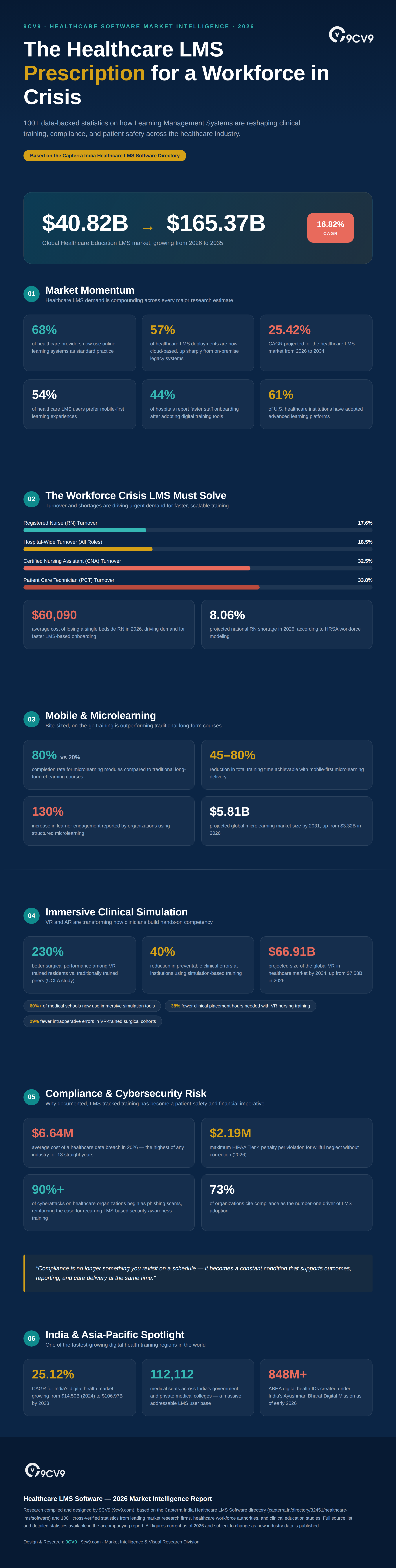
The adoption of digital learning solutions across the healthcare sector further demonstrates this growing momentum. Approximately 68% of healthcare providers now utilize online learning systems, while nearly 57% of healthcare organizations have adopted cloud-based learning platforms. Furthermore, 61% of healthcare institutions in the United States have implemented advanced learning platforms, highlighting the increasing importance of digital infrastructure in modern medical education and workforce management.
One of the most significant factors driving Healthcare LMS software adoption in 2026 is the growing healthcare workforce crisis. Hospital-wide employee turnover stands at approximately 18.5%, while registered nurse turnover has reached 17.6%. The average cost of losing a single bedside registered nurse has risen to USD 60,090, with individual hospitals experiencing annual financial losses of between USD 4.2 million and USD 6.2 million due to registered nurse turnover alone.
These workforce challenges have intensified the need for healthcare organizations to implement efficient onboarding programs, continuous professional development initiatives, and structured employee retention strategies. Approximately 44% of hospitals report faster staff onboarding following the implementation of digital training tools, while 68% of healthcare leaders indicate that training programs positively impact employee retention. These findings demonstrate the potential strategic value of healthcare learning management systems beyond traditional educational functions.
Regulatory compliance also remains a fundamental driver of Healthcare LMS software investment. Healthcare organizations must continuously train employees on data privacy regulations, occupational safety requirements, clinical protocols, patient confidentiality, and professional certification standards. Across industries, approximately 73% of surveyed organizations identify compliance as a major driver of LMS adoption, while 80% of organizations report that their LMS platforms improve audit readiness and reduce regulatory exposure.
The financial implications of inadequate compliance management further reinforce the importance of automated training infrastructure. Healthcare organizations operating without centralized learning management systems may encounter difficulties monitoring employee certifications, documenting mandatory training completion, maintaining accurate audit records, and ensuring consistent adherence to evolving regulatory requirements.
In addition to compliance and workforce management, technological innovation is fundamentally reshaping the Healthcare LMS software landscape. Artificial intelligence (AI), mobile learning, microlearning, gamification, virtual reality (VR), augmented reality (AR), and immersive clinical simulations are increasingly influencing how healthcare professionals acquire, retain, and apply medical knowledge.
Mobile learning has become particularly important for healthcare professionals working across demanding schedules and distributed clinical environments. Nearly 54% of Healthcare LMS users prefer mobile learning, reflecting the growing demand for flexible, accessible, and on-demand educational experiences. Meanwhile, microlearning modules achieve reported average completion rates of 80%, compared with approximately 20% for traditional long-form eLearning courses.
Immersive learning technologies are also creating new opportunities for clinical education and competency development. The global virtual reality in healthcare market is estimated to reach USD 7.58 billion in 2026 and is projected to expand to USD 66.91 billion by 2034. Approximately 34% of healthcare organizations have already adopted VR for staff training, while another 43% plan to implement the technology in the near future. These developments highlight the increasing role of simulation-based learning in surgical education, nursing training, emergency preparedness, and clinical skills development.
Cybersecurity awareness represents another increasingly critical application of Healthcare LMS software. With healthcare data breaches costing an estimated USD 6.64 million per incident in 2026, healthcare organizations face substantial financial, operational, and reputational risks associated with inadequate employee cybersecurity training. Learning management systems can help organizations deliver recurring phishing awareness programs, data protection training, information security assessments, and documented compliance education.
Geographically, North America continues to maintain a strong position in the healthcare eLearning industry, accounting for approximately 54.76% of global healthcare eLearning services revenue in 2024. However, Asia-Pacific is projected to become the fastest-growing region for healthcare education, supported by expanding digital healthcare infrastructure, increasing medical education demand, and national digital transformation initiatives across countries such as India, China, and Japan.
The growing convergence of healthcare technology, workforce management, artificial intelligence, and digital education is transforming Healthcare LMS software from a conventional training administration tool into a strategic enterprise platform. Modern healthcare learning management systems are increasingly expected to support measurable competency development, personalized learning pathways, automated certification tracking, regulatory preparedness, workforce productivity, and improved clinical education outcomes.
Understanding the latest Healthcare LMS software statistics, market data, adoption patterns, and emerging technology trends is therefore essential for healthcare executives, hospital administrators, human resource professionals, clinical educators, compliance officers, healthcare technology vendors, and software investors seeking to make informed strategic decisions.
This comprehensive guide to the Top 110 Healthcare LMS Software Statistics, Data & Trends in 2026 examines the most important developments shaping the global healthcare learning management system industry, including:
- Global Healthcare LMS software market size, revenue forecasts, and growth projections.
- Healthcare learning management system adoption and cloud deployment trends.
- Regulatory compliance, certification management, and employee training costs.
- Healthcare workforce shortages, employee turnover, and staff onboarding statistics.
- Mobile learning, microlearning, and digital education effectiveness.
- Virtual reality, augmented reality, and immersive clinical training adoption.
- Healthcare cybersecurity awareness and data protection training statistics.
- Artificial intelligence, gamification, and personalized learning innovations.
- Regional healthcare eLearning growth and digital health transformation.
- Patient safety, clinical competency development, and healthcare training outcomes.
By examining these 110 Healthcare LMS software statistics, organizations can gain a deeper understanding of the evolving healthcare education landscape, identify emerging investment opportunities, evaluate digital training strategies, and prepare for the future of technology-driven workforce development.
As the healthcare sector continues to prioritize operational resilience, regulatory compliance, workforce competency, and patient safety, Healthcare LMS software is positioned to play an increasingly influential role in building a more knowledgeable, adaptable, efficient, and digitally empowered global healthcare workforce in 2026 and beyond.
Before we venture further into this article, we would like to share who we are and what we do.
About 9cv9
9cv9 is a business tech startup based in Singapore and Asia, with a strong presence all over the world.
With over ten years of startup and business experience, and being highly involved in connecting with thousands of companies and startups, the 9cv9 team has listed some of the top and best companies/tools in this review.
If you like to get your company listed in our top B2B software reviews, check out our world-class 9cv9 Media and PR service and pricing plans here.
Top 110 Healthcare LMS Software Statistics, Data & Trends in 2026
Market Size & Growth
- The global Healthcare LMS market was valued at USD 2.92 billion in 2025 and is projected to reach USD 6.5 billion by 2035, expanding at a CAGR of 8.4%, signaling durable long-term demand for specialized clinical training platforms.
- The broader Healthcare Education LMS market stood at USD 40.82 billion in 2026 and is forecast to hit USD 165.37 billion by 2035 at a 16.82% CAGR, reflecting healthcare’s accelerating shift toward digital-first workforce education.
- A full 68% of healthcare providers now use online learning systems, confirming that digital training has become standard operating practice rather than a supplementary tool.
- Nearly 54% of healthcare LMS users prefer mobile learning, underscoring the need for platforms built around on-the-go, device-agnostic access.
- In the U.S. specifically, 61% of healthcare institutions have adopted advanced learning platforms, reflecting strong digital readiness among American health systems.
- Cloud-based deployment has reached almost 57% adoption among healthcare organizations, favoring scalable subscription models over legacy on-premise systems.
- Roughly 44% of hospitals report faster staff onboarding after implementing digital training tools, directly linking LMS adoption to workforce efficiency gains.
- Another market analysis pegs the Healthcare LMS sector at USD 1.91 billion in 2025, growing to USD 2.36 billion in 2026 at a striking 23.9% CAGR, one of the fastest expansion rates in the enterprise software space.
- That same market is projected to nearly double again, from USD 2.36 billion in 2026 to USD 4.92 billion by 2030 at a 20.1% CAGR.
- The LMS-in-Healthcare segment specifically was valued at USD 3.71 billion in 2026 and is expected to reach USD 6.42 billion by 2031 at an 11.59% CAGR.
- Healthcare and pharmaceuticals represent the fastest-growing end-user vertical in the overall LMS market, expanding at a 14.89% CAGR as continuing-education compliance cycles intensify.
- The global LMS market (all industries) reached USD 30.51 billion in 2026 and is on track for USD 54.86 billion by 2031 at a 12.45% CAGR.
- A more aggressive healthcare-specific forecast places the market at USD 3.98 billion in 2026, surging to USD 24.34 billion by 2034 at a 25.42% CAGR.
- Across all sectors, the global LMS market is projected to climb from USD 31.61 billion in 2026 to USD 104.04 billion by 2034 at a 16.10% CAGR.
- The “solutions” component (versus services) is expected to command 52.43% of LMS market revenue in 2026, driven by demand for turnkey e-learning platforms.
- One long-range forecast puts the LMS market at USD 36.9 billion in 2026, rising to USD 144.19 billion by 2035 at an 18.6% CAGR.
- The Healthcare LMS Software segment specifically was valued at USD 1.1 billion in 2025 and is expected to reach USD 4.4 billion by 2033 at a 19.1% CAGR.
- Healthcare e-learning services overall were estimated at USD 11.10 billion in 2024, growing at a 14.58% CAGR through 2030.
- North America commands the largest share of the healthcare e-learning services market, accounting for 54.76% of global revenue in 2024.
- Clinical training modules dominate content demand, holding 61.68% of the healthcare e-learning services revenue share.
- Among technology platforms used for healthcare e-learning delivery, LMS software captures the largest share at 37.56% of revenue.
- A separate CAGR-heavy projection sees the healthcare LMS market reaching USD 7.85 billion by 2029, growing at roughly 25.42% annually from 2024.
- Market analysts note considerable variance in absolute sizing between firms (ranging from roughly $1B to $40B depending on scope definitions), which reflects how differently “healthcare LMS” is defined — from narrow compliance-tracking tools to broad digital health-education ecosystems.
Compliance, Regulation & Cost of Training
- The American Hospital Association projects a shortage of up to 3.2 million U.S. healthcare workers by 2026, intensifying pressure on LMS platforms to accelerate onboarding and reduce training time-to-competency.
- Online compliance training in 2026 typically costs $5 to $17 per employee per month, or roughly $50 to $100 per employee annually for basic course access.
- Specialized or in-person compliance training can climb to $200–$500 per employee, making digital LMS delivery a significant cost-saving alternative for large health systems.
- Across a three-year window, the total cost of ownership for compliance training (software, content, and administration combined) typically lands between $1,500 and $3,000 per employee.
- Healthcare’s roughly 18% average annual staff turnover — rising to 38% among younger workers — effectively doubles real training costs because organizations must continuously retrain replacement staff.
- A 2026 survey of more than 670 healthcare compliance and safety leaders found that 62% of staff reported feeling more confident after completing phishing-simulation training modules.
- The same research found 53% of healthcare leaders are apprehensive about AI data privacy and security, and 52% are concerned about AI output accuracy — both pointing to a growing need for AI-governance training content within LMS platforms.
- A striking 68% of healthcare leaders say training programs positively impact employee retention, reinforcing LMS investment as a workforce-stability strategy, not just a compliance checkbox.
- 76% of surveyed healthcare leaders say training programs directly support broader organizational business goals.
- Hospitals reportedly need the equivalent of 59 full-time employees just to manage regulatory compliance operations, a burden that automated LMS tracking is designed to reduce.
- Under 2026 HIPAA enforcement, a Tier 4 “willful neglect without correction” violation can carry a penalty of up to $2,190,294, a stark incentive for documented, LMS-tracked HIPAA training.
- In 2024, the HHS Office for Civil Rights fined a major health system $750,000 specifically for inadequate staff training on breach-notification procedures.
- In a separate 2023 case, a hospital system paid $490,000 due to insufficient documentation of HIPAA training completion — highlighting the audit value of LMS-based completion records.
- HIPAA penalties for “unknowing” violations alone can range from $100 to $50,000 per violation per day, making documented, trackable training a direct financial safeguard.
- Compliance is cited as the single largest driver of LMS adoption, referenced by approximately 73% of organizations surveyed across industries.
- Regulated industries, including healthcare, spend roughly 50% more on LMS platforms than less-regulated sectors, reflecting the compounding cost of compliance-heavy training mandates.
- Poorly executed compliance training is linked to average incident costs of roughly $62,000 per compliance failure, reinforcing the ROI case for structured LMS tracking.
- Programs using automated certification tracking see approximately 28% higher course completion rates than those relying on manual tracking methods.
Workforce Shortage, Turnover & the Case for Faster Onboarding
- The U.S. faces a projected national RN shortage of roughly 8.06% in 2026, according to HRSA workforce modeling, adding urgency to faster LMS-driven credentialing.
- Licensed practical nurse (LPN) shortages are projected to reach approximately 20% nationally in 2026, nearly double the RN shortage rate.
- National RN turnover climbed to 17.6% in 2025–2026, reversing several years of gradual post-pandemic improvement.
- Hospital-wide turnover across all clinical and support roles now sits at 18.5% nationally.
- The average cost of losing a single bedside RN has reached $60,090, according to the 2026 NSI National Health Care Retention Report.
- Individual hospitals lose between $4.2 million and $6.2 million annually due to RN turnover alone — a cost directly tied to onboarding and retraining cycles that LMS platforms aim to shorten.
- First-year RN turnover ranges from 22.7% to nearly 30%, exposing a critical gap in onboarding effectiveness that structured digital training programs are designed to close.
- Frontline support roles see even steeper churn: patient care technician turnover reaches 33.8%, and certified nursing assistant turnover reaches 32.5%.
- Generational data shows Gen Z nurses have the highest turnover at 22%, followed by Millennials at 21%, prompting LMS vendors to prioritize mobile-first, bite-sized content for younger clinical staff.
- The national RN vacancy rate stood at 8.6% in 2025–2026, with the typical hospital carrying 43 unfilled full-time RN positions.
- A global meta-analysis of 21 studies across 14 countries found the combined nurse turnover rate to be 16%, with Asia recording a higher 19% average.
- Roughly 40% of RNs and LPNs report plans to leave or retire from nursing within the next five years, up sharply from 28.7% in 2022.
Mobile Learning & Microlearning in Healthcare
- The global mobile learning market is projected to surpass $80 billion by 2027, with healthcare cited as one of the primary frontline-workforce adopters.
- Microlearning modules achieve an average completion rate of 80%, compared to just 20% for traditional long-form eLearning courses.
- 85% of organizations now incorporate video-based content into their microlearning strategies, reflecting healthcare staff’s preference for short, visual instruction.
- Mobile-first microlearning can reduce total training time by 45% to 80% while maintaining comparable knowledge outcomes.
- Without reinforcement, learners forget approximately 90% of new information within a single week — a key rationale behind spaced-repetition microlearning models used in clinical compliance refreshers.
- The global microlearning market was valued at USD 3.32 billion in 2026 and is expected to reach USD 5.81 billion by 2031 at an 11.83% CAGR.
- Healthcare and life sciences represent the fastest-growing end-user segment in microlearning, forecast to grow at a 15.22% CAGR.
- Large enterprises currently hold 54.72% of the microlearning market, though SMEs are growing faster at a 14.59% CAGR as cloud pricing becomes more accessible.
- Organizations deploying microlearning report engagement increases of up to 130% compared to traditional long-form training formats.
- AI-powered content conversion tools can cut microlearning design time by up to 94%, dramatically accelerating how quickly healthcare LMS content libraries can be refreshed.
- Gartner projects that AI will personalize 80% of corporate learning content — including compliance and clinical modules — by the end of 2026.
- Approximately 95% of U.S. adults aged 18 to 49 own a smartphone, forming the technical backbone that makes mobile healthcare microlearning viable at scale.
Virtual & Augmented Reality in Clinical Training
- The global VR-in-healthcare market reached roughly $7.58 billion in 2026 and is projected to climb to $66.91 billion by 2034, one of the fastest CAGRs (31.3%) in all of digital health.
- Education and training applications hold the largest revenue share within the VR healthcare market, at 28.96% in 2026.
- 82% of healthcare specialists agree that VR is a proficient tool for clinical education, according to industry survey data.
- A landmark UCLA randomized study found VR-trained surgical residents performed 230% better than peers trained with standard technique guides.
- The same VR-trained cohort completed procedures 20% faster while correctly executing 38% more procedural steps.
- VR-based clinical training has been shown to cut training costs by roughly 50% in real-world hospital deployments, such as OSF HealthCare’s arrhythmia-detection training program.
- Healthcare institutions integrating simulation-based training into onboarding report a 40% reduction in preventable clinical errors.
- VR nursing programs can reduce required clinical placement hours by 38% while improving scores on standardized OSCE assessments.
- AI-adaptive VR training pathways deliver 55% faster time-to-competency compared to traditional skills-lab curricula.
- Institutions using AI-tracked VR surgical simulation report 29% fewer intraoperative errors among trained cohorts.
- Over 60% of medical schools now integrate immersive simulation tools into their core curricula, replacing inconsistent clinical rotation exposure.
- The broader healthcare and medical simulation market is valued at USD 2.96 billion in 2026, projected to reach USD 7.86 billion by 2035 at an 11.44% CAGR.
- 34% of healthcare organizations have already adopted VR for staff training, while another 43% plan to implement it in the near term.
- 91% of healthcare training buyers agree that VR meaningfully enhances educational program outcomes.
- Augmented reality overlays have been shown to improve spatial awareness during surgical training by 42%, according to peer-reviewed research.
Healthcare Cybersecurity & Data-Protection Training
- Healthcare data breaches cost an average of $6.64 million per incident in 2026, the highest of any industry for 13 consecutive years — a figure that directly justifies mandatory, LMS-tracked cybersecurity awareness training.
- Healthcare accounts for 17% of all ransomware attacks across every industry tracked globally.
- A striking 99% of hospitals operate at least one connected medical device containing a known, exploitable vulnerability.
- The average time to identify and contain a healthcare data breach stretches to roughly 279–291 days, nearly five weeks longer than the cross-industry average.
- Across all industries, 88% of data breaches are attributable to human error — a statistic that positions staff training as one of the most cost-effective cybersecurity investments available.
- Healthcare organizations typically allocate only 4% to 7% of their IT budget to cybersecurity, compared to roughly 15% in financial services.
- More than 90% of cyberattacks targeting the healthcare industry take the form of phishing scams, reinforcing the value of recurring, LMS-delivered phishing-simulation modules.
- 61% of healthcare data breach threats originate from negligent (untrained) employees rather than external attackers alone.
- A record 772 large healthcare data breaches (affecting 500+ individuals each) were reported to the HHS Office for Civil Rights in the 2025–2026 reporting period.
- The “human element” — including misconfigurations and misdirected communications — accounted for 54% of all healthcare security incidents documented in the 2026 Data Breach Investigations Report.
- 45% of healthcare cybersecurity professionals identified phishing as the root cause of their organization’s most severe historical data breach.
AI, Gamification & General LMS Effectiveness
- Gamified training modules deliver roughly 43% higher learner engagement than standard, non-gamified course formats.
- Gamification techniques boost knowledge retention by an estimated 15% to 20% compared to conventional training delivery.
- 83% of learners report feeling more motivated to complete training when gamified elements are present.
- Certification tracking ranks as a top-three priority feature for approximately 70% of organizations shopping for LMS platforms.
- 80% of surveyed organizations say their LMS platform directly improves audit readiness and reduces regulatory exposure.
- Annual safety and compliance certifications account for approximately 35% of all courses delivered through enterprise LMS platforms.
- 93% of businesses worldwide report plans to adopt or expand eLearning programs, reflecting near-universal momentum toward digital training infrastructure.
- Organizations that layer AI-driven personalization into their eLearning stack report an 80% increase in learner engagement.
- The corporate LMS market segment alone may reach $50.1 billion by 2030, growing at an estimated 23.8% CAGR.
India & Asia-Pacific Digital Health Training Landscape
- India’s digital health market was valued at USD 14.50 billion in 2024 and is projected to reach USD 106.97 billion by 2033 at a 25.12% CAGR, one of the steepest growth curves globally.
- India’s e-health market specifically is forecast to grow from USD 14.50 billion in 2025 to USD 51.37 billion by 2034 at a 15.09% CAGR.
- India’s Ayushman Bharat Digital Mission (ABDM) had enrolled over 84.79 crore (roughly 848 million) ABHA health IDs as of January 2026, forming a foundation for interoperable digital health training and record-keeping.
- India hosts 112,112 medical seats across government and private medical colleges, representing a massive addressable base for scalable healthcare LMS deployment.
- 67% of Indians report feeling comfortable seeking medical advice through health applications, signaling growing digital trust that extends to online clinical education platforms.
- Asia-Pacific is projected to be the fastest-growing region for healthcare education globally, driven by national digital-health initiatives across India, China, and Japan.
Patient Safety & the Clinical Case for Better Training
- Approximately 400,000 hospitalized patients in the U.S. experience some form of preventable harm every year, a figure directly tied to gaps in clinical training and competency verification.
- More than 200,000 U.S. patient deaths annually are attributed to preventable medical errors, according to peer-reviewed patient-safety research.
- Medical errors are recognized as the third leading cause of death in the United States, underscoring why standardized, auditable clinical training is treated as a patient-safety imperative rather than an administrative formality.
- The direct healthcare cost of medical errors is estimated at $20 billion annually, with hospital-acquired infections alone adding $35.7–$45 billion in further costs — both categories where LMS-tracked infection-control and protocol training play a measurable preventive role.
Conclusion
The Top 110 Healthcare LMS Software Statistics, Data & Trends in 2026 highlight a fundamental transformation in how healthcare organizations approach workforce education, regulatory compliance, clinical competency development, and patient safety. As the global healthcare industry becomes increasingly digitized, Healthcare Learning Management System (LMS) software is evolving from a conventional employee training solution into a strategic technology infrastructure that supports organizational resilience, workforce productivity, and sustainable operational growth.
The substantial growth of the global Healthcare LMS software market reflects the increasing importance of digital learning solutions across hospitals, clinics, pharmaceutical companies, medical schools, and healthcare institutions. With one market forecast projecting growth from USD 2.92 billion in 2025 to USD 6.5 billion by 2035 at a CAGR of 8.4%, the industry demonstrates considerable long-term expansion potential. Another forecast estimates that the LMS-in-healthcare market will grow from USD 3.71 billion in 2026 to USD 6.42 billion by 2031, representing a CAGR of 11.59%.
Although market valuations differ according to research methodologies, geographical coverage, and industry definitions, these projections consistently indicate that healthcare organizations are increasingly prioritizing investments in digital education, automated training management, and specialized clinical learning platforms.
Healthcare LMS Software Is Becoming an Essential Component of Healthcare Infrastructure
The widespread adoption of healthcare learning management systems demonstrates that digital education is no longer merely an optional supplement to traditional medical training.
Approximately 68% of healthcare providers utilize online learning systems, while 61% of healthcare institutions in the United States have adopted advanced learning platforms. Furthermore, nearly 57% of healthcare organizations have embraced cloud-based deployment models, reflecting a broader transition toward scalable, flexible, and remotely accessible training infrastructure.
Cloud-based Healthcare LMS software enables healthcare organizations to centralize educational resources, standardize training procedures, monitor employee progress, automate certification management, and deliver learning experiences across multiple facilities and geographical locations.
For healthcare institutions managing thousands of employees across diverse clinical and administrative departments, these capabilities are becoming increasingly valuable. Centralized learning platforms can help reduce administrative complexity, improve training consistency, and provide management teams with greater visibility into workforce competency and regulatory compliance.
Workforce Shortages and Employee Turnover Will Continue to Drive Healthcare LMS Adoption
One of the most significant findings from the Healthcare LMS software statistics in 2026 is the growing relationship between workforce challenges and digital training investments.
The healthcare industry continues to experience substantial employee turnover, recruitment difficulties, and professional staffing shortages. Hospital-wide employee turnover stands at approximately 18.5%, while registered nurse turnover has reached 17.6%. Additionally, first-year registered nurse turnover ranges from 22.7% to nearly 30%, highlighting the challenges healthcare organizations face in retaining newly recruited clinical professionals.
The financial consequences of workforce instability are equally significant. The average cost of losing a single bedside registered nurse has reached USD 60,090, while individual hospitals experience estimated annual losses of between USD 4.2 million and USD 6.2 million due to registered nurse turnover alone.
These statistics reinforce the importance of developing structured onboarding programs, accessible professional development opportunities, and continuous clinical education initiatives.
Approximately 44% of hospitals report faster staff onboarding after implementing digital training tools, while 68% of healthcare leaders believe that training programs positively influence employee retention. Furthermore, 76% of surveyed healthcare leaders indicate that training initiatives directly support broader organizational business objectives.
Although Healthcare LMS software cannot independently resolve systemic workforce shortages or employee turnover, it can help healthcare organizations address important contributing factors through more efficient onboarding, structured career development, standardized competency assessments, and accessible learning opportunities.
Regulatory Compliance and Certification Management Remain Critical Investment Drivers
Regulatory compliance continues to be one of the most important factors influencing Healthcare LMS software adoption in 2026.
Healthcare organizations operate within highly regulated environments that require continuous employee education, professional certification management, data privacy awareness, occupational safety training, and adherence to established clinical protocols.
Approximately 73% of surveyed organizations across industries identify compliance as a leading driver of LMS adoption. Meanwhile, regulated industries, including healthcare, spend approximately 50% more on LMS platforms than less-regulated sectors, reflecting the additional complexity associated with mandatory training and compliance documentation.
The growing importance of automated compliance management is further demonstrated by several industry findings:
- Approximately 70% of organizations evaluating LMS platforms identify certification tracking as a top-three priority.
- Around 80% of surveyed organizations report that their LMS platforms improve audit readiness and reduce regulatory exposure.
- Automated certification tracking is associated with approximately 28% higher course completion rates compared with manual tracking methods.
- Annual safety and compliance certifications account for approximately 35% of courses delivered through enterprise learning management systems.
- Poorly executed compliance training has been associated with substantial financial costs arising from compliance failures.
These findings demonstrate why healthcare organizations are increasingly investing in learning management systems equipped with automated training assignments, certification expiration notifications, employee competency tracking, compliance reporting, and centralized audit documentation.
As regulatory requirements continue to evolve, Healthcare LMS software will likely become increasingly integrated into broader healthcare governance, risk management, and compliance strategies.
Mobile Learning and Microlearning Are Reshaping Healthcare Education
The growing adoption of mobile learning and microlearning represents another significant transformation within the Healthcare LMS software market.
Healthcare professionals frequently operate within demanding work environments characterized by irregular schedules, rotating shifts, emergency responsibilities, and limited availability for traditional classroom-based education. Consequently, flexible and accessible digital learning solutions are becoming increasingly important.
Nearly 54% of Healthcare LMS users prefer mobile learning, demonstrating the growing demand for educational content that can be accessed through smartphones, tablets, and other portable devices.
Microlearning is also emerging as an influential approach to healthcare workforce education. Industry statistics indicate that microlearning modules achieve average completion rates of approximately 80%, compared with around 20% for traditional long-form eLearning courses. Organizations implementing microlearning strategies have also reported engagement improvements of up to 130%.
Furthermore, mobile-first microlearning has demonstrated the potential to reduce total training time by between 45% and 80% while maintaining comparable knowledge outcomes in reported applications.
The global microlearning market is projected to grow from USD 3.32 billion in 2026 to USD 5.81 billion by 2031, expanding at a CAGR of 11.83%. Healthcare and life sciences represent the fastest-growing end-user segment, with a projected CAGR of 15.22%.
These developments suggest that future Healthcare LMS platforms will increasingly prioritize short-form educational content, mobile accessibility, video-based instruction, spaced repetition, personalized learning pathways, and continuous knowledge reinforcement.
Artificial Intelligence and Gamification Are Transforming Healthcare LMS Capabilities
Artificial intelligence is expected to become an increasingly influential component of healthcare learning management systems, enabling organizations to deliver more personalized, adaptive, and data-driven educational experiences.
AI-powered Healthcare LMS software can potentially support individualized learning recommendations, automated content development, competency gap identification, intelligent training assessments, and predictive workforce analytics.
Organizations incorporating AI-driven personalization into their eLearning infrastructure have reported learner engagement improvements of up to 80%. Additionally, AI-powered content conversion tools have demonstrated the potential to reduce microlearning design time by up to 94%.
Gamification is similarly transforming employee engagement within digital learning environments. Gamified training modules reportedly generate approximately 43% higher learner engagement than conventional non-gamified courses, while gamification techniques have been associated with knowledge retention improvements of between 15% and 20%.
Approximately 83% of learners also report feeling more motivated to complete training when gamified elements are incorporated into educational programs.
For healthcare organizations, these technologies present opportunities to improve participation in mandatory compliance courses, encourage continuous professional development, and reinforce important clinical knowledge through interactive learning experiences.
However, AI adoption also introduces new governance challenges. Approximately 53% of surveyed healthcare leaders express concerns about AI-related data privacy and security, while 52% are concerned about the accuracy of AI-generated outputs.
Consequently, healthcare institutions must balance technological innovation with appropriate safeguards, human oversight, clinical content validation, and responsible AI governance.
Virtual Reality and Immersive Clinical Training Will Expand the Healthcare LMS Ecosystem
Virtual reality, augmented reality, and simulation-based education are creating new opportunities for healthcare organizations to deliver practical clinical training within controlled learning environments.
The global virtual reality in healthcare market is estimated to reach USD 7.58 billion in 2026 and is projected to expand to USD 66.91 billion by 2034, representing a CAGR of approximately 31.3%.
Education and training applications account for an estimated 28.96% of revenue within the healthcare VR market, highlighting the commercial significance of immersive medical education.
Approximately 34% of healthcare organizations have already adopted virtual reality for staff training, while another 43% plan to implement the technology in the near future. Furthermore, 82% of healthcare specialists recognize virtual reality as an effective clinical education tool.
Research examining VR-based surgical education has reported substantial improvements in procedural performance, completion speed, and the accurate execution of clinical tasks. Individual healthcare deployments have also demonstrated potential training cost reductions of approximately 50%.
These findings illustrate the potential of immersive learning technologies to complement conventional clinical education, particularly in surgical training, nursing education, emergency response preparation, procedural competency development, and medical simulation.
As these technologies become more accessible, Healthcare LMS software vendors may increasingly integrate immersive training modules, simulation performance tracking, virtual competency assessments, and interactive clinical learning environments into their platforms.
Nevertheless, immersive digital training should complement rather than indiscriminately replace supervised clinical practice, particularly where professional accreditation and patient safety requirements apply.
Cybersecurity Training Will Become Increasingly Important for Healthcare Organizations
The growing frequency, complexity, and financial consequences of healthcare cybersecurity incidents represent another compelling reason for organizations to invest in comprehensive learning management systems.
Healthcare data breaches cost an estimated USD 6.64 million per incident in 2026, demonstrating the considerable financial risks associated with compromised medical information and digital healthcare infrastructure.
Healthcare also accounts for approximately 17% of ransomware attacks across tracked industries globally, while the human element contributed to approximately 54% of healthcare security incidents documented in the 2026 Data Breach Investigations Report.
These statistics reinforce the importance of continuous employee cybersecurity education, particularly as healthcare organizations increasingly rely on connected medical devices, electronic health records, cloud-based applications, and interoperable healthcare information systems.
Healthcare LMS platforms can support cybersecurity risk management through recurring phishing awareness training, data privacy education, simulated security exercises, information protection assessments, and documented employee training completion.
A survey involving more than 670 healthcare compliance and safety leaders found that 62% of staff reported increased confidence after completing phishing simulation training.
Although employee education alone cannot eliminate cybersecurity threats, structured and recurring training can complement technical security controls, incident response procedures, and organizational data protection policies.
Regional Healthcare LMS Market Expansion Will Create New Growth Opportunities
The global Healthcare LMS software market is expected to benefit from continued digital healthcare investment across established and emerging economies.
North America maintains a leading position in the healthcare eLearning services industry, accounting for approximately 54.76% of global revenue in 2024. The region’s established healthcare infrastructure, regulatory requirements, and adoption of advanced digital learning technologies contribute to its significant market presence.
However, Asia-Pacific is projected to become the fastest-growing region for healthcare education, supported by expanding healthcare infrastructure, increasing medical education demand, and national digital transformation initiatives.
India represents a particularly significant example of this broader regional transformation. The country’s digital health market was valued at USD 14.50 billion in 2024 and is projected to reach USD 106.97 billion by 2033, growing at a CAGR of 25.12%.
Additionally, India’s extensive medical education ecosystem, comprising more than 112,000 medical education seats across government and private institutions, represents a substantial potential market for scalable digital learning solutions.
As healthcare systems across Asia-Pacific continue to modernize, opportunities are likely to emerge for Healthcare LMS software providers offering affordable cloud-based platforms, mobile learning capabilities, multilingual educational content, and flexible training management solutions.
Healthcare LMS Software Will Play a Growing Role in Patient Safety and Clinical Quality
Beyond workforce development, operational efficiency, and regulatory compliance, one of the most important long-term objectives of Healthcare LMS software is supporting safer and more consistent healthcare delivery.
Preventable medical errors, hospital-acquired infections, inconsistent clinical practices, and inadequate competency verification continue to impose substantial financial and human costs on healthcare systems.
The direct healthcare cost of medical errors in the United States has been estimated at USD 20 billion annually, while hospital-acquired infections contribute an additional estimated USD 35.7 billion to USD 45 billion in healthcare costs.
These figures highlight the importance of standardized clinical education, recurring competency assessments, infection prevention training, and effective communication of updated medical procedures.
Healthcare LMS software can contribute to these objectives by helping organizations maintain consistent training standards, identify educational gaps, document employee competencies, and ensure that healthcare professionals receive timely updates on clinical protocols.
Simulation-based training, adaptive learning technologies, and automated competency tracking may further strengthen the ability of healthcare institutions to prepare employees for complex clinical responsibilities.
However, improved patient outcomes depend on multiple interconnected factors, including staffing levels, clinical supervision, organizational culture, medical infrastructure, and adherence to evidence-based practices. Healthcare LMS software should therefore be viewed as an important supporting component of a comprehensive patient safety strategy rather than a standalone solution.
What Healthcare Organizations Should Prioritize When Investing in Healthcare LMS Software
The Healthcare LMS software statistics and trends in 2026 indicate that organizations should evaluate learning management systems based on their ability to deliver measurable operational, educational, and compliance-related value.
Important considerations when selecting Healthcare LMS software include:
- Automated regulatory compliance and professional certification tracking.
- Scalable cloud-based infrastructure and multi-location training management.
- Mobile-first learning experiences and accessible educational content.
- Clinical competency assessments and standardized training pathways.
- Artificial intelligence-powered personalization and learning analytics.
- Microlearning, gamification, and interactive educational capabilities.
- Healthcare cybersecurity awareness and data protection training.
- Integration with existing human resource and healthcare management systems.
- Comprehensive reporting, audit documentation, and employee performance monitoring.
- Support for virtual reality, augmented reality, and simulation-based clinical education.
- Data security, privacy protection, and responsible AI governance.
- Transparent pricing, implementation costs, and measurable training outcomes.
Rather than selecting software solely based on subscription costs or the number of available features, healthcare organizations should consider how effectively a platform addresses their specific workforce challenges, regulatory obligations, educational requirements, and long-term digital transformation objectives.
The Future of Healthcare LMS Software Beyond 2026
The future of the Healthcare LMS software industry will likely be characterized by deeper integration between digital education, artificial intelligence, workforce analytics, regulatory compliance management, and immersive clinical training.
Traditional learning management systems primarily focused on distributing educational materials and recording course completion. Emerging healthcare learning platforms are increasingly expected to deliver personalized educational experiences, identify competency gaps, automate regulatory workflows, and provide actionable insights into workforce development.
As healthcare organizations continue to face rising operational costs, employee shortages, evolving cybersecurity threats, and increasingly complex regulatory environments, the ability to deliver efficient and measurable workforce education will become an important source of organizational resilience.
Healthcare LMS software vendors that successfully combine intuitive user experiences, robust security infrastructure, automated compliance management, advanced analytics, and innovative educational technologies are likely to be well-positioned to address this growing demand.
At the same time, healthcare institutions that adopt digital learning strategically may be better equipped to improve employee onboarding, strengthen professional development, reduce administrative burdens, and maintain consistent training standards across increasingly complex healthcare environments.
Ultimately, the 110 Healthcare LMS software statistics, data points, and trends in 2026 demonstrate that healthcare learning management systems are becoming an increasingly important component of the global healthcare technology ecosystem.
From accelerating employee onboarding and strengthening regulatory compliance to enabling personalized learning, immersive clinical education, and cybersecurity awareness, Healthcare LMS software offers significant opportunities to modernize healthcare workforce development.
For healthcare executives, hospital administrators, human resource professionals, clinical educators, compliance officers, technology providers, and investors, understanding these market developments is essential for making informed decisions about future healthcare education investments.
As the healthcare industry continues its digital transformation, organizations that prioritize scalable, secure, accessible, and evidence-informed learning management systems will be better positioned to develop competent workforces, strengthen operational resilience, support regulatory preparedness, and contribute to higher standards of healthcare delivery.
In 2026 and beyond, Healthcare LMS software is increasingly becoming more than an educational technology investment. It represents a strategic foundation for building a more knowledgeable, adaptable, compliant, technologically empowered, and patient-centered global healthcare workforce.
If you find this article useful, why not share it with your hiring manager and C-level suite friends and also leave a nice comment below?
We, at the 9cv9 Research Team, strive to bring the latest and most meaningful data, guides, and statistics to your doorstep.
To get access to top-quality guides, click over to 9cv9 Blog.
To hire top talents using our modern AI-powered recruitment agency, find out more at 9cv9 Modern AI-Powered Recruitment Agency.
People Also Ask
What is Healthcare LMS software?
Healthcare LMS software is a digital learning management system designed to deliver clinical education, employee training, regulatory compliance courses, competency assessments, and professional certification management within healthcare organizations.
How big is the Healthcare LMS software market in 2026?
One market forecast values the LMS-in-healthcare market at USD 3.71 billion in 2026, with projected growth to USD 6.42 billion by 2031.
What is the projected growth rate of the Healthcare LMS software market?
The global Healthcare LMS market is projected to grow at a CAGR of 8.4% between 2025 and 2035, although growth estimates vary depending on market definitions and research methodologies.
What percentage of healthcare providers use online learning systems?
Approximately 68% of healthcare providers use online learning systems to support employee education, clinical training, professional development, and regulatory compliance.
What are the major Healthcare LMS software trends in 2026?
Major trends include AI-powered learning, cloud-based deployment, mobile learning, microlearning, gamification, automated compliance tracking, virtual reality, and personalized clinical education.
Why is Healthcare LMS software important for hospitals?
Healthcare LMS software helps hospitals standardize employee training, accelerate onboarding, monitor clinical competencies, manage certifications, strengthen regulatory compliance, and support patient safety.
What percentage of healthcare organizations use cloud-based LMS software?
Nearly 57% of healthcare organizations have adopted cloud-based learning platforms, reflecting growing demand for scalable, accessible, and flexible digital training infrastructure.
How does Healthcare LMS software improve employee onboarding?
Healthcare LMS software streamlines onboarding through automated course assignments, standardized training pathways, competency assessments, and progress tracking. Approximately 44% of hospitals report faster onboarding after adopting digital training tools.
Can Healthcare LMS software improve employee retention?
Healthcare LMS software can support employee retention through structured professional development and accessible learning opportunities. Approximately 68% of healthcare leaders report that training programs positively influence retention.
How much does Healthcare LMS compliance training cost?
Online compliance training typically costs USD 5 to USD 17 per employee per month in 2026. Specialized or in-person compliance training can cost between USD 200 and USD 500 per employee.
How does Healthcare LMS software support HIPAA compliance?
Healthcare LMS software supports HIPAA compliance through mandatory training assignments, employee assessments, completion records, automated reminders, and centralized audit documentation. However, software alone cannot guarantee compliance.
What percentage of organizations adopt LMS software for compliance training?
Approximately 73% of surveyed organizations across industries identify compliance as a major driver of LMS adoption, highlighting the importance of automated regulatory training management.
How does Healthcare LMS software improve audit readiness?
Healthcare LMS software centralizes training records, certification histories, assessment results, and compliance documentation. Approximately 80% of surveyed organizations report that LMS platforms improve audit readiness.
What is the role of artificial intelligence in Healthcare LMS software?
Artificial intelligence supports personalized learning pathways, automated content generation, competency gap identification, adaptive assessments, intelligent course recommendations, and workforce learning analytics.
How popular is mobile learning in healthcare?
Nearly 54% of Healthcare LMS users prefer mobile learning, reflecting the need for flexible training that accommodates rotating shifts, demanding schedules, and distributed healthcare workforces.
What is microlearning in Healthcare LMS software?
Microlearning delivers educational content through short, focused modules that support knowledge retention and flexible training. Reported average completion rates reach 80%, compared with 20% for traditional long-form eLearning courses.
How fast is the healthcare microlearning market growing?
Healthcare and life sciences represent the fastest-growing end-user segment in the microlearning market, with a projected CAGR of 15.22%.
How does gamification improve healthcare training?
Gamification uses interactive challenges, rewards, quizzes, and progress indicators to increase learner motivation. Gamified training modules reportedly achieve approximately 43% higher engagement than conventional training formats.
Can gamification improve knowledge retention in healthcare education?
Gamification techniques have been associated with knowledge retention improvements of approximately 15% to 20%, supporting continuous education and reinforcement of important clinical knowledge.
How is virtual reality used in Healthcare LMS software?
Virtual reality supports immersive clinical simulations, surgical training, nursing education, emergency response preparation, and procedural competency development within controlled learning environments.
What percentage of healthcare organizations use virtual reality for training?
Approximately 34% of healthcare organizations have adopted virtual reality for staff training, while another 43% plan to implement the technology in the near future.
How large is the virtual reality healthcare market in 2026?
The global virtual reality in healthcare market is estimated at USD 7.58 billion in 2026 and is projected to reach USD 66.91 billion by 2034, growing at a CAGR of approximately 31.3%.
How does Healthcare LMS software support cybersecurity training?
Healthcare LMS software delivers phishing simulations, cybersecurity awareness courses, data protection training, employee assessments, and recurring security education to help reduce human-related cybersecurity risks.
What is the average cost of a healthcare data breach in 2026?
Healthcare data breaches cost an estimated USD 6.64 million per incident in 2026, highlighting the importance of cybersecurity awareness, employee training, and robust technical security controls.
How does Healthcare LMS software help address nursing shortages?
Healthcare LMS software helps organizations accelerate nurse onboarding, standardize clinical education, monitor professional competencies, and support continuous career development. It cannot independently resolve systemic staffing shortages.
What are the essential features of Healthcare LMS software?
Essential features include automated compliance tracking, certification management, mobile accessibility, clinical assessments, learning analytics, secure data management, customizable training pathways, and HR system integration.
Which region dominates the healthcare eLearning market?
North America leads the healthcare eLearning services market, accounting for approximately 54.76% of global revenue in 2024, supported by established healthcare infrastructure and digital learning adoption.
Which region is expected to experience the fastest healthcare education market growth?
Asia-Pacific is projected to become the fastest-growing healthcare education region, driven by digital health initiatives, expanding medical education infrastructure, and technology adoption across India, China, and Japan.
How does Healthcare LMS software contribute to patient safety?
Healthcare LMS software supports patient safety through standardized clinical training, infection prevention education, competency assessments, protocol updates, and continuous professional development alongside supervised clinical practice.
What is the future of Healthcare LMS software beyond 2026?
Healthcare LMS software is expected to evolve toward AI-powered personalization, immersive clinical simulations, predictive learning analytics, automated compliance management, mobile-first education, and integrated workforce development platforms.
Sources
- WiseGuyReports
- Global Growth Insights
- Research and Markets
- Mordor Intelligence
- Market Data Forecast
- Market Research Intellect
- Fortune Business Insights
- IndustryARC
- Grand View Research
- Business Research Insights
- MarketsandMarkets
- Disprz
- Paradiso Solutions
- OpenPR
- Coherent Market Insights
- Strategic Revenue Insights
- Market Research Future
- Research
- Manikanta B
- InfoPro Learning
- HealthStream
- MedTrainer
- Coggno
- TechClass
- HIPAA Journal
- Medcurity
- Aurora Financials
- Valamis
- Access Healthcare Staffing
- Nightingale College
- HealthLeaders Media
- Nursa
- Becker’s Hospital Review
- ThriveSparrow
- NSI Nursing Solutions
- Nurse
- NCBI PMC
- Prolink
- eLearning Industry
- Relias
- Make Headway
- 5mins AI
- Vouch
- Engageli
- Dynamic Pixel
- iSpring Solutions
- ProProfs
- ScienceSoft
- Nadcab
- Towards Healthcare
- Treeview
- VR Vision Group
- Oxmaint
- Vention Teams
- EON Reality
- OSF Innovation
- ORDR
- MedhaCloud
- Swif AI
- Axis Intelligence
- FaxSIPit
- Bright Defense
- UpGuard
- IBM
- Total Assure
- DeepStrike
- Atrixware
- Custom Market Insights
- The Report Cubes
- TechSci Research
- Digital Health News
- Healthcare Radius
- PubMed
- NCBI Bookshelf
- ECRI


