

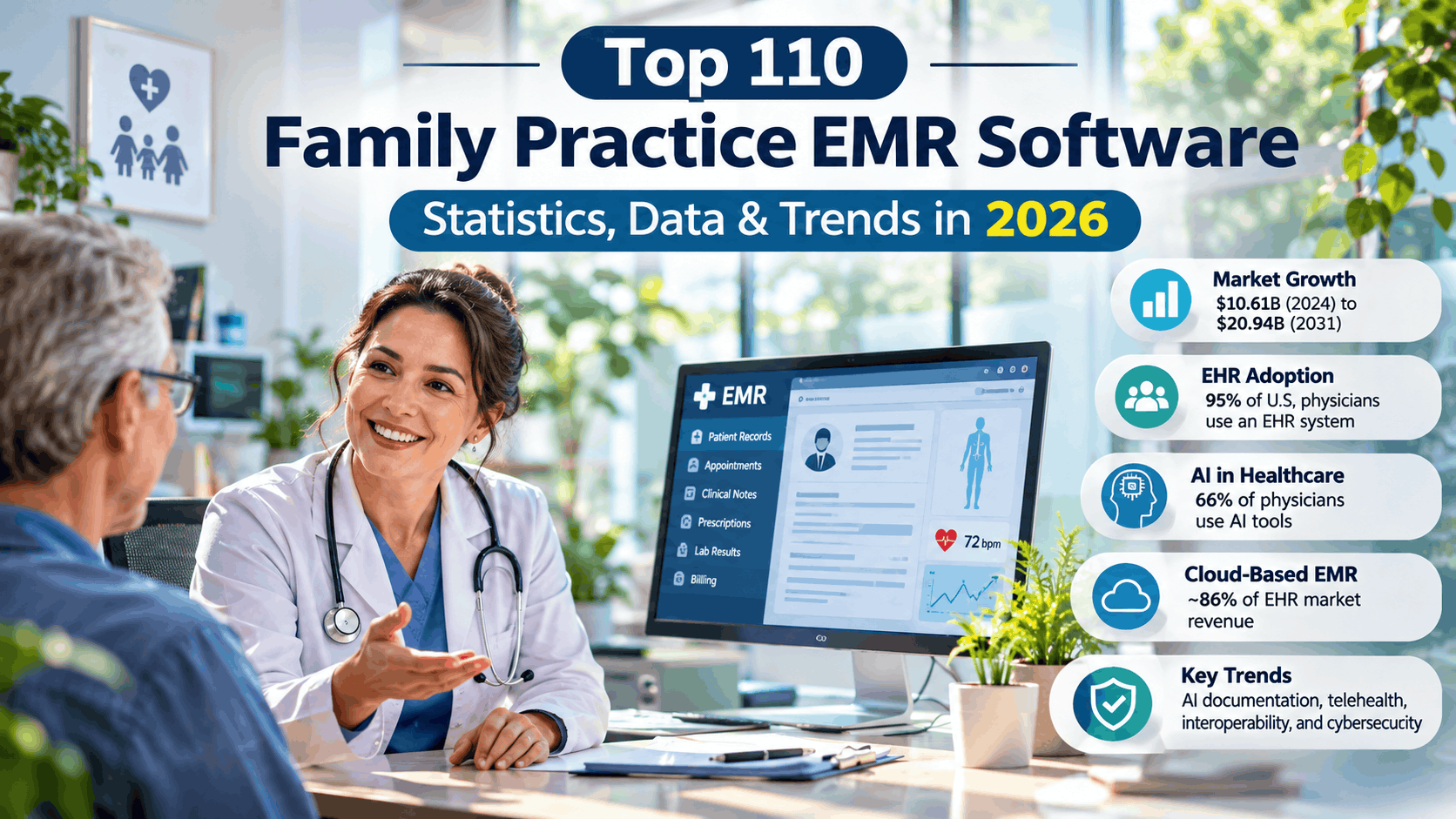
Key Takeaways
- Rapid Market Growth: The global Family Practice EMR Software market is projected to reach $20.94 billion by 2031, growing at a 12% CAGR, driven by digital healthcare transformation and increasing EHR adoption.
- AI and Cloud-Based EMR Adoption: With 95% of U.S. office-based physicians using EHR systems and 66% adopting AI tools, cloud-based EMR software, automated clinical documentation, and AI-powered workflows are reshaping primary care.
- Cost, Cybersecurity, and Physician Efficiency: Family Practice EMR Software typically costs $300–$600 per provider monthly, while rising cybersecurity threats, physician burnout, and interoperability requirements are driving demand for secure, affordable, and efficient solutions.
Family Practice EMR Software is transforming primary healthcare in 2026, with the global market projected to reach $20.94 billion by 2031 at a 12% CAGR. With 95% of U.S. office-based physicians using electronic health records, key trends include AI-powered documentation, cloud adoption, rising cybersecurity concerns, and growing demand for affordable clinical solutions.
The healthcare industry is undergoing a significant digital transformation in 2026, with Family Practice Electronic Medical Record (EMR) Software becoming an essential component of modern primary care delivery. As healthcare providers face increasing pressure to improve patient outcomes, streamline administrative workflows, reduce operational costs, and maintain regulatory compliance, the adoption of advanced EMR and Electronic Health Record (EHR) systems continues to accelerate worldwide.
Also, read our article on the Top 10 Family Practice Electronic Medical Records Software.

The global Family Practice EMR Software market, valued at approximately $10.61 billion in 2024, is projected to reach $20.94 billion by 2031, representing a compound annual growth rate (CAGR) of 12%. Meanwhile, the broader global EHR market is forecast to generate approximately $33.99 billion in revenue in 2026, highlighting the growing importance of digital healthcare infrastructure.
In the United States, EMR adoption has reached remarkable levels. According to the 2024 National Electronic Health Records Survey, 95% of office-based physicians use some form of EHR system, while 83.6% have adopted certified EHR technology. These figures demonstrate how electronic medical records have evolved from optional practice management tools into fundamental healthcare infrastructure.

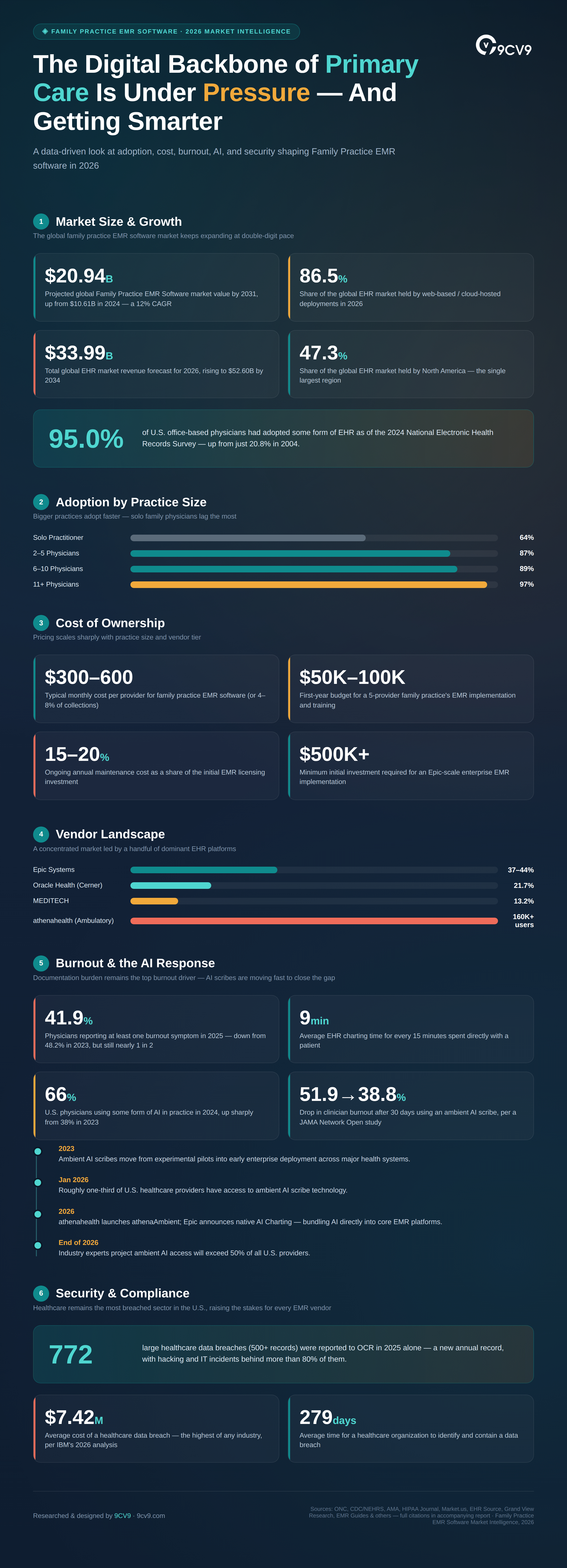
However, widespread adoption does not necessarily translate into seamless implementation or improved physician satisfaction. Family medicine practices continue to face challenges involving software implementation costs, documentation workloads, interoperability limitations, cybersecurity vulnerabilities, and physician burnout. For example, 20.9% of physicians in 2025 reported spending more than eight hours weekly on EHR-related activities outside normal working hours, illustrating the administrative burden associated with digital recordkeeping.
At the same time, emerging technologies are reshaping the family practice EMR software landscape. Artificial intelligence (AI), ambient clinical documentation, cloud-based EHR platforms, telehealth integration, and automated patient engagement are becoming increasingly important competitive differentiators. In 2024, approximately 66% of U.S. physicians reported using AI in their practices, compared with 38% in the previous year. AI-powered medical scribes are also demonstrating measurable improvements in documentation efficiency, clinician productivity, and physician well-being.
Financial considerations remain equally important for healthcare organizations evaluating EMR solutions. Family practice EMR software typically costs between $300 and $600 per provider per month, although implementation expenses, training requirements, maintenance fees, and integration costs can significantly increase the total cost of ownership. Understanding these financial implications is particularly critical for independent physicians, small medical clinics, and growing primary care groups seeking cost-effective digital solutions.
Furthermore, the competitive landscape continues to evolve as established vendors such as Epic Systems, athenahealth, Oracle Health, and MEDITECH compete alongside specialized EMR providers offering tailored solutions for family medicine. Cloud-based deployment, AI-assisted charting, patient portals, electronic prescribing, revenue cycle management, and healthcare interoperability are increasingly influencing software purchasing decisions.
This comprehensive guide to the Top 110 Family Practice EMR Software Statistics, Data & Trends in 2026 examines the most important developments shaping the electronic medical records industry. It explores global market size and growth forecasts, EMR adoption rates, software pricing, vendor market share, physician satisfaction, AI-powered clinical automation, telehealth utilization, cybersecurity risks, and healthcare interoperability.
Whether readers are family physicians, healthcare administrators, medical practice owners, health IT professionals, software developers, or industry investors, these 110 statistics provide valuable insights into the opportunities, challenges, and technological innovations influencing family practice EMR software in 2026 and beyond.
By understanding these data-driven trends, healthcare organizations can make more informed decisions about EMR software selection, digital transformation investments, clinical workflow optimization, and long-term technology strategies while maintaining a strong focus on patient care quality and operational efficiency.
Before we venture further into this article, we would like to share who we are and what we do.
About 9cv9
9cv9 is a business tech startup based in Singapore and Asia, with a strong presence all over the world.
With over ten years of startup and business experience, and being highly involved in connecting with thousands of companies and startups, the 9cv9 team has listed some of the top and best companies/tools in this review.
If you like to get your company listed in our top B2B software reviews, check out our world-class 9cv9 Media and PR service and pricing plans here.
Top 110 Family Practice EMR Software Statistics, Data & Trends in 2026
Market Size & Growth
1. The global Family Practice EMR Software market was valued at $10.61 billion in 2024 and is projected to reach approximately $20.94 billion by 2031, reflecting the accelerating shift from paper charts to digital records in primary care settings.
2. With a compound annual growth rate of 12% between 2024 and 2031, family practice EMR software is expanding roughly twice as fast as the broader healthcare IT sector, signaling outsized investor and vendor interest in primary care digitization.
3. The global EHR market as a whole is forecast to generate $33.99 billion in revenue in 2026, underscoring just how central electronic records have become to worldwide healthcare infrastructure spending.
4. By 2034, the global EHR market is expected to nearly double to $52.60 billion, a trajectory that suggests family practices adopting EMR software today are buying into a market with a long runway of vendor innovation ahead.
5. Demand for EMR software among family and primary care practices grew at an estimated 6–7% year-over-year pace in 2026, driven largely by digital transformation initiatives and interoperability mandates.
6. Cloud-based EHR software alone was valued at $35.82 billion in 2024 and is projected to reach $82.49 billion by 2034, illustrating how decisively the market has tilted toward subscription-based, internet-hosted platforms.
7. Web-based and cloud-hosted EHR deployments now account for 86.49% of the global EHR market, confirming that on-premise servers have become the exception rather than the rule for new family practice buyers.
8. A separate analysis puts the web/cloud EHR revenue share at 83.68% in 2025, a figure broadly consistent with other market trackers and reinforcing the strength of the cloud-first trend.
9. North America commands 47.33% of the global EHR market by revenue, a dominance rooted in early digitization incentives and a dense concentration of major EHR vendors headquartered in the region.
10. A related estimate places North America’s EMR market share at 43.3% in 2026, driven by the region’s decade-plus head start on EHR usage rates exceeding 85% among eligible providers.
11. Acute-care/inpatient EHR systems account for 45.57% of total EHR market revenue, leaving outpatient and ambulatory systems — the category most family practices fall into — as a large but comparatively smaller revenue segment.
12. The global ambulatory EHR market, the segment most directly relevant to family practices, reached $6.83 billion in 2025 and continues to grow at a 6.7% CAGR.
13. The broader U.S. healthcare IT market, encompassing EMR, billing, and adjacent systems, is projected to reach $974.5 billion by 2027, giving family practice EMR vendors a vast total addressable market to compete within.
14. The global AI-in-medical-scribing market, closely tied to modern EMR workflows, is projected to approach $3 billion by 2033 as ambient documentation tools become standard EMR add-ons.
15. Cloud EHR platforms now account for roughly 80% of new EHR purchases in 2026, while on-premise systems still serve an estimated 30–40% of the total installed base — a gap that highlights how quickly new buyers are choosing cloud over legacy infrastructure.
EHR/EMR Adoption Rates
16. As of the 2024 National Electronic Health Records Survey, 95.0% of U.S. office-based physicians had adopted some form of EHR system, marking a new high-water mark for digital record-keeping in outpatient care.
17. Within that same 2024 survey, 83.6% of physicians specifically used a certified EHR system, the type required to qualify for federal incentive and quality-reporting programs.
18. Just three years earlier, in 2021, 88.2% of U.S. office-based physicians had adopted any EHR, showing a meaningful jump of nearly seven percentage points in overall adoption by 2024.
19. Certified EHR adoption specifically stood at 77.8% in 2021, meaning a sizable share of “any EHR” adopters were still using systems that didn’t meet certification standards at that time.
20. Solo practitioners report the lowest EHR adoption rate of any practice size category, at just 64%, reflecting the disproportionate cost and administrative burden EMR systems place on single-physician offices.
21. Practices with 2 to 5 physicians report an 87% EHR adoption rate, a dramatic jump from solo practices that illustrates the benefits of shared implementation costs among a small physician group.
22. Mid-sized practices with 6 to 10 physicians report an even higher 89% adoption rate, suggesting adoption gains continue but begin to plateau once a practice reaches moderate scale.
23. Large group practices with 11 or more physicians report the highest adoption rate at 97%, nearly universal, likely reflecting greater access to dedicated IT staff and negotiating leverage with vendors.
24. Looking back to 1991, EHR prevalence in small practices stood at under 1%, a stark reminder of how recent the digitization of American primary care truly is.
25. Approximately 91% of primary care physicians currently use an EHR system, a figure that sits comfortably above the national physician average and reflects primary care’s role as an early adopter category.
26. EHR adoption rates in primary care specifically reach around 94%, compared to 89% in obstetrics and gynecology, showing measurable variation even among high-adopting specialties.
27. Internationally, France and Germany each report 88% EMR adoption among primary care physicians, putting European primary care roughly on par with U.S. adoption levels as of 2019 data.
28. Canada reports 86% EMR adoption among primary care physicians, trailing France and Germany only slightly and confirming EMR adoption as a near-universal norm across major developed healthcare systems.
29. Switzerland lags its European peers with a 70% primary care EMR adoption rate, illustrating that even wealthy healthcare systems can show notable gaps in digital record uptake.
30. Australia has reached an EHR adoption rate of approximately 93% in primary care settings, placing it among the most digitally mature primary care systems globally.
Cost & Pricing
31. Family practice EMR software typically costs between $300 and $600 per provider per month, though some vendors instead charge 4% to 8% of a practice’s total collections rather than a flat subscription fee.
32. That collections-based pricing model means a practice’s EMR cost rises and falls with its revenue, which can be advantageous during slow periods but expensive during high-volume months.
33. A five-provider family practice should budget roughly $50,000 to $100,000 for first-year implementation and staff training alone, a hidden cost that often surprises practices comparing only monthly subscription fees.
34. Enterprise-grade platforms like Epic require a minimum initial investment of $500,000 or more, pricing them out of reach for the vast majority of independent family practices.
35. Small clinics more broadly face upfront EHR investment costs ranging from $100,000 to $300,000 depending on system complexity and the scope of hardware needed.
36. At the opposite end of the spectrum, large hospital systems implementing enterprise EHR platforms can spend $10 million to $30 million or more on a single rollout.
37. Ongoing annual maintenance for an EHR system typically runs 15% to 20% of the initial licensing cost, a recurring expense that compounds over a system’s multi-year lifecycle.
38. Small and medium-sized family practices typically spend between $3,000 and $10,000 per year on EMR software, a figure that reflects the more modest subscription tiers designed for solo and small-group buyers.
39. Mid-market practices can expect annual EMR costs ranging from $10,000 to $30,000, roughly triple the small-practice tier as feature sets and user counts expand.
40. Initial consulting and setup work for an EMR implementation generally costs between $1,000 and $5,000, separate from the software subscription itself.
41. Ongoing maintenance and support subscriptions for smaller EMR deployments typically range from $500 to $2,000 annually, a comparatively modest add-on next to the core license fee.
42. A typical three-provider family practice spends between $21,000 and $40,000 in its first year of EMR ownership once implementation, training, and licensing are combined.
43. After the initial year, that same three-provider practice can expect ongoing annual costs of $15,000 to $30,000, roughly 30–40% lower than first-year spending once one-time implementation costs fall away.
44. Epic’s family practice pricing runs $500 to $1,000 or more per provider per month on a quote basis, positioning it as a premium option generally reserved for practices with hospital affiliations or strong IT support.
45. Practices without a built-in telehealth module should budget an additional $30 to $75 per month for a HIPAA-compliant third-party virtual care tool.
Vendor Landscape & Market Share
46. Epic Systems holds an estimated 37% to 44% share of the U.S. ambulatory EHR market, making it the single largest vendor by installed base even outside the hospital setting where it originally built its dominance.
47. A separate estimate places Epic’s overall EHR vendor market share at 28.21%, a figure that, while lower than ambulatory-specific numbers, still confirms Epic’s position as the industry’s largest single player.
48. Epic won approximately 70% of all new hospital EHR contracts awarded in 2024, an extraordinary win rate that suggests its market lead is widening rather than narrowing.
49. Epic has been named Best in KLAS for 15 consecutive years, an unmatched streak in health IT that reflects sustained customer satisfaction alongside its scale advantages.
50. A related industry estimate puts Epic’s hospital EHR market share specifically at 42.3%, reinforcing its multi-source consensus position as the dominant inpatient EHR vendor.
51. Oracle Health, formerly Cerner, holds an estimated 21.7% share of the acute care EHR market, comfortably the second-largest position but with signs of erosion.
52. Oracle Health lost 74 hospital sites in 2024 alone, evidence that its post-acquisition integration into Oracle’s cloud infrastructure has created friction with some existing customers.
53. MEDITECH holds roughly 13.2% of the acute care EHR market, rounding out the trio of vendors that together dominate hospital-based electronic record deployments.
54. athenahealth serves more than 160,000 healthcare providers across the United States, a scale that makes it one of the largest ambulatory-focused EHR vendors by user count even without hospital-market dominance.
55. athenahealth won Best in KLAS for Overall Independent Physician Practice Suite for the third consecutive year in 2026, a recognition based on interviews with actual paying customers rather than vendor self-reporting.
56. athenahealth earned four separate 2024 Best in KLAS awards across multiple categories, further cementing its reputation among independent and small-to-mid-sized family practices.
57. Praxis EMR has ranked #1 in the American Academy of Family Physicians’ EHR User Satisfaction Surveys for 12 consecutive years, a notable specialty-specific accolade for a template-free charting platform built specifically around family medicine workflows.
User Reviews & Satisfaction
58. athenaOne carries an average Capterra user rating of 3.8 out of 5, with reviewers frequently praising its charting and scheduling tools while criticizing pricing and occasional workflow friction.
59. Tebra, the platform formed from the merger of Kareo and PatientPop, holds a slightly higher average Capterra rating of 3.9 out of 5, often cited for ease of billing and scheduling among independent practices.
60. Epic holds an average Capterra rating of 4.4 out of 5 among reviewers, many of whom operate within larger hospital-affiliated practices where Epic’s steep learning curve is offset by dedicated IT support.
61. Medesk, a smaller cloud-based EMR platform, posts the highest average Capterra rating in this comparison set at 4.6 out of 5, suggesting newer or niche vendors can sometimes outperform market leaders on user satisfaction.
62. athenahealth carries a “good” aggregated user satisfaction rating of 75% across 953 reviews compiled from multiple recognized software review platforms.
63. Tebra EHR scores slightly higher at a 79% aggregated user satisfaction rating across 1,549 reviews, a larger review sample that lends additional weight to the comparison.
64. Among practices that ultimately switched EHR vendors, 44% cited an unresponsive vendor as their primary reason for leaving, highlighting that ongoing support quality can matter as much as initial feature sets.
Physician Burnout & Documentation Burden
65. Physician burnout affected 41.9% of doctors in 2025, continuing a four-year decline from a pandemic-era peak but still representing symptoms in roughly two out of every five physicians.
66. That 41.9% figure is down from 48.2% in 2023, evidence of gradual but real improvement even as systemic administrative pressures persist.
67. Despite these gains, 20.9% of physicians in 2025 still spent more than eight hours per week on the EHR outside of normal working hours — so-called “pajama time” — a figure unchanged since 2022.
68. Physicians on average spend 1.5 to 2 hours documenting in the EHR for every single hour of direct patient care, a ratio that underscores how administrative work has come to rival clinical time itself.
69. More than half of clinicians, 57%, report losing over 44 hours per month to documentation alone, equivalent to more than a full additional work week every single month.
70. For every 15 minutes physicians spend directly with a patient, they spend an average of 9 minutes charting that encounter in the EHR, a ratio that captures just how much clinical time is consumed by data entry.
71. The average physician spends 16.6% of total working hours, or roughly 8.7 hours per week, on administrative tasks rather than direct patient care.
72. Nearly half of small-practice clinicians, 48%, say family members complain about the after-hours EHR work they bring home, a statistic that speaks to burnout’s spillover into physicians’ personal lives.
73. More than a third of clinicians, 38%, say they have considered cutting their clinical hours specifically because of documentation burden.
74. A quarter of clinicians, 25%, report actively considering leaving medicine entirely, a striking figure that connects documentation burden directly to long-term workforce retention risk.
75. When physicians are asked to name the top driver of burnout, 62% point to bureaucratic workload and EHR demands, ranking it above staffing shortages and long hours as a root cause.
AI, Ambient Scribes & Clinical Automation
76. Two-thirds of U.S. physicians, 66%, reported using some form of AI in their practice in 2024, a dramatic jump from just 38% the year before.
77. Ambient clinical documentation powered by generative AI is now the single most universally adopted AI use case in healthcare, with 100% of surveyed health systems reporting at least some usage.
78. As of January 2026, roughly one-third of U.S. healthcare providers have access to ambient AI scribe technology, a penetration level reached in a remarkably short window since the tools first launched commercially.
79. Industry analysts predict that ambient AI scribe access will exceed 50% of all U.S. providers by the end of 2026, effectively doubling penetration within a single calendar year.
80. A separate market analysis suggests more than 80% of physicians already use some form of AI scribe tool, a figure notably higher than the “access” statistic above, reflecting differences in how surveys define usage versus availability.
81. At the UCSF health system specifically, 70% of physicians use an AI scribe in their daily practice as of 2026, illustrating how quickly adoption can concentrate within forward-leaning institutions.
82. Kaiser Permanente clinicians logged more than 2.5 million AI-scribed patient encounters over a 14-month period, one of the largest real-world deployments of ambient AI documentation recorded to date.
83. That same Kaiser Permanente rollout produced an estimated 15,700-plus clinician-hours in documentation time savings over one year, equivalent to nearly 1,800 working days returned to clinical staff.
84. A rigorous five-site academic medical center study found AI scribe adopters saved 16 minutes of documentation time for every eight hours of scheduled patient care, a more modest but still statistically meaningful improvement.
85. The same multisite study found AI scribe adopters spent 13 fewer minutes inside the EHR overall per eight-hour clinical day, a slightly smaller reduction than the documentation-specific figure.
86. AI scribe adoption in that study correlated with a 1.7% increase in weekly patient visit volume, suggesting time savings translate into modest capacity gains rather than purely qualitative relief.
87. That increased visit volume was associated with an estimated additional $167 per month in evaluation-and-management revenue per clinician, giving practices a rough financial ROI benchmark for AI scribe investment.
88. Entry-level, budget-tier AI scribe apps can cost as little as $40 per clinician per month, though these often come with strict caps on monthly notes and limited EHR integration.
89. Enterprise-grade AI scribe platforms with deep EHR integration, such as Microsoft’s DAX Copilot or Abridge, often run several hundred dollars per clinician per month, typically bundled into multiyear contracts.
90. A 30-day study of ambient AI scribe use published in JAMA Network Open found burnout among ambulatory clinicians dropped from 51.9% to 38.8%, alongside measurable improvements in after-hours documentation time.
Telehealth & Patient Engagement
91. 71.4% of physicians reported using telehealth weekly in their practices in 2024, a figure that has remained remarkably stable well above pre-pandemic norms.
92. That 2024 telehealth usage rate is nearly triple the 25.1% reported in 2018, confirming that virtual care has become a durable fixture of modern practice rather than a temporary pandemic-era measure.
93. Primary care telehealth utilization has settled into a steady state of roughly 6% to 7% of total encounters as of late 2025, following a decline from pandemic-era peaks.
94. That steady-state figure represents roughly a 30% decrease from the more than 8% utilization rate recorded in July 2022, illustrating a partial but not complete retreat from virtual visits in primary care specifically.
95. More than half of primary care physicians, 53.9%, report using telemedicine for less than 25% of their total patient consultations, indicating telehealth remains a supplementary rather than primary care modality for most.
96. Nearly 28% of primary care physicians report using telemedicine for between 25% and 49% of visits, representing a meaningful middle tier of moderate virtual-care reliance.
97. The vast majority of care settings now offer telehealth as an option, with 86% of hospitals and 79% of general practice offices citing it as a tool to remove barriers to patient access.
98. Among patients who regularly receive primary care through telemedicine, 80% report being consistently satisfied with the quality and level of care they receive.
99. Among adults aged 50 and older with at least one chronic condition, 61% have activated a patient portal account, though only 54% went on to log at least one active session.
100. Portal engagement drops sharply among certain populations, with only 42% of patients aged 65 and older, 40% of Black patients, and as low as 21% to 38% among various non-English-speaking groups actively using their portal accounts.
Cybersecurity & Data Protection
101. A record 772 large healthcare data breaches, each affecting 500 or more individuals, were reported to federal regulators in 2025 alone, the highest annual total since reporting began in 2009.
102. The cumulative total of large healthcare data breaches reported since 2009 reached 7,670 as of April 2026, collectively affecting more than 935 million individuals — a figure that exceeds the entire U.S. population multiple times over.
103. Hacking and other IT incidents now account for more than 80% of all large healthcare data breaches, up sharply from just 49% in 2019, reflecting the healthcare sector’s growing exposure to organized cyberattacks.
104. On average, it takes a healthcare organization 279 days to identify and contain a data breach, roughly five weeks longer than the cross-industry global average of 241 days.
105. The average cost of a healthcare data breach now stands at $7.42 million, the highest of any industry tracked, reflecting the sensitivity and resale value of protected health information.
106. Healthcare breach costs run to roughly $408 per compromised record, nearly triple the $148 global cross-industry average, underscoring the outsized financial stakes of securing EMR systems specifically.
107. Nearly two-thirds of healthcare professionals, 63%, believe cloud-based systems such as EHRs represent the area of greatest security breach risk within their organization.
Interoperability & Value-Based Care
108. The 21st Century Cures Act mandates that all certified EHR technology support FHIR-based APIs for patient data access, a requirement that has reshaped vendor product roadmaps industrywide.
109. By 2026, Medicare Advantage, Medicaid, and Affordable Care Act exchange payers must implement FHIR-based APIs not only for patient access but also for exchanging prior authorization status data with providers.
110. Under the MIPS Promoting Interoperability category, a physician practice that fails to meet data-sharing requirements can receive a zero score in that category, directly reducing its Medicare reimbursement — a clear financial incentive tying EMR interoperability features to practice revenue.
Conclusion
The Top 110 Family Practice EMR Software Statistics, Data & Trends in 2026 reveal a healthcare technology landscape undergoing rapid transformation, driven by increasing digital adoption, artificial intelligence, cloud computing, and growing demand for efficient patient care management. Electronic Medical Record (EMR) and Electronic Health Record (EHR) systems have evolved from basic digital documentation tools into comprehensive healthcare platforms that support clinical decision-making, practice management, patient engagement, and regulatory compliance.
With the global Family Practice EMR Software market projected to grow from $10.61 billion in 2024 to approximately $20.94 billion by 2031, at a compound annual growth rate (CAGR) of 12%, the industry presents significant opportunities for healthcare providers, technology vendors, and investors. This expansion reflects the increasing importance of digital infrastructure in primary care and the continued modernization of healthcare delivery worldwide.
One of the most important findings is the widespread adoption of electronic health records among healthcare professionals. In the United States, 95% of office-based physicians had adopted some form of EHR system by 2024, demonstrating that digital recordkeeping has become a fundamental component of modern medical practice. However, adoption rates alone do not guarantee improved clinical efficiency, particularly for smaller family practices facing financial, technical, and operational challenges.
Cost remains a critical consideration when selecting family practice EMR software. With typical subscription prices ranging from $300 to $600 per provider per month, healthcare organizations must carefully evaluate implementation expenses, employee training, system maintenance, technical support, and long-term return on investment. Independent medical practices, in particular, need scalable and affordable solutions that balance advanced functionality with manageable operating costs.
Another defining trend is the growing influence of artificial intelligence and clinical workflow automation. AI-powered medical scribes, ambient documentation systems, automated charting, and intelligent clinical assistance tools are increasingly helping physicians reduce administrative workloads. With 66% of U.S. physicians reporting AI usage in 2024, compared with 38% in 2023, the integration of AI into healthcare technology is becoming an important driver of innovation.
These developments are particularly relevant given the persistent challenges associated with physician burnout and excessive documentation requirements. In 2025, approximately 41.9% of physicians reported experiencing burnout, while 20.9% spent more than eight hours weekly working on EHR-related tasks outside normal business hours. These statistics highlight the need for EMR platforms that prioritize usability, efficient documentation, intuitive interfaces, and reduced administrative complexity.
Cloud-based deployment is also reshaping the competitive landscape. With web-based and cloud-hosted EHR solutions accounting for a substantial majority of market revenue, healthcare organizations are increasingly prioritizing flexible, scalable, and remotely accessible systems. Cloud infrastructure enables family practices to support multiple locations, integrate telehealth services, improve collaboration, and reduce dependence on expensive on-premise technology.
Meanwhile, cybersecurity, patient data protection, and healthcare interoperability remain essential priorities. The rising frequency and financial impact of healthcare data breaches demonstrate the importance of robust security controls, encryption, access management, and regulatory compliance. At the same time, interoperability requirements and FHIR-based APIs are encouraging EMR vendors to improve information exchange between healthcare providers, insurers, laboratories, and patients.
Looking ahead, the most competitive family practice EMR software solutions will likely be those that successfully combine AI-powered automation, affordable pricing, seamless interoperability, strong cybersecurity, integrated telehealth capabilities, and user-friendly clinical workflows. Vendors that address physician documentation burdens while improving operational efficiency and patient experiences will be better positioned to meet the evolving needs of primary care organizations.
For family physicians, medical practice owners, healthcare administrators, and technology decision-makers, the key takeaway from these 110 statistics is clear: successful EMR adoption is no longer simply about replacing paper records with digital systems. It is about selecting intelligent, secure, interoperable, and cost-effective healthcare technology that delivers measurable value to both clinicians and patients.
As the family practice EMR software market continues expanding through 2026 and beyond, healthcare organizations that strategically invest in modern digital solutions, prioritize physician satisfaction, and embrace responsible technological innovation will be better equipped to improve clinical productivity, strengthen patient relationships, and build more sustainable healthcare operations.
Ultimately, the future of family practice EMR software will be defined not only by market growth and technological advancement but also by its ability to reduce administrative burdens, support better clinical decisions, enhance patient care quality, and make primary healthcare more accessible, efficient, and sustainable.
If you find this article useful, why not share it with your hiring manager and C-level suite friends and also leave a nice comment below?
We, at the 9cv9 Research Team, strive to bring the latest and most meaningful data, guides, and statistics to your doorstep.
To get access to top-quality guides, click over to 9cv9 Blog.
To hire top talents using our modern AI-powered recruitment agency, find out more at 9cv9 Modern AI-Powered Recruitment Agency.
People Also Ask
What is Family Practice EMR Software?
Family Practice EMR Software is a digital healthcare solution that helps family physicians manage patient records, clinical documentation, prescriptions, appointments, billing, and medical histories within a centralized electronic system.
What is the global Family Practice EMR Software market size in 2026?
The global Family Practice EMR Software market was valued at $10.61 billion in 2024 and is projected to reach approximately $20.94 billion by 2031, reflecting strong demand for digital healthcare solutions.
What is the projected growth rate of the Family Practice EMR Software market?
The global Family Practice EMR Software market is projected to grow at a compound annual growth rate (CAGR) of approximately 12% between 2024 and 2031, driven by healthcare digitization and cloud adoption.
How many physicians use Electronic Health Records in 2026?
According to the 2024 National Electronic Health Records Survey, 95% of U.S. office-based physicians had adopted some form of EHR system, while 83.6% used certified EHR technology.
What percentage of primary care physicians use EMR software?
Approximately 91% to 94% of primary care physicians use electronic health record systems, demonstrating widespread adoption of digital patient records across family medicine and primary care practices.
How much does Family Practice EMR Software cost in 2026?
Family Practice EMR Software typically costs between $300 and $600 per provider per month. Actual pricing depends on practice size, software features, implementation requirements, integrations, and vendor contracts.
What is the average implementation cost of EMR software for family practices?
A five-provider family practice may spend approximately $50,000 to $100,000 on first-year implementation and training. Costs vary depending on software complexity, data migration, customization, and staff requirements.
What are the best Family Practice EMR Software providers in 2026?
Major Family Practice EMR Software providers include Epic Systems, athenahealth, Tebra, Praxis EMR, and Medesk. The best choice depends on practice size, clinical workflows, affordability, integrations, and support quality.
Which company has the largest EHR software market share?
Epic Systems is a leading EHR vendor, with an estimated 37% to 44% share of the U.S. ambulatory EHR market. Its extensive healthcare network and enterprise capabilities contribute to its market position.
What is the difference between EMR and EHR software?
EMR software primarily manages digital patient records within a medical practice, while EHR software supports broader healthcare information sharing across providers, hospitals, laboratories, and other healthcare organizations.
What percentage of EMR software is cloud-based in 2026?
Market estimates indicate that web-based and cloud-hosted EHR systems account for approximately 83.68% to 86.49% of global EHR market revenue, reflecting strong demand for scalable healthcare technology.
Why are family practices switching to cloud-based EMR software?
Cloud-based EMR software offers remote accessibility, automatic updates, scalable infrastructure, reduced hardware requirements, and easier integration with telehealth, billing, and patient engagement systems.
How is artificial intelligence transforming Family Practice EMR Software?
Artificial intelligence improves EMR workflows through automated clinical documentation, AI medical scribes, intelligent data entry, clinical assistance, and administrative automation, helping physicians reduce repetitive tasks.
What percentage of physicians use AI in healthcare?
Approximately 66% of U.S. physicians reported using artificial intelligence in their practices in 2024, compared with 38% in 2023, highlighting the rapid expansion of AI-powered healthcare applications.
What are AI medical scribes in Family Practice EMR Software?
AI medical scribes use artificial intelligence to capture clinical conversations and generate draft medical notes. These tools help physicians reduce documentation time and improve efficiency during patient consultations.
How much time can AI medical scribes save physicians?
A multisite academic medical center study found that AI scribe users saved approximately 16 minutes of documentation time per eight hours of scheduled patient care, alongside reductions in overall EHR usage.
Can EMR software reduce physician burnout?
Well-designed EMR software and AI documentation tools may reduce administrative workloads. One study found clinician burnout decreased from 51.9% to 38.8% following 30 days of ambient AI scribe use.
What percentage of physicians experience burnout in 2026?
Physician burnout affected approximately 41.9% of doctors in 2025, declining from 48.2% in 2023. Administrative demands, documentation workloads, and EHR-related tasks remain important contributing factors.
How much time do physicians spend on EHR documentation?
Research cited in the industry data suggests physicians spend approximately 1.5 to 2 hours on EHR documentation for every hour of direct patient care, highlighting the importance of efficient clinical workflows.
What are the biggest challenges of implementing Family Practice EMR Software?
Common challenges include high implementation costs, staff training, data migration, workflow disruption, physician resistance, cybersecurity risks, interoperability limitations, and ongoing maintenance expenses.
What is the average annual cost of EMR software for small medical practices?
Small and medium-sized family practices typically spend approximately $3,000 to $10,000 annually on EMR software, although costs increase with additional providers, advanced features, and implementation services.
How does EMR software improve patient care in family medicine?
EMR software helps physicians access medical histories, track chronic conditions, manage prescriptions, coordinate referrals, monitor treatment plans, and maintain more complete patient documentation.
What role does telehealth play in Family Practice EMR Software?
Telehealth integration allows family physicians to conduct virtual consultations, access patient records, document encounters, manage appointments, and coordinate follow-up care through connected digital platforms.
What percentage of physicians use telehealth services?
Approximately 71.4% of physicians reported using telehealth weekly in 2024, compared with 25.1% in 2018, demonstrating the continued importance of virtual healthcare services.
How secure is cloud-based Family Practice EMR Software?
Cloud-based EMR security depends on encryption, access controls, authentication, monitoring, backups, and vendor safeguards. Healthcare organizations must also evaluate regulatory compliance and data protection practices.
What is the average cost of a healthcare data breach?
The average healthcare data breach cost was estimated at $7.42 million, making healthcare one of the most financially exposed industries to cyberattacks and emphasizing the importance of strong EMR security.
What is EHR interoperability, and why is it important?
EHR interoperability enables healthcare systems to exchange and use patient information across different platforms. It supports coordinated care, reduces fragmented records, and improves access to clinical information.
How does HIPAA affect Family Practice EMR Software?
HIPAA requires covered healthcare organizations and their business associates to protect patient health information. EMR platforms must support appropriate privacy, security, access management, and data protection safeguards.
What features should family physicians look for in EMR software in 2026?
Important features include electronic prescribing, clinical documentation, appointment scheduling, patient portals, billing integration, telehealth, AI assistance, interoperability, cybersecurity, and customizable workflows.
What are the biggest Family Practice EMR Software trends for 2026 and beyond?
Major trends include AI-powered medical scribes, cloud-based EHR adoption, automated clinical workflows, telehealth integration, stronger cybersecurity, FHIR interoperability, patient engagement, and value-based care support.
Sources
Market Research Intellect
OpenPR
Software Finder
Research and Markets
ITQlick
EMRSystems
OmniMD
Coherent Market Insights
EMR Guides
Aptarro
Market.us
Medical Economics
HealthIT.gov
Office of the National Coordinator for Health Information Technology (ONC)
PubMed Central (PMC)
National Center for Biotechnology Information (NCBI)
Becker’s Hospital Review
Centers for Disease Control and Prevention (CDC)
Barton Associates
PatientNotes
Freed
Tebra
The Intake
American Medical Association (AMA)
DocVA
NEJM Catalyst
SOAPNoteAI
STAT News
HealthExec
JAMA Network
DemandSage
GetStream
American Hospital Association (AHA)
Sermo
American Journal of Managed Care (AJMC)
HIPAA Journal
DeepStrike
FaxSIPit
BrightDefense
EHR Source
Rhythm360
Grand View Research
Fortune Business Insights
Medesk
Capterra
SelectHub
EMRFinder
Invene
Elation Health
Advanced Data Systems Corporation (ADSC)
Murphi AI


