

Key Takeaways
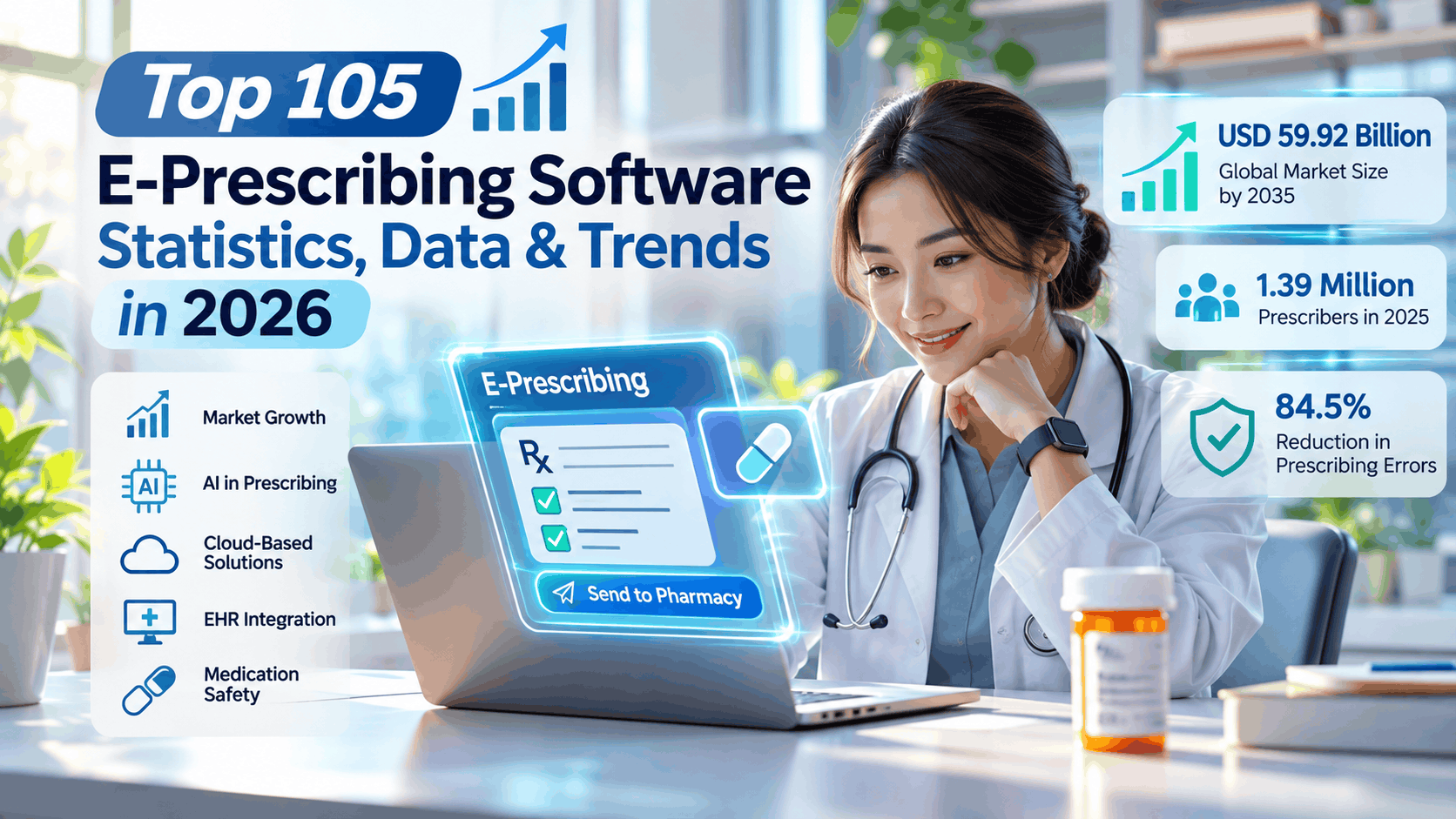
- Rapid E-Prescribing Software Market Growth: The global e-prescribing market is projected to reach USD 59.92 billion by 2035, growing at a CAGR of 25.92% from 2026 to 2035, driven by healthcare digitalization, EHR integration, and regulatory requirements.
- Increasing Adoption and Improved Patient Safety: In 2025, 1.39 million prescribers used the Surescripts network, while research demonstrated that e-prescribing implementation can reduce prescription errors by approximately 84.5%, improving medication safety and healthcare efficiency.
- AI, Cloud Technology, and EPCS Shape Future Trends: AI-powered clinical decision support, cloud-based e-prescribing software, telehealth integration, and electronic prescribing for controlled substances (EPCS) are transforming prescription management, regulatory compliance, and patient care in 2026.
E-prescribing software is transforming healthcare in 2026 through digital prescriptions, improved medication safety, and streamlined workflows. The global e-prescribing market is projected to reach USD 59.92 billion by 2035, growing at a 25.92% CAGR. Key trends include AI-powered prescribing, cloud-based platforms, EHR integration, electronic prescribing for controlled substances (EPCS), and automated medication management.
The global healthcare industry is undergoing a significant digital transformation, with e-prescribing software emerging as an essential technology for improving medication safety, streamlining prescription management, and enhancing patient care. As healthcare providers increasingly replace traditional paper prescriptions with electronic systems, the demand for secure, interoperable, and AI-powered prescribing solutions continues to accelerate worldwide.
Also, read our article on the Top 10 e-Prescribing Software To Try.

According to industry research, the global e-prescribing market is projected to grow from approximately USD 5.98 billion in 2025 to USD 59.92 billion by 2035, representing a compound annual growth rate (CAGR) of 25.92% between 2026 and 2035. Although market estimates vary across research providers, forecasts consistently indicate substantial growth driven by healthcare digitalization, regulatory requirements, electronic health record (EHR) integration, and increasing demand for medication management solutions.
The United States remains one of the most mature markets for electronic prescribing technology. In 2025, the Surescripts network processed approximately 30.5 billion healthcare intelligence transactions, while 1.39 million prescribers utilized electronic prescribing services. Furthermore, 84.4% of e-prescribers and 98.3% of pharmacies on the network were enabled for Electronic Prescribing for Controlled Substances (EPCS), highlighting the growing importance of secure digital prescription workflows and regulatory compliance.

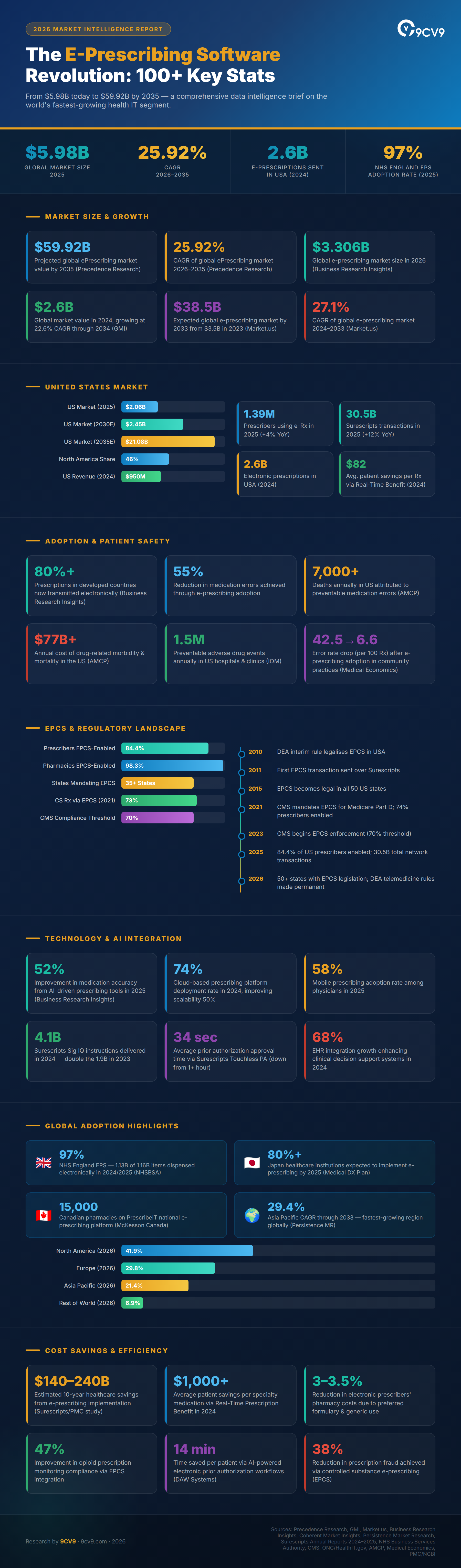
Beyond adoption rates, e-prescribing software is delivering measurable improvements in healthcare efficiency and patient safety. Research involving community-based medical practices found that prescribing error rates declined from 42.5 to 6.6 errors per 100 prescriptions following implementation, representing an approximately 84.5% reduction. Meanwhile, real-time prescription benefit technology helped patients identify more affordable medications, with reported average savings of USD 82 per prescription in 2024 and more than USD 1,000 for certain specialty medications.
Artificial intelligence, cloud computing, telehealth integration, and automated prior authorization are among the leading e-prescribing software trends shaping 2026. Cloud-based solutions are gaining market share as healthcare organizations prioritize scalability, interoperability, remote accessibility, and lower infrastructure maintenance requirements. AI-powered clinical decision support, drug interaction alerts, predictive analytics, and automated medication instructions are also expanding the capabilities of modern electronic prescribing platforms.
Geographically, North America continues to lead the global e-prescribing software market, while Europe and Asia Pacific are experiencing growing adoption supported by national digital healthcare initiatives. In England, approximately 97% of prescription items dispensed during 2024/2025 were processed through the NHS Electronic Prescription Service, demonstrating how digital prescribing infrastructure can operate at a national scale.
For healthcare providers, hospitals, pharmacies, health technology companies, software vendors, and investors, understanding the latest e-prescribing software statistics, market size, adoption rates, growth forecasts, and emerging technology trends is essential for making informed strategic decisions.
This comprehensive guide explores the top 105 e-prescribing software statistics, data, and trends in 2026, covering global market growth, electronic prescription adoption, EPCS compliance, medication error reduction, AI-powered prescribing, cloud-based solutions, regional developments, cost savings, and the future of digital prescription management. Together, these insights provide a data-driven overview of how electronic prescribing technology is transforming healthcare delivery and creating new opportunities across the global digital health ecosystem.
Before we venture further into this article, we would like to share who we are and what we do.
About 9cv9
9cv9 is a business tech startup based in Singapore and Asia, with a strong presence all over the world.
With over ten years of startup and business experience, and being highly involved in connecting with thousands of companies and startups, the 9cv9 team has listed some of the top and best companies/tools in this review.
If you like to get your company listed in our top B2B software reviews, check out our world-class 9cv9 Media and PR service and pricing plans here.
Top 105 E-Prescribing Software Statistics, Data & Trends in 2026
🌐 Global Market Size & Growth
- The global ePrescribing market is valued at USD 5.98 billion in 2025 and is projected to reach USD 59.92 billion by 2035, representing a massive leap in health IT investment that signals strong long-term tailwinds for software vendors.
- The global ePrescribing market is expected to grow at a CAGR of 25.92% from 2026 to 2035, making it one of the fastest-expanding digital health segments and a compelling opportunity for early-stage investors and SaaS providers.
- The global e-prescribing system market is estimated to be worth USD 3.306 billion in 2026, confirming that the sector has now crossed a multi-billion-dollar threshold and is no longer a niche healthcare IT category.
- The global e-prescribing market is projected to reach USD 37.87 billion by 2035 at a CAGR of 31.1% from 2026, with competing research firms converging on a consensus view of aggressive double-digit annual expansion.
- A separate estimate from Market.us places the global e-prescribing market at USD 38.5 billion by 2033, up from USD 3.5 billion in 2023, reflecting a 27.1% CAGR — reinforcing the consistency of bullish projections from multiple reputable research houses.
- Persistence Market Research estimates the global e-prescribing market at USD 6.0 billion in 2026 and USD 26.2 billion by 2033, growing at a 23.4% CAGR, a projection that underscores broad analyst consensus on sustained above-market growth.
- The Electronic Prescribing Software Market (standalone software segment) was valued at USD 1.35 billion in 2024 and is forecast to reach USD 3.85 billion by 2033, with a 12.5% CAGR specifically for the software licensing sub-segment.
- Coherent Market Insights estimates the e-prescribing market at USD 5.2 billion in 2026, projected to reach USD 20.0 billion by 2033 at an 18.6% CAGR, illustrating that even conservative research models anticipate a 4x market expansion this decade.
- Global Market Insights values the global e-prescribing market at USD 2.6 billion in 2024, forecast to grow at a 22.6% CAGR from 2025 to 2034, with the breadth of third-party validation lending credibility to the sustained growth thesis.
- The e-prescribing software market was estimated at USD 3,318.33 million in 2024 and is projected to surpass USD 34,575.89 million by 2033 at a CAGR of 29.4%, suggesting potential for a tenfold revenue increase within a decade.
🇺🇸 United States Market
- The U.S. ePrescribing market was valued at USD 2.06 billion in 2025 and is projected to reach USD 21.08 billion by 2035, growing at a CAGR of 26.18%, cementing North America’s position as the global epicenter of e-prescribing innovation.
- The U.S. e-prescribing market was valued at USD 758.57 million in 2024, expected to reach USD 2.45 billion by 2030 at a CAGR of 21.65%, showing that even the world’s most mature e-prescribing market still has substantial runway ahead.
- The U.S. e-prescribing market generated approximately USD 950.3 million in revenue in 2024, supported by regulatory measures including the HITECH Act and Meaningful Use incentives that have made digital prescribing a de facto standard of care.
- North America dominated the global ePrescribing market with a 46% share in 2025, a position reinforced by a superior regulatory infrastructure, high EHR penetration, and decades of investment in health IT interoperability.
- North America secured over 43.1% of the global e-prescribing market in 2023 with a valuation of USD 1.5 billion, confirming its market leadership even before the wave of AI-driven prescribing tools reached mass adoption.
- North America is set to lead the e-prescribing market with a 41.9% share in 2026, even as Asia Pacific and Latin America begin to close the gap through aggressive national digital health programmes.
- The U.S. e-prescribing market is projected to be worth around USD 2.6 billion by 2026, growing at a CAGR of 22.4% from 2019 — a trajectory that has largely been met or exceeded as regulatory tailwinds accelerated adoption post-COVID.
- In 2024, the U.S. led the North American e-prescribing market, generating a revenue of about USD 950.3 million, with the U.S. healthcare system’s regulatory framework serving as a primary accelerant for platform adoption across all care settings.
📈 Network & Prescription Volume
- Surescripts processed 30.5 billion total network transactions in 2025, a 12% increase from 2024, demonstrating that healthcare’s shift to digital intelligence exchange has achieved an irreversible and self-reinforcing momentum.
- In 2024, the Surescripts Network Alliance exchanged 27.2 billion total health intelligence transactions, a 14.2% year-over-year increase, encompassing e-prescriptions, prior authorizations, medication histories, and clinical direct messages.
- In 2024, Surescripts processed 2.6 billion electronic prescriptions, helping patients receive needed medications faster and more safely, with this volume representing the largest single-year throughput in the network’s history to that point.
- In 2025, 1.39 million prescribers used e-prescribing through Surescripts, a 4.0% increase from 2024, with virtually all U.S. pharmacies participating in the network — a near-universal footprint no paper-based system could replicate.
- At end-2023, 1.29 million prescribers were using e-prescribing via Surescripts, a nearly 5% increase from 2022, with the steady growth rate reflecting both regulatory mandates and genuine workflow improvement driving voluntary adoption.
- In 2024, 1.34 million prescribers used e-prescribing to process 2.6 billion prescriptions through Surescripts, demonstrating that physician uptake and volume growth are moving in parallel, reinforcing network efficiency at scale.
- Surescripts processed 2.5 billion electronic prescriptions in 2023, including 21 million for specialty medications — a 5% specialty increase from 2022 — signaling that e-prescribing is no longer confined to routine medications but is now critical for complex drug therapies.
- In 2024, Surescripts Real-Time Prescription Benefit was used more than 788 million times — a 23.5% increase from the prior year — giving prescribers and patients real-time visibility into medication costs and formulary alternatives.
- In 2025, 1.08 million healthcare professionals and organizations used Clinical Direct Messaging via Surescripts, an 11.8% increase from 2024, facilitating secure, HIPAA-compliant care coordination at an unprecedented national scale.
- Nearly 900,000 prescribers used Real-Time Prescription Benefit in 2024, saving patients an average of USD 82 per prescription and over USD 1,000 per specialty medication — concrete proof that e-prescribing reduces financial toxicity for patients.
- Surescripts delivered 4.1 billion Sig IQ structured medication instructions in 2024, double the 1.9 billion recorded in 2023, transforming free-text prescription directions into standardized machine-readable formats that reduce pharmacy dispensing errors.
- In 2025, 60% of Medication History for Ambulatory and Reconciliation responses were augmented by Surescripts Sig IQ, up from 52% in 2024, reflecting rapid uptake of structured clinical language that meaningfully improves downstream prescribing accuracy.
- Surescripts delivered 3.31 billion medication histories in 2024, helping reduce prescriber burden in managing medication lists and preventing adverse drug events across primary, specialty, and urgent care settings.
- Surescripts’ Touchless Prior Authorization reduced average approval time from over one hour to just 34 seconds in 2024, a 99%+ time savings that dramatically reduces prescription abandonment and improves patient access to needed therapies.
- 24.9% of retail pharmacy locations were enabled for RxTransfer by 2025, up from just 6% in 2024 — a four-fold increase in a single year that illustrates the speed at which interoperability infrastructure can scale when standards and incentives align.
- In 2021, 94% of all prescriptions filled in the United States were e-prescriptions, according to Surescripts data — a landmark achievement that effectively made electronic prescribing the default modality of medication dispensing in America.
🛡️ EPCS (Electronic Prescribing for Controlled Substances)
- In 2025, 84.4% of e-prescribers on the Surescripts network were enabled for EPCS, while 98.3% of pharmacies were EPCS-enabled — a near-universal pharmacy footprint that removes the logistical barrier for clinicians still transitioning from paper.
- Surescripts processed 256.9 million EPCS transactions in 2021, representing 73% of all prescribed controlled substances that year, demonstrating how quickly the technology was adopted once regulatory mandates kicked in.
- More than 35 U.S. states have enacted EPCS legislation as of 2025, covering approximately 75% of the U.S. population and creating a regulatory environment where electronic controlled-substance prescribing is quickly becoming a universal expectation.
- CMS mandates that prescribers electronically prescribe at least 70% of their qualifying Schedule II–V controlled substance prescriptions under Medicare Part D, a threshold that has forced even resistant prescribers to adopt EPCS-capable platforms.
- As of 2026, EPCS is legally permitted in all 50 U.S. states, having become nationwide in 2015, yet 16% of prescribers remain non-enabled — underscoring that technology availability and technology utilization are still not synonymous.
- A 27% decrease in overdose deaths was recorded in 2024, with some states experiencing declines of 35% or more, partly attributed to wider EPCS adoption that curbs prescription fraud, doctor-shopping, and opioid diversion at the point of prescribing.
- Pharmacies have shown stronger EPCS adoption than prescribers, with only 2% of pharmacies still without EPCS enablement in 2026 — a disparity that points to prescriber-side inertia as the primary barrier to achieving full controlled-substance e-prescribing.
- In 2023, over 72% of healthcare providers adopted controlled substance e-prescribing systems, achieving a 38% reduction in prescription fraud according to Business Research Insights analysis.
🏥 Adoption & Clinical Outcomes
- Over 2.3 million prescribers globally were using e-prescribing platforms as of 2025, representing a critical mass of adoption that is now creating self-reinforcing network effects across pharmacy, payer, and provider ecosystems.
- More than 80% of prescriptions in developed healthcare systems are now transmitted electronically, reducing medication errors by nearly 55% — a patient safety transformation that would have been considered aspirational just a decade ago.
- Over 95% of U.S. pharmacies are enabled for e-prescriptions, creating a nearly frictionless infrastructure for digital prescription transmission that is unmatched anywhere else in the world.
- Approximately 92% of physicians actively use e-prescribing platforms in the U.S., reflecting near-saturation in primary adoption while the growth frontier has shifted to clinical decision support and AI-enhanced prescribing features.
- Integrated EHR or hospital information systems account for 72.34% of e-prescribing usage in 2024, underscoring that embedded point-of-care workflows — rather than standalone tools — are the dominant deployment model for sustainable adoption.
- One study of 12 community-based practices found that error rates dropped from 42.5 to 6.6 per 100 prescriptions one year after e-prescribing adoption, achieving an 84.5% error rate reduction that directly translates to patient safety gains and liability risk reduction.
- Error rates for e-prescribing adopters decreased 1.5-fold from 26.0 errors per 100 prescriptions at baseline to 16.0 errors per 100 prescriptions at one year, compared to no improvement for non-adopters who remained at 37.3 errors per 100 prescriptions.
- Medication errors are estimated to cause approximately 7,000–9,000 deaths and over USD 40 billion in costs in the United States annually, providing a powerful economic and ethical rationale for accelerating e-prescribing adoption across all care settings.
- More than 75% of medication errors occur during the prescribing or administration stage, making e-prescribing’s point-of-care intervention the highest-impact stage for automated clinical decision support to prevent harm.
- At least 1.5 million preventable adverse drug events occur each year in U.S. hospitals, nursing homes, and ambulatory care settings, according to the Institute of Medicine — a burden that e-prescribing with integrated drug interaction alerts is uniquely positioned to address.
- Surescripts estimates that 84% of prescriptions written are ultimately filled, suggesting that electronic prescribing’s streamlined workflow and cost transparency tools are contributing to meaningful improvements in patient adherence compared to historical paper benchmarks.
- An analysis of Surescripts data estimated USD 140 to USD 240 billion in savings and improved health outcomes through improved medication adherence over a 10-year period following e-prescribing implementation — a returns profile that dwarfs the cost of any digital transformation investment.
☁️ Technology, Cloud & AI
- Cloud-based e-prescribing platforms reached 74% deployment penetration in 2024, improving system scalability by 50% and enabling real-time data exchange across distributed care networks that would be impossible with on-premise architectures.
- AI-driven prescribing tools enhanced medication accuracy by 52% across clinical settings in 2025, with vendors like Epic embedding over 100 AI-based prescription management features for interaction screening and optimal dosing suggestions.
- Mobile prescribing adoption increased to 58% among physicians in 2025, supporting remote healthcare services and enabling clinicians to prescribe from bedside, clinic, home, or rural outreach settings without any degradation in clinical decision support.
- Interoperability upgrades improved data exchange across 65% of healthcare networks in 2024, with the remaining integration gaps representing a clear market opportunity for middleware vendors and health information exchange platforms.
- Web and cloud-based solutions held a 69.4% share of the e-prescribing deployment market in 2024, reflecting healthcare’s broader preference for SaaS architectures that eliminate IT maintenance burdens and reduce total cost of ownership.
- By 2026, the web/cloud-based e-prescribing segment contributes more than 58% of global ePrescribing revenue, with cloud adoption acting as the technical foundation for AI, mobile, and real-time benefit features that are reshaping clinical workflows.
- AI-driven drug interaction alerts, predictive analytics for adherence risk, and natural language processing for free-text medication orders are now embedded in over 50% of leading e-prescribing platforms, transforming the prescription pad from a documentation tool into a clinical intelligence interface.
- In 2025, Surescripts partnered with CLEAR to implement an IAL2 identity framework for EPCS prescribers, reflecting the rising security demands of controlled-substance prescribing and the industry’s shift toward biometric-level authentication standards.
- DAW Systems’ AI-powered electronic prior authorization workflows save approximately 14 minutes per patient, a time savings that translates to substantial cumulative efficiency gains across high-volume practices and health systems.
- Epic Systems has embedded more than 100 AI-based prescription management features into its e-prescribing workflows, setting a new industry benchmark for the integration depth achievable when clinical intelligence and prescribing are unified on a single platform.
- Adoption of EPCS controlled substance e-prescribing increased by 72% across the U.S. between 2020 and 2023, directly reducing prescription fraud by 38% — a law enforcement and patient safety win that has been cited in congressional testimony on opioid policy.
🌍 Regional & Global Trends
- Europe is projected to account for 29.8% of the global e-prescribing market by 2026, driven by coordinated national digital medicine programmes, the epSOS cross-border framework, and NHS England’s goal of fully eliminating paper prescriptions.
- In England’s NHS, 97% of all 1.16 billion prescription items dispensed in 2024/2025 were processed via the Electronic Prescription Service — 1.13 billion items — representing the most comprehensive national e-prescribing deployment anywhere in the world.
- 99.2% of NHS community pharmacy contractors in England dispensed at least one item through EPS in 2024/2025, a near-universal pharmacy-side adoption rate that few other healthcare systems have achieved outside of Scandinavia.
- Wales launched a nationwide electronic prescription service in January 2024 that eliminated 40 million paper prescription forms annually, enabling secure, real-time GP-to-pharmacy transmission across the entire country.
- The NHS Long Term Plan allocated USD 98.7 million over three years to accelerate e-prescribing implementation across NHS hospitals, with the January 2025 Medicines Data workstream beginning weekly ePMA data collection from all NHS hospitals.
- In July 2025, Better and Speeds Healthcare agreed to deploy the Better Meds ePMA system across 55 UK mental health sites, transitioning paper-based workflows to electronic prescribing with integrated clinical decision support.
- NHS England projects that half of all NHS hospital trusts could be using the Electronic Prescription Service by 2026, as the secondary care rollout accelerates with FHIR-compliant systems from multiple IT suppliers.
- Asia Pacific is expected to grow at a CAGR of 29.4% through 2033, the fastest-growing region globally, driven by Japan’s Medical Digital Transformation Promotion Plan, China’s three-medical linkage reforms, and India’s expanding digital health infrastructure.
- Japan expects over 80% of healthcare institutions to implement e-prescribing systems by 2025, with the government’s Medical DX initiative linking prescriptions to the My Number national ID card system for seamless cross-provider continuity.
- McKesson Canada deployed the national PrescribeIT e-prescribing platform across 15,000 pharmacies, improving interoperability and secure prescription exchange nationwide — a model that other countries with fragmented pharmacy networks are studying.
- Canada has a compelling urgency driver for e-prescribing adoption: two-thirds of adults over 65 use five or more medications, with medication errors causing 1 in 143 hospitalizations and costing CAD 140 million annually.
- The Asia Pacific e-prescribing market is projected to grow at a CAGR of 25.45% through 2030, with Japan and China driving volume while Southeast Asian markets including India, Indonesia, and Vietnam begin their digital prescription transitions.
- England records 237 million medication errors annually at various stages of the medication process, according to the British Medical Journal — a crisis-level figure that drives UK policymakers’ urgency to complete the transition from paper to electronic prescribing across all settings.
💊 Market Segmentation
- The software product segment dominated the e-prescribing market with a 58.80% share in 2026, as the core licensing demand for prescribing platforms remains the primary revenue driver for vendors across hospital, ambulatory, and specialty care settings.
- The solutions segment (software + hardware) accounted for 68.9% of the global e-prescribing market in 2024, with the rising demand for medication management and error reduction as primary growth engines for platform licensing revenues.
- The services segment is projected to grow at a 26.45% CAGR — the fastest of any segment — as healthcare organizations increasingly require implementation support, regulatory guidance, staff training, and continuous optimization partnerships.
- Hospitals dominate the e-prescribing end-user market with a 47.4% share in 2026, given their high prescription volumes, complex multi-drug regimens, and regulatory obligations that make automated prescribing not just beneficial but operationally essential.
- Integrated EHR or HIS e-prescribing solutions held 72.34% of the total market in 2024, while mobile-first standalone apps are growing at a 26.56% CAGR — the fastest growth vector — targeting outreach clinics, pop-up care, and rural health settings.
- The controlled substances (EPCS) segment is the largest prescription category at 38.54% of the e-prescribing market in 2024, driven by federal mandates and the opioid crisis response that has made secure electronic prescribing of narcotics a legal and clinical imperative.
- Specialty drug e-prescribing is growing fastest at a 25.67% CAGR within prescription categories, reflecting the explosive pipeline of high-cost biologics, oncology agents, and GLP-1 agonists that require sophisticated benefit verification and prior authorization workflows.
- GLP-1 agonist prescriptions showed continued growth in nearly all U.S. states and Puerto Rico in 2025 data tracked by Surescripts, with only Oklahoma and West Virginia registering declines — evidence that e-prescribing networks are central infrastructure for managing America’s obesity and diabetes pharmacotherapy revolution.
🔒 Security, Fraud & Compliance
- The DEA requires biometric authentication with a false match rate below 0.001 for EPCS, representing one of the most rigorous identity standards in commercial healthcare and elevating the security requirements for all EPCS-certified software vendors.
- The Medicare Prescription Drug Program paid pharmacies USD 25 million for Schedule II drugs billed as refills in 2009 — illegal under Medicare — a fraud pattern that electronic prescribing with real-time monitoring can detect and block in near real-time.
- Prescription fraud reduction of 38% has been directly attributed to EPCS adoption, as electronic systems give prescribers, pharmacies, payers, and government agencies the ability to detect abuse patterns that are virtually undetectable in paper-based prescription systems.
- 35 states mandate EPCS as of 2025, representing 75% of the U.S. population — a legislative coverage that creates a strong compliance tailwind for e-prescribing software vendors with EPCS-certified products.
- Controlled substances comprise 12% of all prescriptions made each year in the U.S., yet represent a disproportionately high share of fraud, diversion, and abuse risk — making EPCS technology essential infrastructure for the nation’s ongoing opioid response strategy.
💰 Cost Savings & Efficiency
- Electronic prescribers’ pharmacy costs decreased by 3–3.5% through increased use of preferred formulary brands and generics in highly managed markets, demonstrating that e-prescribing delivers tangible procurement savings as well as clinical quality improvements.
- Real-time prescription benefit tools save patients an average of USD 37 per prescription when used to identify a lower-cost medication alternative, with this savings jumping to USD 82 per prescription in 2024 — more than doubling in a single year.
- Specialty medication savings via real-time prescription benefit averaged over USD 1,000 per prescription in 2024, a figure that fundamentally changes the patient financial burden calculation for biologic therapies and other high-cost specialty drugs.
- Each hospitalization due to an adverse drug event costs approximately USD 9,000, each emergency room visit USD 427, and each ambulatory care visit USD 111 — cost savings that flow directly to patients, payers, and health systems when e-prescribing prevents even a fraction of the 1.5 million annual U.S. adverse drug events.
- One in four patients abandons a prescription because it was too expensive, according to a Harris Poll survey conducted on behalf of Surescripts, confirming that prescription cost transparency tools embedded in e-prescribing platforms are a critical patient adherence intervention.
- Opioid prescription monitoring compliance improved by 47% through the integration of EPCS with Prescription Drug Monitoring Programs (PDMPs), with 87% of office-based physicians who checked their state’s PDMP reporting associated clinical benefits such as reducing or eliminating inappropriate controlled-substance prescriptions.
- Electronic prior authorization processing increased by 49% in 2023, as e-prescribing platforms automated a workflow that had historically consumed hours of staff time per patient and was a leading driver of prescription abandonment and treatment delays.
📱 Telehealth & Emerging Trends
- Telehealth integration supports over 45% of remote consultations that require digital prescription transmission, with the DEA’s January 2025 permanent extension of telemedicine prescribing flexibilities cementing e-prescribing as the backbone of virtual care medication management.
- The weekly volume of e-prescriptions written via telehealth platforms peaked the week of March 29, 2020, at a 72.5% increase from the week of February 23, 2020 — a COVID-era surge that permanently shifted prescribers’ and patients’ expectations toward digital-first prescribing.
- 92% of patients now value prescription-delivery integration when choosing a telehealth platform, according to 2026 telemedicine market analysis — a consumer preference that is compelling every digital health provider to prioritize embedded e-prescribing functionality.
- Telepharmacy, valued at USD 3.7 billion in the U.S. in 2024 and projected to more than double by 2032, is emerging as a critical access solution for the millions of Americans living in pharmacy deserts, with e-prescribing as the technical foundation enabling remote medication dispensing.
- The number of prescribers utilizing e-prescribing increased more than 6% in 2020, driven largely by the COVID-19 pandemic’s acceleration of telehealth adoption, with all specialties increasing their EPCS utilization by at least 10 percentage points during that year alone.
- Pain management specialists saw the largest single-year EPCS utilization increase — a jump of 17 percentage points in 2020 — reflecting both regulatory pressure and the clinical imperative to maintain opioid prescribing oversight during a period of disrupted in-person care.
- Pharmacist-initiated e-prescribing jumped nearly 29% in 2023, the fastest-growing prescriber category on the Surescripts network, as states expand pharmacist prescribing authority and care models evolve to leverage the full scope of pharmacist clinical expertise.
Conclusion
The top 105 e-prescribing software statistics, data, and trends in 2026 highlight the growing importance of electronic prescribing technology in transforming healthcare delivery, improving medication safety, reducing administrative burdens, and enhancing patient outcomes. As healthcare organizations worldwide accelerate their digital transformation initiatives, e-prescribing software is evolving from a convenient alternative to paper prescriptions into an essential component of modern healthcare infrastructure.
With the global e-prescribing market projected to reach USD 59.92 billion by 2035, growing at a compound annual growth rate (CAGR) of 25.92% from 2026 to 2035, the industry presents substantial opportunities for healthcare technology providers, software developers, hospitals, pharmacies, and investors. Although market forecasts differ across research organizations, the overall outlook indicates sustained growth supported by regulatory mandates, expanding electronic health record (EHR) adoption, and increasing demand for integrated medication management systems.
The United States continues to demonstrate the scale and maturity of electronic prescribing adoption. In 2025, the Surescripts network processed approximately 30.5 billion healthcare intelligence transactions, while 1.39 million prescribers utilized its electronic prescribing services. Additionally, 84.4% of e-prescribers and 98.3% of pharmacies on the network were enabled for Electronic Prescribing for Controlled Substances (EPCS), reflecting the increasing emphasis on prescription security, regulatory compliance, and fraud prevention.
Beyond market expansion, the benefits of e-prescribing software extend directly to healthcare quality and operational efficiency. Research involving community-based medical practices demonstrated an approximately 84.5% reduction in prescribing errors following electronic prescribing implementation. Meanwhile, real-time prescription benefit solutions helped patients achieve average medication savings of USD 82 per prescription in 2024, illustrating the potential of digital prescribing technology to improve medication affordability and accessibility.
Looking ahead, artificial intelligence, cloud-based e-prescribing platforms, telehealth integration, automated prior authorization, and advanced clinical decision support systems are expected to shape the next phase of industry innovation. These technologies can help healthcare professionals identify potential drug interactions, optimize prescribing workflows, improve medication adherence, and support more informed clinical decisions. At the same time, growing interoperability requirements and stricter data security standards will continue influencing software development and purchasing decisions.
Regional developments also demonstrate the expanding global reach of electronic prescribing technology. While North America maintains its leadership position, Europe and Asia Pacific are becoming increasingly important markets. National digital healthcare initiatives, investments in electronic prescription infrastructure, and broader adoption of interoperable healthcare systems are creating new opportunities for e-prescribing software providers across developed and emerging economies.
However, challenges remain. Healthcare organizations must address implementation costs, integration complexity, cybersecurity risks, regulatory differences, clinician training requirements, and the need for reliable data exchange between healthcare providers, pharmacies, and insurers. Successfully overcoming these barriers will be essential for achieving the full clinical and economic benefits of electronic prescribing systems.
Ultimately, the e-prescribing software statistics and trends for 2026 demonstrate that the future of prescription management will be increasingly digital, connected, intelligent, and patient-centered. Healthcare organizations that invest in secure, scalable, and interoperable e-prescribing solutions will be better positioned to improve operational efficiency, support medication safety, enhance patient experiences, and adapt to evolving healthcare regulations.
As the global digital health industry continues to expand, e-prescribing software will remain a critical driver of healthcare innovation, helping create a more efficient, accessible, and data-driven medication management ecosystem in 2026 and beyond.
If you find this article useful, why not share it with your hiring manager and C-level suite friends and also leave a nice comment below?
We, at the 9cv9 Research Team, strive to bring the latest and most meaningful data, guides, and statistics to your doorstep.
To get access to top-quality guides, click over to 9cv9 Blog.
To hire top talents using our modern AI-powered recruitment agency, find out more at 9cv9 Modern AI-Powered Recruitment Agency.
People Also Ask
What is e-prescribing software?
E-prescribing software is a digital healthcare solution that enables medical professionals to create, manage, and electronically transmit prescriptions to pharmacies, improving medication safety, accuracy, and workflow efficiency.
How big is the global e-prescribing software market in 2026?
Global e-prescribing market estimates for 2026 range from approximately USD 3.3 billion to USD 6 billion, depending on the research provider and market definition.
What is the projected growth rate of the e-prescribing software market?
One industry forecast projects the global e-prescribing market to grow at a compound annual growth rate (CAGR) of 25.92% from 2026 to 2035, reaching approximately USD 59.92 billion.
What are the biggest e-prescribing software trends in 2026?
Major trends include AI-powered prescribing, cloud-based platforms, EHR integration, electronic prescribing for controlled substances (EPCS), automated prior authorization, telehealth integration, and real-time medication cost transparency.
How many healthcare providers use e-prescribing software?
In 2025, approximately 1.39 million prescribers used electronic prescribing through the Surescripts network in the United States, representing a 4% increase from 2024.
What percentage of prescriptions are electronic in the United States?
According to Surescripts data, approximately 94% of prescriptions filled in the United States were electronic prescriptions in 2021, demonstrating widespread adoption of digital prescribing technology.
What are the main benefits of e-prescribing software?
E-prescribing software improves prescription accuracy, reduces medication errors, streamlines clinical workflows, enhances patient safety, supports regulatory compliance, and enables faster communication between healthcare providers and pharmacies.
How does e-prescribing software reduce medication errors?
E-prescribing software minimizes handwriting errors, standardizes prescription information, and supports automated drug interaction alerts. One study reported an 84.5% reduction in prescribing errors after implementation.
What is Electronic Prescribing for Controlled Substances (EPCS)?
EPCS enables authorized healthcare professionals to electronically prescribe controlled medications through secure systems that support identity verification, authentication, regulatory compliance, and prescription tracking.
What percentage of pharmacies support EPCS in 2026?
Surescripts reported that 98.3% of pharmacies on its network were EPCS-enabled in 2025, demonstrating near-universal pharmacy readiness for electronic controlled-substance prescriptions.
How does artificial intelligence improve e-prescribing software?
AI-powered e-prescribing tools support drug interaction screening, dosage recommendations, medication history analysis, adherence predictions, and automated prescription workflows, helping clinicians make more informed prescribing decisions.
What role does cloud computing play in e-prescribing software?
Cloud-based e-prescribing platforms enable remote access, scalable infrastructure, real-time data exchange, and easier software maintenance. Web and cloud solutions represented 69.4% of the deployment market in 2024.
Which region dominates the global e-prescribing software market?
North America leads the global e-prescribing market, with an estimated 41.9% market share in 2026, supported by established healthcare IT infrastructure, regulatory requirements, and widespread EHR adoption.
How fast is the Asia Pacific e-prescribing market growing?
Asia Pacific is projected to experience a CAGR of approximately 29.4% through 2033, driven by healthcare digitalization initiatives, expanding medical infrastructure, and increasing electronic prescription adoption.
How widely is e-prescribing software used in Europe?
Electronic prescribing is widely adopted across several European healthcare systems. In England, approximately 97% of prescription items dispensed during 2024/2025 were processed through the NHS Electronic Prescription Service.
What is the relationship between e-prescribing software and EHR systems?
E-prescribing software integrates with electronic health record systems to provide access to medication histories, patient information, clinical decision support, and prescription management within existing healthcare workflows.
How much money can patients save using e-prescribing software?
Surescripts reported average patient savings of USD 82 per prescription through real-time prescription benefit tools in 2024, with savings exceeding USD 1,000 for certain specialty medications.
How does e-prescribing software improve patient safety?
E-prescribing software improves patient safety through accurate prescription transmission, medication history access, automated drug interaction checks, standardized instructions, and reduced risks associated with manual prescribing.
What percentage of hospitals use e-prescribing software?
The source data identifies hospitals as the largest e-prescribing end-user segment, accounting for an estimated 47.4% market share in 2026. This represents market share rather than the percentage of hospitals using the technology.
How does e-prescribing software support telehealth services?
E-prescribing software enables healthcare professionals to electronically transmit prescriptions during virtual consultations, supporting remote medication management, faster pharmacy communication, and convenient patient access to prescribed treatments.
What is the role of electronic prior authorization in e-prescribing?
Electronic prior authorization automates medication approval requests between healthcare providers and insurers. Surescripts reported reducing average approval times from over one hour to 34 seconds through its touchless solution in 2024.
How many electronic prescriptions are processed annually?
The Surescripts network processed approximately 2.6 billion electronic prescriptions in 2024, highlighting the extensive scale of digital prescription management in the United States.
What are the main challenges facing e-prescribing software adoption?
Major challenges include implementation costs, EHR integration complexity, cybersecurity risks, regulatory compliance, clinician training, interoperability limitations, and resistance to changing established prescribing workflows.
How does e-prescribing software help prevent prescription fraud?
E-prescribing software supports identity authentication, secure prescription transmission, electronic audit trails, and controlled-substance monitoring, making unauthorized prescription changes and fraudulent activities easier to detect.
What is the difference between e-prescribing software and pharmacy management software?
E-prescribing software primarily enables healthcare providers to create and transmit electronic prescriptions. Pharmacy management software supports dispensing, inventory control, billing, patient records, and pharmacy operations.
How does e-prescribing software improve medication adherence?
E-prescribing software supports medication adherence through faster prescription transmission, medication history access, cost transparency, and reduced administrative delays that might otherwise prevent patients from obtaining prescribed treatments.
What is the market share of cloud-based e-prescribing software?
Web and cloud-based e-prescribing solutions accounted for approximately 69.4% of the deployment market in 2024. By 2026, cloud-based solutions were estimated to generate more than 58% of global e-prescribing revenue.
Why is interoperability important for e-prescribing software?
Interoperability enables healthcare providers, pharmacies, insurers, and electronic health record systems to exchange prescription information securely, reducing duplicated work, improving medication accuracy, and supporting coordinated patient care.
What industries and organizations benefit most from e-prescribing software?
Hospitals, outpatient clinics, physician practices, pharmacies, telehealth providers, specialty healthcare organizations, and integrated health systems benefit from electronic prescribing through improved efficiency, compliance, and medication management.
What is the future of e-prescribing software beyond 2026?
The future of e-prescribing software will increasingly involve AI-powered clinical decision support, cloud infrastructure, automated prior authorization, advanced interoperability, secure controlled-substance prescribing, and integrated digital healthcare services.
Sources
Precedence Research
Verified Market Reports
Business Research Insights
Market.us
Mordor Intelligence
GII Research
Market Growth Reports
The Business Research Company
Allied Market Research
Coherent Market Insights
Persistence Market Research
Global Market Insights
Arizton
GlobeNewswire
Research and Markets
Surescripts
Business Wire
RXNT
Centers for Medicare & Medicaid Services (CMS)
Office of the National Coordinator for Health Information Technology (ONC)
HealthIT.gov
Fierce Healthcare
Medical Economics
Academy of Managed Care Pharmacy (AMCP)
PubMed Central (PMC)
National Center for Biotechnology Information (NCBI)
NHS Business Services Authority
The Pharmaceutical Journal
NHS England
Digital Health
Cognitive Market Research
Webinar Care
Doceree
Statista


