


























Key Takeaways
- The global Data Loss Prevention (DLP) software market is experiencing rapid double-digit growth, driven by rising cyber threats, stricter data privacy regulations, accelerating cloud adoption, and expanding enterprise investment in AI-powered security solutions.
- Artificial intelligence, cloud computing, insider threats, and hybrid work are reshaping the DLP landscape, making intelligent, cloud-native, and AI-aware data protection platforms essential for safeguarding sensitive business information in 2026.
- This comprehensive collection of 105 Data Loss Prevention software statistics explores market size, regional growth, breach costs, compliance trends, industry adoption, vendor developments, and future forecasts to help businesses understand the evolving DLP ecosystem.
Data Loss Prevention (DLP) software helps organizations protect sensitive data by detecting, monitoring, and preventing unauthorized access, sharing, or leakage across endpoints, networks, cloud platforms, and AI tools. As cyber threats, regulatory requirements, and cloud adoption accelerate in 2026, businesses increasingly invest in DLP solutions to reduce breach risks, strengthen compliance, and safeguard critical information.
As organizations continue their rapid digital transformation, protecting sensitive data has become one of the most critical priorities for businesses of every size. The proliferation of cloud computing, remote work, artificial intelligence, Software-as-a-Service (SaaS) applications, and increasingly sophisticated cyber threats has fundamentally reshaped how enterprises manage, store, and secure their most valuable digital assets. In this evolving cybersecurity landscape, Data Loss Prevention (DLP) software has emerged as an essential technology for preventing unauthorized access, accidental data leaks, insider threats, regulatory violations, and intellectual property theft.
Also, read our article on the Top 11 Data Loss Prevention (DLP) Software.

The global volume of digital data continues to grow at an unprecedented pace, with cloud platforms expected to store around 100 zettabytes of information—nearly half of all worldwide data. As organizations migrate critical workloads to public and hybrid cloud environments while embracing AI-powered productivity tools, the attack surface for sensitive information has expanded dramatically. Traditional perimeter-based security strategies are no longer sufficient to safeguard confidential business information, customer personally identifiable information (PII), financial records, healthcare data, source code, trade secrets, and regulated content. Modern DLP solutions now play a central role in monitoring, classifying, detecting, and preventing unauthorized movement of sensitive information across endpoints, cloud services, email, collaboration platforms, networks, and storage environments.
The business case for investing in Data Loss Prevention technology has never been stronger. According to the statistics compiled in this report, the average global cost of a data breach remains in the millions of dollars, while organizations in the United States continue to experience the world’s highest breach costs, exceeding USD 10 million per incident. Healthcare, financial services, government, and technology companies remain among the most heavily targeted sectors due to the immense value of the sensitive information they manage. Faster breach detection, AI-powered automation, and comprehensive DLP implementations are increasingly demonstrating measurable financial returns by significantly reducing breach lifecycles, minimizing regulatory penalties, and lowering overall incident costs. These findings reinforce why DLP has evolved from being merely a compliance requirement into a strategic business investment.
At the same time, regulatory pressure continues to intensify across virtually every region of the world. Governments are introducing stricter data privacy laws, expanding cybersecurity reporting obligations, and increasing financial penalties for organizations that fail to adequately protect customer information. Regulations such as the General Data Protection Regulation (GDPR), California Consumer Privacy Act (CCPA), HIPAA, PCI DSS, and emerging data sovereignty mandates require organizations to implement robust controls over how sensitive information is accessed, transferred, processed, and stored. Consequently, Data Loss Prevention platforms have become indispensable tools for automating compliance, maintaining audit trails, enforcing security policies, and reducing legal and financial risks associated with regulatory non-compliance.
One of the defining trends shaping the DLP industry in 2026 is the explosive growth of artificial intelligence. While AI technologies are enabling organizations to automate workflows, improve employee productivity, and accelerate innovation, they are simultaneously introducing entirely new categories of data exposure. Employees are increasingly sharing confidential corporate information with generative AI tools, AI copilots, and large language models, often without realizing the security implications. Research highlighted throughout this collection of statistics shows that a significant proportion of data entered into AI applications contains sensitive business information, customer records, or proprietary intellectual property. As a result, modern DLP vendors are rapidly expanding their capabilities to monitor AI usage, classify sensitive prompts, prevent unauthorized data sharing, and provide governance frameworks specifically designed for generative AI environments.
Another major trend transforming the DLP market is the rapid migration toward cloud-native security architectures. While traditional on-premises deployments continue to serve highly regulated industries, cloud-delivered DLP platforms have become the fastest-growing segment of the market. Organizations increasingly require consistent data protection policies across Microsoft 365, Google Workspace, AWS, Azure, Google Cloud Platform, Salesforce, Slack, Notion, and countless other SaaS platforms. Cloud-native DLP solutions provide the scalability, centralized visibility, and real-time policy enforcement necessary to secure data regardless of where employees work or where information resides. This shift reflects broader enterprise adoption of hybrid work models, distributed workforces, and multi-cloud infrastructure strategies that demand flexible, integrated security solutions rather than isolated point products.
The Data Loss Prevention market itself is experiencing remarkable expansion, making it one of the fastest-growing sectors within enterprise cybersecurity. Multiple industry analysts forecast sustained double-digit compound annual growth rates extending well into the next decade, driven by rising cybercrime, increasing compliance obligations, cloud adoption, AI-related risks, and growing awareness of insider threats. Although market size estimates vary among research firms due to differing methodologies and market definitions, there is broad consensus that DLP software represents one of the most rapidly expanding enterprise software categories. Organizations across banking, healthcare, manufacturing, government, retail, telecommunications, education, and professional services are all increasing investments in advanced DLP technologies to safeguard increasingly valuable digital assets.
Human behavior also remains one of the most significant contributors to data breaches. Whether through phishing attacks, accidental file sharing, credential theft, misconfigured cloud storage, malicious insiders, or unauthorized use of personal devices, employees continue to represent both the strongest and weakest link in enterprise cybersecurity. Modern DLP platforms are therefore evolving beyond simple policy enforcement to incorporate behavioral analytics, user risk scoring, adaptive access controls, contextual decision-making, and real-time coaching that helps employees avoid inadvertently exposing sensitive information. These intelligent capabilities enable organizations to balance strong security with employee productivity, reducing friction while maintaining comprehensive protection.
The competitive landscape is also evolving rapidly as major cybersecurity vendors integrate DLP capabilities into broader security ecosystems. Industry leaders are expanding beyond traditional endpoint, email, and network monitoring by combining Data Loss Prevention with Cloud Security Posture Management (CSPM), Data Security Posture Management (DSPM), Security Service Edge (SSE), Extended Detection and Response (XDR), Privileged Access Management (PAM), Identity and Access Management (IAM), and Security Information and Event Management (SIEM) platforms. Recent mergers, acquisitions, and strategic partnerships illustrate a clear industry movement toward unified cybersecurity platforms capable of protecting sensitive information across increasingly complex enterprise environments.
This comprehensive collection of the Top 105 Data Loss Prevention Software Statistics, Data & Trends in 2026 brings together the latest market intelligence, industry forecasts, adoption metrics, AI developments, cloud security trends, regulatory insights, breach cost data, vendor landscape analysis, and enterprise adoption patterns shaping the future of DLP. These carefully curated statistics provide valuable insights for CISOs, security architects, IT leaders, compliance officers, cybersecurity professionals, technology investors, software vendors, researchers, business executives, and decision-makers seeking to understand the rapidly changing data protection landscape.
Whether you are evaluating enterprise DLP solutions, planning cybersecurity investments, benchmarking industry adoption, assessing compliance strategies, researching market opportunities, or simply staying informed about the latest developments in data security, the statistics presented throughout this report offer a comprehensive, data-driven overview of one of the fastest-growing and most strategically important segments of the global cybersecurity industry. From market size projections and regional growth patterns to AI governance, cloud security, insider threats, compliance requirements, and emerging technology innovations, these insights reveal how Data Loss Prevention software is becoming a foundational pillar of modern enterprise security strategies in 2026 and beyond.
Before we venture further into this article, we would like to share who we are and what we do.
About 9cv9
9cv9 is a business tech startup based in Singapore and Asia, with a strong presence all over the world.
With over ten years of startup and business experience, and being highly involved in connecting with thousands of companies and startups, the 9cv9 team has listed some important and crucial software tools in this review.
If you like to get your company listed in our top B2B software reviews, check out our world-class 9cv9 Media and PR service and pricing plans here.
Top 105 Data Loss Prevention Software Statistics, Data & Trends in 2026
🏦 Market Size & Growth
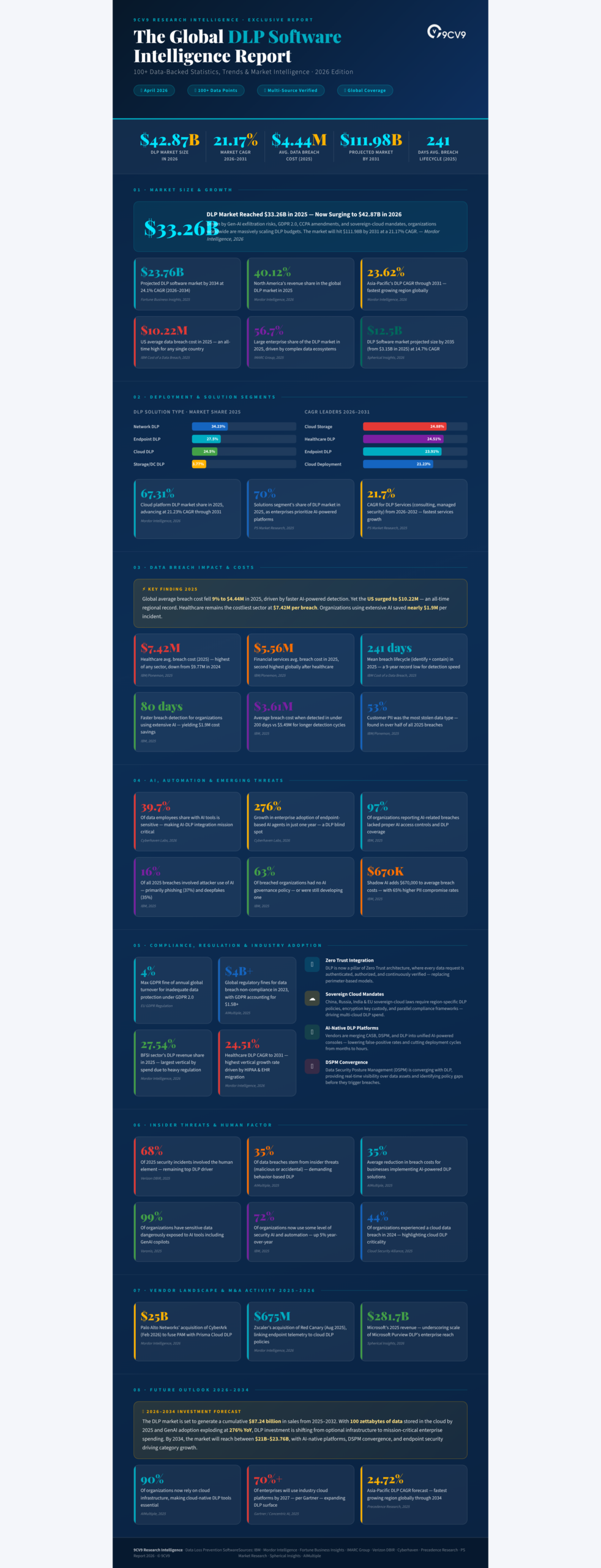
- The global DLP market expanded from USD $33.26 billion in 2025 to USD $42.87 billion in 2026. This explosive leap signals that organizations worldwide are treating data protection no longer as an IT checkbox, but as a board-level financial imperative.
- The DLP market is projected to reach USD $111.98 billion by 2031, growing at a 21.17% CAGR from 2026–2031. With this trajectory, DLP is one of the fastest-scaling segments across the entire cybersecurity software landscape.
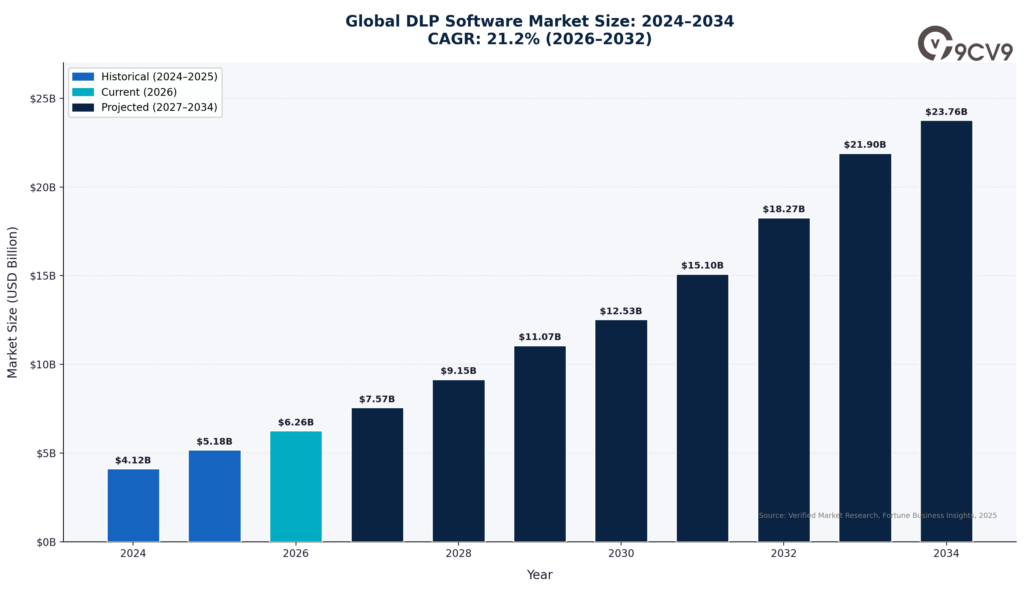
- Fortune Business Insights estimates the global DLP market at USD $3.40 billion in 2025, reaching $23.76 billion by 2034 at a 24.1% CAGR. Multiple analyst firms confirm the same structural growth story: DLP investment is compounding at more than double the rate of overall IT spending.
- IMARC Group values the DLP market at USD $3.1 billion in 2025, forecasting $13.8 billion by 2034 at an 18.10% CAGR. Even the most conservative analyst models show the market nearly quintupling within a decade — a testament to the permanence of data risk as a business concern.
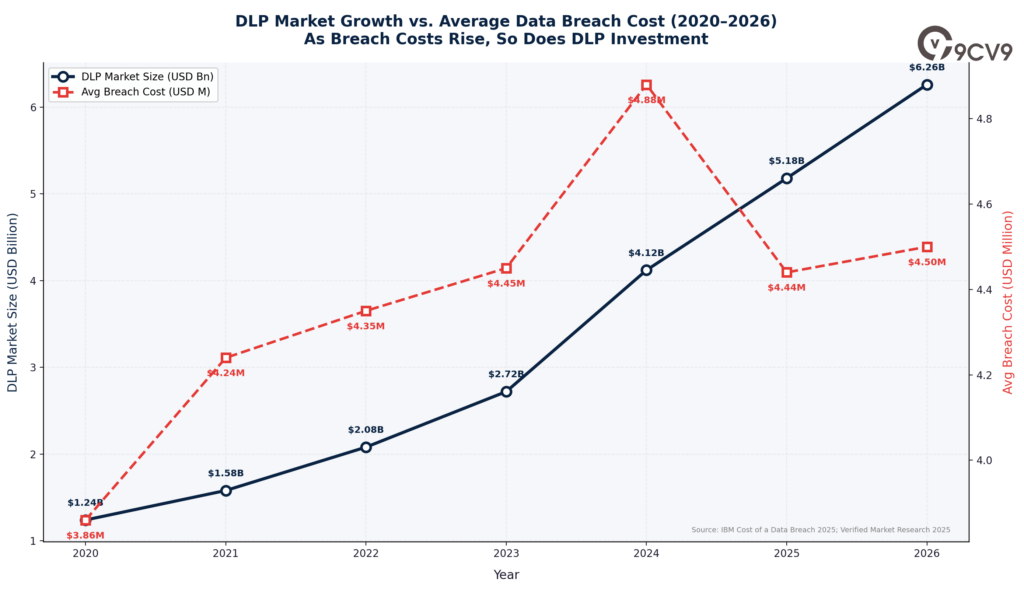
- Verified Market Research valued the DLP software market at USD $4.12 billion in 2024, projecting $15.83 billion by 2032 at a 21.2% CAGR. This places DLP software among the top-tier enterprise security investment categories heading into the 2030s.
- Stratview Research puts the DLP market at $5.18 billion in 2025, growing to $19.08 billion by 2032 at a 20.74% CAGR. Across all projections, there is rare consensus: double-digit compound growth will define DLP for the remainder of the decade.
- Precedence Research values the DLP market at USD $3.43 billion in 2025 and forecasts it reaching $21 billion by 2034 at a 22.32% CAGR. The accelerating CAGR across analyst firms reflects how rapidly the threat and compliance landscape is outpacing legacy security investments.
- The Business Research Company projects the global DLP market to reach $12.53 billion by 2030 at a 28% CAGR. If this higher-growth scenario materializes, DLP software will have become one of the defining categories of enterprise software by 2030.
- PS Market Research values the global DLP market at $4.9 billion in 2025, forecasting $18.9 billion by 2032 at a 21.3% CAGR. The convergence of cloud adoption, AI risk, and regulation makes double-digit DLP growth the baseline — not the optimistic — scenario.
- The DLP market is expected to generate a cumulative sales opportunity of USD $87.24 billion between 2025 and 2032. For security vendors, this represents one of the largest addressable market expansions in enterprise software history.
- The global DLP Software market is projected to grow from USD $3.15 billion in 2025 to $12.5 billion by 2035 at a 14.7% CAGR. Even under conservative modeling, DLP software will nearly quadruple in scale within ten years.
🌍 Regional Breakdown
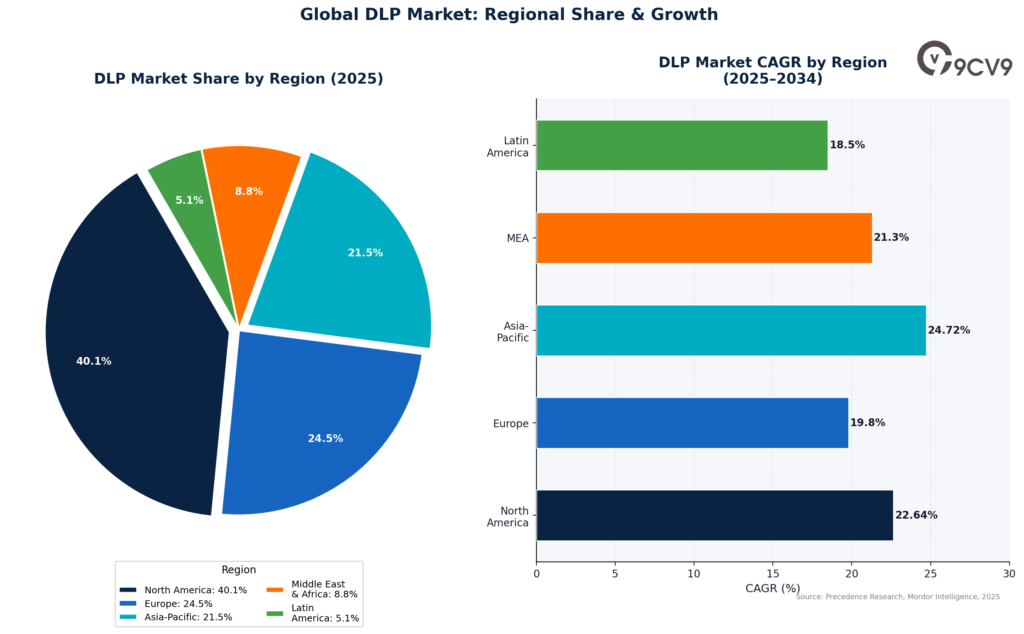
- North America held a 40.12% revenue share of the global DLP market in 2025. Stringent regulatory frameworks like CCPA, HIPAA, and sector-specific mandates make North America the world’s most mature and largest DLP spending region.
- Asia-Pacific is forecast to grow at the fastest DLP CAGR of 23.62% through 2031. Rapid digital transformation, mobile-first adoption, and government-mandated data localization laws are turning APAC into the world’s most dynamic DLP battleground.
- The US DLP market was valued at $690 million in 2024 and is expected to reach $5.31 billion by 2034 at a 22.64% CAGR. America’s combination of high breach costs, aggressive regulatory enforcement, and mature enterprise IT ecosystems drives this disproportionate growth.
- North America dominated the Data Leak Prevention (DLP) Software market with a 38.4% share in 2024. North American enterprises consistently lead global DLP adoption, driven by established cybersecurity cultures and large enterprise IT budgets.
- Asia-Pacific’s DLP market is set to expand at a CAGR of 24.72% during the forecast period. Countries like India, Singapore, South Korea, and Australia are rapidly catching up in DLP adoption as data sovereignty regulation tightens across the region.
- Asia-Pacific is expected to grow at a solid CAGR of 8.2% in the DLP Software segment from 2025 to 2032. Even conservative APAC estimates confirm the region’s structural transition from a DLP laggard to a global growth engine.
- Middle East and Africa saw average breach costs of $7.29 million per incident in 2025. With breach costs rivaling the US in certain sectors, MEA organizations are accelerating DLP investments to close critical protection gaps.
- Canada announced an $80 million Cyber Security Innovation Network initiative in 2024. Government-backed cybersecurity ecosystems like this directly stimulate enterprise DLP adoption by raising the compliance and security baseline across industries.
💰 Data Breach Cost Statistics
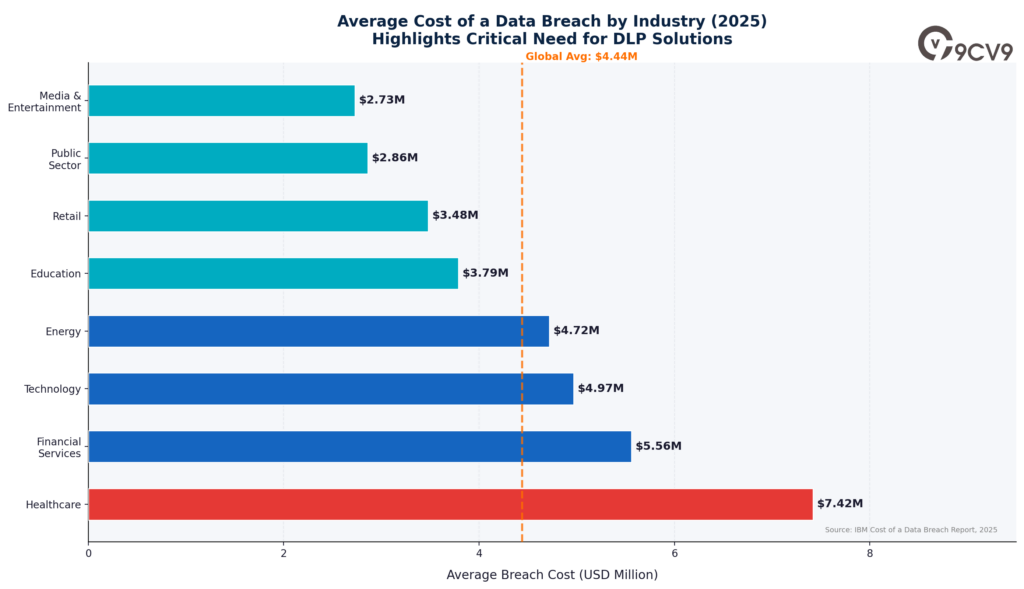
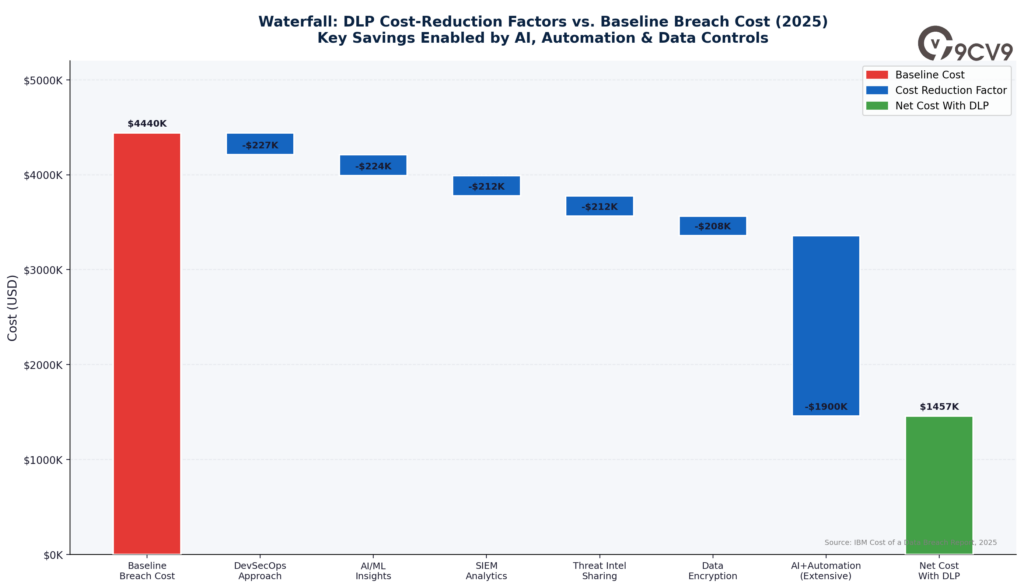
- The global average cost of a data breach fell to $4.44 million in 2025 — a 9% decrease from the 2024 record of $4.88 million. This reduction, driven by faster AI-powered detection, proves that investing in data loss prevention technologies delivers direct, measurable financial returns.
- The US average data breach cost surged to $10.22 million in 2025 — an all-time high for any country or region. Higher US regulatory fines, advanced breach detection costs, and reputational damage expenses make American enterprises the most financially exposed to inadequate DLP controls.
- For the 15th consecutive year, the United States led all regions in average breach cost. This sustained record underscores the structural vulnerability of US enterprises and the critical commercial case for DLP investment in the American market.
- Healthcare maintained the highest average breach cost at $7.42 million per incident in 2025. The combination of HIPAA liability, electronic health record proliferation, and ransomware targeting makes healthcare the sector most urgently in need of comprehensive DLP deployment.
- Financial services recorded a $5.56 million average breach cost in 2025, second only to healthcare. With financial data among the most monetizable for cybercriminals, BFSI organizations face a compounding risk equation that makes DLP non-negotiable.
- Breaches detected in under 200 days cost an average of $3.61 million, versus $5.49 million for longer detection cycles — a $1.88 million difference. This data makes the economic case for AI-powered DLP crystal clear: faster detection directly translates to lower financial exposure.
- Organizations using extensive AI and automation saved nearly $1.9 million per breach compared to those with no AI use. The ROI of AI-enhanced DLP now exceeds the cost of deploying the technology, making AI-native platforms the rational choice for enterprise security leaders.
- Breaches with stolen credentials took an average of 292 days to resolve in 2025. This extended lifecycle highlights why DLP solutions that integrate with identity management systems are essential for reducing both detection time and overall breach cost.
- The mean breach lifecycle fell to 241 days in 2025 — a nine-year record low. While progress is notable, nearly eight months from breach to containment is still far too long for organizations without automated DLP and threat detection in place.
- Breaches detected in under 200 days averaged $3.61M in costs vs $5.49M for those taking over 200 days. This nearly $2 million gap demonstrates the direct ROI of investing in real-time DLP monitoring and rapid incident response capabilities.
- Shadow AI breaches averaged $670,000 in additional costs compared to standard incidents. When employees use unsanctioned AI tools like ChatGPT without DLP controls, organizations face higher PII exposure, longer breach lifecycles, and significantly greater financial penalties.
- Shadow AI breaches involved 65% higher rates of customer PII compromise compared to average breach incidents. This statistic alone justifies the deployment of GenAI-aware DLP solutions that monitor what data enters external AI platforms.
- Customer PII was the most commonly compromised data type in 2025, appearing in 53% of all breaches. Organizations without strong DLP classification and monitoring for PII are operating with an unacceptably high risk of regulatory penalty and customer trust erosion.
- Company intellectual property, while less frequently stolen, was the costliest at $178 per compromised record. For technology, pharma, and manufacturing firms, DLP solutions protecting IP represent the highest-value risk mitigation investment in the security portfolio.
- The public sector recorded the lowest average breach cost at $2.86 million per incident. Lower costs reflect both smaller regulatory fines and less monetizable data, but government agencies are rapidly increasing DLP investments as nation-state attacks intensify.
- Malicious or criminal attacks remained the dominant cause of breaches at 51% in 2025. External threat actors continue to be the primary driver of data loss, making network and cloud DLP solutions the first line of defense for most organizations.
🤖 AI, Automation & Emerging Threats
- 39.7% of data employees share with AI tools is sensitive, according to Cyberhaven Labs research in 2026. This astonishing figure reveals a massive, largely unmonitored data leakage channel that traditional DLP architectures were never designed to cover.
- Enterprise adoption of endpoint-based AI agents grew 276% in just one year. At this pace of AI tool proliferation, organizations without GenAI-specific DLP coverage are exposing a rapidly expanding surface area of sensitive data to uncontrolled exfiltration.
- 97% of organizations that reported AI-related security incidents lacked proper AI access controls. The near-universal absence of AI governance in breached organizations confirms that DLP policies must now explicitly cover generative AI usage as a first-class risk vector.
- 16% of all 2025 breaches involved attacker use of AI — primarily phishing (37%) and deepfakes (35%). As AI-powered attacks become standard criminal tradecraft, AI-aware DLP solutions are the logical counterweight for enterprise security teams.
- 63% of breached organizations had no AI governance policy or were still developing one. The majority of enterprises remain dangerously behind on AI security governance, creating a significant market opportunity for DLP vendors with built-in AI oversight capabilities.
- 72% of organizations used some level of security AI and automation in 2025 — up 5% year-over-year. The rapid mainstream adoption of AI in security operations confirms that AI-powered DLP is no longer a differentiator but an expected baseline capability.
- Organizations using extensive AI and automation detected and contained breaches 80 days faster than non-users. Eighty days is a significant operational advantage; for DLP buyers, this makes AI automation a core evaluation criterion, not a premium feature.
- 99% of organizations have sensitive data dangerously exposed to AI tools, including GenAI copilots and unsanctioned apps. Varonis’s finding that near-universal sensitive data exposure exists in enterprises underlines why DLP platforms addressing the AI attack surface are a 2026 purchasing priority.
- Organizations that used AI and automation extensively identified breaches in 204 days vs 284 days for non-users. An 80-day faster detection window — enabled by AI-driven DLP — is the clearest argument yet for upgrading from legacy rule-based solutions.
- Shadow AI breaches take 247 days on average to resolve — 6 days longer than the global average of 241 days. Even a small increase in breach lifecycle translates to meaningful additional costs, reinforcing why GenAI monitoring within DLP platforms is now a financial imperative.
- The top cost-saving DLP-related measures in 2025 included: DevSecOps (-$227K), AI/ML insights (-$224K), SIEM analytics (-$212K), and data encryption (-$208K). Together, these DLP-adjacent controls can shave over $870,000 from a single breach cost — a compelling ROI for integrated security investment.
- Zscaler acquired SPLX in November 2025 to embed natural-language data classification across Slack and Notion. This deal signals the next generation of DLP: moving from file-centric to conversation-centric protection as collaboration platforms become primary data leakage vectors.
- Palo Alto Networks closed a $25 billion CyberArk acquisition in February 2026 to fuse PAM with Prisma Cloud DLP. Privileged access management and DLP convergence is becoming a key enterprise security architecture pattern, eliminating the siloed approach to data protection.
🚨 Insider Threats & Human Factors
- 68% of all 2025 security incidents involved the human element. Human behavior remains the single greatest predictor of data loss, which is why modern DLP platforms now incorporate behavioral analytics and user intent monitoring alongside technical controls.
- Insider threats account for nearly 35% of all data breaches, through malicious intent or inadvertent errors. With more than a third of breaches originating from within the organization, DLP solutions with insider threat detection are no longer optional for regulated industries.
- Businesses implementing AI-powered DLP report an average 35% reduction in data breach costs. A one-third reduction in breach costs represents the kind of measurable, board-presentable ROI that justifies enterprise DLP procurement decisions.
- Phishing alone accounted for 16% of 2025 breaches, with an average cost of USD $4.8 million per incident. Email remains a primary DLP enforcement channel, and the financial exposure from phishing makes email DLP one of the highest-ROI security controls available.
- Verizon simulations showed users clicked phishing links within 21 seconds of receipt, and entered data within 28 seconds. The near-instant human response to phishing attacks makes real-time DLP blocking at the email gateway a critical defense layer that cannot rely on human judgment alone.
- Business email compromise (BEC) made up about 25% of financially motivated attacks in 2025, with a median loss of $50,000. BEC is now a primary financial threat vector, and organizations need DLP solutions that monitor outbound email content, not just attachments and links.
- Human error accounts for 24% of all data breach incidents. More than one in five breaches stems from employee mistakes rather than malicious action — making DLP solutions with real-time user coaching and policy nudging essential for a well-rounded data security strategy.
- In 2020, 49% of US employees used personal devices to access company applications — a figure that has grown significantly with the normalization of hybrid work. Bring-your-own-device (BYOD) environments are among the hardest data leakage vectors to control without robust endpoint DLP.
- Ransomware attacks result in an average of 16.2 days of operational downtime. While ransomware is often framed as an availability issue, the underlying cause is frequently a failure of DLP and access controls — making prevention the far more cost-effective strategy.
☁️ Deployment, Cloud & Technology Trends
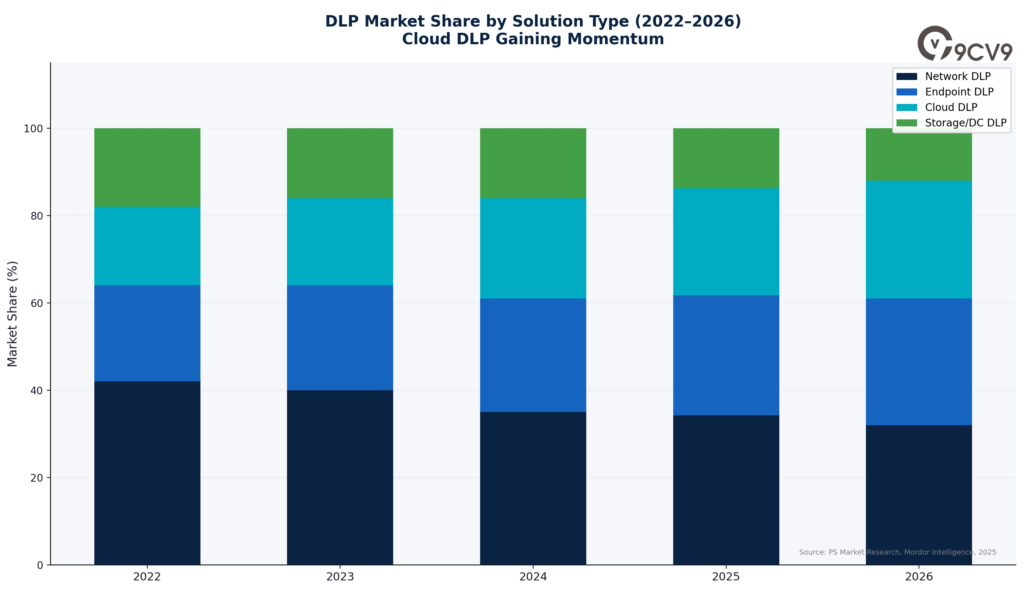
- Cloud platforms captured 67.31% of DLP market share in 2025, advancing at a 21.23% CAGR through 2031. Cloud-delivered DLP has crossed the tipping point to become the dominant architecture — a direct consequence of SaaS proliferation and remote workforce normalization.
- The cloud segment leads DLP market growth in 2026, driven by escalating cloud storage adoption by major enterprises. As data migrates from on-premise data centers to distributed cloud environments, cloud-native DLP is the only architecture that can realistically provide full coverage.
- On-premises DLP held the largest deployment share in 2025 at 56.0% of the market. Despite cloud growth, a majority of enterprises — particularly in regulated industries — still prefer on-premise DLP for maximum control over sensitive data and encryption key custody.
- Large enterprises hold 56.7% of the DLP market in 2025, driven by complex, multi-system data ecosystems. Large organizations face the most complex DLP challenges: distributed data, thousands of users, multiple cloud platforms, and stringent compliance requirements all converge.
- The endpoint DLP segment is forecast to expand at a 23.91% CAGR from 2026–2031, surpassing network DLP in growth. The surge of hybrid work and BYOD environments has transformed endpoints into the primary data leakage risk surface, driving record investment in endpoint DLP solutions.
- Cloud storage security is projected to grow at a 24.88% CAGR through 2031 — the highest of all DLP application segments. As enterprises store more sensitive data in platforms like AWS S3, Azure Blob, and Google Cloud Storage, cloud storage DLP becomes the fastest-growing sub-category in the market.
- Network DLP held the largest market share at 35% in 2025, providing deep content inspection for unauthorized data transmissions. Despite cloud growth, network DLP remains the backbone of enterprise data protection, providing the critical visibility into data movement that perimeter security alone cannot deliver.
- The services segment (consulting, managed security, integration) is expected to grow at a 21.7% CAGR from 2026–2032 — the fastest growth in the DLP ecosystem. As DLP complexity increases, organizations increasingly rely on managed security service providers and consultants to design, deploy, and operate their data protection programs.
- 100 zettabytes of data will be stored in the cloud by 2025, representing nearly 50% of all worldwide data. With half of all data now in the cloud, organizations without cloud-native DLP coverage have effectively left half their sensitive data unprotected.
- By 2027, over 70% of enterprises will use industry cloud platforms to accelerate business initiatives. Gartner’s projection confirms that cloud will become the default operating environment for most enterprises, making cloud DLP a strategic necessity rather than a supplemental control.
- 90% of organizations are expected to rely on cloud infrastructure by 2025, making cloud-optimized DLP tools pivotal. Near-universal cloud adoption means that any DLP strategy built primarily around on-premises controls is already failing to protect the majority of enterprise data.
- 44% of organizations experienced a cloud data breach in 2024. Nearly half of all enterprises suffered a cloud-specific breach, which makes the case that traditional on-premises DLP cannot substitute for dedicated cloud data protection controls.
- The solutions category held 70% of the DLP market in 2025, as enterprises invest in AI-powered DLP platforms over standalone services. AI and machine learning integration is now the dominant driver of DLP platform selection, with false positive reduction and automated classification as top evaluation criteria.
🏢 Industry Verticals
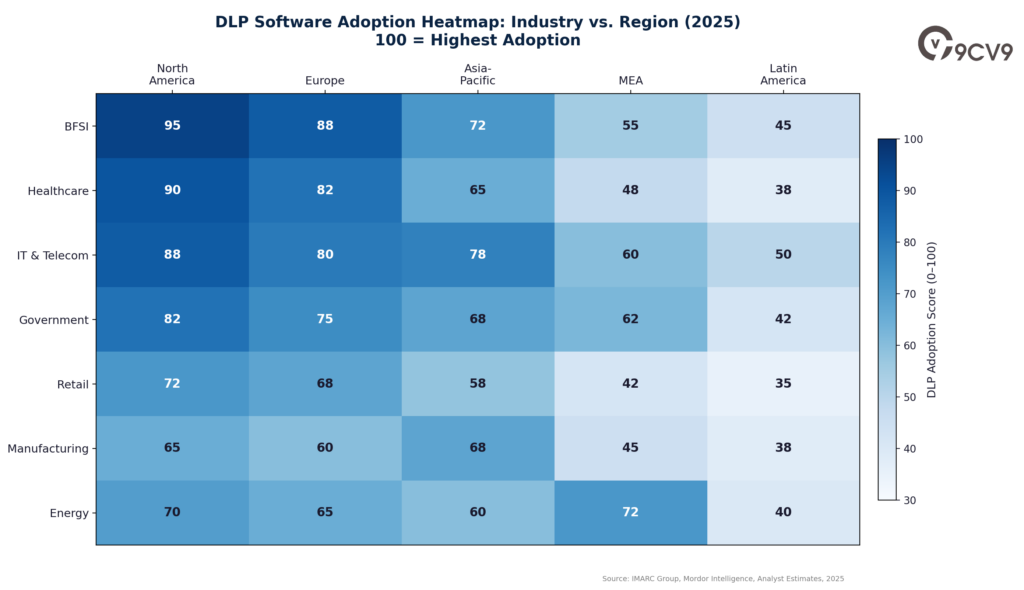
- BFSI held 27.54% of DLP market revenue share in 2025 — the largest of any vertical. Banking, financial services, and insurance organizations face the most demanding combination of regulatory requirements, threat exposure, and sensitive data volume, making them the largest DLP buyers globally.
- Healthcare is projected to lead DLP vertical growth at a 24.51% CAGR through 2031. Record HIPAA settlements, accelerated EHR migration, and the rise of telemedicine are transforming healthcare into the fastest-growing DLP adoption vertical worldwide.
- The finance segment is expected to grow at the highest CAGR among all industry verticals in DLP through 2034. FinTech disruption, open banking regulations, and rising financial cybercrime are combining to make financial sector DLP investment a long-term structural growth driver.
- IT and telecom represented the largest segment by industry in 2024, driven by the need to secure sensitive data and prevent cyberattacks. Technology companies managing vast volumes of proprietary data and customer information are among the most sophisticated — and highest-spending — DLP adopters.
- Compliance management is the dominant DLP application, as organizations use DLP tools to align with GDPR, HIPAA, and CCPA. Regulatory compliance is the primary procurement trigger for DLP solutions, which means every new data protection law globally creates immediate DLP market demand.
- Intellectual property (IP) protection is the fastest-growing DLP application, driven by surging data-centric R&D. As trade secrets and source code become the primary competitive assets of modern enterprises, IP-focused DLP capabilities are moving to the top of security investment priorities.
- Government agencies are key DLP users, deploying solutions to protect classified documents and enforce cross-border data handling laws. The public sector’s increasing digitization of sensitive information — combined with nation-state threat actors — is making government DLP a rapidly expanding procurement category.
📋 Compliance & Regulation
- GDPR violations can result in fines of up to 4% of annual global turnover for inadequate data protection. For large multinationals, a 4% revenue fine can represent hundreds of millions of dollars — making GDPR-compliant DLP one of the highest-ROI risk mitigation investments available.
- Global regulatory fines for data breaches and non-compliance surpassed $4 billion in 2023, with GDPR violations accounting for over $1.5 billion. The scale of regulatory enforcement confirms that non-compliance with data protection laws is no longer a theoretical risk but a predictable financial exposure.
- Non-compliance penalties exceeded $1.4 billion globally in 2023, underscoring the financial implications of inadequate DLP. With enforcement accelerating year-over-year, organizations that delay DLP investment are effectively choosing to self-insure against a growing and quantifiable liability.
- Forcepoint DLP offers 1,700+ pre-built classifiers covering regulatory requirements for 80+ countries. The breadth of global compliance coverage in modern DLP platforms reflects how data protection regulation has become a worldwide phenomenon, not just a European or American concern.
- DLP solutions support regulatory compliance with GDPR, CCPA, HIPAA, and PCI DSS through automated controls and auditable reporting. Modern DLP platforms effectively serve as compliance automation engines, reducing the manual burden of regulatory adherence across multiple simultaneous frameworks.
- Sovereign-cloud mandates in China, Russia, India, and the EU require on-shore data processing and region-specific DLP policies. Data sovereignty is reshaping global DLP architecture requirements, forcing multinationals to operate parallel, jurisdiction-specific data protection programs with localized encryption key custody.
- GDPR 2.0 and amended CCPA rules now assign material financial cost to every breached record. The per-record cost model introduced by evolving regulations is making data minimization and DLP classification — knowing exactly what sensitive data exists — an urgent financial priority for organizations worldwide.
🔑 Key Vendor & M&A Landscape
- Microsoft’s revenue reached $281.7 billion in 2025, underscoring the scale of its Purview DLP platform within enterprise ecosystems. Microsoft Purview’s native integration with Microsoft 365 and Azure makes it the default DLP consideration for the majority of enterprise organizations globally.
- Broadcom (Symantec DLP) reported $63.89 billion in revenue in 2025, maintaining a dominant position in large enterprise DLP. Symantec’s DLP heritage and Broadcom’s infrastructure scale make it a natural choice for large enterprises seeking proven, policy-driven data protection across endpoints, networks, and cloud platforms.
- Zscaler acquired Red Canary for $675 million in August 2025, linking endpoint telemetry to cloud DLP for automated quarantine. This acquisition signals that cloud-native security platforms are racing to close the gap between endpoint detection and cloud DLP enforcement within a single, unified architecture.
- Palo Alto Networks closed a $25 billion acquisition of CyberArk in February 2026 to fuse privileged access management with Prisma Cloud DLP. The PAM-DLP convergence reflects a market understanding that controlling who has access to data is inseparable from controlling what they do with it.
- Fortra acquired Lookout’s Cloud Security business in May 2025, adding SSE and DSPM to Digital Guardian DLP. The rapid consolidation of SSE, DSPM, and DLP capabilities into unified platforms is reshaping enterprise buying decisions and vendor evaluation criteria.
- Check Point Software Technologies reported $2.73 billion in revenue in 2025, offering DLP integrated within its broader cybersecurity portfolio. As major security platforms embed DLP as a native capability, standalone DLP vendors face increasing pressure to differentiate through depth, AI, and specialized coverage.
📈 Adoption Rates & Enterprise Trends
- The SME DLP segment is expected to expand at a 23.23% CAGR through 2034. Small and medium enterprises, historically underserved by DLP vendors, are now a high-growth target as cloud-native solutions reduce the cost and complexity barriers to deployment.
- The on-premises DLP segment is estimated to exhibit a 24.62% CAGR through 2034 — despite cloud’s dominance. The continued strong growth of on-premises DLP reflects persistent demand from regulated industries and government agencies that require air-gapped data control environments.
- Data center and storage-based DLP captured more than 41% of the market by software type in 2024. Data-at-rest protection remains a foundational DLP use case, with storage-based solutions providing the audit trails and classification records that compliance frameworks demand.
- The cloud-based DLP segment accounted for 58% of the market by deployment in 2024. Cloud-delivered DLP has achieved majority market share, confirming that the industry’s center of gravity has permanently shifted away from appliance-based architectures.
- DLP vendor Forcepoint’s risk-adaptive protection dynamically adjusts enforcement based on individual user risk scores. Behavioral, risk-adaptive DLP represents the next generation of data protection — moving from binary block/allow policies to nuanced, context-aware enforcement that balances security with productivity.
- Endpoint DLP agents (Forcepoint, Digital Guardian) typically take 2–6 weeks for initial rollout and 3–6 months to fully tune policies. The significant time-to-value of enterprise DLP deployments reinforces the market shift toward cloud-native platforms that can be operational within days.
- 166 million individuals were affected by data compromises in just the first half of 2025. The scale of consumer data exposure in the first six months alone demonstrates that existing data protection controls remain insufficient for the majority of organizations globally.
- The Identity Theft Resource Center recorded 3,322 data compromises in 2025, up from 3,152 in 2024 — approximately a 5% year-over-year increase. Rising breach frequency, even as detection improves, confirms that threat actors are scaling their operations faster than defensive controls are being adopted.
- 1 in 6 breaches in 2025 involved AI-driven attacks. As AI tools democratize cyberattack capabilities, organizations without AI-aware DLP controls are facing an adversary operating with a structural advantage.
- DevSecOps approaches reduce average breach costs by $227,192 when implemented alongside DLP programs. Integrating security earlier in the development lifecycle creates a compounding data protection effect, reducing the volume of sensitive data that reaches production systems unguarded.
- An estimated 5.6 billion accounts were hacked in 2024 — a significant jump from 731 million in 2023. The nearly 8x surge in compromised accounts in a single year is the clearest possible signal that credential-based data exfiltration has become the dominant threat vector, requiring DLP solutions that monitor post-authentication data movement.
- Remote work-related breaches cost organizations an average of $131,000 more per incident. Hybrid and remote work environments systematically increase breach costs, making endpoint DLP and BYOD data controls among the highest-ROI security investments for modern distributed organizations.
- 91% of cybersecurity professionals reported increased cyberattacks due to remote working. The near-universal security impact of remote work normalization explains why endpoint DLP deployment accelerated dramatically post-pandemic and continues to be a top enterprise purchasing priority.
- Medical data was compromised in 13% of all 2025 breaches, with several incidents tied to ransomware campaigns. Healthcare data’s unique combination of high monetization value and inadequate legacy security controls makes it a disproportionate target — reinforcing the urgency of sector-specific DLP deployment.
- Payment data was involved in 9% of 2025 breaches, often in the financial sector. Despite PCI DSS compliance requirements, payment data continues to be a primary breach target — demonstrating that compliance-minimum DLP is insufficient for organizations handling cardholder data.
Conclusion
The Data Loss Prevention (DLP) software market has entered a defining period of growth and transformation, reflecting the reality that data has become one of the world’s most valuable business assets. As the statistics throughout this report clearly demonstrate, organizations across every industry are facing unprecedented pressure to secure sensitive information while simultaneously embracing cloud computing, artificial intelligence, hybrid work, digital collaboration, and increasingly complex regulatory requirements. Data protection is no longer viewed as a technical responsibility confined to IT departments; it has evolved into a strategic business priority that directly influences financial performance, operational resilience, regulatory compliance, customer trust, and competitive advantage.
One of the strongest themes emerging from these statistics is the remarkable expansion of the global DLP software market. Multiple industry forecasts consistently point toward sustained double-digit annual growth throughout the remainder of the decade, despite variations in market size estimates between analyst firms. This broad consensus signals that enterprise investment in Data Loss Prevention technologies is accelerating across virtually every geography and vertical. Organizations are increasingly recognizing that proactive protection of sensitive information is significantly more cost-effective than recovering from major security incidents, regulatory fines, legal actions, and reputational damage following a data breach.
The financial impact of cyber incidents continues to reinforce this investment trend. Average breach costs remain in the millions of dollars globally, with organizations in the United States experiencing the highest financial exposure worldwide. The data also highlights that healthcare, financial services, government, and technology organizations continue to face particularly severe risks due to the highly sensitive nature of the information they manage. More importantly, the statistics reveal that organizations deploying AI-driven security automation and modern DLP capabilities consistently reduce breach lifecycles and lower overall incident costs. These measurable financial benefits demonstrate that DLP should no longer be viewed merely as a compliance expense but as an investment capable of delivering substantial return on security spending.
Artificial intelligence has simultaneously become one of the greatest opportunities and one of the most significant challenges facing enterprise data protection. The rapid adoption of generative AI platforms, AI assistants, autonomous agents, and intelligent productivity tools has created entirely new pathways through which confidential corporate information can unintentionally leave organizational boundaries. Many employees now interact daily with AI applications that were never considered in traditional security architectures, increasing the likelihood of exposing customer information, intellectual property, financial records, and proprietary business knowledge. The statistics showing widespread sensitive data exposure through AI platforms make it clear that future-ready DLP solutions must include AI-aware monitoring, intelligent classification, prompt inspection, policy enforcement, and governance capabilities specifically designed for the evolving AI ecosystem.
Cloud computing represents another defining force reshaping the DLP landscape. With cloud-native deployments becoming the dominant architecture and organizations storing enormous volumes of business-critical information across SaaS applications and public cloud environments, enterprise security strategies must extend far beyond traditional on-premises infrastructure. Modern DLP platforms are increasingly expected to provide consistent protection across endpoints, email, collaboration platforms, cloud storage, databases, applications, and hybrid environments. The continued growth of cloud-native DLP reflects the reality that enterprise data now exists everywhere, requiring unified visibility and centralized policy enforcement regardless of where users access information.
Regulatory compliance will remain one of the strongest drivers of DLP adoption for years to come. Governments worldwide continue introducing stricter privacy legislation, expanding breach notification requirements, enforcing data sovereignty rules, and increasing penalties for organizations that fail to adequately safeguard sensitive information. Regulations such as GDPR, CCPA, HIPAA, PCI DSS, and numerous regional privacy frameworks have elevated Data Loss Prevention platforms into essential compliance technologies. Organizations increasingly depend on DLP solutions to automate policy enforcement, classify regulated information, generate audit trails, and demonstrate compliance during regulatory reviews. As privacy legislation continues to evolve globally, the demand for intelligent and automated DLP capabilities is expected to grow even further.
The statistics also reinforce that human behavior remains one of the most persistent causes of data loss. Insider threats, phishing attacks, credential compromise, accidental file sharing, shadow IT, and employee mistakes continue contributing significantly to security incidents. Rather than relying solely on restrictive security controls, the latest generation of DLP platforms increasingly incorporates behavioral analytics, contextual risk scoring, adaptive enforcement, and user coaching to reduce accidental data exposure while maintaining workforce productivity. This shift toward risk-aware and behavior-driven security represents one of the most important technological developments within the DLP industry.
Another notable trend is the continued convergence of Data Loss Prevention with broader cybersecurity platforms. Rather than operating as standalone products, DLP capabilities are increasingly integrated with Security Service Edge (SSE), Data Security Posture Management (DSPM), Security Information and Event Management (SIEM), Identity and Access Management (IAM), Extended Detection and Response (XDR), Cloud Security Posture Management (CSPM), and Privileged Access Management (PAM) solutions. Recent acquisitions and platform expansions highlighted throughout these statistics demonstrate that enterprise buyers increasingly prefer unified security ecosystems capable of protecting data across complex, distributed digital environments while simplifying management and improving operational efficiency.
Industry-specific adoption patterns further illustrate the maturity of the DLP market. Financial institutions continue leading enterprise spending due to stringent regulatory obligations and high-value financial information. Healthcare organizations represent one of the fastest-growing segments as electronic health records, telemedicine, and ransomware threats continue expanding. Government agencies, technology companies, manufacturers, telecommunications providers, and multinational enterprises are similarly increasing investments to safeguard intellectual property, classified information, research data, and customer records. These trends demonstrate that DLP is no longer a niche cybersecurity product but an essential capability supporting virtually every major sector of the global economy.
Looking beyond 2026, the role of Data Loss Prevention software is expected to become even more strategic. Emerging technologies such as autonomous AI agents, edge computing, quantum-resistant encryption, decentralized identity, confidential computing, and increasingly distributed enterprise architectures will introduce new security challenges that require intelligent, adaptive, and automated approaches to protecting sensitive information. Future DLP platforms will likely rely even more heavily on artificial intelligence, contextual decision-making, continuous risk assessment, automated remediation, and predictive analytics to secure data without disrupting business operations.
Ultimately, the Top 105 Data Loss Prevention Software Statistics, Data & Trends in 2026 illustrate an industry experiencing sustained innovation, strong enterprise demand, and growing strategic importance. The evidence consistently shows that organizations investing in modern DLP technologies are better positioned to reduce cyber risk, accelerate regulatory compliance, strengthen customer trust, safeguard intellectual property, and adapt to an increasingly AI-driven digital economy. As cyber threats become more sophisticated, regulatory expectations continue to rise, and enterprise data volumes grow exponentially, Data Loss Prevention software will remain one of the foundational pillars of modern cybersecurity strategies. Businesses that prioritize intelligent, cloud-ready, AI-enabled, and compliance-focused DLP solutions today will be significantly better equipped to navigate the evolving security landscape and protect their most valuable digital assets throughout the years ahead.
If you find this article useful, why not share it with your hiring manager and C-level suite friends and also leave a nice comment below?
We, at the 9cv9 Research Team, strive to bring the latest and most meaningful data, guides, and statistics to your doorstep.
To get access to top-quality guides, click over to 9cv9 Blog.
To hire top talents using our modern AI-powered recruitment agency, find out more at 9cv9 Modern AI-Powered Recruitment Agency.
People Also Ask
What is Data Loss Prevention (DLP) software?
Data Loss Prevention (DLP) software helps organizations detect, monitor, and prevent unauthorized access, transfer, or leakage of sensitive data across endpoints, networks, cloud services, email, and collaboration platforms.
Why is Data Loss Prevention software important in 2026?
DLP software is increasingly important due to rising cyberattacks, AI-related data risks, stricter privacy regulations, cloud adoption, and the growing value of protecting sensitive business and customer information.
How large is the global Data Loss Prevention software market?
The global DLP market is worth several billion dollars and is projected to experience strong double-digit annual growth throughout the decade as enterprise security spending continues to increase.
What is driving the growth of the DLP software market?
Major growth drivers include cloud computing, AI adoption, remote work, stricter compliance requirements, increasing cyber threats, insider risks, and the need to secure sensitive enterprise data.
Which region dominates the Data Loss Prevention market?
North America remains the largest DLP market due to mature cybersecurity investments, stringent regulations, high breach costs, and widespread enterprise adoption of advanced security technologies.
Which region is expected to grow the fastest in DLP adoption?
Asia-Pacific is forecast to record the fastest growth, supported by digital transformation, expanding cloud infrastructure, stronger privacy regulations, and increasing cybersecurity investments.
What industries invest the most in Data Loss Prevention software?
Banking, financial services, healthcare, government, IT, telecommunications, and manufacturing are among the largest adopters because they manage highly sensitive and regulated data.
How does DLP software help prevent data breaches?
DLP solutions continuously monitor data movement, classify sensitive information, enforce security policies, and block unauthorized sharing before confidential information leaves the organization.
How does AI affect Data Loss Prevention?
AI creates new risks by exposing confidential information through generative AI tools while also improving DLP through automated classification, threat detection, and faster incident response.
Can DLP software protect cloud environments?
Yes. Modern cloud-native DLP platforms secure SaaS applications, cloud storage, public cloud infrastructure, and hybrid environments while applying consistent security policies across all locations.
What are the main types of Data Loss Prevention solutions?
The primary categories include endpoint DLP, network DLP, cloud DLP, email DLP, storage DLP, and integrated enterprise platforms that combine multiple protection capabilities.
How does endpoint DLP work?
Endpoint DLP monitors laptops, desktops, and mobile devices to prevent unauthorized copying, printing, uploading, or transferring of confidential files and sensitive information.
What is cloud DLP?
Cloud DLP protects sensitive data stored in cloud platforms by identifying confidential information, enforcing policies, monitoring user activity, and preventing unauthorized access or sharing.
What role does DLP play in regulatory compliance?
DLP helps organizations comply with regulations such as GDPR, HIPAA, CCPA, and PCI DSS by automatically identifying, monitoring, protecting, and auditing regulated information.
Can DLP software reduce the cost of a data breach?
Yes. Organizations using advanced DLP with AI and automation often detect incidents faster, reduce breach duration, and significantly lower overall financial losses.
How does DLP help prevent insider threats?
DLP monitors employee activity, identifies risky behavior, blocks unauthorized transfers, and alerts security teams when confidential information is at risk of exposure.
Why is AI governance becoming part of DLP strategies?
Employees increasingly use AI assistants and copilots, making AI governance essential for preventing sensitive corporate information from being unintentionally shared with external AI platforms.
What types of data can DLP software protect?
DLP protects customer records, personally identifiable information, payment data, intellectual property, healthcare records, financial documents, source code, and confidential business information.
Is cloud-based DLP replacing on-premises DLP?
Cloud-native DLP is growing rapidly, but on-premises deployments remain important for government agencies and highly regulated industries requiring greater control over sensitive data.
How does DLP improve enterprise cybersecurity?
DLP complements other security tools by focusing specifically on preventing sensitive data from leaving authorized environments through continuous monitoring and automated enforcement.
What are the biggest data security challenges in 2026?
Organizations face increasing risks from AI usage, cloud data exposure, ransomware, phishing, insider threats, credential theft, remote work, and evolving privacy regulations.
What is the relationship between DLP and Zero Trust security?
DLP strengthens Zero Trust by continuously validating user actions and ensuring sensitive data remains protected regardless of user identity, location, or device.
How does DLP support remote and hybrid work?
DLP secures sensitive information accessed from remote devices by monitoring data movement, enforcing policies, and preventing unauthorized sharing outside corporate environments.
Who are the major Data Loss Prevention software vendors?
Leading vendors include Microsoft, Broadcom (Symantec), Forcepoint, Palo Alto Networks, Zscaler, Check Point, Fortra, and several cloud-native cybersecurity providers.
What is the future of the Data Loss Prevention market?
The DLP market is expected to continue expanding rapidly as organizations invest in AI-powered security, cloud-native protection, integrated cybersecurity platforms, and automated compliance solutions.
Why is intellectual property protection important for DLP?
Protecting source code, trade secrets, product designs, and research data helps organizations maintain competitive advantages while reducing financial and legal risks.
How does DLP integrate with other cybersecurity tools?
Modern DLP platforms integrate with SIEM, IAM, XDR, CASB, SSE, DSPM, endpoint security, cloud security, and threat intelligence platforms for unified protection.
How does DLP help organizations using Microsoft 365 and Google Workspace?
DLP scans emails, documents, chats, and cloud storage to detect sensitive information, enforce security policies, and prevent accidental or malicious data leakage.
What trends are shaping the Data Loss Prevention industry in 2026?
Key trends include AI-powered security, cloud-native deployment, AI governance, behavioral analytics, unified security platforms, stronger compliance automation, and intelligent data classification.
Why should businesses invest in Data Loss Prevention software today?
Growing cyber threats, stricter regulations, increasing cloud adoption, expanding AI usage, and rising breach costs make DLP one of the most valuable long-term cybersecurity investments for organizations.
Sources
Mordor Intelligence Fortune Business Insights IMARC Group Verified Market Research Stratview Research Precedence Research The Business Research Company PS Market Research Spherical Insights Congruence Market Insights IBM Morgan Lewis Cyberhaven Varonis Secureframe Bright Defense Deepstrike Baker Donelson Verizon AIMultiple Global Relay Proofpoint Netwrix Concentric AI Huntress Identity Theft Resource Center Gartner