Key Takeaways
- The best farm management software in the world in 2026 combines AI, precision agriculture, satellite monitoring, machinery integration, and real-time analytics to help farmers improve productivity, profitability, and sustainability.
- Leading farm management platforms such as John Deere Operations Center, Climate FieldView, Syngenta Cropwise, xFarm Technologies, and PTx Trimble offer specialized solutions for crop management, livestock operations, enterprise farming, compliance, and digital agriculture.
- Choosing the right farm management software depends on factors such as farm size, crop type, livestock requirements, integration capabilities, pricing, scalability, and advanced features like automation, traceability, financial management, and predictive analytics.
The best farm management software in the world in 2026 helps farmers plan crops, monitor field performance, manage machinery, track livestock, automate compliance, and improve profitability through AI-powered insights and precision agriculture tools. Leading platforms enable smarter decisions, streamline daily operations, and support sustainable farm growth across businesses of every size.
Agriculture has entered a new era of digital transformation, where data-driven decision-making, artificial intelligence, automation, and precision technologies are becoming as important as tractors, irrigation systems, and quality seeds. As global food demand continues to rise alongside increasing labor shortages, unpredictable climate conditions, tightening environmental regulations, and mounting pressure to improve operational efficiency, farmers and agribusinesses are rapidly embracing advanced farm management software to remain competitive. In 2026, farm management software has evolved far beyond simple record-keeping applications into comprehensive digital ecosystems capable of managing every aspect of agricultural operations, from planting and harvesting to financial planning, machinery maintenance, sustainability reporting, and supply chain traceability.

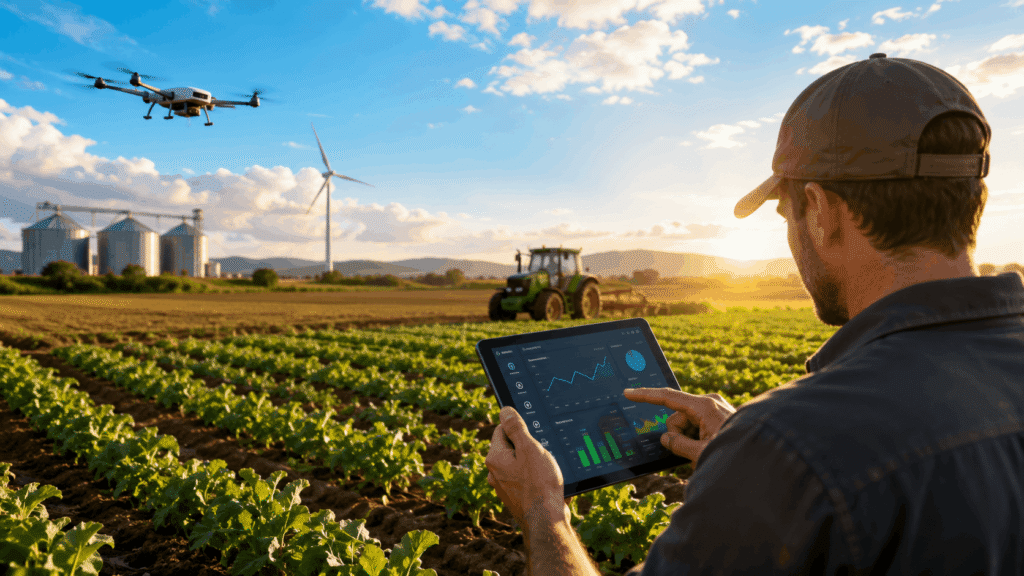
The global agriculture industry is undergoing one of the most significant technological revolutions in its history. Modern farms now generate enormous volumes of information through GPS-enabled machinery, drones, IoT sensors, satellite imagery, weather stations, autonomous equipment, livestock wearables, and connected field devices. Without the right software, transforming this massive amount of raw data into meaningful insights would be nearly impossible. Farm management software bridges this gap by centralizing operational information, automating repetitive tasks, identifying performance trends, and providing actionable recommendations that help farmers maximize productivity while minimizing costs and environmental impact.
The increasing adoption of precision agriculture has further accelerated the demand for sophisticated farm management platforms. Rather than applying fertilizers, pesticides, irrigation, and other resources uniformly across entire fields, farmers can now analyze individual zones using real-time data and variable-rate technologies. This precision approach enables more efficient resource allocation, healthier crops, lower operating expenses, improved sustainability, and stronger long-term profitability. Farm management software serves as the central intelligence platform that connects these precision agriculture technologies into a unified operational workflow.
Artificial intelligence is also reshaping how farms operate in 2026. Many leading software platforms now leverage AI-powered analytics to forecast yields, detect crop diseases before visible symptoms appear, optimize irrigation schedules, predict pest outbreaks, recommend planting windows, monitor livestock health, and automate reporting. Machine learning algorithms continuously improve their recommendations by analyzing historical farm performance, local weather conditions, soil characteristics, satellite imagery, and operational data collected over multiple growing seasons. As a result, farmers can make faster, more informed decisions that reduce risk and improve returns on investment.
Cloud computing has become another defining characteristic of today’s leading farm management solutions. Unlike traditional desktop applications that limited access to office computers, modern cloud-based platforms enable farmers, agronomists, consultants, equipment operators, and business managers to collaborate from virtually anywhere. Mobile applications allow field workers to update activities directly from farms, while managers can monitor operations, approve work orders, review financial reports, and track machinery performance in real time. This level of accessibility significantly improves operational transparency across large agricultural enterprises and family-owned farms alike.
Another major trend driving software adoption is the growing emphasis on sustainability and regulatory compliance. Governments, food processors, retailers, and consumers increasingly demand greater transparency regarding agricultural production practices. Farm management software now helps producers document pesticide applications, fertilizer usage, water consumption, carbon emissions, worker safety records, and environmental stewardship initiatives. Advanced traceability capabilities enable farms to maintain complete production histories from seed to harvest, simplifying compliance with local regulations while strengthening relationships with buyers and certification organizations.
Machinery integration has also reached unprecedented levels of sophistication. Leading farm management software platforms connect directly with tractors, combines, sprayers, harvesters, planters, and autonomous equipment manufactured by major agricultural machinery companies. Operators can automatically collect machine performance metrics, fuel consumption, maintenance schedules, field coverage maps, and operational efficiency reports without manual data entry. This seamless integration reduces administrative workloads while improving equipment utilization and extending machinery lifespan.
Livestock producers are equally benefiting from advances in digital farm management. Modern livestock management modules offer comprehensive tracking of breeding records, grazing rotations, feed management, health monitoring, vaccinations, weight gain, production metrics, and animal movement. Wearable sensors and connected monitoring systems continuously collect data that enables producers to identify health concerns early, improve reproductive performance, optimize feeding strategies, and increase overall herd productivity. These capabilities have become especially valuable as livestock operations continue to expand in size and complexity.
Financial management has likewise become a core component of comprehensive farm management software. Beyond crop planning and field operations, today’s leading platforms provide budgeting tools, expense tracking, profitability analysis, inventory management, payroll administration, contract management, procurement workflows, and enterprise resource planning capabilities. By integrating operational and financial information within a single system, farm owners gain a complete understanding of business performance and can make more strategic investment decisions based on accurate real-time data.
The diversity of available farm management software reflects the wide range of agricultural operations around the world. Some platforms specialize in large-scale row crop farming, while others focus on specialty crops such as fruits, vegetables, vineyards, orchards, and greenhouse production. Certain solutions excel in livestock management, whereas enterprise-grade platforms provide comprehensive business management for multinational agricultural companies. This diversity means that selecting the right software requires careful evaluation of farm size, production type, geographic location, scalability, integration capabilities, ease of use, pricing structure, customer support, and long-term technological roadmap.
In this comprehensive guide to the Top 10 Farm Management Software in the World in 2026, we examine the industry’s leading platforms that are driving digital agriculture across global markets. Each solution has been evaluated based on its features, technological innovation, AI capabilities, precision agriculture tools, scalability, integration ecosystem, user experience, enterprise readiness, pricing approach, and overall value for modern farming operations. Whether you operate a small family farm, a commercial crop enterprise, a livestock business, or a multinational agribusiness organization, this guide provides the insights needed to identify the farm management software best suited to your operational goals and future growth strategy.
Before we venture further into this article, we would like to share who we are and what we do.
About 9cv9
9cv9 is a business tech startup based in Singapore and Asia, with a strong presence all over the world.
With over ten years of startup and business experience, and being highly involved in connecting with thousands of companies and startups, the 9cv9 team has listed some important and crucial software tools in this review.
If you like to get your company listed in our top B2B software reviews, check out our world-class 9cv9 Media and PR service and pricing plans here.
Top 10 Farm Management Software To Know in 2026
- John Deere Operations Center
- Syngenta Cropwise
- Climate FieldView
- xFarm Technologies
- PTx Trimble
- Agworld
- Conservis
- AgriWebb
- Bushel Farm
- Croptracker
1. John Deere Operations Center
John Deere Operations Center has established itself as one of the world’s leading cloud-based farm management software platforms, providing farmers, agronomists, contractors, and agricultural enterprises with a centralized digital ecosystem for managing precision farming operations. Designed to connect equipment, agronomic data, field activities, and business intelligence into a single platform, the software enables users to monitor, analyze, and optimize virtually every stage of modern crop production. As agriculture continues its rapid digital transformation in 2026, the platform remains a benchmark for integrated farm management by combining advanced automation, machine connectivity, artificial intelligence, satellite intelligence, drone imagery, and predictive analytics.
Originally developed as a digital companion for John Deere equipment, the Operations Center has evolved into a comprehensive farm management platform capable of supporting increasingly connected farming environments. It allows users to collect, organize, visualize, and share operational data from planting through harvesting while delivering actionable insights that improve productivity, profitability, resource efficiency, and sustainability. The platform serves farms ranging from family-owned operations to some of the world’s largest commercial agricultural enterprises.
Digital Agriculture Leadership
John Deere Operations Center is positioned as the digital command center of the company’s Smart Industrial strategy. Rather than functioning solely as equipment management software, it operates as an enterprise-scale agricultural intelligence platform that integrates machine telemetry, agronomic analytics, operational planning, financial decision support, and precision agriculture technologies into a unified environment.
The software supports data-driven farming by automatically collecting information from connected tractors, sprayers, combines, planters, and other field equipment. This information is synchronized to cloud storage where operators can monitor machine performance, field progress, crop conditions, input usage, and harvest results in near real time.
Its increasing adoption reflects the broader shift toward Agriculture 4.0, where farms rely on interconnected technologies to improve operational efficiency while reducing production costs and environmental impact.
Platform Positioning in Global Agriculture
| Category | Platform Position | Business Value |
|---|---|---|
| Farm Management | Enterprise-grade digital farm management platform | Centralizes farm operations |
| Precision Agriculture | Industry-leading precision farming ecosystem | Maximizes yield and resource efficiency |
| Equipment Connectivity | Cloud-connected machinery management | Continuous machine monitoring |
| Agronomic Intelligence | Spatial field analytics platform | Improves agronomic decisions |
| Harvest Optimization | AI-assisted harvesting automation | Higher productivity and reduced losses |
| Data Management | Unified operational data repository | Single source of truth across farm operations |
| Decision Support | Predictive analytics platform | Better planning and operational forecasting |
| Sustainability Management | Resource optimization platform | Reduced waste and environmental footprint |
Growing Global Digital Footprint
John Deere continues to expand the scale of its digital agriculture ecosystem through ambitious long-term adoption targets. The company’s strategic roadmap focuses on increasing farmer engagement through connected equipment, cloud software, automation technologies, and precision farming capabilities.
Recent company updates indicate that the Operations Center ecosystem has already surpassed 500 million engaged acres globally while supporting more than one million connected machines. Under its updated long-term ambitions, John Deere aims to expand the platform toward approximately 600 million engaged acres with roughly half classified as highly engaged through deeper software utilization and advanced digital workflows. The company also targets approximately one million unique active monthly digital users across its software ecosystem.
Digital Ecosystem Growth
| Digital Metric | Strategic Importance |
|---|---|
| Hundreds of millions of engaged acres | Expanding global precision agriculture adoption |
| More than 1 million connected machines | Large-scale equipment connectivity |
| Growing monthly digital user base | Increasing software adoption among farmers |
| Global cloud infrastructure | Supports multi-country agricultural operations |
| Continuous AI integration | Accelerates intelligent farm decision-making |
Comprehensive Farm Management Capabilities
John Deere Operations Center combines numerous agricultural technologies into a single digital workspace that simplifies daily farm management while supporting long-term operational planning.
Major capabilities include:
| Functional Area | Primary Capability | Operational Benefit |
|---|---|---|
| Field Mapping | Digital field boundaries and mapping | Improved planning accuracy |
| Machine Monitoring | Live equipment tracking | Better fleet visibility |
| Work Documentation | Automatic field operation recording | Reduced manual data entry |
| Yield Mapping | Spatial harvest analytics | Higher production insights |
| Input Management | Seed, fertilizer and chemical tracking | Cost optimization |
| Crop Scouting | Field observation workflows | Faster issue detection |
| Weather Integration | Local weather intelligence | Better operational timing |
| Remote Collaboration | Shared farm records | Improved team coordination |
| Mobile Access | Cloud synchronization across devices | Anywhere farm management |
| Data Sharing | Secure advisor collaboration | Better agronomic recommendations |
Near Real-Time Operational Intelligence
One of the platform’s greatest strengths is its ability to automatically collect operational data directly from connected agricultural equipment.
Instead of relying on manual record keeping, field activities are synchronized almost immediately after completion, allowing farm managers to monitor:
• Planting progress
• Seeding populations
• Fertilizer applications
• Chemical applications
• Harvest progress
• Fuel usage
• Machine utilization
• Field efficiency
• Equipment health
• Operational costs
This automated workflow significantly reduces administrative workload while improving record accuracy and enabling faster operational decisions.
Advanced Precision Agriculture Technologies
The platform integrates numerous precision agriculture technologies that support site-specific crop management and variable-rate farming.
Precision capabilities include:
| Precision Technology | Operational Purpose |
|---|---|
| GPS-guided field operations | Accurate machine positioning |
| Variable-rate application | Optimized input usage |
| Yield mapping | Production analysis |
| Prescription maps | Data-driven application planning |
| Auto documentation | Automatic operational records |
| Spatial analytics | Field performance comparison |
| Remote machine monitoring | Fleet management |
| Machine telematics | Equipment diagnostics |
| Connected displays | In-cab operational guidance |
| Cloud synchronization | Centralized farm data management |
Integration of Drone Intelligence
One of the platform’s most significant technology advancements came through the acquisition of Sentera, bringing advanced aerial imagery directly into the Operations Center ecosystem.
This integration allows users to combine high-resolution drone imagery with operational data to improve crop scouting, weed detection, stand assessments, nutrient analysis, and field monitoring. Farmers can identify localized issues earlier while generating highly detailed agronomic insights that support precision interventions and reduce unnecessary input applications.
AI-Driven Harvest Automation
The latest model-year equipment introduces increasingly sophisticated automation capabilities powered by computer vision and predictive analytics.
Predictive Ground Speed Automation combines stereo camera technology with satellite-derived biomass intelligence to evaluate crop conditions ahead of the combine. The system continuously adjusts harvesting speed according to crop density, terrain changes, biomass variability, and detected weed patches, helping operators maximize harvesting efficiency while maintaining grain quality.
These intelligent automation features reduce operator workload while improving harvesting consistency across varying field conditions.
Artificial Intelligence Features
| AI Capability | Business Outcome |
|---|---|
| Predictive Ground Speed Automation | Higher harvesting productivity |
| Stereo camera sensing | Real-time crop measurement |
| Biomass prediction | Smarter harvest planning |
| Weed detection | Reduced harvesting interruptions |
| Predictive yield mapping | Better production forecasting |
| Automated machine optimization | Lower operator workload |
| Intelligent field analytics | Faster operational decisions |
| Cloud-based AI processing | Continuous performance improvement |
Advanced Grain Quality Analytics
John Deere continues expanding its grain sensing capabilities through HarvestLab 3000 integration.
The system continuously measures crop quality during harvesting, including:
• Moisture content
• Protein levels
• Oil concentration
• Starch content
These measurements are automatically recorded alongside spatial harvest maps, providing valuable information for crop marketing, storage planning, and future agronomic decisions. The platform supports multiple major crops, including wheat, barley, canola, corn, soybeans, oats, and rye.
Hardware Ecosystem
Although the Operations Center software itself is generally available without a standalone software licensing fee for eligible John Deere customers, realizing its full capabilities typically depends on compatible hardware and precision technology packages.
Typical hardware requirements include:
| Hardware Component | Purpose |
|---|---|
| StarFire GNSS Receiver | High-accuracy positioning |
| G5 Display | In-cab operational interface |
| G5Plus Display | Enhanced precision farming display |
| JDLink Connectivity | Machine-to-cloud communication |
| LTE Modems | Real-time synchronization |
| Precision automation packages | Unlock advanced AI-assisted features |
| Compatible John Deere equipment | Full platform integration |
Organizations should therefore evaluate both software functionality and hardware investment requirements when considering large-scale implementation. Advanced automation packages, premium guidance features, and certain AI-driven capabilities may require additional subscriptions or activation licenses depending on equipment configuration.
2. Syngenta Cropwise
Syngenta Cropwise is one of the world’s largest and most comprehensive digital agriculture ecosystems, providing an integrated farm management platform that enables growers, agronomists, agricultural retailers, cooperatives, and enterprise farming organizations to manage farming operations through a centralized cloud-based environment. Designed to support data-driven agriculture at scale, Cropwise combines agronomic intelligence, precision farming technologies, equipment connectivity, crop protection management, satellite monitoring, artificial intelligence, and operational analytics into a unified digital platform.
As digital agriculture continues to reshape modern farming in 2026, Cropwise has become a critical component of Syngenta’s broader agricultural technology strategy. Rather than functioning solely as a farm record management system, the platform serves as a comprehensive digital ecosystem that connects crop production, field operations, machinery, sustainability initiatives, compliance reporting, and agribusiness collaboration. Its modular architecture allows farms of varying sizes to adopt specialized capabilities while maintaining a centralized repository for operational data, enabling faster and more informed decision-making throughout the crop production cycle.
Global Position in Digital Agriculture
Cropwise has expanded into one of the largest commercial agricultural software ecosystems worldwide, supporting farming operations across multiple continents and diverse crop production systems. The platform is used by independent growers, agricultural service providers, cooperatives, food producers, and multinational farming enterprises seeking to improve productivity, reduce operational costs, and optimize resource utilization through precision agriculture.
The software is designed to integrate agronomic recommendations with real-time operational data, allowing stakeholders throughout the agricultural value chain to collaborate more effectively while maintaining secure control over farm data.
Global Platform Overview
| Category | Platform Position | Business Value |
|---|---|---|
| Farm Management | Enterprise digital agriculture platform | Centralized farm administration |
| Precision Agriculture | Integrated agronomic intelligence ecosystem | Improved crop productivity |
| Fleet Management | Multi-brand machinery management | Higher operational efficiency |
| Crop Protection | Digital pest and disease management | Faster intervention decisions |
| Compliance Management | Digital reporting platform | Improved regulatory compliance |
| Agronomic Analytics | Data-driven decision support | Optimized crop performance |
| Enterprise Agriculture | Multi-farm operational management | Standardized large-scale operations |
| Open Digital Ecosystem | API-enabled agriculture platform | Third-party innovation and software integration |
Extensive Global Agricultural Footprint
Cropwise has achieved significant international adoption and has become one of the most widely deployed farm management ecosystems in commercial agriculture. According to Syngenta, the platform supports the monitoring and management of more than 70 million hectares of farmland across over 30 countries, making it one of the largest digital farming platforms by cultivated area.
Its operational management solution, Cropwise Operations, is deployed across approximately 50 million hectares while connecting more than 30,000 active agricultural machines from numerous equipment manufacturers. This broad machinery compatibility enables farms to consolidate operational data from mixed equipment fleets into a single management environment, reducing operational complexity and improving visibility across field activities.
Global Adoption Metrics
| Digital Metric | Operational Significance |
|---|---|
| Over 70 million hectares managed | Large-scale global platform adoption |
| More than 30 countries | International deployment |
| Approximately 50 million hectares in Cropwise Operations | Extensive operational coverage |
| More than 30,000 connected machines | Large multi-brand telematics ecosystem |
| Multi-country enterprise support | Cross-border agricultural management |
Enterprise Farm Management
Cropwise has increasingly focused on supporting enterprise-scale agricultural operations where farms manage thousands of hectares across multiple regions or countries. The platform enables centralized oversight of field activities, machinery, agronomic performance, labor utilization, and operational costs while maintaining location-specific management capabilities.
A notable example of this enterprise strategy is Syngenta’s collaboration with Al Dahra, where Cropwise has been deployed across approximately 220,000 acres of irrigated farmland spanning Romania, Serbia, Egypt, and Morocco. This implementation allows operational managers to standardize agronomic workflows, monitor performance across multiple countries, and improve decision-making through centralized digital management.
Core Farm Management Capabilities
Cropwise combines numerous software modules that address different aspects of crop production and agricultural operations.
Major capabilities include:
| Functional Area | Primary Capability | Operational Benefit |
|---|---|---|
| Field Mapping | Digital field boundaries and planning | Improved operational visibility |
| Crop Monitoring | Continuous crop health assessment | Earlier issue detection |
| Machine Tracking | Live equipment monitoring | Better fleet utilization |
| Agronomic Records | Centralized crop documentation | Improved historical analysis |
| Compliance Reporting | Regulatory documentation | Simplified compliance management |
| Satellite Monitoring | Remote crop observation | Large-scale field surveillance |
| Operational Planning | Seasonal activity scheduling | Improved workflow coordination |
| Resource Management | Input tracking and optimization | Lower production costs |
| Collaboration Tools | Advisor and grower connectivity | Better agronomic support |
| Mobile Access | Cloud-based field management | Anywhere operational visibility |
Cropwise Protector
Cropwise Protector serves as the platform’s crop protection intelligence module, helping growers monitor pest populations, disease development, and crop health throughout the growing season.
The module enables users to collect field observations, document pest outbreaks, evaluate disease pressure, prioritize treatment areas, and maintain digital crop protection records. By integrating scouting data with environmental conditions and agronomic observations, Cropwise Protector supports earlier interventions that can reduce yield losses while improving the efficiency of crop protection programs.
Cropwise Operations
Cropwise Operations functions as the operational execution layer of the ecosystem, providing comprehensive oversight of agricultural machinery, field activities, and workforce productivity.
The software supports real-time monitoring of:
• Machine location
• Operating speed
• Fuel consumption
• Working hours
• Tillage quality
• Equipment utilization
• Field progress
• Operational efficiency
A key strength of Cropwise Operations is its compatibility with more than 30 agricultural telematics brands, allowing farms operating mixed equipment fleets to consolidate data from manufacturers such as CLAAS, CNH, John Deere, and many others into a single management dashboard.
Fleet Management Capabilities
| Fleet Feature | Operational Benefit |
|---|---|
| Multi-brand telematics | Unified machinery monitoring |
| Live equipment tracking | Better operational visibility |
| Fuel analytics | Reduced fuel consumption |
| Machine utilization reports | Higher equipment efficiency |
| Work quality monitoring | Improved field operation consistency |
| Maintenance insights | Reduced equipment downtime |
| Operator performance analysis | Better workforce productivity |
| Centralized fleet dashboard | Simplified equipment management |
Artificial Intelligence and Computer Vision
Cropwise continues to expand its artificial intelligence capabilities through advanced computer vision technologies that assist growers in identifying crop health issues more rapidly.
One of the platform’s flagship innovations is Crop Doctor, an AI-powered mobile application integrated with Cropwise Grower. Using computer vision and image recognition technologies, growers can capture photographs of crops using a smartphone, allowing the system to analyze visual symptoms and identify potential diseases, pests, or nutrient deficiencies within seconds.
The technology helps reduce diagnostic delays while enabling more timely agronomic interventions. Crop Doctor’s innovation was recognized internationally after receiving the Impact Achievers Award at the GenAI Zurich Awards in 2025 for its application of generative AI and computer vision in agriculture.
AI-Driven Agriculture Features
| AI Capability | Business Outcome |
|---|---|
| Computer vision diagnostics | Faster disease identification |
| Mobile image recognition | Simplified field scouting |
| Pest detection | Earlier intervention |
| Disease classification | Improved crop protection decisions |
| Agronomic recommendations | Better treatment planning |
| AI-powered crop analytics | Enhanced farm productivity |
| Mobile field intelligence | Greater accessibility for growers |
| Automated diagnostics | Reduced dependence on manual assessments |
Open Platform Strategy
In late 2025, Syngenta expanded Cropwise by introducing the Cropwise Open Platform, marking a significant shift toward an open digital agriculture ecosystem.
The platform provides application programming interfaces (APIs) that allow software developers, agricultural retailers, input suppliers, research organizations, and technology partners to build customized applications that integrate directly with Cropwise data.
This strategy enables organizations to extend the platform’s functionality while preserving farmer ownership and control of operational data. The open ecosystem also encourages innovation by supporting third-party analytics, sustainability applications, financial services, digital agronomy tools, and specialized agricultural solutions built on top of the Cropwise infrastructure.
Platform Integration Ecosystem
| Integration Area | Business Advantage |
|---|---|
| Open APIs | Third-party software development |
| Agribusiness Integration | Connected agricultural services |
| Retail Connectivity | Improved input management |
| Farm Data Sharing | Controlled collaboration |
| Developer Ecosystem | Accelerated innovation |
| Enterprise Integration | Scalable digital transformation |
| Farmer Data Ownership | Greater transparency and security |
| Cloud Infrastructure | Flexible platform expansion |
Flexible Commercial Model
Cropwise follows a flexible commercial strategy that accommodates both enterprise-scale agriculture and independent farming operations.
Rather than relying exclusively on fixed software subscriptions, Syngenta commonly delivers Cropwise through regional business models that include enterprise agreements with agricultural retailers, cooperatives, seed companies, food producers, and commercial farming organizations. Independent growers may also access the platform through tiered service packages that are often structured according to farm size, operational complexity, or the number of hectares managed.
This adaptable pricing approach enables organizations of different scales to adopt digital agriculture technologies while selecting modules that align with their operational requirements, making Cropwise suitable for both large multinational farming enterprises and progressively digitizing independent producers.
3. Climate FieldView
Climate FieldView, developed by Climate LLC, a subsidiary of Bayer AG, is one of the world’s most established digital agriculture platforms, enabling growers to transform vast amounts of field data into actionable agronomic intelligence. Built around precision farming, data analytics, artificial intelligence, and connected machinery, the platform helps farmers optimize every stage of crop production—from planning and planting to in-season crop monitoring and post-harvest yield analysis.
As agriculture becomes increasingly data-driven in 2026, Climate FieldView has become a leading enterprise farm management platform for commercial crop producers across North America, South America, Europe, Australia, and several emerging agricultural markets. The software integrates agronomic records, satellite imagery, machine telemetry, weather intelligence, field scouting, prescription generation, and advanced analytics into a unified cloud-based ecosystem that supports more profitable, sustainable, and efficient farming operations.
Rather than functioning solely as a digital recordkeeping system, Climate FieldView serves as an intelligent decision-support platform capable of connecting equipment from multiple manufacturers while providing growers with comprehensive visibility into field performance throughout the entire growing season.
Global Leadership in Digital Agriculture
Climate FieldView has become one of the largest precision agriculture software platforms worldwide, supporting millions of acres of crop production through its cloud infrastructure and extensive equipment compatibility. The platform enables growers to collect, visualize, analyze, and compare operational data from nearly every field activity while maintaining ownership and control of their agricultural information.
Its ability to aggregate data from planters, sprayers, combines, tractors, weather systems, satellite imagery, and agronomic records allows producers to make evidence-based management decisions that improve productivity while reducing unnecessary input costs.
Global Platform Position
| Category | Platform Position | Business Value |
|---|---|---|
| Farm Management | Enterprise digital farming platform | Centralized farm intelligence |
| Precision Agriculture | Industry-leading precision agriculture solution | Improved productivity and profitability |
| Yield Analytics | Advanced yield performance platform | Better production analysis |
| Variable Rate Technology | Prescription generation platform | Optimized seed and fertilizer placement |
| Field Monitoring | Satellite-enabled crop monitoring | Early issue identification |
| Equipment Connectivity | Multi-brand machine integration | Unified operational visibility |
| Agronomic Intelligence | AI-powered decision support | Smarter crop management |
| Enterprise Agriculture | Large-scale commercial farming solution | Scalable farm management |
Extensive Global Agricultural Footprint
Climate FieldView has established one of the largest digital farming networks globally. Bayer reports that the platform has enrolled more than 200 million acres of farmland, serving commercial growers across major agricultural regions including North America, South America, Europe, Australia, and South Africa. Its widespread adoption has been driven by extensive equipment compatibility, strong agronomic analytics, and one of the agriculture industry’s largest historical field datasets.
The platform’s large-scale data ecosystem enables farmers to compare crop performance across multiple seasons while leveraging historical trends to improve future management decisions.
Global Adoption Overview
| Digital Metric | Operational Significance |
|---|---|
| More than 200 million enrolled acres | One of the world’s largest digital agriculture platforms |
| Global deployment | Supports multiple agricultural regions |
| Multi-manufacturer compatibility | Works across diverse machinery fleets |
| Extensive agronomic database | Long-term crop performance intelligence |
| Enterprise-scale cloud platform | Supports commercial farming operations |
Comprehensive Farm Management Capabilities
Climate FieldView provides a complete suite of digital farming tools that assist growers throughout the production cycle.
Major capabilities include:
| Functional Area | Primary Capability | Operational Benefit |
|---|---|---|
| Field Mapping | Digital field visualization | Better operational planning |
| Planting Analytics | Population and hybrid analysis | Improved planting decisions |
| Spraying Records | Application monitoring | Better chemical management |
| Yield Analysis | Harvest performance mapping | Higher profitability insights |
| Variable Rate Prescriptions | Seed and fertility optimization | Increased input efficiency |
| Satellite Monitoring | Crop health imagery | Early crop stress detection |
| Weather Intelligence | Localized weather analysis | Improved operational timing |
| Field Scouting | Mobile observations and reporting | Faster agronomic response |
| Data Sharing | Advisor collaboration | Better agronomic support |
| Historical Analytics | Multi-season comparisons | Improved strategic planning |
FieldView Drive Hardware Integration
One of Climate FieldView’s defining technologies is the FieldView Drive, a compact hardware device that connects directly to compatible agricultural machinery through the vehicle’s diagnostic communication port.
Once installed, the device wirelessly transmits operational data via Bluetooth to an iPad running the FieldView Cab application. This enables automatic collection of spatial planting, spraying, harvesting, and machine performance data without requiring manual uploads during field operations. The hardware is compatible with many major agricultural equipment brands and significantly simplifies farm data collection.
Hardware Ecosystem
| Hardware Component | Primary Function |
|---|---|
| FieldView Drive 2.0 | Automatic machine data collection |
| Bluetooth Connectivity | Wireless communication with mobile devices |
| iPad Integration | Real-time in-cab visualization |
| Cab Application | Live operational monitoring |
| Cloud Synchronization | Automatic data backup and analysis |
| Equipment Adapters | Compatibility across multiple machinery brands |
Satellite-Based Crop Monitoring
Climate FieldView continuously enhances crop monitoring through high-frequency satellite imagery that enables growers to assess field conditions throughout the growing season.
The platform generates field health imagery that highlights crop variability, vegetation performance, and potential problem areas before they become visible during traditional scouting. Combined with weather intelligence and historical agronomic records, these satellite insights help growers prioritize scouting activities, identify production risks, and make more timely management decisions.
Precision Agriculture and Variable Rate Management
FieldView is widely recognized for its sophisticated prescription generation capabilities that support precision agriculture.
Growers can use field data, soil characteristics, historical yield performance, weather trends, and agronomic recommendations to generate customized variable-rate planting and fertility prescriptions that optimize crop inputs according to field variability.
These prescriptions can then be transferred directly to compatible equipment, allowing farmers to implement highly targeted seeding and fertilizer strategies that improve productivity while reducing unnecessary input application.
Precision Farming Features
| Precision Technology | Operational Benefit |
|---|---|
| Variable-rate seeding | Improved seed placement |
| Variable-rate fertility | Optimized nutrient management |
| Prescription generation | Data-driven field management |
| Yield comparison tools | Better performance evaluation |
| Hybrid analysis | Improved seed selection |
| Multi-year field analytics | Long-term optimization |
| Spatial performance mapping | Better field understanding |
| Input optimization | Lower production costs |
Artificial Intelligence and Generative Analytics
Climate FieldView continues expanding its artificial intelligence capabilities as part of Bayer’s digital agriculture strategy.
The latest generation of the platform incorporates advanced AI technologies that synthesize multiple agronomic data sources—including soil characteristics, localized weather patterns, historical crop performance, operational records, and agronomic datasets—to generate intelligent recommendations that help farmers evaluate production risks and improve management decisions. These AI-powered insights simplify complex agricultural data into more accessible decision support for commercial farming operations.
AI-Powered Farm Intelligence
| AI Capability | Business Outcome |
|---|---|
| Agronomic recommendations | Improved crop management |
| Historical data analysis | Better long-term planning |
| Soil intelligence | More accurate input decisions |
| Weather anomaly analysis | Improved risk management |
| Yield prediction support | Better production forecasting |
| Natural-language insights | Simplified decision-making |
| Predictive analytics | Earlier identification of production risks |
| Integrated AI workflows | Higher operational efficiency |
Yield Analysis and Performance Benchmarking
One of FieldView’s strongest capabilities is its advanced yield analytics engine.
The platform automatically generates harvest maps, compares hybrids and crop varieties, evaluates agronomic practices, analyzes productivity across individual management zones, and measures the effectiveness of different input strategies. Farmers can compare multiple seasons of operational data to determine which combinations of genetics, planting populations, fertility programs, and management practices consistently deliver the highest returns.
Yield Analysis Capabilities
| Analysis Tool | Operational Value |
|---|---|
| Yield mapping | Spatial productivity analysis |
| Hybrid comparison | Seed performance evaluation |
| Practice comparison | Better agronomic decisions |
| Field reports | Operational summaries |
| Historical benchmarking | Long-term improvement tracking |
| Soil zone analysis | Site-specific management |
| Harvest performance reports | Better profitability evaluation |
| Custom analytics | Enterprise reporting |
Flexible Pricing Structure
Climate FieldView follows a subscription-based commercial model designed to accommodate farms of varying sizes and operational complexity.
The platform offers multiple service tiers, including entry-level options and premium solutions with advanced analytics, prescription generation, and enterprise capabilities. Commercial farming operations typically subscribe based on the number of acres managed, while hardware such as the FieldView Drive is purchased separately. Additional premium services may include advanced agronomic analytics, prescription tools, and expanded decision-support capabilities.
Pricing and Deployment Overview
| Pricing Component | Typical Structure |
|---|---|
| Subscription Model | Tiered annual subscription |
| Pricing Basis | Acreage-based licensing |
| Entry-Level Plans | Basic functionality available |
| Commercial Plans | Advanced analytics and precision tools |
| Hardware | FieldView Drive purchased separately |
| Enterprise Deployment | Customized large-scale agreements |
| Mobile Applications | Included with subscription |
| Cloud Infrastructure | Continuous synchronization and secure storage |
4. xFarm Technologies
xFarm Technologies has rapidly emerged as one of Europe’s leading farm management software providers, offering a comprehensive digital agriculture platform that helps farmers, agribusinesses, food companies, cooperatives, machinery manufacturers, and agricultural supply chains manage operations more efficiently. Headquartered in Switzerland and Italy, the company has positioned itself at the forefront of Agriculture 4.0 by combining precision farming, artificial intelligence, Internet of Things (IoT) connectivity, sustainability reporting, and supply chain traceability within a unified cloud-based ecosystem.
As the agricultural sector accelerates its digital transformation in 2026, xFarm Technologies continues to expand internationally through strategic acquisitions, technology partnerships, and enterprise-scale deployments. Unlike many traditional farm management systems that focus primarily on field recordkeeping, xFarm delivers a modular platform capable of integrating machinery, irrigation systems, satellite monitoring, environmental compliance, livestock management, financial services, and environmental, social, and governance (ESG) reporting into a single digital workspace.
The platform is designed to support farms of every size, from small family-owned businesses to multinational food supply chains, while enabling stakeholders across the agricultural ecosystem to collaborate using real-time operational data and advanced analytics.
European Leadership in Digital Agriculture
xFarm Technologies has become one of Europe’s fastest-growing agricultural technology companies by focusing on interoperability rather than proprietary ecosystems. The platform supports equipment from multiple manufacturers, integrates third-party technologies, and allows agricultural organizations to build customized digital workflows without being restricted to a single machinery brand.
Its technology supports crop production, livestock management, sustainability initiatives, irrigation optimization, machinery management, and food traceability while helping organizations meet increasing regulatory and ESG reporting requirements.
Platform Position in Global Agriculture
| Category | Platform Position | Business Value |
|---|---|---|
| Farm Management | Enterprise farm management platform | Centralized agricultural operations |
| Precision Agriculture | AI-driven digital farming ecosystem | Improved productivity and sustainability |
| Fleet Management | Multi-brand machinery connectivity | Unified equipment management |
| Irrigation Management | Precision irrigation optimization | Reduced water consumption |
| Sustainability | ESG reporting platform | Better environmental compliance |
| Supply Chain Management | Farm-to-food traceability platform | Greater transparency across value chains |
| Livestock Management | Mixed farming support | Comprehensive farm administration |
| Digital Agriculture | Modular Agriculture 4.0 ecosystem | Scalable digital transformation |
Large and Rapidly Expanding Global Footprint
xFarm Technologies has experienced significant international growth over the past several years. Following its 2024 Series C investment, the company expanded aggressively throughout Europe while accelerating its presence across Latin America, Turkey, India, and North America.
During its 2024 funding announcement, the company reported supporting more than 450,000 farms across over 100 agricultural supply chains covering approximately 7 million hectares worldwide. More recent company updates indicate continued expansion beyond these figures as international adoption accelerates through strategic partnerships and acquisitions.
Global Deployment Overview
| Digital Metric | Operational Significance |
|---|---|
| More than 450,000 farms supported | One of Europe’s largest agricultural software platforms |
| Over 100 agricultural supply chains | Extensive agribusiness ecosystem |
| Approximately 7 million hectares managed | Large-scale precision agriculture deployment |
| Operations across Europe and global markets | International commercial footprint |
| Rapid expansion into Latin America | Accelerated worldwide growth strategy |
Comprehensive Farm Management Capabilities
The xFarm platform combines numerous digital farming tools that simplify agricultural management while supporting precision agriculture and sustainability initiatives.
Core platform capabilities include:
| Functional Area | Primary Capability | Operational Benefit |
|---|---|---|
| Field Mapping | Digital field management | Improved operational planning |
| Crop Records | Centralized field documentation | Better regulatory compliance |
| Machinery Management | Fleet monitoring | Increased equipment efficiency |
| Irrigation Planning | Smart irrigation recommendations | Lower water consumption |
| Crop Protection | Spray documentation | Simplified compliance reporting |
| Sustainability Reporting | ESG monitoring | Improved environmental reporting |
| Satellite Monitoring | Crop health analysis | Earlier issue detection |
| Team Management | Workforce coordination | Improved operational efficiency |
| Livestock Management | Dairy and mixed farming support | Broader farm management capabilities |
| Equipment Maintenance | Digital service records | Reduced machinery downtime |
Advanced Multi-Brand Machinery Connectivity
One of xFarm Technologies’ greatest competitive strengths is its commitment to equipment interoperability.
Rather than requiring farmers to operate a single machinery brand, the platform integrates telematics from numerous agricultural equipment manufacturers and third-party providers, allowing mixed fleets to operate within one centralized management system.
Recent platform updates introduced several additional software integrations, including compatibility with providers such as Exatrek, Ynnova, and TAFE’s TERRA and Trakmate telemetry systems. These integrations expand machinery connectivity while giving operators greater flexibility when managing diverse agricultural equipment fleets.
Fleet Management Features
| Fleet Capability | Operational Benefit |
|---|---|
| Multi-brand telematics | Unified machinery management |
| Live equipment tracking | Real-time operational visibility |
| Fuel consumption analytics | Reduced operating costs |
| Machine maintenance records | Improved equipment reliability |
| Driver activity monitoring | Higher workforce productivity |
| Equipment utilization reports | Better asset management |
| GPS fleet positioning | Increased operational efficiency |
| Cloud-based fleet dashboard | Centralized equipment oversight |
Intelligent Irrigation Optimization
Water management has become a major strategic focus for xFarm Technologies as climate variability increases worldwide.
The platform combines hourly soil moisture measurements, localized weather information, and reference evapotranspiration (ETo) calculations to generate irrigation recommendations that optimize water application according to field-specific conditions.
These precision irrigation capabilities help reduce unnecessary water usage while maintaining crop productivity, making the platform particularly valuable for regions experiencing water scarcity or increasing environmental regulations. The company has also announced partnerships focused on sustainable irrigation projects across coffee production and other high-value agricultural sectors.
Precision Irrigation Features
| Irrigation Capability | Business Outcome |
|---|---|
| Soil moisture monitoring | Improved irrigation timing |
| Reference evapotranspiration analysis | Better water efficiency |
| Local weather integration | Smarter irrigation scheduling |
| Crop-specific recommendations | Higher irrigation accuracy |
| Water consumption analytics | Lower operating costs |
| Sustainability monitoring | Improved environmental performance |
| Mobile irrigation alerts | Faster operational response |
| Historical irrigation reports | Long-term optimization |
Digital Compliance and Field Documentation
The xFarm digital Field Notebook enables growers to maintain comprehensive operational records throughout the production cycle.
The module supports documentation of:
• Crop protection applications
• Fertilizer programs
• Field operations
• Irrigation activities
• Harvest records
• Equipment usage
• Regulatory documentation
• Sustainability reporting
By digitizing these workflows, farms can simplify compliance with agricultural regulations while maintaining accurate operational histories that support audits, certifications, and supply chain transparency.
Supply Chain Traceability and ESG Management
xFarm Technologies has increasingly positioned itself as a sustainability platform rather than solely a farm management application.
Its software enables food companies, processors, retailers, and agricultural cooperatives to monitor environmental performance throughout the production chain while supporting regenerative agriculture initiatives and ESG reporting.
The platform helps organizations document sustainability metrics, monitor environmental performance, improve traceability, and demonstrate compliance with evolving sustainability standards demanded by consumers and regulators alike.
Sustainability Features
| ESG Capability | Business Benefit |
|---|---|
| Supply chain traceability | Improved transparency |
| Sustainability reporting | Easier ESG compliance |
| Environmental monitoring | Better resource management |
| Regenerative agriculture support | Improved soil stewardship |
| Carbon reporting support | Enhanced sustainability initiatives |
| Water footprint monitoring | Reduced environmental impact |
| Farm certification support | Simplified audit preparation |
| Supply chain analytics | Greater operational transparency |
Artificial Intelligence and Geospatial Analytics
Artificial intelligence has become central to xFarm’s technology roadmap.
Following the acquisitions of Greenfield Technologies in Spain and SpaceSense in France, the company significantly expanded its capabilities in regenerative agriculture, satellite intelligence, and geospatial artificial intelligence.
These technologies improve crop monitoring, vegetation analysis, predictive agronomy, and sustainability measurement while enabling farmers to make more accurate, data-driven operational decisions using satellite imagery, machine learning models, and environmental analytics.
AI-Powered Agriculture Features
| AI Capability | Business Outcome |
|---|---|
| Geospatial AI | Enhanced field monitoring |
| Satellite crop analysis | Earlier crop stress detection |
| Predictive agronomic models | Better farming decisions |
| Environmental analytics | Improved sustainability planning |
| AI-supported recommendations | Increased operational efficiency |
| Crop performance forecasting | Better production planning |
| Climate intelligence | Improved weather resilience |
| Precision analytics | Smarter resource allocation |
Workforce and Mixed Farm Management
Beyond crop production, xFarm has expanded support for mixed agricultural enterprises.
Recent software enhancements include:
• Milking parlor management
• Equipment maintenance logs
• Workforce scheduling
• Digital task assignment
• User permission management
The platform allows organizations to assign role-based access for drivers, agronomists, consultants, contractors, and external workers, ensuring secure collaboration while maintaining operational oversight across large agricultural enterprises.
Strategic Investment and Global Expansion
A major milestone in xFarm Technologies’ growth came with its €36 million Series C funding round led by Partech Impact Growth Fund, alongside participation from Swisscom Ventures, United Ventures, Mouro Capital, and existing institutional investors.
The investment is being used to accelerate international expansion, enhance artificial intelligence capabilities, strengthen sustainability services, and establish dedicated Fintech and Insurtech divisions focused on agricultural lending, insurance products, and digital risk management solutions. The company has also expanded through acquisitions and strategic partnerships, including Greenfield Technologies, SpaceSense, and Brazil-based Checkplant, significantly increasing its global reach and technology portfolio.
Pricing Structure
xFarm Technologies follows a flexible freemium software-as-a-service (SaaS) model that allows farmers to begin using essential digital farm management tools without an initial subscription fee.
Premium functionality—including irrigation management, advanced telematics, sustainability reporting, enterprise integrations, and supply chain solutions—is available through annual subscriptions that are generally priced according to farm size, managed hectares, operational complexity, or enterprise agreements. This scalable pricing model enables both individual farmers and multinational agribusinesses to adopt advanced digital agriculture technologies according to their specific operational requirements.
5. PTx Trimble
PTx Trimble is a next-generation precision agriculture platform formed through the strategic joint venture between AGCO Corporation and Trimble Inc., bringing together two of the agricultural technology industry’s most influential innovators. Officially established in 2024, the partnership combines Trimble Agriculture’s advanced precision farming technologies with AGCO’s global machinery ecosystem, creating one of the world’s most comprehensive digital agriculture platforms for mixed-fleet management, precision guidance, farm data management, autonomy, and intelligent field operations.
As agriculture continues its transition toward highly connected and automated farming in 2026, PTx Trimble has positioned itself as a technology-agnostic precision agriculture ecosystem capable of supporting equipment from multiple manufacturers rather than being limited to a single machinery brand. This open approach allows farmers to modernize existing fleets through retrofit technologies while simultaneously managing new-generation equipment within one integrated cloud platform.
At the center of the ecosystem is FarmENGAGE, a cloud-based farm operations management platform that enables producers to coordinate field activities, synchronize operational data, monitor machinery, generate precision prescriptions, and optimize decision-making across every stage of crop production.
Industry Position in Precision Agriculture
Unlike many precision agriculture platforms that focus primarily on proprietary equipment ecosystems, PTx Trimble has adopted a retrofit-first and mixed-fleet strategy. This allows farmers to connect machinery from multiple manufacturers while preserving existing investments in agricultural equipment.
The platform combines cloud software, GNSS positioning, autonomous technologies, precision guidance, machine connectivity, agronomic intelligence, and digital workflow automation into a unified precision agriculture environment that supports farms of virtually every size.
Platform Position in Global Agriculture
| Category | Platform Position | Business Value |
|---|---|---|
| Precision Agriculture | Enterprise precision farming ecosystem | Higher operational efficiency |
| Mixed-Fleet Management | Multi-brand machinery platform | Greater equipment flexibility |
| Farm Management | Cloud farm operations platform | Centralized operational control |
| Precision Guidance | Advanced GNSS guidance ecosystem | Improved field accuracy |
| Digital Agriculture | Connected farm management solution | Unified operational intelligence |
| Retrofit Technology | Upgrade platform for existing machinery | Lower technology adoption costs |
| Autonomy | AI-assisted field operations | Increased labor efficiency |
| Variable Rate Farming | Precision prescription platform | Optimized crop inputs |
Joint Venture and Technology Integration
PTx Trimble represents one of the agricultural technology industry’s largest strategic collaborations.
The joint venture combines:
• Trimble Agriculture software
• Precision guidance technologies
• GNSS positioning systems
• Fleet connectivity
• Farm data management
• AGCO machinery integration
• Retrofit precision agriculture products
• Cloud-based operational intelligence
AGCO holds an 85% ownership stake in the joint venture, while Trimble retains a 15% interest. The partnership combines Trimble’s long-established precision agriculture expertise with AGCO’s global equipment portfolio to accelerate innovation across digital farming technologies.
FarmENGAGE Digital Ecosystem
FarmENGAGE serves as the digital command center of the PTx Trimble ecosystem.
Introduced as the evolution of Trimble Ag Software, FarmENGAGE provides farmers with a centralized cloud platform that manages field operations, machinery, agronomic records, task execution, equipment synchronization, and operational analytics regardless of machinery manufacturer.
The platform is specifically designed for mixed-fleet farming environments where equipment from multiple brands operates simultaneously across the same agricultural business.
FarmENGAGE Core Functions
| Functional Area | Primary Capability | Operational Benefit |
|---|---|---|
| Farm Management | Centralized digital workspace | Simplified farm administration |
| Fleet Management | Multi-brand equipment oversight | Better machinery utilization |
| Task Management | Digital work order coordination | Improved operational planning |
| Field Mapping | Boundary and field management | Greater operational accuracy |
| Guidance Management | Guidance line synchronization | Reduced setup time |
| Data Management | Cloud-based farm records | Improved data accessibility |
| Machine Connectivity | Display synchronization | Faster equipment deployment |
| Agronomic Records | Digital documentation | Better long-term analysis |
Mixed-Fleet Connectivity
One of PTx Trimble’s greatest competitive advantages is its ability to support machinery from numerous manufacturers.
Rather than requiring farmers to replace existing equipment, the platform enables seamless integration across mixed fleets through standardized cloud connectivity and retrofit technologies.
FarmENGAGE supports compatibility with equipment and digital ecosystems from multiple agricultural manufacturers while also connecting directly with PTx Trimble GFX displays, AGCO machinery, and numerous third-party systems. Recent platform enhancements also expanded interoperability with systems such as John Deere Operations Center, Case IH FieldOps, Raven Slingshot, and other compatible farm management platforms.
Mixed-Fleet Capabilities
| Connectivity Feature | Business Benefit |
|---|---|
| Multi-brand machinery support | Greater operational flexibility |
| Cloud synchronization | Real-time data availability |
| Retrofit compatibility | Protects existing equipment investment |
| Third-party integrations | Expanded digital ecosystem |
| Fleet-wide monitoring | Centralized machinery oversight |
| Equipment interoperability | Simplified mixed-brand management |
| Cross-platform data exchange | Improved workflow efficiency |
| Unified farm dashboard | Better operational visibility |
AutoSync Technology
AutoSync is one of FarmENGAGE’s flagship productivity features.
The technology automatically synchronizes operational information across connected displays and cloud systems without requiring manual USB transfers.
Information synchronized includes:
• Field boundaries
• Guidance lines
• Equipment profiles
• Materials
• Operators
• Field names
• Work orders
• Machine activity logs
By eliminating manual data transfers, AutoSync significantly reduces setup time while minimizing operational errors caused by inconsistent field information across multiple machines.
Precision Agriculture and Variable Rate Management
PTx Trimble continues expanding its precision agriculture capabilities through advanced analytics and cloud-based prescription management.
The platform enables growers to:
• Generate variable-rate prescriptions
• Analyze historical yields
• Optimize fertilizer applications
• Improve planting accuracy
• Monitor crop development
• Evaluate field variability
• Compare seasonal performance
• Coordinate field operations
Recent platform innovations introduced AI-assisted yield prediction and automated prescription generation using satellite-derived imagery, enabling growers to develop more accurate variable-rate application strategies while reducing manual analysis.
Precision Farming Features
| Precision Technology | Operational Benefit |
|---|---|
| Variable-rate prescriptions | Optimized crop inputs |
| AI yield prediction | Better harvest forecasting |
| Satellite analytics | Earlier crop insight |
| Guidance line management | Increased field accuracy |
| Prescription automation | Reduced planning time |
| Historical analytics | Improved decision-making |
| Task routing | Better operational efficiency |
| Cloud synchronization | Faster field deployment |
Artificial Intelligence and Satellite Intelligence
Artificial intelligence is becoming increasingly central to the PTx Trimble technology roadmap.
The platform integrates agronomic datasets with satellite imagery and historical operational records to support intelligent farm management.
Key AI capabilities include:
• Yield prediction
• Prescription generation
• Agronomic analytics
• Satellite crop monitoring
• Field variability analysis
• Operational optimization
• Resource planning
• Decision support
These technologies simplify complex agronomic analysis by automatically generating actionable recommendations that improve productivity and resource efficiency.
AI-Powered Agriculture Features
| AI Capability | Business Outcome |
|---|---|
| Yield prediction | Improved harvest planning |
| Prescription generation | Better input optimization |
| Satellite analytics | Earlier crop monitoring |
| Field variability analysis | Smarter management decisions |
| Automated recommendations | Reduced manual analysis |
| Agronomic intelligence | Higher productivity |
| Predictive analytics | Better operational planning |
| Cloud-based AI | Continuous performance improvement |
Advanced GNSS Guidance and IonoGuard Technology
Precision positioning remains one of PTx Trimble’s defining strengths.
In response to increased solar activity associated with Solar Cycle 25, the company introduced Trimble IonoGuard, an advanced positioning technology engineered to improve RTK GNSS reliability during periods of ionospheric disturbance.
IonoGuard is available through the Precision-IQ firmware on compatible NAV-900 guidance controllers and is also supported by the next-generation NAV-960 controller. The technology uses advanced modeling algorithms to reduce signal degradation caused by scintillation and geomagnetic activity, helping maintain centimeter-level positioning accuracy during planting, spraying, and harvesting.
Guidance Technology Features
| Guidance Capability | Operational Benefit |
|---|---|
| RTK GNSS positioning | High-precision field operations |
| IonoGuard technology | Improved signal reliability |
| Solar storm protection | Reduced operational downtime |
| Auto guidance | Lower operator fatigue |
| Centimeter-level positioning | Greater application accuracy |
| Precision-IQ firmware | Continuous software improvements |
| NAV-900 compatibility | Enhanced retrofit support |
| NAV-960 support | Higher processing performance |
Autonomy and Future Farming
PTx Trimble is also investing heavily in agricultural autonomy.
The platform supports advanced autonomous technologies such as the OutRun autonomous grain cart solution, designed to help address agricultural labor shortages while improving operational efficiency. The company’s broader innovation strategy focuses on integrating autonomy, AI-driven decision support, retrofit technologies, and precision guidance into a unified ecosystem that can serve mixed-brand farming operations throughout the crop production cycle.
Pricing Structure
PTx Trimble follows a tiered subscription model that accommodates farms with varying operational requirements.
The ecosystem includes solutions such as Farmer Core and Farmer Pro, with entry-level subscriptions supporting digital work orders, field mapping, display synchronization, and operational management. Higher-tier offerings provide advanced precision agriculture capabilities, including satellite-derived analytics, automated variable-rate prescription generation, enhanced yield mapping, and expanded agronomic intelligence. Subscription pricing varies according to functionality, deployment scale, and regional market conditions, while additional hardware such as GFX displays, guidance controllers, GNSS receivers, and retrofit precision equipment may be purchased separately.
6. Agworld
Agworld is an independent, collaborative, cloud-based farm management software platform designed to connect growers, agronomists, crop consultants, agricultural retailers, contractors, and farm employees within a single standardized digital workspace. Unlike many farm management systems that focus primarily on machinery integration or precision agriculture hardware, Agworld emphasizes operational collaboration, agronomic planning, regulatory compliance, and data standardization across the entire crop production cycle.
As digital agriculture continues to evolve in 2026, Agworld has strengthened its position as one of the leading collaborative farm management platforms serving commercial cropping operations in North America, Australia, South Africa, and New Zealand. The platform enables all stakeholders involved in crop production to work from a shared, real-time database, ensuring that field plans, agronomic recommendations, chemical applications, harvest records, and compliance documentation remain synchronized throughout the farming season.
Rather than relying on fragmented spreadsheets, handwritten notes, or disconnected software systems, Agworld provides a centralized environment where operational decisions are based on structured, standardized data, improving transparency, communication, and decision-making across farming businesses.
Position in the Global Farm Management Market
Agworld differentiates itself through its collaborative ecosystem, allowing independent agronomists, growers, agricultural retailers, and custom applicators to work together using a single source of operational truth. This collaborative approach has made the platform particularly popular among professional crop advisors managing multiple farming clients while enabling growers to retain ownership and visibility of their production data.
The software supports crop planning, chemical recommendations, nutritional management, operational scheduling, compliance reporting, weather integration, machinery records, livestock synchronization, and field-level performance analysis within one integrated platform.
Platform Position in Digital Agriculture
| Category | Platform Position | Business Value |
|---|---|---|
| Farm Management | Collaborative cloud-based farm platform | Centralized operational management |
| Agronomy | Digital agronomic planning system | Improved crop decision-making |
| Compliance | Regulatory reporting platform | Simplified recordkeeping |
| Crop Protection | Structured chemical management | Better application accuracy |
| Nutrient Management | Fertility planning platform | Optimized nutrient programs |
| Collaboration | Multi-user agricultural workspace | Improved communication |
| Mobile Agriculture | Mobile-first farm management | Real-time field accessibility |
| Independent Agriculture | Vendor-neutral software ecosystem | Greater operational flexibility |
Collaborative Digital Farming Ecosystem
Agworld has been built around collaboration rather than isolated farm recordkeeping. The platform enables growers, consultants, retailers, contractors, and farm managers to share operational plans, recommendations, and field activities while maintaining consistent records across every participant involved in crop production.
This shared environment reduces duplicated work, minimizes communication errors, and ensures that everyone involved in field operations has access to the latest agronomic recommendations and operational updates. According to Agworld, the platform is designed to bring growers, agronomists, retailers, and farm staff together throughout the entire production cycle, from planning through harvest.
Collaborative Platform Overview
| Stakeholder | Primary Benefit |
|---|---|
| Growers | Centralized farm management |
| Agronomists | Shared crop planning |
| Agricultural Retailers | Better recommendation management |
| Farm Managers | Improved operational oversight |
| Contractors | Real-time work coordination |
| Farm Employees | Mobile field execution |
| Financial Advisors | Access to operational reporting |
| Business Partners | Improved collaboration |
Structured Agricultural Database
One of Agworld’s defining strengths is its highly structured agricultural database architecture.
Instead of storing agronomic recommendations and field observations as free-text notes, the platform standardizes operational information using predefined agricultural datasets. This allows every chemical product, fertilizer application, crop variety, nutrient, pest, and operational activity to be consistently categorized across all farms.
This standardized data model enables the automatic generation of highly detailed reports without requiring additional manual calculations.
Examples include:
• Chemical application histories
• Nutrient summaries
• Nitrogen application reports
• Phosphorus application records
• Crop protection histories
• Field activity timelines
• Regulatory compliance reports
• Product usage analysis
This structured approach significantly improves reporting accuracy while reducing administrative workload for both growers and consultants.
Core Farm Management Capabilities
Agworld provides a comprehensive suite of operational management tools covering the entire crop production process.
Core platform capabilities include:
| Functional Area | Primary Capability | Operational Benefit |
|---|---|---|
| Crop Planning | Seasonal production planning | Better operational organization |
| Field Records | Centralized documentation | Improved record accuracy |
| Chemical Management | Spray recommendations | Better compliance |
| Nutrient Tracking | Fertility management | Optimized crop nutrition |
| Harvest Recording | Production documentation | Improved performance analysis |
| Weather Integration | Local weather intelligence | Better operational timing |
| Mobile Field Access | Real-time field updates | Faster decision-making |
| Reporting | Automated operational reports | Reduced administrative workload |
| Collaboration | Shared agronomic workspace | Better communication |
| Compliance | Regulatory documentation | Simplified audit preparation |
Advanced Crop Protection Management
Agworld’s structured chemical database enables highly detailed crop protection management.
Every pesticide application is linked to standardized product records rather than manually entered text, allowing the software to automatically generate:
• Chemical application registers
• Active ingredient reports
• Spray histories
• Regulatory compliance logs
• Application timing records
• Product usage summaries
• Residue management reports
• Field treatment histories
These capabilities simplify compliance with increasingly complex agricultural regulations while improving operational consistency across multiple farms.
Precision Nutrient Analytics
The platform also provides sophisticated fertilizer management capabilities by calculating nutrient applications at the active ingredient level.
Rather than simply recording fertilizer product names, Agworld automatically calculates nutrient quantities applied to each field, including measurements such as active grams or kilograms of nitrogen, phosphorus, potassium, and other nutrients.
This enables growers and agronomists to evaluate nutrient programs with greater precision while supporting environmental stewardship and fertilizer optimization.
Nutrient Management Features
| Nutrient Capability | Business Outcome |
|---|---|
| Nitrogen tracking | Improved fertilizer management |
| Nutrient calculations | Greater application accuracy |
| Field nutrient summaries | Better crop planning |
| Fertility history | Long-term soil management |
| Product standardization | Consistent reporting |
| Automated nutrient reports | Reduced manual calculations |
| Historical analysis | Better decision-making |
| Regulatory reporting | Easier compliance |
CREW Farm Safety and Compliance
In 2026, Agworld introduced CREW, an integrated safety and compliance management solution developed by FarmReady and made available directly within the Agworld platform.
CREW centralizes workplace safety documentation, training records, compliance workflows, inventory management, and operational procedures, reducing the need for separate safety management systems. By integrating safety and compliance into everyday farm management, agricultural businesses can streamline administrative processes while improving workforce safety and regulatory preparedness.
Safety and Compliance Features
| Safety Capability | Operational Benefit |
|---|---|
| Digital safety management | Centralized compliance |
| Staff training records | Improved workforce readiness |
| Hazard management | Better workplace safety |
| Inventory tracking | Simplified chemical management |
| Compliance documentation | Easier regulatory reporting |
| Operational procedures | Standardized workflows |
| Integrated safety platform | Reduced administrative burden |
| Mobile accessibility | Field-based compliance management |
Technology Integrations
Agworld continues expanding its open integration ecosystem through partnerships with agricultural technology providers.
Recent platform enhancements include direct integration with Davis Weather Station systems, allowing rainfall measurements and localized weather data to appear natively within Agworld on supported mobile devices. Users can also connect with PIPA field boundary software, enabling seamless synchronization of field boundaries and reducing duplication across digital farming workflows. These integrations are available for eligible subscription tiers and strengthen Agworld’s interoperability with external agricultural technologies.
Integration Ecosystem
| Integration | Primary Purpose |
|---|---|
| Davis Weather Stations | Local weather monitoring |
| Rainfall synchronization | Improved irrigation planning |
| PIPA | Field boundary management |
| Mobile synchronization | Real-time field updates |
| Cloud APIs | Data exchange |
| Agronomic platforms | Operational collaboration |
| Third-party software | Expanded functionality |
| Mobile devices | Anywhere farm management |
Livestock and Mixed Farming Support
Agworld has also expanded beyond traditional crop production by integrating with Mobble, a livestock management platform.
This integration enables mixed farming businesses to synchronize livestock records with crop production activities while monitoring pesticide withholding periods, veterinary medicine withholding requirements, grazing management, and operational compliance.
The combined platform provides mixed enterprises with a more complete digital management environment spanning both crop and livestock operations.
Pricing and Collaboration Model
Agworld follows a subscription-based annual licensing model designed for commercial farming businesses and professional agronomists.
Grower subscriptions typically begin at approximately US$1,495 per year for standard commercial licenses, with additional functionality available through higher-tier plans and enterprise agreements depending on operational requirements. A distinguishing feature of Agworld is its Free Viewer subscription, which enables growers to securely share field boundaries, operational records, and application maps with trusted agronomists, custom spray contractors, financial advisors, and other collaborators without requiring additional per-user licensing fees. This collaborative licensing approach encourages wider participation across the farming operation while reducing software costs for external stakeholders.
7. Conservis
Conservis is an enterprise-grade farm management software platform built specifically for large-scale commercial farming operations that require advanced operational oversight, financial transparency, and business intelligence. Unlike many farm management platforms that primarily emphasize agronomic recommendations or precision agriculture hardware, Conservis focuses on managing the business of farming by integrating production activities, financial performance, operational planning, logistics, grain marketing, inventory management, and compliance into a unified digital ecosystem.
As one of the leading agricultural enterprise resource planning (ERP) platforms in the industry, Conservis is designed for complex farming organizations operating across multiple entities, business units, ownership structures, and geographic locations. The platform enables commercial growers to connect machinery data, field operations, accounting records, grain inventories, contracts, and supply chain information into a centralized system that supports strategic business decision-making and long-term profitability.
Following its acquisition by TELUS Agriculture and Rabobank, Conservis has continued expanding its enterprise capabilities by integrating financial services, agricultural data exchange technologies, and supply chain validation tools that help large agricultural businesses improve operational efficiency while meeting increasingly demanding sustainability and reporting requirements.
Enterprise Position in Digital Agriculture
Conservis has established itself as one of the premier software platforms serving commercial row crop and permanent crop enterprises rather than small or medium-sized family farms. Its architecture is specifically engineered to support organizations managing thousands of acres across multiple locations, legal entities, ownership groups, and operational teams.
Instead of functioning solely as a digital field notebook, Conservis delivers enterprise resource planning capabilities tailored to agriculture, allowing organizations to manage operational performance alongside financial planning, inventory valuation, grain marketing, budgeting, and regulatory reporting.
Enterprise Platform Position
| Category | Platform Position | Business Value |
|---|---|---|
| Farm Management | Enterprise farm management platform | Centralized operational oversight |
| Agricultural ERP | Commercial agricultural ERP solution | Integrated business management |
| Financial Management | Farm financial intelligence platform | Improved profitability analysis |
| Grain Management | Crop marketing and inventory platform | Better revenue optimization |
| Multi-Entity Operations | Enterprise organizational management | Scalable farm administration |
| Supply Chain Validation | Traceability and compliance platform | Enhanced market transparency |
| Precision Agriculture | Data integration ecosystem | Unified operational intelligence |
| Enterprise Analytics | Business performance platform | Better executive decision-making |
Enterprise Heritage and Strategic Ownership
Founded in 2009, Conservis quickly became recognized as one of the first farm management platforms designed specifically around enterprise agriculture rather than individual field operations. Prior to its acquisition, the company raised more than US$50 million in private investment to develop advanced farm management technologies focused on operational efficiency and financial intelligence.
In July 2021, Conservis was jointly acquired by TELUS Agriculture and Rabobank through a strategic partnership designed to accelerate digital transformation across global agriculture. The acquisition combined Conservis’ enterprise farm management expertise with TELUS Agriculture’s digital technology portfolio and Rabobank’s agricultural financial services capabilities, significantly expanding the platform’s strategic value for commercial farming businesses.
Strategic Development Timeline
| Milestone | Strategic Importance |
|---|---|
| Founded in 2009 | Enterprise-focused farm management platform |
| More than US$50 million in private funding | Accelerated platform development |
| Acquired by TELUS Agriculture | Expanded digital agriculture capabilities |
| Joint ownership with Rabobank | Enhanced agricultural financial integration |
| Integration with Agricultural Data Exchange | Broader supply chain connectivity |
| Continued enterprise expansion | Strengthened commercial agriculture focus |
Target Market and Enterprise Focus
Conservis is designed primarily for large commercial farming operations where operational complexity extends well beyond traditional crop production management.
Typical users include:
• Multi-entity farming organizations
• Institutional farming businesses
• Commercial grain producers
• Agricultural investment groups
• Large family farming enterprises
• Corporate agricultural operations
• Farm management companies
• Agricultural holding companies
These organizations often require advanced operational visibility across thousands of acres while simultaneously managing financial reporting, grain marketing, labor, equipment utilization, ownership structures, and business performance.
Core Enterprise Capabilities
Conservis combines operational management with enterprise financial intelligence, allowing agricultural businesses to understand not only what is happening in the field but also how those activities influence overall business profitability.
Major platform capabilities include:
| Functional Area | Primary Capability | Business Benefit |
|---|---|---|
| Operational Planning | Seasonal production planning | Better resource allocation |
| Field Operations | Activity management | Improved operational control |
| Financial Management | Integrated business reporting | Greater profitability visibility |
| Grain Marketing | Contract tracking | Revenue optimization |
| Inventory Management | Input and grain inventory | Improved asset control |
| Equipment Management | Machinery utilization | Higher operational efficiency |
| Budget Management | Crop budgeting | Better financial planning |
| Analytics | Enterprise reporting | Executive-level decision support |
| Compliance | Regulatory documentation | Simplified reporting |
| Supply Chain Validation | Traceability management | Enhanced commercial transparency |
Connecting Operational and Financial Data
A defining strength of Conservis is its ability to connect agronomic operations directly with business performance.
Rather than maintaining separate systems for production records and financial accounting, the platform links field activities with budgets, costs, revenues, inventories, and contracts to provide a comprehensive financial picture of the farming operation.
The software aggregates data from multiple operational sources to create a single, auditable record of farm performance while reducing manual data entry and improving reporting accuracy. This integrated approach enables growers to better understand production costs, marketing opportunities, and overall profitability.
Financial Intelligence Features
| Financial Capability | Business Outcome |
|---|---|
| Cost of production analysis | Better profitability management |
| Budget planning | Improved financial forecasting |
| Revenue tracking | Greater financial visibility |
| Profit analysis | More informed investment decisions |
| Financial reporting | Simplified lender reporting |
| Business analytics | Executive-level decision support |
| Enterprise dashboards | Real-time business intelligence |
| Audit-ready reporting | Stronger governance and compliance |
Grain Marketing and Contract Management
Unlike many farm management systems that focus primarily on crop production, Conservis provides sophisticated grain marketing functionality that helps producers manage commercial sales throughout the crop marketing cycle.
The platform supports:
• Grain contract tracking
• Delivery management
• Inventory monitoring
• Settlement tracking
• Revenue forecasting
• Marketing analysis
• Contract performance
• Storage management
These capabilities enable producers to connect physical production with commercial marketing decisions while improving inventory visibility and revenue management throughout the harvest season.
Enterprise Planning and Budgeting
Conservis places significant emphasis on business planning before the growing season begins.
The platform enables organizations to develop comprehensive production plans by integrating:
• Crop plans
• Financial budgets
• Field plans
• Equipment allocation
• Labor planning
• Input purchasing
• Land management
• Debt servicing
Once production begins, the software continuously compares operational performance against original plans, allowing management teams to identify cost overruns, production variances, and operational inefficiencies much earlier than traditional accounting systems.
Planning and Performance Management
| Planning Capability | Operational Benefit |
|---|---|
| Crop budgeting | Better financial preparation |
| Plans versus actuals analysis | Early variance detection |
| Resource allocation | Improved operational efficiency |
| Input purchasing | Cost optimization |
| Financial forecasting | Better capital planning |
| Operational benchmarking | Continuous improvement |
| Executive dashboards | Faster management decisions |
| Historical performance analysis | Long-term strategic planning |
Supply Chain Integration and Agricultural Data Exchange
Through its integration with TELUS Agriculture, Conservis has expanded beyond traditional farm management into supply chain validation and trusted data exchange.
The platform leverages TELUS Agriculture’s Agricultural Data Exchange (ADX) to enable secure information sharing across agricultural supply chains while supporting traceability, sustainability verification, and compliance initiatives.
These capabilities help commercial producers participate more effectively in increasingly data-driven agricultural markets where buyers, processors, and retailers require verified production records and transparent supply chain documentation.
Supply Chain Features
| Integration Capability | Business Benefit |
|---|---|
| Agricultural Data Exchange | Secure data sharing |
| Supply chain validation | Improved traceability |
| Sustainability reporting | Easier ESG compliance |
| Carbon verification support | Environmental reporting |
| Digital compliance records | Reduced administrative burden |
| Trusted partner collaboration | Better commercial relationships |
| Standardized agricultural data | Improved interoperability |
| Enterprise integrations | Broader digital ecosystem |
Financial Services Integration
One of Conservis’ most distinctive advantages is its close integration with Rabobank and Rabo AgriFinance.
This relationship enables the platform to generate lender-ready financial reports that connect operational farm activities with commercial financial performance. By integrating production records with financial management, growers can streamline reporting for lenders, improve loan documentation, and reduce the administrative burden associated with agricultural financing. The partnership also supports broader initiatives in agricultural risk management and financial transparency.
Financial Management Features
| Financial Integration | Business Value |
|---|---|
| Rabo AgriFinance connectivity | Streamlined lender reporting |
| Bank-ready financial reports | Faster financing processes |
| Crop budgeting | Better capital management |
| Loan documentation support | Reduced administrative effort |
| Financial analytics | Improved business planning |
| Operational cost tracking | Greater profitability visibility |
| Integrated reporting | Single source of financial truth |
| Agricultural finance workflows | Enhanced enterprise governance |
Enterprise Deployment and Onboarding
Conservis follows an enterprise software implementation model rather than a self-service subscription approach.
Pricing is generally customized according to:
• Total managed acreage
• Number of operating entities
• Organizational complexity
• Required integrations
• Enterprise support requirements
• User count
• Deployment scope
Enterprise implementations typically include dedicated onboarding specialists who configure the platform around each farming operation’s organizational structure, machinery fleet, crop portfolio, financial workflows, and reporting requirements. This consultative deployment model helps ensure that the software reflects the operational realities of large agricultural businesses while accelerating user adoption and long-term value realization.
8. AgriWebb
AgriWebb is one of the world’s leading livestock and grazing management software platforms, purpose-built for commercial beef, sheep, mixed-livestock, and pasture-based farming enterprises. Unlike many farm management platforms that primarily focus on crop production or precision agriculture machinery, AgriWebb specializes in helping livestock producers optimize animal performance, pasture utilization, grazing efficiency, biosecurity compliance, and farm profitability through a cloud-based, mobile-first digital management system.
As livestock producers increasingly embrace digital agriculture in 2026, AgriWebb has established itself as a market leader in ranch and grazing management across Australia, New Zealand, North America, the United Kingdom, Ireland, and South Africa. The platform combines livestock records, grazing analytics, paddock mapping, compliance management, financial reporting, and equipment integrations into a unified operational ecosystem that enables producers to make more informed management decisions while reducing administrative workload.
Designed to function both online and offline, AgriWebb allows producers to capture field data directly from smartphones and tablets while working in remote grazing environments, automatically synchronizing information once internet connectivity becomes available. This flexibility makes it particularly valuable for extensive grazing operations where reliable connectivity may be limited.
Global Leadership in Livestock Management
AgriWebb has become one of the most recognized digital livestock management platforms by concentrating on the operational realities of commercial grazing enterprises rather than generalized farm management.
The platform integrates livestock management, rotational grazing, pasture monitoring, compliance reporting, inventory management, financial analysis, and workforce coordination into a single digital workspace that supports daily ranch operations while providing long-term business intelligence.
Platform Position in Livestock Agriculture
| Category | Platform Position | Business Value |
|---|---|---|
| Livestock Management | Enterprise livestock management platform | Centralized herd administration |
| Grazing Management | Digital rotational grazing platform | Improved pasture utilization |
| Ranch Management | Commercial ranch management solution | Better operational oversight |
| Animal Performance | Individual and herd analytics | Increased livestock productivity |
| Compliance Management | Biosecurity and audit platform | Simplified regulatory reporting |
| Pasture Management | Digital pasture monitoring | Sustainable grazing practices |
| Financial Reporting | Livestock business analytics | Improved profitability |
| Mobile Agriculture | Offline-first livestock management | Anywhere operational access |
Purpose-Built for Commercial Grazing Operations
AgriWebb has been developed specifically for livestock enterprises managing beef cattle, sheep, and mixed grazing systems.
The software supports operations ranging from family-owned ranches to large commercial enterprises by providing tools for:
• Herd management
• Individual animal records
• Grazing planning
• Pasture monitoring
• Feed management
• Livestock treatments
• Breeding management
• Financial reporting
• Compliance documentation
• Team coordination
Its mobile-first design enables producers to capture operational data directly in the field, reducing paperwork while improving the accuracy and timeliness of livestock records.
Core Livestock Management Capabilities
AgriWebb provides an extensive collection of livestock and ranch management tools covering the full production cycle.
Major capabilities include:
| Functional Area | Primary Capability | Operational Benefit |
|---|---|---|
| Herd Management | Digital livestock records | Better herd visibility |
| Animal Identification | Individual animal tracking | Improved traceability |
| Grazing Management | Rotational grazing planning | Better pasture utilization |
| Feed Management | Feed inventory and planning | Lower feeding costs |
| Weight Monitoring | Animal performance analysis | Faster production decisions |
| Breeding Records | Reproductive management | Improved herd genetics |
| Compliance | Audit-ready documentation | Easier regulatory compliance |
| Financial Reporting | Cost and margin analysis | Better business planning |
| Task Management | Workforce coordination | Improved operational efficiency |
| Mobile Data Collection | Offline field recording | Greater operational flexibility |
Advanced Grazing and Pasture Management
One of AgriWebb’s defining strengths is its sophisticated grazing management functionality.
The platform enables producers to digitally map paddocks, monitor grazing pressure, and optimize livestock movements using interactive geospatial farm maps. Producers can visualize pasture availability, estimate carrying capacity, and monitor grazing performance directly from mobile devices.
The software also provides Grazing Map Insights, allowing users to assess pasture availability, grazing pressure, and estimated grazing days remaining across paddocks. These insights help producers improve pasture recovery, optimize stocking rates, and support more sustainable grazing strategies.
Pasture Management Features
| Grazing Capability | Business Outcome |
|---|---|
| Interactive paddock mapping | Better grazing visibility |
| Rotational grazing planning | Improved pasture recovery |
| Grazing history reports | Better long-term pasture management |
| Carrying capacity analysis | Optimized stocking rates |
| Pasture availability insights | Improved feed allocation |
| Grazing pressure monitoring | Sustainable pasture utilization |
| Stocking rate calculations | Better resource planning |
| Remote pasture sensing integration | Enhanced grazing intelligence |
Livestock Performance Optimization
AgriWebb provides comprehensive livestock performance management by maintaining detailed records for both herd-level and individual-animal operations.
The platform supports:
• Weight recording
• Growth monitoring
• Treatment records
• Medicine administration
• Pregnancy scanning
• Fertility records
• Feed management
• Animal inventories
• Breeding performance
• Livestock reconciliation
For operations using individual animal identification, AgriWebb enables highly detailed performance reporting that supports improved breeding, nutrition, and production decisions.
Livestock Analytics
| Performance Feature | Operational Benefit |
|---|---|
| Weight projections | Better production forecasting |
| Individual animal records | Improved breeding management |
| Herd performance reports | Greater operational visibility |
| Fertility reporting | Higher reproductive efficiency |
| Feed tracking | Better nutritional management |
| Treatment history | Improved animal health |
| Inventory reconciliation | Accurate livestock accounting |
| Gross margin reporting | Better business performance analysis |
Electronic Identification and Hardware Integration
AgriWebb integrates with numerous livestock hardware technologies to streamline animal handling and reduce manual data entry.
The platform supports integration with electronic identification (EID) readers, RFID scanners, stick readers, and Bluetooth-enabled weigh scales, allowing producers to automatically synchronize animal identification and weight records during routine livestock handling.
One notable example is its integration with Gallagher hardware, enabling producers to capture EID and weight data directly from Gallagher scanners and weighing systems into AgriWebb in real time. These integrations improve operational efficiency while reducing transcription errors during livestock processing.
Technology Integration Ecosystem
| Integration | Primary Purpose |
|---|---|
| Electronic ID readers | Individual livestock identification |
| RFID scanners | Faster animal processing |
| Bluetooth weigh scales | Automated weight collection |
| Gallagher hardware | Real-time EID synchronization |
| IoT water monitoring | Water infrastructure monitoring |
| Weather integrations | Local weather intelligence |
| Remote pasture sensing | Grazing optimization |
| Marketplace integrations | Expanded digital ecosystem |
Biosecurity and Compliance Management
Regulatory compliance is a major component of AgriWebb’s platform.
The software automatically maintains comprehensive livestock records that support:
• Animal treatment histories
• Medicine inventories
• Biosecurity documentation
• Livestock movement records
• Audit preparation
• Animal traceability
• Compliance reporting
• Withholding period management
The Compliance subscription tier expands these capabilities with dedicated audit compliance tools, treatment records, feed management, inventory tracking, and reporting designed to keep livestock businesses prepared for inspections and certification requirements.
Compliance Features
| Compliance Capability | Business Benefit |
|---|---|
| Biosecurity records | Easier regulatory compliance |
| Treatment documentation | Improved animal welfare records |
| Medicine inventory | Better medication management |
| Livestock movement history | Enhanced traceability |
| Audit reporting | Reduced administrative effort |
| Inventory management | Greater operational control |
| Compliance dashboards | Continuous audit readiness |
| Digital reporting | Faster certification preparation |
Financial and Business Intelligence
Beyond livestock management, AgriWebb also provides business reporting tools that help producers evaluate profitability and operational performance.
Available financial capabilities include:
• Gross margin analysis
• Cost of production reporting
• Financial reporting
• Inventory valuation
• Enterprise management
• Cost tracking
• Operational dashboards
These reports provide producers with valuable insight into business performance while supporting long-term strategic planning and operational optimization.
Pricing and Subscription Structure
AgriWebb follows a transparent subscription-based software-as-a-service (SaaS) model designed to accommodate livestock operations of different sizes.
Rather than using fixed annual packages, the platform now bases subscription pricing on the average number of cattle and sheep managed over a 12-month period. Customers can choose from three primary subscription tiers—Essentials, Compliance (marketed as Essentials+ in some regions), and Performance—each providing progressively more advanced capabilities. All plans include unlimited users, offline mobile functionality, and ongoing software updates, while premium tiers add features such as treatment and weight records, audit compliance tools, grazing management, financial reporting, weight projections, and advanced breeding analytics. Additional marketplace integrations and grazing planning modules are available as optional add-ons.
9. Bushel Farm
Bushel Farm is a modern, cloud-based farm management software platform designed to simplify crop planning, operational recordkeeping, field monitoring, and grain marketing for commercial crop producers. Developed following Bushel Inc.’s acquisition and rebranding of FarmLogs, the platform combines intuitive farm management tools with one of North America’s largest digital grain commerce ecosystems. This unique integration allows farmers to manage production activities while simultaneously monitoring grain markets, contracts, and delivery opportunities within a single digital environment.
As digital agriculture continues to mature in 2026, Bushel Farm has evolved beyond traditional farm recordkeeping software into a connected farm business platform. It combines agronomic insights, satellite imagery, operational planning, machinery activity records, weather intelligence, and grain marketing capabilities that help growers make faster, more informed business decisions throughout the growing season.
Unlike many farm management platforms that focus primarily on agronomic analytics or machinery integration, Bushel Farm differentiates itself by connecting field production directly with grain merchandising and post-harvest marketing, allowing growers to better manage profitability from planting through final grain delivery.
Digital Agriculture Position
Bushel Farm has established a niche within the digital agriculture market by offering a streamlined, easy-to-use platform that emphasizes simplicity, affordability, and direct integration with grain merchandising infrastructure.
The software is particularly attractive to independent grain producers seeking practical operational tools without the complexity or cost associated with enterprise-scale agricultural ERP systems.
Platform Position in Digital Agriculture
| Category | Platform Position | Business Value |
|---|---|---|
| Farm Management | Cloud-based farm management platform | Simplified crop production management |
| Grain Marketing | Integrated grain commerce platform | Improved marketing decisions |
| Crop Planning | Digital crop planning solution | Better operational organization |
| Satellite Monitoring | Remote crop health monitoring | Earlier crop issue detection |
| Farm Recordkeeping | Digital operational ledger | Improved documentation |
| Market Intelligence | Grain pricing and contract platform | Better revenue management |
| Mobile Agriculture | Mobile-first farm operations | Greater field accessibility |
| Farm Business Management | Production-to-marketing workflow | Enhanced farm profitability |
Evolution from FarmLogs to Bushel Farm
Bushel Farm originated from FarmLogs, one of the earliest cloud-based farm management software platforms in North America. Following FarmLogs’ acquisition by Bushel Inc., the platform was redesigned and reintroduced as Bushel Farm, combining familiar crop management capabilities with Bushel’s extensive digital grain infrastructure.
Today, Bushel Inc. connects more than 2,000 grain buying facilities throughout North America, creating one of the continent’s largest digital grain commerce networks. This infrastructure enables Bushel Farm users to access grain market information, contracts, and delivery opportunities directly through the software without relying on disconnected marketing systems.
Platform Evolution
| Milestone | Strategic Importance |
|---|---|
| FarmLogs launch | Early cloud-based farm management software |
| Acquisition by Bushel Inc. | Expanded grain marketing ecosystem |
| Rebranding to Bushel Farm | Unified production and marketing platform |
| Integration with Bushel Network | Direct grain commerce connectivity |
| Continued platform expansion | Simplified digital farm management |
Core Farm Management Capabilities
Bushel Farm provides a practical suite of digital farm management tools designed to simplify everyday crop production activities.
Major platform capabilities include:
| Functional Area | Primary Capability | Operational Benefit |
|---|---|---|
| Crop Planning | Seasonal field planning | Better production organization |
| Field Records | Digital crop documentation | Improved operational accuracy |
| Satellite Monitoring | Crop health analysis | Earlier stress detection |
| Weather Monitoring | Rainfall and weather tracking | Better field timing |
| Machinery Logs | Equipment activity records | Improved operational visibility |
| Grain Marketing | Market and contract management | Higher revenue potential |
| Field Mapping | Digital field boundaries | Better operational planning |
| Mobile Access | Cloud-based management | Anywhere farm visibility |
Satellite Crop Health Monitoring
One of Bushel Farm’s most valuable agronomic capabilities is its satellite-based crop monitoring system.
The platform utilizes Normalized Difference Vegetation Index (NDVI) imagery to help growers monitor crop development throughout the growing season. Satellite imagery highlights differences in crop vigor, allowing producers to identify potential problem areas that may require additional field scouting.
These visual insights help farmers prioritize field inspections while supporting earlier identification of production issues such as nutrient deficiencies, disease pressure, water stress, or uneven crop establishment. Bushel Farm also provides satellite imagery history that allows users to compare crop development over time.
Precision Monitoring Features
| Monitoring Capability | Business Outcome |
|---|---|
| NDVI vegetation imagery | Earlier crop stress identification |
| Satellite field monitoring | Improved crop visibility |
| Historical imagery | Seasonal crop comparisons |
| Field health analytics | Better agronomic decisions |
| Vegetation performance mapping | Faster issue detection |
| Cloud-based imagery | Remote field monitoring |
| Mobile visualization | Improved field accessibility |
| Crop variability analysis | More targeted scouting |
Weather and Rainfall Intelligence
Bushel Farm incorporates localized weather intelligence to support operational planning throughout the growing season.
The platform records historical rainfall using radar-based weather datasets, enabling growers to review precipitation patterns across individual fields and evaluate weather impacts on crop performance. These localized rainfall records assist with planting decisions, irrigation planning, field accessibility assessments, and crop development monitoring.
Weather Management Features
| Weather Capability | Operational Benefit |
|---|---|
| Historical rainfall tracking | Better seasonal analysis |
| Radar-based precipitation | Localized weather visibility |
| Weather history | Improved operational planning |
| Field-specific rainfall | Better irrigation decisions |
| Seasonal comparisons | Enhanced production analysis |
| Mobile weather access | Real-time decision support |
| Cloud weather records | Long-term farm intelligence |
| Integrated weather dashboard | Simplified monitoring |
Digital Crop Planning and Operational Records
Bushel Farm enables producers to organize seasonal operations using digital field records that replace traditional paper documentation.
The software supports documentation of:
• Crop plans
• Planting activities
• Input applications
• Field observations
• Harvest activities
• Equipment usage
• Crop histories
• Operational timelines
By centralizing operational information, growers can maintain consistent records while improving communication across farming teams and business partners.
Integrated Grain Marketing Ecosystem
The most distinctive feature of Bushel Farm is its direct integration with Bushel’s extensive grain merchandising network.
Rather than requiring producers to manually collect grain bids through telephone calls or separate marketing applications, Bushel Farm provides direct access to grain elevators, grain buyers, contracts, and pricing information within the farm management interface.
The platform enables users to monitor:
• Local grain bids
• Cash prices
• Futures markets
• Existing contracts
• Delivery schedules
• Marketing opportunities
• Settlement information
• Break-even calculations
This integration allows growers to connect crop production directly with grain marketing decisions, improving revenue management and reducing administrative workload. Bushel’s broader network supports digital connectivity with more than 2,000 grain facilities across North America, making it one of the largest agricultural commerce ecosystems in the region.
Grain Marketing Features
| Marketing Capability | Business Benefit |
|---|---|
| Real-time grain bids | Faster marketing decisions |
| Cash price monitoring | Better pricing visibility |
| Futures market integration | Improved market awareness |
| Grain contract management | Simplified contract tracking |
| Delivery scheduling | Better logistics planning |
| Break-even analysis | Improved profitability management |
| Elevator connectivity | Streamlined grain sales |
| Digital grain commerce | Reduced administrative work |
Farm Business Intelligence
Bushel Farm helps producers evaluate the financial performance of crop production by combining operational records with grain marketing information.
The platform supports business decision-making through:
• Profitability analysis
• Revenue tracking
• Crop performance comparisons
• Grain marketing evaluation
• Production history
• Contract management
• Seasonal reporting
• Operational summaries
These tools enable farmers to better understand the financial impact of production decisions while supporting more effective long-term planning.
Pricing and Accessibility
Bushel Farm is positioned as an affordable and accessible farm management platform for independent crop producers.
The platform offers a free tier with basic crop management and trial functionality, allowing growers to explore core features before upgrading. Paid subscriptions begin at approximately US$199 per year, providing access to expanded crop planning, satellite imagery, operational recordkeeping, and grain marketing capabilities. This entry-level pricing makes Bushel Farm one of the more cost-effective digital farm management solutions available for commercial crop producers while benefiting from integration with Bushel’s extensive grain commerce ecosystem.
10. Croptracker
Croptracker is a specialized, enterprise-grade farm management software platform developed specifically for fruit, vegetable, orchard, vineyard, greenhouse, and other specialty crop operations where food safety, labor management, regulatory compliance, and end-to-end product traceability are critical business requirements. Unlike conventional farm management platforms that primarily focus on broadacre row crops, Croptracker is purpose-built to address the unique operational complexity of high-value horticultural production, where multiple harvest windows, labor-intensive field activities, strict pesticide regulations, and comprehensive traceability standards must all be managed simultaneously.
As the global fresh produce industry continues to face increasing regulatory oversight and consumer demand for food transparency in 2026, Croptracker has become one of the leading digital platforms for growers, packers, processors, and produce distributors seeking to digitize operations from planting through packing and final shipment. The platform combines farm management, labor tracking, spray compliance, harvest management, inventory control, quality assurance, and supply chain traceability into a unified cloud-based ecosystem that supports both operational efficiency and audit readiness.
Having worked closely with specialty crop producers since 2006, Croptracker continues to expand its modular software ecosystem, enabling growers to adopt individual operational modules while maintaining a centralized database that connects every stage of production from field to consumer.
Position in the Specialty Crop Management Market
Croptracker occupies a distinct position within the agricultural software industry by focusing exclusively on specialty crop production rather than broadacre farming. The platform is designed for industries where precise labor management, harvest coordination, food safety documentation, and product traceability directly influence operational profitability and regulatory compliance.
Its modular architecture allows organizations to implement only the components they require while expanding functionality as operations grow.
Platform Position in Digital Agriculture
| Category | Platform Position | Business Value |
|---|---|---|
| Specialty Crop Management | Enterprise horticulture management platform | Centralized specialty crop operations |
| Farm Management | Modular farm management software | Flexible operational management |
| Food Traceability | End-to-end produce traceability platform | Stronger food safety compliance |
| Labor Management | Workforce productivity platform | Improved labor efficiency |
| Compliance Management | Agricultural regulatory compliance system | Simplified audit preparation |
| Harvest Management | Harvest and packing management platform | Better production coordination |
| Quality Assurance | Produce quality monitoring platform | Higher product consistency |
| Agricultural Analytics | Operational reporting and business intelligence | Better management decisions |
Purpose-Built for High-Value Crop Production
Unlike traditional farm management software developed primarily for grain farming, Croptracker is engineered specifically for industries where operational complexity extends far beyond planting and harvesting.
The platform supports operations including:
• Orchards
• Vineyards
• Vegetable farms
• Berry production
• Greenhouse operations
• Nursery production
• Produce packing facilities
• Fresh produce distribution
These industries require precise documentation of labor, chemical applications, harvest timing, inventory movement, and product traceability while maintaining compliance with increasingly stringent food safety standards.
Core Farm Management Capabilities
Croptracker provides a comprehensive collection of operational management modules covering the complete specialty crop production cycle.
Core platform capabilities include:
| Functional Area | Primary Capability | Operational Benefit |
|---|---|---|
| Spray Management | Digital pesticide recordkeeping | Improved regulatory compliance |
| Harvest Management | Harvest tracking and yield recording | Better production visibility |
| Labor Management | Employee time and productivity tracking | Higher workforce efficiency |
| Packing Operations | Packing line management | Improved inventory accuracy |
| Shipping Management | Produce shipment tracking | Enhanced supply chain visibility |
| Storage Management | Cold storage inventory | Better inventory control |
| Quality Control | Product inspection and grading | Consistent product quality |
| Traceability | End-to-end product tracking | Faster recall readiness |
| Analytics | Operational reporting | Improved business intelligence |
| Mobile Operations | Cloud-based mobile applications | Real-time field data collection |
Advanced Spray Record Management
One of Croptracker’s most recognized capabilities is its award-winning Spray module, developed specifically for specialty crop operations where pesticide compliance requirements are particularly rigorous.
Rather than functioning as a simple spray diary, the system provides comprehensive chemical management that includes:
• Digital spray records
• Fertilizer applications
• Chemical inventories
• Tank mix calculations
• Application histories
• Input cost tracking
• Worker safety monitoring
• Regulatory reporting
The platform automatically tracks pre-harvest intervals (PHI), restricted-entry intervals (REI), chemical inventories, application costs, and worker safety information while generating audit-ready reports for food safety inspections and agricultural compliance programs. Applicators can enter data directly from smartphones or tablets, even while working offline, with records synchronizing automatically once connectivity is restored.
Spray Management Features
| Spray Capability | Business Outcome |
|---|---|
| Digital spray records | Simplified compliance |
| Chemical inventory tracking | Better inventory management |
| PHI monitoring | Reduced harvest compliance risks |
| REI management | Improved worker safety |
| Tank mix calculations | Greater application accuracy |
| Application cost tracking | Better financial management |
| Mobile spray logging | Faster field documentation |
| Audit-ready reporting | Easier regulatory inspections |
Comprehensive Labor Management
Labor represents one of the largest operating expenses for specialty crop producers, making workforce management a major focus of Croptracker’s platform.
Its integrated Punch Clock module enables growers to digitally manage employee attendance, work assignments, productivity, and payroll information directly from mobile devices or dedicated kiosks.
Workers can begin and end shifts by scanning badges, while supervisors monitor activities in real time across multiple work crews. The system supports both hourly and piece-rate compensation models, helping growers calculate payroll more accurately while improving labor allocation and productivity reporting.
Labor Management Features
| Labor Capability | Operational Benefit |
|---|---|
| Digital punch clock | Accurate attendance tracking |
| Badge scanning | Faster workforce check-in |
| Piece-rate calculations | Simplified payroll processing |
| Crew scheduling | Better workforce coordination |
| Productivity reporting | Higher labor efficiency |
| Mobile workforce management | Real-time operational visibility |
| Payroll support | Reduced administrative workload |
| Labor analytics | Better cost management |
Harvest and Produce Traceability
Croptracker provides comprehensive traceability throughout the post-harvest supply chain.
Every harvested bin, pallet, container, or lot can be tracked from the field through packing, storage, shipping, and final customer delivery.
The platform records:
• Harvest locations
• Employee information
• Harvest dates
• Block identification
• Packing activities
• Storage locations
• Shipping records
• Customer deliveries
This complete chain of custody allows growers and packing facilities to respond quickly to food safety audits or product recalls while demonstrating compliance with industry traceability standards. The system also supports barcode-enabled tracking to improve inventory accuracy and operational efficiency.
Traceability Features
| Traceability Capability | Business Benefit |
|---|---|
| Harvest tracking | Complete production history |
| Barcode labeling | Faster inventory management |
| Packing records | Improved product accountability |
| Storage tracking | Better inventory visibility |
| Shipping documentation | End-to-end logistics oversight |
| Product genealogy | Rapid recall response |
| Food safety reporting | Stronger regulatory compliance |
| Chain-of-custody records | Enhanced consumer confidence |
Quality Control and Production Analytics
Croptracker supports ongoing quality management throughout production by enabling growers and packers to monitor crop quality, yields, operational costs, and workforce performance.
The platform generates more than 50 operational reports covering areas such as:
• Harvest yields
• Spray histories
• Labor performance
• Quality inspections
• Packing efficiency
• Inventory movement
• Operational costs
• Food safety compliance
These reports help management teams evaluate performance, identify operational bottlenecks, and improve profitability across growing, harvesting, and packing operations.
Operational Intelligence
| Analytics Capability | Business Value |
|---|---|
| Yield analysis | Better production planning |
| Labor productivity reports | Improved workforce efficiency |
| Quality monitoring | Higher product consistency |
| Cost reporting | Better profitability analysis |
| Harvest analytics | Improved operational planning |
| Inventory reporting | Greater stock visibility |
| Compliance reporting | Simplified audit preparation |
| Executive dashboards | Faster management decisions |
Flexible Modular Architecture
A key advantage of Croptracker is its modular software design.
Rather than requiring organizations to purchase an all-inclusive platform, growers can begin with essential modules such as Spray Record Keeping or Harvest Management and gradually expand into additional functionality including:
• Punch Clock
• Packing
• Shipping
• Storage
• Quality Control
• Irrigation
• GAP Reports and Audits
• Order Desk
• Production Practice
This modular approach enables operations of different sizes to tailor the platform to their specific production requirements while supporting future growth.
Pricing and Enterprise Deployment
Croptracker follows a subscription-based software-as-a-service (SaaS) pricing model designed for commercial fruit and vegetable producers. Standard subscriptions begin at approximately US$27.50 per user per month with a minimum requirement of 10 users, resulting in an entry-level annual investment of approximately US$3,300. Enterprise pricing varies according to operational scale, required modules, integration requirements, and customization needs. Larger deployments can incorporate custom workflows, API integrations, tailored reporting, account linking, and dedicated implementation support for packing facilities, processors, and multi-site agricultural enterprises.
Conclusion
The global agricultural industry is entering one of the most transformative periods in its history, with digital technologies becoming fundamental to improving productivity, profitability, sustainability, and long-term resilience. As farms continue to expand in scale and complexity, traditional methods of managing crops, livestock, machinery, labor, finances, and supply chains are rapidly giving way to integrated digital ecosystems that provide real-time insights and data-driven decision-making. The top farm management software platforms in the world in 2026 are at the center of this transformation, empowering agricultural businesses to operate more efficiently while adapting to evolving environmental, economic, and regulatory challenges.
The leading farm management software solutions highlighted in this guide demonstrate how modern agriculture has evolved far beyond simple recordkeeping applications. Today’s platforms integrate precision agriculture, artificial intelligence, satellite imagery, Internet of Things (IoT) sensors, machine telematics, financial analytics, supply chain traceability, regulatory compliance, and predictive modeling into comprehensive digital environments. These technologies enable farmers to optimize every aspect of their operations—from planning and planting to harvesting, marketing, sustainability reporting, and enterprise management.
Choosing the right farm management software ultimately depends on the specific needs of each agricultural operation. Large-scale row crop enterprises may benefit most from enterprise platforms such as John Deere Operations Center, Climate FieldView, PTx Trimble, or Conservis, which offer advanced machinery connectivity, precision farming, financial planning, and operational analytics. Farms seeking greater interoperability across multiple machinery brands may find platforms like xFarm Technologies or Syngenta Cropwise particularly valuable due to their extensive integration capabilities and open digital ecosystems.
Meanwhile, livestock producers have specialized solutions such as AgriWebb that focus on herd performance, grazing optimization, pasture management, animal traceability, and livestock compliance. Specialty crop growers operating orchards, vineyards, vegetable farms, or greenhouse operations may achieve greater value from Croptracker, which addresses the unique labor management, food safety, harvest tracking, and traceability requirements of high-value horticultural production. Independent crop producers seeking affordable yet capable digital tools may find Agworld and Bushel Farm attractive options due to their collaborative workflows, grain marketing integration, operational simplicity, and cost-effective pricing models.
Another defining trend shaping farm management software in 2026 is the increasing role of artificial intelligence. AI-powered crop diagnostics, predictive yield forecasting, automated variable-rate prescriptions, satellite image interpretation, machine learning-driven agronomic recommendations, and natural language reporting are becoming standard capabilities rather than experimental innovations. These intelligent systems reduce manual analysis while helping growers make faster, more informed decisions that improve operational efficiency and profitability.
Cloud computing also continues to redefine agricultural management by enabling seamless synchronization across mobile devices, machinery, offices, consultants, contractors, and supply chain partners. Farmers no longer need to rely on disconnected spreadsheets, paper records, or isolated machinery displays. Instead, modern farm management software creates centralized digital ecosystems where operational, financial, agronomic, and compliance information is securely accessible from virtually anywhere, improving collaboration across the entire agricultural enterprise.
Sustainability has likewise become a core component of digital agriculture platforms. Many of the world’s leading farm management software providers now incorporate carbon reporting, environmental monitoring, water management, fertilizer optimization, regenerative agriculture tracking, and Environmental, Social, and Governance (ESG) reporting capabilities. These features help farms comply with increasingly stringent environmental regulations while supporting participation in sustainability initiatives, carbon markets, and responsible supply chain programs demanded by food companies and consumers alike.
Interoperability is another major factor influencing software selection. Rather than locking producers into proprietary ecosystems, many modern platforms increasingly support open APIs, third-party integrations, multi-brand machinery connectivity, financial software integration, weather services, drone imagery, remote sensing technologies, accounting systems, and supply chain platforms. This flexibility allows agricultural businesses to build customized digital ecosystems that evolve alongside changing operational requirements without requiring complete infrastructure replacement.
Financial management has also become increasingly integrated into farm management software. Enterprise platforms now provide sophisticated budgeting tools, profitability analysis, inventory valuation, grain marketing, contract management, lender reporting, and business intelligence dashboards that allow producers to evaluate not only crop performance but also overall financial health. This convergence of agronomic and financial data gives farm managers greater visibility into return on investment, operational efficiency, and long-term business planning.
Looking ahead, the future of farm management software will likely be defined by even greater automation, predictive intelligence, robotics integration, autonomous machinery, advanced satellite analytics, real-time environmental monitoring, and AI-powered decision support. As digital agriculture continues to mature, software platforms will increasingly serve as intelligent operational command centers that connect every aspect of the agricultural value chain—from field operations and livestock management to logistics, processing, sustainability, finance, and global food distribution.
Ultimately, investing in the right farm management software is no longer simply a technology upgrade; it is a strategic business decision that can significantly influence productivity, profitability, regulatory compliance, and long-term competitiveness. Whether managing a small independent farm, a diversified livestock enterprise, a specialty crop operation, or a multinational agricultural business, selecting a platform that aligns with operational objectives, scalability requirements, integration needs, and future growth plans will be essential for success in the increasingly digital agricultural landscape.
As agriculture continues embracing innovation throughout 2026 and beyond, the software solutions featured in this list represent some of the most advanced and trusted platforms available globally. By carefully evaluating their features, strengths, pricing structures, scalability, and industry focus, farmers and agribusiness leaders can confidently choose a farm management system that supports smarter decisions, more efficient operations, stronger sustainability outcomes, and sustainable long-term growth in an increasingly competitive global agricultural industry.
If you find this article useful, why not share it with your hiring manager and C-level suite friends and also leave a nice comment below?
We, at the 9cv9 Research Team, strive to bring the latest and most meaningful data, guides, and statistics to your doorstep.
To get access to top-quality guides, click over to 9cv9 Blog.
To hire top talents using our modern AI-powered recruitment agency, find out more at 9cv9 Modern AI-Powered Recruitment Agency.
People Also Ask
What is farm management software?
Farm management software is a digital platform that helps farmers manage crops, livestock, machinery, finances, labor, inventory, and field activities while improving productivity through data-driven decision-making.
What is the best farm management software in 2026?
The best farm management software in 2026 depends on your needs. Leading platforms include John Deere Operations Center, Climate FieldView, Syngenta Cropwise, xFarm Technologies, and PTx Trimble.
Why do farmers use farm management software?
Farmers use farm management software to automate daily operations, improve crop yields, reduce costs, monitor equipment, manage labor, and make informed decisions using real-time farm data.
How does farm management software work?
Farm management software collects data from sensors, machinery, drones, satellites, and manual inputs to provide dashboards, reports, forecasts, and recommendations for farm operations.
What features should farm management software include?
Key features include crop planning, livestock tracking, field mapping, weather monitoring, financial management, inventory control, machinery tracking, compliance reporting, and mobile access.
Can farm management software improve crop yields?
Yes. Farm management software helps optimize planting schedules, irrigation, fertilization, and pest control using data analytics, which can improve productivity and crop yields.
Is farm management software suitable for small farms?
Yes. Many platforms offer affordable plans designed for small and medium-sized farms, making digital farm management accessible to growers of all sizes.
Which farm management software is best for large agricultural enterprises?
Enterprise farms often choose solutions like John Deere Operations Center, Conservis, Croptracker, and PTx Trimble because of their scalability and advanced operational management tools.
What is precision agriculture software?
Precision agriculture software uses GPS, sensors, AI, drones, and satellite imagery to optimize farming decisions, reduce waste, and increase productivity across agricultural operations.
Does farm management software support livestock management?
Yes. Many platforms include livestock management features such as animal tracking, breeding records, grazing management, health monitoring, and production reporting.
Can farm management software integrate with tractors and machinery?
Yes. Leading platforms integrate with tractors, harvesters, sprayers, GPS equipment, and IoT devices to automatically collect operational and performance data.
Is cloud-based farm management software better?
Cloud-based software offers remote access, automatic updates, secure backups, and easier collaboration, making it a preferred option for many modern farming operations.
Can farm management software help reduce farming costs?
Yes. It identifies inefficiencies, optimizes resource usage, improves equipment utilization, and reduces waste, helping farms lower operating expenses.
Does farm management software use artificial intelligence?
Many modern platforms use AI for yield prediction, disease detection, weather forecasting, irrigation optimization, and decision support to improve farm performance.
What industries use farm management software?
Farm management software is used across crop farming, horticulture, orchards, vineyards, dairy farming, livestock operations, greenhouse production, and agribusiness enterprises.
Can farm management software track farm finances?
Yes. Most platforms include budgeting, expense tracking, income reporting, profitability analysis, and financial dashboards for better business management.
Does farm management software support mobile devices?
Yes. Most leading solutions provide mobile apps that allow farmers to manage operations, record field activities, and access reports from anywhere.
How does GPS improve farm management software?
GPS enables accurate field mapping, equipment guidance, precision planting, fertilizer application, and boundary management, improving efficiency and reducing overlap.
Can farm management software improve sustainability?
Yes. It helps reduce fertilizer use, optimize irrigation, lower fuel consumption, and monitor environmental performance to support sustainable farming practices.
Is farm management software difficult to learn?
Most modern platforms feature user-friendly dashboards, mobile apps, tutorials, and customer support, making them accessible even for users with limited technical experience.
What is digital farming?
Digital farming combines software, AI, IoT, GPS, drones, and data analytics to improve agricultural productivity, profitability, and sustainability through smarter farm management.
Can farm management software monitor weather conditions?
Yes. Many platforms integrate real-time weather forecasts, rainfall data, temperature monitoring, and climate insights to support better farming decisions.
Does farm management software help with regulatory compliance?
Yes. It automates record keeping, spray logs, traceability, and compliance reporting to help farms meet local and international agricultural regulations.
Can farm management software integrate with drones?
Yes. Some platforms analyze drone imagery to monitor crop health, detect diseases, assess field conditions, and improve precision agriculture practices.
How much does farm management software cost?
Pricing varies by provider and farm size. Some platforms offer free versions, while enterprise solutions typically use custom pricing based on features and operational scale.
Which farm management software is best for specialty crops?
Croptracker is widely recognized for specialty crops, offering advanced traceability, labor management, compliance, and harvest tracking for fruit and vegetable producers.
What should I consider before choosing farm management software?
Consider farm size, crop type, livestock needs, integration capabilities, ease of use, scalability, mobile access, AI features, customer support, and pricing.
Can farm management software improve farm profitability?
Yes. Better planning, accurate resource allocation, automated workflows, and real-time insights help farmers increase efficiency and maximize profitability.
What are the biggest trends in farm management software in 2026?
Major trends include AI-powered analytics, predictive farming, satellite monitoring, IoT integration, autonomous machinery, sustainability tracking, and cloud-based farm operations.
Which farm management software is right for my farm?
The right solution depends on your operation. Small farms may prioritize affordability and simplicity, while large enterprises often need advanced analytics, automation, compliance tools, and machinery integration.
Sources
Precedence Research Estes Performance Concaves Farmonaut Fortune Business Insights Tracxn A-bots Global Agriculture Research Nester Grand View Research Research and Markets GM Insights Agworld iGrow News Mordor Intelligence New Market Pitch CapiWell Q4 Global Ag Tech Initiative AI Buzz John Deere Cropwise Syngenta Agrogeo Guideflow ChecklistGuro Cubix xFarm Apple App Store InsightAce Analytic Capterra G2 Future Market Insights Trimble Newsroom PTx Trimble Holt Ag Solutions No-Till Farmer GetApp SafetyCulture AgriWebb Farm Progress Grain ODM