
Key Takeaways
- The top distribution software in 2026 combines cloud ERP, AI-driven demand forecasting, and real-time supply chain visibility to optimize inventory, logistics, and order fulfillment.
- Leading platforms such as NetSuite, Microsoft Dynamics 365, SAP S/4HANA, and Blue Yonder enable distributors to automate operations, reduce costs, and improve warehouse productivity.
- Modern distribution ERP and WMS solutions are evolving into cognitive supply chain ecosystems that support automation, sustainability tracking, and scalable cloud-native infrastructure.
The global distribution industry is undergoing one of the most significant technological transformations in its history. As businesses navigate increasingly complex supply chains, rising customer expectations, and the explosive growth of e-commerce, distribution software has become a critical pillar of modern logistics operations. In 2026, companies across manufacturing, wholesale, retail, and logistics sectors rely heavily on advanced distribution software platforms to manage inventory, automate workflows, coordinate warehouses, and maintain real-time visibility across their entire supply networks.


Distribution software has evolved far beyond its traditional role as a simple inventory tracking system. Today’s platforms integrate enterprise resource planning (ERP), warehouse management systems (WMS), transportation management systems (TMS), and artificial intelligence-driven analytics into unified digital ecosystems. These technologies enable organizations to analyze operational data in real time, automate supply chain decisions, and maintain precise control over complex distribution networks.

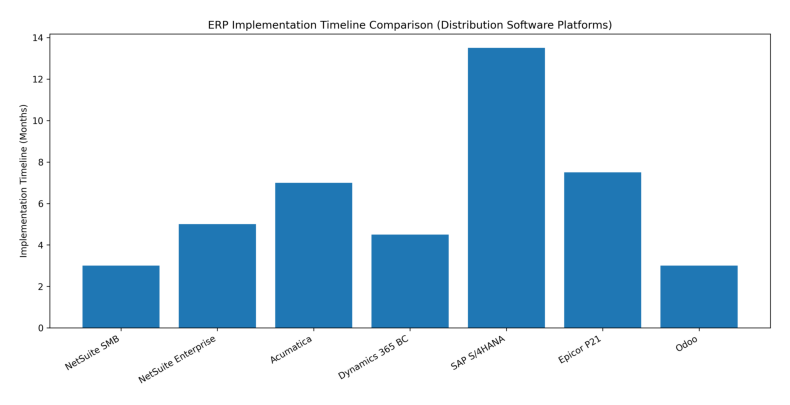
The demand for advanced distribution software has grown rapidly due to several structural changes within global commerce. One of the most significant drivers is the continued expansion of e-commerce, which has dramatically increased the volume and speed of order fulfillment requirements. With global online retail sales expected to reach trillions of dollars annually, businesses must process large numbers of orders while maintaining high levels of accuracy and delivery speed. Without robust distribution software, managing these operations efficiently becomes nearly impossible.

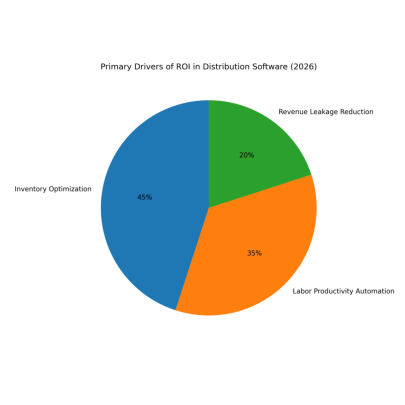
At the same time, global supply chains have become increasingly interconnected and vulnerable to disruptions. Geopolitical tensions, fluctuating tariffs, supply shortages, and transportation bottlenecks have forced companies to adopt digital tools capable of responding quickly to unexpected events. Modern distribution software platforms provide the intelligence and operational flexibility required to detect disruptions early, reroute shipments, and adjust inventory allocations across multiple warehouses and distribution centers.
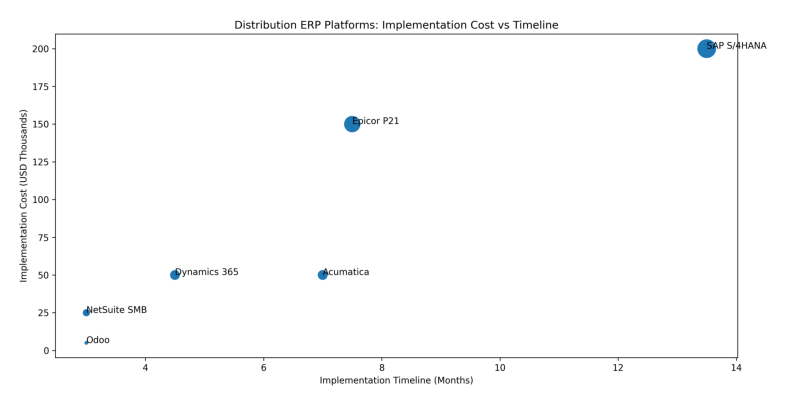
Another major factor driving the adoption of distribution software in 2026 is the shift toward data-driven decision-making. Companies are no longer relying solely on historical sales data or manual forecasting techniques to plan inventory and logistics operations. Instead, leading distribution platforms now incorporate artificial intelligence and machine learning models that analyze large volumes of internal and external data. These systems can identify patterns in demand fluctuations, supplier performance, seasonal trends, and consumer behavior, allowing organizations to optimize procurement and inventory strategies with unprecedented accuracy.
Cloud computing has also played a pivotal role in reshaping the distribution software landscape. Earlier enterprise systems often required expensive on-premise infrastructure and lengthy implementation processes. In contrast, modern cloud-based distribution platforms allow businesses to deploy sophisticated supply chain management tools quickly and scale their capabilities as operations expand. Cloud-native architectures enable real-time access to operational data across multiple locations, ensuring that decision-makers can monitor inventory, track shipments, and coordinate logistics activities from anywhere in the world.
The integration of microservices architecture, application programming interfaces, and modular software design has further accelerated innovation within the distribution software market. Companies can now customize their technology stack by integrating specialized tools such as warehouse automation platforms, predictive analytics engines, and supplier collaboration systems into their core ERP environment. This flexibility allows distributors to build technology ecosystems tailored to their specific operational requirements.
As these technological developments continue to reshape the logistics landscape, choosing the right distribution software has become a strategic priority for organizations of all sizes. Businesses must evaluate platforms not only based on their core functionality but also on factors such as scalability, artificial intelligence capabilities, ease of implementation, integration with existing systems, and long-term return on investment.
Large enterprise organizations often require highly sophisticated ERP and supply chain management platforms capable of supporting global operations and complex regulatory requirements. Systems such as SAP S/4HANA Cloud and Microsoft Dynamics 365 Supply Chain Management provide extensive capabilities for multinational distributors managing multiple subsidiaries and large warehouse networks.
Mid-sized distribution companies typically seek platforms that balance functionality with implementation efficiency. Solutions such as Acumatica Distribution Edition and Bizowie Cloud ERP offer robust operational features without the heavy infrastructure requirements associated with enterprise-scale systems.
Meanwhile, startups and smaller distributors are increasingly adopting modular ERP platforms like Odoo, which allow companies to implement individual software modules incrementally as their operational needs grow. This modular approach enables businesses to modernize their distribution infrastructure without committing to large upfront technology investments.
Warehouse management systems and specialized logistics platforms also play an increasingly important role within the broader distribution software ecosystem. Platforms such as Manhattan Active Warehouse Management and Blue Yonder provide advanced tools for managing automated warehouse environments, optimizing transportation routes, and coordinating logistics operations across large supply networks.
The rise of robotics, Internet of Things sensors, and predictive analytics is further expanding the capabilities of these systems. Automated warehouses equipped with intelligent robotics fleets can now process thousands of orders per hour while maintaining high levels of accuracy. Meanwhile, connected sensors embedded in pallets, vehicles, and storage facilities provide real-time operational data that feeds directly into distribution software platforms.
In addition to operational efficiency, sustainability has become an important consideration in modern distribution software. Governments and regulatory agencies around the world are introducing stricter environmental reporting requirements, particularly related to carbon emissions generated by supply chain activities. As a result, many leading distribution platforms now include tools for tracking environmental impact, optimizing transportation routes, and monitoring supplier sustainability performance.
All of these technological developments highlight the growing importance of distribution software in shaping the future of global commerce. What was once considered a back-office operational tool has now evolved into a central strategic platform that drives operational efficiency, customer satisfaction, and financial performance.
This comprehensive guide explores the top 10 distribution software platforms in the world in 2026, analyzing the technologies, capabilities, and innovations that have positioned them as leaders in the industry. From cloud-native ERP systems and AI-powered supply chain platforms to advanced warehouse management solutions, each of these technologies plays a vital role in enabling modern distribution organizations to thrive in an increasingly complex and competitive business environment.
Understanding the strengths and unique capabilities of these platforms will help businesses identify the most suitable distribution software solutions for their operational needs, ensuring they remain competitive in a rapidly evolving global supply chain landscape.
Before we venture further into this article, we would like to share who we are and what we do.
About 9cv9
9cv9 is a business tech startup based in Singapore and Asia, with a strong presence all over the world.
With over nine years of startup and business experience, and being highly involved in connecting with thousands of companies and startups, the 9cv9 team has listed some important learning points in this overview of the Top 10 Distribution Software in 2026.
If you like to get your company listed in our top B2B software reviews, check out our world-class 9cv9 Media and PR service and pricing plans here.
Top 10 Distribution Software in 2026
- Oracle NetSuite ERP
- Microsoft Dynamics 365
- SAP S/4HANA Cloud (Public Edition)
- Epicor Prophet 21 (P21)
- Infor CloudSuite Distribution (SX.e)
- Acumatica Distribution Edition
- Blue Yonder
- Manhattan Active Warehouse Management
- Bizowie Cloud ERP
- Odoo ERP
1. Oracle NetSuite ERP
Oracle NetSuite ERP continues to hold a dominant position within the global cloud ERP ecosystem, particularly among distribution companies that require integrated operational systems capable of handling complex supply chain processes. By 2026, NetSuite has established itself as one of the most widely adopted ERP platforms for mid-sized and large distributors seeking scalable cloud infrastructure, real-time analytics, and unified business management capabilities.
One of the defining characteristics of Oracle NetSuite ERP is its fully unified architecture. Unlike traditional enterprise systems that rely on multiple disconnected software tools to manage different business functions, NetSuite integrates financial management, inventory control, customer relationship management, procurement workflows, and e-commerce operations within a single cloud-based platform. This integrated approach eliminates data silos and provides organizations with a centralized operational environment where information flows seamlessly between departments.
For distribution companies operating in fast-paced markets, this unified data environment enables real-time visibility into inventory levels, order fulfillment activities, supplier transactions, and financial performance. Decision-makers can access accurate operational insights instantly, allowing them to respond quickly to changing market conditions and supply chain disruptions.
With a customer base exceeding 37,000 organizations globally, NetSuite has become particularly attractive to high-growth distributors managing complex supply networks and large transaction volumes. Its scalability allows businesses to expand their operations without needing to migrate to new software platforms as they grow.
Unified Architecture and Integrated Distribution Management
NetSuite’s unified architecture is one of the primary reasons it has become a preferred ERP solution for distribution companies. The platform was designed to centralize critical business processes into a single operational system, reducing the need for separate applications to manage accounting, inventory, sales, and logistics operations.
This architecture enables distributors to maintain a consistent and reliable “single source of truth” across their entire organization. Operational data such as product availability, customer orders, procurement activities, and financial transactions are stored within a single database environment, ensuring accuracy and reducing the risk of data discrepancies.
Table: Core Business Functions Integrated Within Oracle NetSuite ERP
| Functional Area | Operational Capability | Strategic Benefit |
|---|---|---|
| Financial Management | Accounting, revenue tracking, financial reporting | Real-time financial visibility |
| Inventory Management | Multi-location inventory tracking | Improved stock accuracy |
| Order Management | Automated order processing and fulfillment | Faster transaction processing |
| Customer Relationship Management | Customer data management and sales tracking | Enhanced customer service |
| E-commerce Integration | Online storefront and ERP data synchronization | Omnichannel sales support |
For distributors that operate across multiple warehouses or geographic regions, the ability to synchronize operational data across locations is essential. NetSuite’s centralized system ensures that inventory movements, sales transactions, and procurement updates are reflected immediately throughout the organization.
Pricing and Licensing Structure in 2026
Oracle NetSuite ERP follows a modular pricing model designed to support organizations with varying operational needs. Instead of offering a fixed pricing structure, the platform allows companies to select specific modules and user licenses based on their business requirements.
The base subscription provides access to the core ERP platform, while additional modules can be activated to extend system capabilities. These modules may include advanced inventory planning, manufacturing management, financial consolidation, and e-commerce integration.
Because of this modular design, the overall cost of NetSuite can vary significantly depending on the scale of deployment and the number of functional modules implemented.
Table: Estimated Oracle NetSuite Pricing Structure (2026)
| Cost Component | Pricing Estimate |
|---|---|
| Base License (Limited / Starter) | $999 – $1,000 per month |
| Base License (Mid-Market Tier) | Approximately $2,499 per month |
| Base License (Enterprise Tier) | $5,000 or more per month |
| Full User License | $129 – $199 per user per month |
| Self-Service / Employee License | $15 – $25 per user per month |
| Advanced Inventory Module | $499 – $2,000 per month |
| Manufacturing Module | $1,000 – $3,000 per month |
| Implementation Cost (Small and Mid-Sized Businesses) | $10,000 – $35,000 |
| Implementation Cost (Enterprise Deployments) | $150,000 – $500,000 or more |
These pricing ranges illustrate how the system can scale from smaller mid-market implementations to large enterprise deployments.
Distribution Capabilities and Supply Chain Performance
Oracle NetSuite ERP includes a broad range of features designed specifically to support distribution operations. The platform offers advanced tools for managing multi-location inventory, demand forecasting, procurement coordination, and order fulfillment processes.
One of the most valuable features for distribution companies is NetSuite’s demand planning capability. By analyzing historical sales data and current inventory levels, the system can generate forecasts that help organizations maintain optimal stock levels. This capability reduces the risk of inventory shortages while minimizing excess stock that ties up working capital.
Another key feature is multi-location inventory management. Distribution companies often operate multiple warehouses, fulfillment centers, and retail locations. NetSuite enables businesses to track inventory movements across these locations in real time, ensuring accurate stock visibility throughout the supply chain.
Table: Distribution Management Capabilities in Oracle NetSuite ERP
| Capability | Description | Business Impact |
|---|---|---|
| Demand Planning | Predictive inventory forecasting based on sales patterns | Improved procurement decisions |
| Multi-Location Inventory Management | Real-time tracking of inventory across warehouses | Increased supply chain visibility |
| Order Fulfillment Automation | Automated workflows for picking, packing, and shipping | Faster delivery times |
| Financial Consolidation | Integrated reporting across multiple subsidiaries | Simplified financial management |
| E-commerce Integration | Synchronization of online sales with ERP inventory data | Unified commerce operations |
These capabilities allow distribution companies to maintain operational efficiency even as their supply chains expand and become more complex.
Operational Challenges and Implementation Considerations
Despite its extensive capabilities, NetSuite ERP can present certain challenges during implementation and customization. One of the most frequently cited concerns among users is the complexity of advanced system configuration.
While the platform offers significant flexibility, customizing workflows and modules often requires experienced consultants with specialized knowledge of the NetSuite ecosystem. For organizations with highly specific operational requirements, these customization efforts can increase implementation costs and extend deployment timelines.
Additionally, companies transitioning from legacy systems may encounter challenges related to data migration and system integration. Ensuring that historical data is accurately transferred into the new platform requires careful planning and data cleansing processes.
Table: Common Challenges in NetSuite ERP Implementations
| Challenge | Description | Potential Impact |
|---|---|---|
| System Customization Complexity | Advanced configurations require expert support | Increased implementation costs |
| Data Migration | Migrating historical operational data into the system | Longer implementation timelines |
| User Training | Employees must adapt to new workflows and interfaces | Temporary productivity adjustments |
Despite these challenges, many organizations consider the long-term benefits of NetSuite’s integrated architecture to outweigh the initial implementation effort.
Strategic Importance of NetSuite for Distribution Businesses
Oracle NetSuite ERP remains one of the most influential distribution software platforms in the global market. Its unified architecture, scalability, and real-time data capabilities make it particularly valuable for distributors experiencing rapid growth or operating across multiple regions.
The platform enables organizations to manage financial operations, supply chain activities, and customer interactions within a single digital ecosystem. This integration improves operational transparency, enhances decision-making accuracy, and allows businesses to respond quickly to changing market conditions.
Key strategic advantages of Oracle NetSuite ERP include:
• Fully integrated ERP architecture combining financial, operational, and customer data
• Real-time visibility across multi-location inventory networks
• Scalable cloud infrastructure suitable for growing distribution companies
• Built-in e-commerce and omnichannel integration capabilities
• Advanced demand planning and supply chain forecasting tools
These features position NetSuite as one of the leading ERP platforms supporting digital transformation in the global distribution industry.
Conclusion
As distribution companies continue to adopt cloud-based technology and data-driven supply chain strategies, platforms such as Oracle NetSuite ERP will remain central to operational modernization efforts. Its ability to integrate multiple business functions within a single cloud environment enables organizations to streamline operations, improve financial oversight, and maintain greater control over complex supply chain networks.
For mid-sized and large distributors seeking a unified ERP platform capable of supporting high transaction volumes and global operations, Oracle NetSuite ERP continues to represent one of the most powerful and widely adopted solutions available in 2026.
2. Microsoft Dynamics 365
Microsoft Dynamics 365 has established itself as one of the most influential enterprise platforms within the global distribution software ecosystem. By 2026, Microsoft has successfully positioned its ERP and supply chain portfolio as a highly adaptable solution capable of serving both mid-sized distributors and large multinational enterprises. This strategic positioning has been achieved through a dual-product architecture that includes Dynamics 365 Business Central for mid-market organizations and Dynamics 365 Supply Chain Management for large-scale enterprises with complex logistics operations.
The defining characteristic of the Microsoft Dynamics 365 ecosystem in 2026 is the deep integration of artificial intelligence across the entire operational environment. Microsoft’s Copilot AI framework has transformed the ERP platform from a traditional transaction-processing system into an intelligent decision-support infrastructure. Instead of simply recording operational activities such as orders, inventory updates, and procurement transactions, the system now actively analyzes data to provide predictive insights and automated recommendations.
For distributors navigating volatile supply chains and unpredictable demand patterns, this shift toward cognitive ERP systems represents a major technological advancement. By integrating machine learning models directly into planning workflows, Dynamics 365 allows organizations to anticipate operational disruptions, optimize inventory levels, and automate complex supply chain decisions.
Microsoft’s Dual ERP Strategy for Distribution Companies
Microsoft’s ERP strategy in the distribution sector revolves around a two-tier architecture designed to support companies at different stages of operational maturity. This approach enables Microsoft to serve a wide range of businesses, from small distributors seeking cost-effective ERP solutions to global enterprises managing extensive warehouse networks and international supply chains.
Dynamics 365 Business Central focuses primarily on mid-market organizations that require strong financial management, inventory tracking, and basic supply chain planning. In contrast, Dynamics 365 Supply Chain Management offers advanced logistics capabilities, predictive analytics, and large-scale operational control for multinational enterprises.
Table: Microsoft Dynamics 365 ERP Portfolio for Distribution Businesses
| Platform | Primary Target Market | Core Focus Areas | Operational Complexity Level |
|---|---|---|---|
| Dynamics 365 Business Central | Small to Mid-Sized Distributors | Financials, inventory control, order management | Moderate |
| Dynamics 365 Supply Chain Management | Large Enterprises | Global logistics, advanced planning, automation | High |
This two-tier approach allows Microsoft to maintain consistent platform architecture while offering scalable functionality tailored to different operational requirements.
The Role of Copilot AI in the Dynamics 365 Ecosystem
One of the most significant developments within the Microsoft Dynamics ecosystem by 2026 is the pervasive integration of Copilot, Microsoft’s artificial intelligence assistant embedded directly within business applications. Copilot enables users to interact with ERP systems using natural language queries, automated insights, and predictive analytics.
Instead of relying solely on manual reporting or data analysis, distribution managers can now leverage AI-driven insights to identify potential supply chain disruptions, forecast demand shifts, and adjust procurement strategies in real time.
Table: Core Copilot AI Capabilities in Dynamics 365
| AI Capability | Description of Functionality | Operational Impact for Distributors |
|---|---|---|
| Predictive Demand Forecasting | Uses machine learning to analyze historical and live sales data | Improves demand planning accuracy |
| Automated Operational Insights | Identifies supply chain risks and operational inefficiencies | Enables proactive decision making |
| Natural Language Queries | Allows managers to ask operational questions in conversational language | Simplifies data access and reporting |
| AI-Assisted Procurement Planning | Recommends purchase orders based on demand forecasts | Optimizes supplier ordering strategies |
| Intelligent Workflow Automation | Automates repetitive operational tasks | Reduces manual administrative workload |
Through these capabilities, Microsoft Dynamics 365 has evolved into what analysts often describe as a cognitive ERP system, capable of learning from operational data and improving decision quality over time.
Financial Impact and Return on Investment
Independent industry research has consistently highlighted the strong financial performance associated with Dynamics 365 deployments. Studies conducted by Nucleus Research and Forrester Consulting have indicated that organizations adopting Dynamics 365 platforms experience significant improvements in operational efficiency, cost control, and revenue growth.
One frequently cited metric indicates that organizations receive approximately $16.97 in value for every dollar invested in the Dynamics 365 platform. This high return on investment is attributed to productivity improvements, reduced operational costs, improved inventory accuracy, and enhanced decision-making capabilities.
Table: Financial Impact of Microsoft Dynamics 365 Implementations
| Financial Metric | Business Central (Mid-Market) | Supply Chain Management (Enterprise) |
|---|---|---|
| Projected Net Present Value (3 Years) | $3.3 Million | $12.9 Million |
| Average Payback Period | 16 Months | 13–15 Months (Estimated) |
| Estimated User Licensing Cost | $70 – $100 per user per month | Negotiated enterprise licensing |
| Average ROI per $1 Invested | $16.97 | $16.97 |
These financial outcomes highlight the growing importance of AI-driven ERP systems as strategic investments rather than purely operational software tools.
Advanced Supply Chain Planning and Autonomous Operations
One of the major innovations introduced in Dynamics 365 Supply Chain Management by 2026 is the concept of Autonomous Supply Chain Operations. This approach combines predictive analytics, real-time data integration, and machine learning algorithms to create a more responsive and adaptive supply chain management framework.
Traditional supply chain planning models often rely on static forecasts and manual adjustments. In contrast, Dynamics 365 SCM uses continuous data inputs from sales transactions, promotional campaigns, supplier performance metrics, and lead-time variability to refine forecasts dynamically.
Table: Autonomous Supply Chain Capabilities in Dynamics 365 SCM
| Capability Area | Description of Functionality | Strategic Value for Distributors |
|---|---|---|
| Real-Time Forecast Adjustments | Continuously updates demand forecasts based on live sales data | Improves planning accuracy |
| Supplier Lead-Time Analysis | Evaluates supplier performance variability | Reduces procurement uncertainty |
| Promotion Impact Forecasting | Predicts demand spikes caused by marketing campaigns | Prevents inventory shortages |
| Predictive Risk Detection | Identifies potential supply chain disruptions early | Improves operational resilience |
According to platform performance benchmarks, these predictive capabilities can reduce demand forecasting errors by as much as 40 percent. This improvement directly impacts inventory carrying costs, warehouse utilization efficiency, and overall customer satisfaction.
Demand Driven Material Requirements Planning (DDMRP)
Another critical feature integrated into Dynamics 365 SCM is Demand Driven Material Requirements Planning, commonly referred to as DDMRP. This advanced planning methodology improves inventory placement by establishing dynamic stock buffers based on real-time demand signals rather than static forecasting models.
Within Dynamics 365, Copilot assists planners by analyzing demand fluctuations, supply constraints, and inventory velocity to automatically adjust buffer levels across distribution networks.
Table: DDMRP Benefits in Distribution Operations
| Planning Capability | Description | Business Outcome |
|---|---|---|
| Dynamic Inventory Buffers | Automatically adjusts stock levels based on demand signals | Prevents overstock and stockouts |
| Intelligent Replenishment | Automates procurement decisions using predictive demand models | Improves supply chain efficiency |
| Multi-Node Inventory Placement | Optimizes inventory distribution across multiple warehouses | Reduces shipping delays |
| AI-Driven Planning Recommendations | Copilot suggests optimal inventory strategies | Enhances decision-making accuracy |
These capabilities allow distributors to operate leaner supply chains while maintaining high service levels for customers.
Strategic Advantages for Distribution Companies
Several factors have contributed to the strong adoption of Microsoft Dynamics 365 within the distribution industry. One of the most significant advantages is its seamless integration with the broader Microsoft technology ecosystem, including Microsoft 365 productivity tools, Power BI analytics, and Azure cloud infrastructure.
This integration allows organizations to create a unified digital workplace where operational data, analytics dashboards, and collaboration tools coexist within a single technology environment.
Key advantages include:
• Deep integration with Microsoft productivity tools
• AI-powered operational insights through Copilot
• Scalable architecture for both mid-market and enterprise organizations
• Advanced supply chain planning capabilities
• Strong analytics and reporting through integrated business intelligence
For distributors seeking to modernize supply chain operations while leveraging AI-driven decision support, Dynamics 365 provides a comprehensive platform that bridges operational execution with strategic planning.
The Future Role of Microsoft Dynamics 365 in Distribution Technology
As supply chains become increasingly complex and data-driven, ERP platforms must evolve beyond simple record-keeping systems. Microsoft Dynamics 365 represents a significant step in this transformation by combining enterprise resource planning with advanced artificial intelligence and predictive analytics.
By 2026, the platform has become a central component in the digital transformation strategies of many global distribution organizations. Its AI-powered capabilities, strong financial impact metrics, and flexible deployment options position Microsoft Dynamics 365 as one of the most advanced distribution software solutions shaping the future of intelligent supply chain management.
3. SAP S/4HANA Cloud (Public Edition)
SAP S/4HANA Cloud (Public Edition) continues to serve as one of the most robust enterprise resource planning systems supporting large-scale distribution organizations across global markets. In 2026, the platform remains a core technology backbone for multinational enterprises that require resilient supply chain infrastructure, strict financial governance, and highly scalable operational frameworks.
Unlike mid-market ERP systems designed for rapidly growing distributors, SAP S/4HANA Cloud is typically deployed by large corporations managing highly complex supply chains that span multiple regions, subsidiaries, and regulatory environments. The platform is particularly well suited for organizations that operate international logistics networks, manage extensive product catalogs, and require sophisticated compliance and financial reporting capabilities.
A major strategic shift within SAP’s ERP ecosystem by 2026 is the adoption of the Clean Core approach. This philosophy encourages businesses to move away from heavy customizations embedded within the ERP core system and instead adopt standardized operational processes supported by modular microservices. By minimizing core system modifications, SAP enables faster upgrades, improved system stability, and greater compatibility with future innovations.
The Clean Core Strategy and Microservices Architecture
The Clean Core strategy represents a major transformation in the way SAP systems are implemented and maintained. Traditional ERP implementations often relied heavily on deep customizations that altered the underlying system code. While these customizations allowed companies to tailor the system to their operational workflows, they frequently created significant challenges during software upgrades and system migrations.
SAP’s modern architecture encourages organizations to keep the ERP core standardized while placing custom business logic, extensions, and integrations on the SAP Business Technology Platform. This approach separates innovation from core system functionality and allows companies to deploy enhancements without disrupting the main ERP environment.
Table: Clean Core Architecture in SAP S/4HANA Cloud
| Architecture Component | Description of Functionality | Operational Benefit for Enterprises |
|---|---|---|
| ERP Core Platform | Standardized core business processes for finance, supply chain, and operations | Ensures stability and upgrade compatibility |
| SAP Business Technology Platform | Extension layer for custom applications, integrations, and automation | Enables innovation without altering core ERP |
| Microservices Architecture | Modular services that support individual business capabilities | Allows flexible system expansion |
| API-Based Integration Framework | Connects SAP systems with third-party applications and data platforms | Improves interoperability with external systems |
This architectural shift allows enterprises to adopt new technologies such as artificial intelligence and predictive analytics without compromising the stability of their ERP infrastructure.
Artificial Intelligence Integration and the Joule Copilot
Artificial intelligence has become a central component of SAP’s ERP strategy by 2026. One of the most prominent AI innovations within the SAP ecosystem is Joule, an intelligent copilot designed to assist users in performing complex business tasks more efficiently.
Joule integrates directly into SAP applications and uses natural language interaction, automation workflows, and predictive analytics to support decision-making across finance, procurement, supply chain operations, and customer management.
Within finance departments, Joule-based automation has demonstrated significant productivity improvements. According to SAP research estimates, finance professionals can reduce the time spent on manual reconciliation processes by as much as 70 percent when AI-assisted automation tools are implemented.
Table: Joule AI Copilot Capabilities in SAP S/4HANA Cloud
| AI Capability | Description of Functionality | Business Impact |
|---|---|---|
| Automated Financial Reconciliation | Uses AI to match transactions and resolve discrepancies | Reduces manual accounting workload |
| Natural Language Data Queries | Allows users to retrieve business insights through conversational prompts | Simplifies data analysis |
| Intelligent Workflow Automation | Automates routine administrative tasks | Improves operational efficiency |
| Predictive Supply Chain Insights | Identifies potential inventory shortages or supply chain disruptions | Enhances proactive planning |
| AI-Assisted Sales Processing | Generates structured sales orders from unstructured communications | Accelerates order processing |
These AI-driven capabilities are part of SAP’s broader vision to transform enterprise software into intelligent business platforms capable of supporting predictive decision-making.
SAP S/4HANA Cloud Platform Metrics and Market Performance
SAP S/4HANA Cloud has achieved widespread adoption among enterprise organizations across manufacturing, distribution, retail, and logistics industries. Its performance metrics reflect strong customer retention rates, high user satisfaction, and significant enterprise deployment volumes.
Table: SAP S/4HANA Cloud Platform Metrics (2026)
| Performance Metric | Value or Estimate |
|---|---|
| Average Cost per User | Approximately $200 per user per month |
| Minimum Implementation Fee | Approximately $75,000 |
| Verified Global Installations | Over 10,000 enterprise deployments |
| Customer Retention Rate | Approximately 78 percent |
| Average User Rating (G2) | 4.5 out of 5 |
| User Recommendation Rate | Between 73 percent and 75 percent |
These figures indicate strong enterprise confidence in SAP’s ERP platform, particularly among organizations that require robust operational control across large supply chain networks.
AI-Powered Sales and Operational Automation
The SAP S/4HANA roadmap for 2026 includes several AI-driven capabilities designed to automate operational tasks and enhance business productivity. Among the most notable innovations is the ability for the system to automatically generate sales orders from unstructured business communications such as emails, documents, or customer messages.
Using natural language processing and AI-based document recognition, the platform can extract relevant order information and convert it into structured ERP transactions. This capability significantly reduces the administrative workload associated with manual order entry.
Additionally, SAP has introduced AI-assisted project services tools designed to support agile business management. These tools analyze project timelines, resource allocation, and financial forecasts to recommend adjustments that improve operational efficiency.
Table: AI-Enhanced Operational Features in SAP S/4HANA Cloud
| Feature Area | Description | Operational Advantage |
|---|---|---|
| Automated Sales Order Creation | Converts unstructured customer communications into ERP orders | Reduces manual data entry |
| Intelligent Project Services | Provides AI recommendations for project scheduling and resource allocation | Improves project delivery efficiency |
| Predictive Financial Analysis | Identifies financial anomalies and forecasting trends | Enhances financial planning accuracy |
| Automated Workflow Management | Streamlines approval processes and operational tasks | Improves administrative efficiency |
These innovations allow enterprises to operate more efficiently while improving the accuracy and speed of business processes.
Industry-Specific Innovation Through SAP Business Data Cloud
Another major development in SAP’s ERP ecosystem is the introduction of industry-focused data platforms that support predictive analytics and operational intelligence. One example introduced in 2026 is Retail Intelligence within the SAP Business Data Cloud.
This solution aggregates and harmonizes operational data from multiple sources, including sales channels, warehouse systems, supplier networks, and external business platforms. By consolidating this information within a unified analytics environment, organizations can generate deeper insights into market trends, customer behavior, and supply chain performance.
Table: Retail Intelligence Capabilities in SAP Business Data Cloud
| Capability Area | Description | Strategic Benefit |
|---|---|---|
| Data Harmonization | Integrates data from SAP and third-party systems | Creates a unified enterprise data environment |
| AI-Based Supply Chain Simulation | Uses predictive models to simulate supply chain scenarios | Supports proactive planning decisions |
| Inventory Optimization Analytics | Evaluates stock levels across distribution networks | Reduces excess inventory and shortages |
| Sales and Demand Intelligence | Analyzes consumer behavior and purchasing patterns | Improves demand forecasting accuracy |
By using AI-powered simulations, the platform enables organizations to test different supply chain scenarios and anticipate potential disruptions before they occur.
Strategic Value for Global Distribution Enterprises
SAP S/4HANA Cloud remains one of the most powerful ERP platforms available to global distribution companies. Its architecture, scalability, and AI-driven capabilities allow large organizations to manage extensive supply chains with high levels of operational control.
Key advantages for distribution enterprises include:
• Highly scalable infrastructure for multinational operations
• Strong financial governance and regulatory compliance tools
• AI-powered automation across finance and supply chain processes
• Integration capabilities through the SAP Business Technology Platform
• Predictive analytics supporting proactive supply chain management
These capabilities allow enterprises to shift from reactive operational management toward more predictive and data-driven strategies.
The Role of SAP S/4HANA Cloud in the Future of Distribution Software
As global supply chains grow more complex and interconnected, enterprise ERP systems must evolve to support advanced analytics, automation, and intelligent decision-making. SAP S/4HANA Cloud has positioned itself at the center of this transformation by combining traditional ERP capabilities with modern cloud architecture and artificial intelligence.
By 2026, the platform continues to serve as a foundational technology for multinational distributors seeking operational resilience, financial transparency, and scalable digital infrastructure. Its Clean Core strategy, AI-powered Joule copilot, and advanced data analytics platforms demonstrate SAP’s commitment to building intelligent enterprise systems capable of supporting the next generation of global distribution operations.
4. Epicor Prophet 21 (P21)
Epicor Prophet 21, commonly referred to as P21, has long been recognized as one of the most specialized enterprise resource planning platforms designed specifically for wholesale and industrial distribution companies. By 2026, the system continues to hold a strong position within the distribution software market due to its industry-focused architecture, which directly addresses the operational challenges faced by distributors in sectors such as manufacturing supply, industrial parts, building materials, and wholesale logistics.
Unlike many general-purpose ERP platforms that require extensive configuration or customization to support distribution workflows, Epicor Prophet 21 was designed from the outset to support the unique operational requirements of distribution businesses. This sector-specific focus has allowed the platform to deliver highly specialized features related to inventory management, pricing strategies, supplier coordination, and order fulfillment.
By 2026, the platform has evolved further with the integration of Epicor Prism, a generative artificial intelligence engine developed specifically for supply chain and distribution environments. Prism enhances operational efficiency by automating routine decision-making tasks, simplifying access to operational data, and enabling users to interact with the ERP system using conversational queries.
Epicor Prophet 21’s Position Within the Distribution Software Market
Epicor Prophet 21 occupies a distinct niche in the ERP landscape. While large enterprise platforms such as SAP and Oracle NetSuite serve a broad range of industries, P21 focuses specifically on the operational needs of distributors. This targeted approach allows the system to deliver out-of-the-box functionality that aligns closely with the workflows of wholesale and industrial supply businesses.
The platform is widely adopted by organizations ranging from mid-sized distributors to large regional supply chains. Its ability to support both smaller organizations and companies with thousands of users makes it one of the more flexible ERP solutions within the distribution sector.
Table: Market Position of Epicor Prophet 21 in Distribution ERP Landscape
| ERP Platform Category | Target Market Segment | Distribution Specialization | Customization Requirements |
|---|---|---|---|
| General Enterprise ERP Systems | Large multinational enterprises | Moderate | High |
| Mid-Market ERP Platforms | Growing distributors and wholesalers | Moderate | Moderate |
| Industry-Specific Distribution ERP | Wholesale and industrial distributors | Very High | Low |
Epicor Prophet 21 falls within the industry-specific ERP category, offering built-in functionality that directly addresses distribution-specific operations without requiring extensive system modification.
Integration of Epicor Prism Generative AI
One of the most important technological developments within the Prophet 21 ecosystem in 2026 is the integration of Epicor Prism. This generative AI framework is designed to enhance supply chain decision-making by providing intelligent insights, automating repetitive operational tasks, and improving access to ERP data.
Prism enables users to retrieve complex operational information through simple natural language queries. Rather than navigating multiple reports or dashboards, distribution managers can ask the system questions related to inventory levels, sales trends, or supplier performance and receive immediate insights.
Table: Epicor Prism AI Capabilities in Prophet 21
| AI Capability | Description of Functionality | Operational Benefit for Distributors |
|---|---|---|
| Conversational Data Access | Allows users to retrieve ERP insights using natural language | Simplifies reporting and analytics |
| Automated Operational Decisions | AI assists with routine supply chain decisions | Reduces manual planning tasks |
| Predictive Inventory Insights | Analyzes historical and real-time data to forecast inventory demand | Improves purchasing accuracy |
| Intelligent Workflow Automation | Automates repetitive ERP processes such as approvals or updates | Enhances operational efficiency |
Through these capabilities, Prism transforms Prophet 21 from a traditional ERP platform into a more intelligent operational management system that actively assists users in optimizing supply chain performance.
Inventory Optimization and Operational Efficiency
One of the central value propositions of Epicor Prophet 21 is its ability to optimize inventory management. In distribution businesses, inventory typically represents one of the largest operational expenses. Excess stock ties up working capital, while insufficient inventory leads to lost sales and reduced customer satisfaction.
Prophet 21 addresses this challenge through advanced demand forecasting tools, inventory planning algorithms, and automated replenishment systems. These features allow organizations to maintain optimal stock levels while minimizing waste and storage costs.
Industry performance benchmarks suggest that organizations implementing Prophet 21 often experience measurable improvements in inventory efficiency.
Table: Operational Performance Impact of Prophet 21
| Performance Metric | Estimated Impact of Implementation |
|---|---|
| Inventory Level Reduction | 15 percent to 20 percent decrease |
| Service Level Improvement | Increased order fulfillment accuracy |
| Operational Productivity | Improved warehouse efficiency |
| Working Capital Optimization | Reduced capital tied to excess stock |
These operational improvements allow distributors to improve profitability while maintaining high service levels for customers.
Deployment Flexibility and User Scalability
Another major advantage of Epicor Prophet 21 is its flexible deployment architecture. The system supports several deployment models, allowing organizations to select an infrastructure approach that aligns with their IT strategy and security requirements.
Companies can deploy Prophet 21 through cloud infrastructure hosted on Microsoft Azure, maintain an on-premise installation, or implement a hybrid architecture that combines elements of both environments.
Table: Deployment Options for Epicor Prophet 21
| Deployment Model | Description | Suitable Organization Type |
|---|---|---|
| Cloud Deployment (Azure) | ERP system hosted within Microsoft Azure cloud infrastructure | Organizations seeking scalability and reduced IT maintenance |
| On-Premise Deployment | ERP system installed within the company’s internal infrastructure | Companies requiring direct system control |
| Hybrid Deployment | Combination of cloud services and local infrastructure | Organizations transitioning to cloud environments |
This flexibility allows distributors to modernize their IT infrastructure gradually while maintaining operational continuity.
Platform Adoption and User Ecosystem
Epicor Prophet 21 has built a stable and dedicated user community within the distribution sector. By 2026, the platform maintains a substantial install base composed primarily of wholesale and industrial distributors across North America, Europe, and other global markets.
Table: Epicor Prophet 21 Platform Statistics (2026)
| Metric | Estimated Value |
|---|---|
| Installed Customer Base | Approximately 2,500 organizations |
| Typical User Range per Company | 10 to 2,000 users |
| Average Cost per User | Approximately $200 per user per month |
| Supported Deployment Models | Cloud, On-Premise, Hybrid |
These figures demonstrate the platform’s scalability, allowing both small and large distributors to operate within the same ERP framework.
Technical Architecture and Development Stack
Epicor Prophet 21 is built upon a modern technology stack designed to support performance, scalability, and web-based accessibility. The system utilizes contemporary web technologies that allow users to access ERP functionality through browser-based interfaces without requiring extensive local software installations.
Table: Technical Stack Supporting Epicor Prophet 21
| Technology Layer | Core Technologies Used | System Benefit |
|---|---|---|
| Web Interface | HTML5 | Enables browser-based ERP access |
| Front-End Framework | Angular JS | Supports responsive and modern UI design |
| Application Layer | Microsoft .NET Framework | Ensures stable enterprise application performance |
| Database Infrastructure | Microsoft SQL Server | Provides scalable data management |
This technology foundation allows the system to support modern business environments where employees require access to ERP systems across various devices and locations.
Advanced Distribution Functionality
Beyond standard ERP features, Prophet 21 includes several advanced capabilities designed specifically for the distribution industry. These capabilities include complex pricing management, customer relationship management tools, demand forecasting, and automated order processing.
Table: Advanced Distribution Capabilities in Prophet 21
| Functional Area | Description | Business Benefit |
|---|---|---|
| Advanced Pricing Matrices | Supports complex pricing rules based on customer segments and volume | Enables flexible pricing strategies |
| Demand Forecasting | Predicts product demand based on historical sales patterns | Improves inventory planning accuracy |
| Integrated CRM | Connects customer data with sales and support interactions | Enhances customer relationship management |
| Electronic Document Workflows | Converts paper-based processes into automated digital workflows | Increases operational efficiency |
One of the most notable operational improvements provided by these tools is the migration from manual paperwork to digital transaction processing. By automating previously paper-based processes, distributors can significantly increase order throughput without expanding administrative staff.
Strategic Importance for Distribution Businesses
Epicor Prophet 21 continues to be regarded as one of the most specialized ERP platforms available to distribution businesses. Its industry-focused design allows companies to deploy a system that aligns closely with their operational needs while minimizing the need for costly customization.
Key strategic benefits include:
• Built-in functionality tailored specifically for distributors
• AI-powered insights through Epicor Prism
• Strong inventory optimization capabilities
• Flexible deployment models supporting cloud and on-premise environments
• Scalable architecture supporting organizations from 10 to 2,000 users
These features make Prophet 21 particularly valuable for industrial and wholesale distributors seeking operational efficiency while maintaining control over inventory and supply chain processes.
Future Role of Epicor Prophet 21 in Distribution Technology
As the distribution industry continues to modernize, specialized ERP platforms like Epicor Prophet 21 play an increasingly important role in supporting sector-specific operational requirements. By combining industry expertise with modern technologies such as generative AI and cloud deployment models, the platform continues to evolve alongside the changing needs of distribution organizations.
By 2026, Epicor Prophet 21 remains one of the most trusted ERP systems within the wholesale and industrial distribution sector, offering a powerful combination of inventory optimization, operational automation, and AI-driven decision support that enables distributors to remain competitive in increasingly complex supply chain environments.
5. Infor CloudSuite Distribution (SX.e)
Infor CloudSuite Distribution, historically known as Infor SX.e, continues to hold a strong position within the global distribution software ecosystem in 2026 by focusing on a unique strategic approach known as micro-vertical specialization. Rather than delivering a broad, generalized ERP platform, Infor has designed CloudSuite Distribution to serve highly specific segments of the distribution industry. These include sectors such as HVAC supply, electrical components, plumbing products, industrial equipment, and building materials.
This industry-focused strategy allows the platform to provide functionality tailored to the operational workflows, pricing structures, and supply chain dynamics that define these specialized industries. As a result, companies operating within these sectors often find that the platform requires fewer modifications compared with traditional ERP systems that must be heavily customized to support distribution-specific processes.
Built on the Infor OS digital platform, CloudSuite Distribution integrates advanced analytics, artificial intelligence, and modern cloud infrastructure into a unified enterprise environment. This architecture allows distributors to manage procurement, warehouse operations, financial processes, and customer interactions while simultaneously leveraging predictive analytics and machine learning insights.
Micro-Vertical Strategy and Industry-Specific Functionality
Infor’s micro-vertical strategy distinguishes CloudSuite Distribution from many other ERP platforms on the market. Instead of offering a one-size-fits-all system, the platform incorporates industry-specific workflows and operational tools designed for particular distribution segments.
These micro-vertical capabilities allow businesses to address highly specialized operational requirements such as equipment rental management, contractor-based sales models, and project-based procurement processes.
Table: Micro-Vertical Focus Areas of Infor CloudSuite Distribution
| Industry Segment | Key Operational Requirements Supported by the Platform |
|---|---|
| HVAC Distribution | Contractor pricing models, seasonal inventory planning |
| Electrical Supply Distribution | Complex product catalogs and multi-branch inventory |
| Plumbing Distribution | Contractor order management and supplier coordination |
| Industrial Equipment Distribution | Lifecycle management and service tracking |
| Building Materials Distribution | Project-based procurement and bulk logistics |
By delivering industry-aligned capabilities within the core platform, Infor CloudSuite Distribution reduces the need for extensive customization and shortens ERP implementation timelines.
Platform Architecture and the Role of Infor OS
The technical foundation of CloudSuite Distribution is Infor OS, a cloud-based digital platform that connects multiple enterprise systems and services within a single technology environment. Infor OS enables seamless integration between ERP functionality, analytics tools, artificial intelligence engines, and external business systems.
This architecture also supports the deployment of advanced technologies such as Birst analytics and Coleman AI, which enhance operational visibility and enable data-driven decision-making.
Table: Core Technology Components of Infor CloudSuite Distribution
| Technology Layer | Platform Component | Functional Purpose |
|---|---|---|
| ERP Core System | CloudSuite Distribution | Manages finance, inventory, and supply chain |
| Digital Platform Infrastructure | Infor OS | Connects enterprise applications and services |
| Analytics Engine | Infor Birst | Provides advanced reporting and data visualization |
| Artificial Intelligence Engine | Infor Coleman AI | Delivers predictive insights and automation |
| Integration Framework | API-based connectivity | Enables integration with external software |
This modular architecture allows distributors to expand system capabilities as operational needs evolve, without disrupting core business processes.
Financial Performance and Operational Productivity Gains
Organizations implementing Infor CloudSuite Distribution have reported significant improvements in operational efficiency and financial performance. Case studies conducted in 2026 demonstrate that companies adopting the platform often experience measurable gains in warehouse productivity, order processing efficiency, and revenue optimization.
These improvements are largely attributed to automation tools, predictive analytics capabilities, and enhanced inventory management systems embedded within the platform.
Table: Measured Business Impact of Infor CloudSuite Distribution Deployments
| Performance Metric | Reported Impact from Platform Implementation |
|---|---|
| Return on Investment (ROI) | Approximately 114 percent |
| Warehouse Productivity Increase | Approximately 30 percent improvement |
| Revenue Leakage Reduction | Approximately 70 percent reduction |
| Sales Order Processing Speed | Approximately 30 percent faster |
The reduction in revenue leakage is particularly significant for distributors operating with complex pricing structures and multi-channel sales environments. By automating pricing validation and order processing workflows, the platform reduces the likelihood of pricing errors and unbilled services.
Pricing Structure and Implementation Range
Infor CloudSuite Distribution offers a pricing structure designed to accommodate businesses of varying sizes within the distribution sector. Subscription costs are typically determined by user licensing, implementation scope, and the range of modules deployed.
Table: Infor CloudSuite Distribution Pricing Overview (2026)
| Cost Component | Estimated Pricing Range |
|---|---|
| Average Cost per User | Approximately $150 per user per month |
| Minimum Implementation Fee | Approximately $15,000 |
| Typical Implementation Range | $15,000 to $500,000 depending on scope |
| Installed Customer Base | Over 800 organizations worldwide |
Implementation costs can vary widely depending on factors such as company size, number of distribution centers, and the level of customization required for industry-specific workflows.
Advanced Operational Capabilities in the 2026 Platform
The 2026 release of Infor CloudSuite Distribution introduces several advanced capabilities designed to improve supply chain visibility and operational efficiency. Among the most notable innovations is the introduction of three-dimensional visibility into inventory and order fulfillment operations.
This capability allows warehouse managers and supply chain planners to visualize stock locations, fulfillment processes, and logistics flows within an interactive environment that enhances decision-making and operational coordination.
Table: Key Advanced Capabilities in the 2026 Platform
| Capability Area | Description of Functionality | Operational Benefit |
|---|---|---|
| 3D Inventory Visualization | Interactive visual representation of warehouse inventory | Improves warehouse planning and coordination |
| Real-Time Order Fulfillment Tracking | Monitors fulfillment progress across distribution centers | Enhances supply chain transparency |
| Predictive Inventory Analytics | Uses AI to anticipate stock shortages and demand fluctuations | Improves procurement planning |
| Workflow Automation | Automates repetitive operational tasks | Reduces administrative workload |
These capabilities help distribution organizations improve warehouse efficiency while gaining deeper insight into operational performance.
Environmental, Social, and Governance (ESG) Compliance Capabilities
Another significant innovation introduced within the 2026 platform is the integration of AI-powered Environmental, Social, and Governance (ESG) tracking. As regulatory frameworks continue to evolve globally, many organizations must monitor and report environmental impact, supply chain sustainability, and corporate governance practices.
Infor CloudSuite Distribution incorporates ESG monitoring tools that track environmental metrics and supplier compliance within supply chain operations.
Table: ESG Monitoring Features in Infor CloudSuite Distribution
| ESG Capability | Description | Compliance Benefit |
|---|---|---|
| Environmental Impact Tracking | Monitors carbon footprint associated with logistics operations | Supports sustainability reporting |
| Supplier Compliance Monitoring | Tracks supplier adherence to ESG regulations | Improves supply chain transparency |
| Regulatory Reporting Automation | Generates reports required for environmental and governance audits | Reduces compliance workload |
| AI-Based Sustainability Analysis | Identifies opportunities to reduce environmental impact | Supports strategic sustainability initiatives |
These tools help organizations align operational practices with emerging regulatory and sustainability standards.
Rental and Lifecycle Management for Equipment Distributors
For distributors operating in machinery and equipment sectors, CloudSuite Distribution provides advanced lifecycle management capabilities that track assets from procurement through rental, maintenance, and eventual replacement.
This functionality is particularly valuable for distributors that manage large fleets of rentable equipment or industrial machinery requiring regular servicing.
Table: Equipment Lifecycle Management Capabilities
| Lifecycle Stage | Platform Capability | Operational Benefit |
|---|---|---|
| Equipment Procurement | Tracks asset acquisition and supplier data | Improves asset visibility |
| Rental Management | Manages rental contracts, billing, and equipment allocation | Supports rental-based revenue models |
| Maintenance Scheduling | Automates service schedules and repair tracking | Extends equipment lifespan |
| Asset Retirement | Manages equipment disposal or resale processes | Optimizes asset lifecycle value |
These tools allow distributors to expand service-based business models while maintaining full visibility over equipment performance and utilization.
Strategic Value for Specialized Distribution Businesses
Infor CloudSuite Distribution remains one of the most specialized ERP platforms available to distributors operating within niche industry segments. Its micro-vertical design allows organizations to deploy systems that align closely with industry-specific workflows, reducing the need for extensive customization and accelerating operational efficiency.
Key strategic benefits include:
• Industry-specific functionality tailored to specialized distribution sectors
• Integrated analytics through the Birst intelligence platform
• AI-driven insights powered by Coleman AI
• Cloud-based infrastructure supporting scalable operations
• Advanced inventory visibility and warehouse management tools
These capabilities make the platform particularly attractive for distributors operating within technically complex industries that require specialized operational support.
Future Outlook for Infor CloudSuite Distribution
As the distribution industry continues to evolve in response to technological innovation and regulatory change, ERP platforms must provide both operational flexibility and deep industry expertise. Infor CloudSuite Distribution has positioned itself as a solution that combines cloud technology, artificial intelligence, and sector-specific functionality to address these demands.
By 2026, the platform remains a key technology solution for specialized distributors seeking operational precision, data-driven insights, and scalable digital infrastructure capable of supporting modern supply chain management.
6. Acumatica Distribution Edition
Acumatica Distribution Edition has emerged as one of the fastest-growing enterprise resource planning platforms within the global distribution software market by 2026. Positioned primarily as a cloud-native ERP solution for mid-sized and rapidly expanding distribution companies, the platform has gained significant traction due to its flexible licensing structure, modern user interface, and strong emphasis on scalability.
Unlike many traditional ERP systems that charge customers based on the number of individual users accessing the system, Acumatica introduced a resource-based licensing model. This approach allows organizations to scale system usage according to computing resources and transaction volume rather than per-user access. As a result, companies can add employees, seasonal workers, or temporary staff without incurring additional user licensing fees.
For distributors experiencing seasonal demand fluctuations or workforce expansion during peak business cycles, this licensing structure provides a major financial advantage. It enables companies to increase operational capacity without significantly increasing software subscription costs.
The platform has therefore become particularly appealing to mid-market distribution businesses seeking enterprise-level functionality while maintaining predictable software costs and flexible operational scalability.
Resource-Based Licensing Model and Its Strategic Impact
Acumatica’s resource-based licensing model represents a significant departure from the traditional per-seat ERP pricing structure that has dominated the industry for decades. In conventional ERP environments, companies are typically required to purchase additional user licenses for every employee accessing the system, which can lead to escalating costs as organizations grow.
Acumatica instead measures licensing based on the computing resources consumed by the organization, including transaction volumes, system throughput, and overall operational usage. This allows businesses to expand their workforce without being constrained by licensing limitations.
Table: Comparison of ERP Licensing Models in the Distribution Software Market
| Licensing Model | Pricing Basis | Operational Impact for Distributors |
|---|---|---|
| Per-User Licensing | Cost determined by number of system users | Increased costs as workforce expands |
| Module-Based Licensing | Pricing tied to specific ERP modules | Costs increase with functionality expansion |
| Resource-Based Licensing | Pricing based on computing resource usage | Enables workforce scalability without added license fees |
By eliminating user-based cost constraints, Acumatica allows distribution companies to adopt a more flexible workforce strategy, particularly during periods of seasonal demand such as peak retail cycles or industry-specific supply surges.
Market Growth and Adoption Trends
Acumatica’s adoption has accelerated rapidly in the mid-market ERP segment. Many distributors view the platform as a viable alternative to more established ERP systems that are often perceived as complex or costly to implement.
The platform’s cloud-native design and modern user interface have further contributed to its growth. Businesses transitioning from legacy on-premise ERP systems frequently cite Acumatica’s ease of deployment, mobile accessibility, and simplified system management as major advantages.
Table: Key Market Adoption Characteristics of Acumatica Distribution Edition
| Adoption Factor | Description | Business Impact |
|---|---|---|
| Cloud-Native Architecture | Fully cloud-based ERP platform with browser-based access | Eliminates infrastructure maintenance |
| Modern User Interface | Intuitive dashboards and responsive design | Improves user productivity |
| Flexible Licensing Model | Resource-based pricing structure | Reduces cost barriers for scaling teams |
| Mobile Accessibility | Supports mobile device access for field operations | Enables remote workforce management |
These characteristics have positioned Acumatica as a strong challenger within the distribution ERP market, particularly among companies seeking modern cloud infrastructure without complex enterprise licensing structures.
User Satisfaction and Platform Performance Ratings
Independent user review platforms have consistently reported high satisfaction levels among organizations using Acumatica. In 2026, ratings from enterprise software review platforms indicate that the system frequently scores higher than some established ERP competitors across several key usability categories.
These ratings reflect positive feedback regarding reporting functionality, system usability, implementation experience, and product innovation.
Table: ERP Platform Comparison Based on G2 User Ratings (2026)
| Rating Category | Acumatica Score | NetSuite Score |
|---|---|---|
| Reporting and Dashboards | 86 percent | 77 percent |
| Ease of Use | 85 percent | 76 percent |
| Ease of Setup | 80 percent | 70 percent |
| Product Direction and Innovation | 93 percent | 82 percent |
| Quality of Support | High (Partner-Led Model) | Moderate (Vendor-Led Model) |
One factor contributing to Acumatica’s high support rating is its partner-driven support model. Instead of relying exclusively on vendor-managed support services, Acumatica works closely with regional implementation partners who provide ongoing system assistance and customization expertise.
Implementation Timeline and Return on Investment
Acumatica has also gained recognition for its relatively fast implementation timelines compared with many traditional ERP systems. Because the platform is delivered through cloud infrastructure and designed with a modular architecture, companies can deploy core functionality more rapidly than with heavily customized legacy ERP deployments.
Industry benchmarks indicate that the average implementation timeline for Acumatica Distribution Edition is approximately seven months. In addition, many organizations report achieving measurable financial benefits within the first year after deployment.
Table: Implementation and ROI Metrics for Acumatica Distribution Edition
| Metric | Estimated Value or Range |
|---|---|
| Average Implementation Timeline | Approximately 7 months |
| Typical ROI Realization Period | Approximately 16 months |
| Deployment Model | Cloud-native architecture |
| System Accessibility | Web and mobile device support |
These implementation metrics demonstrate the platform’s ability to deliver relatively rapid time-to-value for businesses transitioning from legacy systems.
Cloud Infrastructure and Real-Time Operational Visibility
Acumatica’s architecture is built entirely around cloud computing infrastructure. This design enables organizations to access operational data in real time from virtually any location with internet connectivity. Distribution managers, warehouse personnel, and field representatives can interact with the system through browser-based interfaces or mobile applications.
The platform’s real-time data environment provides continuous updates across multiple operational functions, including order processing, warehouse inventory levels, supplier transactions, and financial reporting.
Table: Real-Time Operational Capabilities of Acumatica Distribution Edition
| Operational Capability | Description | Strategic Benefit |
|---|---|---|
| Real-Time Inventory Tracking | Updates stock levels instantly across warehouses | Improves supply chain visibility |
| Mobile ERP Access | Allows employees to access ERP functionality through mobile devices | Enables remote workforce productivity |
| Integrated Analytics Dashboards | Displays operational performance indicators in real time | Supports faster decision-making |
| Automated Workflow Management | Streamlines approval processes and transaction management | Reduces administrative delays |
These features allow organizations to operate with greater agility while maintaining continuous visibility into distribution operations.
Mobile Functionality and Workforce Accessibility
Another major advantage of Acumatica Distribution Edition is its strong mobile capabilities. The platform was designed with modern device compatibility in mind, allowing employees to interact with ERP workflows through smartphones and tablets.
This functionality is particularly valuable for distribution companies with field-based employees such as warehouse supervisors, logistics managers, or sales representatives who require real-time system access outside traditional office environments.
Table: Mobile ERP Capabilities in Acumatica
| Mobile Feature | Description | Operational Advantage |
|---|---|---|
| Mobile Inventory Updates | Allows warehouse staff to update stock levels directly from mobile devices | Improves inventory accuracy |
| Field Sales Access | Enables sales teams to access customer and order data remotely | Improves customer engagement |
| Real-Time Approval Workflows | Managers can approve orders and transactions from mobile devices | Accelerates operational decisions |
| Mobile Analytics Dashboards | Displays performance metrics through mobile-friendly dashboards | Enhances managerial visibility |
These mobile capabilities make Acumatica particularly attractive to organizations that prioritize remote access, operational flexibility, and modern user experience design.
Strategic Advantages for Mid-Market Distributors
Acumatica Distribution Edition has gained strong momentum within the mid-market ERP sector by combining modern technology infrastructure with flexible pricing models. For growing distribution companies seeking enterprise functionality without the complexity of large-scale ERP platforms, Acumatica provides a balanced solution.
Key strategic advantages include:
• Resource-based licensing model supporting workforce scalability
• High user satisfaction ratings across usability and reporting categories
• Cloud-native architecture supporting real-time operational visibility
• Mobile accessibility enabling distributed workforce management
• Faster implementation timelines compared with many traditional ERP systems
These characteristics position Acumatica as one of the most competitive emerging platforms within the distribution software landscape.
Future Outlook for Acumatica in the Distribution ERP Market
As distribution companies increasingly adopt cloud technology and modern digital infrastructure, ERP platforms that offer scalability, usability, and flexible licensing models are likely to gain further adoption. Acumatica’s continued investment in cloud architecture, partner-driven support services, and user-focused design suggests that it will remain a strong competitor within the global distribution ERP market.
By 2026, Acumatica Distribution Edition is widely viewed as a scalable and modern alternative to traditional ERP systems, offering growing distributors the ability to expand operations without the constraints often associated with legacy enterprise software platforms.
7. Blue Yonder
Blue Yonder has established itself as one of the most influential technology providers within the global supply chain software ecosystem. By 2026, the company holds a dominant position in specialized logistics and planning solutions, particularly in the areas of Warehouse Management Systems (WMS), Transportation Management Systems (TMS), and Supply Chain Planning (SCP). Rather than functioning as a traditional ERP platform, Blue Yonder focuses on advanced supply chain orchestration, providing organizations with highly specialized tools for optimizing logistics operations and end-to-end supply chain coordination.
Over the past several years, the company has evolved from offering separate supply chain modules into a unified platform that integrates these previously independent systems into a single operational environment. This transformation has been enabled through Blue Yonder’s Cognitive Solutions architecture, which connects supply chain planning, warehouse execution, and transportation logistics through a centralized data cloud.
The ability to integrate these historically siloed operational functions into a single digital platform has significantly improved the efficiency and responsiveness of global supply chains. By consolidating planning intelligence, logistics coordination, and warehouse operations, organizations using Blue Yonder are able to respond more quickly to supply chain disruptions while optimizing operational performance across their distribution networks.
Blue Yonder’s Role in the Modern Distribution Technology Stack
In many distribution organizations, enterprise resource planning systems handle financial management and core operational transactions, while specialized supply chain platforms like Blue Yonder manage the complex logistics and planning functions required to move goods efficiently through global networks.
Blue Yonder plays a crucial role in the technology ecosystem by serving as a supply chain intelligence layer that connects planning systems, warehouse operations, and transportation logistics into a coordinated operational framework.
Table: Blue Yonder’s Position in the Distribution Software Ecosystem
| Software Category | Core Functionality | Example Platforms |
|---|---|---|
| Enterprise Resource Planning | Financial management, inventory tracking, and order processing | NetSuite, SAP, Microsoft Dynamics |
| Supply Chain Planning Systems | Demand forecasting, inventory optimization, and production planning | Blue Yonder SCP |
| Warehouse Management Systems | Warehouse operations, inventory movement, and fulfillment | Blue Yonder WMS |
| Transportation Management Systems | Route planning, freight optimization, and logistics coordination | Blue Yonder TMS |
By integrating these layers into a single operational platform, Blue Yonder enables organizations to achieve greater supply chain visibility and coordination across the entire distribution process.
Unified Cognitive Solutions Architecture
The defining technological innovation within Blue Yonder’s platform in 2026 is its Cognitive Solutions architecture. This framework connects multiple operational systems through a centralized data cloud, allowing businesses to analyze and respond to supply chain events in real time.
Historically, planning systems, warehouse management platforms, and transportation software operated independently, creating data silos that limited operational visibility. Blue Yonder’s unified architecture eliminates these silos by consolidating operational data across the entire supply chain.
Table: Core Components of Blue Yonder Cognitive Solutions
| Platform Component | Description of Functionality | Operational Benefit for Distributors |
|---|---|---|
| Supply Chain Planning (SCP) | Forecasts demand and optimizes inventory allocation | Improves long-term supply planning |
| Warehouse Management System | Manages warehouse operations including picking, packing, and storage | Increases warehouse productivity |
| Transportation Management System | Optimizes shipping routes and freight logistics | Reduces transportation costs |
| Data Cloud Integration Layer | Connects operational data across supply chain systems | Enables real-time decision-making |
Through this integrated framework, organizations gain the ability to manage supply chain operations with far greater precision and agility.
Return on Investment Through Platform Synergy
One of the most compelling advantages of Blue Yonder’s unified platform approach is the measurable return on investment that organizations can achieve when supply chain systems operate in a fully integrated environment.
When planning systems, warehouse operations, and transportation logistics share the same operational data environment, businesses can coordinate inventory allocation, delivery scheduling, and procurement strategies more effectively. This level of coordination significantly reduces inefficiencies across the supply chain.
Industry analyses suggest that organizations implementing the full Blue Yonder platform have reported returns on investment as high as twelve times their original technology investment. This ROI is driven by operational improvements in logistics planning, warehouse efficiency, and transportation optimization.
Table: Operational Value of Integrated Supply Chain Platforms
| Operational Area | Impact of Unified Platform Integration |
|---|---|
| Inventory Planning | Improved forecasting accuracy |
| Warehouse Efficiency | Faster order processing and fulfillment |
| Transportation Optimization | Reduced freight and logistics costs |
| Supply Chain Responsiveness | Faster reaction to disruptions |
These improvements allow companies to operate leaner supply chains while maintaining high levels of service performance.
Global Multi-Enterprise Supply Chain Network
One of Blue Yonder’s most significant advantages in 2026 is its multi-enterprise supply chain network. This network connects thousands of organizations across manufacturing, logistics, and distribution industries, creating a collaborative ecosystem that allows companies to share operational data and coordinate supply chain activities in real time.
The network includes access to more than 172,000 global trading partners, including suppliers, logistics providers, distributors, and retailers. By participating in this network, organizations can exchange operational information such as shipment status, inventory availability, and transportation capacity.
Table: Blue Yonder Global Network Capabilities
| Network Capability | Description | Strategic Benefit |
|---|---|---|
| Trading Partner Connectivity | Links companies with suppliers and logistics providers | Improves collaboration across supply chains |
| Real-Time Data Exchange | Enables continuous sharing of shipment and inventory data | Enhances supply chain transparency |
| Resource Optimization | Coordinates transportation and warehouse capacity | Reduces operational inefficiencies |
| Disruption Response | Identifies and mitigates supply chain disruptions | Improves operational resilience |
This global connectivity allows businesses to operate supply chains that are far more responsive to external disruptions such as logistics bottlenecks, supplier delays, or geopolitical events.
Industry Recognition and Market Performance
Blue Yonder has received consistent recognition from industry analysts and enterprise software review platforms for its leadership in supply chain technology.
The company’s warehouse and transportation management solutions have repeatedly been recognized by major analyst firms as leaders in their respective categories.
Table: Blue Yonder Platform Performance Indicators (2026)
| Metric | Reported Value |
|---|---|
| Gartner Leadership Recognition | 14-time Leader in WMS and TMS categories |
| Average User Rating (G2) | 4.2 out of 5 |
| Customer Recommendation Rate | Approximately 73 percent |
| Global Supply Chain Network | Over 172,000 connected trading partners |
These metrics demonstrate strong industry confidence in Blue Yonder’s ability to deliver advanced supply chain technology solutions.
Transportation Optimization and Cost Reduction
Transportation logistics represents one of the most significant operational expenses for distribution businesses. Blue Yonder’s transportation management system uses advanced optimization algorithms to determine the most efficient shipping routes, consolidate shipments, and coordinate freight capacity.
One example frequently cited within industry case studies involves DHL, which reported measurable transportation cost reductions after implementing Blue Yonder’s logistics optimization tools.
Table: Logistics Optimization Outcomes
| Operational Metric | Measured Improvement in Case Study |
|---|---|
| Transportation Cost Reduction | Approximately 7 percent reduction |
| Delivery Efficiency | Improved route planning accuracy |
| Freight Capacity Utilization | Increased shipment consolidation |
These improvements demonstrate how advanced logistics planning software can significantly reduce operational costs for distribution organizations.
Agentic AI and Predictive Supply Chain Intelligence
A major focus of Blue Yonder’s product development strategy in 2026 is the introduction of Agentic AI technologies. These AI-driven agents analyze vast quantities of supply chain data and generate predictive recommendations that guide operational decision-making.
Rather than simply providing historical analytics, Agentic AI actively monitors operational conditions and recommends adjustments to inventory planning, warehouse operations, and transportation schedules.
Table: Agentic AI Capabilities in Blue Yonder
| AI Capability | Description | Operational Impact |
|---|---|---|
| Predictive Supply Chain Analysis | Identifies potential disruptions before they occur | Improves supply chain resilience |
| Automated Operational Guidance | Recommends actions to optimize logistics and inventory | Enhances decision-making efficiency |
| Real-Time Demand Forecasting | Continuously updates forecasts based on live data | Improves inventory planning accuracy |
| Intelligent Workflow Automation | Automates repetitive logistics planning tasks | Reduces manual operational effort |
These AI-driven capabilities allow supply chain teams to shift from reactive problem-solving toward proactive operational planning.
Extreme Delivery Performance and Retail Innovation
Blue Yonder’s technology is increasingly used by large retailers and logistics organizations seeking to accelerate delivery performance and enhance customer satisfaction. One example involves the use of AI-based order management solutions that enable extremely rapid fulfillment timelines.
Retail companies implementing these tools can offer accelerated delivery commitments, such as same-day or even 30-minute order fulfillment windows in certain markets. For instance, retailers like Walgreens have implemented AI-driven order management systems built on Blue Yonder’s platform to support fast delivery promises for high-demand consumer products.
Table: Retail Fulfillment Innovation Enabled by Blue Yonder
| Capability Area | Description | Customer Benefit |
|---|---|---|
| AI-Based Order Management | Automatically prioritizes and routes customer orders | Faster delivery fulfillment |
| Hyper-Fast Delivery Models | Supports rapid fulfillment commitments such as 30-minute delivery | Improved customer convenience |
| Inventory Allocation Optimization | Directs inventory to optimal fulfillment locations | Reduces delivery times |
| Real-Time Logistics Coordination | Synchronizes warehouse and transportation operations | Improves operational efficiency |
These capabilities highlight the growing importance of AI-powered supply chain orchestration within modern retail and distribution networks.
Strategic Importance of Blue Yonder in Global Distribution
Blue Yonder continues to play a critical role in the digital transformation of supply chain operations worldwide. Its ability to unify planning intelligence, warehouse execution, and transportation logistics within a single data-driven platform enables organizations to manage increasingly complex distribution networks with greater efficiency.
Key strategic advantages of the platform include:
• Integrated planning, warehouse management, and transportation optimization
• Global supply chain connectivity through a multi-enterprise network
• Advanced AI-driven supply chain intelligence
• Proven cost reductions in logistics and transportation operations
• Industry leadership in warehouse and transportation management technology
These capabilities position Blue Yonder as one of the most advanced supply chain orchestration platforms available to global distribution enterprises.
Future Outlook for Blue Yonder in Supply Chain Technology
As global supply chains continue to evolve in response to increasing complexity, digital transformation, and real-time operational demands, specialized supply chain platforms are becoming essential components of modern distribution technology ecosystems.
Blue Yonder’s continued investment in artificial intelligence, predictive analytics, and global network connectivity suggests that it will remain a central player in shaping the future of intelligent supply chain management. By combining advanced planning capabilities with real-time logistics orchestration, the platform enables organizations to operate more agile, resilient, and data-driven distribution networks in an increasingly dynamic global economy.
8. Manhattan Active Warehouse Management
Manhattan Active Warehouse Management has emerged as one of the most technologically advanced warehouse management platforms within the global supply chain software ecosystem. Developed by Manhattan Associates, the Manhattan Active suite has redefined modern warehouse management by adopting a fully cloud-native architecture built entirely on microservices. By 2026, this platform has become widely recognized for its ability to support extremely complex warehouse environments, particularly those involving robotics automation, high-volume order fulfillment, and advanced logistics orchestration.
Unlike many traditional warehouse management systems that were originally built for on-premise deployment and later adapted to cloud environments, Manhattan Active Warehouse Management was designed from the outset as a cloud-first solution. This architectural approach allows the system to deliver greater scalability, faster system updates, and improved operational resilience compared with legacy warehouse management platforms.
The platform’s design philosophy centers on continuous innovation without disruption. Its versionless architecture eliminates the need for large-scale software upgrades, enabling organizations to receive regular system improvements without interrupting warehouse operations.
Microservices Architecture and Cloud-Native Infrastructure
The technological foundation of Manhattan Active Warehouse Management is a fully microservices-based architecture. Microservices represent a modern software development approach in which applications are divided into small, independent services that communicate with each other through well-defined interfaces.
This architecture allows individual components of the system to be updated or expanded independently, without requiring a complete system overhaul. As a result, organizations using Manhattan Active WM can implement new features or enhancements while maintaining continuous system availability.
Table: Core Technology Architecture of Manhattan Active Warehouse Management
| Technology Component | Description of Functionality | Operational Advantage |
|---|---|---|
| Microservices Architecture | Modular services operating independently within the platform | Enables rapid updates and scalability |
| Cloud-Native Infrastructure | Designed specifically for cloud deployment environments | Improves system performance and reliability |
| API-Based Integration Layer | Supports integration with robotics, IoT devices, and ERP systems | Enhances warehouse automation capabilities |
| Elastic Computing Resources | Dynamically allocates system resources based on operational demand | Maintains performance during peak volumes |
This architecture allows the platform to support highly dynamic warehouse environments where operational workloads fluctuate throughout the day.
Versionless Software Architecture and Continuous Updates
One of the most distinctive characteristics of the Manhattan Active platform is its versionless architecture. Traditional enterprise software systems typically operate on version-based release cycles that require periodic upgrades. These upgrades often involve system downtime, data migration, and complex implementation projects.
Manhattan Active eliminates this requirement by implementing continuous software delivery through incremental updates. Instead of releasing major version upgrades, the system delivers regular quarterly updates that automatically introduce new features and improvements without interrupting operations.
Table: Advantages of Versionless Software Architecture
| Platform Feature | Description | Business Impact |
|---|---|---|
| Continuous Software Updates | Regular enhancements delivered automatically | Eliminates manual upgrade processes |
| Zero Downtime Deployment | Updates implemented without system interruption | Maintains uninterrupted warehouse operations |
| Reduced IT Maintenance Costs | No large-scale upgrade projects required | Lowers long-term system management costs |
| Continuous Innovation Delivery | New features introduced incrementally | Accelerates adoption of new technologies |
This approach significantly reduces the operational risks and costs traditionally associated with enterprise software maintenance.
Support for Highly Complex Warehouse Environments
Modern distribution centers often involve sophisticated operational environments that combine automated storage systems, robotics-assisted picking technologies, and advanced logistics coordination. Manhattan Active Warehouse Management has been designed to support these complex operational scenarios.
In 2026, the platform continues to receive high recognition in industry evaluations for its ability to support large-scale automated warehouse environments. Independent analyst assessments have ranked Manhattan Active WM among the highest-performing platforms for high-complexity warehouse operations.
Table: Warehouse Complexity Levels Supported by Manhattan Active WM
| Complexity Level | Operational Environment Description | Platform Capability Level |
|---|---|---|
| Level 1 Warehouse | Basic storage and manual order fulfillment | Supported |
| Level 2 Warehouse | Multi-location inventory with basic automation | Supported |
| Level 3 Warehouse | High-volume distribution centers with advanced inventory tracking | Strong capability |
| Level 4 Warehouse | Automated warehouses using robotics and conveyor systems | Industry-leading support |
| Level 5 Warehouse | Fully automated logistics facilities with AI and IoT integration | Highest capability rating |
The platform’s ability to support Levels 3 through 5 warehouse complexity makes it particularly attractive for organizations operating large distribution centers and fulfillment hubs.
Robotics and Internet of Things Integration
Automation technologies are playing an increasingly important role in warehouse operations. Robotics systems, automated guided vehicles, and IoT sensors are commonly used to improve warehouse efficiency and reduce manual labor requirements.
Manhattan Active Warehouse Management includes native integration capabilities for robotics and IoT devices. Through its API-driven architecture, the platform can coordinate robotic picking systems, automated storage and retrieval systems, and sensor-based inventory tracking technologies.
Table: Automation and Robotics Integration Capabilities
| Technology Integration Area | Description | Operational Benefit |
|---|---|---|
| Robotics Picking Systems | Coordinates robotic picking and sorting processes | Improves order fulfillment speed |
| Automated Storage Systems | Integrates with automated storage and retrieval infrastructure | Optimizes warehouse space utilization |
| IoT Inventory Sensors | Tracks real-time product movement and storage conditions | Enhances inventory visibility |
| Conveyor and Sorting Systems | Manages automated material handling equipment | Improves throughput and operational accuracy |
These integrations enable warehouses to operate at significantly higher productivity levels while maintaining precise inventory control.
Platform Performance Metrics and Industry Adoption
Manhattan Active Warehouse Management has received strong recognition from enterprise technology analysts and user review platforms. Its adoption across global distribution networks reflects its ability to support complex warehouse operations at scale.
Table: Manhattan Active Warehouse Management Platform Metrics (2026)
| Metric | Reported Value or Estimate |
|---|---|
| Technology Architecture | 100 percent microservices-based |
| Average User Rating (G2) | 4.0 out of 5 |
| Customer Recommendation Rate | Approximately 75 percent |
| Verified Enterprise Deployments | 149 organizations categorized as SCALE users |
These metrics demonstrate the platform’s strong reputation among organizations operating large distribution centers.
Artificial Intelligence and Customer Service Automation
Artificial intelligence has also become an important component of the Manhattan Active ecosystem. One example is Active Maven, an AI-powered customer service solution designed to enhance operational support and customer engagement.
Active Maven uses machine learning algorithms to analyze customer interactions and provide intelligent recommendations to service teams. This capability allows organizations to resolve issues more efficiently while improving customer satisfaction.
Table: AI Capabilities within the Manhattan Active Platform
| AI Capability | Description | Business Impact |
|---|---|---|
| Customer Interaction Analysis | AI analyzes support requests and identifies resolution patterns | Improves customer service efficiency |
| Automated Service Recommendations | Suggests solutions for customer inquiries | Reduces response times |
| Intelligent Workflow Assistance | Guides employees through complex operational procedures | Improves employee productivity |
These AI tools help organizations improve operational support processes while reducing manual workload for customer service teams.
Market Adoption and Enterprise Usage
Manhattan Associates has experienced significant growth in the adoption of its cloud-based warehouse management platform. Financial reports from the company indicate strong expansion in cloud subscription revenue, reflecting the broader industry shift toward software-as-a-service supply chain platforms.
In the fourth quarter of 2024, Manhattan Associates reported approximately 90.3 million dollars in cloud subscription revenue, representing a year-over-year increase of roughly 33 percent. This growth highlights the increasing demand for cloud-native warehouse management systems capable of supporting complex distribution networks.
Table: Manhattan Associates Market Performance Indicators
| Metric | Reported Value |
|---|---|
| Cloud Subscription Revenue (Q4 2024) | 90.3 million USD |
| Year-over-Year Revenue Growth | Approximately 33 percent |
| Primary Revenue Model | Cloud-based SaaS subscriptions |
The company’s platform is used by some of the largest retail and distribution organizations worldwide. Major enterprises such as CVS Health and Costco rely on Manhattan Associates’ infrastructure to manage large-scale logistics networks supporting hundreds of billions of dollars in annual revenue.
Strategic Importance in the Global Supply Chain Ecosystem
Manhattan Active Warehouse Management plays a critical role in enabling modern warehouse automation and high-volume distribution operations. Its microservices architecture, robotics integration capabilities, and continuous software innovation model position it as one of the most advanced warehouse management platforms available in 2026.
Key strategic advantages include:
• Fully cloud-native microservices architecture
• Versionless software model with continuous updates
• Industry-leading support for complex warehouse environments
• Deep integration with robotics and IoT technologies
• Strong adoption among global retail and logistics enterprises
These capabilities allow organizations to operate highly automated warehouses while maintaining system reliability and scalability.
Future Outlook for Manhattan Active Warehouse Management
As distribution networks continue to evolve toward automation, robotics, and data-driven logistics operations, warehouse management platforms must provide the technological foundation necessary to support these advanced operational environments.
Manhattan Active Warehouse Management has positioned itself at the forefront of this transformation by delivering a cloud-native platform capable of supporting highly complex warehouse operations without the limitations associated with legacy systems. By combining modern software architecture with advanced automation capabilities, the platform continues to shape the future of intelligent warehouse management within the global supply chain ecosystem.
9. Bizowie Cloud ERP
Bizowie Cloud ERP has emerged as a specialized enterprise resource planning platform designed specifically for mid-market distribution companies. By 2026, the platform has positioned itself as one of the most focused ERP solutions for distributors operating within the revenue range of approximately 10 million to 500 million dollars annually. Its growth within this segment is driven by a design philosophy centered on simplicity, distribution-specific functionality, and rapid implementation without the complexity often associated with large enterprise ERP systems.
Unlike large Tier 1 ERP platforms that attempt to serve a broad range of industries with highly customizable frameworks, Bizowie was developed with a targeted focus on distribution operations. The platform prioritizes features that are critical for wholesale distributors, such as inventory control, warehouse management, supplier coordination, electronic data interchange (EDI), and integrated financial management.
This specialized design allows organizations to deploy a comprehensive ERP system that supports core distribution workflows without requiring extensive customization or significant internal IT resources. As a result, Bizowie has become particularly appealing to mid-market companies seeking enterprise-level operational capabilities while maintaining a manageable system footprint.
Market Position within the Distribution ERP Landscape
Within the broader distribution software ecosystem, ERP platforms can generally be divided into several categories based on organizational scale and system complexity. Bizowie occupies a strategic position within the mid-market ERP category, serving companies that require robust operational tools but do not have the scale or technical infrastructure necessary to implement large enterprise ERP systems.
Many mid-sized distributors find themselves in a technology gap between lightweight inventory software designed for small businesses and large enterprise platforms designed for multinational corporations. Bizowie addresses this gap by providing a distribution-centric ERP system that balances advanced functionality with manageable system complexity.
Table: ERP Platform Segmentation in the Distribution Market
| ERP Category | Typical Business Size Served | System Complexity | Distribution Feature Depth |
|---|---|---|---|
| Small Business Inventory Systems | Startups and small distributors | Low | Basic inventory tracking |
| Mid-Market ERP Platforms | Distributors with $10M–$500M revenue | Moderate | Advanced distribution tools |
| Enterprise ERP Platforms | Large multinational distributors | Very High | Extensive global supply chain management |
Bizowie is positioned firmly within the mid-market category, focusing on delivering powerful distribution functionality without the complexity associated with enterprise-level platforms.
Purpose-Built Architecture for Distribution Operations
One of Bizowie’s most distinguishing characteristics is its purpose-built architecture for distribution businesses. Rather than adapting a generalized ERP system to support distribution workflows, the platform was designed with distribution operations as its primary use case.
This approach ensures that the platform includes built-in functionality required for managing complex product catalogs, coordinating supplier relationships, and handling high-volume order processing.
Table: Core Functional Modules in Bizowie Cloud ERP
| Functional Module | Description of Capability | Business Benefit for Distributors |
|---|---|---|
| Warehouse Management System | Tracks inventory across warehouses and distribution centers | Improves stock accuracy and logistics coordination |
| Electronic Data Interchange | Automates data exchange with suppliers and trading partners | Streamlines procurement workflows |
| Procurement Management | Manages supplier relationships and purchase order processes | Improves supply chain coordination |
| Sales Order Management | Handles customer orders, fulfillment, and billing processes | Accelerates order processing |
| Financial Management | Supports accounting, financial reporting, and revenue tracking | Provides operational financial visibility |
Because these modules are tightly integrated within the platform, distributors are able to manage core business functions within a single unified environment.
Strategic Advantages for Mid-Market Distribution Companies
Many mid-market distributors face a common challenge when selecting ERP systems. Large enterprise platforms often provide extensive functionality but require significant financial investment, specialized IT resources, and lengthy implementation cycles. On the other hand, smaller systems may lack the operational depth required to manage complex distribution operations.
Bizowie addresses this challenge by offering a balanced ERP solution that combines strong operational capabilities with a streamlined system architecture. This allows organizations to adopt modern digital infrastructure without the operational disruption typically associated with large ERP deployments.
Table: Comparative Positioning of ERP Solutions for Mid-Market Distributors
| ERP Platform Type | Strengths | Limitations for Mid-Market Companies |
|---|---|---|
| Small Business Accounting Systems | Easy to implement, low cost | Limited distribution functionality |
| Enterprise ERP Platforms | Comprehensive features and scalability | High complexity and implementation cost |
| Mid-Market Distribution ERP | Balanced functionality and manageable complexity | Designed for focused operational needs |
Bizowie’s strategy focuses on delivering distribution excellence rather than attempting to compete directly with large enterprise ERP vendors across every industry segment.
Integrated EDI and Vendor Collaboration
One of the platform’s key operational advantages is its integrated Electronic Data Interchange (EDI) capability. EDI enables businesses to exchange documents such as purchase orders, invoices, and shipment notifications electronically with suppliers and trading partners.
For distribution companies that operate within large supplier networks, EDI integration significantly reduces manual data entry and improves transaction accuracy.
Table: EDI Capabilities in Bizowie Cloud ERP
| EDI Functionality | Description | Operational Benefit |
|---|---|---|
| Automated Purchase Orders | Sends electronic purchase orders directly to suppliers | Reduces manual procurement processes |
| Electronic Invoice Processing | Automates invoice generation and validation | Improves financial accuracy |
| Shipment Notifications | Tracks supplier shipments in real time | Enhances supply chain visibility |
| Trading Partner Integration | Connects distributors with vendor and retailer networks | Streamlines business communication |
These capabilities allow distributors to operate more efficiently while strengthening collaboration with suppliers and trading partners.
Warehouse Control and Inventory Optimization
Warehouse operations represent a critical component of distribution business performance. Bizowie Cloud ERP includes integrated warehouse management capabilities that provide real-time visibility into inventory movements, order fulfillment processes, and stock availability.
This functionality enables warehouse managers to coordinate picking, packing, and shipping operations more effectively while minimizing inventory discrepancies.
Table: Warehouse Management Capabilities in Bizowie
| Warehouse Functionality | Description | Operational Impact |
|---|---|---|
| Inventory Tracking | Monitors product quantities across multiple storage locations | Prevents stockouts and overstock conditions |
| Order Fulfillment Management | Coordinates picking, packing, and shipment preparation | Accelerates order processing |
| Warehouse Workflow Automation | Automates inventory updates and operational tasks | Reduces manual administrative work |
| Real-Time Inventory Visibility | Provides instant access to stock availability information | Improves supply chain planning |
These capabilities allow distributors to manage warehouse operations with greater accuracy and efficiency.
Low Complexity and Rapid Implementation
One of the major differentiators of Bizowie Cloud ERP is its relatively low system complexity compared with large enterprise ERP platforms. The system architecture emphasizes usability and streamlined implementation, allowing companies to deploy core ERP functionality without extensive configuration projects.
This reduced complexity often leads to faster implementation timelines and lower deployment costs, which can be particularly important for mid-market organizations with limited internal IT resources.
Table: ERP Implementation Complexity Comparison
| ERP Category | Implementation Complexity | Typical Implementation Timeline |
|---|---|---|
| Small Business Systems | Low | Weeks to a few months |
| Mid-Market Distribution ERP | Moderate | Several months |
| Large Enterprise ERP Platforms | Very High | One to three years |
Bizowie’s streamlined architecture enables companies to adopt digital supply chain tools while minimizing operational disruption during system deployment.
Strategic Value for Distribution Businesses
Bizowie Cloud ERP continues to gain recognition as a practical ERP solution for mid-market distributors seeking operational efficiency without the burden of large enterprise systems. Its distribution-focused architecture and integrated functionality provide organizations with a strong foundation for managing procurement, inventory, and financial operations.
Key strategic advantages include:
• Purpose-built ERP functionality tailored specifically for distribution companies
• Integrated warehouse management and inventory control capabilities
• Built-in EDI support for supplier and partner collaboration
• Lower system complexity compared with enterprise ERP platforms
• Scalable architecture suitable for mid-market organizations
These characteristics make Bizowie particularly well suited for distribution businesses that require comprehensive operational tools while maintaining manageable technology infrastructure.
Future Outlook for Bizowie Cloud ERP in Distribution Technology
As mid-market distributors continue to adopt cloud-based ERP platforms, systems that balance functionality with simplicity are likely to see increasing demand. Bizowie’s focused approach to distribution technology allows it to address the needs of organizations that require powerful operational capabilities without the complexity associated with enterprise-scale ERP systems.
By 2026, Bizowie Cloud ERP has solidified its role as a leading mid-market ERP solution within the distribution industry, providing a platform that combines specialized distribution functionality, modern cloud infrastructure, and practical implementation models designed to support growing distribution organizations.
10. Odoo ERP
Odoo ERP has rapidly emerged as one of the most disruptive enterprise software platforms within the global distribution technology landscape by 2026. Known for its modular architecture and open-source foundation, Odoo provides a flexible enterprise resource planning environment that allows organizations to implement individual business applications incrementally rather than adopting a full-scale ERP system at once.
This modular approach has proven particularly attractive to startups, small wholesalers, and growing distribution companies seeking an affordable and scalable operational platform. Instead of deploying a complex ERP suite with extensive upfront investment, businesses using Odoo can begin with a small set of essential applications such as inventory management, accounting, and order processing, and later expand the system by activating additional modules as operational requirements evolve.
The platform’s open-source ecosystem further differentiates it from many traditional ERP providers. Developers, partners, and independent contributors around the world continuously extend the platform through custom modules and industry-specific adaptations. This collaborative innovation model has contributed to Odoo’s rapid adoption across numerous industries and geographic markets.
Modular ERP Architecture and Multi-App Ecosystem
A defining characteristic of Odoo ERP is its modular architecture. Rather than offering a monolithic ERP system that must be implemented all at once, Odoo provides a broad ecosystem of individual applications that function as interconnected modules within a unified platform.
Organizations can implement only the components required for their current operations while retaining the option to expand functionality over time. This incremental adoption strategy allows businesses to control implementation costs and reduce operational disruption during digital transformation initiatives.
Table: Core Modules Available in the Odoo ERP Ecosystem
| Functional Module | Description of Capability | Operational Benefit for Distributors |
|---|---|---|
| Inventory Management | Tracks stock levels and warehouse movements | Improves inventory visibility |
| Sales Order Management | Manages customer orders, invoicing, and fulfillment workflows | Streamlines sales processing |
| Procurement Management | Coordinates supplier purchases and vendor relationships | Enhances supply chain coordination |
| Accounting and Finance | Supports financial reporting, invoicing, and revenue tracking | Provides financial transparency |
| Customer Relationship Management | Manages customer interactions and sales pipelines | Improves customer engagement |
| E-commerce Integration | Connects online storefronts with inventory and order systems | Enables omnichannel sales operations |
Because these modules share a unified database architecture, organizations can maintain consistent data across departments while gradually expanding system capabilities.
Positioning in the Distribution ERP Market
Within the broader distribution ERP market, Odoo occupies a unique position as a flexible and cost-effective alternative to traditional enterprise platforms. Many small and mid-sized distributors find themselves constrained by the high licensing costs and implementation complexity associated with enterprise ERP systems such as SAP, Oracle NetSuite, or Microsoft Dynamics.
Odoo’s modular architecture allows these companies to deploy a functional ERP system at a significantly lower cost while still maintaining access to core operational tools required for distribution businesses.
Table: ERP Platform Segmentation for Distribution Businesses
| ERP Category | Typical Organization Size | Implementation Complexity | Cost Structure |
|---|---|---|---|
| Small Business Software | Small startups and micro-distributors | Low | Low |
| Modular ERP Platforms | Small-to-mid-sized distributors | Moderate | Flexible |
| Enterprise ERP Platforms | Large multinational distributors | High | High |
Odoo’s position within the modular ERP category makes it particularly appealing to organizations seeking affordability and scalability without committing to large enterprise infrastructure.
Company Growth and Market Expansion
By 2026, Odoo’s rapid global expansion reflects the growing demand for flexible ERP systems that can support modern digital business environments. The company has experienced substantial revenue growth and organizational expansion over the past several years, indicating strong market adoption across both developed and emerging markets.
The company’s workforce has expanded significantly, with thousands of employees supporting product development, customer services, and global partner ecosystems. Leadership has announced plans to further expand staffing levels in order to support increasing global demand for the platform.
Table: Odoo Corporate Growth Metrics (2026)
| Corporate Metric | Reported Value |
|---|---|
| Annual Revenue (2025) | 712 million US dollars |
| Annual Recurring Revenue (Jan 2026) | 554 million US dollars |
| Estimated Company Valuation | More than 7 billion euros |
| Total Employees | Approximately 7,000 |
| Planned Workforce Expansion | Target of 10,000 employees |
| Active Countries Served | 215 global markets |
| Live Odoo Stores Worldwide | 121,868 |
These figures illustrate Odoo’s transition from a niche open-source project into a large-scale enterprise software provider operating globally.
Open-Source Ecosystem and Developer Community
One of Odoo’s most distinctive strengths is its large and active developer community. The platform’s source code is publicly available, allowing developers and organizations to customize the system extensively or create entirely new modules tailored to specific operational needs.
This open-source ecosystem has generated a large repository of community-driven enhancements, industry-specific modules, and regional localization features. For distribution businesses operating in specialized sectors or unique regulatory environments, the ability to customize ERP functionality can provide significant operational advantages.
Table: Open-Source Ecosystem Indicators
| Ecosystem Metric | Reported Value |
|---|---|
| GitHub Repository Stars | Over 48,000 |
| GitHub Repository Forks | Over 31,000 |
| Global Developer Community | Tens of thousands of contributors |
| Custom Modules Available | Thousands of community-built extensions |
This vibrant ecosystem allows businesses to tailor the ERP system to their specific operational workflows while benefiting from continuous innovation contributed by the global developer community.
Distribution Capabilities for Small and Mid-Sized Wholesalers
Although Odoo is not designed specifically as a distribution-only ERP platform, it provides a range of capabilities that support the operational needs of wholesale distributors. These capabilities include warehouse inventory tracking, order management, procurement coordination, and supplier collaboration.
For smaller wholesalers, the platform offers a practical balance between operational functionality and affordability. While it may not include the advanced supply chain optimization tools found in high-end enterprise platforms, it provides sufficient operational features for many growing distribution businesses.
Table: Distribution Management Capabilities in Odoo ERP
| Operational Capability | Description | Benefit for Small Distributors |
|---|---|---|
| Warehouse Inventory Tracking | Tracks stock quantities across warehouse locations | Prevents stock discrepancies |
| Order Processing Workflows | Automates order capture, invoicing, and shipping coordination | Improves fulfillment efficiency |
| Procurement Management | Manages supplier purchases and vendor relationships | Enhances procurement planning |
| Product Catalog Management | Organizes large product catalogs and pricing structures | Simplifies product management |
These capabilities make Odoo particularly suitable for companies transitioning from manual systems or basic accounting software into more structured ERP environments.
Cost Efficiency and Accessibility
Cost efficiency is one of the most significant factors contributing to Odoo’s growing adoption among startups and small distribution companies. Because businesses can activate only the modules they require, implementation costs remain relatively low compared with full-scale enterprise ERP deployments.
Additionally, the availability of community-developed modules and open-source customization options allows organizations to extend system functionality without relying exclusively on vendor-provided software.
Table: Cost Advantages of Modular ERP Systems
| ERP Platform Type | Cost Structure | Financial Impact for Businesses |
|---|---|---|
| Enterprise ERP Systems | High licensing and implementation costs | Large upfront investment |
| Modular ERP Platforms | Pay-as-you-expand functionality | Lower initial costs |
| Open-Source ERP Solutions | Community-supported customization | Flexible development options |
These financial advantages have contributed significantly to Odoo’s popularity among small wholesalers and emerging distribution companies.
Strategic Value for Growing Distribution Businesses
Odoo ERP provides a flexible technology platform for organizations seeking to modernize their operational infrastructure without committing to large enterprise software investments. Its modular architecture allows businesses to evolve their ERP capabilities gradually as operational complexity increases.
Key strategic advantages include:
• Modular ERP architecture allowing incremental system adoption
• Open-source ecosystem enabling extensive customization
• Lower cost of entry compared with enterprise ERP platforms
• Global developer community contributing continuous innovation
• Integrated business applications covering finance, inventory, and sales operations
These features make Odoo an attractive solution for organizations seeking operational efficiency while maintaining control over system development and deployment costs.
Future Outlook for Odoo in the Distribution ERP Market
As digital transformation accelerates across the global distribution industry, ERP platforms that offer flexibility, affordability, and customization capabilities are likely to see increasing adoption. Odoo’s open-source philosophy and modular architecture position it well to serve the growing number of businesses seeking scalable technology solutions without the complexity associated with traditional enterprise systems.
By 2026, Odoo ERP has established itself as a major disruptor within the distribution software market, providing startups and small-to-mid-sized wholesalers with an accessible path toward full ERP functionality while maintaining the flexibility required to adapt to evolving business needs.
Global Distribution Software Market 2026: An In-Depth Analysis of Cognitive Supply Chains and Cloud-Native Platforms
The global distribution technology landscape in 2026 reflects a profound transformation compared with the operational models that dominated the early 2020s. Distribution companies are no longer defined solely by their ability to move products efficiently through warehouses and transportation networks. Instead, competitive advantage is increasingly determined by how quickly organizations can transform operational data into automated, intelligent decisions.
Modern distribution ecosystems are now built around cognitive supply chain architectures that leverage artificial intelligence, real-time analytics, and cloud-native infrastructure. These platforms continuously analyze operational signals such as inventory fluctuations, supplier performance, demand variability, and logistics constraints in order to orchestrate supply chain activities with minimal human intervention.
The evolution of distribution software has been accelerated by several major technological shifts. These include the rise of agent-based artificial intelligence, the expansion of circular supply chain models focused on sustainability, and the widespread adoption of microservices-based cloud platforms capable of supporting highly scalable operations.
By the end of 2026, the global supply chain management solutions market is expected to reach an estimated value of approximately 32.9 billion US dollars. This growth represents a compound annual growth rate of approximately 11.2 percent since 2018, reflecting the rapid digital transformation occurring across global logistics networks.
The expansion of distribution software adoption is also closely tied to the explosive growth of global e-commerce. With worldwide online retail sales projected to exceed 8 trillion US dollars, businesses are under increasing pressure to implement advanced supply chain systems capable of managing high order volumes while maintaining inventory accuracy and operational efficiency.
Industry surveys indicate that approximately 28 percent of organizations have recently implemented modern distribution software platforms to reduce order processing errors, improve warehouse coordination, and enhance inventory visibility.
The Changing Economic and Technological Environment in 2026
The distribution software market is currently operating within an economic environment characterized by persistent volatility and structural uncertainty. Unlike previous decades where supply chain disruptions occurred occasionally, modern logistics networks now face continuous fluctuations driven by geopolitical tensions, evolving trade policies, shifting tariffs, and unpredictable consumer demand patterns.
At the same time, the rapid expansion of hyper-local fulfillment models has significantly increased operational complexity for distributors and retailers. Companies must now coordinate inventory across multiple regional distribution centers, last-mile delivery hubs, and e-commerce fulfillment facilities.
These conditions have rendered traditional supply chain planning models increasingly ineffective. Static forecasting tools and manual operational adjustments are no longer sufficient to manage complex, high-speed logistics environments. Instead, organizations are turning to digital supply chain platforms capable of providing real-time analytics, predictive modeling, and automated operational orchestration.
Within this context, the global distribution software market has continued to expand steadily. In 2026, the total distribution software market is estimated to reach approximately 13.04 billion US dollars, representing incremental growth compared with previous years.
A specialized segment of this market, wholesale distribution ERP software, has also demonstrated strong growth potential. The segment is estimated to be valued at approximately 2.62 billion US dollars in 2026 and is projected to grow to nearly 5.93 billion US dollars by 2035. This expansion corresponds to a compound annual growth rate of approximately 9.5 percent.
These figures illustrate the growing demand for specialized ERP platforms designed specifically for distribution operations, particularly among mid-sized and large organizations seeking greater operational visibility and automation.
Global Distribution Software and Supply Chain Technology Market Outlook
Table: Market Size and Growth Projections Across Key Distribution Software Segments
| Market Segment | 2025 Value (USD) | 2026 Estimated Value (USD) | 2035 Projected Value (USD) | CAGR |
|---|---|---|---|---|
| Global Software Market | $823.92 Billion | $921.14 Billion | $2,468.93 Billion | 11.60% (2026–2035) |
| Supply Chain Solutions Market | $29.6 Billion (Est) | $32.9 Billion | Not Available | 11.2% (2018–2026) |
| Distribution Software Market | $12.79 Billion | $13.04 Billion | $15.58 Billion | 2.0% (2026–2035) |
| Wholesale ERP Software Market | $2.39 Billion (Est) | $2.62 Billion | $5.93 Billion | 9.5% (2026–2035) |
| Warehouse Management Systems Market | $5.92 Billion | $7.11 Billion (Est) | $25.81 Billion (2033) | 20.2% (2026–2033) |
| Cloud ERP Market | $65.89 Billion | $76.17 Billion | $207.59 Billion (2034) | 13.4% (2026–2034) |
Among these segments, warehouse management systems and cloud ERP platforms are experiencing the most rapid growth. This trend reflects the increasing importance of automation, robotics integration, and real-time operational analytics within modern distribution networks.
Warehouse management technology, in particular, has become a central component of supply chain infrastructure as organizations deploy automated fulfillment systems, robotics-assisted picking operations, and advanced inventory tracking technologies.
The Emergence of Agentic Artificial Intelligence
One of the most transformative technological developments influencing the distribution software market in 2026 is the emergence of agent-based artificial intelligence, commonly referred to as Agentic AI.
Traditional enterprise software platforms typically rely on predictive analytics to forecast demand, identify operational risks, or recommend inventory adjustments. While these capabilities remain valuable, the next generation of supply chain technology is moving beyond prediction toward autonomous orchestration.
Agentic AI systems are capable of analyzing real-time operational data, identifying emerging patterns, and initiating automated actions across supply chain networks. Instead of simply alerting managers to potential issues, these systems can automatically adjust procurement schedules, reroute shipments, rebalance warehouse inventory, or coordinate supplier responses.
This transition represents a major paradigm shift within the supply chain technology sector. Instead of functioning solely as analytical tools, modern distribution platforms are increasingly becoming intelligent operational engines capable of managing complex logistics processes with minimal human intervention.
Despite the transformative potential of artificial intelligence, adoption remains uneven across the industry. In 2026, only approximately 23 percent of supply chain organizations have implemented a formal AI strategy within their operational infrastructure.
However, companies that have successfully integrated AI across their supply chain systems are reporting substantial financial benefits. Industry analyses suggest that organizations deploying fully integrated cognitive supply chain platforms can achieve returns on investment of up to twelve times their original technology investment.
Strategic Implications for Distribution Software Platforms
The shift toward cognitive supply chains and automated decision-making has significantly reshaped the competitive landscape for distribution software vendors. Modern platforms must now provide far more than basic inventory management or order processing capabilities.
Leading distribution software ecosystems increasingly focus on delivering several critical capabilities:
• Real-time data integration across supply chain networks
• Advanced predictive analytics and machine learning models
• Autonomous supply chain orchestration through AI-driven agents
• Cloud-native infrastructure capable of scaling with business growth
• Modular microservices architectures supporting continuous innovation
Platforms that successfully combine these capabilities are emerging as dominant players within the distribution technology sector.
This report provides a detailed examination of the ten most influential distribution software platforms currently shaping the global market in 2026. Each of these platforms demonstrates a unique approach to integrating artificial intelligence, cloud architecture, and supply chain automation in order to meet the evolving demands of modern distribution organizations.
Together, these systems represent the technological foundation of the next generation of global supply chain infrastructure.
Comparative Analysis of Implementation and Return on Investment in Distribution Software Platforms (2026)
The distribution software ecosystem in 2026 is increasingly evaluated through the lens of Time to Value (TTV), a metric that measures how quickly organizations can realize measurable operational benefits after deploying a new software platform. In an industry where margins are tightly linked to operational efficiency and inventory turnover, companies are prioritizing solutions that deliver rapid deployment, measurable cost reductions, and improved supply chain performance.
Cloud-native ERP and supply chain platforms have significantly improved implementation timelines compared with legacy enterprise systems. However, despite advances in software architecture and deployment frameworks, the implementation process continues to present operational challenges. Data migration, system integration, and workflow restructuring remain critical factors that influence both implementation duration and overall project costs.
Enterprise software research conducted across ERP deployments in 2026 indicates that the median project cost for enterprise software implementation is approximately 450,000 US dollars. In addition, the average implementation timeline for complex enterprise platforms remains close to nine months. A substantial portion of this effort is associated with data migration and system preparation tasks, which typically account for between 30 percent and 40 percent of the total implementation workload.
Implementation Effort and Cost Structures Across Major Distribution Platforms
The level of effort required to implement distribution software varies widely depending on the scale of the organization, the complexity of operational workflows, and the architecture of the platform being deployed. Cloud-native systems with modular architectures generally offer faster implementation timelines, while large enterprise platforms designed for multinational operations require significantly longer deployment cycles.
Table: Implementation Costs and Deployment Timelines for Major Distribution Software Platforms (2026)
| Software Platform | Typical Implementation Fee | Estimated Implementation Timeline |
|---|---|---|
| NetSuite (Small and Mid-Sized Businesses) | $10,000 – $35,000 | 8 – 12 weeks |
| NetSuite (Enterprise Deployments) | $150,000 – $500,000+ | 4 – 6+ months |
| Acumatica Distribution Edition | $10,000+ | Approximately 7 months |
| Microsoft Dynamics 365 Business Central | $10,000+ | 3 – 6 months |
| SAP S/4HANA Cloud | $75,000+ | 9 – 18 months |
| Epicor Prophet 21 (P21) | $10,000 – $500,000 depending on scope | 6 – 9 months (estimated) |
| Odoo ERP | Minimal app-based implementation cost | 2 – 4 months (estimated) |
These variations highlight a significant strategic trade-off between deployment complexity and operational capability. Enterprise systems such as SAP S/4HANA offer extensive functionality and global scalability, but they often require longer deployment timelines due to extensive configuration requirements and integration complexity.
Conversely, modular ERP platforms such as Odoo and Acumatica can be deployed more rapidly due to their flexible architecture and simplified implementation frameworks.
Primary Drivers of Return on Investment in Distribution Software
Return on investment for distribution software implementations in 2026 is typically derived from improvements in three primary operational areas: inventory optimization, labor productivity, and revenue protection. Each of these factors directly influences the profitability of distribution organizations.
Inventory management improvements represent one of the most significant sources of financial return. Distribution companies often maintain substantial working capital tied up in warehouse inventory. Even small improvements in inventory accuracy and forecasting can release large amounts of capital back into the organization.
Labor productivity gains represent another critical driver of financial return. Modern ERP and supply chain systems automate many operational tasks that were previously handled manually, including order processing, procurement management, warehouse coordination, and supplier communications.
Revenue protection is the third major component of ROI. Distribution organizations often experience revenue leakage due to pricing inconsistencies, order entry errors, billing inaccuracies, or missed invoicing opportunities. Advanced ERP systems incorporate automated validation mechanisms that significantly reduce these errors.
Table: Primary Sources of ROI in Distribution Software Implementations
| ROI Driver | Operational Mechanism | Financial Impact |
|---|---|---|
| Inventory Optimization | Improved demand forecasting and stock level management | Reduces excess inventory and frees capital |
| Labor Productivity Improvements | Automation of order processing, procurement, and logistics | Reduces operational labor costs |
| Revenue Leakage Reduction | Automated pricing validation and invoicing processes | Improves revenue accuracy and margin stability |
| Supply Chain Visibility | Real-time operational analytics | Enables faster operational decision-making |
| Warehouse Efficiency | Automation and workflow optimization | Improves order fulfillment speed |
Organizations that successfully optimize these operational areas often achieve significant improvements in both cost efficiency and service performance.
Inventory Right-Sizing as a Major Source of Capital Efficiency
Inventory optimization continues to represent one of the most immediate financial benefits of distribution software implementation. Many distribution businesses maintain large inventory buffers in order to avoid stockouts, but excessive inventory levels can significantly reduce financial liquidity.
Advanced ERP systems incorporate predictive demand forecasting and automated replenishment tools that allow companies to maintain more precise inventory levels. These capabilities enable organizations to reduce excess stock while maintaining consistent product availability.
For example, implementations of Epicor Prophet 21 have been associated with reductions in overall inventory levels ranging from 15 percent to 20 percent. These reductions translate directly into improved working capital efficiency, allowing businesses to reinvest previously locked capital into other operational initiatives.
Table: Inventory Optimization Outcomes from Distribution ERP Platforms
| ERP Platform Example | Reported Inventory Optimization Impact |
|---|---|
| Epicor Prophet 21 | 15 percent to 20 percent inventory reduction |
| AI-Driven Planning Systems | Improved forecasting accuracy |
| Automated Replenishment Systems | Reduced overstock and stockouts |
These improvements are particularly important for high-volume distributors operating large warehouse networks.
Labor Productivity Gains Through Automation
Automation capabilities embedded within modern distribution software platforms significantly reduce the manual workload associated with operational processes. Tasks such as order entry, invoice validation, purchase order generation, and inventory updates can now be handled automatically by ERP systems.
These automation capabilities enable organizations to process significantly higher order volumes without increasing administrative headcount. In large distribution environments, even modest improvements in labor efficiency can translate into substantial cost savings.
Table: Operational Areas Impacted by Automation
| Operational Process | Traditional Workflow | Automated ERP Workflow |
|---|---|---|
| Order Processing | Manual order entry and validation | Automated order capture |
| Procurement Management | Manual supplier coordination | Automated purchase order generation |
| Inventory Updates | Manual stock reconciliation | Real-time inventory synchronization |
| Financial Reconciliation | Manual transaction matching | Automated accounting validation |
Automation not only improves productivity but also reduces human error, which can further enhance financial accuracy.
Revenue Leakage Reduction and Financial Integrity
Revenue leakage is another significant challenge faced by distribution businesses, particularly those handling high transaction volumes across large customer bases. Pricing errors, billing inconsistencies, and missed invoice generation can lead to significant financial losses over time.
Advanced ERP systems incorporate automated validation rules and pricing management frameworks that significantly reduce the likelihood of these errors. For instance, case studies involving Infor CloudSuite Distribution have reported reductions in revenue leakage of approximately 70 percent following system implementation.
These improvements stabilize financial reporting and improve profit margins, particularly for distributors handling complex pricing structures or large volumes of transactions.
Table: Financial Impact of Revenue Leakage Reduction
| ERP Platform Example | Reported Impact on Revenue Integrity |
|---|---|
| Infor CloudSuite Distribution | Approximately 70 percent reduction in revenue leakage |
| Automated Pricing Validation | Reduced billing inconsistencies |
| Integrated Financial Controls | Improved transaction accuracy |
These financial improvements demonstrate how modern ERP platforms contribute directly to operational profitability.
Strategic Importance of Time to Value in Distribution Technology
As competition within the distribution sector intensifies, the speed at which organizations can realize measurable returns from technology investments has become increasingly important. Time to Value has therefore emerged as a central metric used by companies when evaluating ERP and supply chain platforms.
Platforms capable of delivering rapid implementation, immediate operational visibility, and early automation benefits are often preferred over systems that require extended deployment timelines before producing measurable value.
Several factors influence Time to Value in ERP deployments:
• System complexity and customization requirements
• Data migration and integration challenges
• User training and organizational adoption
• Availability of preconfigured industry workflows
Organizations that carefully plan these factors during implementation are more likely to achieve rapid ROI and long-term operational success.
Conclusion: Implementation Strategy as a Determinant of ERP Success
The success of distribution software implementations in 2026 is not determined solely by platform capabilities. Implementation strategy, data preparation, and organizational readiness play equally important roles in determining whether companies achieve their expected financial returns.
Modern cloud-native ERP systems offer powerful capabilities for inventory optimization, automation, and financial accuracy. However, organizations must carefully manage the implementation process to minimize disruption and accelerate operational benefits.
As the distribution industry continues to adopt increasingly intelligent supply chain technologies, companies that successfully deploy ERP platforms with strong Time to Value metrics will gain significant competitive advantages in efficiency, cost control, and operational agility.
Technological Trends Reshaping Distribution Software in 2026
The global distribution industry in 2026 is undergoing a structural transformation driven by the rapid evolution of supply chain technology. Modern distribution platforms are no longer limited to tracking inventory and processing orders. Instead, they function as intelligent operational ecosystems capable of analyzing large volumes of data, coordinating supply chain partners, and executing automated decisions across logistics networks.
Five major technological trends have emerged as defining characteristics of top-tier distribution software platforms. These innovations are reshaping how distributors forecast demand, coordinate supply networks, manage sustainability requirements, process product returns, and operate automated warehouses.
Artificial Intelligence–Powered Demand Forecasting
Demand forecasting has historically been one of the most challenging aspects of distribution management. Traditional forecasting systems relied primarily on historical sales data and manual planning adjustments. While these methods provided useful baseline projections, they were often unable to account for sudden market shifts, supply disruptions, or emerging consumer trends.
By 2026, advanced ERP and supply chain platforms have replaced static forecasting models with machine learning–based predictive analytics. Artificial intelligence algorithms now analyze a broad range of external signals in addition to historical sales patterns. These signals include weather conditions, social media trends, economic indicators, supplier performance metrics, and seasonal demand variations.
Platforms such as Microsoft Dynamics 365 Supply Chain Management and SAP S/4HANA Cloud incorporate machine learning models that continuously update forecasts based on real-time data inputs. These systems dynamically adjust inventory recommendations and procurement strategies as new operational information becomes available.
Table: Evolution of Demand Forecasting Technologies
| Forecasting Approach | Data Sources Used | Forecast Accuracy Impact |
|---|---|---|
| Traditional Forecasting Models | Historical sales data | Limited adaptability |
| Statistical Forecasting Models | Historical data with statistical trend analysis | Moderate improvement |
| AI-Powered Predictive Forecasting | Real-time operational data, weather, market signals | Up to 40 percent reduction in forecast errors |
The adoption of AI-driven forecasting systems has allowed distributors to reduce inventory waste, minimize stockouts, and maintain more precise supply planning strategies.
Hyper-Connected Supply Chain Networks
Another major transformation occurring within the distribution industry is the shift from linear supply chains to hyper-connected supply networks. Traditional supply chains followed a sequential model in which products moved through a fixed series of stages from supplier to manufacturer, distributor, retailer, and ultimately to the customer.
However, modern logistics environments require far greater flexibility. Disruptions such as supplier delays, transportation bottlenecks, and geopolitical events can occur at any point within the network. To address these challenges, leading distribution platforms have evolved toward network-based supply chain architectures.
Platforms such as Blue Yonder and Oracle NetSuite now support interconnected ecosystems that link suppliers, distributors, logistics providers, and retailers within a shared digital environment. Within these ecosystems, operational data is continuously exchanged among participants.
Table: Characteristics of Hyper-Connected Supply Networks
| Supply Chain Model | Structural Design | Operational Advantage |
|---|---|---|
| Linear Supply Chain | Sequential movement of goods through fixed stages | Limited visibility and flexibility |
| Network-Based Supply Chain | Multiple interconnected supply chain participants | Greater adaptability and coordination |
| Intelligent Supply Network | Real-time data exchange with automated decision-making | Autonomous disruption management |
When disruptions occur within these networks, the system can automatically trigger alternative sourcing strategies, reroute shipments, or rebalance inventory across distribution centers. This level of responsiveness significantly improves supply chain resilience.
Sustainability and Environmental Compliance
Environmental sustainability has become an increasingly important factor influencing distribution technology. Governments around the world have introduced stricter regulatory requirements related to environmental reporting, particularly in areas such as greenhouse gas emissions and supply chain transparency.
One of the most significant regulatory developments affecting distribution companies is the requirement for Scope 3 emissions reporting. Scope 3 emissions include indirect environmental impacts generated by supply chain activities such as transportation, manufacturing, and supplier operations.
As a result, modern distribution software platforms now include built-in tools for tracking environmental performance metrics. Systems such as Infor CloudSuite Distribution and Microsoft Dynamics 365 incorporate carbon accounting dashboards that allow companies to monitor the environmental impact of their supply chain operations.
Table: Sustainability Features in Modern Distribution Software
| Sustainability Capability | Description | Operational Benefit |
|---|---|---|
| Carbon Footprint Tracking | Monitors emissions generated by logistics and suppliers | Supports regulatory compliance |
| Transportation Optimization | Calculates lowest-emission shipping routes | Reduces environmental impact |
| ESG Performance Dashboards | Provides environmental reporting for regulatory agencies | Improves transparency |
| Supplier Sustainability Scoring | Evaluates environmental performance of suppliers | Encourages sustainable sourcing |
These capabilities allow distribution companies to meet regulatory requirements while simultaneously improving operational efficiency and brand reputation.
Reverse Logistics and Circular Supply Chains
Another major technological trend influencing the distribution industry is the growing importance of reverse logistics. Reverse logistics refers to the process of managing product returns, refurbishments, recycling, and resale operations.
Historically, reverse logistics was treated as an operational afterthought within supply chain systems. Returned goods were often processed manually and stored separately from standard inventory workflows. However, the rapid growth of e-commerce has dramatically increased product return volumes.
In addition, the expansion of the global resale economy has made product refurbishment and resale a valuable revenue stream for many organizations. The resale market for apparel and consumer goods is growing at a rate approximately 2.7 times faster than the overall apparel market.
As a result, modern distribution software platforms have integrated reverse logistics into their core operational frameworks. Systems such as Blue Yonder now include specialized capabilities for managing returned products, evaluating resale potential, and routing items into secondary markets.
Table: Components of Reverse Logistics Systems
| Reverse Logistics Function | Description | Strategic Value |
|---|---|---|
| Return Processing Automation | Manages product returns from customers | Improves customer experience |
| Refurbishment and Resale Routing | Determines whether returned products can be resold | Generates additional revenue streams |
| Recycling and Disposal Tracking | Manages environmentally responsible product disposal | Supports sustainability initiatives |
| Secondary Market Integration | Connects returned inventory with resale channels | Maximizes asset recovery value |
These capabilities allow companies to convert returns management from a cost center into a strategic business function.
Autonomous Warehouse Operations
Warehouse automation has reached a new stage of development by 2026 with the introduction of advanced robotics systems capable of working collaboratively with human employees. These systems include autonomous mobile robots, robotic picking systems, and AI-driven warehouse coordination platforms.
Distribution centers increasingly rely on robotics to manage high order volumes while maintaining operational accuracy and safety. Automated systems can perform repetitive tasks such as picking, sorting, and transporting goods within warehouses with high precision.
Industry projections indicate that the global market for humanoid robotics in logistics and warehouse operations could reach approximately 38 billion US dollars by 2035. By 2026, early deployments of these robotic systems have already become common in large, high-complexity distribution centers.
Platforms such as Manhattan Active Warehouse Management and Blue Yonder provide the infrastructure required to coordinate robotics fleets and integrate them into broader warehouse operations.
Table: Robotics and Automation in Modern Warehouses
| Automation Technology | Primary Function | Operational Benefit |
|---|---|---|
| Autonomous Mobile Robots | Transport goods between warehouse locations | Reduces manual labor requirements |
| Robotic Picking Systems | Select products for customer orders | Increases picking speed and accuracy |
| AI-Based Warehouse Coordination | Optimizes robot movement and inventory placement | Improves operational efficiency |
| Human-Robot Collaboration Systems | Enables safe interaction between robots and employees | Enhances workplace productivity |
These technologies allow warehouses to process significantly larger order volumes while maintaining high levels of operational accuracy.
Strategic Implications for Distribution Software Platforms
The technological trends shaping the distribution industry in 2026 highlight a fundamental shift toward intelligent, automated supply chain ecosystems. Modern distribution platforms must integrate artificial intelligence, cloud infrastructure, sustainability analytics, and robotics coordination into a unified operational environment.
Organizations that successfully implement these technologies are better positioned to respond to supply chain disruptions, optimize operational efficiency, and meet evolving regulatory requirements.
The leading distribution software platforms analyzed in this report demonstrate how the industry is transitioning from traditional logistics management systems to intelligent supply chain ecosystems capable of supporting the increasingly complex demands of global commerce.
Future Outlook: Distribution Software Market Projections Toward 2030
The global distribution software industry is expected to undergo even deeper transformation between 2026 and 2030 as emerging technologies continue to redefine how supply chains operate. The next phase of innovation will be characterized by decentralized computing infrastructure, deeper integration between artificial intelligence and connected devices, and a shift toward real-time autonomous supply chain execution.
While cloud computing remains the foundation of modern enterprise software platforms, the increasing complexity of logistics operations is driving the adoption of hybrid architectures that combine centralized cloud processing with localized edge computing. These technologies enable organizations to analyze operational data closer to the physical location where it is generated, significantly reducing latency and enabling faster decision-making.
As global supply chains become increasingly distributed across multiple warehouses, fulfillment centers, and last-mile delivery hubs, the ability to process operational signals instantly will become a critical competitive advantage for distributors and logistics providers.
The Emergence of Edge Computing in Supply Chain Platforms
Edge computing represents one of the most important technological shifts expected to influence distribution software by the end of the decade. In traditional cloud-based systems, operational data generated in warehouses, factories, and retail locations is transmitted to centralized cloud servers for analysis and decision-making.
While this architecture offers scalability and centralized data management, it can introduce delays when immediate operational responses are required. Edge computing addresses this limitation by allowing data processing to occur locally within operational environments.
By 2030, distribution platforms are expected to integrate edge computing capabilities that enable local facilities such as warehouses, production plants, and retail outlets to process operational data independently before synchronizing with centralized cloud infrastructure.
Table: Traditional Cloud Processing vs Edge Computing in Supply Chain Systems
| Technology Model | Data Processing Location | Operational Benefit |
|---|---|---|
| Centralized Cloud Computing | Data processed in remote cloud data centers | High scalability but potential latency |
| Hybrid Edge-Cloud Architecture | Data processed both locally and in the cloud | Faster response times and improved resilience |
| Fully Distributed Edge Systems | Data processed directly at operational sites | Real-time operational autonomy |
Platforms such as Microsoft Dynamics 365 and other cloud-native supply chain systems are expected to adopt hybrid edge-cloud architectures to support real-time operational decision-making.
Internet of Things and Real-Time Supply Chain Visibility
The continued expansion of Internet of Things technologies will further enhance the capabilities of distribution software platforms by enabling granular, real-time monitoring of physical assets across supply chain networks.
IoT sensors embedded within pallets, containers, warehouse equipment, and transportation vehicles can transmit continuous streams of operational data to supply chain platforms. These sensors monitor variables such as product location, temperature conditions, handling events, and delivery status.
By combining IoT data streams with artificial intelligence analytics, distribution systems will be able to generate real-time insights into supply chain performance at an unprecedented level of detail.
Table: Role of IoT in Future Distribution Ecosystems
| IoT Application Area | Data Collected | Operational Impact |
|---|---|---|
| Smart Pallets and Containers | Location tracking and handling status | Improved shipment visibility |
| Warehouse Asset Monitoring | Equipment performance and utilization | Predictive maintenance and improved efficiency |
| Temperature-Controlled Logistics | Environmental conditions for sensitive goods | Reduced product spoilage |
| Transportation Monitoring | Vehicle location and delivery progress | Improved route optimization |
The integration of IoT sensors with next-generation wireless technologies such as 5G will further enhance the speed and reliability of these data transmissions. With near-instant communication between physical assets and digital supply chain platforms, distributors will gain unprecedented visibility into operational performance.
Artificial Intelligence and Autonomous Supply Chain Operations
Artificial intelligence will continue to expand its role within distribution software ecosystems throughout the remainder of the decade. AI systems will increasingly evolve from predictive analytics tools into fully autonomous operational agents capable of coordinating complex supply chain activities.
By combining machine learning models, IoT data streams, and edge computing infrastructure, AI systems will be able to execute supply chain decisions automatically based on real-time operational signals.
Table: Evolution of AI Capabilities in Distribution Platforms
| AI Development Stage | Primary Functionality | Operational Role |
|---|---|---|
| Predictive Analytics | Forecasts demand and operational risks | Decision support |
| Prescriptive Analytics | Recommends operational adjustments | Guided decision-making |
| Autonomous AI Agents | Executes operational actions automatically | Supply chain orchestration |
These autonomous systems will be capable of adjusting inventory allocations, rerouting shipments, optimizing procurement strategies, and coordinating warehouse operations without requiring constant human intervention.
Explosive Growth in Warehouse Management Technology
Warehouse management systems are expected to experience some of the fastest growth within the broader distribution software sector. The increasing demand for rapid order fulfillment, particularly within e-commerce supply chains, has placed unprecedented pressure on warehouse operations.
As retailers and distributors expand their fulfillment networks, advanced warehouse management platforms will become essential for coordinating inventory flows, robotics systems, and high-speed order processing operations.
Industry projections indicate that the global warehouse management systems market is expected to grow at a compound annual growth rate of approximately 20.2 percent through 2033.
Table: Warehouse Management Systems Market Growth Projection
| Market Segment | Market Value |
|---|---|
| WMS Market Size (2026 Estimate) | $7.11 Billion |
| Projected Market Size (2033) | $25.81 Billion |
| Projected CAGR (2026–2033) | 20.2 Percent |
This rapid expansion will be driven largely by the continued growth of global e-commerce and the increasing adoption of automated warehouse technologies.
Rise of Micro-Fulfillment and Nano-WMS Solutions
Another important trend shaping the distribution software market is the rise of micro-fulfillment and urban logistics centers. As consumers demand faster delivery times, retailers and distributors are deploying smaller fulfillment facilities located closer to urban populations.
These facilities require highly specialized warehouse management solutions capable of operating within limited physical space while processing large volumes of orders quickly.
This trend has led to the emergence of lightweight warehouse management systems often referred to as nano-WMS platforms. These systems are designed specifically for micro-fulfillment environments and provide streamlined inventory tracking, robotics coordination, and rapid order processing capabilities.
Table: Micro-Fulfillment Center Technology Requirements
| Operational Requirement | Technology Solution | Business Benefit |
|---|---|---|
| Limited Warehouse Space | Compact robotics systems | Efficient storage utilization |
| High Order Volume | Automated picking and sorting | Faster fulfillment times |
| Real-Time Inventory Visibility | Nano-WMS inventory tracking platforms | Improved stock accuracy |
| Last-Mile Delivery Coordination | Integrated delivery routing software | Accelerated delivery performance |
These technologies enable distributors to offer same-day or even near-instant delivery services within dense urban environments.
Distribution Software as a Strategic Business Platform
Perhaps the most important shift in the distribution technology landscape is the changing role of enterprise software within business operations. In the past, distribution software was primarily viewed as a back-office tool used to manage accounting records, inventory lists, and order transactions.
By 2026 and beyond, distribution software has evolved into a central operational intelligence platform that connects every aspect of the supply chain. These platforms now function as cognitive ecosystems capable of analyzing operational data, coordinating logistics networks, and supporting strategic decision-making.
Table: Evolution of Distribution Software Roles
| Historical Role of Distribution Software | Modern Role of Distribution Platforms |
|---|---|
| Accounting and record keeping | Real-time operational intelligence |
| Inventory tracking | Predictive supply chain analytics |
| Order processing | Autonomous logistics orchestration |
| Manual planning support | AI-driven operational automation |
For modern distributors, the enterprise software platform is no longer a passive record-keeping system. Instead, it serves as the primary engine that drives operational efficiency, protects profit margins, and strengthens customer relationships.
Strategic Outlook for Distribution Organizations
Looking ahead to 2030, distribution organizations that successfully integrate cloud computing, edge processing, artificial intelligence, and IoT infrastructure will be best positioned to compete in an increasingly dynamic global marketplace.
Key strategic capabilities expected to define successful distribution organizations include:
• Real-time operational visibility across global supply networks
• Autonomous supply chain coordination powered by AI agents
• Edge computing infrastructure supporting instant decision-making
• IoT-driven asset monitoring and predictive analytics
• Flexible warehouse management platforms supporting micro-fulfillment operations
As these technologies converge, the distribution industry will continue transitioning toward intelligent supply chain ecosystems capable of adapting continuously to changing market conditions.
In this environment, software platforms will function as the central nervous system of global distribution networks, enabling organizations to maintain operational agility, deliver superior customer experiences, and sustain profitability in a world defined by constant change.
Conclusion
The global distribution industry has entered a decisive phase of technological transformation. By 2026, distribution software is no longer viewed as a supporting operational tool but rather as the central digital infrastructure that drives modern supply chain ecosystems. Organizations across manufacturing, wholesale, retail, and logistics sectors increasingly depend on advanced distribution platforms to coordinate global supply networks, manage high-volume transactions, optimize inventory allocation, and maintain real-time operational visibility.
The analysis of the top 10 distribution software platforms in the world in 2026 illustrates how the industry has evolved from traditional enterprise resource planning systems toward intelligent, cloud-native operational ecosystems. These platforms integrate artificial intelligence, predictive analytics, microservices architectures, and global connectivity to support increasingly complex logistics operations. As supply chains expand across multiple regions and customer expectations for speed and reliability continue to grow, the role of distribution software has become strategically indispensable.
The Shift Toward Cognitive Distribution Ecosystems
One of the most defining characteristics of modern distribution software platforms is their transition toward cognitive supply chain systems. These platforms are no longer limited to processing transactions or maintaining inventory records. Instead, they continuously analyze operational data streams and generate intelligent insights that guide decision-making across procurement, warehouse operations, transportation logistics, and customer fulfillment processes.
Artificial intelligence has become a central component of these systems. Platforms such as Microsoft Dynamics 365, SAP S/4HANA, and Blue Yonder demonstrate how machine learning algorithms can significantly improve demand forecasting accuracy by incorporating external variables such as weather conditions, social trends, supplier lead-time variability, and macroeconomic indicators. These predictive capabilities allow organizations to optimize procurement strategies and maintain precise inventory levels while minimizing the risk of stockouts or overstock situations.
The emergence of autonomous decision-support tools further illustrates how distribution software is evolving beyond predictive analytics. Systems equipped with agent-based artificial intelligence can now initiate operational adjustments automatically. These actions may include rerouting shipments, reallocating warehouse inventory, adjusting procurement orders, or identifying supply chain disruptions before they escalate into operational failures.
Cloud-Native Architecture as the Industry Standard
Another fundamental transformation within the distribution software landscape is the widespread adoption of cloud-native architecture. Modern platforms are increasingly designed using microservices-based infrastructure that enables rapid system updates, flexible scalability, and seamless integration with external systems.
Cloud-based ERP and supply chain platforms provide organizations with several strategic advantages. They eliminate the need for complex on-premise infrastructure, allow continuous software improvements through automatic updates, and support real-time data accessibility across global operations. This accessibility is particularly important for multinational distribution organizations that operate multiple warehouses, distribution centers, and logistics networks across different geographic regions.
Platforms such as Oracle NetSuite, Acumatica, and Bizowie demonstrate how cloud-native ERP systems can provide scalable solutions tailored to the needs of growing distribution companies. These platforms allow organizations to manage financial operations, procurement workflows, warehouse activities, and customer interactions within a unified digital environment.
Specialized Distribution Software Platforms and Industry Niches
The diversity of the top distribution software platforms in 2026 also highlights the growing importance of specialization within the industry. While large enterprise ERP systems continue to serve multinational corporations with complex operational requirements, several platforms have emerged to address the needs of specific distribution segments.
Epicor Prophet 21, for example, is widely recognized as a highly specialized ERP platform designed specifically for wholesale and industrial distribution companies. Its focus on advanced inventory management, pricing matrices, and supplier coordination allows distributors to deploy a system that closely aligns with their operational workflows.
Similarly, Infor CloudSuite Distribution emphasizes micro-vertical specialization for industries such as HVAC, electrical supply, and industrial equipment distribution. By incorporating industry-specific functionality directly into the platform, Infor reduces the need for extensive customization while improving operational efficiency.
At the same time, emerging platforms such as Bizowie Cloud ERP and Odoo ERP demonstrate how modular ERP architectures can support the needs of mid-market distributors and startups seeking affordable, scalable software solutions.
The Expanding Role of Warehouse and Logistics Platforms
While ERP systems remain the foundation of distribution technology, specialized logistics platforms have become increasingly important components of modern supply chain ecosystems. Warehouse management systems and transportation management platforms now play a critical role in coordinating physical logistics operations.
Blue Yonder and Manhattan Active Warehouse Management exemplify this trend by offering advanced systems designed to manage high-volume warehouse environments and global logistics networks. These platforms integrate robotics automation, Internet of Things sensor networks, and real-time analytics to optimize warehouse productivity and transportation efficiency.
The rapid growth of warehouse management technology further reflects the changing nature of global commerce. As e-commerce continues to expand and customer expectations for rapid delivery increase, distribution organizations must deploy advanced logistics platforms capable of managing large fulfillment networks and automated warehouse environments.
Strategic Benefits of Modern Distribution Software
The adoption of modern distribution software platforms delivers several measurable operational and financial benefits for organizations. These benefits extend across multiple aspects of supply chain performance, including inventory management, operational productivity, financial accuracy, and customer satisfaction.
Inventory optimization represents one of the most significant sources of financial return for distribution companies implementing advanced ERP systems. Predictive demand forecasting and automated replenishment tools allow organizations to maintain more precise stock levels, reducing excess inventory while ensuring product availability.
Operational productivity improvements also contribute significantly to return on investment. Automated order processing, supplier coordination, and warehouse workflow management reduce manual administrative workloads and allow companies to process higher transaction volumes without expanding operational headcount.
Financial accuracy is another critical benefit. Modern ERP systems incorporate automated validation mechanisms that reduce pricing errors, billing inconsistencies, and revenue leakage. These improvements strengthen financial reporting integrity and improve overall profit margins.
Table: Strategic Benefits of Distribution Software Platforms
| Operational Area | Key Improvement Provided by Distribution Software |
|---|---|
| Inventory Management | Optimized stock levels and reduced working capital requirements |
| Warehouse Operations | Increased order fulfillment speed and accuracy |
| Procurement Management | Automated supplier coordination and purchasing processes |
| Financial Management | Improved accounting accuracy and revenue protection |
| Customer Fulfillment | Faster order processing and delivery coordination |
These capabilities demonstrate how modern distribution software platforms contribute directly to operational efficiency and business growth.
Preparing for the Next Generation of Distribution Technology
Looking ahead toward the end of the decade, the distribution software industry is expected to continue evolving rapidly. Emerging technologies such as edge computing, autonomous supply chain agents, advanced robotics systems, and hyper-connected logistics networks will further expand the capabilities of digital supply chain platforms.
Edge computing will allow warehouses, factories, and retail locations to process operational data locally, enabling faster decision-making and reducing reliance on centralized cloud servers. Meanwhile, the integration of Internet of Things sensors and 5G connectivity will provide unprecedented visibility into product movements and logistics performance.
The expansion of micro-fulfillment centers and urban logistics hubs will also influence the development of next-generation warehouse management systems designed to operate within smaller, highly automated facilities.
As these technologies mature, distribution software will continue evolving into intelligent orchestration platforms capable of managing complex global supply networks with minimal human intervention.
Final Perspective on the Top Distribution Software Platforms in 2026
The top distribution software platforms analyzed in this report represent the most advanced technology solutions currently shaping the global distribution industry. Each platform contributes unique strengths, ranging from enterprise-scale ERP functionality and AI-powered planning tools to specialized warehouse automation systems and modular cloud-based ERP environments.
Organizations selecting distribution software in 2026 must carefully evaluate their operational requirements, company size, industry specialization, and long-term growth strategy. The most suitable platform will depend on factors such as supply chain complexity, implementation resources, desired scalability, and integration with existing technology infrastructure.
Ultimately, the defining characteristic of successful distribution organizations in the modern economy is their ability to leverage digital technology to transform operational data into strategic advantage. Distribution software platforms serve as the digital foundation that enables this transformation.
As global commerce becomes increasingly dynamic and interconnected, companies that invest in advanced distribution software will be better equipped to respond to supply chain disruptions, optimize operational performance, and deliver superior customer experiences. In this environment, distribution software is no longer simply a tool for managing logistics operations. It has become the central engine powering the next generation of global supply chain innovation.
If you find this article useful, why not share it with your hiring manager and C-level suite friends and also leave a nice comment below?
We, at the 9cv9 Research Team, strive to bring the latest and most meaningful data, guides, and statistics to your doorstep.
To get access to top-quality guides, click over to 9cv9 Blog.
To hire top talents using our modern AI-powered recruitment agency, find out more at 9cv9 Modern AI-Powered Recruitment Agency.
People Also Ask
What is distribution software and why is it important in 2026?
Distribution software helps businesses manage inventory, orders, warehouses, suppliers, and logistics in one system. In 2026, it is essential because companies rely on real-time data, automation, and AI-driven forecasting to optimize supply chains and meet rising e-commerce demand.
What are the top distribution software platforms in the world in 2026?
Leading distribution software platforms in 2026 include Oracle NetSuite ERP, Microsoft Dynamics 365, SAP S/4HANA Cloud, Epicor Prophet 21, Infor CloudSuite Distribution, Acumatica Distribution Edition, Blue Yonder, Manhattan Active WM, Bizowie Cloud ERP, and Odoo ERP.
How does distribution software improve supply chain efficiency?
Distribution software improves efficiency by automating order processing, optimizing inventory levels, tracking shipments in real time, and integrating suppliers and warehouses into one system. This reduces errors, speeds up fulfillment, and improves supply chain visibility.
What features should the best distribution software include in 2026?
Top distribution software should include inventory management, demand forecasting, warehouse management, supplier collaboration, order automation, analytics dashboards, and cloud-based access. AI forecasting and real-time tracking are also key features in modern systems.
How does ERP software support wholesale distribution companies?
ERP systems integrate accounting, procurement, warehouse management, and sales operations into a unified platform. This allows distributors to track inventory, manage supplier relationships, automate workflows, and gain real-time financial visibility.
Which distribution software is best for mid-sized distributors?
Platforms like Acumatica Distribution Edition, Bizowie Cloud ERP, and Microsoft Dynamics 365 Business Central are popular for mid-sized distributors. They offer scalable features, cloud access, and lower implementation complexity compared with large enterprise ERP systems.
What is the difference between ERP and WMS in distribution software?
ERP systems manage financials, procurement, and overall business operations, while WMS focuses specifically on warehouse activities such as picking, packing, inventory tracking, and storage optimization. Many modern platforms integrate both functions.
Is cloud-based distribution software better than on-premise solutions?
Cloud-based distribution software is generally more scalable, easier to update, and accessible from anywhere. It reduces IT infrastructure costs and allows businesses to receive continuous system improvements without complex upgrades.
How does AI improve distribution software platforms?
AI improves distribution software by analyzing large datasets to predict demand, optimize inventory placement, detect supply chain disruptions, and automate procurement decisions. This reduces forecasting errors and improves operational efficiency.
What is the role of warehouse management systems in distribution?
Warehouse management systems control warehouse operations such as inventory tracking, picking routes, storage allocation, and shipment preparation. They improve fulfillment speed, reduce inventory errors, and support automation technologies.
Which distribution software offers the best AI-powered supply chain tools?
Platforms like Microsoft Dynamics 365 Supply Chain Management, SAP S/4HANA Cloud, and Blue Yonder provide advanced AI-powered tools for demand forecasting, logistics optimization, and predictive supply chain planning.
How long does it take to implement distribution software?
Implementation timelines vary depending on platform complexity. Cloud ERP systems may take two to seven months, while large enterprise platforms like SAP S/4HANA may require nine to eighteen months for full deployment.
How much does distribution software cost in 2026?
Costs vary widely depending on the platform and company size. Some systems start at a few hundred dollars per user per month, while enterprise ERP implementations can cost hundreds of thousands of dollars.
Can small businesses use distribution ERP software?
Yes, many platforms such as Odoo ERP and Acumatica offer scalable solutions suitable for small and mid-sized distributors. These systems provide essential inventory, order, and accounting tools without enterprise-level complexity.
What industries benefit most from distribution software?
Industries such as wholesale distribution, manufacturing, retail supply chains, industrial equipment distribution, consumer goods, electronics, and automotive parts distribution benefit significantly from modern distribution software.
What is the role of inventory optimization in distribution software?
Inventory optimization helps businesses maintain the right stock levels by analyzing demand trends, supplier lead times, and warehouse capacity. This reduces excess inventory while ensuring products remain available for customers.
What is cognitive supply chain technology in distribution software?
Cognitive supply chain technology refers to platforms that use artificial intelligence and analytics to interpret supply chain data and automatically recommend or execute operational decisions such as inventory adjustments or shipment rerouting.
How does distribution software reduce operational costs?
Distribution software reduces costs by automating processes, minimizing inventory waste, improving warehouse productivity, and optimizing transportation routes. These efficiencies reduce labor expenses and operational inefficiencies.
What is the difference between supply chain software and distribution software?
Supply chain software covers the entire supply network from manufacturing to delivery, while distribution software focuses specifically on managing inventory, warehouses, and logistics operations within the distribution stage.
Which distribution software supports warehouse automation and robotics?
Platforms such as Manhattan Active Warehouse Management and Blue Yonder support warehouse robotics, automated storage systems, and AI-driven warehouse coordination for high-volume distribution environments.
What is reverse logistics in distribution software?
Reverse logistics refers to managing product returns, refurbishments, recycling, and resale processes. Modern distribution software integrates return management into inventory systems to improve efficiency and recover product value.
How does distribution software help with real-time inventory visibility?
Distribution software uses centralized databases and integrated warehouse systems to track stock levels across multiple locations. This allows businesses to monitor inventory movements and availability in real time.
What is hyper-connected supply chain technology?
Hyper-connected supply chains link suppliers, warehouses, logistics providers, and retailers through shared digital platforms. This allows disruptions or delays to be detected instantly and enables automated responses.
What role does IoT play in distribution software systems?
Internet of Things devices track shipments, pallets, warehouse conditions, and equipment performance through sensors. These data streams feed into distribution software to improve visibility and predictive analytics.
How does distribution software support sustainability and ESG reporting?
Modern distribution software includes tools that track carbon emissions, transportation efficiency, and supplier sustainability metrics. These features help companies comply with environmental regulations and sustainability goals.
What is edge computing in distribution software platforms?
Edge computing processes operational data locally at warehouses or facilities rather than relying entirely on cloud servers. This reduces delays and allows systems to react instantly to supply chain events.
How does distribution software improve order fulfillment speed?
Distribution software automates order processing, warehouse picking routes, and shipping coordination. These automated workflows allow companies to fulfill customer orders faster and reduce processing errors.
What are the benefits of modular ERP platforms for distributors?
Modular ERP platforms allow companies to activate only the software modules they need, such as inventory or accounting. This reduces costs and allows businesses to scale the system as they grow.
What future technologies will shape distribution software after 2026?
Future technologies include advanced AI agents, autonomous warehouse robotics, edge computing, IoT-enabled logistics tracking, and micro-fulfillment center management systems for rapid urban deliveries.
How can companies choose the best distribution software for their business?
Companies should evaluate distribution software based on scalability, supply chain complexity, integration capabilities, implementation cost, and industry-specific features to ensure the system supports long-term growth and efficiency.
Sources
Supply Chain Digital
Global Growth Insights
Stats Market Research
CRM Online
Supply Chain Brain
Business Research Insights
Precedence Research
SkyQuest
Glorium Technologies
Blue Yonder
Top 10 ERP
Bizowie
Manhattan Associates
ERP Software Blog
Folio3
Kimberlite Partners
Broken Rubik
Protelo
Epsilon3
Microsoft
Techcronus
Boyer & Associates
Crescense
SAP Discovery Center
SAP
G2
Futurum Group
Epicor
2WTech
Infor
IntelTech
Research.com
Intellectia AI
Gartner
Landbase
Mordor Intelligence
Apps Run The World