
Key Takeaways
- Cybersecurity salaries in 2026 are rising globally, with AI, cloud, and Zero Trust roles commanding the highest pay premiums.
- Certifications, experience level, and geographic location significantly impact earning potential across entry to executive roles.
- Total compensation now includes remote flexibility, mental wellness, and upskilling support, making non-salary benefits key to retention.
In 2026, cybersecurity continues to solidify its position as one of the most critical and financially rewarding sectors in the global workforce. With cyber threats evolving in complexity and frequency, companies across industries—from finance and healthcare to energy and government—are ramping up investments in cybersecurity talent. As organizations face heightened risks and increasing regulatory pressures, the demand for skilled professionals capable of protecting digital infrastructure has never been greater. This surge in demand is significantly influencing salary benchmarks, benefits packages, and overall compensation strategies across various roles within the cybersecurity ecosystem.


The global cybersecurity job market has seen tremendous growth, not only in terms of hiring volume but also in terms of compensation dynamics. Cybersecurity professionals are now among the highest-paid individuals in the technology industry, with salary ranges varying widely based on experience level, job function, region, and certification status. Entry-level professionals can expect highly competitive starting salaries, while seasoned experts and executives commanding strategic responsibilities, such as Chief Information Security Officers (CISOs), are earning premium packages that rival those in top corporate leadership roles.
This comprehensive guide explores the latest salary data and compensation trends shaping the global cybersecurity industry in 2026. It covers in-depth insights into how pay scales are structured across different roles—from analysts and engineers to penetration testers, architects, and directors. Readers will also discover how factors like security clearances, certifications, remote work, AI and cloud security expertise, and geographical location influence compensation. As hybrid work models and digital transformation reshape workforce expectations, companies are adjusting their compensation frameworks to attract and retain the best cybersecurity talent in a highly competitive landscape.
In addition, this guide highlights the increasing importance of total rewards beyond base salary. From retention bonuses and equity grants to continuous upskilling opportunities and mental wellness programs, organizations are designing holistic compensation packages to meet evolving workforce priorities. For professionals looking to enter or grow within the cybersecurity field, understanding these salary trends is key to making informed career decisions. Likewise, for employers and HR leaders, benchmarking compensation accurately in line with market expectations is essential for building a resilient and future-ready cybersecurity workforce.
Whether you’re a job seeker exploring career opportunities in cybersecurity, a recruiter defining salary ranges, or a business leader shaping retention strategies, this guide provides a detailed, data-driven look at how the industry is rewarding talent globally in 2026. With cybercrime costs projected to exceed trillions of dollars annually, the value of skilled cybersecurity professionals is only expected to grow—making now a crucial time to understand the financial landscape of this mission-critical domain.
Before we venture further into this article, we would like to share who we are and what we do.
About 9cv9
9cv9 is a business tech startup based in Singapore and Asia, with a strong presence all over the world.
With over nine years of startup and business experience, and being highly involved in connecting with thousands of companies and startups, the 9cv9 team has listed some important learning points in this overview of Salaries in the Cybersecurity Industry for 2026: A Complete Guide.
If your company needs recruitment and headhunting services to hire top-quality employees, you can use 9cv9 headhunting and recruitment services to hire top talents and candidates. Find out more here, or send over an email to hello@9cv9.com.
Or just post 1 free job posting here at 9cv9 Hiring Portal in under 10 minutes.
Salaries in the Cybersecurity Industry for 2026: A Complete Guide
- The Global Cybersecurity Labor Market in 2026: An Era of Talent Scarcity and AI-Driven Revaluation
- The Core Compensation Matrix: Salaries by Role and Function
- The Seniority Multiplier: From Entry-Level to Executive Leadership
- Geographical Analysis: Global Salary Benchmarks for 2026
- The Vietnam Market Spotlight: A 2026 Milestone
- Sector-Specific Compensation Trends: Why Industry Matters
- The Certification ROI: Quantifying the Pay Bump
- The Impact of Remote and Hybrid Work on Salary Structures
- Beyond the Base Salary: Total Rewards and Retention Strategies
- Future Projections for 2027
- Practical Implications for the Global Cybersecurity Workforce
1. The Global Cybersecurity Labor Market in 2026: An Era of Talent Scarcity and AI-Driven Revaluation
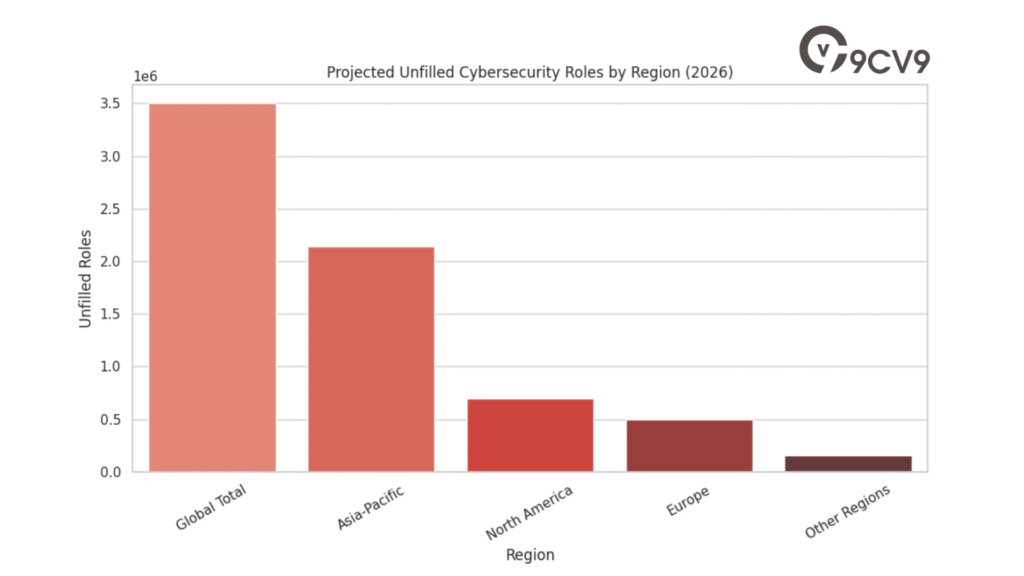
In 2026, the global cybersecurity industry is undergoing significant transformation due to an ever-evolving threat environment and the rapid integration of Artificial Intelligence (AI) into security systems. The demand for cybersecurity professionals is growing much faster than the supply of qualified candidates. With over 3.5 million cybersecurity roles unfilled globally, the shortage is particularly severe in the Asia-Pacific region, where the workforce gap has surpassed 2.14 million professionals.
This global labor shortfall is placing upward pressure on salaries across the cybersecurity sector, outpacing general IT compensation trends. Companies are now aggressively competing for specialized talent, especially in emerging areas such as AI security, Zero Trust architecture, and cloud infrastructure protection.
Transformation of Cybersecurity Roles and Required Skillsets
The typical cybersecurity role has evolved from basic network defense into a highly technical and interdisciplinary function. Today’s security professionals must not only understand foundational practices like incident response and vulnerability management but also have the capability to work with AI-powered systems.
Organizations are increasingly seeking “hybrid” cybersecurity experts—those who can manage traditional tasks and also develop, audit, or defend AI-based tools. Roles focused on AI red-teaming, ethical hacking of ML systems, and the implementation of Zero Trust frameworks are commanding high premiums and witnessing annual salary increases between 15% and 25%.
Cybersecurity’s Elevated Strategic Role in Business
By 2026, cybersecurity is no longer viewed as just an IT function. It is a business-critical risk management function, often directly tied to strategic decision-making. Compensation structures reflect this new perception, with senior roles now offering packages that include stock options, performance incentives, and executive-level bonuses.
The industry’s unemployment rate remains effectively zero, giving skilled cybersecurity professionals considerable leverage during hiring and negotiation processes.
Systemic Drivers Behind Rising Cybersecurity Salaries
Several structural shifts are accelerating salary growth in the cybersecurity domain:
- Cloud-Native Architectures: As more companies adopt cloud technologies, demand for cloud security professionals has intensified.
- Data Privacy Regulations: The global tightening of privacy laws, including updates to GDPR and national data governance frameworks, has boosted the importance of compliance-related roles.
- High Cost of Breaches: With cybercrime costs projected to reach $11.9 trillion globally in 2026, companies are investing heavily in top-tier talent as a preventive measure.
These changes justify six-figure salaries even for entry-level positions in leading tech cities, with junior analysts in New York or San Francisco often earning around $90,000 or more annually.
Salary Pressure Due to Automation of Entry-Level Roles
AI integration in security operations centers (SOCs) has automated many repetitive Tier 1 tasks, reducing the demand—and associated salaries—for some junior roles. However, this has increased the market value for professionals who design, implement, or red-team these AI systems. The result is a widening gap between generalist roles and specialized, AI-centric positions.
Global Cybersecurity Workforce Gaps and Compensation Forecasts
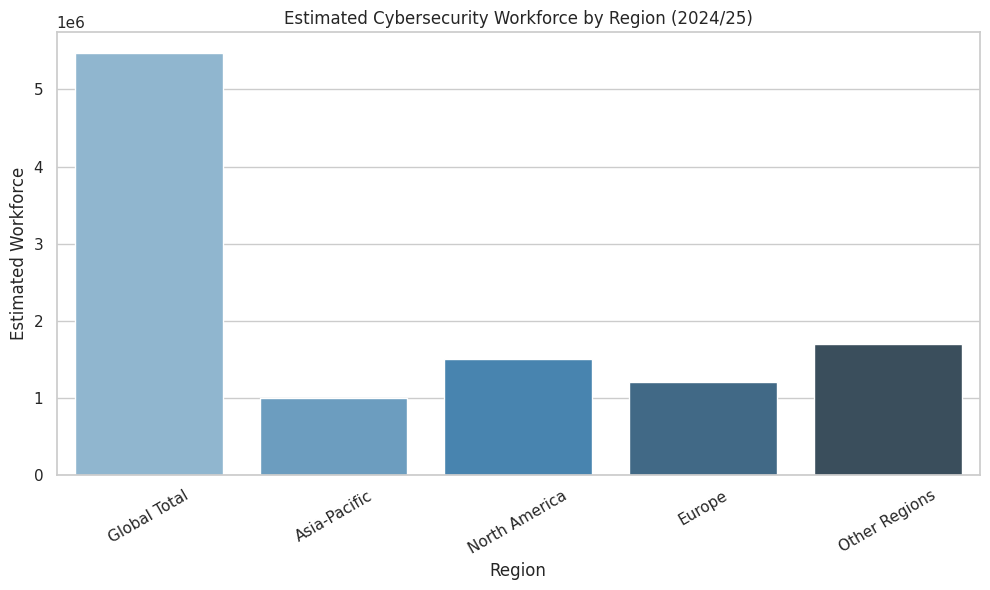
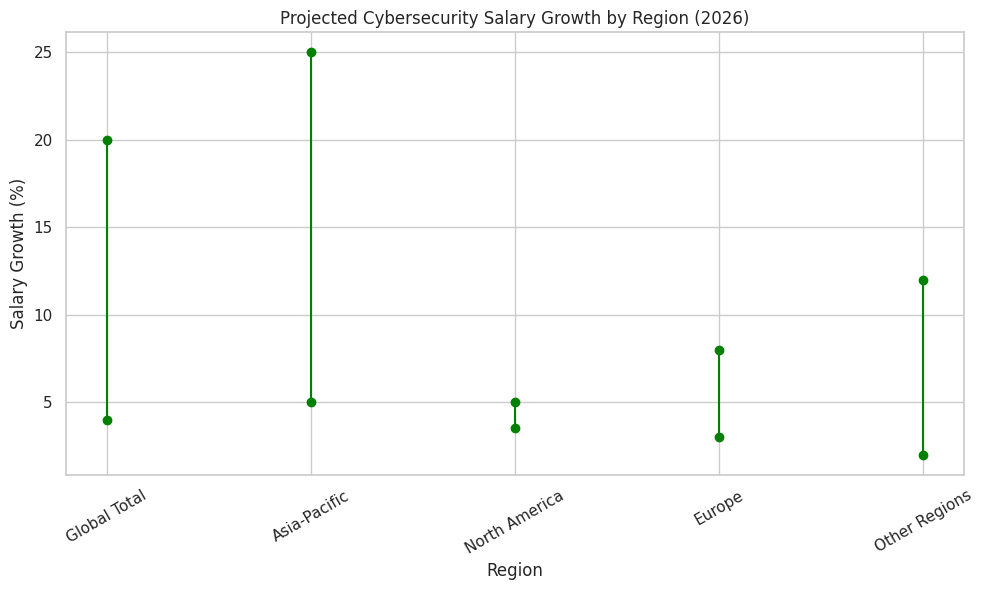
The following table presents a clear overview of the workforce shortages and salary growth projections by region in 2026:
Cybersecurity Workforce Gap and Salary Growth by Region – 2026
| Region | Estimated Workforce (2024/25) | Unfilled Roles (2026) | Projected Salary Growth (%) |
|---|---|---|---|
| Global Total | 5,468,173 | 3,500,000+ | 4% – 20% |
| Asia-Pacific | 997,068 | 2,140,000 | 5% – 15% (General), up to 25% (AI & Data Security) |
| North America | 1,500,000+ | 700,000+ | 3.5% – 5% |
| Europe | 1,200,000+ | 500,000+ | 3% – 8% |
| Other Regions | 1,700,000+ | 160,000+ | Variable by Country |



Key Roles with the Highest Salary Growth in 2026
| Job Role | Description | 2026 Salary Trend |
|---|---|---|
| AI Security Specialist | Secures, validates, and tests AI/ML models in security environments | +20% to +25% year-over-year |
| Cloud Security Architect | Designs secure cloud infrastructure across hybrid environments | +15% to +20% |
| Zero Trust Implementation Lead | Oversees rollout of zero trust frameworks and authentication protocols | +18% to +22% |
| GRC & Data Privacy Compliance Expert | Ensures organizational compliance with evolving data regulations | +10% to +18% |
| Security Automation Engineer | Develops AI-driven detection and response tools in SOCs | +15% |
| Cybersecurity Risk Manager | Manages risk assessments and business continuity plans | +8% to +12% |
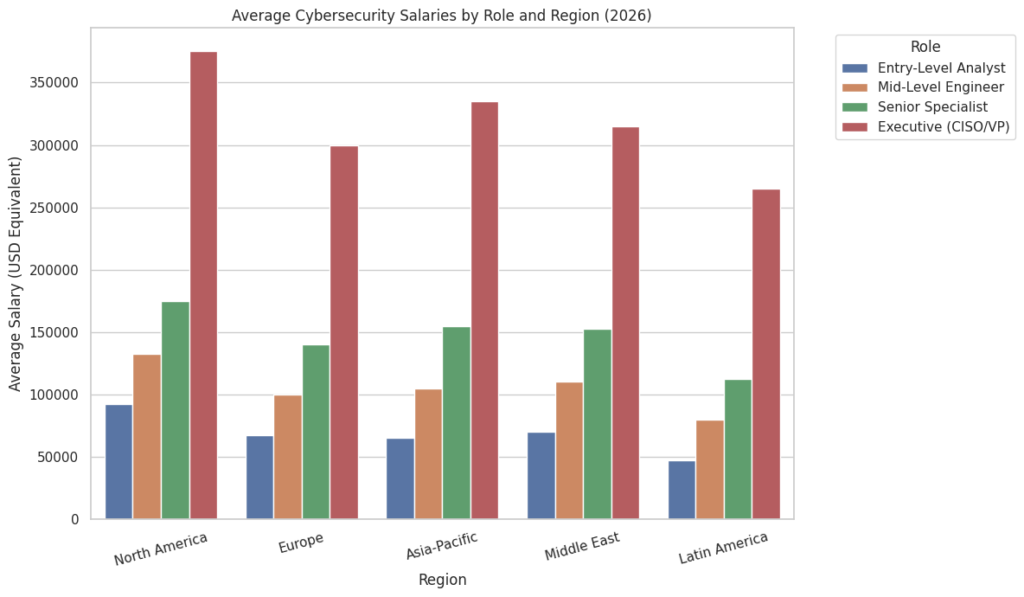
Salary Benchmarks for Cybersecurity Roles by Market
| Region | Entry-Level Analyst | Mid-Level Engineer | Senior Specialist | Executive (CISO/VP) |
|---|---|---|---|---|
| North America | $85,000 – $100,000 | $120,000 – $145,000 | $150,000 – $200,000 | $250,000 – $500,000+ |
| Europe | €60,000 – €75,000 | €90,000 – €110,000 | €120,000 – €160,000 | €200,000 – €400,000 |
| Asia-Pacific | $50,000 – $80,000 | $90,000 – $120,000 | $130,000 – $180,000 | $220,000 – $450,000 |
| Middle East | $55,000 – $85,000 | $95,000 – $125,000 | $135,000 – $170,000 | $210,000 – $420,000 |
| Latin America | $35,000 – $60,000 | $70,000 – $90,000 | $95,000 – $130,000 | $180,000 – $350,000 |

Conclusion
In 2026, cybersecurity has evolved into one of the highest-demand, highest-paying sectors in the global labor market. The combination of persistent talent shortages, evolving threat vectors, and the central role of AI in security operations is transforming not only job functions but also salary structures. Organizations that hope to attract and retain elite cybersecurity professionals must now offer more than just competitive pay—they need to provide long-term career paths, equity incentives, and opportunities for specialization in next-generation security fields. For professionals entering or advancing in this field, the outlook is one of strong negotiation power, continual growth, and significant financial rewards.
2. The Core Compensation Matrix: Salaries by Role and Function
In 2026, salary structures within the global cybersecurity industry are increasingly based on specialization, role complexity, and the strategic value each position delivers. The industry is no longer uniform in pay distribution. Instead, specific functions—especially those tied to advanced engineering, automation, AI defense, and cloud security—are commanding much higher compensation due to the growing demand and limited supply of qualified professionals.
The distinction between cybersecurity monitoring and engineering roles has become sharper. While basic monitoring tasks are now largely automated through AI tools, engineering and architecture roles remain human-intensive, requiring deep technical skillsets. As a result, salaries have shifted accordingly, with the highest compensation now seen among individuals who develop and secure infrastructure at a foundational level.
Security Operations and Analysis Compensation Overview
Security Operations Centers (SOCs) are still central to many organizations’ defense strategies. However, the roles within SOCs have evolved. Entry-level monitoring jobs are being phased out or consolidated through automation. More value is now placed on roles that require threat hunting, forensic investigation, and strategic incident response.
Security Operations Compensation Matrix – 2026
| Role Title | Average Annual Salary (USD) | Salary Range (25th – 75th Percentile) | Key Factors Influencing High-End Salaries |
|---|---|---|---|
| Cybersecurity Analyst (Entry) | $99,400 | $83,000 – $110,000 | Location-based premium, night shifts, 24/7 coverage |
| Cybersecurity Analyst (Mid-Level) | $126,361 | $100,000 – $140,000 | Advanced threat hunting, digital forensics, malware analysis |
| SOC Manager | $150,000 | $120,000 – $180,000 | Size of team, global coverage, management of multiple SOCs |
| Incident Response Manager | $165,000 | $135,000 – $210,000 | Leadership during critical events, breach handling expertise |
| Vulnerability Researcher | $135,000 | $109,000 – $168,000 | Expertise in exploit development, reverse engineering |
These roles typically exist in environments where quick response times and deep technical skills are necessary to minimize damage from potential breaches. Professionals who possess high-value incident handling or forensics expertise can command compensation at the top end of the range.
Engineering and Architecture Roles: Highest-Paying Non-Executive Tracks
Cybersecurity engineering and architecture positions are leading the non-executive salary categories in 2026. These roles are essential for designing resilient infrastructure and implementing advanced security models like Zero Trust and defense-in-depth strategies.
As companies shift toward hybrid and multi-cloud environments, roles such as Cloud Security Engineer and Security Architect are increasingly seen as business-critical. These positions require the ability to design secure systems across diverse platforms while maintaining compliance with global frameworks and regulations.
Cybersecurity Engineering & Architecture Compensation Matrix – 2026
| Role Title | Average Annual Salary (USD) | Senior/Principal Range (USD) | Key Skills and Requirements for 2026 |
|---|---|---|---|
| Cybersecurity Engineer | $144,000 | $162,000 – $208,000 | Automation scripting (Python), CI/CD pipeline integration |
| Cloud Security Engineer | $155,000 | $175,000 – $215,000 | Deep expertise in AWS, Azure, GCP; container and API security |
| Security Architect | $157,632 | $185,000 – $289,000 | NIST/ISO frameworks, enterprise architecture, security blueprints |
| DevSecOps Engineer | $168,000 | $182,000 – $198,700 | Infrastructure as Code (IaC), automation in CI/CD environments |
| AI Security Architect | $531,000 | $450,000 – $600,000+ | AI model hardening, LLM protection, secure ML pipelines |
Among all roles, the AI Security Architect stands out due to a very limited talent pool. These professionals are highly sought after by large tech firms and multinational enterprises to secure large-scale AI infrastructures. The base salary alone exceeds half a million dollars in many cases, and total compensation packages—when factoring in bonuses, equity, and benefits—can reach $1 million or more annually.
Why AI Security Architect Salaries Are Exceptionally High
The rise in compensation for AI Security Architects is driven by three main factors:
- Scarcity of Talent: Only a small number of professionals worldwide possess the deep AI, ML, and cybersecurity knowledge needed to protect machine learning environments from threats.
- Enterprise Criticality: As organizations integrate AI into decision-making and security tools, the risk associated with AI compromise becomes substantial.
- High-Stakes Compensation Structures: Companies often include long-term stock options, milestone-based bonuses, and leadership incentives as part of total compensation for these roles.
Conclusion
The cybersecurity compensation landscape in 2026 reflects the rising complexity and strategic value of digital defense roles. Automation has changed the nature of entry-level positions, but it has also increased the value of professionals who design and safeguard advanced security ecosystems. Roles in architecture, AI, cloud, and DevSecOps are leading the industry in salary growth, and they are expected to remain highly compensated as the threat landscape continues to evolve. For professionals aiming to maximize earnings in cybersecurity, investing in niche technical skills and interdisciplinary expertise remains key to long-term success.
3. The Seniority Multiplier: From Entry-Level to Executive Leadership
a. Salary Progression by Years of Experience (United States)
In 2026, professional experience is one of the most important factors influencing cybersecurity salaries. As the global cybersecurity industry matures, there is a clear financial progression from entry-level roles to top executive positions. Unlike in earlier years, the pathway to higher earnings has accelerated, particularly for professionals with three to five years of relevant experience. These individuals are often the most in-demand, as they typically move from basic operations roles into more technical or strategic positions such as engineering, penetration testing, or security consulting.
The cybersecurity industry places strong emphasis on capability development within the first decade of employment. Professionals who rapidly gain hands-on experience in security infrastructure, threat analysis, or advanced compliance frameworks are often able to command significantly higher compensation in a relatively short period.
Salary Progression Matrix Based on Experience Level in the United States (2026)
The salary figures in this table reflect national averages across the U.S. Compensation tends to be 15% to 35% higher in cities with high living costs such as San Francisco, Seattle, or New York.
| Experience Level | Salary Range (USD) | Median Annual Salary (USD) | Common Job Titles |
|---|---|---|---|
| 0 – 1 Year | $74,000 – $110,000 | $85,000 | Junior Analyst, Entry-Level IT Security Specialist |
| 1 – 3 Years | $85,000 – $128,000 | $105,000 | Security Analyst II, Junior Security Engineer |
| 3 – 5 Years | $110,000 – $163,000 | $135,000 | Security Engineer, Penetration Tester, Threat Analyst |
| 5 – 10 Years | $150,000 – $225,000 | $175,000 | Senior Architect, Security Manager, Cyber Risk Lead |
| 10 – 15 Years | $180,000 – $280,000+ | $215,000 | Director of Security, Principal Security Engineer |
| 15+ Years | $220,000 – $450,000+ | $310,000 | CISO, VP of Security, Global Head of Information Protection |
Key Career Milestones and Salary Inflection Points
- Entry-Level (0–1 Year): Individuals at this stage typically work in structured environments, handling tasks such as log monitoring, vulnerability scanning, and basic compliance checks. Although compensation starts modestly, the foundational knowledge gained sets the stage for rapid advancement.
- Early Career (1–3 Years): Professionals with a couple of years of experience often transition to roles with broader responsibilities. They may begin managing small projects, supporting penetration testing, or participating in internal audits. Salaries reflect this shift, increasing by 20% to 30% on average.
- Mid-Level (3–5 Years): This period marks the most significant jump in earning potential. At this stage, professionals often take on engineering roles or serve as lead analysts. Many begin to specialize in areas like cloud security, governance risk compliance (GRC), or incident response. Annual compensation can rise steeply due to demand for these specialized capabilities.
- Senior-Level (5–10 Years): Experienced professionals often lead teams or design complex security systems. Their responsibilities may include enterprise-level strategy, high-stakes incident response, and compliance with international security frameworks. Employers frequently compete for this talent, offering premium compensation.
Executive and Leadership Compensation in Cybersecurity
The role of the Chief Information Security Officer (CISO) has grown considerably more important in 2026, especially within highly regulated sectors such as finance, healthcare, and critical infrastructure. The CISO is now considered a key business executive, often reporting directly to the CEO or board of directors. Alongside their technical responsibilities, CISOs are expected to manage legal, operational, and reputational risks related to cybersecurity.
For large multinational corporations—particularly those with revenues exceeding $5 billion—CISO compensation now closely mirrors that of Chief Financial Officers (CFOs) or Chief Operating Officers (COOs). Total earnings are composed of a combination of fixed salaries, performance-linked annual bonuses, and long-term stock-based incentives.
Executive Compensation Matrix – CISO Roles in 2026 (United States)
| Organization Type | Base Salary (USD) | Total Compensation with Bonuses & RSUs (USD) |
|---|---|---|
| Mid-Sized Enterprises | $180,000 – $260,000 | $250,000 – $400,000 |
| Large Enterprises ($1B–$5B Rev) | $220,000 – $380,000 | $350,000 – $600,000 |
| Very Large Corporations (>$5B) | $260,000 – $420,000 | $500,000 – $844,000+ |
| Banking & Financial Institutions | $300,000 – $450,000 | $600,000 – $844,000+ |
These compensation packages are designed not only to attract high-level talent but also to reflect the growing risk and accountability associated with executive cybersecurity leadership.
Conclusion
The cybersecurity job market in 2026 offers clear earning potential tied closely to experience, specialization, and leadership capability. While entry-level salaries provide a solid starting point, the greatest jumps occur between the third and tenth year of a professional’s career, especially when moving into specialized or leadership positions. At the executive level, cybersecurity is now recognized as a boardroom issue—one with financial and reputational implications—driving compensation packages that rival those of other C-suite executives. For professionals aiming to build long-term careers in this space, developing deep expertise and aligning with strategic business goals are the most reliable ways to achieve high compensation.
4. Geographical Analysis: Global Salary Benchmarks for 2026
a. North America: The Primary Market
In 2026, cybersecurity salaries vary significantly by region, largely due to economic conditions, labor market dynamics, and local demand for security expertise. However, the global shift toward remote work has started to level the playing field—especially for niche and high-impact roles. While location still plays a role in determining baseline compensation, the rise in international outsourcing and borderless digital collaboration is pushing multinational companies to create more competitive salary structures even outside traditional tech hotspots.
The United States continues to lead globally in average cybersecurity salaries, with countries like Switzerland, Singapore, and Australia closely following. Meanwhile, developing economies are becoming preferred talent hubs for companies with constrained budgets, resulting in a noticeable rise in remote and offshore cybersecurity employment. The outsourcing share has grown from 16% in 2020 to 28% by 2025, with projections indicating continued growth in 2026 and beyond.
North America: The Highest-Paying Region in Cybersecurity
North America—particularly the United States—remains the most lucrative market for cybersecurity professionals. Within the U.S., salaries vary sharply based on location, largely driven by the local cost of living and the concentration of high-tech employers. The national median for a security analyst is estimated at around $124,910. However, in major metro regions like San Jose, San Francisco, and Seattle, this figure can rise dramatically due to competition among enterprises for top-tier talent.
Cybersecurity Salary Matrix – Major U.S. Metro Areas in 2026
| Metro Area / Region | Entry-Level Avg. Salary (USD) | Senior-Level Avg. Salary (USD) | Annual Growth Rate (%) | Key Salary Drivers |
|---|---|---|---|---|
| San Jose / Silicon Valley | $156,652 | $225,000+ | 8.4% | High density of tech firms, demand for AI/cloud security |
| San Francisco | $156,000 | $210,000 | 7.6% | Startups, venture-backed firms, cybersecurity consultancies |
| New York City | $140,000 | $195,000 | 5.2% | Finance-driven security demand, regulatory pressure |
| Washington D.C. / NoVA | $138,410 | $185,000 | 6.8% | Government contracts, security clearance premiums |
| Seattle | $152,660 | $200,000 | 13.3% | Cloud security hiring boom from AWS and Microsoft |
| Dallas / Austin | $115,000 | $165,000 | 4.5% | Fast-growing regional tech ecosystem, lower living costs |
Key Observations and Regional Highlights
- Seattle: Shows the highest annual growth rate in cybersecurity salaries. This surge is primarily fueled by the aggressive hiring efforts of cloud service providers like Amazon Web Services (AWS) and Microsoft. These firms are creating unprecedented demand for professionals skilled in securing multi-cloud environments.
- Washington D.C. and Northern Virginia: The demand for security-cleared professionals in this region remains unmatched. Cybersecurity professionals who possess Top Secret/SCI clearance typically receive a premium between $15,000 and $25,000 on top of their base salary. This compensation bump applies across technical roles regardless of function.
- California (San Jose and San Francisco): Home to a large number of Fortune 500 firms, government-backed projects, and innovation-driven startups, these cities offer some of the highest salaries in the cybersecurity sector. The competition for specialists in fields like DevSecOps, cloud security, and AI threat detection is intense, leading to rising salaries year-over-year.
- New York City: Continues to be a high-paying market due to stringent compliance requirements in financial institutions, particularly those dealing with data privacy, threat modeling, and cyber risk reporting.
Conclusion
Geographical location continues to play a key role in defining cybersecurity salaries in 2026, though the influence of remote work is creating a more globalized benchmark for top-level expertise. While the U.S. remains the clear leader in compensation, global demand is reshaping hiring strategies. Companies are now blending domestic expertise with skilled remote professionals from abroad, allowing for more flexible hiring while still maintaining high security standards. As cybersecurity threats evolve, the value placed on geographically dispersed talent is likely to rise, giving professionals across the world more access to competitive salary structures and career opportunities.
b. The European Market: Germany, Switzerland, and the UK
In 2026, cybersecurity salaries across Europe and Canada are shaped by a mix of regulatory pressures, digital transformation across industries, and economic stability. Cities like Zurich, Frankfurt, and London continue to serve as financial and tech hubs, driving increased demand for cybersecurity professionals. Regulatory developments such as GDPR updates and sector-specific security directives have further heightened the need for skilled experts across governance, compliance, and operational security roles.
While Western Europe remains competitive, salary levels differ significantly based on the country’s cost of living, digital infrastructure maturity, and level of investment in cybersecurity. Switzerland leads the European region in terms of base pay, with Germany and the UK not far behind. In Canada, cybersecurity salaries are increasing quickly—particularly in urban centers—due to rapid cloud adoption and enterprise digitalization.
Cybersecurity Salary Matrix – Europe and Canada (2026)
| Country / Region | Average Security Analyst Salary (Local Currency) | Senior Architect Salary Range (Local Currency) | Key Characteristics Driving Market Trends |
|---|---|---|---|
| Switzerland | CHF 95,000 | CHF 130,000 – CHF 170,000 | Highest base salaries in Europe; strong currency; regulatory stability |
| Germany | €58,000 – €67,000 | €90,000 – €120,000 | Focus on operational technology (OT) and manufacturing sector security |
| United Kingdom | £42,000 – £55,000 | £85,000 – £120,000+ | High demand in FinTech and compliance roles, especially in London |
| Canada | CAD 78,000 | CAD 117,000 – CAD 150,000 | Significant salary growth in Toronto and Vancouver tech sectors |
Regional Market Highlights
- Switzerland: Considered one of the most stable and lucrative job markets in cybersecurity, Switzerland offers high salaries due to its strong financial services sector and stringent data protection standards. Zurich is a top destination for global cybersecurity professionals seeking high income combined with quality of life.
- Germany: The cybersecurity focus here is notably industrial. Germany’s large base of automotive and manufacturing firms has driven up demand for professionals skilled in OT (Operational Technology) security, industrial IoT protection, and supply chain risk assessment. Frankfurt and Munich remain the top hiring hubs.
- United Kingdom: London leads the UK’s cybersecurity hiring market, especially in the financial technology (FinTech) and banking sectors. Demand is also growing for professionals who can navigate post-Brexit regulatory landscapes, including GDPR adaptations, data localization, and cross-border risk management.
- Canada: Canadian cities like Toronto, Vancouver, and Montreal are experiencing fast-paced growth in cybersecurity roles, primarily due to rapid digitization across both public and private sectors. Roles in cloud security, DevSecOps, and AI-driven security tools are becoming particularly well-compensated.
Conclusion
Cybersecurity compensation in 2026 reflects a strong and growing need for expert talent across Europe and Canada. While Switzerland remains the highest-paying market in Europe, Germany and the UK offer strong potential—especially for specialists in industrial and financial cybersecurity. Canada is emerging as a high-growth market with competitive salary packages for professionals across cloud security and AI-focused roles. With regulatory developments continuing to evolve, organizations in these regions are expected to increase investment in cybersecurity personnel, particularly for roles tied to infrastructure protection, compliance, and secure digital transformation.
c. The Asia-Pacific Frontier: Singapore, Australia, and India
The Asia-Pacific (APAC) region has become one of the fastest-growing areas in the global cybersecurity market in 2026. This growth is being driven by several powerful trends, including the region’s rapid adoption of digital technologies, major government-led digital infrastructure initiatives, the rise of local cloud-first enterprises, and an expanding threat landscape. At the same time, there remains a severe talent shortage—estimated at over 2.14 million unfilled cybersecurity positions—which is intensifying salary competition and raising compensation benchmarks across the region.
In this evolving environment, countries such as Singapore, Australia, and India are playing key roles in defining the salary landscape for cybersecurity professionals in APAC. While each country operates under its own economic context, there is a shared urgency to attract and retain talent across specialized areas such as AI security, cloud infrastructure, and threat intelligence.
Cybersecurity Salary Matrix – APAC Region (2026)
| Country | Role | Average Annual Salary (Local Currency) | Key Market Insights |
|---|---|---|---|
| Australia | Security Engineer | AUD 140,000 | Mature market with strong salary offerings, especially in Sydney and Melbourne |
| Singapore | Security Analyst | SGD 65,000 – SGD 85,000 | Strong financial services demand, compliance-driven hiring across industries |
| Singapore | AI Security Specialist | SGD 118,733 | Advanced roles in AI threat detection and automation command premium pay |
| India | Security Analyst | INR 600,000 – INR 900,000 | Entry to mid-level roles growing steadily in Tier 1 cities and tech outsourcing firms |
| India | AWS Security Expert | INR 1,520,000 | Specialists with cloud certifications earn significantly more |
Country-Level Observations
- Singapore: Serving as the region’s cybersecurity hub, Singapore continues to invest heavily in both public and private sector cyber capabilities. AI-focused roles and positions requiring machine learning or automation knowledge have seen compensation surge, often offering salaries close to double that of standard analyst roles. The country’s robust compliance framework and strategic location have attracted global financial institutions and multinational firms, raising overall salary expectations.
- Australia: With a mature cybersecurity job market, Australia provides competitive salaries, especially in engineering roles tied to network security, DevSecOps, and threat response. Cities like Sydney, Melbourne, and Brisbane are key hiring centers. Local demand is also high for professionals with hybrid skills in both security architecture and compliance risk management.
- India: While salary benchmarks remain lower compared to Western economies when converted to USD, the gap is closing rapidly. International corporations, including Amazon, Google, and Meta, are increasingly offering premium packages to local cybersecurity experts—especially those with global certifications (such as CISSP, AWS Certified Security, or CEH). The purchasing power in local terms has improved significantly, making cybersecurity a highly attractive career path in India.
Top-Paying Cybersecurity Roles in APAC – 2026 (Comparison Matrix)
| Role Title | Australia (AUD) | Singapore (SGD) | India (INR) | Demand Growth Trend |
|---|---|---|---|---|
| Security Analyst | AUD 110,000 | SGD 75,000 | INR 750,000 | Moderate |
| Security Engineer | AUD 140,000 | SGD 90,000 | INR 1,000,000 | High |
| AI Security Specialist | AUD 165,000 | SGD 118,733 | INR 2,000,000+ | Very High |
| AWS/Cloud Security Lead | AUD 150,000 | SGD 105,000 | INR 1,520,000 | Very High |
| GRC/Compliance Manager | AUD 130,000 | SGD 95,000 | INR 1,300,000 | Moderate |
Conclusion
The cybersecurity talent gap across Asia-Pacific is placing upward pressure on salaries, especially in specialized domains like AI, cloud security, and governance risk compliance. As companies in Singapore and Australia continue to compete for talent in a constrained labor market, and as India becomes a preferred location for global cybersecurity outsourcing, the overall regional salary trends are on an upward trajectory. The mix of local market demand, international hiring, and fast-growing digital ecosystems make APAC a high-potential zone for cybersecurity professionals seeking long-term career growth and financial rewards in 2026.
5. The Vietnam Market Spotlight: A 2026 Milestone
a. Cybersecurity Salaries in Vietnam (Ho Chi Minh City / Hanoi)
In 2026, Vietnam stands out as one of the most important emerging markets for cybersecurity talent in Southeast Asia. This rise has been powered by an influx of foreign direct investment (FDI), government-supported digital transformation initiatives, and an accelerating demand for cybersecurity solutions across industries. Vietnam’s economic modernization has created an urgent need for skilled security professionals—particularly in major cities like Ho Chi Minh City and Hanoi.
Salaries in cybersecurity and related digital transformation roles have risen sharply, with average increases ranging between 15% and 25% over the past year. These increases are especially prominent in areas tied to artificial intelligence (AI), cloud security, and threat intelligence, as companies adapt to new technologies and compliance frameworks. The 2026 salary survey conducted by Robert Walters confirms this upward pressure, driven by both global expansion and local demand.
Evolving Workforce Priorities in Vietnam
Vietnamese professionals are becoming more discerning in their career decisions. While competitive salaries remain the top priority (highlighted by 64% of employees), there is growing attention to workplace flexibility (36%) and organizational culture (39%). As companies seek to retain top-tier talent, they must align their compensation and working conditions with the expectations of a more skilled and selective workforce.
Cybersecurity Salary Matrix – Vietnam (2026 Estimates)
The table below highlights core cybersecurity positions based on data collected from leading employers, recruiters, and employee-reported figures. Salaries reflect full-time roles in Vietnam’s major urban technology centers.
| Role Title | Average Annual Salary (VND) | Average Hourly Rate (VND) | Senior-Level Maximum (VND) |
|---|---|---|---|
| Cyber Security Engineer | 783,308,361 | 376,591 | 954,852,892 |
| Cyber Security Specialist | 717,414,302 | 344,911 | 902,865,981 |
| Information Security Consultant | 640,048,000 | N/A | N/A |
| Cloud Services Director | 909,538,000 | N/A | N/A |
Key Observations from the 2026 Vietnamese Market
- Cybersecurity Engineer Roles: These professionals are in high demand as companies transition to modern security architectures. Employers report aggressive hiring competition and a willingness to pay senior-level engineers close to or above VND 950 million annually.
- Cybersecurity Specialists: These mid-level roles are also seeing a rise in compensation, particularly for professionals with certifications such as CEH, CISSP, or CompTIA Security+. Salaries are boosted further for those supporting multi-national firms with regional compliance requirements.
- Cloud Services Directors: These executives play a crucial role in cloud security strategy and implementation. While fewer in number, their average annual salary exceeds VND 900 million, reflecting the complexity and business-critical nature of their responsibilities.
- Information Security Consultants: Often hired on a project basis or contract roles, these professionals help organizations assess and improve their cyber risk posture. While average salaries are slightly lower, they enjoy high demand across government, finance, and retail sectors.
Impact of AI and Digital Transformation on Talent Value
Vietnam’s rapid AI adoption is reshaping the cybersecurity job market. As businesses deploy AI-based tools for threat detection, access control, and automation, the nature of the workforce is shifting. Entry-level and support roles are gradually losing ground to automation, while professionals skilled in AI-secure infrastructure, cloud-native security, and risk governance are being heavily pursued by both domestic and international firms.
Talent Shortage and Leadership Demand
Vietnamese employers report significant difficulty in recruiting skilled cybersecurity talent, with 80% citing major hiring challenges. This shortage has led to intense competition for experienced professionals and a growing need for cybersecurity leaders who can guide digital transformation at scale. Firms are increasingly focused on hiring talent that can not only implement technical solutions but also lead cross-functional security programs aligned with enterprise risk strategy.
Conclusion
Vietnam’s cybersecurity market in 2026 is undergoing a major transformation. Competitive salaries, combined with a strong push toward digital innovation, are making it a destination for top talent and global investment. While junior roles are being affected by automation, senior engineers, architects, and cybersecurity leaders are experiencing significant salary growth and career opportunities. For companies operating in or expanding to Vietnam, attracting and retaining skilled cybersecurity professionals will require not only financial incentives but also flexible working models and strong organizational culture.
6. Sector-Specific Compensation Trends: Why Industry Matters
a. The Financial Services and Banking Premium
In 2026, a cybersecurity professional’s salary is not solely determined by experience, skills, or geography—the industry in which they work is also a major factor. Across global markets, certain sectors offer significantly higher salaries due to the critical nature of data protection, strict regulatory oversight, and the financial risks involved in security breaches.
Professionals working in industries such as banking, financial services, defense, and healthcare are seeing salaries that are 20% to 30% higher than their peers in retail, logistics, education, or general manufacturing. This wage difference is primarily due to the increased risk exposure and compliance responsibilities these professionals shoulder in highly regulated environments.
High-Paying Industries in Cybersecurity – 2026 Benchmark Table
| Industry Sector | Salary Premium Over General Market (%) | Key Drivers of Higher Pay |
|---|---|---|
| Banking & Financial Services | 20% – 30% | Regulatory pressure, fraud prevention, real-time threat response |
| Healthcare | 15% – 25% | Patient data privacy, HIPAA/GDPR compliance |
| Defense & Aerospace | 20% – 30% | National security mandates, advanced threat simulation |
| Energy & Utilities | 10% – 20% | Critical infrastructure security, SCADA/ICS protection |
| Technology (Big Tech) | 10% – 15% | AI, cloud, and large-scale infrastructure demands |
| E-commerce & Retail | 0% – 10% | Data privacy, fraud detection, but lower critical risk thresholds |
| Manufacturing | 0% – 5% | Moderate security maturity, increasing focus on OT security |
Financial Sector Spotlight: Highest Compensation Benchmarks
Among all industries, the financial sector continues to offer the highest total compensation for cybersecurity professionals in 2026. This is especially true in Tier-1 global banks, which face constant cybersecurity threats across massive digital footprints and operate under some of the strictest regulatory frameworks worldwide.
Salaries in banking are elevated not only due to high base pay, but also due to aggressive bonus structures, equity grants, and long-term performance incentives. Roles tied to security architecture, application security, and executive leadership are particularly well-compensated.
Cybersecurity Compensation Matrix – Financial Services Sector (2026)
| Role Title | Total Compensation (Regional Bank) | Total Compensation (Tier-1 Global Bank) | Compensation Notes |
|---|---|---|---|
| SOC Analyst Tier 2 | $113,900 | $145,000+ | Includes bonuses for off-hours and incident escalation |
| Security Engineer (Mid-Level) | $144,000 | $180,000 – $210,000 | Higher end tied to certifications and project leadership |
| Application Security Engineer | $161,211 | $189,000 – $220,000 | Bonus-eligible roles due to code review, DevSecOps integration |
| Security Architect (Senior) | $225,000 | $256,000 – $327,000 | Architect roles tied to core system resilience and regulatory audits |
| Chief Information Security Officer (CISO) | $325,600 | $744,000 – $844,000 | Executive pay includes up to 50% in stock-based compensation and annual bonuses |
Key Insights Driving the Tier-1 Banking Premium
- Risk Volume and Complexity: Global financial institutions face thousands of cyber threats daily, including fraud, DDoS attacks, and insider threats. Security operations must function at extremely high accuracy and uptime.
- Compliance and Regulatory Burden: Professionals in the sector must address standards such as PCI-DSS, FFIEC, and GDPR, while ensuring systems remain audit-ready.
- Performance-Linked Rewards: At top banks, total compensation for senior professionals includes large equity packages and performance bonuses, sometimes accounting for 30% to 50% of overall annual income.
- Reputation and Financial Damage: Due to the severe consequences of a breach—both financial and reputational—banks are willing to pay a premium for talent capable of safeguarding systems and guiding enterprise-wide risk strategy.
Conclusion
Cybersecurity compensation in 2026 is deeply influenced by industry-specific needs and risk exposure. Sectors with highly sensitive data and strict compliance requirements are leading the salary curve—particularly finance, healthcare, and defense. Professionals seeking higher income opportunities should consider roles in these verticals, especially at large multinational corporations or institutions with expansive digital operations. For organizations, the increasing competition for experienced talent means that offering competitive, industry-adjusted compensation is no longer optional—it is essential to maintaining security readiness and compliance in today’s threat-heavy landscape.
b. Healthcare and E-commerce
As the global cybersecurity industry expands in 2026, healthcare and e-commerce have emerged as two sectors facing rapid transformation and elevated threat exposure. Both industries have responded by increasing their investments in cybersecurity infrastructure, compliance readiness, and skilled personnel. While salaries in these sectors may not yet match those in banking or defense, they reflect significant year-over-year growth due to escalating demand, expanding digital ecosystems, and rising cyber risks.
Professionals working in these sectors are now seeing higher compensation, particularly in roles tied to data protection, AI governance, and regulatory compliance. The need for talent who can safeguard critical infrastructure, ensure continuous digital service, and protect vast volumes of personal data has led to notable increases in salary benchmarks.
Cybersecurity Salary Matrix – Healthcare and E-Commerce Sectors (2026)
| Sector | Role Type | Average Salary Range (USD) | Key Focus Areas | Demand Outlook |
|---|---|---|---|---|
| Healthcare | Cybersecurity Analyst / Engineer | $115,000 – $133,000 | HIPAA compliance, patient data privacy, medical IoT security | High and growing |
| E-Commerce | AI Security Specialist | $204,000 – $286,000 | Customer data protection, algorithm integrity, fraud defense | Very high |
| E-Commerce | Application Security Engineer | $145,000 – $185,000 | Payment systems security, storefront uptime, code audits | High |
| Healthcare | Network Security Manager | $128,000 – $150,000 | Securing hospital systems, third-party vendor risk | Moderate to high |
Healthcare Sector: Securing Critical Systems and Patient Data
Cybersecurity roles in healthcare are seeing increased visibility and compensation as hospitals, insurers, and medical device companies face rising ransomware attacks, data breaches, and system outages. Salary levels for cybersecurity analysts and engineers in this space now range from $115,000 to $133,000, with higher compensation offered for professionals managing hospital networks or overseeing regulatory readiness for frameworks such as HIPAA and GDPR.
A unique challenge in this sector is the security of connected medical devices (IoMT), which require real-time protection without disrupting patient care. This has created a strong need for security engineers skilled in embedded systems and secure real-time communication protocols.
E-Commerce Sector: High-Tech Environments, High-Stakes Cyber Defense
In the e-commerce industry, the emphasis is on protecting customer identities, payment systems, and maintaining 24/7 platform uptime. As consumer shopping habits continue shifting online, major e-commerce platforms and digital marketplaces have invested heavily in security operations to maintain consumer trust and platform reliability.
Cybersecurity professionals specializing in AI-driven fraud detection, machine learning algorithm security, and large-scale payment system architecture are commanding some of the highest salaries in the sector. AI security specialists, for instance, are earning between $204,000 and $286,000, reflecting their role in building and securing intelligent systems that protect billions in online transactions.
Application security engineers are also in strong demand. These professionals ensure that code deployed on customer-facing platforms is secure, scalable, and protected from common vulnerabilities such as SQL injection, XSS, and API misconfigurations.
Conclusion
Cybersecurity salaries in healthcare and e-commerce are experiencing strong upward momentum in 2026. While not yet at the same level as banking or defense, these sectors are evolving rapidly, with compensation increasing alongside the growing volume and complexity of cyber threats. Healthcare organizations prioritize patient safety and data privacy, while e-commerce businesses focus on operational continuity and digital trust. Both require skilled cybersecurity talent across multiple domains—including AI, application security, compliance, and infrastructure defense—making them attractive and competitive markets for professionals seeking career advancement in cybersecurity.
c. Government and Defense
In 2026, the government and defense sectors remain critical employers of cybersecurity talent across the globe. These sectors play a vital role in protecting national security, intelligence infrastructure, public services, and defense technologies. Unlike private tech companies, compensation in these areas follows structured pay scales. However, professionals in these roles often receive additional financial incentives, including clearance-related premiums and federal employee benefits.
Security clearances are a central component of the compensation model in defense roles. Professionals with active security clearances—especially those with Secret or Top Secret access—are compensated with substantial annual bonuses, reflecting the sensitivity of their work and the limited pool of eligible talent.
Cybersecurity Salary Matrix – Government and Defense Sector (2026)
| Role Title | Base Salary Range (USD) | Security Clearance Level | Additional Compensation from Clearance | Estimated Total Annual Compensation (USD) |
|---|---|---|---|---|
| Federal Agency Analyst | $90,000 – $150,000 | Secret | +$5,000 – $10,000 | $95,000 – $160,000 |
| Defense Contractor Engineer | $120,000 – $180,000 | Top Secret (TS/SCI) | +$15,000 – $25,000 | $135,000 – $205,000 |
| Information Systems Security Engineer (ISSE) | $118,000 – $163,000 | Top Secret Preferred | Included in high-end offers | $163,000+ (for TS-cleared professionals) |
Key Compensation Features in Government and Defense Roles
- Clearance Premiums: Security clearances directly impact total earnings. Professionals with Secret clearance typically receive an additional $5,000 to $10,000 annually, while those with Top Secret or TS/SCI clearance can earn $15,000 to $25,000 more per year. These premiums reflect both the trust placed in cleared personnel and the limited availability of such individuals.
- Structured Salary Bands: Government cybersecurity positions are governed by formal pay scales based on grade level, tenure, and role complexity. Although base salaries may appear lower than those in private-sector tech firms, overall compensation is enhanced through benefits such as pension plans, housing allowances (in select countries), health insurance, and education stipends.
- Contractor Opportunities: Many cybersecurity professionals in the defense sector work as contractors for government agencies. These contractors often enjoy more flexible pay arrangements and higher ceilings than direct federal employees, particularly when aligned with large-scale defense programs.
- Demand for Clearance-Eligible Talent: A growing number of governments are expanding national cybersecurity strategies in response to global cyber warfare and digital espionage threats. This trend has increased demand for systems engineers, network defense experts, penetration testers, and incident response leads—particularly those with eligibility for security clearance.
Roles in High Demand Across Government and Defense
| Role Type | Primary Focus Areas | Clearance Requirement | Demand Level |
|---|---|---|---|
| Cyber Threat Intelligence Analyst | Nation-state threat detection, defense against APTs | Secret or Top Secret | Very High |
| Systems Security Architect | Securing classified networks, zero trust deployment | Top Secret | High |
| Cybersecurity Program Manager | Leading multi-agency initiatives, compliance oversight | Secret+ preferred | High |
| Red Team Operator / Ethical Hacker | Simulated attacks on federal infrastructure | Secret+ or TS/SCI | Moderate to High |
| Cryptographic Engineer | Development of secure communications systems | Top Secret | High |
Conclusion
Cybersecurity careers in the government and defense sectors offer structured, stable, and mission-critical opportunities with increasing financial rewards in 2026. Although base salaries may appear conservative compared to private tech or finance, the value of federal benefits, long-term job stability, and clearance-based bonuses often elevate total compensation to competitive levels. As national cybersecurity strategies evolve and digital defense becomes a geopolitical priority, professionals with specialized knowledge and government clearance credentials will find abundant career opportunities and rising salary potential across this sector.
7. The Certification ROI: Quantifying the Pay Bump
a. The Most Lucrative Certifications of 2026
In 2026, professional certifications remain one of the most influential factors in increasing a cybersecurity professional’s earning potential. Globally, holding a recognized certification can lead to a salary increase of approximately 25% to 35% compared to peers without credentials. These certifications serve as proof of expertise, help fast-track career advancement, and are often a minimum requirement for roles in regulated industries or specialized technical domains.
Management-oriented certifications, such as CISM and CISSP, offer the highest salary ceilings, unlocking access to senior positions in strategy, leadership, and enterprise security architecture. Meanwhile, technical certifications, including OSCP and AWS Security Specialty, provide strong returns on investment for hands-on practitioners, particularly in areas like penetration testing, red teaming, and cloud defense.
Cybersecurity Certification Salary Matrix – 2026 Global Benchmarks
| Certification | Average Annual Salary (USD) | Common Roles Unlocked | Career Level |
|---|---|---|---|
| CISM | $155,000 – $162,347 | Information Security Manager, Risk Lead | Management |
| CISSP | $124,000 – $175,583 | Security Architect, Director, VP of SecOps | Senior Professional |
| OSCP | $119,895 – $140,000 | Penetration Tester, Red Team Specialist | Advanced Technical |
| CISA | $110,000 – $140,000 | IT Auditor, GRC Analyst | Compliance / Audit |
| AWS Security Specialty | $138,053 – $162,100 | Cloud Security Engineer, Multi-Cloud Expert | Cloud Specialist |
| CEH | $95,000 – $125,000 | Junior Penetration Tester, Security Analyst | Intermediate |
| Security+ | $94,000 – $99,140 | Junior Security Analyst | Foundation / Entry-Level |
Key Insights on Certification ROI in 2026
- Immediate Salary Boost: Earning a new certification often results in a 10% to 20% salary increase within 12 months, particularly when paired with a role change or promotion.
- OSCP Return on Investment: The Offensive Security Certified Professional (OSCP) certification, which costs approximately $1,749, typically leads to entry-level or mid-level roles with salaries ranging between $82,000 and $100,000. This makes it one of the most cost-effective investments for aspiring red teamers or ethical hackers.
- Cloud Certification Trends: As organizations increasingly adopt multi-cloud architectures, cloud security certifications have become mandatory in hiring requirements. According to industry surveys, 41% of employers now list cloud-related certifications as baseline criteria for cloud security roles.
- Management vs. Technical Tracks: Professionals on the management track with certifications like CISM or CISSP tend to reach higher total compensation packages, especially in enterprise environments, while technical experts with specialized credentials often receive bonuses tied to project-based performance or security breach prevention.
The Salary Influence of Security Clearance in the U.S. Market
In the United States, possessing an active government security clearance remains a major advantage in the cybersecurity job market. Federal agencies and defense contractors require clearance for roles handling sensitive or classified information, and they often pay a premium to attract cleared professionals.
Due to the extensive background checks and vetting process required to obtain clearances, companies are more likely to hire professionals who already hold them. This creates a competitive “cleared talent market,” particularly among defense contractors who seek to poach experts from federal positions.
Security Clearance Salary Matrix – U.S. Cybersecurity Market (2026)
| Clearance Status | Average Salary (Low USD) | Average Salary (High USD) | Estimated Premium Over Non-Cleared Roles |
|---|---|---|---|
| No Clearance Mentioned | $112,973 | $157,288 | Baseline |
| Secret Clearance | $81,240 | $168,100 | +$10,000 |
| Top Secret / SCI | $104,070 | $185,090 | +$20,000 – $25,000 |
Key Observations
- Top Secret Premiums: Professionals holding a Top Secret or Sensitive Compartmented Information (SCI) clearance receive average annual salary premiums ranging from $20,000 to $25,000 due to their eligibility to work on classified projects.
- High Demand for Cleared Engineers: Positions like defense contractors, ISSEs, and cybersecurity architects working with government agencies consistently offer higher compensation for clearance-holding candidates.
- Clearance as a Hiring Filter: Employers often list active clearance as a required qualification, bypassing otherwise qualified candidates without this status.
Conclusion
Certifications and clearances are powerful tools in shaping cybersecurity compensation globally in 2026. Professionals who invest in recognized credentials—whether in technical areas like offensive security or leadership roles in compliance and governance—are better positioned for salary growth, job mobility, and higher-value assignments. Similarly, in regions like the United States, security clearance opens access to high-stakes roles in government and defense, commanding notable salary premiums. Together, these qualifications significantly increase earning potential in a highly competitive and specialized global job market.
8. The Impact of Remote and Hybrid Work on Salary Structures
a. Geographic Arbitrage and Localized Pay
In 2026, the global cybersecurity workforce is navigating a significant transformation in where and how professionals work. The tension between traditional office-based expectations and the preference for remote flexibility has reshaped salary dynamics and job preferences across the industry. While some companies are enforcing return-to-office (RTO) mandates, most cybersecurity professionals are still favoring remote or hybrid roles.
This growing shift has not only influenced recruitment trends but has also reshaped the compensation structures of cybersecurity jobs. Salary premiums once granted for remote work have begun to normalize, and companies are increasingly factoring geographic cost of living into remote pay offers.
Cybersecurity Hiring Preferences and Workplace Trends – 2026
| Workforce Insight | Data Point | Key Implication |
|---|---|---|
| Companies requiring full-time office work | 30% | Growing RTO trend in specific sectors, especially finance and government |
| Professionals preferring remote work | 85% cite remote flexibility as a top priority | Hiring strategies must align with flexibility demands to attract top talent |
| Willingness to accept lower pay for remote | 69% | Majority of professionals would trade salary for location independence |
| Average acceptable pay cut for flexibility | 11% | Reflects the rising value of work-life balance among cybersecurity professionals |
The Demand for Remote Cybersecurity Roles
Remote work has led to a surge in cybersecurity risk exposure, especially in organizations operating with distributed teams and unsecured home networks. As a result, demand for cybersecurity specialists who can secure remote workloads, endpoints, and collaboration tools has increased significantly. These roles often include expertise in Zero Trust architecture, cloud-based security tools, remote access governance, and data loss prevention.
Cybersecurity leaders now prioritize hiring professionals with proven capabilities in securing hybrid infrastructures, regardless of physical location. However, compensation varies based on regional cost structures and job function.
Remote vs. Onsite Salary Matrix – 2026
| Role Type | Work Model | Average Annual Salary (USD) | Notes on Compensation Differences |
|---|---|---|---|
| Senior Project Manager (Tech) | Fully Remote | $140,000 | Slightly discounted from major tech hub rates |
| Senior Project Manager (Onsite) | San Francisco / NYC | $155,000 – $165,000 | Higher due to local cost-of-living and physical presence requirement |
| Cloud Security Architect | Fully Remote | $175,000 – $195,000 | Pay remains high due to scarce global talent |
| Security Analyst (Remote Team) | Remote in Tier-2 city | $98,000 – $110,000 | Localized pay scaling applied |
| Security Analyst (In-Office) | Tech Hub Onsite | $115,000 – $125,000 | Slightly higher base due to in-person presence and regional premiums |
Understanding Geographic Arbitrage in Cybersecurity Pay
In the 2026 global labor market, companies are leveraging geographic arbitrage as a cost-optimization strategy. By hiring skilled cybersecurity professionals in lower-cost regions while paying them locally adjusted salaries, organizations reduce expenses without sacrificing expertise. This trend is most visible in companies with mature remote operations and global talent sourcing pipelines.
The practice has shifted the salary model: while remote roles were once linked to higher pay due to their flexibility, they now often come with neutral or slightly reduced pay compared to in-office equivalents in expensive urban centers.
Remote-Friendly Cybersecurity Specializations – 2026 Growth Matrix
| Specialization | Remote Viability | Market Demand in 2026 | Example Roles |
|---|---|---|---|
| Cloud Security | Very High | Extremely High | Cloud Security Engineer, IAM Specialist |
| Security Consulting & GRC | High | High | GRC Consultant, Risk Assessor, CISO Advisor |
| Application Security / DevSecOps | High | Very High | DevSecOps Engineer, Code Reviewer, AppSec Analyst |
| Security Operations / SOC Tier 2+ | Moderate | High | Threat Hunter, Detection Engineer |
| Red Team & Penetration Testing | Moderate to High | Growing | Ethical Hacker, Red Teamer, OSINT Specialist |
| Network Security Engineering | Low to Moderate | Stable | Onsite often required for physical infrastructure |
Conclusion
The evolution of remote and hybrid work has deeply influenced how cybersecurity salaries are structured across the globe in 2026. While flexibility remains a key driver of job selection, its direct salary premium is beginning to diminish due to normalized demand and widespread adoption. Remote-capable roles—especially in cloud security, GRC, and application defense—remain highly paid due to their strategic value and scalability across geographies. For employers, the balance between flexibility, compensation, and security risk mitigation is central to maintaining a competitive edge in today’s cybersecurity talent market.
b. The Disconnect Between Employers and Employees
In 2026, the global cybersecurity labor market is experiencing a growing disconnect between what employers expect and what employees prefer, particularly regarding work location and flexibility. As companies reintroduce in-office mandates, a large portion of cybersecurity professionals are pushing back, prioritizing flexibility and remote work as essential parts of their career choices.
This mismatch has become one of the leading causes of employee turnover in the cybersecurity industry. Professionals now have more leverage due to a global skills shortage, and many are not willing to compromise on flexibility—especially when other employers are offering more adaptive work models.
Cybersecurity Workforce Sentiment Matrix – 2026 Findings
| Workforce Insight | Percentage (%) | Implications for Employers |
|---|---|---|
| Professionals who would leave over RTO | 76% | Employers risk losing talent if remote work is withdrawn |
| Workers reporting higher productivity remotely | 83% | Remote/hybrid models are seen as more effective by most cybersecurity staff |
| Impact of delayed job offers | High | Companies that hesitate to extend offers often lose candidates to flexible competitors |
Remote Flexibility as a Competitive Advantage
With the cybersecurity talent pool being limited and in high demand globally, employers who delay hiring decisions or insist on rigid in-office policies are losing qualified candidates to more agile organizations. Fast, remote-friendly recruitment processes are proving to be a major competitive advantage in 2026.
Job seekers in cybersecurity are actively prioritizing roles that offer hybrid or fully remote arrangements. Even compensation alone is no longer enough to attract and retain skilled professionals if flexibility is not part of the offer. Companies that ignore this trend face higher attrition rates, lower engagement, and reduced productivity across their security teams.
Recruitment Responsiveness and Workplace Policy Impact – 2026 Matrix
| Factor | Flexible Employer Outcome | Rigid Employer Outcome |
|---|---|---|
| Offer Turnaround Time | 48–72 hours | 5–10 business days |
| Offer Acceptance Rate | 80% | 45% |
| Employee Retention (12-month average) | 86% | 63% |
| Time-to-Fill Security Roles | 30–45 days | 60–90+ days |
Conclusion
The preference for remote and hybrid work models among cybersecurity professionals is no longer a trend—it is a defining feature of the modern cybersecurity workforce in 2026. The disconnect between rigid employer expectations and employee demands for flexibility is leading to faster job switching, longer recruitment cycles, and decreased retention. Organizations that want to attract top-tier cybersecurity talent must rethink their approach, aligning hiring strategies with the new reality of remote work to stay competitive in a rapidly evolving global market.
9. Beyond the Base Salary: Total Rewards and Retention Strategies
a. Non-Financial Incentives and Soft Benefits
As the global demand for cybersecurity talent intensifies in 2026, competitive base salaries alone are no longer sufficient to attract and retain top professionals. In a labor market where unemployment in cybersecurity hovers near zero, employers are shifting their focus toward offering comprehensive total rewards packages that go far beyond the paycheck.
The concept of Total Compensation now includes a wide range of financial and non-financial benefits, creating a holistic Employee Value Proposition (EVP). This EVP encompasses everything from equity and performance bonuses to continuous learning, flexible work policies, wellness benefits, and an organization’s stability and reputation. Together, these components influence not just hiring outcomes—but long-term retention and employee loyalty.
Total Compensation Model for Senior Cybersecurity Professionals – 2026 Example
| Compensation Component | Value (USD) | Share of Total Compensation (%) | Description |
|---|---|---|---|
| Base Salary | $200,000 | 61.3% | Fixed annual pay reflecting the market rate for senior-level roles |
| Annual Bonus (18%) | $36,000 | 11.0% | Performance-based variable pay tied to individual and company KPIs |
| RSU Grant (Restricted Stock) | $40,000 | 12.3% | Equity grants rewarding long-term contribution and retention |
| Benefits (Health, Wellness) | $50,000 | 15.4% | Includes insurance, wellness programs, mental health support |
| Total Compensation | $326,000 | 100% | Combined package reflecting both cash and non-cash value to employees |
Key Non-Financial Retention Drivers in Cybersecurity Hiring
| Strategic Incentive | Description | Employee Appeal in 2026 |
|---|---|---|
| Continuous Learning & Upskilling | 84% of professionals expect AI to impact their career positively if employers provide training | High – Especially for AI, automation, and cloud |
| Mental Health & Wellness | Expanded offerings include therapy sessions, mindfulness programs, and fitness stipends | Moderate to High – Enhances long-term engagement |
| Flexible Work & Asynchronous Models | Mix of remote work, flexible hours, and human-centered scheduling | Very High – Core factor in job selection |
| Transparent Leadership | Professionals now seek financial transparency and leadership credibility from employers | High – Especially in larger enterprise roles |
| Career Growth Opportunities | Lateral mobility, mentorship, and internal promotions linked to skills development | High – Essential for mid-career professionals |
What Top Cybersecurity Talent Looks for in 2026
Cybersecurity professionals are no longer only evaluating jobs based on title or salary. Instead, they are increasingly interested in joining companies that offer long-term stability, access to upskilling programs, and progressive work cultures. Employers are now expected to provide clearly defined career pathways, continuous learning frameworks (especially in AI-driven security domains), and benefits that support both physical and mental well-being.
Professionals also actively evaluate companies’ leadership transparency and market position. During interviews, candidates are more likely to ask about organizational health, budget stability, and how cybersecurity is prioritized within the business strategy. This trend underscores the importance of organizational reputation as a key component of talent attraction.
Conclusion
In the global cybersecurity industry of 2026, total compensation has become the new standard for attracting and retaining high-performing talent. While base salaries remain foundational, companies are now competing across a wider landscape that includes equity, training, wellness programs, flexible work models, and transparent leadership. The organizations that excel in building a complete and modern Employee Value Proposition will be best positioned to secure and retain the cybersecurity professionals who are driving innovation and protecting enterprise systems worldwide.
10. Future Projections for 2027
As the global cybersecurity sector moves toward 2027, industry analysts project that salary growth will remain strong. This upward trend is being fueled by new and complex cybersecurity threats, widespread digital transformation, and the accelerated adoption of emerging technologies across sectors. Specialized roles are becoming more critical—and as a result, compensation is expected to rise for professionals with in-demand skill sets in areas such as Operational Technology (OT) security, Zero Trust architecture, cryptographic systems, and AI-powered defense strategies.
Emerging High-Paying Specializations in Cybersecurity – 2027 Outlook
| Role / Area of Expertise | Average Salary Range (USD) | Drivers of Demand | Future Outlook |
|---|---|---|---|
| OT Security Specialist | $132,962 – $285,000 | Industrial network convergence, smart factories, ICS threats | Rapid growth |
| Zero Trust Security Engineer | 20% – 25% salary premium (above network engineers) | Mandatory adoption of identity-first security in enterprises | Mainstream by 2027 |
| Post-Quantum Cryptography Specialist | $155,000 – $220,000 | Early response to quantum risk, regulatory readiness | Emerging but high potential |
| AI Security Engineer | $160,000 – $245,000 | Demand for secure AI infrastructure and LLM model hardening | Standard job title by 2027 |
The Expansion of OT and IoT Security
Operational Technology (OT) security is rapidly evolving into one of the most critical and under-resourced areas of cybersecurity. As traditional manufacturing systems, utility grids, and industrial processes become increasingly integrated with digital networks, they also become more vulnerable to cyberattacks.
Organizations are now urgently seeking cybersecurity professionals who understand both IT protocols and industrial control systems (ICS), such as SCADA. This skillset is rare and highly valued, with OT Security Specialists already commanding salaries that surpass many traditional security engineering roles. Senior OT engineers working in regulated or infrastructure-heavy sectors—like energy, oil & gas, and utilities—are earning upwards of $280,000 per year in 2026, with projections for continued growth.
OT Security Compensation Matrix – 2026/2027 Projections
| Job Title | Industry Focus | Avg. Salary (USD) | Skills in Demand |
|---|---|---|---|
| OT Security Specialist | Utilities, Manufacturing | $132,962 – $210,000 | ICS/SCADA, anomaly detection, network segmentation |
| Senior OT Security Engineer | Energy, Oil & Gas | $200,000 – $285,000 | Secure architecture, compliance, vendor risk |
Zero Trust Becomes Standard Infrastructure
Zero Trust architecture is no longer optional—it is becoming a standard security model across large enterprises. Unlike traditional perimeter-based models, Zero Trust enforces identity and access control at every layer. As a result, professionals who are skilled in deploying Zero Trust frameworks are seeing higher-than-average compensation, with salary premiums ranging from 20% to 25% above traditional network security roles.
These professionals often hold expertise in technologies such as identity federation, policy-based access controls, micro-segmentation, and behavioral monitoring. As Zero Trust becomes a baseline expectation in regulated industries by 2027, the demand for engineers who can implement and scale such frameworks will continue to rise.
Quantum Computing and Advanced Privacy Requirements
The cybersecurity industry is also preparing for the disruptive potential of quantum computing. While still in its early stages, quantum technology poses a threat to traditional encryption methods. In response, companies and governments are beginning to invest in talent capable of developing and implementing post-quantum cryptographic systems.
This trend is creating new demand for cybersecurity experts with backgrounds in mathematics, cryptographic engineering, and regulatory compliance. As global privacy regulations evolve—especially across regions like the EU, North America, and Asia-Pacific—professionals with the ability to align security strategies with legal frameworks will also see increasing demand.
Projected Compensation for Quantum & Privacy Roles – 2027
| Role Title | Core Functionality | Avg. Salary (USD) | Future Demand Trend |
|---|---|---|---|
| Post-Quantum Cryptography Engineer | Develop quantum-resilient encryption systems | $170,000 – $220,000 | Emerging, long-term growth |
| Privacy & Data Compliance Consultant | Align security frameworks with privacy regulations | $135,000 – $185,000 | High across regulated markets |
AI Security Roles Will Standardize
Artificial Intelligence is now deeply embedded in enterprise cybersecurity, from automated threat detection and risk scoring to behavioral analytics and response orchestration. As AI adoption grows, the need for professionals who can secure these systems is rising sharply.
By 2027, “AI Security Engineer” is expected to become a normalized job title, no longer seen as a niche specialization. However, during this transition phase, professionals with rare combinations of machine learning expertise and cybersecurity domain knowledge are earning significant premiums. Roles in this category include AI model validators, LLM red teamers, and trust and safety engineers.
AI Security Compensation Projections – 2026 to 2027
| Role Title | Primary Responsibilities | Avg. Salary (USD) | Notes on Premiums |
|---|---|---|---|
| AI Security Engineer | Securing ML/AI models, adversarial defense | $160,000 – $245,000 | Premiums may normalize post-2027 |
| LLM Red Team Specialist | Stress-testing language models | $185,000 – $265,000 | Currently highly specialized |
| AI Risk & Governance Analyst | Monitoring AI behavior, compliance, and ethics | $150,000 – $200,000 | New role, increasing demand |
Conclusion
Looking ahead to 2027, the global cybersecurity job market will continue to expand—driven by increasingly complex digital ecosystems and emerging technologies like quantum computing, AI, and industrial digitization. Salary growth will remain strong across specialized roles, particularly in OT security, Zero Trust architecture, AI security, and post-quantum cryptography. As these disciplines mature, some salary premiums may level out, but the competition for professionals with advanced technical skillsets will remain intense. For cybersecurity professionals aiming to future-proof their careers and maximize their earnings, upskilling in these emerging areas will be key. For employers, proactive investment in these roles will be critical to staying secure in the face of next-generation threats.
11. Practical Implications for the Global Cybersecurity Workforce
The cybersecurity industry continues to be one of the most secure and financially attractive career paths in the global job market. As of 2026, it offers strong starting salaries and exceptional long-term earning potential. From entry-level professionals earning approximately $70,000 to seasoned experts and executives surpassing the $300,000 mark, cybersecurity roles remain at the center of enterprise risk management strategies across every industry.
Salary growth across the field is being driven by the integration of next-generation technologies like cloud computing, artificial intelligence, and Zero Trust frameworks. The most competitive compensation packages are found at the intersection of these emerging domains and traditional cybersecurity disciplines. Professionals who possess both core security knowledge and the ability to adapt to rapid innovation are experiencing the highest demand—and the strongest salary acceleration.
Global Cybersecurity Salary Benchmarks – 2026
| Career Level | Global Median Salary (USD) | Year-over-Year Growth (%) | Primary Drivers of Compensation Growth for 2027 |
|---|---|---|---|
| Entry-Level | $85,000 | 4.2% | Professional certification and foundational skillsets |
| Mid-Level | $135,000 | 5.1% | Cloud security specialization, GRC skills, threat analytics |
| Senior/Architect | $185,000 | 8.6% | AI implementation, enterprise security architecture |
| Executive / CISO | $310,000+ | 10.5% | Regulatory exposure, board-level strategy, leadership value |
Strategic Takeaways for Organizations in 2026
In today’s landscape, cybersecurity is not just a technical function—it is a mission-critical component of business continuity and regulatory compliance. As a result, the competition for qualified cybersecurity talent has intensified across all global regions. Organizations are not only contending with a supply-demand imbalance but must also offer compelling value propositions to retain their workforce.
While base pay remains the foundation of any offer, it is no longer sufficient on its own. Retention now requires:
- Performance-based bonuses
- Equity or RSU offerings (especially for high-impact roles)
- Mental wellness and burnout-prevention benefits
- Ongoing technical training and upskilling budgets
- Flexibility in work location and hours
Talent Mobility and Retention Trends – 2026 Snapshot
| Factor | Industry Observation (2026) | Business Implication |
|---|---|---|
| Average salary increase when switching companies | 15% – 25% | Organizations must reduce turnover through internal advancement |
| Time-to-hire for mid-senior roles | 60 – 90 days | Prolonged hiring cycles risk losing talent to faster competitors |
| Percentage of professionals prioritizing upskilling | 78% | Learning budgets now core to total rewards strategy |
| Top non-monetary motivator for job change | Flexible/hybrid work environment | Flexibility must be integrated into compensation and hiring models |
Key Drivers for Salary Growth in 2027 and Beyond
Cybersecurity salaries are expected to continue rising into 2027, particularly in roles that align with fast-evolving risk landscapes. Professionals who invest in niche technical domains, certifications, and cross-functional leadership skills are best positioned to capitalize on future salary premiums.
High-Impact Skills and Roles Expected to Drive Salary Growth – 2027 Forecast
| Specialization Area | Description | Salary Impact Projection |
|---|---|---|
| AI-Augmented Threat Intelligence | Combines data science with automated risk detection | +12%–15% |
| OT & ICS Security | Secures industrial and energy infrastructure systems | +10%–18% |
| Cloud-Native Security | Specializes in container, API, and serverless defense | +8%–12% |
| Quantum-Resilient Cryptography | Builds future-proof encryption strategies | +15%–20% |
| Zero Trust & Identity Engineering | Designs access-first security environments | +10%–14% |
Conclusion
The global cybersecurity workforce in 2026 operates at the intersection of innovation, regulation, and high-stakes decision-making. Salaries are increasing to reflect the specialized expertise, constant vigilance, and strategic importance that security professionals bring to organizations.
For professionals, the path to top-tier compensation lies in continuous upskilling—particularly in emerging domains like AI, OT security, and cloud architecture. For organizations, success in securing and retaining talent depends on designing compensation packages that go beyond salary to include long-term growth, flexibility, and meaningful engagement with the evolving cybersecurity mission.
The human element remains the most valuable—and most expensive—asset in defending the digital world. In a time of escalating threats and global talent shortages, both professionals and employers must adapt their strategies to meet the demands of the next chapter in cybersecurity.
Conclusion
As the world becomes more interconnected and digital ecosystems grow in both scale and complexity, cybersecurity continues to rise as one of the most vital professions globally. The year 2026 marks a pivotal point in the cybersecurity industry—where demand for skilled professionals has never been higher, the wage gap between general IT and cybersecurity roles continues to widen, and the salary structures themselves are evolving in response to emerging technologies, regulatory pressures, and workforce expectations.
Across all global markets, cybersecurity careers are offering not only stability but also outstanding compensation growth. Entry-level salaries have become more competitive, often beginning at $70,000 to $85,000, while mid-level professionals earn well into six figures. Senior roles, particularly those in architecture, AI security, and cloud-based defense, regularly command salaries above $180,000. At the executive level, Chief Information Security Officers (CISOs) are seeing total compensation packages exceeding $300,000, with additional performance-based incentives and equity components depending on organization size and industry sector.
What is clear from the 2026 data is that base salary is no longer the sole determinant of job value. Total compensation now includes a wide spectrum of benefits—from health and wellness programs to continuous upskilling budgets, flexible working models, and leadership development initiatives. Certifications and clearances remain high-impact differentiators, while roles tied to AI, Zero Trust, OT security, and post-quantum cryptography are generating strong wage premiums and market scarcity.
Moreover, regional dynamics show that while the United States remains the top-paying market, countries like Switzerland, Singapore, Australia, Germany, the United Kingdom, and Canada are quickly closing the gap, especially for professionals in urban tech and finance hubs. Meanwhile, emerging economies such as Vietnam and India are gaining ground in outsourced cybersecurity services, offering competitive compensation relative to cost of living and local economic factors.
Remote and hybrid work models have added another layer to salary structures, redefining expectations around flexibility, productivity, and compensation. In many cases, professionals are willing to trade a portion of their salary for greater autonomy and remote-first cultures, pushing companies to rethink their employee value propositions.
Looking forward to 2027 and beyond, the cybersecurity salary landscape will continue to shift alongside key trends such as the adoption of AI, the rise of industrial cybersecurity, the evolution of data privacy laws, and the looming disruption posed by quantum computing. The most future-proof professionals will be those who continuously evolve—investing in niche certifications, mastering cross-functional disciplines, and building the strategic capabilities necessary to lead in a risk-first, regulation-heavy world.
For employers, attracting and retaining top cybersecurity talent will require more than just high pay. It will require transparency, purpose-driven leadership, skill development pathways, and a people-first culture that respects the complexity and intensity of modern security work.
For professionals, now is the time to map a career path that aligns with the most in-demand specializations. Whether you’re a new graduate, a mid-level engineer, or an aspiring CISO, the global cybersecurity industry in 2026 offers a unique opportunity to build a rewarding, high-growth, and impact-driven career.
This comprehensive guide to cybersecurity salaries globally in 2026 underscores one critical truth: as technology evolves, the value of cybersecurity professionals will only continue to grow. Investing in expertise—whether as an individual or an organization—is not just a smart decision; it’s a strategic imperative for success in the digital age.
If you find this article useful, why not share it with your hiring manager and C-level suite friends and also leave a nice comment below?
We, at the 9cv9 Research Team, strive to bring the latest and most meaningful data, guides, and statistics to your doorstep.
To get access to top-quality guides, click over to 9cv9 Blog.
To hire top talents using our modern AI-powered recruitment agency, find out more at 9cv9 Modern AI-Powered Recruitment Agency.
People Also Ask
What is the average salary for a cybersecurity professional in 2026?
The global average salary for cybersecurity professionals in 2026 ranges from $85,000 to over $310,000 depending on role and location.
Which cybersecurity jobs pay the most in 2026?
Roles such as CISO, AI Security Engineer, and OT Security Specialist are among the highest-paying in the cybersecurity industry in 2026.
How much does a cybersecurity analyst earn in 2026?
Cybersecurity analysts earn between $85,000 and $125,000 annually in 2026, depending on experience and location.
Are cybersecurity salaries increasing in 2026?
Yes, cybersecurity salaries have grown significantly in 2026 due to high demand, skill shortages, and rising cyber threats.
What is the salary for entry-level cybersecurity roles in 2026?
Entry-level cybersecurity positions in 2026 typically start between $70,000 and $90,000 globally.
How does location affect cybersecurity salaries in 2026?
Salaries vary by country and city, with higher pay in tech hubs like the U.S., Switzerland, Singapore, and Australia.
What industries offer the highest cybersecurity salaries in 2026?
Banking, defense, healthcare, and tech lead with the highest cybersecurity salaries due to high-risk environments.
What certifications boost cybersecurity salaries in 2026?
Certifications like CISSP, CISM, OSCP, and AWS Security Specialty can increase salaries by 25% to 35% in 2026.
Is remote work affecting cybersecurity salaries in 2026?
Remote roles are now normalized, with slightly lower or neutral pay compared to in-office positions in high-cost areas.
How much do CISOs earn in 2026?
Chief Information Security Officers (CISOs) earn over $300,000 in total compensation, especially in global corporations.
Are cloud security roles paying more in 2026?
Yes, cloud security engineers earn $150,000 to $215,000 due to the rise of multi-cloud environments and architecture demand.
What is the salary range for AI security professionals in 2026?
AI security engineers can earn between $160,000 and $245,000, with roles becoming standard across many enterprises.
What is the impact of Zero Trust on cybersecurity salaries?
Cybersecurity professionals skilled in Zero Trust frameworks earn 20% to 25% more than traditional network engineers.
How much can OT security specialists earn in 2026?
OT security roles offer between $132,000 and $285,000 due to the growing need in manufacturing and utilities sectors.
Does switching jobs increase salary in cybersecurity?
Professionals switching jobs in 2026 can expect a 15% to 25% salary boost, especially when moving into high-demand areas.
How much do cybersecurity professionals make in the U.S. in 2026?
In the U.S., salaries range from $100,000 for junior roles to over $400,000 for senior executive positions in cybersecurity.
Are cybersecurity salaries competitive in Europe in 2026?
Yes, countries like Switzerland, Germany, and the UK offer strong cybersecurity salaries with growing demand.
What are the salary trends for cybersecurity in APAC?
Salaries in APAC are rising, especially in Singapore and Australia, with India offering competitive wages for skilled roles.
How important are benefits in cybersecurity compensation?
Benefits like wellness, remote flexibility, and learning stipends add 15% to 25% to total compensation in many roles.
What is total compensation in cybersecurity?
Total compensation includes base pay, bonuses, equity, benefits, and incentives, often exceeding $300,000 for senior roles.
Do certifications like OSCP increase starting salaries?
Yes, technical certifications like OSCP can raise starting salaries by up to 20%, especially for red team and pen testing roles.
Are cybersecurity professionals in demand in 2026?
Yes, the global talent gap remains above 3.5 million, creating high demand and strong job security across all regions.
What are the fastest-growing roles in cybersecurity for 2026?
AI security, OT security, Zero Trust engineering, and post-quantum cryptography are among the fastest-growing job types.
Do security clearances increase cybersecurity pay?
Yes, professionals with Secret or Top Secret clearance in defense roles can earn $10,000 to $25,000 more annually.
What is the role of upskilling in salary growth?
Continuous learning in AI, cloud, and threat analytics is essential to staying competitive and unlocking higher salaries.
How do cybersecurity salaries compare to other tech jobs?
Cybersecurity salaries are generally higher due to the increasing complexity and critical importance of the role.
Will cybersecurity salaries continue to rise after 2026?
Yes, salaries are projected to grow in 2027, especially in sectors impacted by AI, IoT, and advanced cyber threats.
Is cybersecurity a good career for high earning potential?
Absolutely. With strong demand, specialized roles, and high global risk, cybersecurity offers excellent earning potential.
How do soft benefits impact cybersecurity job satisfaction?
Flexible hours, remote work, and mental wellness support are key drivers of retention and job satisfaction in 2026.
What should professionals focus on to earn more in cybersecurity?
Focus on certifications, cloud and AI expertise, strategic leadership skills, and aligning with high-risk industries.
Sources
Electro IQ
Splunk
Research
Motion Recruitment
Robert Walters
EC-Council
Redbud Cyber
EC-Council University
Oreate AI
VIR
Tuoi Tre News
Lorien
IT Support Group
Nucamp
Programs
CCI Training Center
Robert Half
6figr
University of San Diego
Bureau of Labor Statistics
eDept
KnowledgeHut
NovelVista
ERI SalaryExpert
NetCom Learning
VCCI News
ERI Economic Research Institute
ZipRecruiter
Dumpsgate
FlexJobs
Vena Solutions
Hays
GDI Infotech