Key Takeaways
- Average salaries in Bosnia and Herzegovina are rising in 2026, but most households still need dual incomes to keep up with the cost of living.
- Salary growth is strongest in ICT, finance, and healthcare, while construction and manufacturing remain closely tied to minimum wage levels.
- Education, digital skills, and city location play a major role in earning potential, with clear gaps between regions and EU neighboring countries.
Understanding salary trends in Bosnia and Herzegovina in 2026 requires more than simply looking at average wage figures. The country is entering a decisive phase in its labor market evolution, shaped by minimum wage reforms, cost of living pressures, demographic shifts, regional competition, and increasing alignment with European labor standards. For employees, employers, investors, and policymakers alike, salaries in 2026 reflect both progress and persistent structural challenges.
Also, read our guide on the Top 10 Recruitment Agencies in Bosnia and Herzegovina.


Over the past few years, Bosnia and Herzegovina has moved away from its long-standing reliance on low-cost labor as a competitive advantage. Significant increases in the statutory minimum wage, the introduction of education-linked pay structures, and adjustments to payroll taxes have reshaped how income is distributed across sectors. These changes are not cosmetic. They affect hiring strategies, household finances, migration decisions, and the long-term sustainability of businesses operating in the country.
At the same time, the cost of living continues to rise. The trade union consumer basket, which measures the monthly cost required for a four-member household to live with basic dignity, remains far above what a single average salary can support. This gap between income and expenses defines everyday economic reality for most families and explains why dual-income households, informal work, and remittances from abroad remain widespread. Any serious discussion about salaries in 2026 must therefore consider purchasing power, not just nominal pay.
Another defining feature of the 2026 salary landscape is inequality across sectors and regions. Knowledge-based industries such as information technology, finance, and professional services operate at wage levels that are increasingly disconnected from the rest of the economy. In contrast, construction, manufacturing, retail, and hospitality remain closely tied to minimum wage dynamics, even as labor shortages push employers to raise pay. Where a person works, what they do, and what skills they possess now matter more than ever.
Geography also plays a critical role. Salaries in Sarajevo continue to outpace those in other cities due to higher living costs, the concentration of international organizations, and stronger demand for skilled professionals. Other urban centers such as Banja Luka, Tuzla, and Mostar offer different income-to-cost trade-offs that influence internal labor mobility. These regional differences are increasingly important for both workers deciding where to live and companies planning expansion or recruitment.
International comparisons further shape expectations. While Bosnia and Herzegovina remains relatively competitive within parts of the Western Balkans, the wage gap with European Union member states such as Croatia and Romania continues to drive migration. For many professionals, regional relocation offers a significant income increase without the barriers associated with moving to Western Europe. This external pressure is one of the strongest forces influencing wage policy and labor market reform.
This complete guide to salaries in Bosnia and Herzegovina for 2026 is designed to provide a clear, data-driven, and practical overview of the current wage environment. It examines average and minimum salaries, sector-specific pay trends, regional differences, the impact of education and experience, payroll taxes, mandatory benefits, and real living costs. Rather than focusing on isolated figures, it connects salary data to everyday economic realities and long-term structural trends.
Whether the reader is an employee planning a career move, an employer adjusting compensation strategies, or an observer seeking to understand where the Bosnian labor market is heading, this guide offers a comprehensive foundation. Salaries in 2026 are not just numbers on a payslip. They are a reflection of where Bosnia and Herzegovina stands today and where its economy is trying to go next.
Before we venture further into this article, we would like to share who we are and what we do.
About 9cv9
9cv9 is a business tech startup based in Singapore and Asia, with a strong presence all over the world.
With over nine years of startup and business experience, and being highly involved in connecting with thousands of companies and startups, the 9cv9 team has listed some important learning points in this overview of the Salaries in Bosnia and Herzegovina for 2026: A Complete Guide.
If you like to get your company listed in our top B2B software reviews, check out our world-class 9cv9 Media and PR service and pricing plans here.
Salaries in Bosnia and Herzegovina for 2026: A Complete Guide
- Macroeconomic Context and the 2026 Fiscal Outlook
- The Transformation of the Wage Floor: Minimum Wage Reform
- National Average Wages and Projections for 2026
- Sectoral Analysis: Industry-Specific Salary Data
- Geographic Comparison: Salary Variations by City
- The Impact of Experience and Education on Earnings
- Living Standards and the Cost of Living (Potrošačka Korpa)
- Payroll Taxes, Contributions, and Net vs. Gross Earnings
- Mandatory Benefits: The Regres, Leave, and Allowances
- International Comparisons: Bosnia and Herzegovina in a Global Context
- Strategic Outlook for 2026
1. Macroeconomic Context and the 2026 Fiscal Outlook
Salary expectations in Bosnia and Herzegovina for 2026 are closely linked to how the economy has evolved since 2024. After a noticeable slowdown in early 2025, caused mainly by weaker manufacturing output and softer industrial demand, the economy is projected to regain moderate momentum. Real GDP growth is expected to reach around 2.7% in 2026, reflecting a gradual recovery rather than rapid expansion.
This improvement is largely supported by stronger domestic consumption, as households benefit from easing inflation and slightly improving income stability. At the same time, foreign direct investment has stabilized after reaching approximately EUR 926 million in 2024. While Bosnia and Herzegovina is not seeing large inflows compared to regional peers, the consistency of FDI through 2026 provides a reliable base for job retention and incremental wage adjustments, particularly in services, energy, and light manufacturing.
Inflation, which placed significant pressure on real wages in previous years, is forecast to cool further. After rising to about 3.3% in 2025, consumer price inflation is expected to moderate to roughly 2.4% in 2026. This slowdown is critical, as it allows nominal salary increases to translate into real purchasing power gains rather than being absorbed by higher living costs.
From a broader perspective, the country’s total economic output measured by purchasing power parity is projected to approach USD 91 billion in 2026. This highlights a slow but steady expansion in economic capacity, even as Bosnia and Herzegovina continues to face demographic constraints such as population aging and outward labor migration.
Key Economic Indicators Influencing Salaries
The following table summarizes the main national indicators that directly or indirectly influence wage levels and salary negotiations across sectors.
Indicator | 2024 Actual / Estimated | 2025 Projected | 2026 Forecast
Real GDP Growth (%) | 3.0 | 2.2 | 2.7
GDP Nominal (USD billions) | 29.6 | 33.2 | 36.2
GDP per Capita (Nominal USD) | 8,571 | 8,668 | 10,550
GDP per Capita (PPP USD) | 21,702 | 22,830 | 23,933
Consumer Price Inflation (%) | 1.7 | 3.3 | 2.4
Unemployment Rate (%) | 12.6 | 13.1 | 12.7
Public Debt (% of GDP) | 28.1 | 25.4 | 30.6
These figures suggest that while overall economic growth remains moderate, the structure of income generation is gradually shifting. The projected rise in nominal GDP per capita to around USD 10,550 by 2026 points to a labor market where higher value-added activities, such as IT services, business support, and specialized technical roles, are becoming more important contributors to income growth than traditional low-margin manufacturing.
Labor Market Dynamics and Wage Pressure
Despite positive headline indicators, the labor market remains relatively tight. Unemployment is expected to hover around 12.7% in 2026, showing only marginal improvement. This indicates that wage growth is not being driven by a broad expansion in employment, but rather by higher pay for workers already active in the formal economy.
Employers in sectors facing skill shortages are under increasing pressure to raise salaries to retain talent, especially as regional labor mobility remains high. Younger and skilled workers continue to seek opportunities abroad, forcing domestic companies to compete not only locally but also with neighboring EU labor markets.
At the same time, public sector wages and government-mandated adjustments play a stabilizing role. While these increases are typically modest, the easing of inflation ensures that even small nominal raises can result in slight real income gains for employees.
Economic Structure and Salary Outlook for 2026
The evolving economic structure of Bosnia and Herzegovina is a key factor shaping salary trends. As the economy slowly transitions from basic manufacturing toward services and knowledge-based activities, wage differentiation between sectors is becoming more pronounced.
Sectoral Wage Momentum Matrix
Sector | Salary Growth Outlook | Key Drivers
Public Administration | Low to Moderate | Budget constraints, inflation-linked adjustments
Manufacturing | Low | Productivity limits, cost pressures
IT and Digital Services | High | Talent shortages, export-oriented demand
Construction | Moderate | Infrastructure projects, regional demand
Retail and Consumer Services | Low to Moderate | Domestic consumption recovery
Overall, salary growth in 2026 is expected to be steady but uneven. Real wage improvements will be more visible in specialized and export-oriented roles, while broad-based income growth across the entire workforce will remain constrained by structural unemployment and moderate economic expansion.
From an SEO and labor market perspective, Bosnia and Herzegovina in 2026 presents a salary landscape defined by stability rather than acceleration. For employers, the focus will be on retention and selective pay increases. For employees, real income gains will depend heavily on sector, skill level, and exposure to internationally competitive industries.
2. The Transformation of the Wage Floor: Minimum Wage Reform
One of the most important changes shaping salary levels in Bosnia and Herzegovina for 2026 is the major reform of the minimum wage system. This reform applies across both the Federation of Bosnia and Herzegovina and the Republika Srpska and has redefined the lowest acceptable pay levels in the labor market. For many years, minimum wages in the country were among the lowest in Southeastern Europe, which pushed a large number of workers to seek better-paying jobs abroad. The reforms introduced from January 2025 onward were designed to address this long-standing issue and to set a stronger foundation for wage growth in 2026.
These changes are not limited to entry-level jobs. By raising the legal wage floor, employers are now required to adjust salary structures across all levels, influencing both public and private sector pay negotiations.
Minimum Wage Changes in the Federation of Bosnia and Herzegovina
In the Federation of Bosnia and Herzegovina, the statutory minimum net wage was raised to 1,000 BAM per month. This represents a sharp increase of more than 60 percent compared to the previous level of 620 BAM in 2024. The objective of this adjustment goes beyond improving basic living standards.
A key motivation behind the increase is the reduction of informal pay practices, particularly so-called “envelope wages,” where part of an employee’s income was paid in cash to avoid social security contributions. By setting a higher official minimum, authorities aim to push more compensation into the formal system, increasing transparency and long-term social protection for workers.
Looking ahead to 2026, trade unions continue to push for an even higher minimum wage of 1,200 BAM. Their argument is that the current level has already been weakened by rising living costs, especially food, housing, and utilities. While no final decision has been made, this ongoing debate adds uncertainty for employers planning future salary budgets.
Education-Based Minimum Wages in Republika Srpska
The Republika Srpska has taken a different and more structured approach by introducing a tiered minimum wage system linked to education and skill level. This model acknowledges that higher qualifications should lead to higher pay, even at the minimum wage level.
The aim of this system is to reduce the underpayment of educated workers and to slow the outflow of skilled labor to neighboring countries and the European Union. By guaranteeing higher minimum pay for qualified workers, the system creates a clearer link between education and earnings from the very start of a career.
Minimum Net Salary by Education Level in Republika Srpska for 2026
Education or Skill Level | Minimum Monthly Net (BAM) | Approximate EUR Equivalent
Unskilled Worker | 1,000 | 511
Skilled Worker with Secondary Degree | 1,050 | 537
Four-Year Secondary Education | 1,100 | 562
Higher Education Degree (Associate) | 1,350 | 690
University Degree (Bachelor or Master) | 1,450 | 741
This structure significantly reduces the risk of university graduates being paid wages similar to unskilled roles, particularly in administrative, technical, or junior professional positions. As a result, salary compression at the lower end of the market is being actively addressed.
Support Measures for Employers and Labor Market Stability
To help businesses adapt to these higher wage obligations, the Republika Srpska has allocated dedicated budget support for employers. Approximately 12.6 million BAM has been set aside to subsidize companies during the transition period. The goal of these subsidies is to prevent job losses and ensure that wage increases do not result in layoffs, especially in small and medium-sized enterprises.
This financial support plays a critical role in maintaining labor market stability while allowing workers to benefit from higher guaranteed pay. It also signals a broader policy shift toward balancing worker protection with business sustainability.
Overall Wage Floor Impact on the 2026 Salary Landscape
The transformation of the minimum wage system has reshaped the entire salary framework in Bosnia and Herzegovina for 2026. Higher wage floors are pushing up entry-level pay, narrowing extreme wage gaps, and influencing salary expectations well beyond minimum thresholds.
For employees, these reforms offer stronger income security and clearer links between education and earnings. For employers, they require more structured pay scales and better workforce planning. In the context of a complete salary guide for 2026, minimum wage reform stands out as a central factor defining compensation trends across all sectors of the economy.
3. National Average Wages and Projections for 2026
The national average wage is one of the most important reference points when analyzing salaries in Bosnia and Herzegovina for 2026. It is widely used by employers to plan compensation budgets and by individuals to assess career progression and income expectations. By the end of 2025, the average monthly gross salary had risen to approximately 2,549 BAM, reflecting strong nominal growth driven by labor shortages, minimum wage reforms, and rising operating costs for employers. In net terms, the average take-home pay stood at around 1,605 BAM per month.
This sharp increase signals a structural shift in wage dynamics rather than a short-term fluctuation. Employers are increasingly required to offer higher base pay to attract and retain workers, particularly in urban areas and in sectors facing skill gaps.
Average Salary Outlook for 2026
Looking ahead to 2026, wage forecasts point to continued upward movement. Economic models suggest that the average gross monthly salary could approach 2,750 BAM by mid-2026. This projected increase is closely linked to higher statutory minimum wages, stronger collective bargaining, and a tightening labor market caused by migration and demographic pressures.
Urban centers such as Sarajevo, Banja Luka, and Mostar are expected to experience faster wage growth than rural regions. Companies operating in professional services, IT, construction, and export-oriented industries are likely to lead this trend, setting higher benchmarks that gradually influence the broader labor market.
Historical and Projected Wage Development
The long-term evolution of wages provides useful context for understanding how far salary levels have progressed and where they may be headed.
Historical and Projected Average Gross Monthly Wages in BAM
Year | Average Gross Wage (BAM) | Year-on-Year Change
2005 | 765 | Not applicable
2022 | 1,723 | Not available
2023 | 1,946 | 12.9%
2024 | 2,138 | 9.8%
2025 (October actual) | 2,549 | 16.2%
2026 (projected) | 2,750 | 7.9%
2027 (projected) | 3,009 | 9.4%
This data highlights how rapidly wages have increased since 2022, especially during 2024 and 2025. While growth is expected to slow slightly in 2026, it remains strong by historical standards.
Nominal Versus Real Wage Growth
Although nominal wages are rising quickly, it is essential to distinguish between headline salary figures and real purchasing power. After adjusting for inflation, real wage growth in 2026 is expected to be closer to 5.5%. This means that while workers are earning more on paper, the actual improvement in living standards is more moderate.
Household spending patterns play a major role in how this real growth is felt. Essentials such as food, housing, utilities, and transportation continue to absorb a large share of monthly income. As a result, even meaningful salary increases may feel limited for lower- and middle-income households.
Real Wage Growth Impact Matrix for 2026
Income Group | Nominal Wage Growth Impact | Real Purchasing Power Effect
Low-income earners | High | Moderate improvement
Middle-income earners | Moderate to high | Noticeable but uneven gains
High-income earners | Moderate | Stronger real gains due to lower cost pressure
Implications for Workers and Employers
For employees, the projected rise in average wages offers cautious optimism. Real income growth should continue, but expectations must remain realistic given ongoing cost-of-living pressures. Career advancement, skill development, and sector choice will remain key factors in achieving above-average salary growth.
For employers, the steady rise in national average wages signals the need for careful workforce planning. Salary structures will need regular adjustments to remain competitive, particularly in industries exposed to regional and international labor competition.
4. Sectoral Analysis: Industry-Specific Salary Data

a. Information and Communication Technology (ICT)
Salary levels in Bosnia and Herzegovina for 2026 vary widely depending on the industry. While some sectors are closely tied to minimum wage levels, others operate at salary standards comparable to Western European markets. This growing gap between industries is one of the defining characteristics of the current labor market.
Sectors such as information technology and finance continue to lead in terms of income, driven by export-oriented services and international clients. In contrast, construction, hospitality, and parts of retail still rely heavily on minimum wage frameworks, even though they are experiencing fast percentage-based wage growth due to labor shortages.
This uneven development means that overall salary averages can be misleading without understanding sector-specific dynamics.
Information and Communication Technology as the Top-Paying Sector
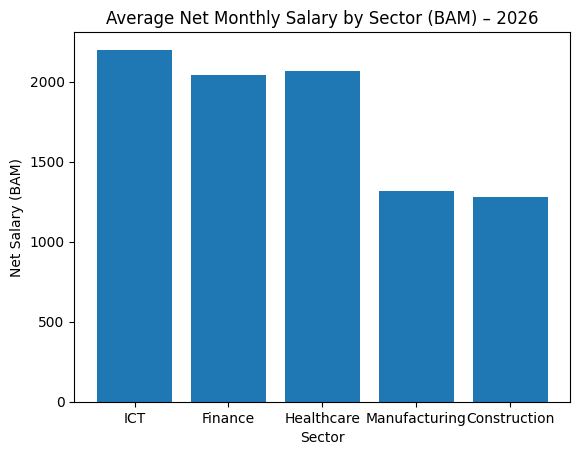
The ICT sector remains the highest-paying industry in Bosnia and Herzegovina and continues to attract both domestic and international investment. Its ability to serve global markets allows companies to offer compensation far above the national average. By late 2025, average net salaries in ICT reached approximately 2,202 BAM per month, which is nearly 40 percent higher than the countrywide average.
In 2026, this gap is expected to persist or widen further as demand for skilled developers, analysts, and designers continues to exceed supply. Employers compete aggressively for experienced professionals, especially those with international project exposure or specialized technical skills.
Remote work has further strengthened earning potential. Many professionals based in Bosnia and Herzegovina now work for foreign companies while remaining in the local labor market. These remote roles are often paid in foreign currency, pushing total compensation well beyond local salary norms.
ICT Salary Levels by Role and Experience in 2026
The table below outlines projected net monthly salaries in the ICT sector, showing how income rises with experience and specialization.
Position | Entry Level (1–3 years) | Mid-Level (around 5 years) | Senior Level (8+ years)
Software Engineer | 1,710 – 2,200 BAM | 2,800 – 4,500 BAM | 5,032 – 8,495 BAM
QA Engineer | 1,400 – 1,800 BAM | 2,200 – 2,800 BAM | 2,900 – 3,500 BAM
IT Business Analyst | 1,200 – 1,481 BAM | 1,600 – 2,100 BAM | 2,200 – 2,800 BAM
Internet Developer | 1,100 – 1,400 BAM | 1,600 – 1,900 BAM | 2,000 – 2,500 BAM
UX and UI Designer | 1,300 – 1,700 BAM | 1,900 – 2,500 BAM | 2,600 – 3,400 BAM
These figures highlight how rapidly salaries increase once professionals move beyond entry-level roles. In many cases, mid-level compensation now matches what were considered senior salaries only a few years ago.
Changing Salary Structures and Talent Competition
A key trend in 2026 is the narrowing gap between mid-level and senior salaries. Because the pool of experienced professionals is limited, companies are offering higher pay earlier in a career to retain talent. For example, a software engineer with around five years of experience can now command a gross monthly salary of approximately 4,500 BAM, a level previously reserved for senior positions.
This shift reflects intense competition rather than pure productivity gains. Employers increasingly prioritize retention, flexible work arrangements, and performance-based bonuses to avoid losing skilled staff to foreign employers.
For highly specialized roles or leadership positions, total annual compensation can be significantly higher. Professionals working with niche technologies, advanced data systems, or leading international development teams may earn the equivalent of 50,000 to 65,000 USD per year, especially when working remotely for overseas companies.
Sector Comparison Matrix for 2026 Salary Potential
Sector | Salary Level | Growth Momentum | Key Drivers
ICT and Software | Very High | Strong | Global demand, remote work, skill shortages
Finance and Professional Services | High | Moderate | Regulation, regional integration
Construction | Low to Moderate | High | Labor shortages, infrastructure projects
Hospitality and Tourism | Low | Moderate | Seasonal demand, minimum wage reforms
Retail and Consumer Services | Low | Low to Moderate | Domestic consumption trends
Overall Impact on the 2026 Salary Landscape
The sectoral breakdown of salaries shows that career outcomes in Bosnia and Herzegovina are increasingly shaped by industry choice rather than years of experience alone. ICT continues to define the upper ceiling of earnings, while traditional sectors remain constrained despite wage growth.
b. Financial and Insurance Activities
The financial and insurance sector in Bosnia and Herzegovina continues to strengthen as it aligns more closely with European banking regulations and reporting standards. This ongoing integration has increased the need for skilled professionals in finance, accounting, risk management, and compliance. As a result, salaries in this sector remain among the highest in the country and play a key role in shaping overall wage expectations for 2026.
By late 2025, the average net monthly salary in financial and insurance activities reached approximately 2,039 BAM. This placed the sector firmly within the top three highest-paying industries nationwide. The outlook for 2026 suggests continued stability, with moderate salary growth supported by rising regulatory complexity, digital transformation in banking, and increased oversight requirements.
Average Finance and Accounting Salaries for 2026
Compensation in finance-related roles varies depending on seniority, certification level, and location. Positions based in major cities, particularly Sarajevo, tend to offer higher pay due to the concentration of banks, insurance companies, and multinational corporate offices.
Finance and Accounting Salary Overview for 2026
Job Title | Estimated Annual Gross (BAM) | Average Monthly Net (BAM) | Typical Annual Bonus (BAM)
Finance Manager | 31,416 | 2,618 | Not commonly fixed
Accountant (Sarajevo) | 29,521 | 1,980 | 1,033
Certified Public Accountant | 29,226 | 1,960 | 1,184
General Accountant | 29,111 | 1,950 | 1,019
Certified Accountant | 28,742 | 1,920 | 1,164
These figures highlight the relatively narrow salary range across accounting roles, with certification and specialization providing incremental but consistent pay advantages. Management positions, however, show a clearer salary premium, reflecting responsibility for compliance, reporting accuracy, and strategic financial planning.
Regional Pay Differences and Urban Salary Premiums
Location plays an important role in financial sector salaries. Accountants and finance professionals working in Sarajevo earn around 5 percent more than the national average. This premium is largely due to the presence of international banks, audit firms, and corporate headquarters in the capital.
In smaller cities and regional centers, salaries remain competitive but tend to be slightly lower, with fewer opportunities for large bonuses or rapid advancement. However, remote and hybrid work models are slowly reducing this gap, especially for roles focused on reporting, analysis, and internal controls.
The Growing Role of Bonuses and Performance Pay
One of the defining trends in the financial and insurance sector for 2026 is the increasing use of performance-based compensation. Bonuses averaging above 1,000 BAM per year are now common across accounting and finance roles, particularly in private banks, insurance firms, and international companies.
Performance Pay Adoption Matrix
Role Type | Base Salary Weight | Bonus Importance | Key Performance Factors
Junior Accounting Roles | High | Low to Moderate | Accuracy, deadlines
Certified Accountants | High | Moderate | Compliance, audit results
Finance Managers | Moderate | High | Profitability, risk control
Insurance Specialists | Moderate | High | Sales volume, portfolio growth
This shift toward bonuses reflects a broader move away from purely fixed salaries. Employers increasingly link compensation to individual performance, regulatory compliance outcomes, and overall financial results.
Outlook for Financial Sector Salaries in 2026
Looking ahead, salaries in financial and insurance activities are expected to remain resilient. Demand for certified professionals, especially those with experience in international standards, digital finance tools, and regulatory reporting, will continue to support above-average pay.
c. Healthcare and Social Protection
The healthcare and social protection sector has experienced some of the most significant salary changes in Bosnia and Herzegovina in recent years. These adjustments are largely a response to the continued emigration of medical professionals, especially nurses and doctors, to higher-paying European Union countries. As a result, healthcare wages have become a strategic priority for policymakers and employers aiming to stabilize the workforce and protect the quality of public health services.
By late 2025, the average net monthly salary in healthcare reached approximately 2,068 BAM, marking the highest level ever recorded for the sector. This increase reflects a combination of public sector wage reforms, targeted allowances, and the rapid expansion of private healthcare providers offering more competitive compensation.
Drivers Behind Healthcare Salary Growth
Several structural factors are pushing healthcare salaries upward going into 2026. The most critical issue is staff shortages caused by international migration. Hospitals and clinics face intense competition to retain experienced nurses and specialized practitioners, particularly in urban centers.
At the same time, demand for healthcare services continues to rise due to population aging and increased use of private medical services. These pressures have forced employers to improve pay scales, introduce retention bonuses, and offer clearer career progression pathways.
Public sector reforms have also played an important role. Salary adjustments for medical staff are increasingly linked to experience, specialization, and workload intensity, rather than flat wage structures.
Healthcare Salary Levels by City and Experience
Salary differences within the healthcare sector vary notably by location and seniority. Major cities offer higher compensation due to greater demand, higher living costs, and the concentration of specialized medical facilities.
Healthcare Professionals Salary Comparison for 2026
Position | Location | Entry-Level Gross (BAM) | Average Gross (BAM) | Senior-Level Gross (BAM)
Registered Nurse | Sarajevo | 18,786 | 26,953 | 32,801
Registered Nurse | Mostar | 18,100 | 26,000 | 31,500
Registered Nurse | Banja Luka | 16,372 | 23,161 | 28,586
Registered Nurse | Tuzla | 16,800 | 24,000 | 29,200
Trauma Nurse Practitioner | National Average | 24,000 | 32,000 | 38,000
These figures show that a registered nurse working in Sarajevo earns roughly 16 percent more than a comparable role in Banja Luka. This gap highlights regional imbalances within the healthcare system, driven by differences in funding levels, patient volume, and access to private-sector employment opportunities.
Regional Pay Differences and Workforce Implications
Urban centers continue to attract healthcare professionals due to better pay and career prospects. Smaller cities and regional hospitals face greater challenges in recruitment and retention, often relying on government incentives or additional allowances to remain competitive.
Private clinics, particularly in Sarajevo and Mostar, are playing an increasing role in shaping salary benchmarks. Their higher pay structures are influencing public institutions, which must now adjust compensation policies to prevent further staff losses.
Long-Term Salary Outlook for Healthcare Professionals
Looking beyond 2026, healthcare salaries are projected to grow by approximately 21 percent over the next five years. This pace is well above the national average for wage growth and reflects the government’s commitment to workforce retention and system stability.
Healthcare Salary Growth Outlook Matrix
Factor | Impact on Salaries | Long-Term Effect
Staff shortages | Very high | Sustained upward pressure
Public sector reforms | High | More structured pay scales
Private healthcare expansion | High | Increased competition for talent
Aging population | Moderate | Rising service demand
d. Construction and Manufacturing
Construction and manufacturing continue to form the foundation of Bosnia and Herzegovina’s physical economy. These sectors employ a large share of the workforce and are closely tied to infrastructure development, housing demand, and industrial output. Despite their economic importance, wages in both sectors have historically remained below the national average. Going into 2026, however, salary conditions are showing gradual improvement, largely driven by minimum wage reforms and tax adjustments.
By late 2025, construction recorded the lowest average net salaries among major industries, with typical monthly pay around 1,278 BAM. Manufacturing salaries were slightly stronger but still modest compared to services-based sectors. The 2026 outlook suggests a slow but meaningful shift, especially for lower-income workers.
Impact of Minimum Wage Increases on Blue-Collar Jobs
The increase in the statutory minimum wage has had a stronger effect on construction and manufacturing than on higher-paying industries. Because many roles in these sectors were clustered close to the legal minimum, the new wage floor has directly lifted take-home pay for a large portion of workers.
General laborers, machine operators, and site workers now benefit from a higher guaranteed income, even if wage growth above the minimum remains limited. While this does not eliminate income gaps with higher-skilled sectors, it does improve basic financial security for thousands of workers.
At the same time, employers face rising labor costs, which has increased pressure to improve productivity, reduce informal employment, and invest in workforce efficiency.
Construction and Industrial Salary Levels by Role
Salary differences within construction and manufacturing are strongly influenced by skill level and responsibility. Engineers and technical specialists earn significantly more than general laborers, creating a wide internal wage gap.
Construction and Manufacturing Salary Snapshot for 2026
Position | Average Monthly Net or Gross (BAM) | Typical Annual Bonus (BAM)
Civil Engineer | 2,580 net | 1,100 gross
Lead Civil Engineer | 2,840 net | 1,183 gross
Structural Engineer | 3,080 gross | Not common
Machine Fitter | 2,081 net | Not common
Manufacturing Worker | 1,320 net | Rare
Construction Worker | 1,278 net | Rare
This table shows that professional and engineering roles offer competitive pay, particularly for experienced staff. In contrast, general labor positions remain closely aligned with the minimum wage threshold, limiting income growth without further skill development.
Manufacturing Wage Trends and Take-Home Pay
In late 2025, average manufacturing wages reached approximately 2,033 BAM on a gross basis. Due to recent tax and contribution reforms, workers in this sector are retaining a larger share of their earnings than in previous years. This has slightly improved net income levels, even where gross wages have not increased significantly.
Manufacturers are increasingly focused on retaining skilled machine operators and technicians, especially as labor shortages grow and regional competition for workers intensifies. However, wage increases remain cautious due to narrow profit margins and sensitivity to energy and raw material costs.
Wage Structure Comparison Matrix for 2026
Role Category | Pay Level | Growth Potential | Key Constraints
Engineering and Technical | High | Moderate | Project availability, specialization
Skilled Trades | Moderate | Low to Moderate | Training access, automation
General Labor | Low | Low | Minimum wage dependence
Supervisory Roles | Moderate to High | Moderate | Experience and certification
Outlook for Construction and Manufacturing Salaries
Looking ahead to 2026, construction and manufacturing are expected to see gradual wage improvement rather than rapid growth. The main gains will continue to come from minimum wage adjustments and improved net pay due to tax changes, rather than strong increases in base salaries.
For workers, long-term income growth will depend heavily on upskilling, certification, and progression into technical or supervisory roles. For employers, the challenge will be balancing higher wage floors with productivity improvements and cost control.
5. Geographic Comparison: Salary Variations by City
Location plays a decisive role in shaping salary levels in Bosnia and Herzegovina for 2026. In many cases, where a person works can influence income just as much as job title or industry. Differences in living costs, concentration of employers, and the presence of public institutions all contribute to noticeable wage gaps between cities. Understanding these regional variations is essential for both employers setting compensation and professionals planning career moves.
Sarajevo and the Capital City Salary Advantage
Sarajevo continues to offer the highest salaries in the country, reflecting its role as the political, financial, and administrative center. The city hosts international organizations, large banks, government institutions, and a growing number of technology firms. As a result, wages are adjusted upward to match both higher demand for skilled workers and higher living expenses.
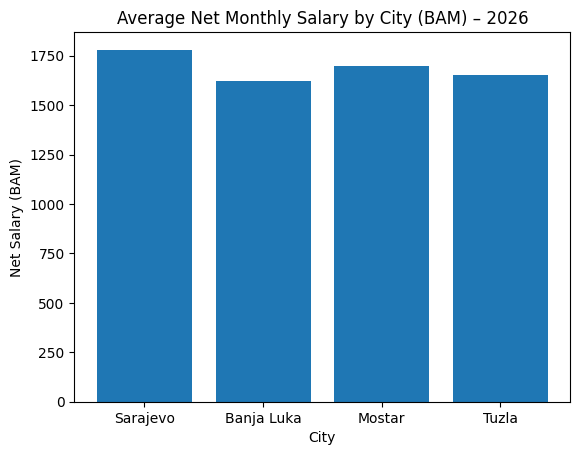
The cost of living in Sarajevo is estimated to be around 8 percent higher than the national average. To maintain comparable purchasing power, employers typically offer higher pay than in other cities. For 2026, the projected average net salary in Sarajevo is approximately 1,780 BAM.
Professionals working in the capital often receive a salary premium of 5 to 10 percent compared to similar roles in cities such as Mostar or Tuzla. This premium is most visible in ICT, finance, consulting, and roles connected to international organizations.
Banja Luka and Public Sector Stability
Banja Luka serves as the administrative center of the Republika Srpska and offers a more stable but slightly lower salary environment compared to Sarajevo. Wage growth in the city is strongly influenced by the public sector, judiciary, healthcare institutions, and energy-related companies.
The projected average net salary in Banja Luka for 2026 is around 1,620 BAM. While private sector salaries tend to be lower than in the capital, public sector roles provide predictable income and long-term job security.
A notable factor supporting salary growth in Banja Luka is targeted public spending. The 2026 budget includes dedicated funding to increase compensation for judges and prosecutors, reinforcing the city’s position as a center for administrative and legal employment.
Tuzla and Mostar as Regional Economic Centers
Tuzla and Mostar play important but distinct roles in the national economy. Tuzla remains a key industrial and energy hub, with strong employment in chemicals, utilities, and manufacturing-linked services. Salaries in Tuzla tend to be moderate, offering a balanced relationship between income and living costs.
Mostar, on the other hand, benefits from tourism, logistics, healthcare, and cross-border trade. Seasonal demand and private healthcare providers contribute to higher wages in specific professions, even if the overall city average remains below Sarajevo.
Examples of regional salary levels highlight these differences. In Tuzla, an online sales manager can earn around 35,834 BAM on a gross annual basis, reflecting demand for commercial and digital roles. In Mostar, registered nurses earn approximately 26,000 BAM gross annually, compared to around 24,000 BAM in Tuzla, showing how healthcare pay varies by city.
City-by-City Salary Comparison for 2026
The table below illustrates forecasted average net monthly salaries across major cities for common roles.
Position | Sarajevo Net (BAM) | Banja Luka Net (BAM) | Tuzla Net (BAM) | Mostar Net (BAM)
Accountant | 1,980 | 1,880 | 1,850 | 1,870
Registered Nurse | 1,850 | 1,650 | 1,700 | 1,780
Software Developer | 3,800 | 3,500 | 3,200 | 3,400
Sales Manager | 1,850 | 1,700 | 1,650 | 1,720
Administrative Worker | 1,450 | 1,380 | 1,320 | 1,350
Cost-to-Income Balance Matrix
While Sarajevo offers the highest salaries, it also comes with higher expenses. Other cities may provide better value when income is measured against cost of living.
City | Salary Level | Living Cost Level | Overall Affordability
Sarajevo | High | High | Moderate
Banja Luka | Medium | Medium | Good
Tuzla | Medium | Low to Medium | Very Good
Mostar | Medium | Medium | Good
What Geographic Salary Differences Mean for 2026
Regional salary variation is expected to persist throughout 2026. Sarajevo will remain the top-paying city, especially for skilled professionals and international-facing roles. Banja Luka will continue to offer stable income growth driven by the public sector, while Tuzla and Mostar will provide competitive opportunities in industry, healthcare, and tourism.
6. The Impact of Experience and Education on Earnings
In Bosnia and Herzegovina, income growth is not driven by time alone. The link between experience, education, and salary varies widely depending on the profession and sector. For 2026, salary data shows that some careers reward seniority aggressively, while others maintain relatively flat pay structures regardless of years worked. Understanding these differences is essential for anyone evaluating long-term earning potential.
Experience and Salary Growth Patterns
Salary progression in Bosnia and Herzegovina is uneven across industries. In professional and knowledge-based sectors such as law, accounting, technology, and engineering, experience leads to sharp increases in pay. In contrast, service-oriented and manufacturing roles tend to have compressed salary bands, where income growth slows after the early career stage.
On average, moving from an entry-level position with one to three years of experience to a senior role with eight or more years of experience results in a 65 to 80 percent increase in gross annual earnings. In some commercial roles, the increase is even more pronounced.
Experience-Based Gross Salary Comparison for 2026
Job Title | Entry Level Annual Gross (BAM) | Senior Level Annual Gross (BAM) | Approximate Increase
Online Sales Manager | 19,733 | 45,607 | 131%
Certified Public Accountant | 20,599 | 36,101 | 75%
QA Engineer | 20,307 | 35,327 | 74%
Registered Nurse | 16,372 | 28,586 | 75%
Lead Civil Engineer | 23,851 | 42,172 | 77%
Internet Developer | 16,757 | 28,100 | 68%
These figures show that commercial and technical roles benefit the most from accumulated experience. Positions tied to revenue generation or regulatory responsibility tend to reward seniority more strongly than routine operational roles.
Age, Skills, and Unexpected Income Trends
An unusual pattern appears in certain administrative roles. In 2026, workers aged 25 to 34 in administrative assistant positions often earn more than those aged 35 to 44. Younger workers in these roles earn the equivalent of around 767 USD per month, while older colleagues average closer to 638 USD.
This reversal is not linked to experience but to skill relevance. Younger employees are more likely to possess strong English proficiency, advanced software skills, and familiarity with digital tools. These abilities are increasingly valued by employers, especially in international-facing companies. Older workers, in contrast, are often tied to legacy pay structures in slower-growing sectors, limiting their earning progression.
Education as a Guaranteed Income Multiplier
Education plays a central role in income determination for 2026, reinforced by recent wage legislation. Authorities have formally linked minimum pay levels to educational attainment, ensuring that higher qualifications result in higher guaranteed earnings.
In the Federation of Bosnia and Herzegovina, workers with a university degree are expected to earn a minimum base salary of approximately 1,600 BAM net per month. Those with only secondary education are generally placed at around 1,400 BAM net. This creates a mandatory income gap of roughly 14 percent in favor of degree holders.
This policy ensures that higher education continues to deliver measurable financial returns, even in non-technical or administrative professions.
Education Levels Among High-Earning Professionals
The importance of formal education becomes clearer when examining the academic background of top earners across sectors.
Educational Profile of High Earners in 2026
Profession | Bachelor’s Degree Share | Master’s Degree Share
Engineering | 100% | 0%
Registered Nurse | 67% | 10%
Accountant | 56% | 22%
QA Engineer | 53% | 30%
Certified Public Accountant | 45% | 44%
In technical and regulated professions, advanced degrees are increasingly common. In fields such as accounting and quality assurance, holding a Master’s degree is often necessary to reach senior-level pay bands. Employers use education as a signal of expertise, compliance readiness, and long-term professional commitment.
Experience and Education Impact Matrix
Factor | Impact on Salary | Long-Term Effect
Years of experience | High in professional sectors | Strong upward income mobility
Formal education | High across most sectors | Higher salary floors and ceilings
Digital and language skills | Increasingly high | Faster early-career progression
Sector choice | Very high | Determines maximum earning potential
What This Means for Earnings in 2026
For 2026, salary growth in Bosnia and Herzegovina is shaped by a combination of experience depth and educational achievement rather than tenure alone. Workers in professional, technical, and regulated fields benefit the most from long-term career investment, while those in lower-skilled roles face limited progression without retraining or education upgrades.
7. Living Standards and the Cost of Living (Potrošačka Korpa)

Understanding salaries in Bosnia and Herzegovina for 2026 requires looking beyond income figures and examining real living costs. The most widely used benchmark for this purpose is the trade union consumer basket, known locally as the Sindikalna potrošačka korpa. This indicator estimates the minimum monthly spending required for a four-member household to live with basic dignity, covering essential needs such as food, housing, healthcare, education, and transportation.
By late 2025, the total value of this consumer basket reached approximately 3,355 BAM per month. Based on current inflation patterns and a projected inflation rate of around 2.4 percent, the basket is expected to rise further and approach 3,430 BAM by mid-2026. This steady increase highlights the ongoing pressure on household budgets, even as wages continue to rise.
Structure of the Trade Union Consumer Basket
Food remains the largest expense category for households, followed by housing-related costs and essential services. The breakdown below illustrates how monthly expenses are distributed across major categories.
Trade Union Consumer Basket Cost Structure for 2026
Expense Category | Share of Total | Monthly Cost (BAM)
Food | 42.64% | 1,430.68
Housing and Utilities | 14.73% | 494.23
Clothing and Footwear | 11.92% | 399.95
Education and Culture | 10.73% | 359.98
Hygiene and Health | 9.25% | 310.36
Household Maintenance | 5.96% | 199.97
Transportation | 4.77% | 160.05
Total Monthly Basket | 100% | 3,355.25
This cost structure shows how heavily households depend on food spending, leaving limited flexibility when prices rise or income growth slows.
How Salaries Compare to the Cost of Living
When average salaries are measured against the consumer basket, a clear gap becomes visible. In 2026, the average net monthly salary is expected to fall between approximately 1,605 and 1,750 BAM. This level of income covers only about 48 to 51 percent of the total monthly cost required for a family of four.
To fully cover essential living expenses, a household typically needs the equivalent of just over two average net salaries. This reality explains why dual-income households are the norm and why many families still rely on additional income sources such as informal work or financial support from relatives living abroad.
Minimum Wage Coverage and Household Pressure
The situation is even more challenging for households relying on the minimum wage. At the current minimum level, a single minimum wage salary covers less than one-third of the consumer basket, or roughly 30 percent of total household needs.
This large shortfall is a central reason behind ongoing trade union demands for further increases in the wage floor. Labor organizations argue that raising the minimum wage to around 1,200 BAM by the end of 2026 is necessary to reduce poverty risk and improve income adequacy for low-wage workers.
Income Coverage Comparison Matrix
Income Type | Monthly Net Income (BAM) | Basket Coverage
Minimum Wage | 1,000 | About 30%
Average Net Salary | 1,605–1,750 | About 48–51%
Two Average Salaries | 3,210–3,500 | Full coverage
Payroll Taxes and the Gap Between Gross and Net Pay
Another critical factor in evaluating salaries for 2026 is the tax wedge, which represents the difference between what an employer pays in total and what an employee receives as net income. Bosnia and Herzegovina operates a decentralized payroll system, with different rules in the Federation of Bosnia and Herzegovina and the Republika Srpska. Recent reforms aim to reduce pressure on employers while supporting higher net wages.
Payroll Contributions in the Federation of Bosnia and Herzegovina
The Federation has adjusted employer contributions to support the higher minimum wage introduced in recent years. Most payroll deductions are borne by employees, while employers face a smaller additional burden.
Federation Payroll Contribution Structure for 2026
Contribution or Tax | Rate | Paid By
Pension Insurance | 17.0% | Employee
Health Insurance | 12.5% | Employee
Unemployment Insurance | 1.5% | Employee
Total Employee Contributions | 31.0% | Employee
Personal Income Tax | 10.0% | Employee
Employer Payroll Contributions | Around 6.0% | Employer
Payroll Contributions in Republika Srpska
The Republika Srpska follows a slightly different model, shifting more of the contribution burden into the gross salary figure while keeping the total employee contribution rate at 31 percent.
Republika Srpska Payroll Contribution Structure for 2026
Contribution or Tax | Rate | Paid By
Pension Insurance | 18.5% | Employee
Health Insurance | 10.2% | Employee
Unemployment Insurance | 0.6% | Employee
Child Care Contribution | 1.7% | Employee
Total Employee Contributions | 31.0% | Employee
Personal Income Tax | 8.0% | Employee
Support Measures for Entrepreneurs and Small Businesses
A notable fiscal decision for 2026 in the Republika Srpska is the choice to keep the contribution base for entrepreneurs at 70 percent of the average gross salary, rather than increasing it to 80 percent as previously planned. This measure is expected to reduce budget revenue but helps small businesses absorb higher wage costs without losing competitiveness.
By lowering the effective tax burden on self-employed workers and small firms, policymakers aim to protect employment levels while maintaining momentum toward higher wage standards.
What This Means for Living Standards in 2026
The overall picture for 2026 shows that salaries are rising, but living costs continue to grow at a pace that limits real improvements in household welfare. Average wages alone are insufficient to support a family, reinforcing the importance of dual incomes and supplementary earnings.
8. Payroll Taxes, Contributions, and Net vs. Gross Earnings
To fully understand salaries in Bosnia and Herzegovina for 2026, it is essential to look at the gap between gross wages and net take-home pay. This gap, often referred to as the tax wedge, represents the difference between what an employer pays in total and what an employee actually receives after taxes and social contributions. For many workers, this distinction has a major impact on real purchasing power.
Bosnia and Herzegovina operates a decentralized payroll system, with different structures in the Federation of Bosnia and Herzegovina and the Republika Srpska. During 2025 and 2026, both entities introduced adjustments aimed at supporting higher wages, especially the new minimum wage, by rebalancing contribution burdens.
Core Payroll Contribution Structure
Across the country, payroll deductions are built around three main social insurance pillars. These include pension and disability insurance, health insurance, and unemployment insurance. In some cases, additional contributions apply depending on the entity.
These contributions are mandatory and directly affect how much of a gross salary is converted into net income.
Payroll Contributions in the Federation of Bosnia and Herzegovina
The Federation of Bosnia and Herzegovina has focused on easing pressure on employers while maintaining full social insurance coverage for employees. This approach was designed to support the 1,000 BAM minimum wage without significantly increasing labor costs for businesses.
Federation Payroll Contribution Overview for 2026
Contribution or Tax | Rate | Paid By
Pension and Disability Insurance | 17.0% | Employee
Health Insurance | 12.5% | Employee
Unemployment Insurance | 1.5% | Employee
Total Employee Contributions | 31.0% | Employee
Personal Income Tax | 10.0% | Employee
Employer Payroll Contributions | Approximately 6.0% | Employer
Under this system, employees carry most of the contribution burden, while employers face relatively low additional payroll taxes. This structure allows companies to raise net wages more easily without a proportional increase in total employment costs.
Payroll Contributions in Republika Srpska
The Republika Srpska follows a slightly different model. While the total employee contribution rate remains at 31 percent, the structure shifts more of the burden into the gross salary calculation. This makes gross wages appear higher, while net pay outcomes remain broadly comparable.
Republika Srpska Payroll Contribution Overview for 2026
Contribution or Tax | Rate | Paid By
Pension and Disability Insurance | 18.5% | Employee
Health Insurance | 10.2% | Employee
Unemployment Insurance | 0.6% | Employee
Child Care Contribution | 1.7% | Employee
Total Employee Contributions | 31.0% | Employee
Personal Income Tax | 8.0% | Employee
This approach simplifies payroll calculations and provides slightly lower personal income tax rates, which can benefit higher earners in particular.
Net vs. Gross Salary Impact Comparison
The following matrix highlights how payroll structures influence take-home pay across both entities.
Factor | Federation of BiH | Republika Srpska
Total Employee Contributions | 31% | 31%
Personal Income Tax | 10% | 8%
Employer Payroll Burden | Low | Minimal
Net Pay Predictability | High | High
While the systems differ in structure, both aim to balance employee protection with employer affordability under rising wage floors.
Support Measures for Entrepreneurs and Small Businesses
One of the most important fiscal decisions for 2026 in the Republika Srpska relates to self-employed workers and small business owners. Authorities chose to keep the contribution base for entrepreneurs at 70 percent of the average gross salary, instead of increasing it to 80 percent as originally planned.
This measure is expected to reduce government revenue by approximately 19.3 million BAM, but it provides meaningful relief for small firms operating under higher minimum wage requirements. By lowering effective contribution costs, businesses can maintain competitiveness, protect jobs, and absorb rising labor expenses more effectively.
Why Payroll Structure Matters for 2026 Salaries
Payroll taxes and contributions play a decisive role in determining how salary increases are felt by workers. Even modest reductions in contribution burdens can lead to noticeable improvements in net income, especially for low- and middle-wage earners.
9. Mandatory Benefits: The Regres, Leave, and Allowances
In Bosnia and Herzegovina, total compensation in 2026 goes far beyond the monthly salary. A range of legally required benefits and allowances significantly increases an employee’s real annual income. These components are often overlooked when comparing salaries, yet they play a crucial role in financial stability, time off, and work–life balance.
Understanding these mandatory benefits is essential for both employees evaluating job offers and employers calculating the true cost of employment.
The Regres and Its Role in Annual Income
One of the most important mandatory benefits is the Regres, also known as the annual leave allowance. This payment is tied directly to an employee taking their yearly vacation and is designed to support travel, rest, and recovery.
For 2026, the Council of Ministers has set the Regres for state-level institutions at 690.86 BAM, reflecting a noticeable increase compared to the previous year. This adjustment aligns with rising living costs and reinforces the importance of paid rest within the workforce.
In the private sector, the amount is not fixed by law but follows common market practice. Most employers pay a Regres ranging from 40 percent to 100 percent of the employee’s monthly salary. For higher-paid professionals, this can represent a substantial one-time cash inflow during the year.
Regres Payment Practices in 2026
Employment Sector | Typical Regres Level | Payment Timing
Public Sector | Fixed amount set annually | At the start of annual leave
Private Sector | 40% to 100% of monthly salary | During annual leave period
Working Hours and Annual Leave Entitlements
Standard working conditions are clearly defined by labor law and form a key part of the overall compensation framework.
The standard work week consists of 40 hours spread over five working days. This structure provides predictability and aligns Bosnia and Herzegovina with broader European labor standards.
Annual leave is a guaranteed right rather than a discretionary benefit. All employees are entitled to a minimum of 20 working days per year. Certain groups receive extended leave based on age or job conditions.
Annual Leave Entitlements by Employee Category
Employee Category | Minimum Annual Leave
Standard employees | 20 working days
Employees under 18 | 24 working days
Employees in hazardous roles | 30 working days
These provisions ensure that physically demanding or high-risk jobs come with additional recovery time, indirectly improving overall job quality.
Sick Leave and Income Protection
Sick leave policies are another important pillar of mandatory benefits. When an employee is unable to work due to illness, income protection rules apply.
In the Federation of Bosnia and Herzegovina, the employer covers the first 42 days of sick leave, while in the Republika Srpska the employer covers the first month. During this period, employees receive 80 percent of their regular salary. After this initial phase, compensation responsibility shifts according to health insurance regulations.
This structure balances employer responsibility with social insurance support, ensuring workers are not left without income during extended illness.
Maternity Leave and Family Support
Maternity and parental benefits remain among the most generous statutory provisions in the country. The standard maternity leave duration is 12 months. In the Republika Srpska, this period extends to 18 months in cases of twins or the birth of a third child.
During pregnancy-related leave, compensation is paid at 100 percent of the employee’s salary and is covered through the Child Protection Fund. This arrangement removes the financial burden from employers while ensuring full income security for families.
Maternity Leave Provisions in 2026
Scenario | Leave Duration | Salary Coverage
Standard maternity leave | 12 months | 100% of salary
Twins or third child in RS | 18 months | 100% of salary
Overtime, Holiday, and Rest Day Pay
Additional work outside standard hours is compensated through legally mandated premium rates. These premiums can significantly increase total monthly earnings for employees in sectors with irregular schedules.
Overtime work is paid at 125 percent of the employee’s net hourly rate. Work performed on public holidays is compensated at 140 percent, reflecting its higher social cost. Work carried out during weekly rest periods is paid at 115 percent of the net hourly rate.
Premium Pay Rates for Additional Work
Type of Work | Pay Rate Based on Net Hourly Wage
Overtime | 125%
Public holiday work | 140%
Weekly rest day work | 115%
Why Mandatory Benefits Matter in 2026
When all mandatory benefits are taken into account, the real value of employment in Bosnia and Herzegovina becomes much clearer. Regres payments, paid leave, income protection during illness, maternity benefits, and premium pay for extra work collectively add significant value beyond the base salary.
10. International Comparisons: Bosnia and Herzegovina in a Global Context
Placing salaries in Bosnia and Herzegovina within an international context helps explain ongoing labor migration and highlights how competitive the local job market is in 2026. When workers compare their earnings with those in neighboring countries and developed economies, income gaps become a key factor in career decisions, especially for skilled professionals.
Global and Regional Salary Benchmarks
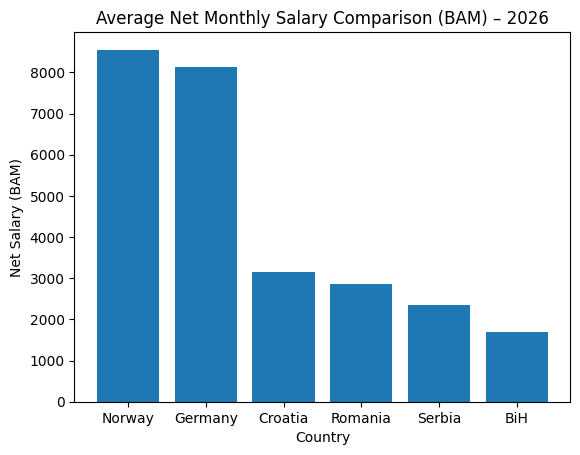
Average net salaries across Europe and beyond show large differences in earning power. Countries in Western Europe continue to offer significantly higher wages, while some regional neighbors have narrowed the gap by benefiting from stronger economic growth and European Union integration.
Average Monthly Net Salary Comparison for 2025–2026 (Converted to BAM)
Country | Average Monthly Net Salary (BAM) | Difference Compared to Bosnia and Herzegovina
Norway | 8,550 | +433%
Germany | 8,125 | +406%
United Kingdom | 5,670 | +253%
Croatia | 3,151 | +96%
Bulgaria | 2,971 | +85%
Romania | 2,861 | +78%
Serbia | 2,354 | +47%
Bosnia and Herzegovina | 1,605 – 1,750 | Baseline
Montenegro | 1,410 | -12%
Albania | 1,206 | -25%
These figures clearly show why Western Europe remains highly attractive. In countries such as Norway and Germany, average net incomes are more than four times higher than in Bosnia and Herzegovina, even before considering differences in social benefits and career opportunities.
Bosnia and Herzegovina Within the Western Balkans
Within the Western Balkan region, Bosnia and Herzegovina remains relatively competitive. Average net salaries are higher than those in Montenegro and Albania and broadly in line with lower-tier regional economies. This positioning helps retain some workers locally, especially those who value proximity to family and lower living costs.
However, competition within the region is intensifying. Serbia now offers average net salaries nearly 50 percent higher than Bosnia and Herzegovina, creating strong incentives for short-distance migration, particularly for healthcare workers, engineers, and skilled trades.
The EU Membership Effect on Wages
The most significant comparison is with neighboring European Union member states such as Croatia and Romania. Croatian salaries are almost double those in Bosnia and Herzegovina, while Romanian net wages are approximately 78 percent higher.
This difference illustrates the so-called EU membership dividend. Access to larger markets, higher investment levels, and stronger labor protections have translated into faster wage growth in EU countries. For many Bosnian professionals, relocating to an EU country offers higher income without the cultural and linguistic barriers associated with moving to Western Europe.
Migration Pressure and Labor Market Competitiveness
These international wage gaps help explain why regional migration is often seen as a practical alternative to long-distance relocation. Moving to Croatia or Romania can significantly increase earnings while keeping travel distance and relocation costs relatively low.
International Salary Attraction Matrix
Destination Type | Income Gain Potential | Migration Complexity | Common Target Groups
Western Europe | Very High | High | IT, engineering, healthcare
EU Neighbors | High | Moderate | Nurses, accountants, skilled trades
Regional Balkans | Moderate | Low | General professionals, technicians
What This Means for Salaries in 2026
For 2026, Bosnia and Herzegovina faces a dual challenge. While salaries are rising domestically, they are doing so from a low base compared to EU economies. This limits the country’s ability to fully close the wage gap in the short term.
11. Strategic Outlook for 2026
The salary environment in Bosnia and Herzegovina in 2026 marks a turning point for the national labor market and the broader economy. Long-standing dependence on low-cost labor is gradually coming to an end. Strong minimum wage increases, combined with the introduction of education-linked pay structures, signal a shift toward a more structured and value-driven compensation model.
This transition has wide-reaching implications for employers, workers, and policymakers. Businesses can no longer rely on low wages as a competitive advantage and must instead focus on efficiency, skills, and productivity.
The End of the Low-Wage Economic Model
For much of the past decade, Bosnia and Herzegovina competed primarily on labor affordability. In 2026, this approach is becoming increasingly unsustainable. Higher statutory wages and rising social contributions mean that labor-intensive business models are under growing pressure.
Companies are now encouraged to invest in automation, digital tools, and process optimization. Productivity gains are becoming essential to offset higher payroll costs. Sectors that fail to adapt risk losing competitiveness, particularly in manufacturing and basic services.
Labor Market Resilience and Real Wage Growth
Despite structural challenges, the labor market in 2026 shows signs of resilience. For the first time in several years, real wage growth is expected to exceed inflation. While this progress starts from a relatively low income base, it represents an important shift in favor of workers’ purchasing power.
However, living costs remain a major constraint. The consumer basket for a four-member household is projected to exceed 3,400 BAM per month, which is roughly double the average net salary. This imbalance continues to place pressure on households and limits the real impact of wage increases for a large share of the population.
Sectoral Wage Polarization and Income Inequality
Salary growth in 2026 is not evenly distributed across the economy. Certain industries function as high-income enclaves, while others lag behind.
The ICT and finance sectors continue to operate as salary leaders. Professionals in these fields, especially those working remotely or serving international markets, can achieve income levels that support a European-standard lifestyle. These sectors are increasingly disconnected from domestic wage norms.
By contrast, much of the broader workforce remains constrained by minimum wage dynamics and limited progression opportunities. This growing gap between high-skill and low-skill roles is becoming one of the defining features of the 2026 salary landscape.
Key Structural Challenges for 2026
Several unresolved issues will shape salary outcomes throughout the year.
One major challenge is the continued existence of informal pay practices, often referred to as envelope wages. While higher minimum wages and stricter enforcement aim to reduce this behavior, full formalization remains a work in progress.
Another critical issue is the retention of skilled workers, particularly in healthcare, engineering, and technical professions. International competition for talent remains strong, and salary increases alone may not be sufficient without improvements in working conditions and career development.
Demographic trends also play a role. A shrinking and aging labor force limits long-term growth potential and increases pressure on employers to retain and upskill existing staff.
Skills, Education, and Individual Earning Potential
For individuals, the 2026 labor market increasingly rewards specialization and modern skills. University education has become more valuable due to legally enforced wage differentials, especially in the Republika Srpska. At the same time, digital literacy, language skills, and technical proficiency are critical for faster salary progression, particularly in the Federation.
Workers who combine formal education with digital capabilities are best positioned to benefit from the changing salary structure. Those who do not adapt face limited income growth, even as nominal wages rise.
Long-Term Direction and Regional Convergence
Looking ahead, Bosnia and Herzegovina’s progress will be measured by its ability to narrow the wage gap with regional peers. As the country advances toward potential European integration milestones, salary convergence with neighboring economies such as Serbia and Croatia will serve as a key indicator of success.
Conclusion
The salary environment in Bosnia and Herzegovina in 2026 reflects a country in the middle of a deep economic and labor market transition. Wages are no longer shaped solely by low-cost competitiveness, but increasingly by structural reforms, minimum wage enforcement, education-linked pay policies, and growing pressure from regional and international labor markets. While average salaries are rising in nominal and real terms, they continue to face strong headwinds from living costs, demographic changes, and global mobility.
From a macroeconomic perspective, 2026 represents a stabilization phase rather than a breakthrough year. GDP growth remains moderate, inflation has eased compared to previous peaks, and real wages are finally beginning to grow faster than consumer prices. However, this improvement starts from a low base, meaning that many households still struggle to translate higher salaries into a materially better standard of living.
Income Growth Versus Cost of Living Reality
One of the most important conclusions from the 2026 salary landscape is the persistent mismatch between earnings and household expenses. The trade union consumer basket, which exceeds 3,400 BAM per month for a four-member family, remains far above what a single average salary can support. Even with rising wages, most households continue to rely on two full incomes, supplementary informal work, or remittances from abroad.
This structural gap explains why salary growth alone cannot solve broader living standard challenges. Without parallel improvements in productivity, housing affordability, and social support mechanisms, wage increases risk being absorbed by higher prices rather than delivering lasting improvements in household welfare.
Sectoral Winners and Structural Imbalances
The analysis clearly shows that salary growth in Bosnia and Herzegovina is uneven. Knowledge-based and internationally connected sectors such as ICT, finance, and professional services continue to act as high-income pockets within the economy. Workers in these fields, especially those with digital skills and remote work opportunities, can achieve income levels that support a European-standard lifestyle.
In contrast, traditional sectors such as construction, manufacturing, retail, and hospitality remain closely tied to minimum wage dynamics. While recent reforms have improved take-home pay for lower-income workers, long-term progression remains limited without upskilling or career transitions. This growing wage polarization is one of the defining features of the 2026 labor market.
The Role of Education, Skills, and Experience
Education and skills have become more decisive than ever in shaping earning potential. Legislative changes linking minimum wages to educational attainment have reinforced the value of formal qualifications, particularly university degrees. At the same time, practical digital skills, foreign language proficiency, and adaptability to new technologies increasingly determine how quickly salaries grow over time.
Experience alone is no longer a guarantee of higher income. In several roles, younger workers with modern skill sets now out-earn older employees tied to legacy systems and outdated job functions. This shift underscores the importance of continuous learning and reskilling in a rapidly evolving labor market.
Geographic and International Pressures
Geography continues to play a major role in salary outcomes. Sarajevo remains the highest-paying city, driven by higher living costs, international institutions, and strong demand for skilled professionals. Other urban centers such as Banja Luka, Tuzla, and Mostar offer different income-to-cost trade-offs, which increasingly influence internal labor mobility.
International comparisons further highlight the challenge facing Bosnia and Herzegovina. While local salaries remain competitive within parts of the Western Balkans, the wage gap with EU member states such as Croatia and Romania continues to drive regional migration. This “EU wage premium” remains one of the strongest external pressures on the domestic labor market.
Payroll Structure and Total Compensation Awareness
Another key takeaway from the 2026 salary framework is the importance of understanding total compensation rather than focusing solely on base pay. Payroll taxes, social contributions, mandatory benefits, Regres payments, overtime premiums, and paid leave significantly affect real annual income. For many employees, these elements make the difference between financial strain and stability.
Recent payroll reforms have helped improve net wages without dramatically increasing employer costs, but the tax wedge remains a critical factor in employment decisions, especially for small businesses and entrepreneurs.
Strategic Implications for Workers and Employers
For workers, the message in 2026 is clear. Income growth increasingly favors specialization, education, and digital capability. Those who invest in skills aligned with international demand are best positioned to benefit from rising wages and remote work opportunities. Remaining in low-skill roles without progression paths carries a growing risk of stagnation.
For employers, higher wage floors and tighter labor supply demand a shift in strategy. Productivity improvements, automation, workforce retention, and formalization of employment practices are no longer optional. Businesses that adapt to the new wage reality can remain competitive, while those relying on outdated low-wage models face increasing pressure.
Looking Beyond 2026
In the broader context, salaries in Bosnia and Herzegovina for 2026 reflect a country moving slowly but decisively toward a more structured and skills-driven labor market. While challenges remain significant, the direction of change is clear. Sustainable income growth will depend on productivity gains, education quality, investment inflows, and successful integration with regional and European markets.
As a complete guide to salaries in Bosnia and Herzegovina for 2026 demonstrates, the future of earnings in the country will not be determined by wage increases alone. It will be shaped by how effectively the economy transitions from low-cost labor to value-driven employment, how well it retains skilled workers, and how successfully it balances income growth with the real cost of living.
If you find this article useful, why not share it with your hiring manager and C-level suite friends and also leave a nice comment below?
We, at the 9cv9 Research Team, strive to bring the latest and most meaningful data, guides, and statistics to your doorstep.
To get access to top-quality guides, click over to 9cv9 Blog.
To hire top talents using our modern AI-powered recruitment agency, find out more at 9cv9 Modern AI-Powered Recruitment Agency.
People Also Ask
What is the average salary in Bosnia and Herzegovina in 2026
The average net monthly salary in Bosnia and Herzegovina in 2026 is estimated to range between 1,605 and 1,750 BAM, depending on sector, location, and experience level.
What is the minimum wage in Bosnia and Herzegovina for 2026
The minimum net wage is set at 1,000 BAM, with ongoing discussions about increasing it further due to rising living costs and inflation pressures.
Is the cost of living higher than salaries in Bosnia and Herzegovina
Yes, the average salary covers only about half of the monthly cost needed for a four-member household, making dual incomes common.
Which sectors pay the highest salaries in Bosnia and Herzegovina
ICT, finance, professional services, and private healthcare offer the highest salaries, often exceeding the national average by a wide margin.
Which sectors have the lowest salaries in 2026
Construction, hospitality, retail, and basic manufacturing roles remain closely tied to minimum wage levels despite recent increases.
How much do software developers earn in Bosnia and Herzegovina
Software developers can earn between 3,200 and 3,800 BAM net monthly, with higher pay for senior or remote international roles.
Are salaries higher in Sarajevo than other cities
Yes, salaries in Sarajevo are typically 5 to 10 percent higher due to higher living costs and a concentration of high-value employers.
How do salaries in Banja Luka compare to Sarajevo
Banja Luka offers slightly lower salaries than Sarajevo but provides more stability, especially in public sector and healthcare roles.
Does education level affect salary in Bosnia and Herzegovina
Yes, higher education leads to higher guaranteed wage floors, with university degree holders earning more than those with secondary education.
Are university degrees financially worth it in 2026
Yes, legislation links education to minimum pay, ensuring degree holders earn noticeably more even in non-technical roles.
How much do nurses earn in Bosnia and Herzegovina
Registered nurses earn between 1,650 and 1,850 BAM net monthly, with higher pay in major cities and private clinics.
Do workers receive bonuses in Bosnia and Herzegovina
Yes, bonuses are common in finance, sales, and professional roles, often exceeding 1,000 BAM annually.
What is the Regres and how much is it in 2026
The Regres is a mandatory holiday allowance paid annually, typically ranging from 40 to 100 percent of a monthly salary.
How many days of annual leave are guaranteed by law
Employees are entitled to a minimum of 20 working days of paid annual leave, with more for hazardous work or younger employees.
How is overtime paid in Bosnia and Herzegovina
Overtime work is paid at 125 percent of the regular net hourly wage, while holiday work is paid at a higher rate.
How do payroll taxes affect take-home pay
Payroll contributions significantly reduce gross salary, but recent reforms aim to improve net income without raising employer costs.
Is net salary much lower than gross salary
Yes, employees typically contribute around 31 percent of gross salary to social insurance, reducing take-home pay.
Are salaries rising faster than inflation in 2026
Real wages are expected to grow slightly faster than inflation, offering modest improvements in purchasing power.
Why do many workers migrate from Bosnia and Herzegovina
Large salary gaps with EU countries, especially Croatia and Romania, make regional migration financially attractive.
How do Bosnian salaries compare to Croatia
Average salaries in Croatia are nearly double those in Bosnia and Herzegovina, driving strong cross-border labor movement.
Is Bosnia and Herzegovina competitive within the Western Balkans
Yes, salaries are higher than in Montenegro and Albania but lower than in Serbia and EU member neighbors.
Do remote jobs improve earning potential
Yes, remote work for foreign companies allows professionals to earn significantly higher incomes while living locally.
What skills are most valuable for higher salaries
Digital skills, foreign languages, technical expertise, and sector-specific certifications offer the strongest salary premiums.
Does experience always lead to higher pay
Not always. Modern skills often matter more than tenure, and younger workers can out-earn older colleagues in some roles.
How much income is needed to support a family
A four-member household typically needs over 3,400 BAM per month, requiring around two average salaries.
Are healthcare salaries improving in 2026
Yes, healthcare wages are rising faster than average due to staff shortages and migration pressures.
What role does location play in salary levels
City of employment strongly affects pay, with capitals and regional hubs offering higher wages than smaller towns.
Are manufacturing wages improving
Manufacturing wages are improving slowly, mainly due to minimum wage increases and tax reforms.
Is Bosnia and Herzegovina moving away from low-wage labor
Yes, higher minimum wages and education-based pay policies signal a shift toward a skills-driven labor market.
Sources
Vienna Institute for International Economic Studies
World Bank Group
International Monetary Fund
World Economics
Wikipedia
Andersen
European Bank for Reconstruction and Development
Remote People
Sarajevo Times
Government of Republika Srpska
Trading Economics
China-CEE Institute
Lemon
Arc
Plane
Plata
ERI SalaryExpert
ERI Economic Research Institute
Index
Vareški Vijestnik
Impuls Portal
Euronews Bosnia and Herzegovina
Biznis Info
SSOOiOKS Sarajevo
Savez samostalnih sindikata Bosne i Hercegovine
Eurofast
Playroll
Papaya Global
BHRT
Službeni list Bosne i Hercegovine
Klix
CEIC Data