

Key Takeaways
- Rapid Hospital Management Software Market Growth: The global market is projected to grow from USD 30.53 billion in 2026 to USD 82.87 billion by 2035, driven by healthcare digitalization and increasing software investments.
- AI and Cloud Computing Are Transforming Hospital Operations: Approximately 75% of US health systems report using AI applications, while cloud-based hospital management software supports greater automation, scalability, and operational efficiency.
- Digital Healthcare Solutions Improve Operational Efficiency: Hospitals using digital management systems report administrative cost reductions of up to 40%, highlighting the importance of integrated software, workflow automation, and patient data management.
Hospital management software improves healthcare efficiency through administrative automation, centralized patient records, appointment scheduling, and financial management. In 2026, the global market has an estimated value of USD 30.53 billion, with projected growth to USD 82.87 billion by 2035 and reported administrative cost savings of up to 40%.
The global healthcare industry is undergoing a significant digital transformation, with hospital management software emerging as a fundamental component of modern healthcare infrastructure. In 2026, hospitals, medical centers, healthcare networks, and specialized treatment facilities are increasingly adopting advanced digital solutions to streamline administrative processes, improve clinical workflows, optimize resource allocation, reduce operational costs, and enhance patient care. As healthcare organizations face growing patient demand, workforce shortages, rising expenses, and increasingly complex regulatory requirements, hospital management software has evolved from a conventional administrative tool into a strategic necessity.

The global hospital management software market is estimated to reach USD 30.53 billion in 2026 and is projected to grow to USD 82.87 billion by 2035, registering a compound annual growth rate (CAGR) of 10.5%. Another market analysis projects the industry to expand from USD 39.34 billion in 2025 to USD 87.89 billion by 2034. Although market valuations vary depending on research methodologies and software classifications, these forecasts consistently demonstrate strong long-term growth potential and increasing investment in digital healthcare management technologies.
One of the primary factors driving this expansion is the growing adoption of integrated hospital management systems. More than 65% of hospitals worldwide are adopting digital hospital management systems to improve patient data integration, while hospitals implementing digital management solutions have reported administrative cost reductions of up to 40%. These findings highlight the potential of hospital management software to improve operational efficiency, strengthen financial performance, and support data-driven healthcare decision-making.

Electronic health records (EHR), electronic medical records (EMR), hospital information systems (HIS), revenue cycle management (RCM) software, patient scheduling platforms, workforce management solutions, and healthcare analytics tools are becoming increasingly interconnected. Rather than relying on fragmented applications and manual administrative procedures, healthcare organizations are investing in centralized digital ecosystems that facilitate information sharing, workflow automation, and coordination across clinical and non-clinical departments.
Artificial intelligence (AI) is also reshaping the hospital management software industry in 2026. Approximately 75% of surveyed US health systems report using at least one AI application, while 50% operate three or more. Furthermore, 71% of US acute-care hospitals had integrated predictive AI into their electronic health record systems by 2024. From intelligent appointment scheduling and automated medical coding to predictive analytics, clinical documentation, insurance verification, and resource optimization, AI-powered hospital management solutions are creating new opportunities to improve productivity and reduce administrative workloads.
Cloud computing represents another major driver of healthcare technology modernization. The global healthcare cloud computing market is projected to increase from USD 74.02 billion in 2026 to USD 169.34 billion by 2031, growing at a CAGR of 18%. Cloud-based hospital management software and Software-as-a-Service (SaaS) platforms offer healthcare organizations greater scalability, deployment flexibility, centralized data accessibility, and potentially lower upfront infrastructure costs. These advantages are particularly important for healthcare networks managing multiple hospitals, outpatient clinics, and geographically distributed medical facilities.
Patient engagement is similarly becoming a central priority in hospital software development. The global patient portal market is valued at an estimated USD 6.20 billion in 2026 and is forecast to reach USD 28.28 billion by 2034. Digital patient portals, mobile healthcare applications, online appointment booking, automated reminders, electronic prescription management, and telemedicine platforms are transforming how patients interact with healthcare providers. As expectations for convenient and accessible healthcare services continue to rise, hospitals are increasingly prioritizing digital solutions that improve the overall patient experience.
Financial management remains another critical area of hospital digital transformation. With healthcare claim denial rates approaching 12% in 2024–2025 and US health systems processing an estimated nine billion medical claims annually, hospitals are under considerable pressure to improve billing accuracy, accelerate reimbursement, and minimize revenue leakage. Modern hospital management software increasingly incorporates automated claim processing, insurance eligibility verification, medical coding assistance, financial reporting, and revenue cycle analytics to address these challenges.
Hospital management software is also helping healthcare organizations respond to workforce shortages and operational inefficiencies. The US nursing workforce is projected to meet approximately 91.94% of demand in 2026, leaving an estimated shortage of 8.06%. Meanwhile, missed medical appointments are estimated to cost the US healthcare system approximately USD 150 billion annually. Advanced workforce scheduling, predictive staffing, appointment automation, and resource management capabilities are therefore becoming increasingly valuable for hospitals seeking to maximize operational capacity without compromising service quality.
However, the rapid digitalization of healthcare also introduces significant challenges. Cybersecurity threats, patient data privacy, software interoperability, legacy infrastructure, implementation costs, and regulatory compliance remain major concerns for hospital administrators and healthcare IT professionals. Healthcare data breaches are estimated to cost an average of USD 6.64 million per incident in 2026, underscoring the importance of robust cybersecurity architecture, secure data exchange, access management, and third-party vendor risk assessment.
Interoperability is another essential consideration shaping the future of hospital management systems. The implementation of Fast Healthcare Interoperability Resources (FHIR)-based application programming interfaces among US hospitals increased from 84% in 2019 to 93% in 2024. This growing adoption reflects the importance of standardized healthcare data exchange, seamless software integration, and improved coordination between clinical systems, administrative platforms, and external healthcare providers.
Understanding the latest hospital management software statistics, market data, adoption rates, and emerging technology trends is essential for hospital executives, healthcare administrators, chief information officers, medical professionals, software developers, technology investors, and healthcare policymakers. These insights provide a valuable foundation for evaluating software investments, identifying operational improvement opportunities, assessing emerging risks, and developing sustainable digital transformation strategies.
This comprehensive guide to the Top 100 Hospital Management Software Statistics, Data & Trends in 2026 examines the most significant developments shaping the global hospital management software industry. It explores market size and growth forecasts, EHR and EMR adoption, cloud computing, artificial intelligence, cybersecurity, telehealth, patient engagement, revenue cycle management, appointment scheduling, healthcare workforce management, IT expenditure, and healthcare interoperability.
By examining these hospital management software statistics and industry trends, healthcare stakeholders can gain a deeper understanding of the evolving digital healthcare landscape, anticipate future technological developments, and make more informed decisions about hospital software selection, implementation, and optimization.
As healthcare systems worldwide continue to transition toward more intelligent, connected, automated, and patient-centric operating models, hospital management software is positioned to play an increasingly important role in improving healthcare accessibility, operational efficiency, financial sustainability, and clinical outcomes throughout 2026 and beyond.
Before we venture further into this article, we would like to share who we are and what we do.
About 9cv9
9cv9 is a business tech startup based in Singapore and Asia, with a strong presence all over the world.
With over ten years of startup and business experience, and being highly involved in connecting with thousands of companies and startups, the 9cv9 team has listed some of the top and best companies/tools in this review.
If you like to get your company listed in our top B2B software reviews, check out our world-class 9cv9 Media and PR service and pricing plans here.
Top 100 Hospital Management Software Statistics, Data & Trends in 2026
Market Size & Growth
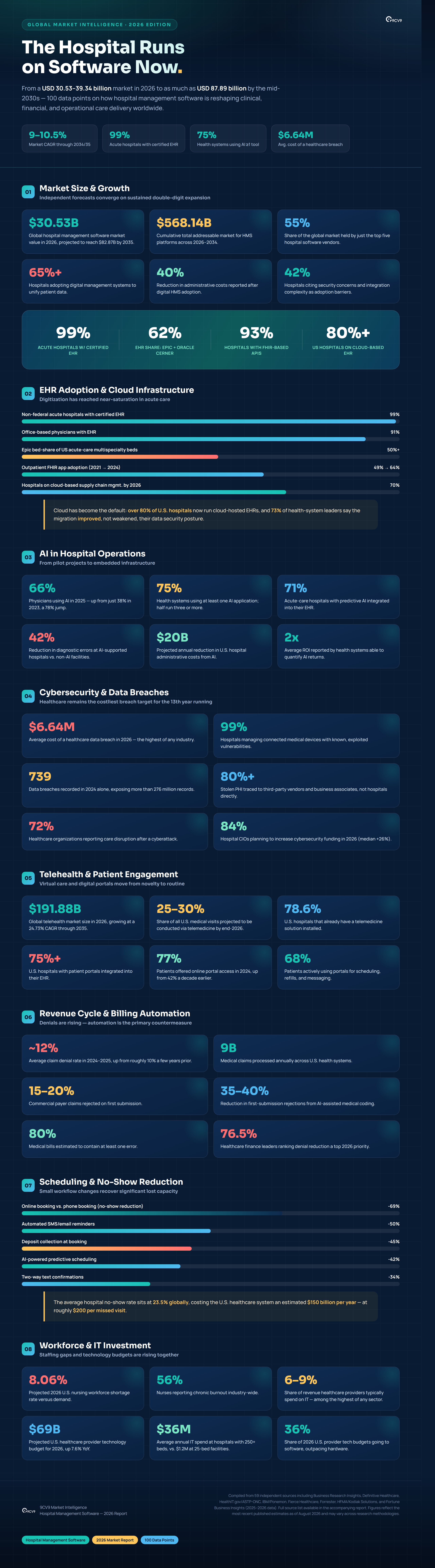
1. The global hospital management software market is valued at USD 30.53 billion in 2026, forecast to reach USD 82.87 billion by 2035 at a 10.5% CAGR.
This trajectory confirms hospital management software has moved from a back-office convenience to one of healthcare IT’s fastest-scaling investment categories.
2. A separate analysis pegs the hospital management software market at USD 38.46 billion in 2025, growing to nearly USD 70.3 billion by 2032 at a 9% CAGR.
Even accounting for methodology differences across research firms, every major estimate points to sustained high-single-digit-to-double-digit annual growth through the next decade.
3. The Hospital Management Software (HMS) market is projected to expand from USD 39.34 billion in 2025 to USD 87.89 billion by 2034, with a cumulative total addressable market of roughly USD 568.14 billion across that window.
The scale of this addressable market signals why software vendors, private equity, and hospital systems alike are prioritizing HMS platform investment.
4. The hospital management solutions segment specifically is estimated at USD 8.88 billion in 2026, projected to reach USD 33.22 billion by 2034 at a 17.93% CAGR.
This narrower solutions-only estimate shows the category compounding faster than the broader software market, reflecting accelerating modular and cloud-first adoption.
5. Another market model values hospital management software at USD 13,100.75 million in 2025, rising to USD 29,100.30 million by 2033 at a 10.49% CAGR.
The wide range across these five market-sizing studies underscores how differently analysts scope “hospital management software,” but all confirm a durable growth story.
6. North America is expected to remain the fastest-growing hospital management software region, with the United States alone commanding a 22.4% global market share.
The U.S. lead reflects mature EHR mandates, higher hospital IT budgets, and dense vendor competition compared to other regions.
7. The top five hospital management software vendors collectively hold close to 55% of global market share.
This level of concentration means buying decisions increasingly hinge on ecosystem lock-in and interoperability with a small number of dominant platforms.
8. Over 65% of hospitals worldwide are now adopting digital hospital management systems specifically to improve patient data integration.
This adoption rate illustrates that digitized, centralized data management has become close to a baseline expectation rather than a differentiator.
9. Hospitals using digital management systems report administrative cost reductions of up to 40%.
Cost containment of this magnitude is a primary justification finance leaders cite when approving hospital software budgets.
10. Around 52% of healthcare facilities cite data security concerns and integration complexity as the leading barriers to hospital management software adoption.
This finding highlights that technical risk, not cost alone, remains the biggest psychological hurdle for slower-moving facilities.
11. Nearly 58% of hospitals are integrating AI-driven analytics into their hospital management operations, while 47% use cloud-based EHR systems.
The gap between AI and cloud adoption rates suggests many hospitals are layering intelligence features onto infrastructure that is only partially modernized.
12. North America holds over 42% of global hospital management software market share, supported by roughly 70% cloud-based solution adoption among major hospitals.
This regional dominance is closely tied to cloud infrastructure maturity rather than software features alone.
13. The U.S. healthcare IT software market was valued at USD 189.6 billion in 2025 and is projected to reach USD 216.5 billion in 2026, en route to USD 634.0 billion by 2033 at a 16.6% CAGR.
Hospital management software sits inside this much larger healthcare IT ecosystem, benefiting from shared infrastructure investment across EHR, billing, and analytics tools.
EHR/EMR Adoption
14. As of 2024, 91% of U.S. office-based physicians and more than 99% of non-federal acute care hospitals had adopted a certified electronic health record.
Near-universal hospital-level EHR adoption confirms digital record-keeping is now a completed transition rather than an emerging trend in acute care.
15. Approximately 95% of U.S. office-based physicians had adopted some form of EHR system as of newer national survey data.
The small remaining gap is concentrated among the smallest independent practices, where switching costs remain proportionally higher.
16. Among general acute care hospitals, 96% use some form of EHR, 94% use Certified EHR Technology, and 86% use the 2015-edition CEHRT standard.
The layered adoption rates show that meeting a minimum EHR bar is common, but staying current with the latest certification edition still lags behind.
17. Epic and Oracle Cerner together account for more than 62% of the U.S. inpatient EHR market, with Epic alone holding 43.9% of hospital installations.
This vendor concentration means most hospital management software integrations must be built around compatibility with just two dominant EHR ecosystems.
18. Epic covers more than 50% of all acute-care multispecialty hospital beds in the United States.
Bed-level market share is arguably a more meaningful adoption metric than installation counts, since it reflects the scale of patients actually served on a single platform.
19. The global EHR market was valued at USD 29.84 billion in 2025 and is projected to reach USD 45.55 billion by 2035 at a 4.32% CAGR.
The comparatively modest EHR-specific growth rate versus the broader HMS market suggests spending is shifting toward newer categories like AI analytics and interoperability tools layered on top of EHRs.
20. Global EHR market revenue is forecast to reach USD 31.7 billion in 2026.
Steady single-digit annual growth in this segment reflects a maturing market rather than a nascent one.
21. FHIR-based application adoption in outpatient settings climbed from 49% in 2021 to 64% in 2024.
This 15-point jump in just three years shows outpatient interoperability accelerating meaningfully faster than many other digital health metrics.
22. Hospital adoption of app-based patient access in inpatient settings rose from 68% in 2021 to a peak of 83% in 2023, settling near 80% in 2024.
The slight pullback after 2023 suggests some hospitals are consolidating or retiring underused patient-access apps rather than continuing unchecked expansion.
23. The U.S. EHR market alone was valued at USD 12.87 billion in 2024, with a modest 2.55% CAGR projected through 2030.
This comparatively low projected growth rate for the mature U.S. EHR segment contrasts sharply with double-digit growth in adjacent hospital management software categories.
Cloud Computing & Deployment
24. Over 80% of U.S. hospitals now use cloud-based electronic health records, according to federal health data.
Cloud-hosted EHRs have effectively become the default deployment model rather than the exception in American hospitals.
25. The global healthcare cloud computing market is projected to grow from USD 74.02 billion in 2026 to USD 169.34 billion by 2031 at an 18.0% CAGR.
This growth rate outpaces most other healthcare IT subsegments, reflecting cloud infrastructure as the connective layer for nearly every other digital health tool.
26. Hospitals represent the largest end-user segment of healthcare cloud computing, holding roughly 35.0% of the market.
Hospitals’ central role in this market confirms that inpatient care settings, not outpatient clinics, are driving the bulk of cloud infrastructure spending.
27. Nearly 70% of U.S. hospitals and health systems are expected to adopt cloud-based supply chain management approaches, with 45% having already transitioned.
Supply chain has emerged as one of the more overlooked but fast-moving areas of hospital cloud migration outside of clinical records.
28. About 73% of surveyed hospital and health system leaders say cloud migration has improved their data security and privacy posture.
This finding runs counter to the common assumption that cloud adoption inherently increases security risk in healthcare.
29. The North American healthcare cloud computing market is valued at USD 29.55 billion in 2026, up from USD 25.39 billion in 2025.
Year-over-year growth of this magnitude in a single region illustrates how quickly hospital cloud budgets are scaling even within mature markets.
30. Software-as-a-Service (SaaS) delivery is the largest healthcare cloud computing segment, favored for its faster deployment and lower upfront capital requirements.
The SaaS preference explains why more hospital management software vendors are shifting entirely away from on-premise licensing models.
AI in Hospital Management & Operations
31. Seventy-five percent of U.S. health systems report using at least one AI application, and 50% now run three or more.
The shift from single-tool experimentation to multi-application AI stacks signals that healthcare AI has entered a scaling phase rather than a pilot phase.
32. Physician use of AI rose from 38% in 2023 to 66% in 2024/2025, a 78% year-over-year increase.
Few healthcare technologies have seen adoption curves this steep, reflecting how quickly clinician attitudes toward AI tools have shifted.
33. Seventy-one percent of U.S. acute-care hospitals had integrated predictive AI into their EHR systems by 2024, up from 66% the prior year.
This steady annual climb suggests predictive AI is becoming a standard EHR feature rather than a specialized add-on.
34. AI-supported hospitals report a 42% reduction in diagnostic errors compared to facilities without AI tools.
Diagnostic accuracy gains of this scale represent one of the clearest clinical justifications for hospital AI investment.
35. Seventy-four percent of U.S. hospitals use AI-powered diagnostic tools within their radiology departments.
Radiology remains the clinical specialty where AI has achieved the deepest and most consistent hospital-level penetration.
36. More than half of health systems able to quantify AI return on investment report achieving 2x ROI on their deployments.
Concrete ROI data like this is increasingly what separates hospital boards willing to expand AI budgets from those still hesitant.
37. AI-based clinical documentation adoption reached 43% among health systems, growing 59% year-over-year.
This is among the fastest-growing AI use cases in hospital operations, driven largely by clinician burnout reduction goals.
38. AI is projected to reduce U.S. hospital administrative costs by roughly USD 20 billion annually.
Administrative efficiency, rather than clinical diagnosis, is emerging as the single largest quantifiable economic benefit of hospital AI adoption.
39. AI-powered scheduling tools reduce patient no-show rates by an average of 42%.
This makes AI scheduling one of the highest-ROI, lowest-risk entry points for hospitals just beginning their AI journey.
40. AI-driven insurance verification tools cut verification processing time by 60% to 80%.
Time savings at this scale directly shortens the revenue cycle and reduces front-desk staffing pressure.
41. The global healthcare AI market grew from approximately USD 15.4 billion in 2023 to roughly USD 45.2 billion in 2026, a compound annual growth rate near 46%.
Few healthcare technology categories have tripled in size within three years, underscoring how central AI has become to hospital management software roadmaps.
42. As of early 2026, approximately 38% of hospitals use AI in some form, while only 22-24% of independent practices have implemented AI for administrative functions.
This adoption gap between large hospital systems and smaller independent practices is likely to widen further without targeted affordability solutions.
Cybersecurity & Data Breaches
43. Healthcare data breaches cost an average of USD 6.64 million per incident in 2026, the highest of any industry for the 13th consecutive year.
This persistent industry-leading breach cost makes cybersecurity investment inseparable from any hospital management software purchasing decision.
44. Ninety-nine percent of hospitals manage connected medical devices that contain known, exploited vulnerabilities.
This near-universal exposure illustrates why hospital management platforms increasingly need built-in device-level security monitoring, not just perimeter defenses.
45. Healthcare accounts for 17% of all ransomware attacks across industries, with 67% of healthcare organizations hit by ransomware in the past year.
Ransomware has effectively become a routine operational risk for hospitals rather than a rare catastrophic event.
46. In 2024, healthcare experienced 739 reported data breaches affecting more than 276 million records — the highest figures on record.
The scale of records exposed in a single year now exceeds the population of many countries, reflecting the sheer volume of sensitive data hospital systems hold.
47. Over 80% of stolen protected health information was taken from third-party vendors and business associates rather than from hospitals directly.
This finding reframes hospital cybersecurity strategy: vendor and supply-chain risk management now matters as much as internal network defenses.
48. More than 90% of hacked patient records were stolen from systems outside the electronic health record itself.
Hospitals focusing security resources solely on EHR protection may be overlooking the majority of their actual breach exposure.
49. Twenty-nine percent of healthcare organizations reported increased patient mortality rates following a data breach or ransomware attack.
This statistic elevates hospital cybersecurity from an IT compliance issue to a direct patient-safety concern.
50. Seventy-two percent of healthcare organizations reported care disruptions — including delayed procedures and longer hospital stays — following a cyberattack.
Operational continuity, not just data confidentiality, is increasingly the primary casualty of hospital cyber incidents.
51. Healthcare organizations invest, on average, only 4% to 7% of their total IT budget in cybersecurity.
This relatively low share, compared to breach costs and ransomware frequency, suggests many hospitals remain structurally under-protected.
52. Eighty-four percent of hospital CIOs plan to increase cybersecurity funding in 2026, with a median budget increase of approximately 26%.
This sharp planned increase signals a post-ransomware-era shift in how hospital leadership prioritizes security spend.
Telehealth & Telemedicine
53. Between 25% and 30% of all U.S. medical visits are projected to be conducted via telemedicine by the end of 2026.
This projection would mean roughly one in four hospital or clinic encounters now happens outside a traditional physical visit.
54. 78.6% of U.S. hospitals report having a telemedicine solution already installed.
With infrastructure this widespread, remaining telehealth growth is now more about utilization than deployment.
55. The global telehealth market is valued at USD 191.88 billion in 2026 and is projected to reach USD 1,402.1 billion by 2035 at a 24.73% CAGR.
This is among the fastest projected growth rates of any healthcare technology segment covered in this research.
56. Forty-four percent of U.S. adults had a virtual care visit in the past 12 months, and 94% of those said they would use telehealth again.
High repeat-usage intent suggests telehealth satisfaction, not just initial pandemic-era necessity, is sustaining ongoing demand.
57. Mental health accounts for 68.9% of all U.S. telehealth claim lines, by far the largest single category of virtual care.
Behavioral health has effectively become the anchor use case for telehealth platforms integrated into hospital management systems.
58. Telehealth’s share of primary care visits has stabilized at 6% to 7% since mid-2023, based on analysis of more than 411 million primary care visits.
This plateau suggests the healthcare system has settled into a “new normal” balance between virtual and in-person primary care rather than continuing pandemic-era growth.
59. An estimated 88.9 million U.S. consumers, or 33% of adults, are projected to use telehealth in 2026 — matching pandemic-era peak usage levels.
Reaching pandemic-peak usage again, years after emergency measures ended, indicates telehealth has achieved durable mainstream adoption.
60. Telehealth visits reduce no-show rates by roughly 52% relative to in-person appointments.
This reduction alone makes telehealth integration a meaningful revenue-protection tool for hospital scheduling systems.
Patient Portal & Engagement
61. More than 75% of U.S. hospitals have implemented patient portals integrated with their electronic health record systems.
Portal integration has become a near-standard feature bundled into hospital management and EHR software rather than a separate purchase.
62. The global patient portal market is valued at USD 6.20 billion in 2026 and is projected to reach USD 28.28 billion by 2034 at a 20.90% CAGR.
This growth rate significantly outpaces the broader EHR market, reflecting patient engagement as a distinct and fast-growing software priority.
63. In 2024, 77% of patients were offered online portal access by their provider or insurer, up sharply from just 42% in 2014.
This near-doubling over a decade illustrates how far patient-facing digital access has expanded following regulatory mandates like the Cures Act.
64. Sixty-five percent of patients who were offered portal access actually logged in, according to 2024 data.
The persistent gap between being offered access and actually using it remains one of patient engagement’s biggest unsolved challenges.
65. Eighty-seven percent of patients who were explicitly encouraged by a clinician to use a portal did so, compared to only 57% without that encouragement.
This 30-point difference shows that provider behavior, not portal design alone, is a major lever for improving digital engagement.
66. Nearly 68% of patients actively use portals for appointment scheduling, prescription refills, and provider communication.
These three functions have effectively become the core value proposition patients expect from any hospital digital front door.
67. Mobile-enabled access accounts for approximately 55% to 60% of total patient portal usage.
This mobile-first behavior means hospital management software vendors without strong native mobile experiences risk losing patient engagement.
68. Only about 30% of patients log into their patient portal six or more times per year, the threshold typically associated with sustained engagement.
This low recurring-engagement rate suggests most portal usage remains episodic rather than habitual.
Revenue Cycle Management, Billing & Claims
69. Claim denial rates climbed to nearly 12% in 2024-2025, up from around 10% just a few years earlier.
This upward trend means hospitals are losing a growing share of billed revenue to denials even as billing technology improves.
70. Forty-one percent of U.S. healthcare providers report that more than 1 in 10 of their claims is now denied, up from 30% of providers three years ago.
The rising share of providers experiencing high denial rates indicates the problem is broadening across the industry, not concentrated in a few outliers.
71. U.S. health systems process approximately 9 billion medical claims annually.
At this volume, even small percentage-point improvements in denial or automation rates translate into massive absolute revenue impact.
72. Commercial payers reject 15% to 20% of claims on first submission, most commonly due to coding errors, missing documentation, or eligibility mismatches.
This first-pass rejection rate highlights why hospital billing software increasingly emphasizes pre-submission claim scrubbing.
73. AI-assisted medical coding reduces first-submission claim rejections by 35% to 40% at mature deployment stages.
Coding automation appears to deliver some of the most measurable financial returns among current healthcare AI use cases.
74. Revenue cycle teams spend an estimated 50 to 75 hours per week managing the claim denial lifecycle.
This labor burden is a strong argument for automated denial management modules within hospital management software suites.
75. Roughly 80% of medical bills are estimated to contain at least one error.
An error rate this high underscores why billing accuracy remains one of the most persistent operational challenges in hospital finance.
76. Only 35% of healthcare providers currently use automated patient eligibility verification.
This relatively low adoption rate suggests significant remaining upside for hospital software vendors offering real-time eligibility checks.
77. 76.47% of healthcare finance leaders rank denial reduction as a top priority heading into 2026.
This near-universal prioritization confirms denial management will likely dominate hospital software procurement conversations this year.
78. Automated claim-scrubbing tools can reduce overall billing error rates by approximately 30%.
This improvement rate offers a clear, quantifiable justification for investing in automated revenue cycle software.
Appointment Scheduling & No-Shows
79. The global average hospital appointment no-show rate is approximately 23.5%.
Nearly one in four scheduled hospital appointments going unfulfilled represents a substantial ongoing capacity and revenue loss.
80. Each missed hospital appointment carries an average direct cost of USD 200 or more.
At scale, this per-appointment cost compounds into a major line item that scheduling software is specifically designed to reduce.
81. Missed appointments are estimated to cost the U.S. healthcare system around USD 150 billion per year.
This figure places no-show reduction among the highest-value operational problems that hospital scheduling software can address.
82. Online-booked appointments have a 1.8% no-show rate compared to 5.9% for offline or phone bookings — roughly 3.2 times lower.
This gap alone makes online self-scheduling one of the single most effective no-show interventions available to hospitals.
83. AI-powered scheduling tools reduce no-show rates by an average of 42%.
Predictive no-show modeling is quickly becoming a standard feature expectation within modern hospital scheduling modules.
84. Automated SMS and email reminders alone can reduce no-shows by up to 50%.
This remains one of the lowest-cost, highest-impact interventions hospitals can implement without a full platform overhaul.
85. Two-way text confirmation systems improve patient attendance by 34%.
Allowing patients to confirm or reschedule via text appears meaningfully more effective than one-way reminder notifications alone.
86. Seventy percent of businesses using appointment scheduling software report experiencing fewer no-shows.
This high satisfaction rate helps explain sustained demand for dedicated scheduling modules within hospital management platforms.
87. Deposit collection at the time of booking is associated with an estimated 45% reduction in no-shows.
Financial commitment mechanisms appear to reinforce behavioral commitment to keeping scheduled appointments.
Workforce, Staffing & Burnout
88. The U.S. nursing workforce is projected to meet only 91.94% of demand in 2026, leaving a nationwide shortage rate of about 8.06%.
This gap illustrates why hospital management software increasingly incorporates workforce and shift-scheduling optimization tools.
89. The licensed practical nurse (LPN) shortage is projected at 20% in 2026, the most acute shortfall among nursing categories.
This more severe LPN-specific shortage suggests staffing software needs to address role-level gaps, not just overall headcount.
90. Fifty-six percent of nurses report experiencing chronic burnout, and 52% report feeling too fatigued to face another shift.
Burnout at this scale directly threatens both staff retention and the administrative capacity hospitals rely on to run management software effectively.
91. The Association of American Medical Colleges projects a U.S. physician shortage of between 37,800 and 124,000 by 2034.
This wide projected range reflects genuine uncertainty, but even the low estimate represents a substantial capacity gap for hospital systems to plan around.
92. An estimated 6.5 million healthcare professionals may exit the workforce by 2026, risking a shortfall of more than 4 million workers.
Workforce attrition at this scale makes automation and efficiency tools within hospital management software an operational necessity rather than a convenience.
93. Each 10% increase in nurse turnover correlates with a 6.5% rise in hospital-acquired infection rates.
This link between staffing stability and patient safety outcomes reinforces why workforce management is now treated as a clinical quality issue, not purely an HR one.
IT Budget & Technology Spending
94. Healthcare providers typically spend 6% to 9% of total revenue on IT — among the highest shares of any industry, trailing only financial services and technology.
This spending intensity confirms hospital management software competes for budget as a top-tier line item rather than a discretionary expense.
95. Hospitals with more than 250 beds spend over USD 36 million annually on IT, compared to roughly USD 1.2 million for hospitals with 25 beds or fewer.
This 30-fold spending gap highlights the vastly different software affordability realities facing large health systems versus small community hospitals.
96. Northeastern U.S. hospitals report the highest average IT expenses of any region, at USD 18.7 million in 2024.
Regional variation of this scale suggests hospital software vendors likely see materially different budget ceilings depending on where their customers are located.
97. U.S. healthcare provider technology budgets are projected to reach USD 69 billion in 2026, up 7.6% year-over-year.
Consistent high-single-digit annual growth in aggregate spending signals sustained, not one-time, investment appetite.
98. Software is projected to account for USD 25 billion, or 36%, of U.S. provider technology budgets in 2026 — outpacing hardware spending categories.
This software-over-hardware shift confirms hospital IT dollars are increasingly directed toward platforms like management systems rather than physical infrastructure.
Interoperability & Data Exchange (FHIR)
99. FHIR-based API implementation among U.S. hospitals rose from 84% in 2019 to 93% in 2024.
Near-universal FHIR adoption at the hospital level means interoperability is now largely a baseline requirement for new hospital management software purchases.
100. More than 90% of U.S. healthcare organizations still rely on HL7 Version 2 messaging for admissions, lab orders, and results reporting.
The continued heavy use of this older standard alongside FHIR shows most hospitals operate hybrid interoperability environments rather than fully modern ones.
Conclusion
The hospital management software industry is experiencing a transformative period in 2026, driven by accelerating digitalization, artificial intelligence adoption, cloud computing advancements, evolving patient expectations, and increasing demand for operational efficiency. The statistics, data, and trends examined throughout this comprehensive analysis demonstrate that hospital management software has become an indispensable component of modern healthcare infrastructure, supporting everything from administrative automation and clinical workflows to financial management, patient engagement, and strategic decision-making.
With the global hospital management software market estimated at USD 30.53 billion in 2026 and projected to reach USD 82.87 billion by 2035 at a CAGR of 10.5%, the industry presents substantial long-term growth opportunities. Although market valuations differ across research methodologies, the consistently positive growth forecasts highlight the increasing importance of digital healthcare solutions. Hospitals, healthcare networks, software developers, and technology investors are likely to continue prioritizing investments in scalable, integrated, and intelligent hospital management systems.
Digital Transformation Is Becoming an Operational Necessity
The widespread adoption of digital hospital management systems reflects a fundamental shift in how healthcare organizations operate. More than 65% of hospitals worldwide are adopting digital management systems to improve patient data integration, while facilities utilizing these technologies have reported administrative cost reductions of up to 40%.
Traditional paper-based processes, disconnected software applications, and manual administrative workflows are increasingly being replaced by integrated hospital information systems capable of centralizing patient records, appointment scheduling, medical billing, inventory management, workforce planning, and operational reporting.
Healthcare organizations that successfully implement these digital solutions may be better positioned to achieve operational benefits, including:
- Reduced administrative workloads and operating expenses.
- Improved coordination between clinical and administrative departments.
- Enhanced patient information accessibility and accuracy.
- More efficient allocation of healthcare resources.
- Improved financial visibility and revenue cycle performance.
- Greater scalability across multiple healthcare facilities.
- Stronger data-driven decision-making capabilities.
- Improved patient experiences and service accessibility.
As healthcare operations become increasingly complex, integrated hospital management software will play a more prominent role in supporting organizational efficiency and long-term sustainability.
Artificial Intelligence Is Reshaping Hospital Management
Artificial intelligence represents one of the most influential technological developments shaping the hospital management software market in 2026. Approximately 75% of surveyed US health systems report using at least one AI application, while 50% have implemented three or more applications. Additionally, 71% of US acute-care hospitals had integrated predictive AI into their electronic health record systems by 2024.
These statistics indicate that AI adoption is progressing beyond experimental implementations toward broader operational integration.
AI-powered hospital management software is increasingly supporting predictive analytics, clinical documentation, medical coding, appointment scheduling, insurance verification, workforce optimization, and administrative automation.
The potential economic benefits are particularly significant. AI is projected to reduce US hospital administrative costs by approximately USD 20 billion annually, while AI-driven insurance verification tools have demonstrated processing time reductions of between 60% and 80%. AI-powered scheduling solutions have also been associated with average patient no-show reductions of 42%.
These developments suggest that artificial intelligence will become an increasingly important differentiator among hospital management software providers. However, healthcare organizations must balance automation opportunities with appropriate human oversight, data governance, patient safety considerations, and responsible AI implementation.
Cloud-Based Hospital Management Software Will Continue to Expand
Cloud computing is establishing itself as a critical technological foundation for the next generation of hospital management systems. The global healthcare cloud computing market is projected to expand from USD 74.02 billion in 2026 to USD 169.34 billion by 2031, representing a CAGR of 18%.
Hospitals account for approximately 35% of the healthcare cloud computing market, highlighting their significant contribution to cloud infrastructure investment.
Cloud-based hospital management software offers several potential advantages over traditional on-premises systems, including greater deployment flexibility, scalable computing resources, centralized information management, remote accessibility, and reduced upfront infrastructure requirements.
The increasing popularity of Software-as-a-Service delivery models is also changing how hospitals purchase, implement, maintain, and upgrade healthcare software. Rather than relying exclusively on expensive infrastructure investments and lengthy software deployment cycles, healthcare organizations can increasingly access modular digital solutions that evolve alongside their operational requirements.
Nevertheless, successful cloud adoption requires careful consideration of data security, system availability, regulatory compliance, vendor reliability, and integration with existing healthcare infrastructure.
Patient-Centric Technologies Are Transforming Healthcare Experiences
The growing importance of patient engagement is another defining trend within the hospital management software industry. The global patient portal market is estimated to reach USD 6.20 billion in 2026 and is projected to expand to USD 28.28 billion by 2034, growing at a CAGR of 20.90%.
Furthermore, the proportion of patients offered online portal access increased from 42% in 2014 to 77% in 2024, demonstrating substantial progress in digital healthcare accessibility.
Patient portals, mobile healthcare applications, online appointment scheduling, electronic prescription management, automated notifications, and integrated telehealth services are fundamentally changing how patients interact with hospitals and healthcare providers.
The global telehealth market is similarly projected to grow from USD 191.88 billion in 2026 to USD 1.40 trillion by 2035, reflecting significant expectations for the continued expansion of virtual healthcare services.
However, providing digital access alone does not guarantee meaningful patient engagement. The statistics reveal that 87% of patients encouraged by healthcare professionals to use patient portals subsequently accessed them, compared with 57% of patients who received no such encouragement.
This finding highlights the importance of combining technological innovation with effective communication, patient education, accessible software design, and active participation from healthcare professionals.
Revenue Cycle Management and Financial Automation Are Increasingly Critical
Financial sustainability remains a major priority for hospitals facing rising operating expenses, reimbursement complexities, workforce shortages, and increasing patient demand.
With healthcare claim denial rates approaching 12% in 2024–2025 and US health systems processing approximately nine billion medical claims annually, even relatively small improvements in billing accuracy and claims processing efficiency could generate substantial financial benefits.
Modern hospital management software increasingly integrates revenue cycle management capabilities designed to automate insurance eligibility verification, medical coding, claim submission, denial management, payment tracking, and financial reporting.
AI-assisted medical coding has been associated with reductions of between 35% and 40% in first-submission claim rejections at mature deployment stages, while automated claim-scrubbing tools can potentially reduce overall billing errors by approximately 30%.
These statistics reinforce the importance of selecting hospital management software that supports both clinical operations and financial performance. Healthcare organizations that effectively integrate financial automation into their digital infrastructure may be better equipped to minimize revenue leakage, improve reimbursement efficiency, and reduce administrative processing costs.
Workforce Management and Resource Optimization Will Remain Major Priorities
Healthcare workforce shortages continue to place considerable pressure on hospitals worldwide. The US nursing workforce is projected to meet approximately 91.94% of demand in 2026, leaving an estimated nationwide shortage of 8.06%. Meanwhile, 56% of surveyed nurses report experiencing chronic burnout.
These challenges highlight the growing importance of hospital workforce management software, automated shift scheduling, predictive staffing analytics, workload monitoring, and resource allocation tools.
Hospital management systems can help administrators identify staffing gaps, optimize employee schedules, reduce repetitive administrative tasks, and improve visibility into workforce availability.
Appointment scheduling represents another substantial opportunity for operational improvement. With an estimated global hospital appointment no-show rate of 23.5% and missed appointments potentially costing the US healthcare system approximately USD 150 billion annually, hospitals have strong incentives to invest in intelligent scheduling technologies.
Automated reminders, online self-scheduling, two-way patient communication, and predictive appointment management can help healthcare organizations reduce unused appointment capacity and improve resource utilization.
Although software cannot independently resolve healthcare workforce shortages, it can support more efficient utilization of existing personnel and infrastructure.
Cybersecurity and Data Protection Must Remain Central to Digital Healthcare Strategies
Despite the numerous benefits of hospital management software, cybersecurity remains one of the most significant challenges facing the healthcare technology industry.
Healthcare data breaches are estimated to cost an average of USD 6.64 million per incident in 2026. Furthermore, 72% of surveyed healthcare organizations reported care disruptions following cyberattacks, demonstrating that cybersecurity incidents can directly affect operational continuity and patient care.
The growing interconnectedness of electronic health records, cloud platforms, connected medical devices, patient portals, and third-party healthcare applications creates an increasingly complex cybersecurity environment.
Encouragingly, 84% of hospital chief information officers reportedly plan to increase cybersecurity funding in 2026, with a median planned budget increase of approximately 26%.
Hospitals evaluating management software should therefore prioritize comprehensive security capabilities, including data encryption, role-based access controls, multifactor authentication, security monitoring, disaster recovery, vulnerability management, and third-party vendor risk assessment.
Cybersecurity should not be treated as an optional software feature or an isolated IT responsibility. Instead, it must form an integral part of hospital management software procurement, implementation, maintenance, and organizational governance.
Interoperability Will Define the Next Generation of Hospital Management Systems
The ability to exchange healthcare information securely and efficiently across different software platforms is becoming increasingly important.
FHIR-based API implementation among US hospitals increased from 84% in 2019 to 93% in 2024, reflecting substantial progress toward standardized healthcare data exchange. However, more than 90% of US healthcare organizations reportedly continue to rely on HL7 Version 2 messaging for essential clinical and administrative processes.
These findings indicate that the healthcare industry continues to operate within hybrid technology environments, combining established legacy infrastructure with modern interoperability standards.
Future hospital management software platforms will need to support seamless integration with electronic health records, laboratory information systems, pharmacy management software, medical imaging platforms, insurance systems, telehealth applications, and external healthcare providers.
Healthcare organizations that prioritize interoperability can potentially reduce information silos, minimize duplicate data entry, strengthen care coordination, and improve the long-term flexibility of their digital infrastructure.
Healthcare Technology Investment Is Expected to Remain Strong
The future growth of hospital management software is further supported by increasing healthcare technology expenditure. US healthcare provider technology budgets are projected to reach USD 69 billion in 2026, representing year-over-year growth of 7.6%.
Software alone is expected to account for approximately USD 25 billion, or 36%, of these technology budgets, demonstrating the strategic importance of digital platforms within healthcare investment portfolios.
However, significant differences in IT spending between large hospital networks and smaller healthcare facilities highlight the need for flexible pricing structures, modular software architectures, and scalable implementation strategies.
Hospital management software vendors that offer accessible, secure, interoperable, and adaptable solutions may be better positioned to address the diverse requirements of healthcare organizations across different markets and operational environments.
The Future of Hospital Management Software Beyond 2026
Looking beyond 2026, the hospital management software industry is likely to become increasingly intelligent, interconnected, automated, and patient-centric. The convergence of artificial intelligence, cloud computing, predictive analytics, digital patient engagement, financial automation, and standardized healthcare data exchange will continue to influence the evolution of hospital operations.
Several developments are expected to shape the future of hospital management software:
- Greater adoption of AI-powered administrative and clinical workflow automation.
- Continued migration toward cloud-based and SaaS hospital management platforms.
- Expansion of integrated telehealth and virtual healthcare services.
- Increased investment in healthcare cybersecurity and data protection.
- More sophisticated predictive workforce management and resource planning.
- Greater automation of medical billing and revenue cycle management.
- Wider adoption of mobile-first patient engagement technologies.
- Improved interoperability between healthcare software applications.
- Increased emphasis on measurable software return on investment.
- Growing demand for scalable and customizable hospital management solutions.
Healthcare organizations will increasingly need to evaluate software based not only on its functionality but also on its ability to support long-term organizational objectives, integrate with existing systems, protect sensitive information, and deliver measurable operational improvements.
Final Thoughts
The Top 100 Hospital Management Software Statistics, Data & Trends in 2026 collectively highlight an industry undergoing sustained technological and operational transformation. From multibillion-dollar market growth forecasts and widespread electronic health record adoption to increasing artificial intelligence integration, cloud migration, cybersecurity investment, and patient engagement innovation, the evidence points toward a future in which digital technology plays an increasingly central role in healthcare delivery.
For hospital administrators, healthcare executives, medical professionals, technology investors, and software developers, understanding these hospital management software statistics is essential for identifying emerging opportunities, evaluating investment priorities, and navigating the challenges associated with healthcare digital transformation.
However, market growth forecasts, adoption statistics, and reported performance improvements should be interpreted within their respective research methodologies, geographical markets, and implementation contexts. Individual hospitals may experience different outcomes depending on their organizational readiness, infrastructure, workforce capabilities, software selection, and implementation strategies.
Ultimately, the most successful healthcare organizations will be those that approach hospital management software as a strategic investment rather than merely a technological upgrade. By prioritizing interoperability, cybersecurity, usability, scalability, financial efficiency, responsible automation, and patient-centered innovation, hospitals can build more resilient and adaptable digital healthcare ecosystems.
As the global healthcare industry continues to evolve, hospital management software will remain a fundamental enabler of operational excellence, financial sustainability, improved healthcare accessibility, and more coordinated patient care. Organizations that make informed, data-driven technology investments today will be better positioned to navigate the complexities of modern healthcare and capitalize on emerging digital transformation opportunities in 2026 and the years ahead.
If you find this article useful, why not share it with your hiring manager and C-level suite friends and also leave a nice comment below?
We, at the 9cv9 Research Team, strive to bring the latest and most meaningful data, guides, and statistics to your doorstep.
To get access to top-quality guides, click over to 9cv9 Blog.
To hire top talents using our modern AI-powered recruitment agency, find out more at 9cv9 Modern AI-Powered Recruitment Agency.
People Also Ask
What is hospital management software?
Hospital management software is a digital platform that helps healthcare facilities manage patient records, appointments, billing, staffing, inventory, clinical workflows, and administrative operations through an integrated system.
How big is the hospital management software market in 2026?
The global hospital management software market is estimated to reach USD 30.53 billion in 2026, driven by healthcare digitalization, artificial intelligence adoption, cloud computing, and increasing demand for operational efficiency.
What is the projected growth rate of the hospital management software market?
The global hospital management software market is projected to grow at a CAGR of 10.5%, reaching USD 82.87 billion by 2035, according to one industry forecast.
What percentage of hospitals use digital hospital management systems?
More than 65% of hospitals worldwide are adopting digital hospital management systems to improve patient data integration, streamline administrative workflows, and enhance operational efficiency.
Which region dominates the hospital management software market?
North America accounts for over 42% of the global hospital management software market, supported by advanced healthcare infrastructure, cloud adoption, and substantial healthcare technology investments.
What are the major hospital management software trends in 2026?
Major trends include AI-powered automation, cloud-based platforms, predictive analytics, telehealth integration, cybersecurity investment, mobile patient portals, revenue cycle automation, and healthcare interoperability.
How much can hospital management software reduce administrative costs?
Hospitals implementing digital management systems report administrative cost reductions of up to 40%, although actual savings depend on software capabilities, implementation quality, and organizational requirements.
What percentage of hospitals use electronic health records?
More than 99% of US non-federal acute care hospitals had adopted certified electronic health records by 2024, reflecting widespread digitalization across the American healthcare industry.
How large is the global electronic health record market?
The global electronic health record market was valued at USD 29.84 billion in 2025 and is projected to reach USD 45.55 billion by 2035, growing at a CAGR of 4.32%.
Who are the leading hospital electronic health record software providers?
Epic and Oracle Cerner are leading EHR providers, collectively accounting for more than 62% of the US inpatient electronic health record market.
What percentage of hospitals use cloud-based hospital management software?
More than 80% of US hospitals reportedly use cloud-based electronic health records, reflecting the growing preference for scalable, accessible, and flexible healthcare software infrastructure.
How big is the healthcare cloud computing market in 2026?
The global healthcare cloud computing market is projected to reach USD 74.02 billion in 2026 and USD 169.34 billion by 2031, growing at a CAGR of 18%.
How is artificial intelligence transforming hospital management software?
Artificial intelligence supports predictive analytics, automated medical coding, clinical documentation, appointment scheduling, insurance verification, workforce planning, and administrative workflow optimization.
What percentage of healthcare systems use artificial intelligence?
Approximately 75% of surveyed US health systems use at least one AI application, while 50% operate three or more AI applications across their healthcare operations.
How much money can AI save hospitals?
Artificial intelligence is projected to reduce US hospital administrative costs by approximately USD 20 billion annually through workflow automation, improved resource utilization, and reduced manual processing.
Can hospital management software reduce patient no-shows?
Yes. AI-powered scheduling tools have been associated with average patient no-show reductions of 42%, while automated SMS and email reminders can reduce missed appointments by up to 50%.
How much do missed hospital appointments cost healthcare organizations?
Missed medical appointments are estimated to cost the US healthcare system approximately USD 150 billion annually, with individual missed hospital appointments carrying average direct costs of USD 200 or more.
What are the biggest challenges in hospital management software adoption?
Major challenges include cybersecurity risks, integration complexity, implementation costs, legacy infrastructure, employee training, regulatory compliance, data migration, and resistance to organizational change.
How much does a healthcare data breach cost in 2026?
Healthcare data breaches are estimated to cost an average of USD 6.64 million per incident in 2026, highlighting the importance of robust cybersecurity and patient data protection.
Are hospitals increasing cybersecurity spending in 2026?
Approximately 84% of hospital CIOs reportedly plan to increase cybersecurity funding in 2026, with a median planned budget increase of around 26%.
What percentage of hospitals use telemedicine software?
Approximately 78.6% of US hospitals report having telemedicine solutions installed, reflecting widespread adoption of virtual healthcare infrastructure.
How large is the global telehealth market in 2026?
The global telehealth market is estimated at USD 191.88 billion in 2026 and is projected to reach approximately USD 1.40 trillion by 2035, growing at a CAGR of 24.73%.
How big is the patient portal software market in 2026?
The global patient portal market is valued at an estimated USD 6.20 billion in 2026 and is projected to reach USD 28.28 billion by 2034, growing at a CAGR of 20.90%.
What percentage of patients have access to online patient portals?
Approximately 77% of patients were offered online portal access by their healthcare provider or insurer in 2024, compared with 42% in 2014.
How does hospital management software improve revenue cycle management?
Hospital management software automates medical billing, insurance eligibility verification, claim submission, denial management, payment tracking, and financial reporting to improve revenue cycle efficiency.
What is the average healthcare claim denial rate?
Healthcare claim denial rates approached 12% in 2024–2025, highlighting growing demand for automated medical billing, claim verification, and revenue cycle management software.
How does hospital management software help address nursing shortages?
Hospital management software supports workforce scheduling, predictive staffing, workload monitoring, and resource allocation, helping healthcare organizations optimize existing personnel and reduce administrative burdens.
How much will healthcare providers spend on technology in 2026?
US healthcare provider technology budgets are projected to reach USD 69 billion in 2026, representing annual growth of 7.6%. Software is expected to account for approximately USD 25 billion.
What is FHIR interoperability in hospital management software?
Fast Healthcare Interoperability Resources, or FHIR, is a healthcare data exchange standard that enables different software systems to share information. FHIR-based API implementation reached 93% among US hospitals in 2024.
What is the future of hospital management software beyond 2026?
The future of hospital management software will likely feature greater AI integration, cloud adoption, predictive analytics, intelligent automation, cybersecurity investment, interoperable healthcare platforms, and personalized patient engagement.
Sources
- Business Research Insights
- Maximize Market Research
- The Insight Partners
- Straits Research
- Future Market Report
- Grand View Research
- ASTP-ONC
- Towards Healthcare
- Market US
- Definitive Healthcare
- Aptarro
- MarketsandMarkets
- Persistence Market Research
- Fortune Business Insights
- Athens CEO
- GHX
- IntuitionLabs
- Fierce Healthcare
- DemandSage
- Vocal Media
- Futurism
- AInora
- ORDR
- Swif AI
- Becker’s Hospital Review
- FaxSIPit
- GetAstra
- North American Community Hub
- Axis Intelligence
- SingleCare
- ScienceSoft
- Business Wire
- Companies History
- eMarketer
- MyPreOp
- EHR in Practice
- CertifyHealth
- Stealth Agents
- Medical Economics
- MD Revenue Group
- WifiTalents
- Plutus Health
- Wavetec
- SchedulingKit
- Ceipal
- Nightingale College
- 3B Healthcare
- Cipa-Booking
- IT Budget Calculator
- Forrester
- Murphi AI
- A3Logics
- VueMed
- MedSoftwares
- Zelthy
- OpenPR
- World Market Reports
- ElectroIQ


