
Key Takeaways
- The top 10 Digital Adoption Platforms in the world in 2026 are driving measurable ROI through AI-powered guidance, workflow orchestration, and faster time-to-value.
- Enterprise and SaaS organizations are adopting DAP software to reduce support costs, increase productivity, and optimize SaaS spend across complex digital ecosystems.
- Agentic orchestration, predictive analytics, and cross-platform adoption are defining the future of digital adoption and enterprise transformation.
The global enterprise technology landscape in 2026 is defined not by a shortage of software, but by an overwhelming abundance of it. Organizations now operate within sprawling digital ecosystems composed of hundreds of SaaS applications, complex ERP systems, AI copilots, collaboration tools, and cloud-based infrastructure. While software capabilities continue to advance at record speed, workforce proficiency and technology utilization have not always kept pace. This widening gap between technological potential and human adoption has elevated the Digital Adoption Platform from a supportive training layer to a strategic enterprise necessity.


The top 10 Digital Adoption Platforms in the world in 2026 represent the most advanced solutions addressing this challenge. These platforms are no longer limited to simple walkthroughs or onboarding tooltips.
They function as intelligent orchestration engines that align user behavior with digital workflows, enforce compliance, optimize SaaS spending, and integrate AI-driven assistance directly into the flow of work.

In a market where organizations spend millions annually on enterprise software, ensuring full utilization and measurable return on investment has become mission-critical.
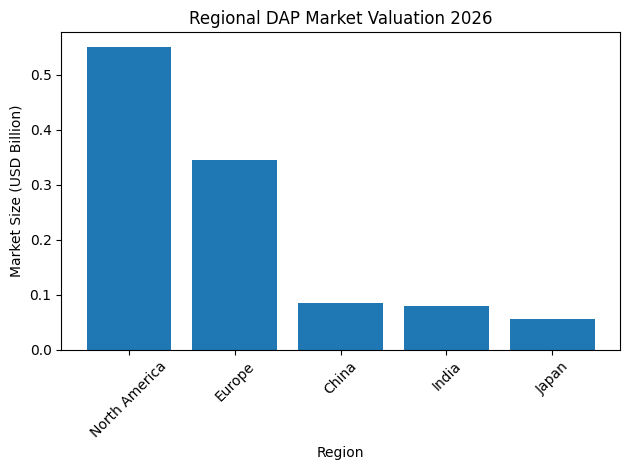
The Digital Adoption Platform market itself reflects this urgency. Rapid year-over-year growth, increasing enterprise adoption rates, and the integration of Generative AI capabilities have transformed DAP software into a central layer of modern IT architecture. From global ERP rollouts to product-led SaaS growth strategies, DAPs are embedded into digital transformation roadmaps across industries such as financial services, healthcare, government, manufacturing, and professional services.
In 2026, selecting the best Digital Adoption Platform is no longer a matter of comparing feature lists. Enterprises evaluate solutions based on total cost of ownership, time-to-value, scalability, security compliance, AI orchestration capabilities, and sector-specific alignment. Some platforms dominate enterprise-grade ERP environments, offering deep integration with SAP and Oracle ecosystems. Others specialize in SaaS product activation, no-code onboarding flows, and behavioral analytics designed for high-growth digital businesses. Still others focus on documentation automation, sales enablement, or process compliance within highly regulated industries.
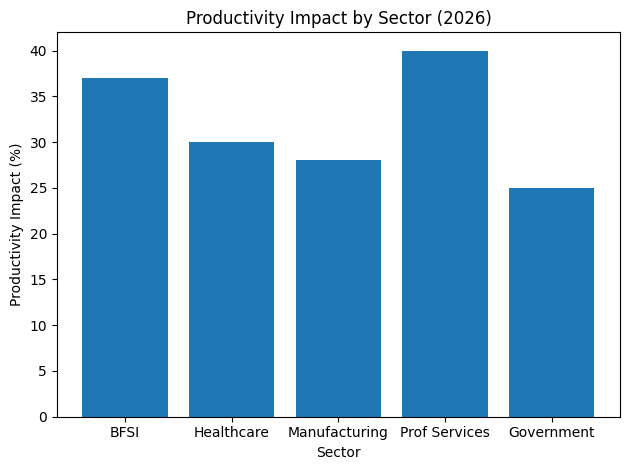
Another defining trend shaping the top 10 Digital Adoption Platforms in 2026 is the rise of agentic orchestration. Modern DAP software integrates AI agents capable of predicting user friction, automating repetitive tasks, and delivering hyper-personalized guidance before issues escalate. This evolution signals a broader shift from reactive digital support to proactive digital intelligence. As Generative AI becomes embedded across enterprise applications, DAPs increasingly serve as governance and optimization layers that ensure AI tools enhance productivity rather than introduce operational risk.

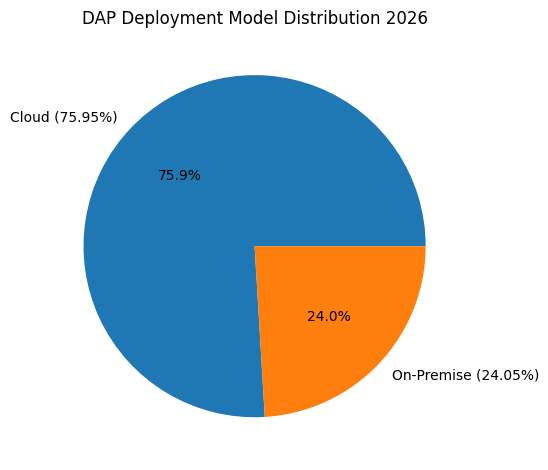
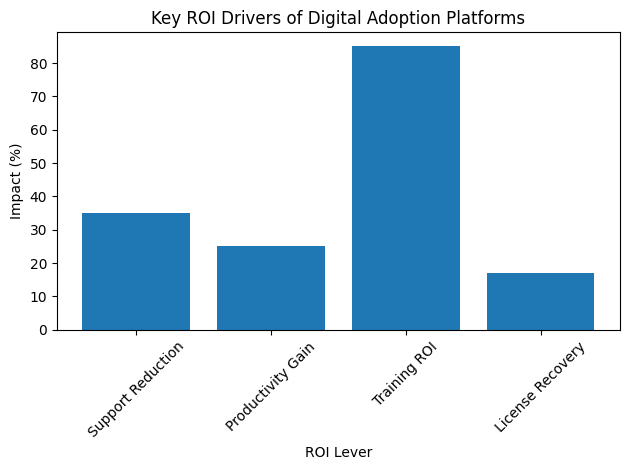
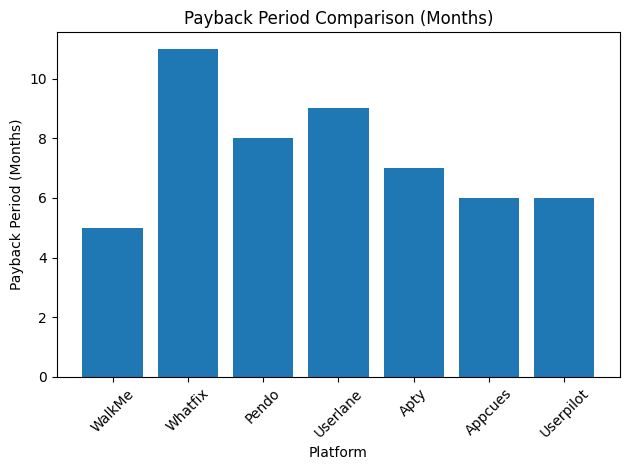
At the same time, economic pressures have intensified the focus on measurable ROI. Organizations now demand quantifiable productivity gains, reductions in support ticket volume, faster onboarding cycles, and identification of underutilized software licenses. With average payback periods often under one year, Digital Adoption Platforms have emerged as one of the most financially defensible investments within the broader SaaS ecosystem.

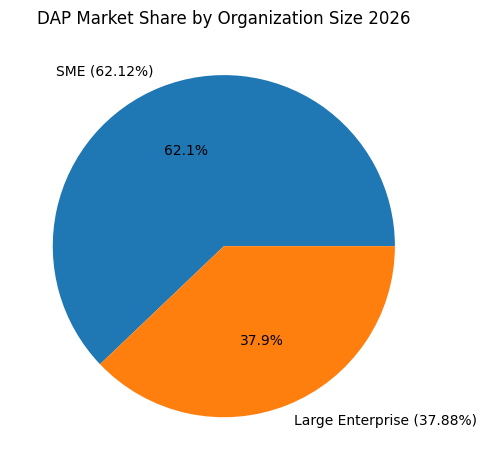
This comprehensive guide explores the top 10 Digital Adoption Platforms in the world in 2026, analyzing their strengths, pricing structures, ROI performance, AI capabilities, and ideal use cases. Whether your organization is undergoing a global ERP transformation, scaling a SaaS product through product-led growth, modernizing government IT infrastructure, or optimizing sales enablement workflows, understanding the competitive landscape of Digital Adoption Platforms is essential.
In an era where digital transformation is no longer optional but foundational, the ability to accelerate software adoption determines whether technology investments become competitive advantages or operational burdens. The leading Digital Adoption Platforms of 2026 are shaping how organizations convert complex systems into measurable performance outcomes.
Before we venture further into this article, we would like to share who we are and what we do.
About 9cv9
9cv9 is a business tech startup based in Singapore and Asia, with a strong presence all over the world.
With over nine years of startup and business experience, and being highly involved in connecting with thousands of companies and startups, the 9cv9 team has listed some important learning points in this overview of the Top 10 Digital Adoption Platform in 2026.
If you like to get your company listed in our top B2B software reviews, check out our world-class 9cv9 Media and PR service and pricing plans here.
Top 10 Digital Adoption Platforms in 2026
1. WalkMe
By 2026, Digital Adoption Platforms have become a critical layer within enterprise technology ecosystems. As organizations operate across dozens of SaaS applications, ERP systems, and AI-driven workflows, software complexity has significantly increased. This has created a global demand for structured digital enablement solutions that accelerate onboarding, reduce user friction, and maximize ROI from enterprise technology investments.
Within the global top 10 Digital Adoption Platforms in 2026, WalkMe, now operating under SAP ownership, continues to stand as one of the most influential enterprise-focused solutions. Its long-standing presence in the DAP category and its integration into SAP’s ecosystem have solidified its position as a strategic enabler of enterprise digital transformation initiatives worldwide.
Company Overview
WalkMe is widely regarded as a pioneer of the Digital Adoption Platform category. Over the years, it has expanded beyond simple in-app guidance to become a comprehensive digital enablement and workflow intelligence platform.
| Metric | Details |
|---|---|
| Company Name | WalkMe (by SAP) |
| Category | Enterprise Digital Adoption Platform |
| Enterprise Customers | 2,000+ global organizations |
| Fortune 500 Penetration | Significant representation |
| Primary Market Focus | Large Enterprises & Global Corporations |
| Core Value Proposition | Digital Adoption Workstation & Workflow Intelligence |
| Global Positioning (2026) | Top-tier Enterprise DAP Provider |
Enterprise Value Proposition
WalkMe’s “Digital Adoption Workstation” represents a strategic evolution in digital adoption. Rather than offering only tooltips and walkthroughs, the platform overlays contextual intelligence across multiple enterprise systems. This allows organizations to identify friction points across workflows, monitor user behavior in real time, and proactively improve digital performance.
The platform delivers measurable value in the following areas:
| Capability Area | Enterprise Impact |
|---|---|
| In-App Guidance | Faster onboarding and reduced training time |
| Cross-Application Workflow Support | Unified process optimization across systems |
| Real-Time Usage Analytics | Data-driven decision-making for IT and HR leaders |
| AI-Driven Task Automation | Reduced manual workload and repetitive processes |
| Change Management Enablement | Structured digital transformation support |
| Compliance Monitoring | Improved governance and process adherence |
Quantitative Performance and ROI Metrics
WalkMe’s enterprise deployments are frequently associated with strong financial outcomes. According to published performance benchmarks, the platform delivers substantial returns for organizations implementing complex digital transformation programs.
| Performance Metric | Reported Outcome |
|---|---|
| 3-Year ROI | 494% |
| Average Payback Period | 5 months |
| Enterprise Productivity Gains | Up to USD 18 million (case-specific) |
| Helpdesk Ticket Reduction | Significant decrease in support volume |
| Training Cost Optimization | Reduced classroom and onboarding spend |
In enterprise case studies such as Nestlé, WalkMe contributed to approximately USD 18 million in productivity gains by accelerating ERP adoption and improving workflow efficiency.
Cost Structure and Enterprise Investment Profile
WalkMe’s pricing model reflects its positioning as a premium enterprise-grade solution. Costs vary based on scale, integration depth, and feature configuration.
| Cost Component | Estimated Range |
|---|---|
| Median Annual Enterprise Cost | USD 79,000 |
| Large-Scale Deployments | USD 150,000 – USD 405,000 annually |
| Pricing Basis | User volume, feature set, system complexity |
| Implementation Complexity | High for multi-system global environments |
| Target Buyer Profile | CIOs, Digital Transformation Leaders, IT Heads |
Investment levels are typically justified in organizations undergoing multi-million-dollar ERP migrations, SAP transformations, CRM modernization programs, and global cloud rollouts.
Strategic Innovation Roadmap in 2026
WalkMe’s 2026 strategy focuses on advancing intelligent automation and improving deployment scalability.
DeepUI Technology
DeepUI enhances the platform’s ability to recognize and adapt to dynamic user interface changes. This reduces maintenance overhead and strengthens long-term sustainability in frequently updated enterprise applications.
Autonomous AI Agents
WalkMe is evolving from guidance-based enablement toward execution-based automation. Autonomous AI agents are designed to complete repetitive enterprise tasks, moving the platform closer to intelligent workflow orchestration.
| Strategic Focus Area | 2026 Objective |
|---|---|
| DeepUI Recognition Engine | Advanced UI element detection and stability |
| Autonomous AI Agents | Execution of repetitive enterprise tasks |
| Predictive Analytics | Early identification of workflow friction |
| SAP Ecosystem Integration | Seamless synergy with SAP cloud and ERP stack |
| Enterprise Workflow Intelligence | Cross-system operational optimization |
Competitive Positioning Within the Top 10 DAPs
In comparative evaluations of the world’s top 10 Digital Adoption Platforms in 2026, WalkMe consistently ranks among the strongest enterprise-grade solutions. While newer competitors may emphasize simplicity or mid-market accessibility, WalkMe differentiates itself through scale, analytics depth, and integration strength.
| Market Segment | WalkMe Strength Level | Typical DAP Competitor |
|---|---|---|
| Fortune 500 Enterprises | Very Strong | Moderate |
| Global ERP Transformations | Exceptional | Limited |
| Mid-Market Deployments | Moderate | Strong |
| AI-First Lightweight Platforms | Emerging | Strong |
| Multi-System Global Programs | Very Strong | Moderate |
Conclusion
As of 2026, WalkMe by SAP remains one of the most influential players in the global Digital Adoption Platform market. Its enterprise-first architecture, strong ROI benchmarks, and expanding AI-driven automation capabilities position it as a cornerstone solution for large organizations navigating complex digital ecosystems.
Within the top 10 Digital Adoption Platforms worldwide, WalkMe continues to define the standard for enterprise-grade digital adoption, particularly in environments requiring cross-system intelligence, compliance control, and scalable global deployment.
2. Whatfix
By 2026, the Digital Adoption Platform market has become increasingly competitive, with enterprise buyers demanding measurable ROI, faster deployments, and stronger user-centric design. Among the top 10 Digital Adoption Platforms globally, Whatfix has firmly established itself as one of the most credible challengers to traditional enterprise incumbents.
Positioned as a platform focused on the “userization” of enterprise technology, Whatfix emphasizes making complex software intuitive, personalized, and performance-oriented. Rather than approaching adoption solely as a change management initiative, the company frames digital adoption as a productivity multiplier driven by user empowerment.
Company Overview
Whatfix has evolved into a global DAP provider serving enterprises across technology, banking, manufacturing, healthcare, and SaaS sectors. Its growth trajectory reflects strong demand for scalable, analytics-driven, and training-focused adoption platforms.
| Metric | Details |
|---|---|
| Company Name | Whatfix |
| Category | Digital Adoption Platform (Enterprise & Mid-Market) |
| Market Position (2026) | Top 10 Global DAP Provider |
| Core Philosophy | Userization of Enterprise Technology |
| Primary Customer Segment | Mid-to-Large Enterprises |
| Deployment Model | Multi-application, cross-platform support |
| Global Footprint | North America, Europe, Asia-Pacific |
Three-Pronged Product Ecosystem
Whatfix differentiates itself through a structured three-component product strategy designed to address enablement, analytics, and training simulation simultaneously.
Core Digital Adoption Platform
The core DAP provides in-app guidance, contextual walkthroughs, smart tips, task automation prompts, and onboarding flows designed to accelerate user proficiency across enterprise systems.
Whatfix Analytics
This module offers deep user behavior tracking, workflow performance metrics, and real-time dashboards. It enables IT leaders and digital transformation teams to quantify adoption gaps and optimize processes with data-backed insights.
Whatfix Mirror
One of the platform’s most distinctive innovations, Whatfix Mirror enables organizations to create interactive sandbox environments. Employees can practice workflows in a simulated version of enterprise software without impacting live systems. This reduces risk, improves confidence, and enhances training outcomes.
| Product Component | Primary Function | Enterprise Benefit |
|---|---|---|
| Core DAP | In-app guidance and contextual assistance | Faster onboarding and task completion |
| Whatfix Analytics | Behavioral insights and usage reporting | Data-driven optimization decisions |
| Whatfix Mirror | Interactive sandbox training environments | Risk-free skill development and practice |
Quantitative Performance and ROI Metrics
Whatfix reports strong implementation efficiency and relatively fast time-to-value compared to traditional enterprise DAP deployments.
| Performance Metric | Reported Outcome |
|---|---|
| Average Payback Period | 11 months |
| Average Implementation Time | 3.2 months |
| Adoption Acceleration | Improved onboarding speed |
| Productivity Improvement | Measurable workflow efficiency gains |
| Training Cost Reduction | Reduced reliance on classroom sessions |
An average implementation timeline of just over three months allows organizations to begin capturing value within the first fiscal year of deployment. The 11-month payback period makes Whatfix particularly attractive to companies seeking quicker ROI validation.
Cost Structure and Investment Profile
Compared to some enterprise-focused competitors, Whatfix typically offers a more accessible median pricing structure while still supporting complex multi-application deployments.
| Cost Component | Estimated Range |
|---|---|
| Median Annual Cost | USD 31,950 |
| Enterprise Multi-App Deployments | USD 100,000+ |
| Pricing Drivers | User volume, application scope, analytics tier |
| Implementation Complexity | Moderate to High depending on system landscape |
| Target Buyer Profile | CIOs, HR Tech Leaders, Digital Transformation Heads |
This pricing model positions Whatfix as a competitive alternative for organizations that require enterprise-grade functionality but seek more flexible cost structures.
Strategic Direction and Innovation Roadmap in 2026
In 2026, Whatfix is investing heavily in Generative AI to enhance contextual self-service and embedded knowledge access.
GenAI-Powered Self-Help Integration
The platform is leveraging generative AI capabilities to aggregate internal knowledge bases, standard operating procedures, helpdesk documentation, and company policies directly within application interfaces. Instead of navigating separate knowledge portals, users can receive contextualized answers in real time inside the software they are using.
| Strategic Focus Area | 2026 Objective |
|---|---|
| GenAI Knowledge Aggregation | Contextual self-help within application UI |
| Intelligent Search Assistance | Faster retrieval of SOPs and internal documentation |
| Workflow Personalization | Adaptive guidance based on user behavior |
| Training Modernization | Expanded use of sandbox simulations |
| Analytics Expansion | Predictive adoption insights |
This strategy reflects a broader industry shift toward embedded AI copilots and real-time contextual assistance, placing Whatfix in alignment with next-generation digital workplace trends.
Competitive Positioning Within the Global Top 10
Within the top 10 Digital Adoption Platforms globally in 2026, Whatfix occupies a strategic middle ground between heavyweight enterprise incumbents and lightweight, AI-native newcomers.
| Market Segment | Whatfix Strength Level | Typical Enterprise DAP Leader |
|---|---|---|
| Mid-Market Organizations | Very Strong | Moderate |
| Large Enterprise Deployments | Strong | Very Strong |
| Sandbox Training Capabilities | Exceptional | Limited |
| GenAI Embedded Assistance | Advanced | Emerging |
| Cost-to-Value Efficiency | High | Moderate |
Conclusion
As of 2026, Whatfix stands out as one of the most influential Digital Adoption Platforms globally, combining structured in-app guidance, advanced analytics, and interactive sandbox training into a cohesive solution. Its focus on user empowerment, measurable ROI, and generative AI-driven self-service capabilities positions it as a leading alternative within the enterprise DAP ecosystem.
For organizations seeking a balance between enterprise-grade scalability and cost efficiency, Whatfix remains a prominent contender in the global top 10 Digital Adoption Platforms.
3. Pendo
By 2026, the Digital Adoption Platform landscape has evolved beyond employee enablement and enterprise workflow optimization. A parallel segment has emerged at the intersection of product-led growth (PLG), in-app engagement, and behavioral analytics. Within this category, Pendo is widely recognized as a dominant force.
Unlike traditional enterprise-focused DAP providers, Pendo’s strength lies in empowering product teams with real-time visibility into user behavior. Its integrated approach combines product analytics, in-app messaging, feature adoption tracking, and feedback collection into a unified growth intelligence platform. As a result, Pendo occupies a distinct position within the global top 10 Digital Adoption Platforms in 2026, particularly in SaaS, technology, and digital-first enterprises.
Company Overview
Pendo has built its reputation as a platform designed for product managers, growth leaders, and customer experience teams. It bridges the gap between behavioral data and product decision-making.
| Metric | Details |
|---|---|
| Company Name | Pendo |
| Category | Product-Led Growth & Digital Adoption Platform |
| Core Specialization | Product Analytics & In-App Engagement |
| Primary User Base | SaaS Companies & Digital Product Teams |
| Market Position (2026) | Top 10 Global DAP & PLG Analytics Provider |
| Revenue (2024) | USD 200 million |
| Valuation (Post-Series F) | USD 2.6 billion |
Integrated Product Ecosystem
Pendo differentiates itself through a tightly integrated ecosystem designed to drive product-led growth. Rather than focusing exclusively on onboarding or change management, it enables continuous product optimization based on real usage data.
Core Product Analytics
Pendo captures behavioral data across web and mobile applications, helping teams understand which features are used, underutilized, or abandoned.
In-App Messaging and Guidance
The platform allows product teams to deploy contextual tooltips, onboarding guides, feature announcements, and targeted messages without requiring engineering releases.
Feedback and Voice-of-Customer Tools
Built-in surveys and feedback modules enable organizations to gather qualitative insights directly within the application environment.
| Product Component | Primary Function | Strategic Outcome |
|---|---|---|
| Product Analytics | Behavioral tracking and feature usage analysis | Data-driven product prioritization |
| In-App Messaging | Contextual communication and onboarding guidance | Improved feature adoption rates |
| Feedback Tools | Embedded surveys and user sentiment collection | Customer-informed product roadmap |
| Growth Experimentation | Targeted messaging and feature rollouts | Accelerated product-led growth |
Quantitative Performance and Financial Strength
Pendo’s financial performance reflects its strong positioning within the PLG ecosystem. As of 2024, the company reported annual revenue of USD 200 million and maintained a valuation of approximately USD 2.6 billion following its Series F funding round.
These metrics underscore investor confidence in the platform’s long-term growth potential and its expanding role in digital experience analytics.
| Financial Metric | Reported Figure |
|---|---|
| Annual Revenue (2024) | USD 200 million |
| Company Valuation | USD 2.6 billion |
| Funding Stage | Series F |
| Growth Segment | Product-Led Growth & Digital Analytics |
| Customer Base | Thousands of product-centric companies |
Cost Structure and Pricing Model
Pendo operates on a per-Monthly Active User (MAU) pricing model, which aligns directly with digital product growth. This approach allows organizations to scale costs alongside user expansion, though it can result in significant increases as adoption grows.
| Cost Component | Details |
|---|---|
| Pricing Model | Per-Monthly Active User (MAU) |
| Median Enterprise Contract | Approximately USD 31,950 annually |
| Scaling Behavior | Costs increase as MAU expands |
| Target Buyers | Product Leaders, Growth Teams, SaaS Executives |
| Expansion Sensitivity | High in large consumer-facing platforms |
The MAU-based structure makes Pendo particularly attractive for SaaS companies seeking direct alignment between user growth and software investment. However, organizations with rapidly expanding user bases must carefully forecast long-term cost implications.
Strategic Direction in 2026: Agent Analytics
In 2026, Pendo is expanding into a new frontier known as “Agent Analytics.” As AI assistants and embedded copilots become standard within enterprise and SaaS applications, understanding how users interact with these AI-driven agents has become critical.
Agent Analytics focuses on:
• Measuring engagement with built-in AI assistants
• Tracking prompt effectiveness and response utility
• Identifying friction in AI-assisted workflows
• Optimizing human-AI interaction patterns
| Strategic Focus Area | 2026 Objective |
|---|---|
| Agent Analytics | Monitor AI assistant engagement and performance |
| AI Interaction Tracking | Analyze user behavior within AI-powered features |
| Feature Optimization | Improve AI-driven functionality adoption |
| Growth Intelligence | Enhance PLG strategies using AI usage insights |
| Predictive Product Data | Anticipate user needs based on interaction trends |
This strategic pivot positions Pendo at the intersection of digital adoption and AI performance analytics, an area expected to grow rapidly as AI copilots become embedded in mainstream enterprise and SaaS platforms.
Competitive Positioning Within the Top 10 DAPs
Within the global top 10 Digital Adoption Platforms in 2026, Pendo occupies a specialized but influential segment focused on digital product optimization rather than traditional enterprise change management.
| Market Segment | Pendo Strength Level | Traditional Enterprise DAP |
|---|---|---|
| SaaS Product Teams | Exceptional | Moderate |
| Product-Led Growth Strategies | Very Strong | Limited |
| Enterprise ERP Transformations | Moderate | Very Strong |
| In-App Product Messaging | Very Strong | Moderate |
| AI Interaction Analytics | Advanced | Emerging |
Conclusion
As of 2026, Pendo continues to lead the product-led growth and digital analytics segment of the Digital Adoption Platform market. Its integration of product analytics, in-app engagement tools, and feedback systems enables organizations to prioritize development based on real user behavior rather than assumptions.
With strong financial performance, a scalable MAU-based pricing model, and a forward-looking strategy centered on Agent Analytics, Pendo remains a critical platform within the global top 10 Digital Adoption Platforms, particularly for SaaS providers and digital-first enterprises seeking growth through data-driven product intelligence.
4. Userlane
By 2026, Digital Adoption Platforms are no longer evaluated solely on usability and onboarding speed. For European enterprises and globally regulated organizations, security architecture, data governance, and compliance alignment have become equally critical decision factors. Within this governance-centric segment of the global top 10 Digital Adoption Platforms, Userlane has established itself as a leading European provider.
Userlane differentiates itself through a strong emphasis on data protection, regulatory compliance, and structured guidance that resembles a “GPS-like” navigation system for enterprise software users. Its architecture and operational model are particularly appealing to organizations operating under strict GDPR frameworks and enterprise-grade data security requirements.
Company Overview
Userlane has built its market position as a compliance-conscious, security-first Digital Adoption Platform, serving enterprises across Europe and multinational organizations requiring high governance standards.
| Metric | Details |
|---|---|
| Company Name | Userlane |
| Category | Enterprise Digital Adoption Platform |
| Market Position (2026) | Top 10 Global DAP Provider |
| Regional Leadership | European Market Leader |
| Core Differentiation | Security-First & Governance-Focused Architecture |
| Primary Customer Segment | Regulated Enterprises & Global Corporations |
| Compliance Emphasis | GDPR and Enterprise Governance Standards |
Enterprise Value Proposition
Userlane is widely recognized for its structured, navigation-style user experience overlay. The platform delivers real-time, step-by-step guidance embedded directly within enterprise applications, helping employees complete tasks accurately and efficiently without leaving the system interface.
Its “GPS-like” design ensures that users are guided from start to finish within workflows, reducing errors and increasing task completion rates. This approach has proven particularly valuable in ERP systems, HR platforms, CRM implementations, and financial software environments.
| Capability Area | Enterprise Impact |
|---|---|
| GPS-Like Workflow Guidance | Reduced user errors and process deviation |
| Secure Data Architecture | High governance and compliance assurance |
| Real-Time Performance Insights | Visibility into digital adoption effectiveness |
| Enterprise Governance Controls | Centralized oversight of user engagement |
| Compliance-Driven Deployment | Alignment with GDPR and European data standards |
Quantitative Performance and Customer Satisfaction
Userlane has consistently received strong customer satisfaction ratings within the enterprise segment. Notably, it has maintained a 10 out of 10 score on TrustRadius for enterprise satisfaction, reflecting strong customer approval in usability, security, and value delivery.
| Performance Metric | Reported Outcome |
|---|---|
| TrustRadius Score | 10/10 |
| Median Annual Customer Spend | Approximately USD 48,300 |
| Enterprise Satisfaction Level | Very High |
| Governance Rating | Strong |
| Implementation Success Rate | Consistently positive enterprise feedback |
The median annual spend of approximately USD 48,300 positions Userlane between premium enterprise incumbents and mid-market DAP providers, making it competitive for compliance-driven organizations seeking robust governance capabilities.
HEART Analytics Framework
A distinguishing feature of Userlane’s platform is its adoption of HEART analytics, a framework designed to measure digital transformation success holistically. HEART stands for:
Happiness
Engagement
Adoption
Retention
Task Success
This model allows organizations to evaluate both qualitative and quantitative dimensions of digital performance.
| HEART Component | Measurement Focus | Strategic Benefit |
|---|---|---|
| Happiness | User satisfaction and sentiment | Improved employee experience |
| Engagement | Frequency and depth of system usage | Higher productivity levels |
| Adoption | Feature utilization and system uptake | Better ROI on software investments |
| Retention | Continued usage over time | Sustained digital transformation outcomes |
| Task Success | Completion accuracy and workflow efficiency | Reduced operational errors |
By applying HEART analytics, Userlane provides executive stakeholders with a multi-dimensional view of digital maturity rather than relying solely on raw usage statistics.
Cost Structure and Investment Profile
Userlane’s pricing structure reflects its enterprise positioning and governance capabilities.
| Cost Component | Details |
|---|---|
| Median Annual Spend | USD 48,300 |
| Pricing Model | Enterprise licensing based on scope and users |
| Target Buyer Profile | CIOs, Compliance Leaders, IT Governance Teams |
| Deployment Complexity | Moderate to High in regulated environments |
| Typical Use Case | ERP, HRIS, CRM, and Financial Systems Adoption |
Organizations operating under strict compliance mandates often justify this investment based on risk mitigation, audit readiness, and long-term operational efficiency.
Strategic Direction in 2026: Agentic Assistance
In 2026, Userlane is advancing toward what it defines as “Agentic Assistance.” This strategy expands beyond guided navigation to incorporate semi-autonomous digital agents capable of proactively supporting users.
A key objective of this initiative is the identification of redundant software licenses and unused tools, often referred to as Shadow IT. By analyzing user behavior patterns, the platform aims to detect underutilized applications and recommend cost-saving optimizations.
| Strategic Focus Area | 2026 Objective |
|---|---|
| Agentic Assistance | Proactive digital workflow support |
| Shadow IT Identification | Detection of redundant or unused software licenses |
| Productivity Optimization | Immediate efficiency improvements |
| Governance Automation | Automated compliance and usage monitoring |
| Cost Reduction Enablement | Direct impact on software spend optimization |
This forward-looking approach positions Userlane not only as a digital adoption enabler but also as a cost-optimization and governance intelligence platform.
Competitive Positioning Within the Global Top 10
Within the global top 10 Digital Adoption Platforms in 2026, Userlane occupies a strong niche focused on compliance, governance, and European market leadership.
| Market Segment | Userlane Strength Level | Typical Global DAP Provider |
|---|---|---|
| European Enterprises | Very Strong | Moderate |
| GDPR-Sensitive Organizations | Exceptional | Moderate |
| ERP & Financial Systems Adoption | Strong | Strong |
| AI-Driven Automation | Emerging | Advanced (varies) |
| Governance & Compliance Monitoring | Very Strong | Moderate |
Conclusion
As of 2026, Userlane stands out as one of the most governance-focused Digital Adoption Platforms globally and a recognized European leader in the space. Its strong emphasis on security, GDPR compliance, structured workflow navigation, and HEART analytics makes it particularly attractive to regulated enterprises seeking both digital enablement and risk mitigation.
With its emerging Agentic Assistance strategy and cost-optimization capabilities, Userlane is expanding beyond guided adoption toward proactive enterprise intelligence, reinforcing its position among the top 10 Digital Adoption Platforms worldwide.
5. Appcues
By 2026, the Digital Adoption Platform market has expanded beyond enterprise transformation and governance use cases to include product-led SaaS growth strategies. In this segment, Appcues is widely recognized as one of the pioneers of design-driven, no-code onboarding and in-app engagement.
Unlike enterprise-heavy Digital Adoption Platforms focused on ERP rollouts or compliance frameworks, Appcues was built with product managers, growth teams, and customer success leaders in mind. Its core objective is to help SaaS companies increase activation, improve feature adoption, and drive lifecycle engagement without requiring constant engineering support.
Within the global top 10 Digital Adoption Platforms in 2026, Appcues occupies a strong position in the SaaS and product experience category.
Company Overview
Appcues has built its brand around simplicity, visual design flexibility, and non-technical deployment. Its no-code editor enables teams to create onboarding flows, tooltips, announcements, and product tours directly within the platform interface.
| Metric | Details |
|---|---|
| Company Name | Appcues |
| Category | SaaS-Focused Digital Adoption Platform |
| Core Differentiation | Design-Centric, No-Code Onboarding |
| Primary Customer Segment | SaaS & Product-Led Growth Companies |
| Market Position (2026) | Top 10 Global DAP (SaaS Segment Leader) |
| Deployment Model | Lightweight, Browser-Based Implementation |
| Target Teams | Product, Growth, Customer Success |
Design-Centric No-Code Onboarding
Appcues’ core strength lies in enabling non-technical teams to launch onboarding experiences without relying on engineering bandwidth. This accelerates experimentation cycles and allows product teams to iterate quickly on user journeys.
Key capabilities include:
• Product tours and walkthroughs
• Contextual tooltips and hotspots
• Feature announcements and release notes
• User segmentation and targeting
• A/B testing of onboarding flows
| Capability Area | Strategic Outcome |
|---|---|
| No-Code Experience Builder | Reduced engineering dependency |
| Personalized User Journeys | Higher activation and engagement rates |
| Segmentation & Targeting | Contextualized in-app communication |
| A/B Testing | Data-driven optimization of onboarding flows |
| Feature Adoption Campaigns | Increased usage of new or underutilized features |
Quantitative Performance and Activation Impact
Appcues emphasizes measurable improvements in user activation and onboarding efficiency. According to reported performance benchmarks, customers implementing personalized journeys through Appcues experience activation rates that are approximately 18 to 20 percent higher compared to generic onboarding experiences.
| Performance Metric | Reported Outcome |
|---|---|
| Activation Rate Improvement | 18% – 20% increase with personalization |
| Time-to-Launch | Rapid deployment via no-code editor |
| Engineering Dependency | Minimal |
| Product Experiment Velocity | High |
| SaaS Growth Alignment | Strong integration with PLG strategies |
These metrics make Appcues particularly attractive to early-stage and growth-stage SaaS companies where activation and feature adoption directly impact revenue expansion and customer retention.
Cost Structure and Transparent Pricing
Compared to enterprise-oriented DAP providers, Appcues offers more transparent and accessible pricing tiers. Its subscription model is structured to support scaling SaaS organizations.
| Pricing Tier | Monthly Cost (Starting) | Target Customer Profile |
|---|---|---|
| Essentials Tier | USD 249 per month | Early-stage SaaS teams |
| Growth Tier | USD 849+ per month | Scaling SaaS & mid-market companies |
| Enterprise Plans | Custom Pricing | Larger SaaS platforms with complex needs |
| Pricing Model | Tiered Subscription | Based on feature set and usage volume |
| Scalability | Increases with feature depth and segmentation needs |
This pricing transparency lowers entry barriers for startups and high-growth SaaS companies seeking structured onboarding without significant upfront investment.
Strategic Direction in 2026: Experience Orchestration
In 2026, Appcues is expanding beyond simple onboarding into broader experience orchestration. This strategy connects in-app engagement with key lifecycle milestones, including upgrades, renewals, expansion opportunities, and churn prevention.
Rather than treating onboarding as a one-time event, Appcues is positioning itself as a continuous product engagement platform.
| Strategic Focus Area | 2026 Objective |
|---|---|
| Lifecycle Experience Mapping | Align in-app engagement with renewal and upgrade cycles |
| Upgrade Trigger Campaigns | Contextual prompts tied to usage thresholds |
| Renewal Retention Journeys | Proactive engagement before subscription expiration |
| Expansion Optimization | Cross-sell and upsell flow integration |
| Unified Experience Orchestration | Connect onboarding, engagement, and retention |
This evolution reflects the broader SaaS market shift toward customer lifecycle management driven by real-time product behavior.
Competitive Positioning Within the Global Top 10
Within the top 10 Digital Adoption Platforms in 2026, Appcues occupies a specialized but influential segment centered on SaaS growth and no-code product engagement.
| Market Segment | Appcues Strength Level | Enterprise-Focused DAP |
|---|---|---|
| SaaS Product Activation | Exceptional | Moderate |
| No-Code Deployment | Very Strong | Limited |
| Enterprise ERP Transformation | Limited | Very Strong |
| Lifecycle Engagement | Strong | Emerging |
| Cost Accessibility | High | Moderate |
Conclusion
As of 2026, Appcues remains one of the most influential design-centric Digital Adoption Platforms globally, particularly within the SaaS and product-led growth ecosystem. Its no-code builder, transparent pricing model, and measurable activation improvements position it as a preferred solution for companies seeking rapid onboarding optimization without heavy technical implementation.
With its strategic expansion into lifecycle experience orchestration, Appcues is moving beyond onboarding to become a continuous engagement platform, reinforcing its standing among the top 10 Digital Adoption Platforms worldwide in the SaaS segment.
6. Apty
By 2026, the Digital Adoption Platform market has matured into distinct strategic categories. While some vendors emphasize product-led growth or no-code onboarding, others concentrate on enterprise process governance and measurable operational outcomes. Within the global top 10 Digital Adoption Platforms, Apty has built a strong reputation as a process-centric solution designed for compliance-heavy industries and ERP-driven organizations.
Apty differentiates itself by focusing on business process optimization rather than simply providing guidance overlays. Its platform is engineered to ensure that employees follow correct procedural steps inside complex enterprise systems, reducing compliance risks and improving operational accuracy.
Company Overview
Apty is widely adopted by organizations operating in highly regulated sectors such as financial services, healthcare, manufacturing, and large-scale enterprise IT environments. It is particularly effective in ERP deployments and CRM environments where structured workflows are critical.
| Metric | Details |
|---|---|
| Company Name | Apty |
| Category | Enterprise Digital Adoption Platform |
| Core Focus | Business Process Optimization & Compliance |
| Primary Customer Segment | ERP-Driven & Compliance-Heavy Organizations |
| Market Position (2026) | Top 10 Global DAP (Process-Focused Segment) |
| System Strength | SAP, Salesforce, and Complex Enterprise Applications |
| Strategic Value Proposition | Measurable Workflow Accuracy and ROI |
Process-Centric Value Proposition
Unlike design-centric or product-led adoption platforms, Apty places business process adherence at the center of its strategy. Its digital guidance ensures that users complete required steps accurately within enterprise systems, preventing deviations that could lead to errors, audit issues, or financial loss.
This makes Apty particularly valuable in environments where compliance, audit trails, and regulatory standards are non-negotiable.
| Capability Area | Enterprise Impact |
|---|---|
| Step-by-Step Workflow Enforcement | Reduced process deviations |
| ERP Optimization | Improved SAP and CRM task accuracy |
| Compliance Monitoring | Lower regulatory risk |
| Real-Time Process Validation | Immediate correction of user mistakes |
| Outcome-Based Reporting | Direct visibility into business performance metrics |
Quantitative Performance and ROI Efficiency
Apty distinguishes itself with a relatively fast time-to-value compared to many enterprise-focused competitors. The platform reports an average payback period of approximately seven months, which is shorter than many large-scale enterprise DAP deployments.
| Performance Metric | Reported Outcome |
|---|---|
| Average Payback Period | 7 months |
| ROI Realization Speed | Faster than many enterprise competitors |
| Process Accuracy Improvement | Measurable error reduction |
| Compliance Risk Reduction | Significant improvement in adherence |
| ERP Adoption Efficiency | Enhanced workflow completion rates |
The shorter payback period makes Apty particularly attractive to CFOs and transformation leaders who require measurable returns within the same fiscal year.
Cost Structure and Pricing Model
Apty’s pricing model is typically structured per application, making it particularly suitable for organizations prioritizing specific high-impact systems.
| Cost Component | Details |
|---|---|
| Starting Price | Approximately USD 9,500 per application |
| Median Annual Enterprise Cost | Around USD 45,000 for five-application rollout |
| Pricing Model | Application-Based Licensing |
| Target Buyer Profile | CIOs, Compliance Officers, ERP Program Leaders |
| Cost Scalability | Increases with number of integrated systems |
For enterprises deploying across multiple applications, total costs scale accordingly. However, the per-application model allows companies to begin with mission-critical systems before expanding platform-wide.
Strategic Direction in 2026: AI-Driven Workflow Intelligence
In 2026, Apty is advancing its AI capabilities to move from reactive guidance toward predictive workflow intelligence. The platform is investing in AI models that analyze user behavior to identify precisely where employees encounter friction within enterprise systems.
Rather than merely highlighting issues, Apty’s system is designed to automatically suggest process improvements and optimization pathways.
| Strategic Focus Area | 2026 Objective |
|---|---|
| AI Friction Detection | Identify workflow bottlenecks in real time |
| Automated Process Recommendations | Suggest structured improvements |
| Predictive Compliance Monitoring | Prevent regulatory deviations before they occur |
| Outcome-Based Optimization | Align digital adoption with business KPIs |
| Continuous Workflow Enhancement | Ongoing refinement of enterprise processes |
This AI-driven approach reinforces Apty’s identity as a measurable outcome platform rather than a purely experience-focused adoption tool.
Competitive Positioning Within the Global Top 10
Within the top 10 Digital Adoption Platforms in 2026, Apty occupies a strong niche centered on compliance, ERP optimization, and business process enforcement.
| Market Segment | Apty Strength Level | General DAP Provider |
|---|---|---|
| ERP-Heavy Enterprises | Very Strong | Moderate |
| Compliance-Regulated Industries | Exceptional | Moderate |
| SaaS Product Activation | Limited | Strong (SaaS-focused DAPs) |
| Process Enforcement | Very Strong | Moderate |
| AI Workflow Optimization | Emerging to Advanced | Varies |
Conclusion
As of 2026, Apty stands out as a process-driven Digital Adoption Platform that prioritizes compliance, workflow accuracy, and measurable business outcomes. Its focus on ERP systems, structured process enforcement, and faster ROI realization positions it as a strategic solution for organizations operating in regulated and complex enterprise environments.
With its continued investment in AI-driven workflow intelligence and predictive process optimization, Apty reinforces its role among the top 10 Digital Adoption Platforms globally, particularly for enterprises where adherence, efficiency, and measurable impact are mission-critical priorities.
7. Userpilot
By 2026, the Digital Adoption Platform market has become increasingly segmented, with distinct solutions serving enterprise ERP transformations, governance-driven compliance, and SaaS product-led growth strategies. Within the SaaS-focused segment of the global top 10 Digital Adoption Platforms, Userpilot has emerged as a strong all-in-one product growth platform.
Userpilot is designed specifically for SaaS teams that require behavior-driven onboarding, contextual engagement, and actionable product analytics within a unified interface. Its positioning centers on helping product and growth teams convert user behavior insights into personalized communication strategies that directly increase feature adoption and retention.
Company Overview
Userpilot has built its reputation as a flexible, analytics-backed product adoption platform tailored to digital-first businesses. It combines UI pattern customization with behavioral segmentation and performance tracking.
| Metric | Details |
|---|---|
| Company Name | Userpilot |
| Category | SaaS Product Growth & Digital Adoption Platform |
| Core Focus | Behavior-Driven Onboarding & Contextual Engagement |
| Primary Customer Segment | SaaS Companies & Product-Led Growth Teams |
| Market Position (2026) | Top 10 Global DAP (SaaS Growth Segment) |
| Deployment Model | Web-Based Implementation with Analytics Integration |
| Target Teams | Product, Growth, Customer Success |
Behavior-Driven Onboarding and Contextual UI Patterns
Userpilot’s primary strength lies in its ability to combine deep behavioral analytics with flexible UI engagement formats. Rather than relying solely on static product tours, the platform enables dynamic experiences triggered by user behavior, lifecycle stage, or feature interaction.
Flexible UI patterns include:
• Hotspots
• Banners
• Tooltips
• Slideouts
• Checklists
• Contextual in-app messages
| Capability Area | Strategic Outcome |
|---|---|
| Behavioral Segmentation | Targeted messaging based on user activity |
| Flexible UI Patterns | Highly customizable engagement experiences |
| Contextual Feature Prompts | Increased discovery of underutilized features |
| Adoption Funnel Analytics | Data-backed optimization of onboarding journeys |
| Lifecycle Messaging | Improved retention and expansion opportunities |
Quantitative Performance and User Ratings
Userpilot has received strong user satisfaction ratings for its effectiveness in increasing product adoption through personalized communication strategies. The platform maintains an average rating of 4.6 out of 5, reflecting positive feedback in usability, flexibility, and measurable impact.
| Performance Metric | Reported Outcome |
|---|---|
| Average User Rating | 4.6 out of 5 |
| Adoption Improvement | Increased through personalized journeys |
| Behavioral Targeting Accuracy | High precision segmentation |
| Implementation Complexity | Moderate |
| Customer Satisfaction Level | Strong among SaaS growth teams |
The high rating underscores Userpilot’s appeal among product managers seeking granular control over user engagement without extensive engineering involvement.
Cost Structure and Pricing Model
Userpilot follows a Monthly Active User (MAU)-based pricing structure, similar to other SaaS-oriented product adoption platforms. Its entry-level pricing is positioned to serve startups and early growth companies while offering scalable custom plans for larger organizations.
| Pricing Tier | Monthly Cost (Starting) | Target Customer Profile |
|---|---|---|
| Starter Plan | USD 299 per month | Up to 2,000 MAUs |
| Growth Plan | Custom Pricing | Scaling SaaS companies |
| Enterprise Plan | Custom Pricing | Large SaaS platforms with complex needs |
| Pricing Model | MAU-Based Subscription | Scales with user volume |
| Scalability Factor | Increases with MAU growth and advanced features |
This pricing structure allows SaaS teams to align investment with user growth while retaining access to advanced segmentation and analytics tools as they scale.
Strategic Direction in 2026: Shadow IT and Cross-Platform Adoption
In 2026, Userpilot is expanding its strategic focus to include Shadow IT identification and cross-platform adoption capabilities across both web and mobile environments.
Shadow IT Identification
As SaaS ecosystems grow more complex, organizations increasingly face challenges related to underutilized or redundant tools. Userpilot aims to leverage behavioral analytics to detect low-usage applications and identify hidden inefficiencies across digital stacks.
Cross-Platform Adoption
The platform is also strengthening its capabilities across web and mobile experiences, enabling unified tracking and engagement regardless of device.
| Strategic Focus Area | 2026 Objective |
|---|---|
| Shadow IT Detection | Identify redundant or underutilized SaaS tools |
| Cross-Platform Analytics | Unified web and mobile engagement insights |
| Mobile Adoption Expansion | Extend behavior-driven onboarding to mobile apps |
| Predictive User Insights | Anticipate churn or disengagement |
| Full-Funnel Adoption Optimization | Improve activation, retention, and expansion metrics |
This expansion reflects a broader market trend toward unified digital experience management and cost optimization within SaaS ecosystems.
Competitive Positioning Within the Global Top 10
Within the global top 10 Digital Adoption Platforms in 2026, Userpilot occupies a strong position in the SaaS growth and contextual adoption segment.
| Market Segment | Userpilot Strength Level | Enterprise-Focused DAP |
|---|---|---|
| SaaS Product Activation | Very Strong | Moderate |
| Behavioral Segmentation | Exceptional | Moderate |
| ERP Transformation | Limited | Very Strong |
| Cross-Platform Engagement | Strong and Expanding | Emerging |
| Cost Accessibility | High | Moderate |
Conclusion
As of 2026, Userpilot stands out as a behavior-driven, analytics-backed Digital Adoption Platform tailored for SaaS growth teams. Its combination of flexible UI patterns, deep behavioral segmentation, and scalable MAU-based pricing makes it particularly well-suited for product-led growth environments.
With its expanding focus on Shadow IT detection and cross-platform adoption across web and mobile, Userpilot continues to strengthen its position among the top 10 Digital Adoption Platforms globally, particularly within the SaaS and digital product ecosystem.
8. ClickLearn
By 2026, Digital Adoption Platforms are no longer limited to in-app guidance and analytics. A specialized segment has emerged focused on automated documentation and structured training for large enterprise systems. Within the global top 10 Digital Adoption Platforms, ClickLearn has carved out a distinct niche as a documentation automation leader for ERP-heavy organizations.
ClickLearn’s differentiation lies in its ability to record a business process once and automatically generate comprehensive training and documentation materials in multiple formats and languages. This makes it particularly valuable for enterprises operating complex systems such as Microsoft Dynamics 365, SAP, and Oracle.
Company Overview
ClickLearn is widely adopted by organizations undergoing ERP implementation, system upgrades, or global rollouts where consistent documentation and multilingual training materials are critical.
| Metric | Details |
|---|---|
| Company Name | ClickLearn |
| Category | Documentation-Centric Digital Adoption Platform |
| Core Specialization | Automated Process Recording & Training Content Generation |
| Primary System Focus | Microsoft Dynamics 365, SAP, Oracle |
| Market Position (2026) | Top 10 Global DAP (Documentation Automation Segment) |
| Target Customer Segment | ERP-Driven Enterprises & Global Organizations |
| Key Differentiation | Record Once, Publish Everywhere Model |
Record-Once, Publish-Multiple-Formats Capability
ClickLearn’s core value proposition revolves around efficiency and standardization. Instead of manually creating training guides, job aids, and video tutorials, organizations can record a workflow once and automatically generate a complete training suite.
The platform transforms captured processes into structured documentation across various media types, ensuring consistency and reducing manual effort.
| Capability Area | Enterprise Impact |
|---|---|
| Automated Process Recording | Reduced documentation workload |
| Multi-Format Output Generation | Consistent training materials across departments |
| Multi-Language Support | Global scalability and localization efficiency |
| ERP System Integration | Seamless capture within complex enterprise platforms |
| Centralized Content Management | Standardized global training governance |
Quantitative Performance and ROI Impact
ClickLearn emphasizes the measurable impact of structured digital adoption strategies compared to traditional, manual documentation approaches. According to reported performance claims, structured adoption strategies supported by automation can yield an 85 percent ROI, compared to approximately 22 percent ROI achieved through traditional training and documentation methods.
| Performance Metric | Reported Outcome |
|---|---|
| ROI with Structured Adoption Strategy | 85% |
| ROI with Traditional Methods | 22% |
| Documentation Time Reduction | Significant efficiency gains |
| Global Training Consistency | Improved standardization |
| ERP Rollout Support | Enhanced onboarding effectiveness |
These figures highlight ClickLearn’s positioning as a cost-efficiency enabler for large-scale ERP programs and global transformation projects.
Language and Format Versatility
A major differentiator for ClickLearn is its ability to support over 40 languages and automatically generate documentation in seven distinct formats. This is particularly important for multinational enterprises operating across diverse geographies.
| Feature Category | Details |
|---|---|
| Supported Languages | 40+ languages |
| Output Formats | 7 formats |
| Documentation Formats | Word, PDF, Interactive Video, and more |
| Training Use Cases | Job aids, eLearning, compliance manuals |
| Localization Efficiency | Automated translation and formatting |
The multi-format capability ensures that training content can be distributed as traditional documents, structured eLearning modules, or interactive media, depending on organizational needs.
Cost and Investment Considerations
While specific pricing varies based on deployment scope and enterprise size, ClickLearn is typically positioned as a strategic investment within large ERP or digital transformation budgets.
| Cost Component | Details |
|---|---|
| Pricing Structure | Enterprise Licensing (Custom Quotes) |
| Investment Scope | Based on ERP complexity and user volume |
| Primary Buyer Profile | CIOs, ERP Program Managers, Learning & Development |
| Scalability | Designed for multi-country deployments |
| Value Justification | Reduced manual documentation costs |
For organizations managing complex ERP systems, the automation of documentation and training materials can significantly reduce internal resource expenditure.
Strategic Direction in 2026: eLearning Expansion and AI Support
In 2026, ClickLearn is expanding beyond automated documentation into custom eLearning portal development and AI-supported text creation.
Custom eLearning Portals
The company is investing in capabilities that allow enterprises to host structured training programs within branded portals, centralizing learning materials for employees and partners.
AI-Supported Text Creation
ClickLearn is also incorporating AI tools to enhance the generation of training narratives, improve clarity, and automatically adapt documentation to different audiences or skill levels.
| Strategic Focus Area | 2026 Objective |
|---|---|
| Custom eLearning Portals | Centralized digital training ecosystems |
| AI Text Generation | Faster creation of structured training narratives |
| Automated Localization | Improved multilingual deployment efficiency |
| ERP Upgrade Support | Scalable documentation during system migrations |
| Continuous Learning Enablement | Ongoing training beyond initial rollout |
This strategy positions ClickLearn as both a documentation automation engine and a structured enterprise learning solution.
Competitive Positioning Within the Global Top 10
Within the global top 10 Digital Adoption Platforms in 2026, ClickLearn occupies a specialized but influential position in documentation-driven adoption.
| Market Segment | ClickLearn Strength Level | General DAP Provider |
|---|---|---|
| ERP Documentation Automation | Exceptional | Limited |
| Multi-Language Training | Very Strong | Moderate |
| In-App Real-Time Guidance | Moderate | Strong |
| Product-Led SaaS Activation | Limited | Very Strong |
| Compliance Training Documentation | Very Strong | Moderate |
Conclusion
As of 2026, ClickLearn stands out as a niche leader within the Digital Adoption Platform market, focusing on automated documentation and multilingual training for complex enterprise systems. Its record-once, publish-everywhere model significantly reduces the burden of manual training material creation while improving consistency across global operations.
With continued expansion into custom eLearning portals and AI-supported text generation, ClickLearn strengthens its role among the top 10 Digital Adoption Platforms worldwide, particularly for ERP-driven and multinational enterprises seeking scalable, standardized digital adoption strategies.
9. Spekit
By 2026, Digital Adoption Platforms are increasingly evaluated on their ability to deliver knowledge directly within employees’ daily workflows. As sales teams operate across CRM systems, collaboration tools, and browser-based platforms, traditional training models have proven too static and disconnected from real-time needs. Within the global top 10 Digital Adoption Platforms, Spekit has distinguished itself as a leader in “just-in-time” learning, particularly in sales enablement environments.
Spekit’s approach centers on delivering contextual knowledge precisely when and where users need it. Rather than requiring employees to search through documentation portals or attend lengthy training sessions, the platform surfaces relevant information directly inside applications such as Salesforce, Slack, and web-based tools.
Company Overview
Spekit has built its reputation around enabling revenue teams with embedded training and unified content management. Its core audience includes sales development representatives (SDRs), account executives, revenue operations teams, and customer success professionals.
| Metric | Details |
|---|---|
| Company Name | Spekit |
| Category | Just-in-Time Learning & Digital Adoption Platform |
| Primary Focus | Sales Enablement & Revenue Team Productivity |
| Market Position (2026) | Top 10 Global DAP (Sales Enablement Segment) |
| Core Differentiation | Knowledge in the Flow of Work |
| Target Systems | Salesforce, Slack, Web Applications |
| Primary Buyer Profile | Sales Leaders, Revenue Operations, Enablement Teams |
Just-in-Time Learning Model
Spekit’s value proposition revolves around delivering answers inside the user’s existing workflow. This eliminates friction associated with switching between systems to locate documentation or training materials.
The platform integrates directly into commonly used tools, ensuring that knowledge is surfaced contextually rather than requiring proactive searching.
| Capability Area | Enterprise Impact |
|---|---|
| Embedded Knowledge Delivery | Reduced context switching |
| Unified Sales Content | Centralized training and playbook access |
| Contextual Prompts | Faster execution of CRM workflows |
| Browser Extension Integration | Cross-platform accessibility |
| Revenue Enablement Analytics | Visibility into content usage and effectiveness |
Quantitative Performance and Business Impact
Organizations adopting Spekit frequently report measurable improvements in onboarding speed and productivity within revenue teams. One of the most cited outcomes is a 25 percent reduction in Sales Development Representative ramp time.
| Performance Metric | Reported Outcome |
|---|---|
| SDR Ramp Time Reduction | 25% faster onboarding |
| Onboarding Cost Savings | Significant reduction in training expenses |
| Sales Productivity Improvement | Higher CRM usage accuracy |
| Knowledge Accessibility | Immediate in-workflow answers |
| Enablement Efficiency | Reduced reliance on static documentation |
These improvements translate directly into revenue impact, particularly in high-growth organizations where faster ramp times increase quota attainment potential.
AI Sidekick: Contextual Intelligence
A central feature of Spekit’s platform is the AI Sidekick, a contextual assistant designed to surface relevant information based on the user’s current task. For example, when a sales representative updates a Salesforce opportunity, the AI Sidekick can display relevant playbook steps, product positioning guidance, or pricing documentation.
| Feature Component | Functionality | Strategic Benefit |
|---|---|---|
| AI Sidekick | Context-aware content surfacing | Immediate task support |
| CRM-Based Triggers | Detects workflow stage and suggests guidance | Improved sales process adherence |
| Slack Integration | Real-time answers within collaboration channels | Faster team communication |
| Browser Extension | Delivers knowledge across web-based tools | Unified multi-platform support |
| Usage Analytics | Tracks content engagement and performance | Data-driven enablement optimization |
The AI Sidekick reduces the cognitive load on sales professionals by eliminating the need to recall complex information manually.
Cost and Investment Considerations
Spekit’s pricing is typically structured around team size and feature depth, making it scalable for growing revenue organizations.
| Cost Component | Details |
|---|---|
| Pricing Model | Subscription-Based (User/Team Licensing) |
| Target Customer Size | Mid-Market to Enterprise Sales Teams |
| Investment Justification | Reduced ramp time and onboarding costs |
| Scalability | Expands with team growth |
| Value Alignment | Revenue acceleration and productivity improvement |
For organizations with large SDR and account executive teams, the investment is often justified through faster time-to-productivity and improved process consistency.
Strategic Direction in 2026: Agentic Workflows
In 2026, Spekit is evolving beyond traditional knowledge management toward AI-powered agentic workflows. This strategy focuses on connecting contextual awareness with automated action, rather than merely surfacing information.
Instead of simply providing guidance, future iterations of the platform aim to:
• Detect workflow patterns
• Anticipate user needs
• Trigger automated actions within systems
• Connect insights directly to execution
| Strategic Focus Area | 2026 Objective |
|---|---|
| AI-Powered Agentic Workflows | Connect context with automated execution |
| Predictive Sales Assistance | Anticipate next best actions |
| Cross-System Integration | Unified support across CRM and collaboration tools |
| Advanced Revenue Analytics | Correlate enablement data with sales performance |
| Workflow Automation Expansion | Reduce manual administrative effort |
This strategic shift aligns Spekit with broader enterprise trends toward intelligent assistants that not only inform but also act within business systems.
Competitive Positioning Within the Global Top 10
Within the global top 10 Digital Adoption Platforms in 2026, Spekit occupies a specialized position centered on revenue enablement and in-workflow learning.
| Market Segment | Spekit Strength Level | General Enterprise DAP |
|---|---|---|
| Sales Enablement | Exceptional | Moderate |
| ERP Transformation | Limited | Very Strong |
| Just-in-Time Learning | Very Strong | Moderate |
| AI Contextual Assistance | Advanced | Emerging |
| Cross-Platform Knowledge Delivery | Strong | Moderate |
Conclusion
As of 2026, Spekit stands out as a leading just-in-time learning platform within the Digital Adoption Platform market, particularly for sales and revenue teams. Its embedded knowledge delivery model, measurable impact on SDR ramp time, and contextual AI Sidekick position it as a powerful tool for organizations seeking to accelerate sales productivity.
With its shift toward AI-powered agentic workflows that connect context and action, Spekit is evolving from a knowledge management solution into a proactive performance enablement platform, reinforcing its role among the top 10 Digital Adoption Platforms globally.
10. Userflow
By 2026, the Digital Adoption Platform market has become clearly segmented between heavyweight enterprise solutions and agile, SaaS-focused platforms. Mid-market software companies increasingly require high-performance onboarding tools without the complexity, cost, and implementation timelines associated with enterprise-grade systems.
Within the global top 10 Digital Adoption Platforms, Userflow has gained recognition as a sophisticated yet lightweight no-code solution. It is particularly well-suited for mid-market SaaS organizations seeking native-feeling product tours, fast deployment cycles, and cost-effective scalability.
Company Overview
Userflow is positioned as a product-led growth enablement platform with a strong emphasis on usability and performance. Its core differentiator lies in its advanced no-code flow builder, which allows teams to design onboarding experiences that seamlessly match the look and feel of their applications.
| Metric | Details |
|---|---|
| Company Name | Userflow |
| Category | SaaS-Focused Digital Adoption Platform |
| Core Differentiation | Advanced No-Code Flow Builder |
| Primary Customer Segment | Mid-Market SaaS Companies |
| Market Position (2026) | Top 10 Global DAP (Mid-Market SaaS Segment) |
| Deployment Speed | Rapid Implementation |
| Target Teams | Product, Growth, Customer Experience |
Sophisticated No-Code Flow Builder
Userflow’s flow builder enables product teams to create interactive tours, onboarding sequences, and checklists without writing code. Unlike many traditional DAPs, the experiences are designed to feel native rather than layered or intrusive.
Key functionality includes:
• Product tours and guided flows
• Onboarding checklists
• In-app announcements
• User segmentation
• Conditional logic for dynamic experiences
| Capability Area | Strategic Outcome |
|---|---|
| Native-Feeling UI Components | Seamless product experience |
| Conditional Logic Flows | Personalized onboarding journeys |
| Checklist Automation | Structured activation guidance |
| Rapid Editing and Deployment | Faster iteration cycles |
| Lightweight Architecture | Reduced performance overhead |
Quantitative Performance and Speed-to-Market
One of Userflow’s strongest advantages is its deployment speed. Teams are able to design and publish more than 10 onboarding flows within less than one week, making it one of the fastest go-to-market solutions in its category.
| Performance Metric | Reported Outcome |
|---|---|
| Time to Launch | 10+ flows live in under 1 week |
| Engineering Dependency | Minimal |
| Iteration Speed | High-frequency updates possible |
| Activation Optimization | Accelerated feature adoption |
| Team Autonomy | Strong independence from developers |
This rapid deployment capability makes Userflow particularly attractive for SaaS companies that operate in fast-moving competitive markets.
Cost Structure and Pricing Model
Userflow is considered one of the most cost-effective professional-grade Digital Adoption Platforms in 2026. Its pricing structure is aligned with mid-market SaaS needs and scales based on Monthly Active Users (MAUs).
| Pricing Tier | Monthly Cost (Starting) | Included MAUs |
|---|---|---|
| Starter Plan | USD 240 per month | Up to 3,000 MAUs |
| Growth Plans | Custom Pricing | Higher MAU Limits |
| Enterprise Plans | Custom Pricing | Advanced Controls |
| Pricing Model | MAU-Based Subscription | Scales with user growth |
| Cost Positioning | Cost-Effective Professional Solution |
This accessible entry point allows growing SaaS companies to implement structured onboarding without incurring enterprise-level costs.
Strategic Direction in 2026: Advanced CSS Selector Technology
In 2026, Userflow is investing in proprietary CSS selector technology designed to handle increasingly complex user interfaces more smoothly than traditional DAP systems.
As modern web applications become more dynamic and component-driven, many legacy DAP platforms struggle with unstable element detection. Userflow’s in-house selector technology aims to improve precision, stability, and performance when targeting UI elements.
| Strategic Focus Area | 2026 Objective |
|---|---|
| Advanced CSS Selector Engine | Improved UI element stability and targeting accuracy |
| Complex UI Compatibility | Better support for dynamic, modern web applications |
| Reduced Maintenance Overhead | Fewer broken flows after UI updates |
| Performance Optimization | Faster rendering of onboarding components |
| Scalable Flow Architecture | Support for high-growth SaaS environments |
This technological focus strengthens Userflow’s competitive positioning against heavier enterprise platforms that may require more maintenance when application interfaces change.
Competitive Positioning Within the Global Top 10
Within the global top 10 Digital Adoption Platforms in 2026, Userflow occupies a strong position in the mid-market SaaS segment, offering a balance between performance, affordability, and flexibility.
| Market Segment | Userflow Strength Level | Enterprise DAP Platforms |
|---|---|---|
| Mid-Market SaaS Companies | Exceptional | Moderate |
| Large Enterprise ERP Transformations | Limited | Very Strong |
| No-Code Deployment Speed | Very Strong | Moderate |
| Native UI Integration | Strong | Moderate |
| Cost Accessibility | Very High | Moderate |
Conclusion
As of 2026, Userflow stands out as a high-performance, no-code Digital Adoption Platform tailored to mid-market SaaS companies. Its ability to launch multiple onboarding flows within days, combined with cost-effective pricing and native-feeling UI experiences, positions it as a compelling alternative to heavier enterprise solutions.
With continued investment in proprietary CSS selector technology to better handle complex modern interfaces, Userflow strengthens its place among the top 10 Digital Adoption Platforms globally, particularly for growth-oriented SaaS organizations seeking speed, flexibility, and affordability.
THE GLOBAL DIGITAL ADOPTION PLATFORM MARKET: 2026 STRATEGIC ANALYSIS AND ENTERPRISE RANKING
The global enterprise technology environment in 2026 is defined by a structural imbalance between software capability and workforce utilization. Organizations now operate within highly digitized ecosystems, yet the practical realization of value from these systems remains inconsistent. The average enterprise manages approximately 305 SaaS applications, with annual spending reaching roughly USD 55.7 million per organization.
This saturation has elevated the Digital Adoption Platform from a supplementary training tool to a strategic orchestration layer within the enterprise stack. In 2026, DAPs function as behavioral alignment engines, synchronizing user actions with digital processes, compliance standards, and AI-powered workflows. They serve as the connective tissue between human capability and software complexity.
Market Valuation and Growth Trajectory
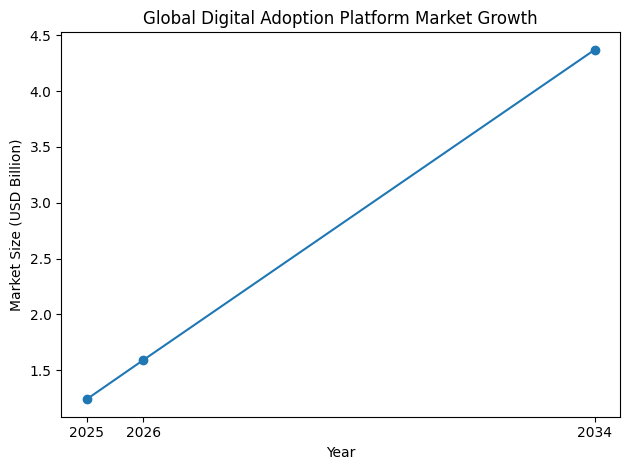
The global Digital Adoption Platform market is projected to reach USD 1.590 billion by the end of 2026, up from USD 1.240 billion in 2025. This represents a compound annual growth rate of approximately 13.50 percent. Long-term projections indicate continued expansion, with the market expected to reach USD 4.370 billion by 2034.
This acceleration reflects the transition from experimentation to institutionalization. Enterprises are no longer evaluating digital adoption; they are operationalizing it at scale.
| Market Indicator | Value (USD Billion) | Strategic Interpretation |
|---|---|---|
| 2025 Global Market Size | 1.240 | Expansion phase driven by SaaS growth |
| 2026 Global Market Size | 1.590 | Consolidation of DAP as core enterprise layer |
| CAGR (2025–2026) | 13.50% | Accelerated enterprise adoption |
| 2034 Projected Market Size | 4.370 | Long-term structural integration into IT ecosystems |
| Average SaaS Applications per Firm | 305 | High complexity driving adoption demand |
| Avg. Annual SaaS Spend per Firm | 55.7 million | Pressure to maximize ROI through adoption optimization |
Macroeconomic Drivers of Digital Adoption
Despite global software spending projected to reach USD 1.43 trillion in 2026, digital transformation outcomes remain uneven. Many organizations report partial modernization rather than full digital maturity.
A primary constraint is the digital literacy gap. The United States economy is estimated to be operating at only 18 percent of its digital potential, translating into approximately USD 2 trillion in lost productivity. This deficit is not attributed to insufficient technology investment but to underutilization, inconsistent training, and lack of contextual in-workflow support.
As a result, by early 2026, approximately 70 percent of large enterprises have implemented structured digital adoption strategies. The strategic focus has shifted from software acquisition to measurable value realization.
| Structural Challenge | Economic Impact | DAP Strategic Role |
|---|---|---|
| Underutilized Software | Reduced ROI on IT investments | Behavioral guidance and usage analytics |
| Digital Literacy Gap | USD 2 trillion productivity loss | Contextual learning and AI-supported enablement |
| SaaS Sprawl | Operational fragmentation | Cross-platform orchestration |
| Hybrid Work Complexity | Workflow inconsistency | Unified in-app support |
| AI Integration | Adoption friction | GenAI literacy and agentic assistance |
Regional Market Distribution and Strategic Expansion
The global DAP market demonstrates geographic concentration in developed economies, though 2026 marks intensified growth across Asia-Pacific markets.
North America maintains leadership with approximately 34.60 percent of total global share. However, Asia-Pacific expansion is accelerating due to SME digitization, cloud migration initiatives, and government-backed modernization programs.
| Region / Country | 2026 Projected Value (USD Billion) | Growth Drivers and Strategic Focus |
|---|---|---|
| Global Market | 1.590 | SaaS sprawl management, GenAI literacy, hybrid work orchestration |
| North America | 0.550 | Cloud modernization, healthcare interoperability, federal IT reform |
| United States | 0.377 | Federal modernization programs, healthcare portal expansion |
| Europe | 0.346 | GDPR compliance automation, cross-border digital services |
| China | 0.085 | Industrial IoT scaling, B2B e-commerce infrastructure |
| India | 0.079 | Fintech growth, SME digital adoption, government digital initiatives |
| Japan | 0.056 | Workforce upskilling, enterprise ERP migration |
Deployment Trends and Market Segmentation
Cloud-based DAP deployment models now dominate the industry, accounting for approximately 75.95 percent of total market share in 2026. The migration away from on-premise infrastructure reflects broader digital workplace decentralization and SaaS-native architecture trends.
Simultaneously, the SME segment has emerged as a powerful expansion engine, projected to represent 62.12 percent of total market share by the end of 2026. This shift is driven by:
• Increased post-pandemic online commerce
• Adoption of no-code onboarding platforms
• Cost-effective SaaS growth tools
• Reduced reliance on professional services
| Market Segment | 2026 Market Share | Strategic Interpretation |
|---|---|---|
| Cloud Deployment | 75.95% | Dominant architecture for scalable adoption |
| On-Premise Deployment | 24.05% | Limited to legacy or regulated environments |
| SME Segment | 62.12% | High-growth engine fueled by no-code adoption tools |
| Large Enterprises | 37.88% | High-value contracts with complex deployment scope |
Strategic Evolution of the Digital Adoption Platform in 2026
The DAP of 2026 has evolved beyond guided walkthroughs. It now incorporates:
• Behavioral analytics
• Workflow intelligence
• GenAI-powered contextual support
• Shadow IT identification
• Agentic automation capabilities
Modern platforms increasingly function as operational intelligence layers rather than training overlays. They integrate with ERP systems, CRM platforms, collaboration tools, and AI copilots to provide continuous adoption governance.
Conclusion: From Adoption Tool to Enterprise Orchestration Layer
In 2026, the Digital Adoption Platform market reflects a structural correction within the global enterprise technology ecosystem. As SaaS portfolios expand and AI systems proliferate, the ability to extract measurable value from digital investments has become mission-critical.
With a projected valuation of USD 1.590 billion in 2026 and long-term growth toward USD 4.370 billion by 2034, the sector has transitioned from optional enhancement to foundational enterprise infrastructure. Organizations are no longer investing in digital adoption as a support function; they are embedding it as a strategic lever for productivity, compliance, and AI-driven transformation.
THE EVOLUTION OF AGENTIC ORCHESTRATION AND AI INTEGRATION IN THE 2026 DIGITAL ADOPTION PLATFORM MARKET
A defining shift in the 2026 Digital Adoption Platform landscape is the transition from static, rule-based guidance toward agentic orchestration. In earlier generations, DAPs primarily delivered walkthroughs, tooltips, and contextual prompts. While effective for onboarding and task reinforcement, these capabilities were reactive and largely instructional.
By contrast, agentic orchestration introduces AI-driven systems that actively coordinate workflows, surface decision support, and dynamically adapt to user behavior. Analyst commentary in late 2025 identified agentic orchestration as the principal differentiator in the evolving market. In this model, AI agents act as real-time operational layers within Digital Experience Platforms and DAP ecosystems.
These agents do not simply display guidance overlays. Instead, they integrate data streams, enterprise content repositories, behavioral signals, and automated decision logic into unified, goal-oriented workflows. The result is a fluid experience where context, action, and outcome are increasingly synchronized.
| Evolution Stage | Core Capability | Strategic Impact |
|---|---|---|
| Static Walkthroughs | Step-by-step guidance | Basic onboarding acceleration |
| Contextual Analytics | Usage tracking and friction detection | Data-informed optimization |
| AI-Assisted Guidance | Intelligent prompts and automation | Reduced cognitive load |
| Agentic Orchestration | Autonomous, goal-driven workflow support | Integrated human-AI performance alignment |
Generative AI and Workforce Proficiency Acceleration
The integration of Generative AI has significantly reshaped digital adoption strategies. By 2026, approximately 78 percent of organizations embed GenAI technologies within operational frameworks, reporting an average 3.7x return on investment. Within the DAP segment, GenAI applications extend beyond conversational interfaces to include automated content creation, knowledge synthesis, and contextual response generation.
Training material development, historically resource-intensive, has been transformed by AI-powered content engines. Certain platforms report reductions of up to 91 percent in content creation time through automated video generation, step documentation, and knowledge base transformation. This capability is particularly valuable in environments where software update cycles have shortened from months to weeks.
| GenAI Application Area | Operational Benefit | Business Outcome |
|---|---|---|
| Automated Training Creation | Rapid documentation generation | Lower content production costs |
| Contextual AI Assistants | Real-time knowledge delivery | Faster task completion |
| Knowledge Base Aggregation | Unified internal documentation | Reduced information silos |
| Dynamic Workflow Adaptation | Behavior-based guidance updates | Continuous optimization |
| AI-Driven Content Localization | Multi-language training scalability | Global deployment efficiency |
Agent Analytics and AI Performance Measurement
A significant development in 2026 is the emergence of Agent Analytics, a discipline focused on measuring how users interact with AI agents embedded within enterprise systems. Rather than evaluating only human engagement metrics, organizations now analyze:
• Prompt-response effectiveness
• AI interaction frequency
• Task completion acceleration
• Workflow error reduction
• Agent-driven decision outcomes
This measurement framework ensures that AI systems enhance productivity rather than introduce friction or over-automation. Agent Analytics transforms AI from a novelty feature into a measurable performance driver.
| Analytics Dimension | Measurement Focus | Strategic Objective |
|---|---|---|
| Interaction Frequency | How often users engage AI assistants | Validate adoption |
| Response Utility | Quality and usefulness of AI outputs | Improve accuracy and trust |
| Task Completion Speed | Time reduction per workflow | Productivity optimization |
| Error Reduction | Decrease in manual mistakes | Compliance and quality assurance |
| Behavioral Adaptation | AI adjustment based on user patterns | Continuous performance improvement |
Digital Adoption Platforms as Technical Debt Mitigation
The expansion of DAP capabilities can also be interpreted through the lens of technical debt. Large enterprises face an estimated USD 2.41 trillion annually in technical debt costs. These costs often arise from fragmented legacy systems, delayed integrations, and underutilized software investments.
DAPs mitigate this burden by accelerating user onboarding and reducing productivity leakage during software transitions. Instead of requiring full system overhauls before value realization, organizations can deploy digital adoption layers that stabilize workflows while modernization initiatives continue.
| Technical Debt Challenge | Enterprise Consequence | DAP Mitigation Role |
|---|---|---|
| Legacy System Complexity | Delayed modernization | Guided transition overlays |
| Integration Delays | Workflow fragmentation | Cross-system orchestration |
| Underutilized Software | Lost ROI | Adoption analytics and enablement |
| Training Gaps | Slow productivity ramp | Contextual learning and automation |
| Frequent Software Updates | Documentation obsolescence | AI-powered content regeneration |
Market Growth Dynamics and Financial Modeling
The financial growth of the Digital Adoption Platform market in 2026 significantly outpaces broader SaaS expansion. The year-over-year market growth can be expressed using the following model:
V_2026 = V_2025 × (1 + r)
Where V represents market value and r represents the annual growth rate.
Given:
V_2025 = USD 1.24 billion
V_2026 = USD 1.59 billion
The implied year-over-year growth rate is approximately 28.2 percent. This growth rate substantially exceeds the general SaaS market expansion rate of 13.32 percent, highlighting the structural importance of digital adoption within enterprise IT ecosystems.
| Financial Indicator | Value | Interpretation |
|---|---|---|
| 2025 Market Value | USD 1.24 billion | Pre-acceleration phase |
| 2026 Market Value | USD 1.59 billion | Expansion driven by AI integration |
| Year-over-Year Growth | 28.2% | Rapid institutional adoption |
| General SaaS Market Growth | 13.32% | Slower comparative expansion |
| Relative Growth Differential | +14.88 percentage points | DAP outpacing broader SaaS ecosystem |
Strategic Implications for Enterprise Technology Leaders
The acceleration of agentic orchestration and AI integration signals a structural transformation within the Digital Adoption Platform market. In 2026, DAPs are no longer confined to onboarding assistance; they serve as operational intelligence layers that bridge human behavior, AI systems, and enterprise processes.
Organizations that integrate agent analytics, AI-driven workflow automation, and dynamic content generation into their adoption strategies are positioned to extract significantly higher returns from digital investments. As AI becomes embedded across enterprise software stacks, the ability to orchestrate human-AI collaboration through structured adoption frameworks will determine long-term productivity outcomes.
In summary, the evolution toward agentic orchestration marks a pivotal inflection point. Digital Adoption Platforms are transitioning from guidance tools to intelligent execution engines, accelerating enterprise performance while mitigating the structural inefficiencies of technical debt and underutilized software.
COMPARATIVE ANALYSIS OF DIGITAL ADOPTION PLATFORM PERFORMANCE AND ECONOMICS IN 2026
In 2026, enterprise decision-making around Digital Adoption Platforms is increasingly driven by two critical financial metrics: Total Cost of Ownership (TCO) and Time-to-Value (TTV). While feature depth and AI capabilities remain important, procurement leaders now prioritize measurable ROI timelines, internal resource requirements, and long-term scalability.
Legacy enterprise platforms deliver deep integration and governance functionality but often require higher upfront investments and professional services support. Conversely, SaaS-focused platforms emphasize rapid deployment and lower entry costs, appealing to mid-market and product-led growth organizations.
The following comparative matrix outlines estimated economic and performance characteristics across leading DAP providers in 2026.
DAP Market Comparison Matrix (2026 Estimates)
| Platform | Median Annual Spend (USD) | Payback Period (Months) | Primary Strength | Typical Use Case Scenario |
|---|---|---|---|---|
| WalkMe | 79,000 | 5 | Enterprise-grade depth | Global SAP and Oracle rollouts |
| Whatfix | 31,950 | 11 | Content flexibility | Training sandboxes and simulation workflows |
| Pendo | 31,950 (Median) | 8 | Behavioral analytics | Product-led growth and product management |
| Userlane | 48,300 | 9 | Security and compliance | European regulated industries |
| Apty | 45,000 | 7 | Process compliance | ERP and Workday validation |
| Appcues | 10,000 – 30,000 | < 6 | Design simplicity | Rapid SaaS onboarding |
| Userpilot | 3,600 – 15,000 | < 6 | SaaS product growth | Contextual feature adoption |
| ClickLearn | Custom | < 12 | Documentation automation | Complex enterprise system documentation |
| Spekit | Custom | 9 | Sales enablement | Just-in-time representative training |
| Userflow | 2,880 – 10,000 | Immediate | No-code agility | Mid-market SaaS onboarding |
Economic Positioning by Segment
The 2026 DAP market can be segmented into three economic tiers:
Enterprise Tier
Platforms such as WalkMe, Whatfix, Userlane, and Apty serve large-scale organizations undergoing ERP migrations, regulatory modernization, and complex digital transformation programs. These solutions typically require structured governance models and deeper integrations.
Mid-Market and SaaS Growth Tier
Platforms such as Appcues, Userpilot, and Userflow focus on fast deployment, no-code agility, and activation-driven ROI. They are favored by SaaS companies and mid-market firms prioritizing rapid iteration.
Specialized Niche Tier
ClickLearn and Spekit occupy specialized niches in documentation automation and sales enablement respectively, offering targeted value rather than broad orchestration.
| Market Tier | Typical Annual Spend Range (USD) | Core Buyer Profile | Value Emphasis |
|---|---|---|---|
| Enterprise Tier | 45,000 – 100,000+ | CIOs, IT Directors, Transformation Leaders | Governance, compliance, global scale |
| SaaS & Mid-Market Tier | 2,880 – 30,000 | Product Managers, Growth Leaders | Speed, activation, agility |
| Specialized Tier | Custom Pricing | Enablement & Documentation Teams | Focused workflow optimization |
Time-to-Value Analysis
Time-to-Value is a defining differentiator in 2026. SaaS-focused platforms frequently deliver ROI in under six months due to lighter implementation requirements. Enterprise-focused platforms often demonstrate strong ROI but may require structured rollout cycles.
| Platform Category | Average TTV Profile | Implementation Complexity |
|---|---|---|
| Enterprise Platforms | 5 – 11 months | High |
| SaaS Growth Platforms | Immediate – 6 months | Low to Moderate |
| Documentation Platforms | Up to 12 months | Moderate |
| Sales Enablement Tools | Around 9 months | Moderate |
Internal Resource and Maintenance Costs
Beyond licensing, organizations must account for internal operational costs. Most enterprises allocate between 1 and 3 full-time employees (FTEs) to manage content creation, workflow optimization, and ongoing updates.
This internal allocation translates into additional annual costs ranging from USD 80,000 to USD 300,000 depending on team size and salary structures.
The necessity of these resources is driven by the phenomenon known as content decay. As SaaS platforms release updates on increasingly compressed cycles, onboarding flows, walkthroughs, and documentation assets require continuous revision to remain accurate.
| Internal Cost Component | Estimated Annual Range (USD) | Strategic Consideration |
|---|---|---|
| 1 FTE Content Manager | ~80,000 | Basic platform maintenance |
| 2–3 FTE Digital Adoption Team | 160,000 – 300,000 | Advanced analytics and optimization |
| Professional Services (Optional) | Variable | Large-scale transformation support |
| Total Extended TCO Impact | Significant | Must be included in procurement modeling |
Total Cost of Ownership Framework
When evaluating TCO in 2026, enterprises typically calculate:
TCO = License Cost + Internal Resource Cost + Professional Services + Maintenance Overhead
This broader calculation often reshapes vendor selection decisions. A lower license cost does not necessarily equate to lower total ownership if internal management requirements are high.
Strategic Implications for Procurement and IT Leadership
The 2026 DAP selection process is no longer centered solely on feature comparison. Instead, it requires alignment across:
• Organizational complexity
• Regulatory exposure
• Software ecosystem size
• Internal content management capacity
• Speed of required ROI realization
Enterprise platforms offer deep governance and integration at higher cost thresholds. SaaS-oriented platforms prioritize rapid activation and affordability. Specialized vendors address targeted operational inefficiencies.
Conclusion
The comparative economics of Digital Adoption Platforms in 2026 highlight a maturing market where financial modeling, TTV, and maintenance overhead are decisive selection criteria. Organizations must evaluate not only licensing expenses but also internal operational commitments to sustain adoption effectiveness.
As software ecosystems continue to expand and AI agents become embedded across enterprise tools, the ability to balance cost efficiency with scalable digital orchestration will define long-term competitive advantage in the Digital Adoption Platform market.
INDUSTRY-SPECIFIC DIGITAL ADOPTION PLATFORM DYNAMICS IN 2026
By 2026, Digital Adoption Platform deployments are no longer implemented as generic overlays across enterprise systems. Instead, adoption strategies are increasingly tailored to the operational realities, compliance mandates, and customer engagement models of specific industries. Vertical specialization has become a defining trend, influencing feature prioritization, deployment models, analytics requirements, and ROI measurement frameworks.
The following sections examine how Digital Adoption Platforms are being deployed across three high-impact sectors: Financial Services, Healthcare and Life Sciences, and Government and Public Sector.
Financial Services, Banking, and Insurance (BFSI)
Digital Banking Transformation and Customer Experience Optimization
In the BFSI sector, DAPs are primarily deployed to manage the transition toward fully digital banking ecosystems. As mobile-first strategies dominate consumer engagement, financial institutions must ensure that both employees and customers can navigate increasingly complex digital platforms seamlessly.
Customer experience research consistently indicates that rapid, contextual support is a primary driver of customer loyalty. Consequently, DAPs in financial services environments must support:
• Mobile banking applications
• Digital onboarding workflows
• Real-time transaction systems
• Streaming-based financial updates
• Multi-channel support integration
Mobile adoption rates serve as a core KPI in this sector. Therefore, DAPs are configured to optimize in-app assistance, reduce onboarding friction, and minimize transaction errors.
| BFSI Adoption Driver | Strategic Objective | DAP Functional Requirement |
|---|---|---|
| Digital Banking Migration | Shift from branch to mobile-first models | Mobile-compatible in-app guidance |
| Customer Loyalty Retention | Faster resolution and onboarding | Real-time contextual support |
| Regulatory Compliance | Adherence to financial regulations | Process enforcement and audit trails |
| Fraud Prevention Awareness | Secure user behavior | Guided security workflows |
| Multi-Channel Integration | Unified digital experience | Cross-platform orchestration |
Healthcare and Life Sciences
Clinical Accuracy, Compliance, and Interoperability
The Healthcare and Life Sciences vertical is projected to experience a 21.78 percent compound annual growth rate in DAP adoption through 2031. This accelerated growth is driven by digitized patient records, telemedicine expansion, and regulatory interoperability mandates.
In this sector, digital adoption is closely tied to patient safety and compliance. Errors in clinical workflows can have direct health consequences, making precise guidance and validation mechanisms essential.
DAP deployments in healthcare environments focus on:
• Electronic Health Record (EHR) navigation
• Clinical workflow standardization
• Interoperability mandate compliance
• Error reduction in patient documentation
• Staff upskilling during system upgrades
A practical example can be seen in the financial services sector, where KeyBank implemented WalkMe to increase self-serve completion rates by 150 percent for key workflows. Similar principles apply in healthcare, where guided completion rates directly impact operational accuracy and compliance outcomes.
| Healthcare Adoption Driver | Strategic Objective | DAP Functional Requirement |
|---|---|---|
| Clinical Error Reduction | Improve patient safety | Step validation and workflow enforcement |
| Interoperability Compliance | Meet regulatory data-sharing standards | Structured process governance |
| Workforce Upskilling | Accelerate onboarding of medical staff | Contextual learning modules |
| Telehealth Expansion | Support remote care platforms | Cross-device adoption support |
| System Upgrade Cycles | Maintain documentation accuracy | AI-driven content automation |
Government and Public Sector
IT Modernization and Cybersecurity Prioritization
In the Government and Public Sector, digital adoption is directly tied to national IT modernization agendas and cybersecurity frameworks. By 2026, the U.S. government DAP market alone is projected to reach USD 0.377 billion.
Public institutions face unique challenges, including legacy system modernization, compliance mandates, and strict security certifications. Digital Adoption Platforms serve as accelerators for cloud migration and workforce enablement.
Notably, FedRAMP-authorized cloud migrations reportedly complete approximately 60 percent faster when paired with structured digital adoption tools. This acceleration reduces operational disruption and strengthens cybersecurity posture by ensuring proper usage of secure systems.
| Government Adoption Driver | Strategic Objective | DAP Functional Requirement |
|---|---|---|
| Federal IT Modernization | Transition from legacy systems | Guided migration workflows |
| Cybersecurity Compliance | Secure system usage | Governance and policy enforcement |
| Cloud Migration Acceleration | Faster FedRAMP-certified deployment | Contextual onboarding and process validation |
| Public Service Digital Portals | Improved citizen engagement | User-friendly navigation overlays |
| Workforce Reskilling | Upskill public employees | Structured training within secure environments |
Comparative Industry Growth Outlook
The growth trajectory of DAP adoption varies by industry, influenced by regulatory complexity, digital maturity, and transformation urgency.
| Industry Vertical | Growth Profile (Through 2026+) | Primary Strategic Focus |
|---|---|---|
| Financial Services (BFSI) | Strong and stable | Mobile adoption and customer loyalty |
| Healthcare & Life Sciences | 21.78% CAGR through 2031 | Clinical accuracy and compliance |
| Government & Public Sector | Rapid modernization-driven growth | IT reform and cybersecurity |
Strategic Implications for Enterprise Leaders
Industry-specific adoption dynamics demonstrate that DAP implementation must align with vertical KPIs rather than generic digital transformation metrics. In financial services, mobile engagement and customer retention dominate. In healthcare, error reduction and regulatory compliance are paramount. In government environments, modernization speed and cybersecurity integrity are central.
As digital ecosystems expand and AI agents become embedded in sector-specific workflows, Digital Adoption Platforms are increasingly configured as specialized orchestration layers tailored to regulatory, operational, and customer-experience requirements.
Conclusion
By 2026, Digital Adoption Platforms have transitioned from horizontal enablement tools to vertically optimized strategic systems. Industry-specific requirements now shape deployment models, analytics frameworks, and ROI calculations. Organizations that align DAP strategy with sector-specific performance indicators are better positioned to reduce friction, accelerate modernization, and extract measurable value from complex digital infrastructures.
FINANCIAL MODELING AND STRATEGIC ROI ANALYSIS OF DIGITAL ADOPTION PLATFORMS IN 2026
Strategic Financial Justification in a High-Spend SaaS Environment
In 2026, the financial case for Digital Adoption Platforms is anchored in two measurable concepts: payback period and mitigation of training decay. As enterprises manage hundreds of SaaS applications and rising operational costs, leadership teams increasingly require quantitative proof of value realization.
Industry research indicates that organizations typically achieve ROI from DAP investments within approximately eight months. This relatively short payback period has positioned DAPs as performance accelerators rather than discretionary enablement tools.
Training decay, defined as the rapid loss of knowledge following traditional training sessions, remains a significant hidden cost. Without contextual reinforcement, employees frequently forget up to 70 percent of newly learned material within weeks. DAPs counteract this decline by embedding support directly within workflows, ensuring continuous reinforcement.
The Mechanics of ROI in 2026
The return on investment for Digital Adoption Platforms is driven by four primary economic levers:
Support Cost Reduction
By enabling contextual, self-service assistance within enterprise systems, DAPs reduce reliance on helpdesk teams. Organizations commonly report a 30 to 40 percent reduction in support ticket volume.
Productivity Gains
DAPs minimize context switching and eliminate the need for users to exit applications to search for instructions. This results in an average 25 percent improvement in employee productivity through faster task completion.
Training Efficiency
Traditional classroom or static eLearning models often yield approximately 22 percent ROI. Structured digital adoption strategies supported by DAPs can generate returns as high as 85 percent by reinforcing real-time learning.
License Waste Mitigation
Advanced analytics capabilities allow platforms to identify underutilized software licenses. Some organizations report reclaiming up to 17 percent of total SaaS expenditure by eliminating redundant or inactive subscriptions.
| ROI Lever | Performance Impact Range | Strategic Financial Outcome |
|---|---|---|
| Support Ticket Reduction | 30–40% decrease | Lower IT support labor costs |
| Productivity Improvement | ~25% increase | Higher output per employee |
| Structured Training ROI | Up to 85% | Reduced onboarding inefficiencies |
| License Waste Recovery | Up to 17% SaaS savings | Direct operational cost reduction |
Annual Savings Calculation Framework
Organizations model expected annual savings using a structured financial equation:
S = (T_hours × R_wage × E_productivity) + (N_tickets × C_support) − C_DAP
Where:
T_hours represents total training hours replaced or optimized
R_wage represents average hourly wage
E_productivity represents efficiency gain percentage
N_tickets represents reduction in support tickets
C_support represents average cost per support ticket
C_DAP represents total platform cost (license + maintenance)
This model captures both direct cost avoidance and productivity amplification. It also allows finance teams to simulate payback periods under various adoption scenarios.
Example Savings Interpretation
If an organization reduces 5,000 support tickets annually at an average cost of USD 25 per ticket, that alone yields USD 125,000 in support cost savings. When combined with productivity improvements across hundreds of employees, annual savings can reach seven-figure levels.
Economic Impact by Sector in 2026
Digital Adoption Platform ROI varies by industry based on operational complexity, compliance burden, and workforce scale.
Table 3: Economic Impact of Digital Adoption Platforms by Sector (2026 Projections)
| Sector | Average Annual Saving per 1,000 Users (USD) | Key Value Driver | Productivity Impact (%) |
|---|---|---|---|
| BFSI | 1,200,000 | Compliance and accuracy | 37 |
| Healthcare | 950,000 | Error reduction in EHR systems | 30 |
| Manufacturing | 1,100,000 | AR guidance and safety protocols | 28 |
| Professional Services | 800,000 | Rapid new hire onboarding | 40 |
| Government | 1,500,000 | Legacy system migration efficiency | 25 |
These projections illustrate how sector-specific dynamics influence financial outcomes. In regulated industries, compliance accuracy drives savings, while in professional services, accelerated onboarding generates the highest productivity lift.
Total Cost of Ownership Considerations
Beyond licensing fees, organizations must incorporate internal management costs into ROI models. Most enterprises dedicate one to three full-time employees to oversee content governance and analytics optimization. This can add USD 80,000 to USD 300,000 annually in internal operational costs.
Therefore, accurate ROI modeling requires inclusion of:
• Platform licensing costs
• Professional services (if applicable)
• Internal content management resources
• Ongoing maintenance overhead
Strategic Outlook: 2027 and Beyond
Looking toward 2027 and the next decade, the Digital Adoption Platform market is projected to reach approximately USD 12.5 billion by 2034. Several structural shifts are expected to define this next phase.
Hyper-Personalization
Predictive behavioral analytics will allow DAPs to anticipate user intent and provide proactive guidance before friction emerges. This will transition adoption from reactive correction to predictive enablement.
Omnichannel Support
Adoption layers will increasingly span web, mobile, desktop, and collaborative environments. The user experience will become continuous rather than application-bound.
Zero UI Trend
AI agents will execute tasks autonomously through conversational interfaces and background automation. Traditional step-by-step walkthroughs will decline as intelligent agents assume procedural responsibility.
Ethical AI and Governance
As Generative AI becomes embedded across enterprise systems, DAPs will serve as governance layers that enforce ethical AI use, data privacy standards, and compliance controls across decentralized applications.
| Emerging Theme | Strategic Implication |
|---|---|
| Hyper-Personalization | Anticipatory support before workflow breakdown |
| Omnichannel Integration | Unified experience across digital workspaces |
| Zero UI Automation | Reduced reliance on manual navigation |
| Ethical AI Governance | Policy enforcement and data privacy protection |
| Agentic Orchestration | Seamless human-AI collaboration |
Strategic Conclusion
The long-term trajectory of Digital Adoption Platforms suggests that the ultimate objective is not full automation but cognitive load reduction. By embedding intelligence directly into enterprise workflows, DAPs empower employees to operate efficiently within increasingly complex digital ecosystems.
Organizations that integrate DAPs into their 2026 strategic roadmaps position themselves to convert technological change into measurable competitive advantage. In an environment characterized by rapid innovation cycles, the ability to accelerate human adaptation remains the decisive differentiator between operational disruption and sustained performance growth.
Conclusion
The global Digital Adoption Platform market in 2026 stands at a defining inflection point. What began as a supplemental onboarding layer has evolved into a mission-critical enterprise capability. As organizations manage increasingly complex SaaS ecosystems, embed artificial intelligence into daily workflows, and accelerate digital transformation initiatives, Digital Adoption Platforms have become indispensable infrastructure within the modern technology stack.
The top 10 Digital Adoption Platforms in the world in 2026 are not simply software tools; they are strategic orchestration engines. They bridge the widening gap between technological sophistication and workforce proficiency. In an environment where enterprises manage hundreds of applications and invest tens of millions of dollars annually in software, value realization has emerged as the primary differentiator. Digital adoption is no longer about training alone. It is about productivity acceleration, compliance assurance, AI governance, and measurable ROI.
A Market Defined by Specialization and Strategic Alignment
One of the most significant developments in 2026 is the segmentation of the Digital Adoption Platform market. The leading vendors differentiate themselves across enterprise depth, SaaS growth enablement, documentation automation, sales productivity, governance compliance, and AI-driven orchestration. There is no universal solution; rather, each platform aligns with distinct operational priorities.
Enterprise-grade platforms deliver deep integration across ERP ecosystems, regulatory frameworks, and global transformation programs. SaaS-focused platforms emphasize activation rates, behavioral analytics, and rapid deployment. Documentation-centric solutions automate multilingual training content generation. Sales enablement platforms embed just-in-time knowledge directly within CRM systems. Process-compliance solutions focus on workflow enforcement and measurable operational accuracy.
This specialization reflects a maturing market where organizations select Digital Adoption Platforms based on strategic objectives rather than feature checklists.
Financial Justification and Measurable ROI
In 2026, investment decisions surrounding Digital Adoption Platforms are grounded in financial modeling and time-to-value analysis. Organizations now evaluate platforms using total cost of ownership frameworks that incorporate licensing, internal content management resources, professional services, and long-term maintenance overhead.
The financial case for DAP adoption is supported by four consistent value drivers:
• Reduction in IT support costs
• Acceleration of employee productivity
• Improved training efficiency and reduced knowledge decay
• Identification of underutilized SaaS licenses
With average payback periods commonly under eight months and measurable gains in productivity exceeding 25 percent in many deployments, Digital Adoption Platforms demonstrate one of the strongest ROI profiles within the broader SaaS landscape. In a market growing faster than general SaaS expansion rates, the financial acceleration of the DAP sector underscores its strategic importance.
Agentic Orchestration and the AI-Driven Future
Another defining characteristic of the top 10 Digital Adoption Platforms in 2026 is the shift toward agentic orchestration. Traditional guided walkthroughs are being supplemented or replaced by AI-powered agents capable of interpreting user behavior, predicting friction points, and automating repetitive workflows.
Agent analytics, contextual AI assistants, and predictive workflow intelligence are transforming DAPs into intelligent coordination layers. These platforms are no longer passive guidance systems; they are active participants in digital execution.
As Generative AI becomes embedded across enterprise systems, Digital Adoption Platforms serve as governance layers that ensure ethical use, data privacy compliance, and productivity alignment. The future of digital adoption is not pure automation but intelligent augmentation—empowering the workforce while reducing cognitive burden.
Industry-Specific Deployment as a Competitive Advantage
The leading Digital Adoption Platforms in 2026 demonstrate vertical specialization across financial services, healthcare, manufacturing, professional services, and government sectors. Each industry presents unique compliance requirements, digital maturity levels, and productivity constraints.
In regulated industries, adoption platforms reduce operational risk and improve audit readiness. In healthcare environments, they minimize clinical errors and ensure interoperability compliance. In government modernization programs, they accelerate secure cloud migrations. In SaaS ecosystems, they increase activation, retention, and expansion revenue.
The ability to tailor digital adoption strategies to sector-specific KPIs has become a core differentiator among the top vendors globally.
Strategic Implications for Enterprise Leaders
For CIOs, CTOs, Chief Digital Officers, and transformation leaders, selecting one of the top 10 Digital Adoption Platforms in the world in 2026 requires alignment across multiple dimensions:
• Organizational size and complexity
• Regulatory and compliance exposure
• Software ecosystem breadth
• AI integration maturity
• Internal governance capabilities
• Speed of expected ROI realization
The most successful implementations occur when Digital Adoption Platforms are embedded into enterprise roadmaps rather than treated as isolated enablement tools. Adoption must be continuous, data-driven, and integrated into transformation strategy.
The Long-Term Outlook Beyond 2026
Looking toward the remainder of the decade, the Digital Adoption Platform market is projected to expand aggressively, potentially exceeding USD 12.5 billion by 2034. Several emerging trends will shape the next chapter:
Hyper-personalized adoption experiences driven by predictive analytics.
Omnichannel guidance that follows users seamlessly across web, mobile, and desktop environments.
Zero-UI paradigms where AI agents execute tasks autonomously.
Stronger governance models for ethical AI deployment.
As enterprise systems become more autonomous and intelligent, the need for structured digital adoption does not diminish. Instead, it evolves into orchestration and human-AI collaboration management.
Final Perspective
The top 10 Digital Adoption Platforms in the world in 2026 represent more than market leaders; they reflect a structural evolution in how organizations approach technology enablement. In an era defined by rapid innovation, compressed software update cycles, and expanding AI integration, the true competitive advantage lies not in purchasing advanced systems but in ensuring that people can use them effectively.
Digital transformation is no longer constrained by technological availability. It is constrained by human adaptation. The organizations that will outperform in 2026 and beyond are those that recognize digital adoption as a strategic discipline—one that converts technological investment into operational performance, workforce empowerment, and sustained competitive differentiation.
In the global enterprise landscape, Digital Adoption Platforms have become the bridge between potential and performance.
If you find this article useful, why not share it with your hiring manager and C-level suite friends and also leave a nice comment below?
We, at the 9cv9 Research Team, strive to bring the latest and most meaningful data, guides, and statistics to your doorstep.
To get access to top-quality guides, click over to 9cv9 Blog.
To hire top talents using our modern AI-powered recruitment agency, find out more at 9cv9 Modern AI-Powered Recruitment Agency.
People Also Ask
What is a Digital Adoption Platform in 2026?
A Digital Adoption Platform (DAP) is software that guides users inside applications, improves feature adoption, reduces support costs, and aligns employee behavior with digital workflows using analytics and AI-driven assistance.
Why are Digital Adoption Platforms important in 2026?
DAPs help organizations maximize ROI from SaaS investments, reduce training decay, improve productivity, and manage complex software ecosystems with AI-powered orchestration.
What are the top 10 Digital Adoption Platforms in the world in 2026?
The top DAPs include enterprise leaders, SaaS-focused platforms, and AI-driven adoption tools that specialize in ERP rollouts, product-led growth, sales enablement, and compliance.
How do Digital Adoption Platforms improve ROI?
They reduce support tickets, shorten onboarding time, increase employee productivity, and identify underused licenses, leading to faster payback periods.
What is the average payback period for a DAP?
Most organizations report a payback period of six to eight months, depending on deployment scope and internal adoption strategy.
How much does a Digital Adoption Platform cost in 2026?
Pricing varies widely, from a few thousand dollars per year for SaaS-focused tools to over USD 100,000 annually for enterprise-grade deployments.
Which DAP is best for enterprise ERP systems?
Enterprise platforms with deep SAP, Oracle, or Salesforce integrations are ideal for large-scale ERP transformations and compliance-heavy environments.
Which DAP is best for SaaS companies?
SaaS-focused DAPs with no-code builders, behavioral analytics, and activation tracking are best for product-led growth and feature adoption.
What industries benefit most from Digital Adoption Platforms?
Financial services, healthcare, government, manufacturing, and SaaS companies see strong ROI due to compliance needs and complex system usage.
How do DAPs reduce support ticket volume?
They provide contextual, in-app self-help tools that allow users to solve issues without contacting IT or support teams.
What is agentic orchestration in Digital Adoption?
Agentic orchestration uses AI agents to automate workflows, predict user friction, and deliver goal-driven assistance inside applications.
How does Generative AI enhance Digital Adoption Platforms?
GenAI automates training content creation, personalizes user guidance, and powers AI assistants that improve task completion speed.
What is Agent Analytics in DAP software?
Agent Analytics measures how users interact with AI assistants to ensure they improve productivity rather than create friction.
Are Digital Adoption Platforms cloud-based?
Most leading DAPs are cloud-based, enabling scalable deployment, faster updates, and remote workforce support.
How do DAPs support hybrid and remote work?
They provide consistent guidance across web, mobile, and desktop environments, ensuring employees receive support regardless of location.
Can Digital Adoption Platforms reduce SaaS waste?
Yes, many platforms identify underutilized licenses and software redundancies, helping companies reclaim unused SaaS spend.
What is training decay and how do DAPs prevent it?
Training decay is the loss of knowledge after traditional sessions. DAPs prevent it by reinforcing learning within real-time workflows.
Do DAPs require coding skills to implement?
Many modern platforms offer no-code builders, allowing product and IT teams to create guidance flows without engineering resources.
How do DAPs improve employee productivity?
By eliminating context switching and reducing search time, DAPs help employees complete tasks up to 25 percent faster.
What makes a DAP enterprise-grade?
Enterprise DAPs offer advanced analytics, compliance controls, multi-system integrations, AI orchestration, and global scalability.
How do DAPs help with digital transformation?
They accelerate software adoption, standardize workflows, and ensure employees effectively use newly deployed systems.
Are DAPs suitable for small and mid-sized businesses?
Yes, many cost-effective DAP solutions are designed specifically for SMEs and growing SaaS companies.
How do Digital Adoption Platforms support compliance?
They enforce step-by-step workflow validation, provide audit trails, and ensure adherence to regulatory requirements.
What KPIs measure DAP success?
Common KPIs include feature adoption rate, task completion time, support ticket reduction, ROI, and employee productivity gains.
How do DAPs integrate with AI copilots?
They monitor and optimize AI assistant usage, provide contextual prompts, and ensure responsible AI deployment.
What is the future of Digital Adoption Platforms?
The future includes hyper-personalization, omnichannel support, zero-UI automation, and deeper AI-powered orchestration.
How do DAPs improve onboarding for new hires?
They deliver guided walkthroughs and contextual learning inside systems, reducing ramp time and training costs.
Can Digital Adoption Platforms scale globally?
Yes, leading DAPs support multilingual content, enterprise security standards, and large-scale international deployments.
How fast can a DAP be deployed?
SaaS-focused DAPs can go live in days or weeks, while enterprise implementations may take several months.
Is investing in a Digital Adoption Platform worth it in 2026?
For organizations managing complex software stacks, a DAP delivers measurable ROI, faster adoption, and long-term productivity gains.
Sources
Zylo
Fortune Business Insights
Whatfix
ClickLearn
Mordor Intelligence
Dimension Market Research
Sitecore
Forrester
Guidde
PM Insights
Pendo
PixieBrix
UserGuiding
Apty
TrustRadius
Userpilot
G2
Gartner
Tracxn
Chameleon
SoftwareReviews
Tandem
Capterra
Software Finder
GetApp
Software Advice
CDP