Key Takeaways
- AI video generators in 2026 have matured into enterprise-ready platforms, offering reasoning-based video generation, native audio, and scalable workflows for real business use.
- The best AI video tools serve different needs, from cinematic storytelling and brand-safe marketing to fast social content, avatars, localization, and open-source customization.
- Companies adopting AI video generators early gain measurable ROI through faster production, global reach, and automation, while late adopters risk long-term competitive disadvantage.
AI video generation has entered a defining era in 2026. What was once considered an experimental technology reserved for short demos and novelty clips has evolved into a powerful production engine used by enterprises, creators, agencies, educators, and media organizations worldwide. The Top 10 Best AI Video Generators for 2026 represent the most advanced, reliable, and commercially viable tools shaping how video content is created, scaled, and distributed in today’s digital economy.


Over the past few years, demand for video content has grown faster than any other content format. Brands are expected to publish more videos across more platforms, in more languages, and at a much faster pace than traditional production workflows can support. AI video generators have emerged as the solution to this challenge, enabling teams to produce high-quality video content with unprecedented speed, consistency, and efficiency.

From Experimentation to Production-Ready Platforms
The AI video tools available in 2026 are fundamentally different from their predecessors. Early-generation models struggled with unstable motion, broken physics, poor lip-sync, and inconsistent visuals. In contrast, today’s leading platforms leverage reasoning-based architectures, spatiotemporal understanding, and multimodal generation to deliver videos that meet professional standards.
Modern AI video generators can now handle complex scenes, maintain character identity across multiple shots, generate synchronized audio and dialogue, and produce outputs in high-definition and 4K resolution. These advancements have moved AI video firmly into production environments rather than isolated creative experiments.
Why AI Video Matters More Than Ever in 2026
Video is no longer optional for digital communication. It is the primary medium for marketing, training, education, product launches, social media, and internal communication. However, traditional video production is expensive, slow, and difficult to scale globally.
AI video generators solve these problems by automating large parts of the production process. Businesses can localize videos instantly, create hundreds of variations for different audiences, and maintain brand consistency without expanding production teams. For creators, AI video lowers the barrier to entry, making professional-quality video accessible without cameras, studios, or complex editing skills.
This shift explains why AI video adoption in 2026 is driven not just by creativity, but by measurable return on investment, operational efficiency, and competitive advantage.
A Diverse Ecosystem of AI Video Tools
One of the most important realities of the AI video landscape in 2026 is that no single tool fits every use case. The market has matured into a diverse ecosystem of platforms, each optimized for specific needs.
Some AI video generators focus on cinematic realism and storytelling, offering advanced physics, lighting, and long-form narrative capabilities. Others are built for enterprises, emphasizing avatars, multilingual localization, compliance, and workflow integration. Creator-focused tools prioritize speed, stylized visuals, and social media formats, while open-source and local models appeal to developers and studios seeking customization and control.
This diversity means that choosing the right AI video generator depends heavily on goals, industry, budget, and technical requirements.
Enterprise Adoption and Business Impact
In 2026, the strongest growth in AI video usage comes from the enterprise and business-to-business segment. Marketing teams use AI video to launch campaigns faster and personalize content at scale. Human resources and learning teams rely on AI video for training, onboarding, and internal communication. E-commerce brands use AI-generated videos to showcase products dynamically across regions and platforms.
Enterprises report significant cost savings and productivity gains from AI video adoption. Production timelines shrink from weeks to days, while content output increases dramatically. This clear business impact has made AI video generators a core part of digital transformation strategies rather than optional creative tools.
Legal, Ethical, and Commercial Readiness
As AI video has become more mainstream, legal and ethical considerations have taken center stage. Copyright ownership, training data transparency, deepfake prevention, and brand safety are now critical decision factors when selecting an AI video platform.
The best AI video generators for 2026 address these concerns directly by offering licensed training data, content safeguards, watermarking, and enterprise-grade compliance features. For global brands and regulated industries, these protections are just as important as visual quality or rendering speed.
What This Guide Covers
This guide to the Top 10 Best AI Video Generators for 2026 provides a comprehensive, practical overview of the leading platforms shaping the future of video creation. It examines not only features and output quality, but also performance, pricing models, enterprise readiness, use cases, and strategic fit.
Whether the reader is a creator looking for fast social content, a business seeking scalable video production, or an organization planning long-term AI adoption, this article is designed to help identify the most suitable AI video generators for 2026 and beyond.
As AI video continues to redefine how stories are told and messages are delivered, understanding the strengths and limitations of the leading platforms has never been more important. This introduction sets the stage for a deeper exploration of the tools that are defining the next generation of video creation.
Before we venture further into this article, we would like to share who we are and what we do.
About 9cv9
9cv9 is a business tech startup based in Singapore and Asia, with a strong presence all over the world.
With over nine years of startup and business experience, and being highly involved in connecting with thousands of companies and startups, the 9cv9 team has listed some important learning points in this overview of the Top 10 Best AI Video Generators for 2026.
If you like to get your company listed in our top B2B software reviews, check out our world-class 9cv9 Media and PR service and pricing plans here.
Top 10 Best AI Video Generators for 2026
- OpenAI Sora 2
- Google Veo 3.1
- Runway Gen-4
- Luma AI Dream Machine Ray 3
- Kling AI
- HeyGen
- Synthesia
- Pika Labs
- Adobe Firefly Video Model
- HunyuanVideo
1. OpenAI Sora 2

Developed by OpenAI, Sora 2 and Sora 2 Pro are widely regarded as leading benchmarks in AI-generated video for 2026. These models are positioned at the high end of the market due to their strong cinematic realism, advanced scene understanding, and ability to generate coherent narratives over longer video durations. Industry analysts frequently reference Sora 2 when comparing professional-grade AI video generators.
Cinematic Realism and Visual Quality
Sora 2 is recognized for its exceptional visual fidelity, often described as close to film-grade output. The system demonstrates an advanced understanding of lighting, camera motion, depth, and physical interactions. Objects move with realistic weight and balance, and scenes maintain visual consistency from frame to frame. This level of realism makes the software suitable for high-impact marketing videos, concept films, branded storytelling, and creative prototyping.
From an industry perspective, Sora 2 sets itself apart by accurately simulating real-world physics. Multi-object scenes, character movement, and environmental effects such as shadows or motion blur appear natural rather than artificial. This realism is one of the main reasons it consistently ranks among the top AI video generators heading into 2026.
Narrative Strength and Long-Form Video Generation
One of Sora 2’s strongest advantages is its ability to generate longer narrative sequences without visual or logical breakdowns. Pro users can produce videos of up to 20 seconds in full HD resolution, while advanced research versions have demonstrated even longer outputs. Throughout these sequences, characters, environments, and story elements remain coherent, which is a key limitation in many competing tools.
For creators focused on storytelling rather than short clips, this capability is particularly valuable. Sora 2 can maintain a consistent narrative arc, making it suitable for short films, cinematic trailers, and complex brand stories rather than just isolated visual moments.
Character Consistency and Scene Flexibility
Sora 2 introduces features designed specifically for professional workflows. The Cameo system allows creators to reuse the same character or subject across multiple scenes while preserving facial features, proportions, and visual identity. This is especially useful for serialized content, brand mascots, or recurring characters in marketing campaigns.
The Remix functionality provides additional flexibility by allowing users to replace backgrounds or objects while keeping the original motion intact. This enables rapid iteration without rebuilding scenes from scratch, saving time during creative experimentation and client revisions.
Performance, Reliability, and Workflow Considerations
In professional evaluations, Sora 2 scores very highly for prompt accuracy and visual consistency. It responds well to detailed instructions, producing outputs that closely match the intended style and narrative direction. While queue times can increase during peak demand, particularly for high-resolution or longer videos, most professionals view this as a reasonable trade-off for the quality delivered.
The platform is generally considered reliable for high-stakes creative projects, where visual errors or unrealistic motion would be unacceptable. This reliability reinforces its reputation as a premium AI video solution rather than a casual or experimental tool.
Professional Benchmark Scores
Visual and performance assessments from industry testers are summarized below.
Performance Benchmark Table
Metric
Average Score
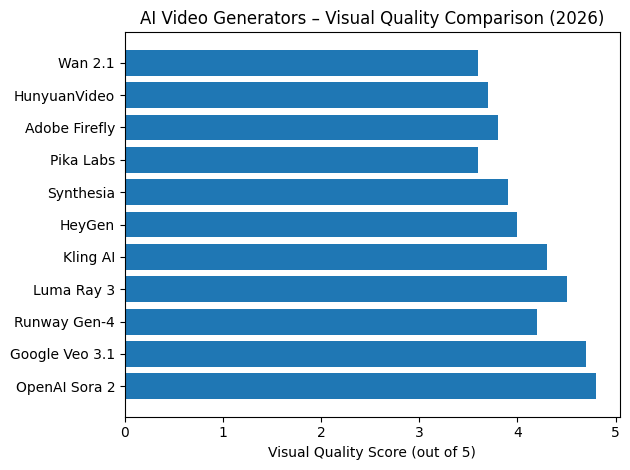
Visual fidelity
4.75 / 5
Prompt adherence
4.7 / 5
Physics realism
4.8 / 5
Character consistency
4.6 / 5
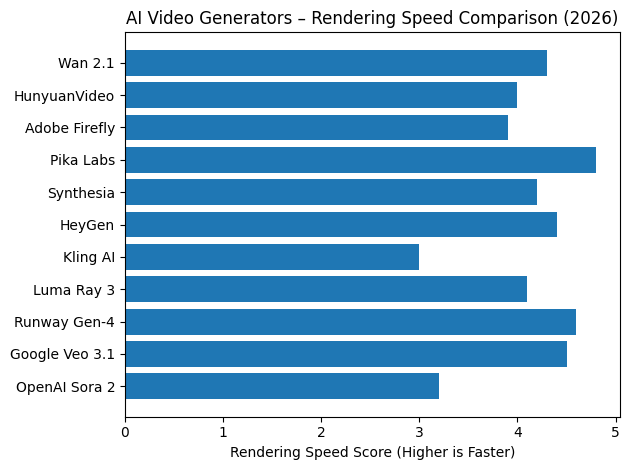
Average render queue time (20s HD)
3.2 minutes
This data highlights why Sora 2 consistently ranks near the top when evaluated against other AI video generators.
Competitive Positioning Matrix
The following matrix illustrates how Sora 2 compares conceptually to typical alternatives in the AI video generation space.
Capability Comparison Matrix
Capability
Sora 2 / Sora 2 Pro
Typical AI Video Tools
Cinematic realism
Very high
Medium
Long-form storytelling
Strong
Limited
Physics accuracy
Advanced
Basic
Character reuse
Supported
Often inconsistent
Professional workflows
Well suited
Partially supported
Why Sora 2 Is a Top AI Video Generator for 2026
From an industry standpoint, Sora 2 earns its place among the top AI video generators due to a rare combination of realism, narrative depth, and professional-grade features. It goes beyond short visual experiments and supports serious creative production, making it relevant for filmmakers, agencies, and enterprise marketing teams.
Its ability to maintain physical realism, character identity, and story coherence positions it as a future-proof tool in an increasingly competitive AI video landscape. As demand grows for high-quality, cinematic AI content in 2026, Sora 2 and Sora 2 Pro remain strong reference points for what advanced AI video generation can achieve.
2. Google Veo 3.1

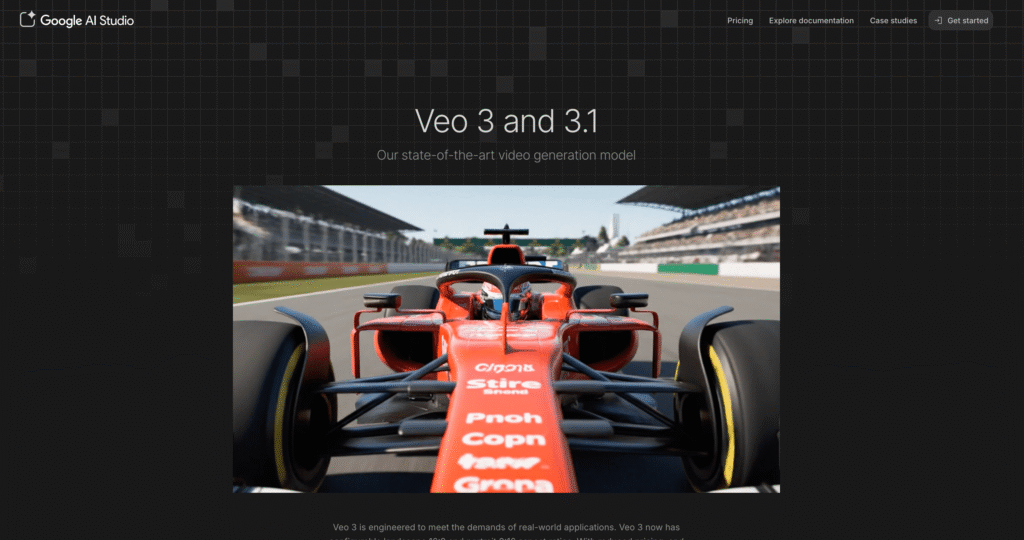
Developed by Google, Veo 3.1 and Google Vids are positioned as one of the most enterprise-ready AI video generation solutions for 2026. These tools are designed for organizations, creative agencies, and marketing teams that already operate within the Google Cloud and Google Workspace environment. Their deep integration with existing workflows makes them especially attractive for large teams that require speed, collaboration, and consistent output quality.
Enterprise-Grade Integration and Workflow Efficiency
Veo 3.1 stands out because it is tightly connected to Google’s broader ecosystem. This allows teams to move from idea creation to final video output without switching platforms. For enterprises and agencies, this reduces friction in the production process and improves collaboration across departments.
Google Vids acts as the central workspace where Veo 3.1 can be applied directly to full video timelines. Users can generate short clips, supporting visuals, or entire video sequences and assemble them into longer presentations. This makes the platform suitable for internal communications, training videos, marketing campaigns, and client-facing presentations.
Native Audio and Dialogue Generation
One of the most important reasons Veo 3.1 ranks among the top AI video generators for 2026 is its built-in audio generation capability. Unlike many tools that focus only on visuals, Veo 3.1 can automatically generate dialogue, ambient sound, and sound effects that match the visual scene.
The system understands the context of each scene and produces audio that feels natural and synchronized. This significantly reduces the need for separate voiceover tools or external sound design, saving time and cost for professional teams working at scale.
Long-Form and High-Resolution Video Creation
Veo 3.1 supports professional filmmaking workflows through its Flow feature. This allows multiple short shots, each up to eight seconds long, to be combined into a single, smooth sequence. These sequences can be rendered in high resolution, including 4K quality, while maintaining visual consistency across scenes.
Within Google Vids, users can build full videos that extend up to 10 minutes in length. This long-form capability makes the platform suitable for product demos, educational content, brand storytelling, and detailed presentations rather than just short social media clips.
Performance Modes for Different Use Cases
Veo 3.1 offers flexible performance options to match different production needs. A Fast mode allows creators to quickly test ideas, storyboards, or rough concepts. This is useful during early creative stages or when rapid iteration is required.
For final production, the Standard mode focuses on high-quality output with enhanced detail, sharper visuals, and improved cinematic realism. This dual-mode approach supports both speed and quality within the same platform.
Quality Benchmarks and Industry Performance
Independent evaluations consistently rate Veo 3.1 highly across several performance categories. It performs especially well in dialogue-driven scenes, where visual detail and audio alignment are critical.
AI Video Performance Table
Evaluation Metric
Average Rating
Cinematic realism
4.75 / 5
Dialogue accuracy
4.7 / 5
Audio and visual alignment
4.8 / 5
Long-form consistency
4.6 / 5
Enterprise usability
4.7 / 5
These scores highlight why Veo 3.1 is often selected for professional and enterprise-level projects.
Capability Comparison Matrix
The following matrix explains how Veo 3.1 compares to typical AI video generation tools available on the market.
Capability Area
Google Veo 3.1 and Vids
Typical AI Video Tools
Enterprise integration
Very strong
Limited
Native audio generation
Included
Often external
Long-form video support
Up to 10 minutes
Short clips only
4K output
Supported
Inconsistent
Team collaboration
Built-in
Basic
Why Veo 3.1 Is a Top AI Video Generator for 2026
From an industry perspective, Google Veo 3.1 earns its place among the top AI video generators because it combines visual quality, audio intelligence, and enterprise-level integration in a single platform. It is not just a creative experiment tool but a practical solution for real business use cases.
Its ability to generate realistic visuals, accurate dialogue, and long-form videos within a collaborative workspace makes it especially valuable for organizations that need consistent, scalable video production. As demand for professional AI-generated video grows in 2026, Veo 3.1 and Google Vids stand out as reliable, high-performance solutions for serious creators and enterprises alike.
3. Runway Gen-4

Runway Gen-4 and Gen-4 Turbo, developed by Runway, are widely recognized as leading tools for professional video effects, commercial production, and advanced creative workflows. For 2026, these models stand out as some of the most powerful AI video generators for users who require precision control, cinematic quality, and production-ready outputs.
Professional Focus on Visual Effects and Commercial Production
Runway has built a strong reputation in the VFX and high-end commercial space. Gen-4 continues this direction by focusing on detailed control rather than fully automated generation alone. The platform is designed for creators who need to modify, enhance, or restyle existing footage while keeping visual consistency intact.
This approach makes Runway especially popular with production studios, advertising agencies, and advanced content teams that work with real footage and need AI assistance without losing creative authority.
Advanced Reference-Driven Control
One of the key reasons Runway Gen-4 ranks among the top AI video generators for 2026 is its reference-driven workflow. Instead of generating everything from scratch, creators can guide the AI using existing clips, reference frames, or stylistic inputs.
Tools such as Motion Brushes allow users to selectively apply motion or effects to specific parts of a scene. The Aleph models extend this control further by enabling changes such as camera angles, weather conditions, lighting environments, or even the perceived aging of subjects within the same footage. This level of precision is rare among AI video tools and is critical for professional use.
Production-Ready Architecture and Video Standards
Runway Gen-4 is optimized for industry-standard production pipelines. It supports 24 frames per second workflows, which aligns with cinematic and broadcast standards. In addition, the platform offers high-quality 4K upscaling, allowing creators to deliver outputs suitable for television, streaming platforms, and premium digital campaigns.
This focus on professional standards ensures that AI-generated or AI-enhanced footage can move directly into editing and post-production without extensive rework.
Speed and Performance with Gen-4 Turbo
Gen-4 Turbo is designed for teams that need faster turnaround times without sacrificing stability. It delivers consistent performance with predictable queue behavior, which is essential in professional environments where deadlines matter.
On average, Gen-4 Turbo maintains short waiting times and completes longer renders efficiently. This makes it suitable for rapid iteration, client previews, and time-sensitive production tasks.
Rendering Performance Table
Performance Metric
Average Result
Average queue time
1.8 minutes
20-second render completion
1.7 minutes
Output stability
High
Pipeline compatibility
Professional grade
These metrics highlight why Gen-4 Turbo is often chosen for fast-paced commercial workflows.
World Building and Interactive Capabilities
Another defining strength of Runway Gen-4 Turbo is its use of General World Models. These models enable the creation of large, continuous environments that can be explored or extended over time. Unlike static video generation, this approach supports interactive scenes and autonomous virtual agents.
This capability opens up new possibilities for immersive content, experimental storytelling, and future-facing applications where environments and characters need to evolve dynamically.
Character Consistency and Stylized Content
Runway remains a preferred choice for creators who prioritize character consistency across multiple scenes. Its Restyle features allow users to apply specific artistic looks or visual themes while keeping characters recognizable and stable.
Although the platform has a steeper learning curve compared to simpler AI video tools, professionals often view this as a fair trade-off for the control and creative flexibility it provides.
Capability Comparison Matrix
Capability Area
Runway Gen-4 and Turbo
Typical AI Video Tools
Reference-based editing
Strong support
Limited
Character consistency
High
Often inconsistent
Production standards
24 fps, 4K ready
Mixed support
Rendering speed
Fast with Turbo
Variable
Learning curve
Advanced
Beginner friendly
Why Runway Is a Top AI Video Generator for 2026
From an industry perspective, Runway Gen-4 and Gen-4 Turbo earn their place among the top AI video generators because they are built for serious production work. They focus on control, quality, and professional standards rather than quick, fully automated outputs.
For studios, agencies, and advanced creators who need reliable character consistency, cinematic workflows, and powerful editing tools, Runway remains one of the most capable and future-ready AI video platforms heading into 2026.
4. Luma AI Dream Machine Ray 3


Luma AI Dream Machine Ray 3, developed by Luma AI, is widely regarded as one of the most advanced cinematic AI video generators heading into 2026. Introduced in late 2025, Ray 3 is positioned firmly toward professional film production rather than casual content creation. Its design philosophy focuses on logic, realism, and directorial control, making it a strong contender among the top AI video tools in the market.
Reasoning-Driven Video Generation
Ray 3 stands out due to its inference-capable architecture. Unlike traditional AI video models that generate frames primarily based on visual prediction, Ray 3 evaluates scenes logically before rendering them. The system assesses how characters should move, how objects should interact, and how physical forces should behave to ensure internal consistency.
This reasoning-based approach results in more believable motion, accurate spatial relationships, and fewer visual errors. For filmmakers and high-end creators, this significantly reduces the need for manual correction in post-production and improves overall production efficiency.
Cinematic Output and Professional Color Pipelines
One of the strongest reasons Ray 3 is considered a top AI video generator for 2026 is its native support for professional-grade output formats. The platform delivers 16-bit HDR video and allows direct export of 16-bit EXR frames. These formats are standard in high-end film and visual effects workflows.
Ray 3 integrates smoothly with industry-standard color grading and compositing software, allowing AI-generated footage to move seamlessly into professional pipelines without quality loss.
Professional Output Capability Table
Output Feature
Ray 3 Support Level
HDR video depth
Native 16-bit
EXR frame export
Native 16-bit
Color grading readiness
High
VFX pipeline compatibility
Professional studio level
This level of output quality places Ray 3 in a different category from consumer-focused AI video tools.
Advanced Directorial Control Tools
Ray 3 introduces an Annotation feature that provides a more hands-on creative workflow. Directors and creators can draw directly on reference images to specify motion paths, character positions, and scene composition. This allows precise visual intent to be communicated without relying solely on text prompts.
This approach mirrors traditional filmmaking techniques and gives professionals greater creative authority. It is particularly useful in complex scenes where exact movement and framing are critical.
Rapid Concept Development and Draft Mode
While Ray 3 is built for high-end production, it also supports early-stage creativity. The Draft Mode enables quick, low-cost previews of scenes and storyboards. This allows teams to test ideas, explore visual directions, and refine concepts before committing to full-quality renders.
This balance between experimentation and final production makes Ray 3 suitable for both creative exploration and polished delivery.
Market Position and Industry Confidence
Following a major funding round in late 2025, Luma AI reached a multi-billion-dollar valuation, signaling strong confidence from investors and the broader industry. This financial backing supports continued research and development, positioning Ray 3 as a long-term competitor to other major players in cinematic AI video generation.
The platform is increasingly viewed as a serious alternative for studios seeking advanced AI tools that align with traditional filmmaking standards.
Capability Comparison Matrix
Capability Area
Ray 3
Typical AI Video Tools
Reasoning-based motion
Advanced
Limited
Directorial control
Very high
Text-driven
Professional output formats
16-bit HDR, EXR
Compressed formats
Storyboard exploration
Built-in
Basic or absent
Film studio suitability
High
Moderate to low
Why Ray 3 Is a Top AI Video Generator for 2026
From an industry standpoint, Luma AI Dream Machine Ray 3 earns its place among the top AI video generators by combining logical scene understanding, professional-grade outputs, and director-focused controls. It is designed not just to generate videos, but to fit naturally into real filmmaking environments.
For studios, visual effects teams, and serious creators seeking cinematic realism and precise control, Ray 3 represents a forward-looking solution that bridges AI innovation with established production workflows in 2026.
5. Kling AI


Kling AI 2.6 and its advanced Model O1, developed by Kuaishou, are widely regarded as some of the strongest AI video generation tools for high-motion and character-focused content in 2026. The platform is especially popular among social media creators, digital agencies, and brands that need consistent characters, expressive motion, and scalable video production.
High Motion Fidelity and Realistic Facial Expressions
One of the main reasons Kling AI ranks among the top AI video generators for 2026 is its exceptional motion quality. The system handles fast camera movements, dynamic subject actions, and rapid scene transitions with minimal visual distortion. Facial expressions remain natural and emotionally accurate, even during intense motion or close-up shots.
This strength makes Kling AI particularly suitable for short-form videos, advertisements, influencer content, and narrative-driven social media campaigns where visual realism and emotional connection are critical.
Advanced Multimodal and 3D Scene Understanding
Model O1 represents a major technical step forward for Kling AI. It is designed as a unified multimodal system that understands complex three-dimensional spaces rather than treating scenes as flat image sequences. This allows characters to move naturally through environments while maintaining correct proportions, depth, and spatial awareness.
As a result, scenes feel more immersive and believable, especially in videos that involve movement through space, changing camera angles, or multiple interacting subjects.
Multi-Reference Character Consistency
Kling AI is widely praised for its Elements system, which allows creators to upload up to four reference images at the same time. These references are used to lock in character identity, facial features, clothing, and overall appearance across multiple shots and scenes.
This feature is especially valuable for agencies and creators producing high volumes of user-generated content or branded videos. It ensures that characters remain visually consistent across different clips, campaigns, or extended video sequences.
Output Quality and Flexible Resolution Options
The platform offers multiple production modes to suit different needs and budgets. A Standard mode supports lightweight 720p video generation for fast content creation, while the Professional mode enables higher-quality outputs, including 1080p and 4K resolution.
This flexibility allows teams to choose between speed and visual detail depending on the use case, whether it is quick social media posts or premium brand campaigns.
Resolution and Mode Comparison Table
Output Mode
Supported Resolution
Typical Use Case
Standard
720p
Short-form social content
Professional
1080p
Marketing and ads
Professional Plus
4K
High-end brand visuals
This tiered approach makes Kling AI adaptable to a wide range of production requirements.
Longer Video Creation with Extend Feature
Kling AI also stands out for its Extend capability, which allows creators to lengthen generated clips up to three minutes. This is significantly longer than what many AI video tools currently support.
This feature is particularly useful for storytelling, tutorials, promotional videos, and serialized content where continuity and motion quality must be maintained over longer durations.
Processing Time and Performance Trade-Offs
While Kling AI delivers excellent motion integrity, high-fidelity renders can take longer to process. In Professional mode, complex scenes may require extended rendering times. However, many professionals view this as an acceptable trade-off for the level of motion accuracy and character stability achieved.
The platform prioritizes visual consistency and realism over raw speed, which aligns well with quality-focused production workflows.
Capability Comparison Matrix
Capability Area
Kling AI 2.6 and Model O1
Typical AI Video Tools
Motion fidelity
Best-in-class
Moderate
Facial expression realism
Very high
Variable
Character consistency
Multi-image locked
Often inconsistent
Maximum video length
Up to 3 minutes
Short clips
Processing speed
Moderate to slow
Fast but lower quality
Why Kling AI Is a Top AI Video Generator for 2026
From an industry perspective, Kling AI 2.6 and Model O1 earn their place among the top AI video generators due to their unmatched motion quality, strong facial realism, and reliable character consistency. The platform is especially well suited for creators and agencies that produce large volumes of dynamic, people-focused video content.
By combining advanced 3D scene understanding, multi-reference character control, and extended video length capabilities, Kling AI stands out as a powerful and future-ready solution for professional video creation in 2026.
6. HeyGen

HeyGen, developed by HeyGen, is widely recognized as the leading AI video generator for digital avatars heading into 2026. The platform has become a core tool for corporate training teams, marketing departments, and global education providers that require scalable, human-centered video communication. Its focus on realism, localization, and automation places it firmly among the top AI video generators for professional use.
Industry-Leading Digital Avatar Realism
HeyGen is best known for producing highly realistic human avatars that closely replicate natural facial expressions, gestures, and speech patterns. These avatars are designed to look professional and trustworthy, which is essential for corporate and educational environments.
A key strength of the platform is its advanced lip-sync technology, which aligns speech and mouth movement accurately across more than 175 supported languages. This allows organizations to communicate clearly with global audiences while maintaining a consistent on-screen presenter.
Multilingual Reach and Global Localization
One of the primary reasons HeyGen ranks among the top AI video generators for 2026 is its ability to localize content at scale. Companies can instantly translate and adapt videos into dozens of languages without reshooting or re-editing.
This capability is especially valuable for multinational organizations that need to deliver training materials, onboarding content, compliance videos, or marketing messages across multiple regions while keeping tone, branding, and messaging consistent.
Interactive Avatars for Real-Time Engagement
HeyGen goes beyond static video creation by offering interactive avatars that can respond in real time. These avatars operate based on a user-defined knowledge base, allowing them to answer questions, guide users, or provide support dynamically.
This feature makes HeyGen suitable for customer service applications, virtual assistants, internal help desks, and educational use cases where two-way interaction improves engagement and learning outcomes.
Business-Focused Video Production Workflow
The platform is designed to eliminate the traditional complexity of video production. HeyGen allows teams to create presenter-led videos without cameras, studios, lighting, or on-screen talent.
Its script-to-video workflow enables users to convert simple text prompts or audio recordings into fully produced videos. Brand kits ensure that logos, colors, fonts, and messaging remain consistent across all outputs, which is critical for corporate identity management.
Business Efficiency Value Table
Business Benefit
Impact for Organizations
No filming equipment required
Lower production costs
Script-to-video automation
Faster content creation
Avatar-based presenters
Consistent messaging
Brand kit integration
Strong brand control
Multilingual output
Global scalability
Enterprise Adoption and Market Trust
HeyGen’s rapid adoption by large enterprises highlights its reliability and business value. Many global organizations use the platform to standardize communication while reducing time-to-market for new content.
Its growing valuation reflects strong confidence from both investors and enterprise customers, particularly those seeking to localize video content instantly for international teams and audiences.
Capability Comparison Matrix
Capability Area
HeyGen
Typical AI Video Tools
Avatar realism
Very high
Moderate
Language support
175+ languages
Limited
Interactive video
Supported
Rare
Corporate branding tools
Built-in
Basic
Enterprise readiness
High
Variable
Why HeyGen Is a Top AI Video Generator for 2026
From an industry perspective, HeyGen earns its position among the top AI video generators by solving real business problems at scale. It enables organizations to create professional, presenter-led videos quickly, consistently, and across multiple languages without traditional production barriers.
By combining realistic avatars, interactive capabilities, and enterprise-grade workflows, HeyGen stands out as a future-ready platform for corporate communication, education, and global marketing in 2026.
7. Synthesia


Synthesia, developed by Synthesia, is widely regarded as the market leader in enterprise learning and development video creation for 2026. The platform is designed specifically for large organizations that need to produce training, onboarding, and internal communication videos at scale. Its strong focus on consistency, localization, and operational efficiency places it firmly among the top AI video generators for business use.
Enterprise Learning and Development at Scale
Synthesia is best known for its dominance in corporate training and internal documentation. The platform enables companies to generate large volumes of instructional and technical videos without relying on traditional video production teams. This makes it especially valuable for organizations with distributed workforces and frequent training requirements.
By simplifying video creation, Synthesia allows subject matter experts, HR teams, and technical departments to produce high-quality training content directly, reducing dependency on centralized media teams.
Collaboration, Version Control, and Workflow Management
Following a major funding round in 2025, Synthesia expanded its platform with advanced collaboration features. Teams can now work together on the same video projects, track changes, manage versions, and ensure that updates are clearly documented.
Built-in screen recording capabilities further enhance its usefulness for software training, product walkthroughs, and technical demonstrations. These features make Synthesia suitable for structured corporate environments where accuracy, traceability, and compliance are critical.
Predictable Avatars and Brand Consistency
One of the key reasons Synthesia ranks among the top AI video generators for 2026 is its emphasis on predictable and consistent avatar performance. The avatars are designed to maintain a professional appearance across all videos, ensuring alignment with corporate branding and tone.
Organizations can also create custom studio avatars that match their internal presenters or brand guidelines. This consistency is essential for companies that must meet strict branding, legal, or compliance standards across all regions.
Global Localization and Language Coverage
Synthesia excels in multilingual content delivery. The platform supports instant translation and localization across more than 130 languages and accents, enabling organizations to roll out training and communications globally without re-recording videos.
This capability significantly reduces time and cost for multinational companies while ensuring that messaging remains uniform across regions.
Language and Localization Capability Table
Feature
Enterprise Benefit
Languages supported
130+
Accent variations
Multiple regional options
Lip-sync accuracy
High consistency
Localization speed
Near-instant
Global rollout readiness
Enterprise grade
Templates and Ease of Use
The platform includes over 250 pre-built templates that cover common corporate use cases such as onboarding, compliance training, product updates, and internal announcements. These templates allow teams to create professional-looking videos quickly, even without prior video production experience.
This ease of use is a major contributor to Synthesia’s strong return on investment in corporate environments.
Efficiency-Focused Capability Matrix
Capability Area
Synthesia
Cinematic AI Video Tools
Enterprise training focus
Very strong
Limited
Ease of use
High
Moderate
Brand consistency
Predictable and stable
Variable
Cinematic artistry
Basic
Advanced
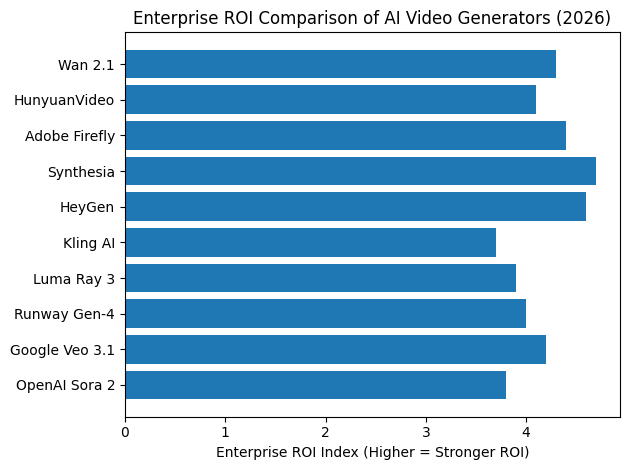
Corporate ROI
High
Context dependent
Why Synthesia Is a Top AI Video Generator for 2026
From an industry perspective, Synthesia earns its place among the top AI video generators by prioritizing what enterprises value most: efficiency, consistency, scalability, and compliance. While it does not aim to compete with cinematic AI tools, it excels where business impact matters most.
For global organizations seeking to standardize training, reduce production costs, and deliver localized video content quickly, Synthesia remains one of the most reliable and future-ready AI video platforms in 2026.
8. Pika Labs


Pika Labs 2.1 and Pika Turbo, developed by Pika Labs, are widely recognized as some of the fastest and most creator-friendly AI video tools available for 2026. The platform is especially popular among social media influencers, content creators, and marketing teams that value speed, creativity, and visual style over strict photorealism.
Creator-First Design and Social Media Focus
Pika Labs is built with modern content creators in mind. Its tools are optimized for short, vertical videos that perform well on mobile-first platforms. Rather than focusing on cinematic realism, Pika emphasizes bold visuals, expressive motion, and eye-catching styles that align with social media trends.
This design philosophy makes Pika an ideal choice for creators producing daily content, brand collaborations, and fast-moving campaigns where relevance and timing are critical.
Stylized Visual Effects and Creative Flexibility
One of the key reasons Pika ranks among the top AI video generators for 2026 is its wide range of stylized effects. Creators can experiment with animation styles such as anime-inspired visuals, 3D cartoon effects, and artistic motion sequences.
Features like scene inpainting allow users to modify parts of a video without regenerating the entire clip, while motion editing tools enable exaggerated or playful movements that stand out in crowded social feeds. This flexibility supports experimentation and creative storytelling without technical complexity.
Speed and Turbo Rendering Performance
Pika Turbo is designed for extreme speed. It allows creators to generate social-ready video clips in a matter of seconds, making it one of the fastest AI video tools on the market.
This rapid turnaround is especially valuable for trend-based content, time-sensitive promotions, and creative testing. Instead of waiting minutes or hours, users can iterate quickly and publish content while trends are still active.
Rendering Speed Performance Table
Performance Metric
Typical Result
Short clip render time
Under 30 seconds
Queue stability
High
Iteration speed
Very fast
Social platform readiness
Optimized
These performance characteristics explain why Pika is often chosen for high-frequency content production.
Simple Interface and Low Learning Curve
Another major strength of Pika Labs is its intuitive and playful interface. The platform is designed so that even beginners can create visually appealing videos without prior editing or production experience.
This low barrier to entry makes Pika attractive not only to influencers, but also to small businesses and marketing teams that want to produce creative content without investing in complex tools or training.
Use Cases and Content Scenarios
Pika Labs is commonly used for creative experiments, short-form advertisements, animated social posts, and trend-driven content. Its tools are well suited for environments where visual impact and speed matter more than precise physical accuracy or long-form storytelling.
This makes it a strong complement to more cinematic AI video tools rather than a direct replacement.
Capability Comparison Matrix
Capability Area
Pika Labs 2.1 and Turbo
Cinematic AI Video Tools
Rendering speed
Extremely fast
Moderate to slow
Stylized visuals
Very strong
Limited
Ease of use
High
Moderate
Photorealism
Basic
Advanced
Best use case
Social and trend content
Film and narrative
Why Pika Labs Is a Top AI Video Generator for 2026
From an industry perspective, Pika Labs 2.1 and Pika Turbo earn their place among the top AI video generators by excelling in speed, creativity, and accessibility. The platform empowers creators to react instantly to trends and produce engaging visuals without technical overhead.
For influencers, social media marketers, and creative teams that prioritize fast output and bold aesthetics, Pika Labs remains one of the most practical and effective AI video solutions heading into 2026.
9. Adobe Firefly Video Model


Adobe Firefly Video Model, developed by Adobe, is positioned as one of the most trusted and enterprise-ready AI video generators for 2026. It is designed primarily for brands, agencies, and professional editors who require legal certainty, creative control, and seamless integration with established post-production workflows.
Commercial Safety and Brand Trust
One of the strongest reasons Adobe Firefly ranks among the top AI video generators for 2026 is its commercially safe foundation. The model is trained only on licensed content and public-domain material. This approach removes legal uncertainty around copyright and usage rights, which is a major concern for global brands and regulated industries.
Because of this guarantee, Firefly is often the preferred choice for marketing teams, advertising agencies, and enterprises that cannot risk legal exposure when deploying AI-generated video assets in paid campaigns.
Deep Integration with Professional Editing Tools
Firefly Video Model is tightly integrated into Adobe’s Creative Cloud ecosystem. It works directly with industry-standard tools such as Premiere Pro and After Effects, allowing editors to use AI-generated clips as part of their normal editing and compositing workflows.
This integration eliminates the friction of exporting and re-importing assets between platforms. Editors can generate, refine, and polish video content within the same environment they already use for professional production.
Generative Video Editing Capabilities
Firefly introduces advanced AI-assisted video editing features that focus on enhancement rather than full automation. One of its most valuable tools is Generative Fill for video, which allows creators to modify or extend parts of a scene while maintaining visual continuity.
This is especially useful for fixing shots, removing unwanted elements, or adding visual details without reshooting footage. The AI respects the original scene structure, lighting, and composition, making edits appear natural and consistent.
Style Matching and Visual Consistency
Another defining strength of Firefly is its ability to match the style and structure of uploaded reference images. This allows AI-generated video elements to align perfectly with existing campaign visuals, brand guidelines, or creative directions.
For marketing teams managing large campaigns across multiple channels, this ensures that all AI-generated assets remain visually consistent with previously approved designs and footage.
Style Consistency Capability Table
Feature
Professional Benefit
Reference image matching
Brand-aligned visuals
Style replication
Campaign consistency
Scene-aware generation
Natural integration
Visual uniformity
Reduced manual correction
Director-Guided Controls and Camera Precision
Firefly emphasizes creative guidance rather than fully automated generation. Its director-guided prompting system allows users to control how the AI interprets instructions, resulting in more predictable outputs.
Professional camera controls, such as shot size and camera angle selection, further enhance creative precision. These controls align closely with traditional filmmaking and editing practices, making Firefly intuitive for experienced editors.
Current Limitations and Practical Trade-Offs
While Firefly Video Model currently focuses on shorter clips, typically up to five seconds, this limitation aligns with its intended role as a post-production enhancement tool rather than a standalone cinematic generator.
Although its visual fidelity may not yet match high-end cinematic models, professionals often prioritize Firefly for its reliability, legal safety, and compatibility with existing workflows.
Capability Comparison Matrix
Capability Area
Adobe Firefly Video Model
Cinematic AI Video Tools
Commercial safety
Guaranteed
Uncertain
Creative Cloud integration
Deep and native
Limited
Clip duration
Short enhancements
Long-form capable
Creative control
High
Variable
Brand suitability
Enterprise-grade
Mixed
Why Adobe Firefly Is a Top AI Video Generator for 2026
From an industry perspective, Adobe Firefly Video Model earns its place among the top AI video generators by addressing the most critical needs of professional creators and brands. It focuses on trust, consistency, and workflow integration rather than experimental visuals.
For organizations that require legally safe AI video content, precise creative control, and seamless collaboration within established editing environments, Adobe Firefly stands out as one of the most practical and future-proof AI video solutions in 2026.
10. HunyuanVideo

The open-source AI video generation ecosystem has advanced rapidly heading into 2026, offering high-performance video models to creators and organizations that operate their own computing infrastructure. Solutions such as HunyuanVideo from Tencent and Wan 2.1 from Alibaba have emerged as leading examples of how open models can now compete with proprietary platforms. These tools are increasingly viewed as top AI video generators for technically capable teams that prioritize flexibility, customization, and cost control.
Foundation-Level Performance with Self-Hosted Control
HunyuanVideo and Wan 2.1 represent a new generation of open models that deliver foundation-model quality without locking users into closed platforms. By running on private or cloud-based infrastructure, organizations gain full control over data, security, and workflows.
HunyuanVideo demonstrates strong physical realism, producing short videos with believable motion, object interaction, and scene continuity. This makes it suitable for research teams, studios, and developers who need transparent systems they can inspect, modify, and extend.
Speed and Hardware Efficiency Advantages
Wan 2.1 stands out for its performance efficiency. It is optimized to generate videos significantly faster than many competing models while maintaining stable output quality. Its lightweight variant can operate on relatively modest hardware, lowering the barrier to entry for advanced video synthesis.
This efficiency makes open-source video generation accessible to startups, independent creators, and research labs that do not have access to large enterprise-grade GPU clusters.
Performance and Hardware Capability Table
Model
Typical Output
Speed Profile
Minimum Hardware
HunyuanVideo
15-second video, 720p
Moderate
Mid-range GPU
Wan 2.1
Short to mid clips
Very fast
8 GB VRAM (light mode)
This balance of speed and hardware efficiency is a major reason these models are gaining traction in 2026.
Custom Training and Style Control with Fine-Tuning
A defining advantage of the open-source ecosystem is support for LoRA fine-tuning. This allows creators to train models on their own video datasets, enabling highly specific visual styles, character appearances, or motion patterns.
For agencies, studios, or brands with proprietary footage, this capability unlocks levels of customization that closed platforms typically do not offer. It also enables experimentation and innovation without platform restrictions.
Expanding Open-Source Innovation Landscape
Beyond HunyuanVideo and Wan 2.1, several other open models are contributing to the rapid growth of this ecosystem. Projects such as Mochi 1 from Genmo and LTXVideo from Lightricks are helping to democratize advanced video synthesis.
These tools are increasingly usable on consumer-grade GPUs, allowing individual creators and small teams to access capabilities that were previously limited to large organizations.
Accessibility and Ecosystem Comparison Matrix
Capability Area
Open-Source Video Models
Closed AI Video Platforms
Infrastructure control
Full user control
Platform managed
Fine-tuning flexibility
Very high
Limited
Hardware requirements
Scalable and flexible
Often fixed
Cost structure
Infrastructure-based
Subscription-based
Transparency and research use
Strong
Restricted
Why the Open-Source Ecosystem Is a Top Choice for 2026
From an industry perspective, the open-source AI video ecosystem earns its place among the top AI video generators by offering freedom, performance, and deep customization. While these tools require more technical expertise than turnkey platforms, they reward users with unmatched flexibility and long-term cost efficiency.
For developers, research teams, studios, and advanced creators who want control over their models and workflows, open-source solutions such as HunyuanVideo and Wan 2.1 represent a powerful and future-ready alternative in the AI video landscape of 2026.
The Economic and Industrial Framework of AI Video in 2026
The rapid rise of AI video generators in 2026 is closely tied to broader shifts in artificial intelligence, cloud computing, and enterprise digital transformation. Industry analysts observe that AI video is no longer a niche creative technology but a core production tool embedded across marketing, media, education, and enterprise communications. This structural shift explains why AI video platforms now feature prominently in any discussion of the top AI video generators for 2026.
Foundation of Growth in Core AI Technologies
At the heart of the AI video boom is the widespread adoption of transformer-based AI architectures. These models became the dominant technical foundation for generative systems in 2025, accounting for more than 40 percent of total AI-related revenue. Their ability to understand context, sequence, and visual continuity has enabled AI video tools to move from experimental outputs to production-ready content.
This technical maturity directly supports the growing capabilities seen in leading AI video platforms, including longer clip generation, better motion consistency, and higher visual realism. As a result, businesses are increasingly confident in deploying AI video at scale.
Regional Market Leadership and Global Expansion
North America continues to lead the global AI video economy. The region generated several billion dollars in AI video revenue in the mid-2020s, driven largely by enterprise adoption and strong demand from marketing, advertising, and media companies. Within this region, the United States stands out as the primary growth engine, with long-term forecasts projecting exponential expansion through the early 2030s.
This regional dominance is reinforced by deep venture capital investment, advanced cloud infrastructure, and early enterprise adoption of generative technologies. As these systems mature, similar growth patterns are emerging across Europe and Asia-Pacific, but North America remains the benchmark market.
Return on Investment and Executive Adoption
One of the most important reasons AI video generators are gaining traction in 2026 is their measurable financial impact. Industry data shows that generative AI technologies deliver an average return of more than three times the investment made. For executive leadership teams, this level of return transforms AI video from an experimental cost center into a strategic growth lever.
C-level executives increasingly view AI video as a way to reduce production costs, shorten content timelines, and dramatically increase output volume without sacrificing quality. This economic logic underpins the rapid adoption of top AI video generators across large organizations.
AI Video Market Growth Overview Table
Market Segment
Recent Market Size
Long-Term Projection
Growth Trend
Global generative AI market
USD 22.21 billion
USD 324.68 billion
Very high growth
Global AI video market
USD 11.20 billion
USD 246.03 billion
Rapid expansion
United States AI video market
USD 3.10 billion
USD 64.68 billion
Strong acceleration
Enterprise generative AI
USD 4.10 billion
USD 67.40 billion
Consistent growth
This growth trajectory explains why AI video platforms are evolving so quickly and competing aggressively on quality, speed, and enterprise readiness.
Enterprise and B2B as the Primary Growth Engine
The enterprise segment has emerged as the dominant force behind AI video adoption. Business-to-business use cases account for more than two-thirds of total market usage, far exceeding consumer experimentation. Companies are deploying AI video tools for branding, internal communications, training, product launches, and customer engagement.
Unlike consumer creators, enterprises prioritize reliability, scalability, compliance, and brand consistency. This has directly influenced the design of many top AI video generators for 2026, pushing vendors to focus on workflow integration, collaboration features, and predictable outputs.
Industry Adoption and Use Case Concentration
Adoption is especially strong in media, advertising, and e-commerce sectors. These industries rely heavily on visual storytelling and face constant pressure to produce high volumes of customized video content. AI video generators enable them to meet this demand without the cost and delay of traditional production pipelines.
Systems developed by companies such as Runway ML and OpenAI have become reference points in this transition, demonstrating how AI video can scale creative output while maintaining acceptable quality standards for commercial use.
Economic Drivers Behind the Top AI Video Generators for 2026
From an industry-wide perspective, the rise of the top AI video generators in 2026 is not driven by creativity alone. It is supported by strong economic fundamentals, clear ROI, enterprise demand, and rapid advances in core AI technologies.
As organizations continue to prioritize efficiency, speed, and global scalability, AI video generators are positioned as essential infrastructure rather than optional creative tools. This economic and industrial framework explains why competition in AI video is intensifying and why the sector is expected to remain one of the fastest-growing segments in the broader AI economy throughout 2026 and beyond.
Technical Paradigms: From Frames to Reasoning
The technical foundation behind the top AI video generators for 2026 has shifted dramatically from earlier generations of video synthesis. Instead of relying on basic frame-by-frame prediction, modern systems now focus on deeper scene understanding, logical consistency, and multimodal intelligence. This transformation explains why today’s leading platforms deliver higher realism, longer sequences, and more reliable outputs across professional use cases.
From Frame Prediction to Spatiotemporal Reasoning
Earlier AI video models focused primarily on predicting the next visual frame based on pixel patterns. In contrast, the 2026 generation is defined by spatiotemporal reasoning. These models understand how objects exist and move through space and time rather than treating video as a sequence of unrelated images.
This approach allows AI systems to maintain consistent character motion, realistic physics, and stable lighting throughout an entire clip. As a result, scenes feel intentional and coherent, which is essential for storytelling, marketing, and enterprise communication.
Advanced Video Compression and Hardware Efficiency
A major technical breakthrough enabling this progress is the use of three-dimensional variational autoencoders. These systems compress video data far more efficiently than previous methods, in some cases reducing data requirements by more than one hundred times.
This efficiency allows high-resolution video generation to run on consumer-grade hardware rather than requiring specialized data centers. For creators and businesses, this means faster iteration, lower infrastructure costs, and broader accessibility to advanced AI video tools.
Video Compression and Capability Table
Technical Capability
Previous Models
2026 Generation Models
Compression efficiency
Low to moderate
Up to 192x improvement
Hardware requirements
High-end GPUs
Consumer-grade GPUs
Resolution stability
Limited
High and consistent
Long-form reliability
Weak
Strong
Inference-Capable Models and Self-Evaluation
Another defining feature of top AI video generators for 2026 is inference capability. Instead of producing content blindly, these systems evaluate their own outputs as they generate video. This self-checking process ensures that scenes make logical sense before final rendering.
This paradigm was pioneered by platforms such as Ray 3 from Luma AI and Model O1 from Kling AI. These systems apply internal reasoning steps to validate physics, character movement, and environmental consistency across an entire sequence.
By reasoning through each scene, AI video generators reduce visual errors, unnatural motion, and lighting inconsistencies that previously limited professional adoption.
Consistency Through Internal Reasoning
The reasoning layer used by modern AI video models ensures that objects obey physical rules, characters maintain believable movement patterns, and lighting remains stable across shots. This internal validation process is especially important for longer videos, where small errors can accumulate and break immersion.
For professional creators, this consistency translates into fewer revisions and less manual correction during post-production.
Native Audio and Multimodal Integration
Another major technical shift defining the top AI video generators for 2026 is native audio generation. Leading platforms now generate visuals, dialogue, ambient sound, and effects together in a single process rather than relying on separate tools.
Systems such as Veo 3 from Google and Sora 2 from OpenAI produce synchronized speech, environmental sound, and motion. This integration closes one of the biggest gaps in earlier AI video workflows, where audio had to be added manually.
Multimodal Capability Comparison Matrix
Capability Area
Earlier AI Video Tools
Top AI Video Generators 2026
Visual generation
Strong
Very strong
Audio generation
External tools required
Native and synchronized
Lip-sync accuracy
Inconsistent
High
Language flexibility
Limited
Multilingual
Interactive potential
Low
High
Enabling Digital Twins and Interactive Avatars
The combination of spatiotemporal reasoning and native audio has unlocked new use cases such as digital twins and interactive avatars. These systems can maintain character identity, voice alignment, and lip-sync across multiple languages and complex camera movements.
This capability is increasingly important for enterprise training, customer support, education, and virtual presenters, where realism and consistency directly impact trust and engagement.
Why These Technical Paradigms Define the Best AI Video Tools in 2026
From an industry perspective, the rise of the top AI video generators for 2026 is driven by these technical advances rather than surface-level visual improvements alone. Spatiotemporal reasoning, inference-based validation, efficient compression, and multimodal generation together form the backbone of modern AI video systems.
These paradigms explain why AI video tools are now reliable enough for enterprise deployment, cinematic experimentation, and global-scale communication. As these technologies mature further, they will continue to separate leading platforms from experimental tools in the evolving AI video landscape.
Quantitative Performance and Benchmarking Analysis
As AI video generation matures in 2026, visual quality alone is no longer enough to differentiate platforms. Professional users now prioritize measurable performance indicators such as rendering speed, queue stability, output reliability, and how accurately a model follows creative instructions. These quantitative benchmarks play a critical role in determining which platforms are recognized among the top AI video generators for 2026.
Render Speed and Queue Reliability
Late-2025 performance data shows clear differences in how leading AI video platforms manage processing demand. Some tools focus on maximum realism at the cost of speed, while others are optimized for rapid iteration and predictable throughput.
For example, Sora 2 Pro from OpenAI delivers high-end cinematic results but often experiences longer wait times during peak usage. In contrast, Turbo variants from platforms like Runway are built to maintain fast and consistent processing, which is critical for agencies and creative teams working under tight deadlines.
Render and Queue Performance Table
Platform
Average Queue Time
Average Render Time
Typical Clip Length
Resolution
Runway Gen-3 Alpha Turbo
1.8 minutes
1.7 minutes
20 seconds
1080p
Sora 2 Pro
3.2 minutes
2.1 minutes
20 seconds
1080p
Luma Dream Machine Ray 3
Under 2.0 minutes
Fast
5 to 10 seconds
4K
Kling AI 2.1 Pro
Slow, 5 to 30 minutes
Variable
10 seconds to 3 minutes
4K
Google Veo 3.1 Fast
Near instant
Seconds
8 seconds and above
4K
This comparison highlights how different tools balance quality, speed, and scalability depending on their intended audience.
Visual Fidelity and Prompt Accuracy
Beyond speed, professional users evaluate AI video platforms based on how accurately they translate written prompts into visual output. This includes maintaining character appearance, lighting intent, camera perspective, and product details without distortion.
Standardized benchmarking tests using complex prompts reveal a tiered performance structure across the leading platforms. These tests rate models on a five-point scale for visual realism and prompt adherence.
Visual Fidelity and Prompt Adherence Table
AI Video Model
Visual Fidelity Score
Prompt Adherence Score
Primary Strength
Sora 2 Pro
4.75 out of 5
4.50 out of 5
Human emotion and lighting realism
Google Veo 3.1
4.75 out of 5
4.80 out of 5
Context awareness and native audio
Kling AI 2.5 Turbo
4.25 out of 5
4.00 out of 5
Motion stability and character consistency
Runway Gen-4
3.75 out of 5
3.50 out of 5
Professional editing controls
Luma Ray 3
4.00 out of 5
3.00 out of 5
Physics accuracy and EXR export
Wan 2.5 Open Source
3.75 out of 5
3.50 out of 5
Speed and deployment flexibility
These results show why some platforms are preferred for cinematic storytelling, while others excel in speed, experimentation, or enterprise workflows.
Common Technical Limitations Across Platforms
Despite rapid progress, even the top AI video generators for 2026 still face shared technical challenges. One recurring issue is the distortion of rigid objects such as shoes, chairs, or mechanical parts, especially during fast motion or camera changes.
Another persistent limitation is object permanence. Items such as props, logos, or background elements may subtly change shape, disappear, or shift position between frames. While platforms like Sora 2 and Veo 3 have made notable improvements in physical realism, complete consistency remains difficult across longer sequences.
Brand-specific details, including logos and product markings, also require careful prompting and validation, as minor inaccuracies can still occur in complex scenes.
What These Benchmarks Mean for Choosing the Best AI Video Generator
From an industry perspective, benchmarking data has become essential when selecting among the top AI video generators for 2026. Teams focused on cinematic quality may accept longer queue times, while agencies and social content teams often prioritize speed and reliability.
These quantitative insights allow organizations to align platform choice with real-world production needs, whether that means fast iteration, precise brand control, or high-end visual storytelling. As benchmarking continues to evolve, performance metrics will remain a key factor separating experimental tools from production-ready AI video platforms.
Pricing Tiers and Enterprise Subscription Models
As AI video generation moves into mainstream enterprise adoption, pricing models have become more structured and diversified. In 2026, the top AI video generators no longer rely on a single subscription format. Instead, they operate within a layered monetization ecosystem that supports individual creators, growing teams, and large enterprises with high-volume production needs.
Evolution from Simple Subscriptions to Tiered Access
Early AI video tools were often priced with flat monthly subscriptions. By 2026, most leading platforms have shifted to tiered pricing that reflects usage intensity, resolution, rendering speed, and access to advanced features. These tiers typically range from entry-level creator plans to fully customized enterprise licenses.
This evolution allows users to align costs with actual production requirements. Small teams can experiment affordably, while large organizations can scale video output without renegotiating contracts for every project.
Overview of Pricing Across Leading AI Video Generators
The table below illustrates how pricing varies among several top AI video generators, highlighting starting plans and enterprise-level options.
AI Video Generator Pricing Comparison Table
Platform
Entry-Level Monthly Price
Top Tier or Enterprise Option
Usage Structure
HeyGen
29 USD
Custom enterprise pricing
Limited videos per month
Runway
15 USD
95 USD unlimited plan
Credits per second
OpenAI Sora 2
20 USD
Pro tier and higher
Integrated within ChatGPT
Kling AI
6.99 USD
180 USD ultra tier
Monthly credit allocation
Adobe Firefly
10 USD
Creative Cloud enterprise
Unlimited with paid plans
InVideo
28 USD
899 USD teams plan
Minutes-based usage
Pictory
19 USD
99 USD teams plan
Script and URL-based videos
Google Veo
14 USD
20 USD pro tier
Workspace-based access
This range demonstrates how platforms differentiate themselves by usage model rather than price alone.
Credit Systems and Usage-Based Billing
Many AI video generators rely on credit-based systems, where users consume credits based on video length, resolution, or model complexity. Credits may be measured per second, per minute, or per render.
This structure provides transparency for professional users who need to forecast production costs. However, it also requires careful planning, especially for teams producing long-form or high-resolution content.
Unlimited and High-Volume Enterprise Plans
Enterprise customers increasingly prefer unlimited or relaxed usage plans. These tiers allow organizations to produce large volumes of video without tracking individual credits for each render. In exchange, platforms may apply fair-use policies such as queue prioritization limits or slower rendering during peak demand.
Despite these constraints, unlimited plans remain attractive for marketing departments, training teams, and media organizations that need predictable budgeting and consistent output.
Enterprise Plan Characteristics Matrix
Feature
Standard Plans
Enterprise Plans
Monthly limits
Strict
Flexible or unlimited
Queue priority
Standard
Managed or throttled
Collaboration tools
Basic
Advanced
Brand and compliance controls
Limited
Enterprise-grade
Support and SLAs
Standard
Dedicated
Developer Access and API Monetization
Beyond subscriptions, API access has become a significant revenue stream for AI video providers. Developers and technology partners use APIs to integrate video generation directly into applications, platforms, and automated workflows.
Some providers offer prepaid compute or resource packages tailored for developers. These packages enable large-scale, programmatic video generation while maintaining predictable infrastructure costs. This model is especially important for SaaS platforms, marketplaces, and AI-powered content engines.
What Pricing Models Reveal About the AI Video Market
From an industry perspective, the pricing strategies of the top AI video generators for 2026 reflect a clear shift toward enterprise readiness and scalability. Flexible tiers, usage-based billing, unlimited plans, and developer APIs indicate that AI video is now treated as core production infrastructure rather than an experimental tool.
These pricing frameworks allow organizations of all sizes to participate in the AI video economy, while giving platform providers sustainable paths to monetize high computational demand. As competition increases, pricing transparency and value alignment will continue to play a major role in platform selection.
Industrial Adoption Case Studies
The real-world value of the top AI video generators for 2026 is best understood through how large organizations apply them at scale. Across industries, two distinct adoption strategies have emerged. Global marketing groups tend to focus on platform orchestration, while film studios experiment with proprietary training and controlled use cases. These contrasting approaches highlight both the strengths and limitations of AI video in professional environments.
Platform-Oriented Adoption by Global Agencies
Large agencies increasingly treat AI video as shared infrastructure rather than a standalone creative tool. Their goal is to connect multiple AI systems into a single operating layer that supports speed, personalization, and scale across global campaigns.
The WPP and Google Strategic Expansion
One of the most visible examples of enterprise-level adoption is the partnership between WPP and Google. In late 2025, the two organizations expanded their collaboration through a multi-year agreement that included a substantial financial commitment toward AI technologies.
Under this partnership, WPP integrated advanced AI video and multimodal systems into its internal marketing platform. This allowed creative teams to generate, adapt, and distribute video assets directly within existing workflows rather than relying on external production cycles.
Operational Impact of the WPP–Google Model
The results of this approach demonstrate why AI video generators are becoming core enterprise tools rather than optional enhancements.
Enterprise Performance Impact Table
Operational Metric
Measured Outcome
Asset creation speed
2.5 times faster
Campaign workflow efficiency
Up to 70 percent improvement
Time-to-market
Reduced from months to days
These improvements enabled WPP to move beyond basic automation. Instead of simply producing content faster, teams could deliver highly personalized video assets at scale, adjusting messaging in near real time for different audiences, regions, and platforms.
Strategic Implications for Enterprise Marketing
This case shows how AI video is being used to support continuous personalization rather than one-time campaigns. By embedding AI video directly into planning and execution systems, agencies can manage millions of variations of creative assets without proportionally increasing production costs.
Proprietary Training Challenges in Film Studios
Hollywood studios have taken a different path, exploring whether proprietary datasets can be used to train custom AI video models for filmmaking. While this approach offers creative control, it has also revealed significant limitations.
The Lionsgate and Runway Experiment
In contrast to the agency model, Lionsgate entered a collaboration with Runway to train an AI system using its internal film library. The dataset included thousands of titles, such as John Wick and The Hunger Games.
The goal was to develop a proprietary model capable of supporting high-end film production. However, industry reports later indicated that the dataset size was not sufficient to achieve the same level of performance as models trained on much larger and more diverse video sources.
Key Challenges Identified
Several structural issues emerged during this effort. A film catalog, even a large one, lacks the diversity required to train general-purpose video models. Legal complexity around actor rights, likeness usage, and downstream distribution further slowed progress.
In addition, no single AI video model was able to handle every aspect of professional filmmaking. Dialogue generation, visual composition, editing logic, and narrative pacing still required different specialized systems.
Studio-Level Adaptation Strategy
As a result, Lionsgate adjusted its approach. Instead of relying on a single proprietary model, the studio shifted toward an ecosystem strategy. AI video tools are now applied to narrowly defined tasks such as background refinement, set extensions, and creating digital replicas of specific environments.
This targeted use of AI video is currently seen as the most practical application in high-end filmmaking, where quality, rights management, and creative oversight remain critical.
Comparative Adoption Strategy Matrix
Adoption Dimension
Global Agencies
Film Studios
Primary goal
Scale and personalization
Creative control
AI model strategy
Platform orchestration
Task-specific models
Dataset requirements
Broad and external
Limited and internal
Risk profile
Lower
Higher
Current effectiveness
High
Selective
What These Case Studies Reveal About AI Video in 2026
From an industry perspective, these contrasting examples explain how the top AI video generators for 2026 are being adopted in practice. Enterprise marketers benefit most from integrated platforms that emphasize speed, flexibility, and personalization. Film studios, on the other hand, achieve better results by applying AI video in focused, supportive roles rather than full-scale replacement of traditional production.
Together, these case studies show that AI video success in 2026 depends less on hype and more on aligning technology capabilities with realistic operational goals.
The Legal and Regulatory Landscape for 2026
As AI video generation becomes mainstream, legal and regulatory frameworks have evolved rapidly to address ownership, training data usage, and misuse risks. For organizations evaluating the top AI video generators for 2026, understanding this legal landscape is as important as comparing features or performance. Regulatory clarity now directly influences platform design, enterprise adoption, and long-term risk management.
Copyright Ownership and the Role of Human Creativity
Regulatory guidance from the U.S. Copyright Office has made it clear that copyright protection applies only to works created by humans. Fully automated AI-generated videos, created without meaningful human direction, are not eligible for copyright registration.
However, this does not exclude AI-assisted video from protection entirely. When a human plays a clear creative role, such as guiding prompts, selecting outputs, editing scenes, or arranging generated clips into a final work, those human contributions can be protected. In practice, this means creators and companies retain rights over their creative decisions, even when AI tools are heavily involved.
This distinction is critical for businesses using AI video generators for branding, advertising, and original content creation, as it reinforces the need for human oversight in production workflows.
Copyright Eligibility Overview Table
Creation Element
Copyright Eligibility
Fully AI-generated without guidance
Not eligible
Human-guided prompting and editing
Eligible
Creative selection and arrangement
Eligible
Post-production modifications by humans
Eligible
Context-Dependent Fair Use in AI Training
Another major regulatory focus is how AI video models are trained. The Copyright Office has emphasized that fair use determinations for training data are highly context-specific rather than automatic.
Training large models on diverse datasets is often viewed as transformative, especially when the model learns general patterns rather than reproducing specific works. However, problems arise when a system can recreate recognizable or near-identical copies of its training material.
The potential impact on the original market is a key factor. If AI video outputs directly substitute for licensed content, this weighs against fair use. As a result, many top AI video generators for 2026 now prioritize filtering, dataset curation, and output controls to reduce legal exposure.
Key Fair Use Considerations Matrix
Fair Use Factor
Regulatory Interpretation
Transformative purpose
Often favors large-scale training
Risk of market substitution
Weighs against fair use
Output similarity to source data
High risk if near-verbatim
Licensing availability
Encouraged but not mandated
Licensing Models and Market Development
Rather than enforcing mandatory licensing schemes, regulators have signaled support for allowing a licensing market to develop naturally. This approach gives rights holders, platforms, and creators flexibility to negotiate terms that reflect real-world value and use cases.
As a result, some AI video platforms emphasize licensed or public-domain training data, while others offer enterprise assurances around content safety. This divergence is now a major differentiator among leading AI video generators.
Regulation of Deepfakes and Synthetic Media Abuse
The misuse of AI-generated video has also prompted direct legislative action. In 2025, U.S. lawmakers introduced strict penalties targeting non-consensual synthetic media, particularly AI-generated intimate imagery. This legislation reflects growing concern about identity misuse, harassment, and misinformation.
At the same time, leading technology providers have implemented technical safeguards to increase transparency. Watermarking and content authenticity standards allow platforms, publishers, and audiences to identify AI-generated media more easily.
Industry Adoption of Transparency Standards
Major AI video providers now integrate watermarking and provenance systems to maintain trust. Technologies such as SynthID from Google and C2PA-based metadata help identify whether content is synthetic, edited, or generated by AI.
These measures are especially important for news organizations, advertisers, and enterprises, where reputational risk is high and authenticity is critical.
Trust and Safety Measures Table
Safeguard
Purpose
AI watermarking
Identify synthetic media
Content provenance metadata
Track edits and origin
Policy enforcement tools
Prevent misuse
Regulatory alignment
Support enterprise adoption
Why Legal Readiness Matters for AI Video Platforms in 2026
From an industry perspective, the legal environment is now a core factor in determining which platforms qualify among the top AI video generators for 2026. Tools that offer clear copyright guidance, transparent training practices, and built-in safeguards are far more attractive to enterprises than those focused solely on visual quality.
As regulation continues to evolve, AI video platforms that align early with legal standards will gain trust, reduce risk, and position themselves as long-term partners for professional content creation.
Infrastructure, Compute, and Environmental Considerations
The rapid advancement of the top AI video generators for 2026 is powered by equally significant changes in computing infrastructure, hardware investment, and system efficiency. Behind every improvement in video quality, speed, and realism lies a massive expansion in model size, compute capacity, and global infrastructure spending. Understanding these foundations helps explain why only a limited number of platforms can compete at the highest level.
Explosive Growth in Model Scale and Compute Power
AI video performance in 2026 is driven by aggressive scaling strategies. Leading models are increasing in size at a rapid pace, with parameter counts roughly doubling year over year. At the same time, the amount of compute required to train and run these systems is growing more than four times annually.
To support this demand, global hyperscale cloud providers have committed hundreds of billions of dollars in infrastructure spending across 2025 and 2026. These investments are essential for training large video models, supporting real-time inference, and delivering reliable performance to enterprise customers.
Compute Growth and Investment Overview Table
Infrastructure Metric
Current Trend
Model parameter growth
Approximately double each year
Annual compute scaling
More than four times year over year
Hyperscaler capital investment
Over 300 billion USD
Primary beneficiaries
Enterprise AI platforms
This scale of investment explains why advanced AI video generation is increasingly dominated by well-funded platforms.
Cloud-Based Processing Versus Local Generation
Cloud infrastructure remains the dominant deployment model for AI video generation. More than half of the market relies on cloud-based systems because they offer flexibility, scalability, and predictable costs for business users. Enterprises can generate video content without managing their own hardware, which simplifies adoption.
However, there is a growing shift toward local or hybrid processing models. Privacy-sensitive organizations, research teams, and open-source users increasingly prefer local generation to maintain control over data and reduce long-term costs.
Hardware Efficiency for Local AI Video Generation
Some modern AI video models are optimized to run efficiently on local GPUs. For example, systems developed by Alibaba are designed to operate on relatively modest hardware configurations. These models can function effectively with mid-range GPU memory capacities, making local deployment more practical.
Professional-grade GPUs such as the NVIDIA RTX A6000 have become popular choices for teams running AI video workloads on-premise. This trend is helping democratize access to advanced video generation beyond large cloud providers.
Local Versus Cloud Deployment Comparison Matrix
Deployment Aspect
Cloud-Based Platforms
Local Generation
Scalability
Very high
Moderate
Upfront hardware cost
Low
High
Data privacy control
Limited
Full control
Operational complexity
Low
Higher
Ideal users
Enterprises and agencies
Developers and researchers
Optimizing GPU Orchestration and Cost Control
As AI video workloads grow, organizations are focusing on smarter resource orchestration rather than raw compute expansion alone. Efficient scheduling of GPU workloads, dynamic allocation of resources, and intelligent load balancing now play a critical role in controlling costs.
The most effective AI video platforms optimize inference workflows so that performance gains do not come with proportionally higher energy or infrastructure expenses. This balance is especially important for high-volume video generation.
Capital Markets and Strategic Infrastructure Investment
Private equity firms and alternative investors have become major players in AI infrastructure funding. Large-scale investments signal confidence that AI video and generative systems will remain long-term growth markets.
One notable example is the significant investment led by SoftBank into OpenAI in 2025. Deals of this magnitude highlight how critical infrastructure ownership and compute access have become to maintaining leadership in AI video generation.
Energy Efficiency and the Rise of Agentic Systems
Another important driver of infrastructure evolution is the emergence of agentic AI systems. These systems are capable of managing complex tasks autonomously, such as workflow optimization, financial analysis, or supply chain coordination. As these agents become more common, the demand for energy-efficient inference hardware continues to grow.
For AI video platforms, this means designing models that deliver high-quality outputs while minimizing energy consumption. Sustainability is no longer a secondary concern but a core requirement for scalable, long-term deployment.
Why Infrastructure Determines the Best AI Video Platforms in 2026
From an industry perspective, infrastructure is one of the strongest differentiators among the top AI video generators for 2026. Platforms with access to scalable compute, optimized hardware, and efficient orchestration can deliver faster results, higher quality, and more reliable service.
As compute costs rise and environmental considerations gain importance, AI video providers that balance performance with efficiency will be best positioned to lead the market in the years ahead.
Strategic Outlook for the AI Video Industry
The AI video generation industry in 2026 is entering a more mature and professional phase. After several years of experimentation, the market has moved beyond disconnected pilot projects and isolated tools. Organizations are now adopting AI video as a core creative and operational capability. This shift explains why the top AI video generators for 2026 are defined less by novelty and more by reliability, integration, and measurable business impact.
From Experimentation to Professional Systems
Industry observers describe 2026 as a period of “flight to quality.” Companies are prioritizing tools that deliver consistent results, predictable workflows, and enterprise readiness. AI video is no longer treated as a side experiment but as an essential production layer that supports marketing, training, communications, and localization at scale.
This transition marks the beginning of orchestrated systems, where multiple AI models work together inside unified platforms. In these environments, AI functions as a long-term creative partner rather than a one-off automation tool.
Reasoning-Based Models Replace Simple Prediction
One of the most important strategic shifts shaping the top AI video generators for 2026 is the move from frame prediction to reasoning-based generation. Advanced models now evaluate scenes logically before final output, reducing common issues such as broken physics, inconsistent lighting, or unnatural movement.
Platforms such as Ray 3 from Luma AI and Model O1 from Kling AI represent this new generation. Their ability to reason through scenes significantly improves reliability, especially for longer or more complex videos.
This capability is becoming a baseline expectation rather than a differentiator for professional users.
Ecosystem Integration Becomes a Requirement
Successful AI video adoption in 2026 depends on ecosystem thinking. Rather than relying on a single model to do everything, organizations are combining multiple specialized tools within one coordinated workflow.
This approach has been validated by both enterprise marketing groups and media organizations. Large agencies use orchestration platforms to route tasks to the best-performing models, while studios apply AI selectively to support specific production needs.
Ecosystem Strategy Comparison Matrix
Strategic Element
Isolated Tools
Integrated Ecosystems
Scalability
Limited
High
Workflow efficiency
Fragmented
Streamlined
Creative consistency
Variable
Controlled
Enterprise readiness
Low
High
Long-term ROI
Uncertain
Measurable
Commercial Safety and Legal Readiness as Competitive Advantages
Another defining factor for the top AI video generators for 2026 is commercial safety. Global brands and regulated industries require assurance that AI-generated content can be used without legal risk.
Platforms such as Firefly from Adobe and Veo from Google are gaining traction because they emphasize licensed-only training data, content transparency, and enterprise protections. These features are increasingly non-negotiable for large organizations.
As regulations evolve, tools that cannot meet legal and ethical standards are likely to be excluded from enterprise workflows.
High-Volume Business ROI Drives Market Growth
The strongest growth in AI video adoption continues to come from business-to-business use cases. Marketing automation, multilingual localization, internal training, and customer communication all benefit from AI-driven video generation.
Enterprises report strong returns on investment from these deployments, often achieving multiple times the value of their initial spend. This clear financial benefit explains why AI video budgets are expanding even in cost-conscious environments.
Enterprise ROI Impact Table
Business Area
AI Video Impact
Marketing campaigns
Faster rollout, higher personalization
Localization
Lower cost, global reach
Training and onboarding
Consistent delivery at scale
Internal communications
Reduced production time
Competitive Landscape and Market Consolidation
As the market grows toward long-term projections exceeding hundreds of billions of dollars, competitive dynamics are beginning to consolidate. A small number of foundation labs are expected to dominate core model development, while specialized platforms focus on application-specific use cases.
Foundation model leaders include OpenAI, Google, and Runway. Alongside them, application-focused leaders such as HeyGen and Synthesia continue to grow by serving well-defined enterprise needs.
Strategic Risk of Delayed Adoption
Industry analysts increasingly warn that organizations delaying AI video integration beyond 2026 face structural disadvantages. As competitors adopt faster, more scalable content production, late adopters may struggle to match speed, personalization, and cost efficiency.
In a digital economy shaped by synthetic media, competitive positioning is increasingly determined by how effectively AI video is embedded into daily operations rather than by isolated creative experiments.
Why 2026 Is a Defining Year for AI Video Strategy
From a strategic perspective, 2026 represents a turning point for the AI video industry. The focus has shifted decisively toward quality, orchestration, legal readiness, and return on investment. The top AI video generators for 2026 are those that align advanced technology with real operational needs.
Organizations that embrace these systems early and integrate them deeply into their workflows are best positioned to compete in a market defined by speed, scale, and intelligent media production.
Conclusion
The landscape of AI video generation in 2026 reflects a decisive shift from experimental tools to mission-critical creative infrastructure. What began as short, novelty-driven clips has evolved into a sophisticated ecosystem capable of supporting cinematic storytelling, enterprise marketing, global localization, education, and real-time digital interaction. The Top 10 Best AI Video Generators for 2026 represent not just the most advanced tools available today, but also the strategic direction in which visual content creation is heading.
AI Video Has Reached Professional Maturity
By 2026, AI video generators have crossed an important threshold: professional trust. Advances in spatiotemporal reasoning, inference-based validation, native audio generation, and high-resolution output have addressed many of the limitations that previously restricted adoption. Issues such as inconsistent motion, broken physics, poor lip-sync, and visual instability are no longer universal barriers but edge cases that continue to shrink with each model iteration.
As a result, AI video is now widely accepted in environments that demand reliability, including enterprise communications, regulated industries, global advertising, and high-volume content operations. This professional maturity is the defining characteristic separating the leading platforms from experimental or short-lived alternatives.
Different Tools, Different Strategic Roles
One of the clearest insights from analyzing the top AI video generators for 2026 is that no single platform dominates every use case. Instead, the market has segmented into clear categories, each serving a specific strategic role.
Cinematic and reasoning-driven models excel in realism, long-form storytelling, and complex scene logic. Enterprise-focused platforms prioritize scalability, brand consistency, multilingual output, and compliance. Creator-first tools optimize for speed, stylization, and trend responsiveness. Open-source and local models appeal to developers and studios seeking control, customization, and infrastructure independence.
This diversity is a strength rather than a weakness. Organizations that achieve the most value from AI video are those that adopt an ecosystem mindset, selecting multiple tools and orchestrating them within unified workflows rather than searching for a single all-purpose solution.
Enterprise ROI Is the Primary Growth Driver
The strongest adoption signal in 2026 comes from the business-to-business market. Enterprises are not investing in AI video for novelty; they are investing because the return on investment is measurable and repeatable. Marketing teams reduce production timelines from months to days. Localization costs drop dramatically while global reach expands. Training and onboarding content becomes consistent, scalable, and always up to date.
This economic logic explains why AI video budgets continue to grow even as scrutiny around technology spending increases. AI video generators that clearly demonstrate efficiency gains, cost reduction, and output scalability are positioned for long-term dominance.
Commercial Safety and Legal Readiness Are No Longer Optional
Another defining theme for 2026 is the growing importance of legal clarity and ethical deployment. Copyright rules, training data scrutiny, deepfake legislation, and transparency standards now directly influence platform selection.
AI video generators that offer licensed-only training, watermarking, provenance metadata, and enterprise indemnification have a clear advantage with global brands and regulated organizations. Creative quality alone is no longer sufficient. Trust, compliance, and governance have become core product features.
Platforms that fail to align with this reality face increasing friction in enterprise adoption, regardless of their technical capabilities.
Infrastructure and Efficiency Shape Competitive Advantage
Behind every leading AI video generator is a massive investment in compute, infrastructure, and optimization. The platforms that scale efficiently, manage GPU orchestration intelligently, and balance performance with energy consumption are better positioned to deliver consistent service as demand grows.
At the same time, the rise of local and hybrid generation models signals a future where control, privacy, and cost optimization matter as much as raw scale. This dual trajectory ensures that both hyperscale cloud platforms and optimized local solutions will coexist in the AI video ecosystem.
2026 as a Strategic Inflection Point
The year 2026 stands out as a strategic inflection point for AI video. Organizations that integrate AI video generators deeply into their core workflows gain compounding advantages in speed, personalization, and creative output. Those that delay adoption risk structural disadvantages that become harder to overcome over time.
AI video is no longer just a content creation tool. It is becoming a competitive capability that shapes how brands communicate, how products are launched, how teams are trained, and how stories are told at scale.
Final Perspective on the Top 10 AI Video Generators for 2026
The Top 10 Best AI Video Generators for 2026 are defined not only by technical excellence, but by their alignment with real-world needs. They combine reasoning-based intelligence, workflow integration, commercial safety, and scalable economics into platforms that can support both creative ambition and operational efficiency.
As the industry continues to mature, the winners will be those that move beyond isolated features and deliver cohesive, trustworthy, and high-impact video ecosystems. For creators, businesses, and enterprises alike, 2026 marks the beginning of an era where AI video is not an advantage for early adopters alone, but a foundational element of modern digital strategy.
If you find this article useful, why not share it with your hiring manager and C-level suite friends and also leave a nice comment below?
We, at the 9cv9 Research Team, strive to bring the latest and most meaningful data, guides, and statistics to your doorstep.
To get access to top-quality guides, click over to 9cv9 Blog.
To hire top talents using our modern AI-powered recruitment agency, find out more at 9cv9 Modern AI-Powered Recruitment Agency.
People Also Ask
What are AI video generators?
AI video generators are software tools that use artificial intelligence to create videos from text, images, or prompts, reducing the need for cameras, actors, and traditional video production workflows.
Why are AI video generators important in 2026?
In 2026, AI video generators are essential because they enable faster content creation, lower costs, global localization, and scalable video production for marketing, training, and communication.
What makes an AI video generator one of the best in 2026?
The best AI video generators combine high visual quality, reasoning-based consistency, native audio, enterprise workflows, legal safety, and strong ROI for both creators and businesses.
Can AI video generators replace traditional video production?
AI video generators can replace many routine and scalable video tasks, but high-end filmmaking still benefits from human creativity, direction, and hybrid AI-assisted workflows.
Are AI video generators suitable for businesses?
Yes, many AI video generators are built specifically for businesses, offering brand consistency, multilingual support, collaboration tools, and compliance features for enterprise use.
What industries use AI video generators the most?
Marketing, advertising, e-commerce, education, corporate training, media, and customer support are the leading industries using AI video generators in 2026.
Do AI video generators support multiple languages?
Most top AI video generators support multilingual output, with some offering instant translation, regional accents, and accurate lip-sync across dozens or hundreds of languages.
Are AI-generated videos copyrighted?
Copyright depends on human involvement. Videos created with meaningful human guidance, editing, or selection can be copyrighted, while fully automated outputs may not qualify.
How accurate are AI video generators with prompts?
Leading AI video generators in 2026 show high prompt accuracy, but complex scenes may still require refinement, multiple iterations, or human oversight for best results.
What video quality can AI video generators produce?
Top platforms can generate videos in 1080p and 4K, with improved motion, lighting, and physics compared to earlier generations.
Do AI video generators include audio and voiceovers?
Many modern AI video generators include native audio, voiceovers, sound effects, and lip-sync, reducing the need for external audio tools.
Are AI video generators expensive?
Pricing varies widely, from affordable creator plans to enterprise subscriptions. Costs depend on usage, resolution, speed, and advanced features.
What is the difference between cloud-based and local AI video generation?
Cloud-based tools offer scalability and ease of use, while local generation provides more control, privacy, and potential cost savings for technical users.
Can AI video generators be used for social media content?
Yes, many AI video generators are optimized for short-form, vertical, and trend-based social media videos with fast rendering times.
Are AI video generators safe for brand use?
Brand-safe platforms use licensed or public-domain training data and offer safeguards like watermarking and compliance features, making them suitable for commercial use.
What are reasoning-based AI video models?
Reasoning-based models analyze scenes logically before rendering, improving consistency in physics, character movement, and lighting across video sequences.
How long can AI video generators create videos?
Clip length varies by platform, ranging from a few seconds to several minutes, depending on the model, pricing tier, and intended use case.
Do AI video generators work for training and education?
Yes, they are widely used for onboarding, internal training, tutorials, and educational content due to their consistency and scalability.
What role does ROI play in AI video adoption?
ROI is a major driver, as businesses report faster production, lower costs, and higher output volume compared to traditional video workflows.
Are open-source AI video generators reliable?
Open-source models can be powerful and flexible but usually require technical expertise and infrastructure to achieve stable, high-quality results.
Can AI video generators personalize content?
Yes, many platforms support personalization at scale, allowing variations in messaging, language, visuals, and format for different audiences.
What are common limitations of AI video generators?
Common challenges include object consistency, complex geometry accuracy, brand detail reproduction, and occasional visual artifacts.
Do AI video generators support collaboration?
Enterprise-focused tools often include collaboration, version control, and review workflows for teams working on shared video projects.
How fast are AI video generators in 2026?
Speed varies by platform, with some generating videos in seconds and others prioritizing quality over speed with longer render times.
Can AI video generators be integrated into existing tools?
Many platforms integrate with editing software, cloud suites, or APIs, enabling seamless use within existing workflows.
What is the future of AI video beyond 2026?
AI video is expected to become more interactive, efficient, and integrated, with greater realism and deeper use in enterprise systems.
Are AI video generators suitable for small businesses?
Yes, many tools offer affordable plans that allow small businesses to create professional videos without large production budgets.
How do AI video generators handle compliance and regulation?
Leading platforms include transparency tools, watermarking, and legal safeguards to align with evolving regulations and enterprise standards.
Which factors should buyers consider when choosing an AI video generator?
Key factors include video quality, speed, pricing, scalability, legal safety, integration, and alignment with specific business or creative goals.
Sources
Grand View Research
Market
Netguru
Zapier
Crunchbase News
DataCamp
Atlabs AI
Global Market Insights
Medium
Vast AI
CometAPI
AIxploria
Jotform
TMCnet
Synthesia
PCMag
Skywork AI
SimaLabs AI
AI Tools SME
Pixazo AI
Imagine Art
Research AIMultiple
Aloa
InVideo AI
Luma AI
Tracxn
Max Productive AI
HeyGen
Hyperstack
Kling AI
eesel AI
WPP
Future Party
TheWrap
PetaPixel
U.S. Copyright Office
McDermott Will & Schulte
Finnegan
Crescendo AI
AI Funding Tracker