Key Takeaways
- Discover how top AI tools in 2026 are redefining LinkedIn Ads with smarter targeting, real-time optimisation, and data-driven strategy.
- Learn which platforms offer the best features for content creation, revenue attribution, and compliance with privacy regulations.
- Explore how AI-driven LinkedIn Ads management helps B2B marketers reduce costs, boost engagement, and increase pipeline performance.
In 2026, LinkedIn has solidified its status as the leading professional advertising platform for B2B marketers, especially those focused on high-intent targeting, account-based marketing (ABM), and revenue-driven performance campaigns. As digital marketing enters a more data-conscious and AI-dominated era, the ability to run scalable, efficient, and personalised LinkedIn ad campaigns is no longer a competitive advantage—it’s a necessity.


The current advertising environment on LinkedIn demands more than just creative visuals and catchy headlines. Marketers now face rising customer acquisition costs, stricter data privacy regulations, evolving algorithm preferences, and the growing expectation of pipeline and revenue attribution over basic lead generation. To succeed in this landscape, brands are turning to artificial intelligence (AI) to manage every stage of the campaign lifecycle—from strategic targeting and predictive bidding to content generation, A/B testing, and real-time optimisation.

This comprehensive guide explores the top 10 AI tools for LinkedIn Ads Management in the world in 2026, selected based on their ability to integrate seamlessly with CRM systems, personalise audience experiences using intent signals, generate high-performing creative assets, and deliver measurable impact across the sales funnel. These platforms do not merely automate processes—they transform LinkedIn into a strategic performance channel by enabling brands to reach the right audiences with the right message at the right time.
Key developments influencing the rise of these AI tools in 2026 include:
- LinkedIn’s shift to the 360Brew algorithm, which favours authentic thought leadership and engagement-driven content over generic or overly automated messaging.
- The dominance of first-party data and matched audience strategies, replacing reliance on third-party cookies.
- The integration of privacy-safe tracking and server-side data frameworks, guided by standards such as the LinkedIn Data Diamond Alliance (LiDDA).
- The shift in advertising KPIs from volume-driven metrics like MQLs to revenue attribution, influenced opportunities, and pipeline velocity.
With hundreds of marketing platforms promising AI-powered capabilities, it’s more important than ever to distinguish which tools truly deliver value in the LinkedIn ecosystem. Whether you’re a growth-stage SaaS startup, an enterprise B2B brand, or a marketing agency managing multiple LinkedIn campaigns at scale, the tools featured in this list offer solutions tailored for creative velocity, ad precision, cross-platform orchestration, and compliance readiness.

By leveraging these advanced platforms, marketers can:
- Automate and personalise LinkedIn Ads based on real-time buyer behavior
- Maintain ad freshness and combat creative fatigue through generative AI
- Predict performance outcomes before campaigns even launch
- Sync campaign data with Salesforce, HubSpot, and other CRM platforms for full-funnel visibility
- Adapt to privacy-first regulations while maintaining data-driven targeting
This blog will walk you through the capabilities, strengths, and strategic value of each AI tool leading the future of LinkedIn Ads Management in 2026. From intent orchestration and thought leader amplification to advanced video automation and attribution intelligence, each tool contributes to a smarter, more scalable, and revenue-aligned approach to LinkedIn advertising.
Whether your goal is to improve ROI, shorten sales cycles, increase pipeline value, or align marketing and sales more closely—this guide to the top 10 AI tools will equip you with the insights needed to dominate LinkedIn’s performance landscape in 2026 and beyond.
Before we venture further into this article, we would like to share who we are and what we do.
About 9cv9
9cv9 is a business tech startup based in Singapore and Asia, with a strong presence all over the world.
With over nine years of startup and business experience, and being highly involved in connecting with thousands of companies and startups, the 9cv9 team has listed some important learning points in this overview of the Top 10 AI Tools For Linkedin Ads Management in 2026.
If you like to get your company listed in our top B2B software reviews, check out our world-class 9cv9 Media and PR service and pricing plans here.
Top 10 AI Tools For Linkedin Ads Management in 2026
- Metadata.io
- 6sense Revenue AI
- Demandbase One
- Influ2
- Factors.ai
- Predis.ai
- HeyReach
- DigitalFirst.ai
- Sprout Social
- Terminus / DemandScience
1. Metadata.io

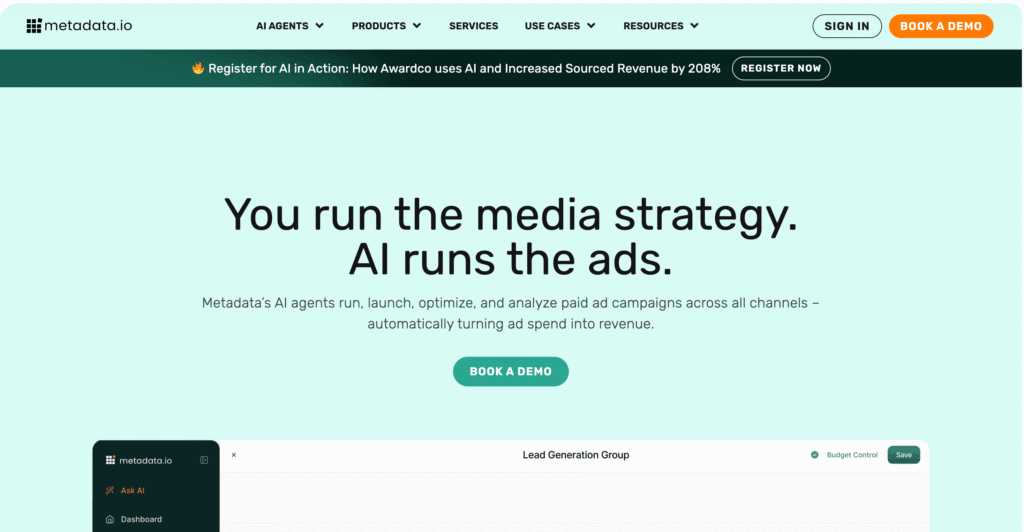
Metadata.io has transitioned beyond being a mere ad tool. It now operates as an autonomous marketing operating system, particularly known for managing LinkedIn ads with advanced AI capabilities. Its technology suite is centered around two proprietary features—Bid Agent and Analyst Agent—which are engineered to handle complex campaign decisions with minimal human intervention. These agents analyze countless variables in real-time to maximize ad efficiency, dynamically adjust bids, and optimize targeting strategies based on live performance data.
Key Technological Innovations
- Bid Agent Technology: This AI engine monitors live campaign behavior and autonomously adjusts bids at scale to maximize cost-efficiency and impact.
- Analyst Agent Automation: Interprets campaign analytics, identifies trends, and adjusts multivariate testing without requiring human analysis.
- MetaMatch Database: A proprietary intelligence asset containing over 1.5 billion verified business profiles. This allows for high-accuracy targeting that goes beyond LinkedIn’s native features.
Multichannel Targeting with LinkedIn at the Core
Although Metadata.io supports multichannel B2B campaign execution, it maintains LinkedIn Ads as its central pillar. The AI leverages MetaMatch to enrich lead profiles and retarget audiences on platforms like Facebook and Instagram. This holistic yet LinkedIn-anchored strategy allows businesses to maintain brand presence and conversion momentum across multiple digital touchpoints.
Performance Matrix: Investment and Operational Efficiency
The following table provides a detailed breakdown of Metadata.io’s performance and investment profile, emphasizing its relevance to LinkedIn advertising in the B2B space:
Table: Metadata.io Performance and Value Profile
| Metric | Data Point / Value | Strategic Relevance for B2B LinkedIn Ads |
|---|---|---|
| Starting Price | $24,000 per year / $5,650 per month | Geared towards mid-sized to large enterprises |
| Implementation Timeline | 1 Month | Quick onboarding and operational deployment |
| Time to ROI | 11 Months | Suitable for high-value, long-conversion cycles |
| Revenue Impact | 177% Lift in Influenced Revenue | Driven by AI-led bid and testing optimization |
| Notable Clients | Slack, Zoom, G2, Juniper Networks | Demonstrates trust from high-performing SaaS firms |
AI-Driven Experimentation and Budget Allocation
One of Metadata.io’s standout features is its capacity to automate massive-scale A/B testing. It can run thousands of campaign variants simultaneously and automatically retire low-performing versions. The remaining budget is reallocated to the top-performing ads in real time, ensuring better ROI with reduced manual oversight.
This automation cycle includes:
- Intelligent creative testing
- Continuous campaign iteration
- Budget reallocation without human input
- Performance-based decision-making across multiple LinkedIn ad formats (single image, video, carousel, sponsored InMail)
Impact for B2B and Enterprise LinkedIn Advertisers
Metadata.io is not a plug-and-play tool for casual marketers. It is purpose-built for organizations with complex B2B sales cycles, high-value pipelines, and the need for scalable advertising intelligence. The platform’s patented automation capabilities enable these teams to remain agile in highly competitive markets while reducing the human resource load traditionally associated with LinkedIn campaign management.
Strategic Value Matrix: Metadata.io for LinkedIn Ads
| Functionality Area | Value Delivered to LinkedIn Advertisers | AI Feature Supporting It |
|---|---|---|
| Targeting Precision | Hyper-segmented audience reach beyond LinkedIn limits | MetaMatch Data Intelligence |
| Campaign Efficiency | Bid optimization and reduced manual operations | Bid Agent |
| Data-Driven Decision Making | Trend forecasting and adjustment without delays | Analyst Agent |
| Cross-Platform Strategy | Unified execution across LinkedIn, Facebook, IG | Centralized Campaign Dashboard |
| Testing at Scale | Faster ad variant deployment and iteration | Multivariate Testing Engine |
Conclusion
As AI becomes a necessity in digital advertising rather than an add-on, Metadata.io positions itself as an indispensable asset for enterprise-level LinkedIn advertisers. It brings automation, strategic targeting, and real-time optimization into a single system, transforming how modern B2B campaigns are run on the world’s most influential professional platform. Businesses seeking to lead in 2026’s competitive LinkedIn ad ecosystem will find Metadata.io a critical advantage in their martech stack.
2. 6sense Revenue AI


In 2026, 6sense Revenue AI stands out as a top-tier AI tool for managing LinkedIn ads, especially for enterprise-level organizations focused on account-based marketing (ABM) and predictive targeting. Its strength lies in its ability to uncover and act upon unseen buying behaviors—often referred to as the “dark funnel”—where potential buyers show interest without filling out forms or making direct contact.
6sense has earned recognition as a market leader by Forrester, largely due to its powerful intent data engine and integration with LinkedIn Campaign Manager. The platform enables businesses to launch smarter, more timely ad campaigns that align with buyer behavior in real time.
Predictive Intent Data and Sales Intelligence
- 6sense processes over 1 trillion intent signals each day to help companies detect which accounts are researching solutions.
- These insights allow teams to reach potential customers earlier in the decision-making process—before they ever visit a product page or submit a lead form.
- By identifying companies based on anonymous web traffic and engagement signals, 6sense enables hyper-personalized advertising on LinkedIn.
Intelligent Workflows and LinkedIn Integration
6sense offers seamless audience synchronization between its platform and LinkedIn Campaign Manager. This connection allows marketers to:
- Build dynamic audience segments that automatically update as leads progress through different buying stages.
- Launch always-on LinkedIn campaigns that adapt in real-time based on lead behavior.
- Execute targeted messaging aligned to sales funnel stages—”Aware,” “Consideration,” and “Purchase.”
Case Study Highlight: Blue Yonder
Blue Yonder, a leading global company, utilized 6sense to manage over 450 LinkedIn audience segments using Intelligent Workflows. The results:
- 12x return on LinkedIn ad spend
- Clear mapping of the buyer journey using AI-powered segmentation
- Highly effective budget allocation for ABM-focused LinkedIn campaigns
6sense Performance and Market Penetration Overview
The table below outlines key operational metrics that reinforce 6sense’s effectiveness in managing LinkedIn ad campaigns.
Table: 6sense Market Penetration and Operational Performance
| Metric | Performance Figure | Strategic Importance for LinkedIn Advertising |
|---|---|---|
| Daily Intent Signal Volume | Over 1 Trillion Signals | Powers predictive targeting and dark funnel detection |
| Marketing Pipeline Growth | 268% Increase | Demonstrates campaign effectiveness at scale |
| Market Share (ABM Tools) | 4.11% Share | Positions 6sense among niche ABM tech leaders |
| Median Annual Contract Value | $57,000 | Enterprise-level pricing for advanced capabilities |
| Account Reach Improvement | 10.8% Lift | Achieved through real-time ID Graph matching |
| Sales Cycle Reduction | Up to 22 Days Shorter | Driven by early engagement with high-intent leads |
AI Classification of Buyer Stages for Ad Targeting
6sense uses machine learning to classify accounts into actionable stages. This classification is central to how it triggers LinkedIn ad campaigns.
Matrix: 6sense AI-Driven Buyer Stage Mapping and Ad Targeting
| Buyer Stage | Signal Behavior Detected | LinkedIn Ad Strategy Triggered |
|---|---|---|
| Aware | Early keyword and industry research | Brand awareness ads and educational content |
| Consideration | Solution comparisons and competitor views | Product-specific messaging and use-case promotion |
| Purchase | Pricing queries, demo requests | Bottom-of-funnel offers, case studies, testimonials |
Real-Time Lead Prioritization and Ad Execution
6sense’s “Signalverse” engine empowers marketing teams to respond instantly to prospect activity. It:
- Identifies anonymous visitors and links them to known accounts.
- Automates ad delivery to buying committee members as soon as intent is detected.
- Minimizes sales lag by accelerating outreach based on behavioral insights.
Strategic Benefits of 6sense for LinkedIn Ads
| Benefit Area | Description |
|---|---|
| Predictive Reach | Targets leads before they actively engage |
| Funnel-Adaptive Campaigns | Auto-updates LinkedIn ads to match each buyer stage |
| Enterprise-Level Insights | Customizes outreach to large accounts using behavioral patterns |
| Sales Acceleration | Shortens conversion timelines by acting on high-intent signals immediately |
| Intelligent Retargeting | Continually refines audiences based on live behavior shifts |
Conclusion
6sense Revenue AI brings predictive intelligence and real-time targeting to LinkedIn ads management, making it an essential platform for enterprises seeking smarter ways to influence the B2B buying journey. By integrating intent signals, buyer stage insights, and automated campaign delivery, 6sense enables marketing teams to make their LinkedIn advertising strategy proactive, efficient, and deeply aligned with actual customer behavior. For organizations with long sales cycles and complex buyer committees, 6sense provides unmatched power in 2026’s LinkedIn advertising landscape.
3. Demandbase One

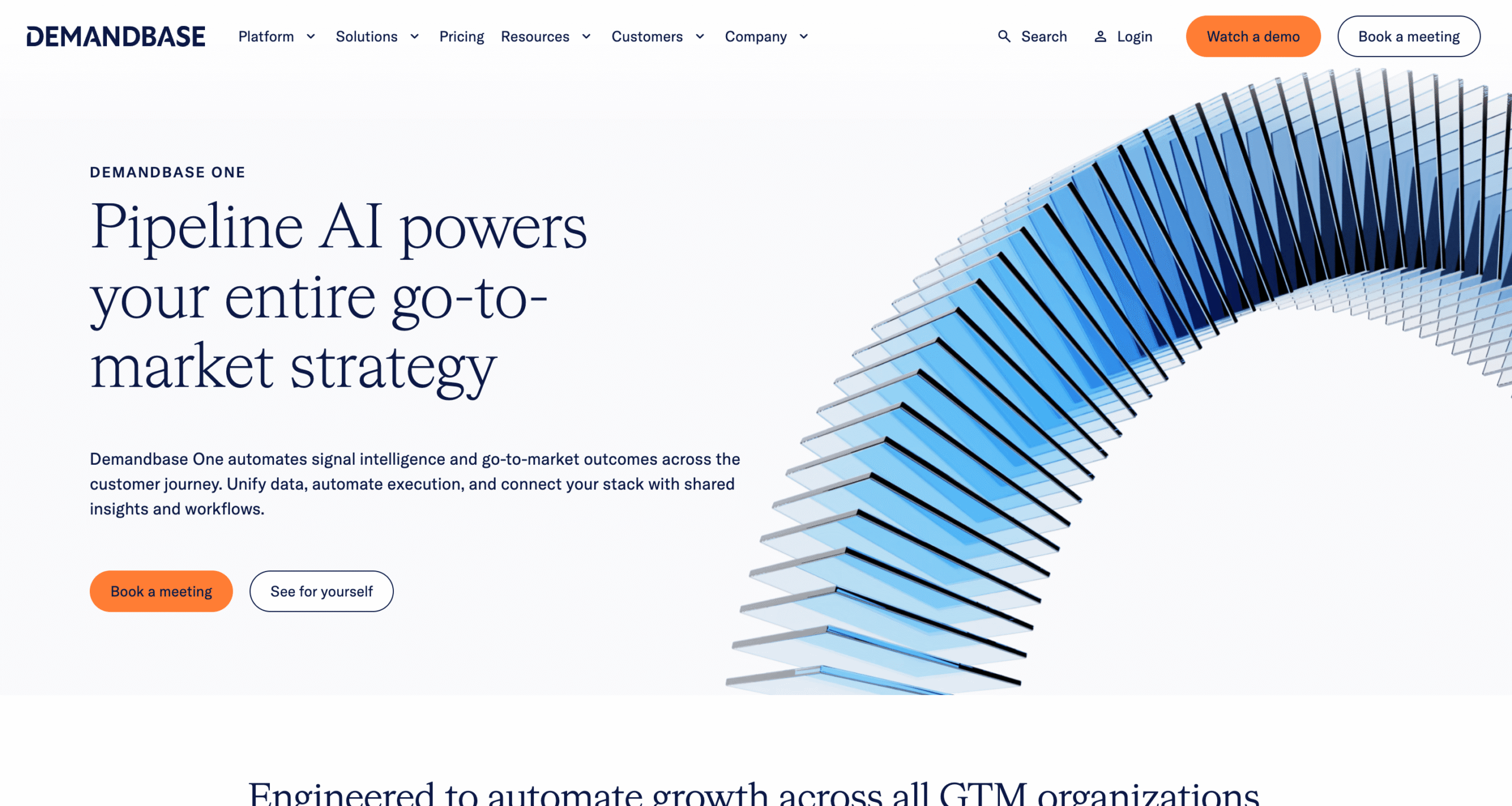
Demandbase One has become a globally recognized solution in 2026 for businesses that need a deeply integrated and intelligent approach to LinkedIn advertising. Known for its comprehensive pipeline-building capabilities, this platform offers a unique buying-group-focused strategy that delivers highly targeted and personalized ad experiences.
Unlike other tools that focus only on lead generation or campaign automation, Demandbase One merges advertising, analytics, sales intelligence, and website personalization into a single AI-driven platform. Its ability to connect different parts of the go-to-market strategy makes it especially useful for large enterprise teams running complex B2B campaigns.
AI-Powered AdsIQ and Bidding Technology
At the heart of Demandbase One is AdsIQ, a smart advertising engine that uses AI to make bidding decisions based on intent data. Rather than treating each individual prospect separately, AdsIQ understands buying groups within organizations and sets ad strategies accordingly.
- Uses AI to assess both account-level and individual behavior
- Adjusts bids in real-time to match engagement level and buying intent
- Syncs directly with LinkedIn ad placements for advanced audience precision
Unified Experience for LinkedIn Advertising and Beyond
Demandbase One stands out because it brings multiple essential marketing tools under one roof. Instead of juggling different platforms for ads, web personalization, and analytics, companies can operate everything from a unified dashboard.
Key integrated features include:
- AI-powered targeting and bidding for LinkedIn ads
- Real-time intent analytics to track buying signals
- Web personalization based on account behavior
- Sales alert systems for timely follow-up on engaged leads
Pricing Structure and Enterprise-Focused Modularity
Demandbase One offers modular pricing, with each feature packaged into individual components. This structure gives enterprises the flexibility to select what they need but also positions the platform as a high-investment solution.
Table: Demandbase One Modular Pricing and Feature Estimates
| Module Name | Purpose | Estimated Annual License Cost |
|---|---|---|
| Advertising Cloud | Run LinkedIn and programmatic ads | $30,000+ |
| Orchestration Module | Automate workflows and trigger sales notifications | $20,000 |
| Personalization Module | Customize website content for each account | $30,000 |
| Platform Fee | Access to the Demandbase software infrastructure | $45,000 – $60,000 |
| Professional Services | Implementation, onboarding, and consultation | $20,000 – $30,000 |
Performance Outcomes with Demandbase One
Even though the platform has a complex setup and high cost, it has consistently proven its value in accelerating sales cycles and increasing deal sizes. Its “Agentbase” feature coordinates multiple AI agents that work together to optimize results across advertising and sales engagement.
Table: Demandbase One Strategic Impact Metrics
| Performance Metric | Measured Impact | Business Value Delivered |
|---|---|---|
| Pipeline Velocity Increase | Up to 83% | Faster lead conversion through unified AI |
| Growth in Average Deal Size | Up to 50% | Driven by improved targeting and personalization |
| Buying Group Engagement Accuracy | High | Enables smarter budget allocation on LinkedIn |
| Manual Coordination Reduction | Significant | Streamlined GTM execution via AI agents |
AI Coordination with Agentbase
Agentbase is a standout capability that enables different AI agents within Demandbase One to communicate and collaborate. This internal coordination leads to better alignment between sales and marketing efforts.
Matrix: AI Agent Functions in Demandbase One
| AI Agent Function | Operational Role | Outcome for LinkedIn Ads |
|---|---|---|
| Ad Optimization Agent | Manages real-time ad performance | Improves cost efficiency and ROI |
| Buyer Intent Agent | Tracks changes in engagement signals | Adjusts targeting based on live data |
| Personalization Agent | Controls website content per account | Increases conversion likelihood |
| Sales Enablement Agent | Sends alerts to reps based on campaign activity | Speeds up sales outreach and response times |
Why Enterprises Choose Demandbase One for LinkedIn Ads
Demandbase One is tailored for enterprise B2B teams managing long buying cycles, multiple stakeholders, and large advertising budgets. Its strength lies in linking different marketing functions to create a seamless customer journey—from ad impression to closed deal.
Table: Strategic Benefits of Using Demandbase One
| Benefit Area | Description |
|---|---|
| Unified GTM Operations | One platform for ads, analytics, and personalization |
| AI-Driven Efficiency | Reduced human error and faster execution |
| LinkedIn-Focused Targeting | Optimized ad spend through intent-driven audience selection |
| Scalable for Large Campaigns | Handles high-volume, complex audience segments |
| High ROI for Enterprises | Proven impact on revenue and deal size in real-world case studies |
Conclusion
In 2026, Demandbase One is a preferred choice among AI tools for LinkedIn ads management, especially for large organizations that require advanced analytics, personalization, and cross-functional coordination. Through its AdsIQ engine and Agentbase AI system, the platform ensures that every marketing dollar is intelligently spent, making it an ideal solution for those aiming to maximize impact on LinkedIn and across their entire B2B pipeline.
4. Influ2

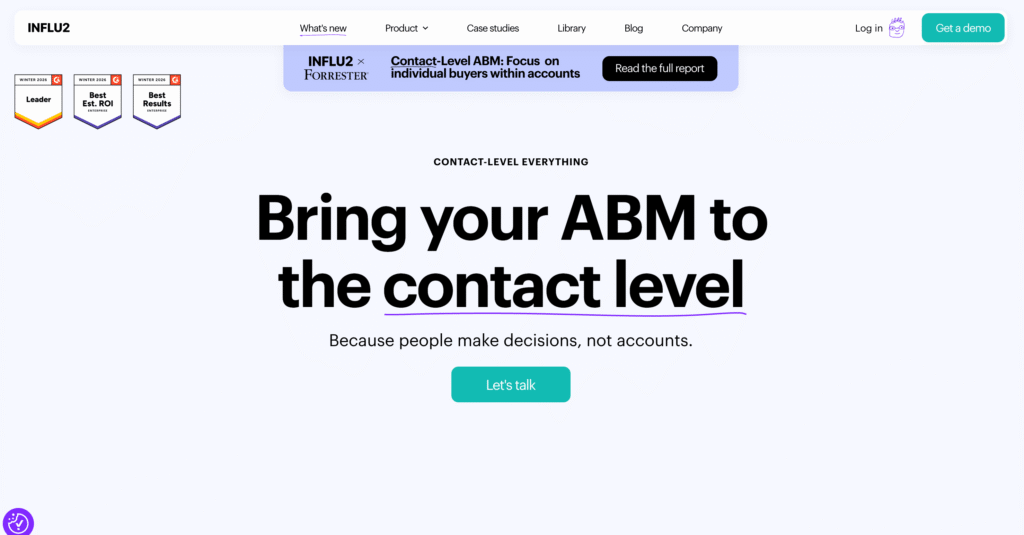
Influ2 has positioned itself as one of the top global AI tools for LinkedIn Ads Management in 2026 by reshaping how B2B marketers engage with their audience. Unlike traditional platforms that rely solely on account-level targeting, Influ2 brings a person-level advertising approach—allowing companies to reach specific decision-makers within their target accounts. This method is proving vital in a year when fast and personalized engagement is the key to winning B2B deals.
The importance of reaching the right individuals within buying committees is growing. According to industry insights, nearly 84% of buyers choose the vendor that engages them first. Influ2 empowers marketing teams to identify, reach, and track interactions with named individuals through LinkedIn and other platforms, ensuring that the first point of contact happens with the right person.
Person-Based Advertising Technology and Strategy
Influ2’s core innovation lies in targeting individuals rather than just companies. This shift brings higher relevance, improved ad interaction, and better lead conversion across LinkedIn and other display channels.
- Tracks and targets specific job titles, names, and departments across digital platforms
- Uses real-time behavioral data to trigger LinkedIn ad engagement
- Prioritizes those who interact with ads, ensuring that follow-ups are accurate and meaningful
Unique Pricing Structure and Credit-Based System
The platform follows a distinctive pricing model that combines platform access and media spend into a bundled fee. Pricing is based on the number of individuals targeted, with ad impressions and engagement measured in credits. Though cost per engagement is relatively high, the precision and ROI justify the spend for mid-to-large-sized B2B companies.
Table: Influ2 Pricing and Credit Structure Overview
| Pricing Component | Description | Estimated Value in 2026 |
|---|---|---|
| Platform Access | Includes platform features and integrations | Included in bundled fee |
| Media Spend Allocation | Based on total reach and engagement | Varies by campaign |
| Engagement Credit Cost | Cost per engaged contact | Approximately $5 per contact |
| Targeting Scope | Person-based audience selection | Customizable by role and region |
LinkedIn Campaign Performance Metrics
Influ2 has demonstrated measurable improvements in campaign results when applied to LinkedIn Ads. By focusing on high-intent individuals, companies can see stronger pipeline growth and better engagement rates compared to traditional advertising.
Table: Influ2 LinkedIn Campaign Impact Benchmarks
| Metric | Observed Result (2026) | Marketing Value Delivered |
|---|---|---|
| Deal Velocity | 41% Increase | Faster progression through the sales funnel |
| Accounts in Pipeline | 6x Increase | Higher quantity of qualified accounts |
| Site Engagement | 94% Boost | Better alignment between ads and landing content |
| Response Rate | 30%+ (for some users) | Surpasses B2B industry average of 10-15% |
| Active User Base | ~239 Companies | Strong mid-market adoption and growing enterprise use |
CRM Integration and Sales Enablement
A standout feature of Influ2 is its seamless integration with major CRM platforms such as Salesforce and HubSpot. This allows sales teams to receive real-time alerts about ad engagement by named individuals. With this visibility, sales reps can prioritize follow-ups based on actual ad interaction rather than relying on traditional MQL scoring models.
Matrix: CRM Engagement and Sales Workflow Optimization
| CRM Integration Feature | Functional Benefit | Sales Enablement Outcome |
|---|---|---|
| Real-Time Intent Alerts | Instant notification when target sees/clicks an ad | Enables timely and relevant sales outreach |
| Contact Behavior Mapping | Visualizes who engaged and on which ad format | Enhances personalization in communication |
| Lead Prioritization Filters | Ranks prospects by engagement intensity | Focuses sales effort on high-propensity leads |
| Marketing-to-Sales Sync | Aligns ad engagement data with pipeline metrics | Bridges hand-off gaps between departments |
Operational and Strategic Benefits for LinkedIn Ads
Influ2 adds value by combining digital ad targeting with sales-ready insights, making it ideal for organizations aiming to engage C-level decision-makers across LinkedIn.
Table: Strategic Benefits of Influ2 for LinkedIn Advertising
| Benefit Area | Description |
|---|---|
| Person-Level Targeting | Precision engagement with named stakeholders |
| Ad-to-Sales Conversion Path | Closes the gap between marketing campaigns and sales results |
| Intent Data Integration | Real-time behavioral insights directly into CRM systems |
| LinkedIn-Specific Optimization | AI-driven ad sequencing tailored for LinkedIn’s B2B environment |
| Performance Visibility | End-to-end tracking from ad click to pipeline progression |
Conclusion
Influ2 has become a critical AI tool in the LinkedIn Ads ecosystem for 2026, especially for B2B organizations that prioritize targeting precision and conversion readiness. Its person-based advertising approach, CRM integration, and ability to track real-time engagement make it a valuable asset in building stronger sales pipelines. As LinkedIn continues to grow as a high-impact channel for professional advertising, platforms like Influ2 are shaping how companies connect with their most important audiences.
5. Factors.ai

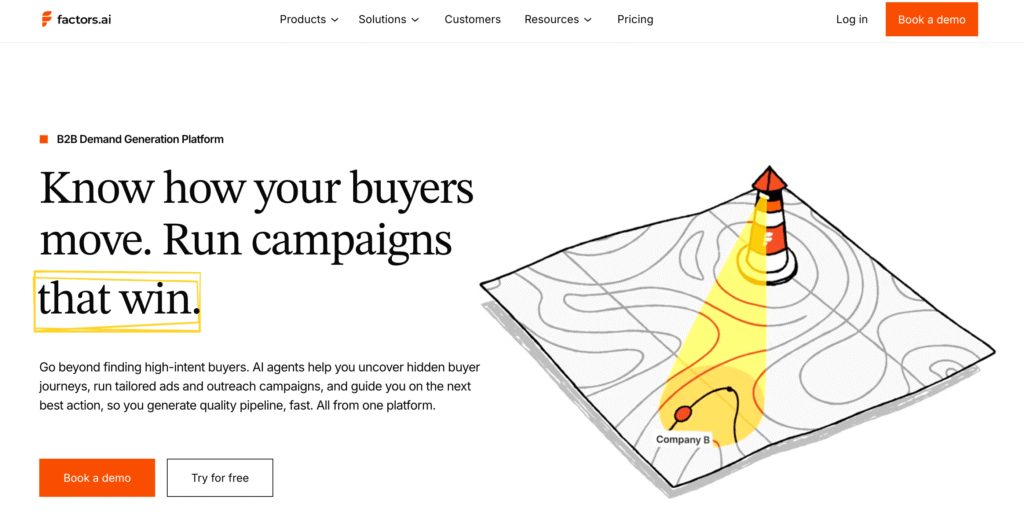
In 2026, Factors.ai has emerged as one of the most vital AI-powered platforms for LinkedIn ads management, especially for B2B marketers struggling with performance attribution. Its focus on view-through conversions—a key metric ignored by many native advertising platforms—gives it a unique advantage in optimizing LinkedIn’s display-driven ecosystem.
The company’s standout feature, AdPilot, provides precise control over ad impressions at the account level. This ensures that marketing budgets are distributed evenly across the Ideal Customer Profile (ICP), avoiding waste on overexposed or low-quality prospects. With deeper visibility into conversion paths and enhanced attribution, Factors.ai supports smarter campaign decisions that improve ROI across the board.
AdPilot: Advanced Attribution and Impression Management
Factors.ai’s AdPilot tool has been designed to solve a major gap in LinkedIn marketing analytics—the inability to properly track non-click conversions. Most ad platforms rely heavily on direct clicks, overlooking the influence of impressions that result in conversions later through other channels. AdPilot changes that by introducing:
- View-through attribution to track ad impact beyond direct clicks
- Impression control to prevent ad saturation within specific accounts
- Budget reallocation tools based on performance insights and conversion behavior
Performance Comparison: AdPilot vs. Traditional Metrics
The following table outlines how AdPilot’s approach to view-through conversion outperforms traditional click-based methods used in LinkedIn campaigns:
Table: AdPilot Performance Metrics Compared to Traditional Campaigns
| Metric | Traditional (Click-Only) | AdPilot (View-Through) | Strategic Impact |
|---|---|---|---|
| Cost per Opportunity | $4,348 | $395 | Drastically lower acquisition cost |
| Opportunities Identified | 11 | 111 | Higher volume of quality pipeline entries |
| Pipeline Value | $1,800 | $19,440 | Stronger monetization of LinkedIn ad traffic |
| ROI Improvement | N/A | 25% – 35% | Better campaign profitability |
| Lead Quality Improvement | N/A | 30% increase in SQLs | Enhanced targeting and qualification |
Business Impact Through Enhanced Attribution and Lead Intelligence
Factors.ai excels at identifying anonymous website visitors, reaching over 75% recognition accuracy—compared to just 40% offered by many traditional tools. This deeper visibility allows marketing and sales teams to act on real intent data and reach prospects before competitors do.
Matrix: Attribution and Conversion Efficiency with Factors.ai
| Attribution Feature | Functional Advantage | Outcome for LinkedIn Campaigns |
|---|---|---|
| View-Through Conversion Tracking | Measures ad impact beyond clicks | Recognizes unseen ROI from display ads |
| Anonymous Visitor Identification | Maps unknown visitors to company-level data | Expands reach and boosts targeting precision |
| Multi-Channel Influence Mapping | Shows how LinkedIn affects other channels | Better overall marketing orchestration |
| AI-Based Intent Scoring | Ranks leads based on post-view behavior | Prioritizes follow-ups to high-quality leads |
Client Success Example: Scrut Automation
Scrut Automation leveraged Factors.ai to improve its LinkedIn campaign results significantly. By using the platform’s intent signals and attribution engine:
- The company recorded a 30% increase in Sales Qualified Leads (SQLs)
- Their campaigns reached a broader decision-making audience without budget waste
- Their marketing-to-sales handoff process became more precise and effective
Key Outcomes of Using Factors.ai for LinkedIn Ads
Companies using Factors.ai for their LinkedIn advertising in 2026 report substantial improvements in deal quality, attribution accuracy, and marketing efficiency. The platform ensures that even ad impressions—those that don’t immediately result in clicks—are correctly valued and optimized.
Table: Strategic Benefits of Factors.ai for LinkedIn Ads Management
| Benefit Area | Description |
|---|---|
| View-Through Attribution | Tracks hidden influence of LinkedIn ads across buyer journey |
| Smarter Budget Allocation | Prevents overspending on underperforming accounts |
| Higher Deal Value Conversion | LinkedIn-sourced leads close at 28.6% higher ACV |
| Improved Channel Synergy | LinkedIn boosts performance of paid search and retargeting |
| Increased Sales Qualified Leads | Up to 30% more SQLs through intelligent targeting |
Conclusion
Factors.ai plays a crucial role among the top 10 AI tools for LinkedIn Ads Management in 2026 by solving one of the most pressing challenges in digital marketing—accurate attribution. Its unique view-through tracking, advanced impression controls, and deep lead intelligence empower B2B teams to run smarter, more effective campaigns. For any business aiming to maximize the value of their LinkedIn ad budget, Factors.ai provides the visibility and control needed to turn impressions into impact.
6. Predis.ai

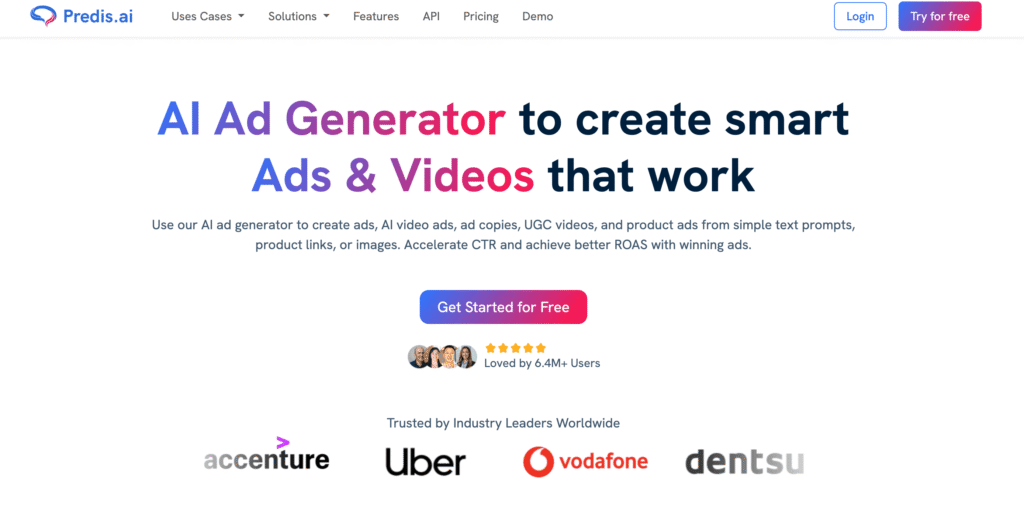
Predis.ai has earned a strong reputation as one of the top AI tools for LinkedIn Ads Management in 2026, especially for brands and agencies focused on maintaining engagement in high-frequency campaigns. In today’s fast-paced digital environment, creative fatigue can begin within 48 to 72 hours. This means that ads quickly become less effective if repeated too often without variation. Predis.ai tackles this issue by enabling fast, AI-generated creative changes at scale—without the need for expensive production or agency support.
Trusted by over 500,000 users worldwide, including SMBs and marketing agencies, Predis.ai is empowering teams to meet LinkedIn’s content demand with unmatched creative speed and variety.
AI-Driven Creative Production and Campaign Personalization
Predis.ai leverages artificial intelligence to design, write, and package full ad campaigns—visuals, captions, headlines, and hashtags—in less than 30 seconds. This instant production enables marketers to react quickly to campaign performance or market shifts without relying on external teams.
Key features include:
- Full ad creation using text-to-design and text-to-video AI
- The Micro-Pivot framework to generate dozens of design variations from one asset
- Customization of layouts, color schemes, and messaging formats instantly
Addressing Creative Fatigue with the Micro-Pivot Framework
The Micro-Pivot approach by Predis.ai allows marketers to modify an existing winning ad by making minor yet impactful changes. This resets audience perception, reduces fatigue, and extends the life of top-performing content.
Matrix: Creative Fatigue Management Using Micro-Pivoting
| Creative Element | Variation Applied | Resulting Impact on LinkedIn Campaigns |
|---|---|---|
| Layout Design | Swapped position of text/graphics | Refreshes visual engagement |
| Color Palette | Adjusted brand/accent colors | Captures attention without changing core idea |
| Font Style and Size | Alternated typographic hierarchy | Keeps ads visually distinct across impressions |
| Video Frame Composition | Changed opening/closing sequences | Extends content lifecycle |
Operational and Marketing Performance Insights
The following table showcases Predis.ai’s impact on productivity, content performance, and cost-efficiency—critical elements for companies running LinkedIn campaigns with high turnover demands.
Table: Predis.ai Operational and User Performance Metrics
| Category | Key Statistic | Value Delivered to LinkedIn Marketers |
|---|---|---|
| Global User Base | Over 500,000 users | Proven scalability across SMBs and agencies |
| Content Production Speed | 30% – 50% faster | Cuts production cycle times significantly |
| Video Engagement Lift | 150% increase in video conversions | Powered by the Generative Motion engine |
| Creative Cost Savings | 25% reduction | Less dependency on outsourced design agencies |
| Output Volume Increase | 40% boost in content assets | Meets ad variation needs for high-frequency runs |
Generative Motion Engine: AI Video Creation at Scale
Predis.ai’s Generative Motion technology transforms static product information into engaging, motion-based content. It connects directly with e-commerce product catalogs, automatically building promotional video reels that include music, voiceovers, and dynamic scenes.
Matrix: Generative Motion Capabilities for LinkedIn Campaigns
| Functionality | Description | Marketing Use Case on LinkedIn |
|---|---|---|
| Catalog Integration | Pulls product images and details from online stores | Creates platform-native promotional ads |
| Music Syncing | Aligns visuals with music beats | Increases watch time and retention |
| Automated Voiceovers | Adds AI narration in multiple languages | Expands campaign reach across global markets |
| Dynamic Scene Assembly | Generates fluid scene transitions from product sets | Mimics high-end video ad formats on LinkedIn |
Strategic Advantages of Using Predis.ai for LinkedIn Advertising
Predis.ai enables small and mid-sized businesses to compete at a higher level by offering tools typically reserved for larger enterprises with in-house creative teams. Its scalable, automated design and video generation ensures that LinkedIn campaigns can stay fresh, adaptive, and cost-effective without sacrificing quality.
Table: Competitive Benefits of Predis.ai for LinkedIn Ads
| Strategic Area | Description |
|---|---|
| Rapid Ad Refresh Cycles | Prevents creative burnout through frequent variation |
| Automated Visual and Copy Sync | Reduces time and effort in content production |
| Built-in Video Generation | Democratizes access to premium ad formats |
| Integrated Content Personalization | Tailors messaging for multiple audience segments |
| Budget-Friendly Scaling | Ideal for SMBs with limited marketing resources |
Conclusion
In 2026, Predis.ai continues to transform how marketers manage LinkedIn advertising with speed, precision, and affordability. By solving the challenge of creative fatigue and automating full-funnel content generation, the platform equips marketing teams with the tools they need to maintain performance and stay ahead in crowded digital spaces. Whether creating static visuals or motion-driven campaigns, Predis.ai is helping businesses keep their LinkedIn ads engaging, dynamic, and conversion-ready.
7. HeyReach

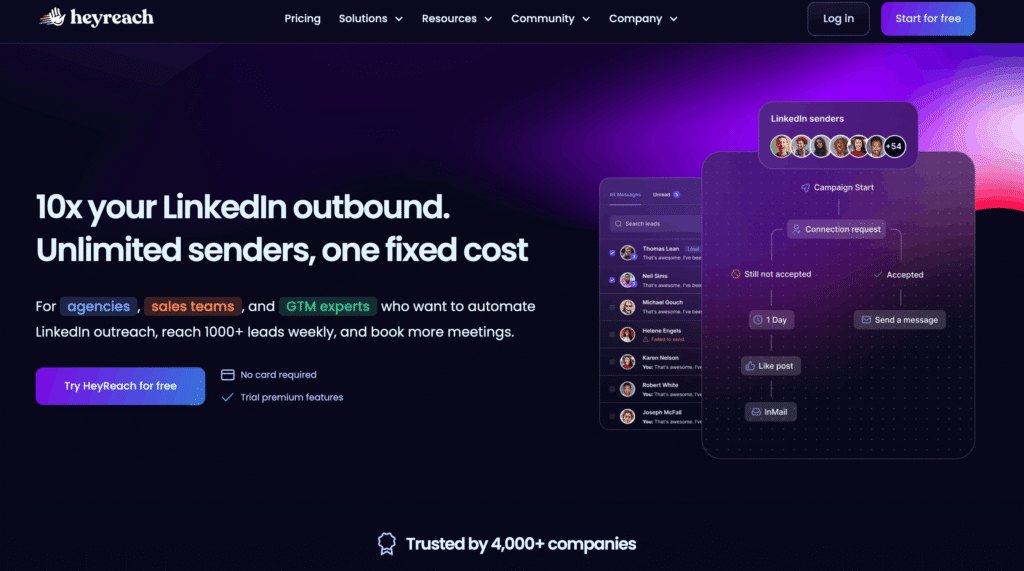
HeyReach has positioned itself as one of the most advanced AI-driven tools for LinkedIn outreach and ad support in 2026. Designed specifically for teams managing multiple LinkedIn accounts, this cloud-based platform addresses two growing challenges in the digital marketing space: complying with LinkedIn’s increasingly strict activity policies and scaling outreach without compromising account safety.
For marketers and agencies running LinkedIn ad campaigns supported by outreach automation, HeyReach provides a secure environment where AI handles lead engagement across many accounts—without triggering security alarms. It mimics human-like activity while maximizing visibility to new prospects, which is crucial in maintaining both campaign integrity and performance.
AI Outreach Automation with Built-In Safety Compliance
HeyReach’s key innovation is its “auto-rotation” engine, which distributes outreach across several LinkedIn profiles. This allows teams to scale without exceeding LinkedIn’s activity thresholds. Each account remains under its daily and weekly limits, reducing the risk of account flags or restrictions.
- Enables up to 1,000 prospect touches per week through account rotation
- Keeps daily actions within LinkedIn’s compliance limits
- Simulates natural human activity patterns to maintain credibility
Matrix: AI Outreach Safety vs. Traditional Manual Approaches
| Activity Function | Traditional Manual Approach | HeyReach AI-Powered Automation | Strategic Advantage |
|---|---|---|---|
| Daily Connection Requests | Limited to 100 | Auto-managed under safe thresholds | Maintains account trust and uptime |
| Response Management | Individual and siloed | Unified inbox with shared access | Ensures faster response from any team |
| Behavioral Mimicking | Manual, inconsistent | Predictable and human-like timing | Reduces detection risk on LinkedIn |
| Lead Rotation Logic | Not applicable | AI-rotated between multiple profiles | Scales outreach volume securely |
Pricing Structure and Scale-Ready Packages
HeyReach’s pricing is tiered to support individuals, small teams, and large agencies. From single-user plans to unlimited account bundles, the platform is accessible to businesses of all sizes aiming to streamline LinkedIn outreach alongside ad campaigns.
Table: HeyReach Pricing Plans and Account Capacity
| Plan Type | Monthly Price Range | LinkedIn Account Capacity | Ideal User Type |
|---|---|---|---|
| Basic Plan | $79 per sender | 1 account | Freelancers, individual consultants |
| SMB/Agency Plan | $799 – $999 | Up to 50 accounts | Growth-stage agencies and teams |
| Unlimited Plan | $1,499 – $1,999 | Unlimited accounts | Enterprise agencies and platforms |
AI-Driven Response Optimization
One of the most valuable benefits of HeyReach is its impact on response rates. While traditional manual outreach typically achieves a 10% to 12% response rate, users leveraging HeyReach’s AI capabilities have reported results as high as 30% or more.
Table: LinkedIn Outreach Performance Metrics Using HeyReach
| Metric Category | Manual Process | AI-Powered via HeyReach | Outcome Impact |
|---|---|---|---|
| Average Response Rate | 10% – 12% | 30%+ | Higher engagement and conversion potential |
| Missed Interaction Rate | High | Near-zero (with shared inbox) | No lead goes unanswered |
| Prospect Coverage | Limited by individual | Expanded via rotation and scaling | Larger audience reach within same effort |
| Compliance with LinkedIn | Risk-prone | Fully compliant behavior mimicry | Low account restriction risk |
Collaborative Inbox and Team Response Features
HeyReach enhances sales and marketing coordination through a shared, centralized inbox. Team members can respond to conversations initiated by others without needing to switch accounts, ensuring that every message receives attention, regardless of the original sender.
Matrix: Team Collaboration Efficiency with HeyReach
| Feature | Functionality Description | Benefit for LinkedIn Campaign Teams |
|---|---|---|
| Unified Inbox | All messages across accounts in one dashboard | Centralized communication control |
| Reply as Team Member | Respond on behalf of others | Faster response time and better experience |
| Contact Labeling and Filtering | Organize leads by status or intent | Prioritize follow-ups and campaign integration |
| Activity Sync | Aligns outreach history with CRM | Maintains data consistency across touchpoints |
Strategic Benefits of HeyReach for LinkedIn Ads Management
While HeyReach is primarily used for outreach automation, its role in supporting LinkedIn ad campaigns is growing. It acts as the engagement layer that captures interest after ad impressions, driving deeper interaction with leads. By combining paid visibility and organic connection, it strengthens full-funnel LinkedIn marketing strategies.
Table: Strategic Role of HeyReach in LinkedIn Ad Campaigns
| Benefit Area | Description |
|---|---|
| Ad Follow-Up Automation | Engages users who interacted with LinkedIn ads |
| Lead Qualification Signals | Helps identify high-interest prospects from initial conversations |
| Account-Based Reach Scaling | Multiplies outreach across different buyer personas |
| Security Compliance Engine | Avoids LinkedIn bans with smart activity distribution |
Conclusion
In the 2026 LinkedIn marketing landscape, HeyReach offers a unique and essential advantage for businesses that want to scale their outreach safely and efficiently. With its AI-driven automation, compliance-aware behavior, and collaborative team tools, HeyReach complements LinkedIn advertising by enabling direct, personal engagement at scale. For marketers, agencies, and sales teams aiming to maximize the ROI of LinkedIn campaigns, HeyReach delivers a powerful, secure, and scalable outreach solution.
8. DigitalFirst.ai

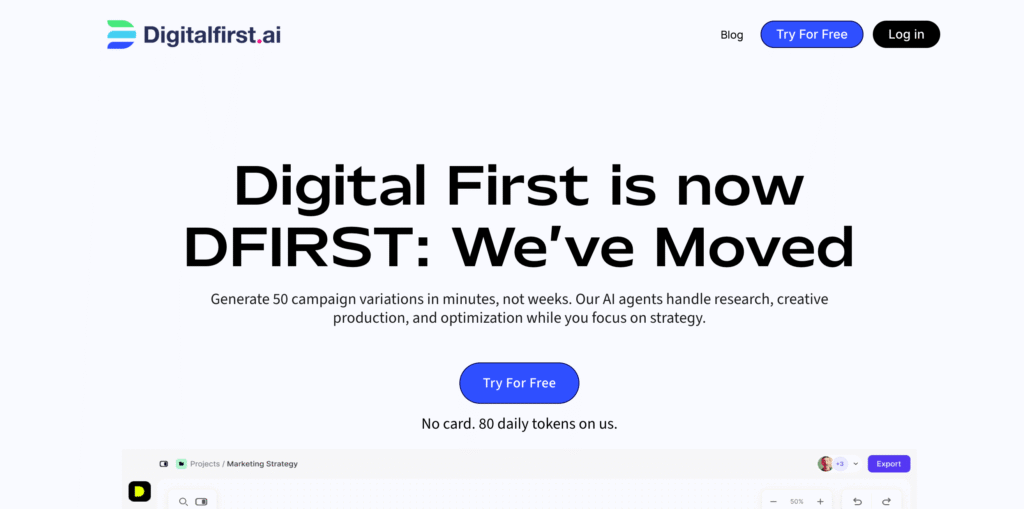
DigitalFirst.ai has become a go-to AI platform in 2026 for marketers who need to manage complex LinkedIn advertising campaigns with clarity, speed, and AI-driven accuracy. Unlike traditional marketing software, this tool uses a visual, canvas-based interface that simplifies the process of creating multi-step ad campaigns. It allows teams to plan, design, and deploy full LinkedIn ad strategies from a unified dashboard without jumping between different tools or platforms.
With the power to connect over 50 AI models—including industry-leading engines like GPT-5 and Gemini—DigitalFirst.ai streamlines the entire workflow from market research and content planning to creative production and scheduling. For LinkedIn ad management, it delivers strategic control, creative speed, and unmatched productivity.
Canvas-Based Workflow for LinkedIn Advertising Campaigns
The unique strength of DigitalFirst.ai lies in its visual campaign builder. Every marketing task is represented as a node on a drag-and-drop canvas. These nodes are interconnected and supported by various AI tools that automate actions, generate content, and optimize creative assets. This design makes it easy for teams to build LinkedIn campaigns with logic, structure, and real-time AI support.
Matrix: DigitalFirst.ai Canvas Structure for LinkedIn Campaigns
| Node Functionality | Description | Role in LinkedIn Ad Management |
|---|---|---|
| Audience Research Node | Gathers insights using AI web scrapers and trend models | Targets accurate personas for LinkedIn ads |
| Ad Copy Generator Node | Uses GPT-5 and Gemini to write tailored messaging | Crafts highly relevant and professional ad copy |
| Image Design Node | Utilizes DALL·E for visual generation | Creates eye-catching visuals for campaigns |
| Scheduling and Deployment | Aligns posts and ads with best engagement times | Automates campaign delivery on LinkedIn |
AI Integration with Brand Learning via Data Room
DigitalFirst.ai features a built-in “Data Room” where marketers can upload brand assets, past content, and even competitor site data. The platform’s AI studies this information to create brand-aligned assets, ensuring consistency in tone, visual identity, and messaging across all LinkedIn campaigns.
- Trains AI to follow company voice and style
- Enhances message accuracy and relevance
- Reduces manual input while improving brand integrity
Time Savings and Production Efficiency Gains
One of the key benefits of DigitalFirst.ai is the substantial time savings it provides in content creation and deployment. Weekly production time is reduced by up to 15 hours, thanks to AI automation across multiple areas such as caption writing, image design, hashtag generation, and scheduling.
Table: DigitalFirst.ai Productivity and Workflow Efficiency
| Task Area | Weekly Time Saved | Level of AI Automation | Benefit to LinkedIn Marketing |
|---|---|---|---|
| Caption Writing | 5 – 7 Hours | High – LLM-generated messaging | Speeds up content output and variation |
| Content Scheduling | 2 – 3 Hours | Smart automation | Aligns with peak times for visibility |
| Image Optimization | 2 – 3 Hours | AI-assisted via DALL·E creative generation | Keeps visuals fresh and aligned with trends |
| Hashtag Research | 1 – 2 Hours | Smart tagging based on AI analysis | Increases discoverability on LinkedIn |
| Total Campaign Production | 10 – 15 Hours Saved | Comprehensive across all steps | Enables more campaigns with less time spent |
Strategic Consolidation of Tools into a Unified Workspace
Instead of using multiple fragmented platforms for research, content creation, design, and publishing, DigitalFirst.ai brings every LinkedIn advertising function into one system. This leads to improved workflow, fewer errors, and stronger campaign consistency.
Table: Advantages of a Unified Workspace for LinkedIn Ads
| Function Consolidated | Traditional Tool Used | Replaced by DigitalFirst.ai Feature |
|---|---|---|
| Keyword/Market Research | Third-party tools (e.g., SEMrush) | AI Research Nodes |
| Creative Design | Photoshop, Canva | Image Generator Node (AI Visuals) |
| Caption/Copywriting | Freelancers or in-house teams | GPT-5 / Gemini Node for Ad Copy |
| Scheduling/Publishing | Hootsuite, Buffer | Built-in Scheduling Node |
Key Benefits of DigitalFirst.ai for LinkedIn Ad Campaigns
DigitalFirst.ai offers more than just automation—it provides a strategic framework for creating powerful and personalized LinkedIn advertising experiences. From research to execution, every part of the campaign lifecycle is AI-enhanced and visualized for full team visibility and control.
Table: Strategic Value of DigitalFirst.ai in 2026 LinkedIn Ads
| Benefit Area | Description |
|---|---|
| Visual Campaign Orchestration | Clear, structured workflow from strategy to launch |
| AI Content Consistency | Branding remains aligned across all LinkedIn ad creatives |
| Workflow Consolidation | Replaces multiple tools with one streamlined system |
| Efficiency at Scale | Enables teams to handle more campaigns with fewer resources |
| Custom AI Training via Data Room | Aligns ad tone, voice, and visuals with brand DNA |
Conclusion
DigitalFirst.ai redefines how marketing teams approach LinkedIn advertising in 2026. Its canvas-based AI orchestration, deep integrations with generative models, and custom brand learning engine offer a unique advantage to companies seeking both scale and strategic precision. For businesses looking to save time, reduce tool fatigue, and improve their creative output while running smart, targeted LinkedIn ad campaigns, DigitalFirst.ai is an essential solution in the modern martech stack.
9. Sprout Social

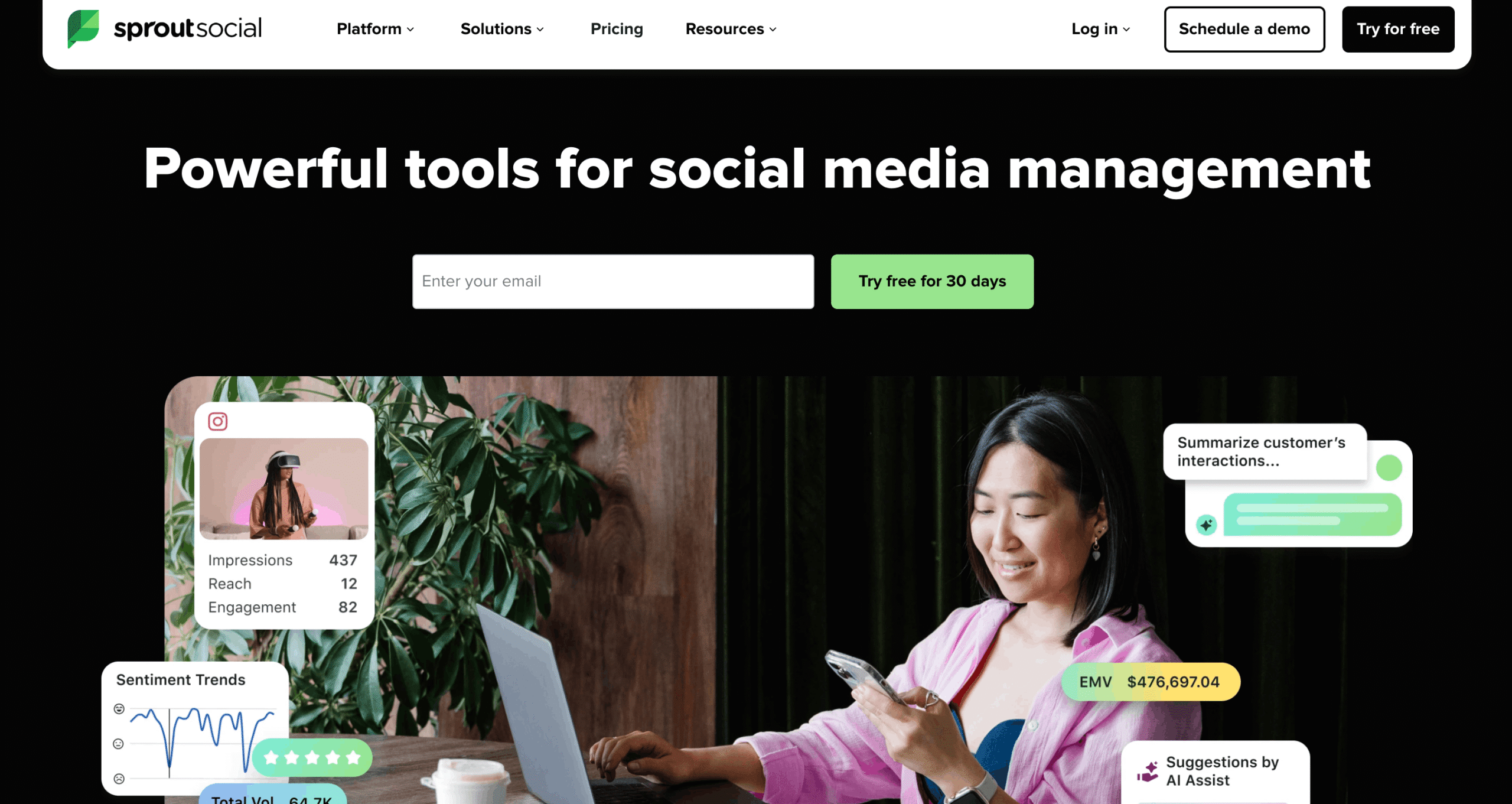
Sprout Social has secured its place among the top AI-powered tools for LinkedIn ads management in 2026, serving as a reliable, all-in-one social media platform tailored for enterprise teams. Its intelligent automation, combined with deep performance analytics and seamless LinkedIn integration, makes it a strategic asset for organizations aiming to scale their digital campaigns while maintaining compliance and brand consistency.
What sets Sprout Social apart in 2026 is its strong alignment with enterprise use cases, especially for teams in regulated industries. The platform’s AI Writing Assistant, automated audience targeting, and in-depth ROI reporting help marketing leaders deliver high-impact campaigns while reducing manual workload and operational complexity.
LinkedIn-Focused AI Targeting and Audience Management
Sprout Social offers highly specialized AI tools for managing LinkedIn campaigns. The platform allows users to target ads based on job titles, industries, and company sizes—without needing to manually build audiences. It continuously gathers performance data from LinkedIn Pages and individual posts, feeding it back into the system to enhance future campaign strategies.
Matrix: AI-Driven LinkedIn Campaign Capabilities
| Feature Area | Functionality Description | Strategic Benefit for LinkedIn Marketing |
|---|---|---|
| Audience Targeting | Automates segmentation by job role, seniority, and industry | Reaches precise B2B segments at scale |
| AI Writing Assistant | Generates optimized ad copy and post content | Improves engagement and saves time |
| Content Performance Tracking | Analyzes post-level and Page-level engagement data | Refines targeting and messaging strategy |
| Post Scheduling Automation | Publishes content during optimal times | Maximizes visibility and follower interaction |
Enterprise-Level Features and Performance Ratings
Sprout Social is built for scalability, making it ideal for large marketing departments and enterprise environments. With pricing starting at $199 per seat/month, it provides a high-end suite of AI and analytics tools suited for teams that manage high-volume campaigns across regions or business units.
Table: Sprout Social – Enterprise Adoption and Feature Value
| Metric / Feature | Value Delivered | Relevant Use Case |
|---|---|---|
| Starting Cost | $199 per seat/month | Designed for enterprise-scale operations |
| Overall Platform Rating (G2) | 4.4 / 5 | Positive market feedback |
| ROI Reporting | Premium analytics and campaign attribution | CMO-level performance tracking |
| Workflow Automation Score | 8.6 / 10 | Optimized for large marketing teams |
| Reliability Score | 8.7 / 10 | Suitable for high-security and regulated sectors |
Adoption Trends Among Regulated Industries
Sprout Social has become especially valuable for organizations operating in regulated sectors such as finance, healthcare, and legal services. In 2026, these industries are adopting AI tools like Sprout 50% faster than unregulated peers, driven by the need for compliance, data transparency, and operational security.
Matrix: Industry Adoption and Compliance Management
| Industry Segment | AI Adoption Speed (vs. Non-Regulated) | Sprout’s Functional Role |
|---|---|---|
| Financial Services | 50% Faster | Ensures messaging compliance and audit trails |
| Healthcare and Pharma | 47% Faster | Manages privacy-centric campaigns and access |
| Government and Legal | 44% Faster | Supports documentation and approval workflows |
| Enterprise Tech Companies | High Adoption | Aligns brand voice across distributed teams |
Collaborative Workflow and Team Enablement
Sprout Social supports multiple users and teams across a centralized platform, making it easy to assign tasks, manage approvals, and coordinate global LinkedIn ad campaigns. This structure is especially beneficial for companies that require strict brand governance and consistent execution across regions.
Table: Sprout Social Workflow Features for LinkedIn Campaign Management
| Feature | Description | Team Benefit |
|---|---|---|
| Role-Based Access | Customizes user permissions | Maintains control across distributed teams |
| Approval Workflows | Pre-publish content review system | Ensures compliance and consistency |
| Comment and Collaboration Logs | Tracks internal notes and changes | Enhances transparency and accountability |
| Campaign Tagging | Labels campaigns by objective, channel, or region | Simplifies tracking and reporting by segment |
Conclusion
Sprout Social remains a dominant platform for enterprise-level LinkedIn ad management in 2026, combining automation, intelligence, and compliance into one cohesive solution. It delivers value to marketing executives, content strategists, and operations leaders alike by enabling smarter decision-making, faster campaign delivery, and measurable business impact. For organizations looking to manage LinkedIn ads with greater visibility, governance, and intelligence, Sprout Social offers a reliable, future-ready toolkit built to scale.
10. Terminus / DemandScience

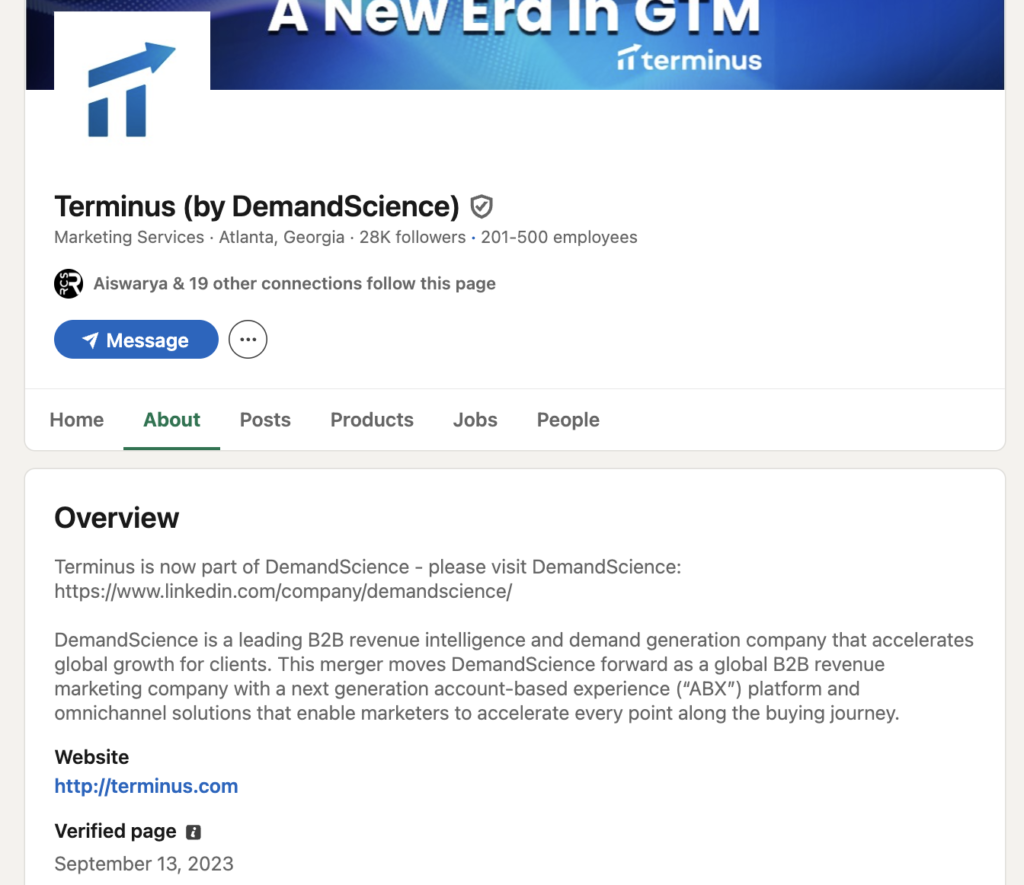
In 2026, the strategic merger of Terminus with DemandScience has resulted in one of the most powerful AI-enabled Account-Based Marketing (ABM) platforms available for LinkedIn advertising and broader digital engagement. This integration delivers a data-rich, automation-driven solution designed for mid-market and enterprise B2B teams seeking to run personalized, scalable, and performance-driven ad campaigns.
By combining Terminus’s ad-centric orchestration capabilities with DemandScience’s proprietary “Ionic” AI data layer, marketers can now identify, engage, and convert target accounts more effectively across multiple channels—including LinkedIn, display networks, and live chat experiences. The platform enables teams to optimize budget, forecast pipeline, and eliminate unqualified signals that often lead to wasted marketing efforts.
Orchestration of LinkedIn and Cross-Channel Campaigns
Terminus has long been known for its robust ad operations engine. With its integration into DemandScience, the platform now delivers unified campaign orchestration that covers LinkedIn ads, web chat, display banners, and social media. The ability to synchronize messaging across these touchpoints drives stronger buyer engagement and helps companies influence decision-makers at every stage of the funnel.
Matrix: Cross-Channel Campaign Alignment Powered by Terminus + DemandScience
| Engagement Channel | AI Coordination Layer Used | Campaign Outcome Achieved |
|---|---|---|
| LinkedIn Sponsored Ads | Intent + Buyer Data Matching | Higher opportunity creation rates |
| Display Advertising | Smart Audience Rotation | Better budget utilization across ICP segments |
| Website Chat Integrations | AI-Powered Engagement Sequences | Increased on-site session depth |
| Social Channels | Centralized Orchestration | Seamless message continuity |
DemandScience’s “Ionic” AI Layer for Data Accuracy
A critical innovation behind the platform’s success is the Ionic data layer, developed by DemandScience. This system applies AI to cleanse and verify B2B intent signals, eliminating misleading data—often referred to as the “Marketing Data Mirage.” As a result, marketers receive more accurate insights into which buyers are truly ready to engage, allowing them to avoid wasted impressions and focus LinkedIn ad spend on high-intent accounts.
Table: DemandScience Ionic Layer Capabilities
| Functionality | Description | Strategic Advantage for LinkedIn Advertising |
|---|---|---|
| Intent Signal Verification | Filters out false-positive buyer behaviors | Increases targeting accuracy |
| Real-Time Data Sync | Integrates with CRM and MAP platforms | Keeps LinkedIn campaigns aligned with sales data |
| Account Tier Scoring | Ranks account value based on verified interest | Prioritizes outreach and budget allocation |
| Mirage Detection System | Identifies invalid engagement spikes | Reduces ad waste and improves ROI |
Performance Metrics and ROI Improvements
The integration has delivered significant performance improvements across key ABM metrics, with some teams reporting as much as a 900% increase in deal size. The combination of smart engagement, clean data, and AI targeting translates into more efficient marketing spend and higher conversion rates from LinkedIn and surrounding digital ecosystems.
Table: Terminus and DemandScience ABM Performance Outcomes
| Outcome Category | Statistical Result | Primary Driver |
|---|---|---|
| On-Site Engagement | 684% Increase | Unified ads and chat activation |
| Opportunity Creation Rate | 50% Lift in New Opportunities | Precise account targeting via intent data |
| Event Attendance | 50% Higher Participation | Trigger-based retargeting of ad viewers |
| Budget Efficiency | 25% Waste Reduction | Elimination of invalid signals through Ionic layer |
| Median ACV Range | $23,000 – $57,000 | Improved audience fit and deal quality |
Salesforce and MAP Integration for Campaign Synchronization
The combined platform is built to plug directly into enterprise CRMs like Salesforce and popular Marketing Automation Platforms (MAPs) such as Marketo, HubSpot, and Pardot. This integration ensures that engagement signals from LinkedIn ads are instantly reflected across sales and marketing systems, allowing teams to act quickly on buying intent and avoid delays in follow-up.
Matrix: Platform Integration Capabilities
| System Integrated | Type of Integration | Impact on LinkedIn Campaign Execution |
|---|---|---|
| Salesforce CRM | Bi-directional account sync | Aligns ad targeting with real pipeline data |
| HubSpot / Marketo | Lead and campaign flow sharing | Triggers smart nurture campaigns based on ad views |
| LinkedIn Campaign Manager | Native ad delivery sync | Reduces delays in launch and optimization cycles |
| Slack / Teams Notifications | Activity alert triggers | Real-time alerts on account engagement events |
Conclusion
The Terminus and DemandScience merger offers a full-stack ABM solution optimized for 2026’s fast-evolving B2B landscape. With AI-driven orchestration, deep integrations, and performance-focused campaign layers, the platform enables marketing teams to run sophisticated LinkedIn ad strategies that convert at scale. It’s particularly ideal for organizations seeking measurable, defensible ROI, unified team coordination, and clean, intent-rich data to fuel every stage of the funnel. For mid-market and enterprise brands looking to transform their LinkedIn advertising into a predictable revenue engine, Terminus and DemandScience deliver unmatched strategic power.
The Economic Structure of LinkedIn Ads in 2026: High Costs, Higher Strategic Returns
In 2026, LinkedIn continues to stand apart as a premium advertising platform for B2B marketers. While its average cost metrics may appear higher compared to broader consumer-focused networks like Meta or Google, the platform delivers exceptional performance where it matters most—company-level influence and full-funnel marketing impact. LinkedIn’s value lies not in low-cost clicks, but in high-quality, conversion-ready interactions within carefully targeted professional audiences.
Advertisers leveraging LinkedIn for demand generation, account-based marketing, or high-consideration B2B sales cycles are seeing significant ROI, not just within LinkedIn itself but across connected marketing activities such as outbound sales, search ads, and website engagement. This multiplier effect is known as the “LinkedIn Halo Effect.”
LinkedIn’s Competitive Pricing and Performance Landscape
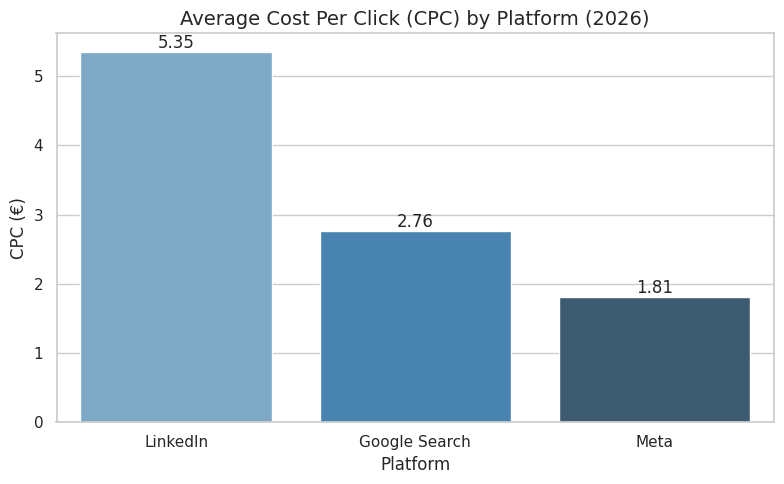
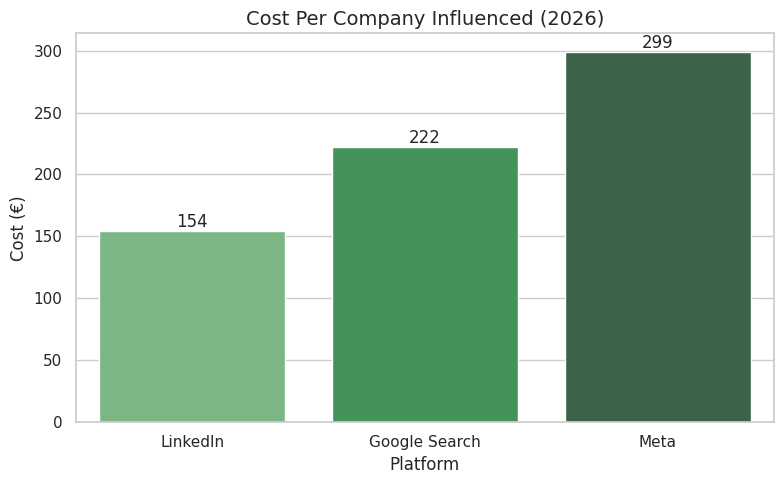
While LinkedIn advertising comes with a higher cost-per-click (CPC)—averaging around €5.35 in 2026—it delivers unmatched cost-efficiency when analyzed through the lens of company-level influence. For example, the average cost per company influenced is just €154, beating out Google Search and Meta, which record figures of €222 and €299 respectively.
This efficiency is a result of LinkedIn’s precise targeting capabilities and its ability to influence decision-makers early in the buying journey, leading to more downstream conversions from other channels.
Table: LinkedIn vs. Other Platforms – Company Influence Cost Comparison
| Metric | Google Search | Meta Ads | Insight | |
|---|---|---|---|---|
| Average CPC | €5.35 | €2.76 | €1.81 | LinkedIn has the highest CPC |
| Average Cost per Company Influenced | €154 | €222 | €299 | LinkedIn delivers the most cost-efficient B2B impact |
The LinkedIn Halo Effect: Boosting Other Channels’ ROI
One of the defining strengths of LinkedIn Ads in 2026 is its cross-channel synergy. When potential buyers are first exposed to a LinkedIn ad, they are far more likely to engage with additional marketing efforts. For example:
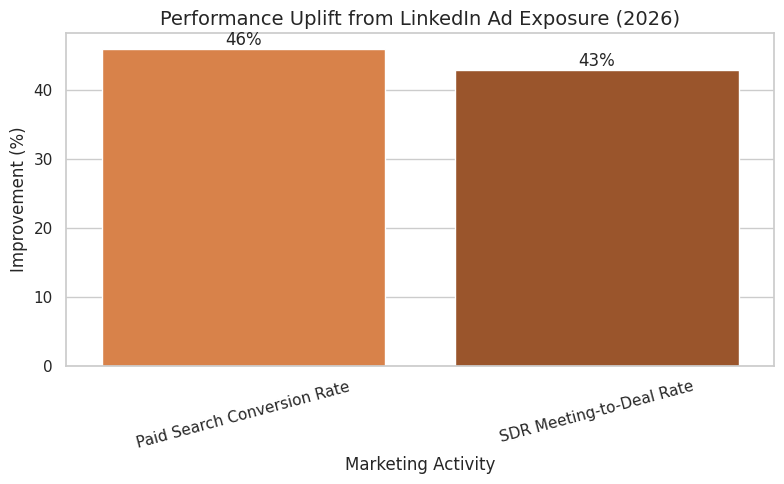
- Ideal Customer Profile (ICP) audiences exposed to LinkedIn ads convert via paid search at 46% higher rates.
- Sales Development Representatives (SDRs) report a 43% lift in meeting-to-deal conversions when leads have already seen LinkedIn ads.
Matrix: Cross-Channel Performance Improvements Triggered by LinkedIn Ads
| Marketing Channel | Improvement Rate (%) | Triggering Exposure to LinkedIn Ads |
|---|---|---|
| Paid Search Conversion Rate | +46% | Higher intent from LinkedIn awareness |
| SDR Meeting-to-Deal Rate | +43% | Warmed leads due to prior LinkedIn activity |
2026 LinkedIn Ad Benchmarks and Performance Metrics
Despite its premium pricing model, LinkedIn’s advertising benchmarks show strong performance in engagement, conversion, and ROI for B2B marketers who adopt the right strategy. High-performing advertisers are achieving elevated metrics across click-through rate (CTR), cost per lead (CPL), and return on ad spend (ROAS).
Table: LinkedIn Advertising Benchmarks and Cost Metrics (2026)
| Metric | Industry Benchmark (Median) | Top 10% Performance | Competitive Context |
|---|---|---|---|
| CPM (Cost per 1,000 Impressions) | $22.00 – $35.00 | N/A | High B2B premium positioning |
| CPC (Cost per Click) | $3.00 – $8.00 | N/A | Premium audience targeting |
| CPL (Cost per Lead) | $80.00 – $250.00 | Under $60.00 | High-consideration campaign focus |
| CTR (Click-Through Rate) | 0.47% | 0.74% or higher | Strong engagement from tailored content |
| Sponsored Content Conversion Rate | 3.03% | 8.33% or higher | Optimized for high-funnel quality traffic |
| Lead Gen Forms – ROAS | 1.13x | Up to 8x | Strong ROI when using native formats |
Conclusion
In the competitive B2B advertising space of 2026, LinkedIn remains one of the most effective yet misunderstood platforms. While the upfront costs are higher than consumer ad networks, the return per qualified company influenced—and the cascading benefits across other marketing channels—make LinkedIn an essential pillar of any serious digital strategy. For brands focused on account-level impact, long-term revenue generation, and strategic brand positioning, the economics of LinkedIn advertising continue to deliver unmatched value.
LinkedIn’s Evolving Algorithmic Landscape and Targeting Strategy in the 360Brew Era (2026)
In 2026, the way LinkedIn prioritizes and ranks content has shifted dramatically due to the widespread deployment of its proprietary 360Brew large language model (LLM). This algorithmic upgrade has transformed how visibility is earned on the platform—favoring genuine expertise, thought leadership, and personalized content over viral or formulaic posts.
For marketers using AI tools to manage LinkedIn ads, this shift means that campaign strategies must now align with what LinkedIn recognizes as “Professional Substance.” This refers to content that offers deep insight, original perspectives, or peer-recognized value. Simply automating ad creative or repurposing brand content is no longer enough.
How 360Brew Reprioritizes Content Ranking Signals
LinkedIn’s 360Brew model uses a more sophisticated layer of evaluation to determine which posts appear in-feed, with a strong focus on a user’s or brand’s contribution to the professional ecosystem. The model is designed to elevate voices that demonstrate credibility, leadership, and consistent network engagement.
Table: Key Ranking Signals Under LinkedIn’s 360Brew Model
| Signal Category | Description | Impact on Content Visibility |
|---|---|---|
| Profile and Page Consistency | Aligned visuals, up-to-date titles, and verified credentials | Boosts content trust and algorithmic confidence |
| Network Engagement Behavior | Frequency and quality of interactions with connections | Elevates posts from actively engaged professionals |
| Peer Recognition and Thought Exchange | Comments, mentions, and shares from known experts | Increases credibility score in the algorithm |
| Original Insight and Storytelling | Non-generic, firsthand knowledge shared by individuals | Heavily prioritized over branded or AI-generated content |
Consequences for B2B Campaigns in 2026
Due to these algorithmic preferences, a majority of B2B campaigns fail to generate traction on LinkedIn. Approximately 81% of them rely too heavily on polished but impersonal corporate content. Meanwhile, content shared by executives and subject-matter experts is receiving up to four times the engagement of similar posts shared by company pages.
Matrix: Human-Centric vs. Brand-Centric Content Performance
| Content Origin | Relative Engagement Level | Preferred by Algorithm |
|---|---|---|
| CEO / C-suite Thought Leadership | 4x Higher Engagement | Yes |
| Functional Experts (Marketing, Sales) | 2x Higher Engagement | Yes |
| Company Page Content | Baseline | Only if paired with community value |
| AI-Generated or Repurposed Posts | Below Baseline | Rarely boosted |
Hierarchy of Ad Formats Aligned to 2026 User Expectations
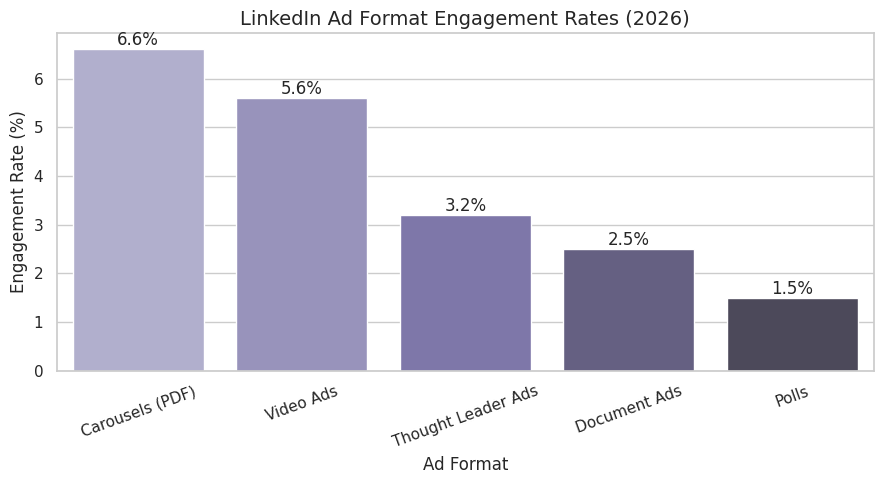
As content preferences evolve, LinkedIn’s ad formats have also undergone a reordering in effectiveness. Formats that promote depth, engagement, or interactivity now outperform more traditional promotional types. This makes it essential for ad campaigns to be crafted not just with visuals and calls-to-action, but with substance and authenticity that reflect the platform’s professional tone.
Table: LinkedIn Ad Format Performance Hierarchy (2026)
| Ad Format | Engagement Benchmark (%) | Recommended Strategic Use Case |
|---|---|---|
| Carousels (PDF) | 6.60% (Highest) | Sequential storytelling, educational narratives |
| Video Ads | 5.60% | Eye-catching awareness; high virality potential |
| Thought Leader Ads | 1.7x Higher CTR | Executive amplification and credibility extension |
| Document Ads | Variable | Value-rich TOFU content; often used for ungated PDFs |
| Polls | Highest Organic Reach | Community engagement and insight generation |
Introduction of BrandLink: LinkedIn’s New Premium Video Placement
LinkedIn has launched “BrandLink,” a high-impact in-stream ad format that allows businesses to place video ads before content from LinkedIn’s most trusted publishers. These video ads benefit from higher completion rates and enhanced brand association, outperforming standard feed-based formats in both engagement and message retention.
Matrix: BrandLink vs. Standard Video Ads
| Video Format | Placement Context | Engagement Benefit | Strategic Advantage |
|---|---|---|---|
| BrandLink Video (New) | In-stream before trusted publishers | Higher completion rate | Stronger brand recall, trusted association |
| Standard Feed Video | Native in user feed | Moderate scroll-stopping performance | Best for wide exposure campaigns |
Conclusion
The 360Brew algorithm has fundamentally reshaped how advertisers and marketers approach content delivery and engagement on LinkedIn in 2026. AI tools used for LinkedIn Ads Management must now adapt to this shift by generating campaigns that elevate individual voices, enhance professional value, and select formats that encourage meaningful interaction. For those that can align their strategies with this new landscape—particularly through tools that support thought leadership, storytelling, and AI-aided personalization—LinkedIn remains one of the most powerful B2B advertising platforms in the world.
Privacy, Compliance, and First-Party Data Strategy in LinkedIn Ads Management (2026)
In 2026, privacy regulations and compliance frameworks have fundamentally reshaped how AI tools manage LinkedIn advertising campaigns. With global enforcement of data protection laws such as GDPR and similar frameworks in APAC, North America, and the Middle East, advertisers are required to adopt new methods for targeting, tracking, and measuring performance—without relying on third-party cookies or outdated identity systems.
Leading this change is the LinkedIn Data Diamond Alliance (LiDDA), a global consortium of top ad-tech platforms collaborating to enforce privacy-safe ad targeting practices. This alliance ensures that AI-based tools used in LinkedIn ads remain fully compliant, while still delivering high precision through ethical and consent-driven data processes.
LiDDA and the New Era of Privacy-Safe AI Targeting
The LiDDA framework is now considered the gold standard for compliance in LinkedIn advertising. It enforces the use of secure, server-side tracking methods and ensures that user identities are verified through encrypted consent-driven signals. This standard provides a robust foundation for AI targeting systems while preserving the integrity of the user experience and adhering to legal data boundaries.
Matrix: Role of LiDDA in LinkedIn Ads Compliance and AI Accuracy
| Component of LiDDA Framework | Description | Impact on LinkedIn Ad Campaigns |
|---|---|---|
| Server-Side Measurement Protocols | Shifts away from browser-based cookies | Ensures more reliable and regulation-compliant data |
| Privacy-Safe Identifiers | Uses hashed professional signals | Enables identity without compromising user consent |
| Ad-Tech Certification | Standardized audits for AI ad tools | Builds trust in AI-driven automation |
| Consent Synchronization | Aligns platform settings with user privacy controls | Reduces risk of policy violations |
First-Party Data Fusion: The Foundation of Smart LinkedIn Targeting in 2026
As third-party cookies have been phased out across browsers, first-party data has become the essential fuel for AI targeting engines. LinkedIn’s own verified user base—combined with CRM data from advertisers—now powers the most accurate and responsive targeting strategies available in the B2B ad ecosystem.
Platforms such as 6sense and Demandbase have built advanced features around this concept, referred to as “First-Party Data Fusion.” This method creates dynamic “Matched Audiences” by syncing an organization’s internal CRM, marketing automation data, and firmographic details with LinkedIn’s rich professional profiles.
These matched audiences are continuously updated based on real-time career signals, such as job changes, promotions, or recent activity. The result is highly relevant audience segments that evolve with the buyer’s journey, increasing the effectiveness of LinkedIn advertising throughout the sales funnel.
Table: First-Party Data Fusion Capabilities in LinkedIn Ad Platforms (2026)
| Feature | Functional Description | Benefit for LinkedIn Ads Management |
|---|---|---|
| CRM Integration | Connects internal databases to LinkedIn audience segments | Automates matched audience creation |
| Career Signal Monitoring | Tracks user changes like title updates or job switches | Keeps targeting in sync with buyer lifecycle |
| Role-Based Retargeting | Realigns ad messaging based on evolving professional roles | Increases relevance and reduces ad fatigue |
| Consent-Based ID Mapping | Uses LinkedIn’s opt-in data frameworks | Ensures privacy-compliant personalization |
Strategic Importance of First-Party Data for AI Tools in 2026
AI tools such as 6sense, Demandbase, and Terminus now rely heavily on first-party data infrastructure to deliver compliant and precise targeting. These tools access data from sources like Salesforce, HubSpot, and LinkedIn APIs to align targeting with sales pipelines, account lists, and ongoing intent signals.
Matrix: Strategic Role of First-Party Data in LinkedIn Ads AI Tools
| AI Tool | First-Party Data Feature Set | Strategic LinkedIn Use Case |
|---|---|---|
| 6sense | Intent-driven CRM + LinkedIn profile matching | Real-time audience updates for ABM campaigns |
| Demandbase | Dynamic audience enrichment via data fusion | Personalized top- and mid-funnel LinkedIn content |
| Terminus | Role-triggered segmentation and messaging | Nurturing deals through career path changes |
Conclusion
In the privacy-conscious digital landscape of 2026, LinkedIn advertising has become a model for responsible, data-driven performance marketing. Thanks to frameworks like LiDDA and the shift toward first-party data fusion, AI tools now deliver not just powerful targeting, but also regulatory alignment and long-term trust.
The top AI tools in LinkedIn Ads Management—such as 6sense, Demandbase, and Terminus—have evolved to integrate these new standards deeply, ensuring every ad delivered is both effective and compliant. For brands aiming to thrive in this environment, aligning LinkedIn strategies with privacy-forward data and AI orchestration is no longer optional—it’s essential.
Navigating the Future of LinkedIn Advertising: AI Precision, Creative Velocity, and Revenue Attribution in 2026
LinkedIn advertising in 2026 is shaped by a new set of expectations that challenge outdated approaches to automation. While artificial intelligence now powers nearly every aspect of campaign development—from targeting and audience segmentation to content production and performance analytics—the platform has simultaneously raised the bar for quality, relevance, and human authenticity. The most successful marketers are no longer just automating for efficiency, but using AI tools for precision, personalization, and revenue alignment.
Leading organizations are deploying the top 10 AI tools for LinkedIn Ads Management not only to scale faster, but to make smarter, data-driven decisions based on real buyer intent. These tools help brands move beyond superficial demographics and focus on engaging professionals at the exact moment they’re showing signs of active interest or decision-making behavior.
AI Tools as Enablers of Precision Over Automation
Instead of relying on basic automation, modern AI tools enable sophisticated campaign orchestration tailored to professional context and verified behaviors. These tools interpret career signals, firmographic changes, and buying group dynamics to help marketers deploy LinkedIn campaigns that are timely, targeted, and revenue-centric.
Matrix: AI Application Shift – From Broad Automation to Precision Marketing
| AI Function Area | Outdated Approach (Pre-2026) | Modern AI Application (2026) | Value to LinkedIn Strategy |
|---|---|---|---|
| Audience Targeting | Generic filters (job title, region) | Intent-based signals and buyer journey tracking | Focused budget allocation and higher ROI |
| Ad Creation | Static creatives reused at scale | Automated generation of variations using AI | Increased engagement, less fatigue |
| Campaign Goals | Lead generation volume | Revenue and pipeline attribution | Direct alignment with sales outcomes |
| Reporting and Analytics | Click-through and form fill metrics | Multi-touch attribution and deal velocity impact | Enhanced CMO-level decision making |
Creative Velocity as a Competitive Necessity
In today’s 360Brew-powered LinkedIn ecosystem, content that lacks depth or originality is quickly deprioritized by the algorithm. To remain visible and credible, brands must operate with high “Creative Velocity”—the ability to consistently produce engaging, relevant, and expert-driven content at scale.
AI tools such as Predis.ai and DigitalFirst.ai empower marketers to maintain this momentum by automating design, video production, and post-level optimization. This allows creative teams to treat content as a renewable asset, continuously adapted to audience signals without loss of personalization.
Table: Creative Velocity Metrics Enabled by Top AI Tools
| AI Tool | Creative Automation Feature | Time Saved Per Campaign | Competitive Outcome Achieved |
|---|---|---|---|
| Predis.ai | Text-to-video, visual pivoting engine | 10–15 hours/week | Constant visual refresh to fight ad fatigue |
| DigitalFirst.ai | Canvas workflow with multi-model input | 20+ hours/week | Seamless flow from research to production |
| Factors.ai | Engagement-based optimization feedback | N/A | Aligns creative with conversion signals |
From Lead Generation to Revenue Attribution
The biggest shift in 2026 is philosophical. Traditional lead generation KPIs—such as form fills and MQL counts—are being replaced with more meaningful business metrics. Brands are shifting their focus toward pipeline acceleration and revenue attribution. This shift is supported by AI platforms like 6sense, Demandbase, and Terminus that integrate deeply with CRM and sales data to track how LinkedIn ads influence deals, renewals, and upsell opportunities.
Table: Transition from Lead Metrics to Revenue Attribution Goals
| Campaign Goal Category | Pre-2026 Focus | 2026 Strategic Focus | AI Tool Alignment |
|---|---|---|---|
| Volume of Leads | Form submissions and downloads | Quality pipeline contribution | Demandbase, Terminus |
| Ad Engagement | Click-through rates and likes | Meeting creation and deal movement | 6sense, Influ2 |
| Conversion Tracking | Isolated ad conversion forms | Full-funnel revenue attribution | Factors.ai, Metadata.io |
| ROI Metrics | Basic ROAS on ad spend | Account-level revenue lift over time | Sprout Social, DemandScience |
Unlocking the 32% Revenue Growth Hidden Behind the Data Mirage
Many organizations still struggle with what experts call the “Marketing Data Mirage”—a distorted view of performance caused by siloed metrics and non-actionable insights. The use of advanced AI tools helps cut through this illusion by connecting campaign data directly to financial outcomes. Those who master this AI-powered alignment between marketing activities and revenue results are expected to unlock up to 32% additional growth annually—currently hidden behind fragmented analytics and incomplete attribution models.
Matrix: Revenue Unlock Potential via AI-Powered Attribution
| Barrier to Growth | AI-Driven Solution | Business Result Unlocked |
|---|---|---|
| Siloed campaign data | Cross-channel unification via AI tools | Unified reporting across LinkedIn and CRM |
| Misleading conversion metrics | View-through and multi-touch attribution | Accurate influence measurement on closed revenue |
| Limited sales-marketing alignment | Real-time lead prioritization using buyer signals | Higher conversion rates from ad-influenced meetings |
Conclusion
The future of LinkedIn advertising in 2026 belongs to those who combine the power of AI with a deep understanding of buyer intent, creative engagement, and measurable revenue impact. The top 10 AI tools highlighted across this report aren’t just designed for automation—they’re built to empower marketers to work smarter, tell richer stories, and align more tightly with the goals of the business.
By shifting focus from volume to value, and from basic optimization to revenue orchestration, leading B2B brands are transforming LinkedIn from a promotional platform into a precision-led growth engine. Those who adapt to this new era—with the support of AI—stand to outperform their competition in visibility, credibility, and revenue growth.
Conclusion
As the digital advertising landscape becomes increasingly competitive and regulated, the role of AI in LinkedIn ads management has shifted from being a helpful enhancement to a mission-critical requirement. In 2026, businesses aiming to achieve meaningful growth through LinkedIn must do more than just automate campaigns—they must adopt precision-focused, intent-driven, and privacy-aligned strategies made possible by the most advanced AI tools available.
The top 10 AI platforms featured throughout this guide—ranging from Metadata.io and 6sense to Sprout Social and DemandScience—are reshaping how B2B marketers approach targeting, content creation, attribution, and performance measurement. These tools go far beyond traditional automation. They integrate deeply with CRM systems, leverage first-party data, support advanced orchestration across ad formats, and comply with global data regulations like GDPR through initiatives such as the LiDDA framework.
At the core of successful LinkedIn advertising in 2026 is a blend of four key elements:
- AI precision: Enabling real-time, hyper-targeted ad delivery based on behavioral and professional intent signals.
- Creative velocity: Maintaining a steady stream of high-quality content variations using AI-powered design, copywriting, and video generation.
- Revenue attribution: Shifting focus from lead generation to pipeline contribution and measurable ROI using AI-driven reporting and integrations.
- Privacy and compliance: Building trust through data-secure systems that align with regulatory standards, while still allowing deep personalization.
The LinkedIn algorithm—now shaped by the 360Brew engine—rewards professional substance over virality, pushing brands to craft more human, insight-rich narratives. AI tools that support executive amplification, document storytelling, and real-time campaign refinement are helping marketers adapt to this new expectation. Campaigns backed by executive thought leadership or authentic content outperform brand pages alone, emphasizing the need for a multi-dimensional strategy.
Moreover, as third-party cookies fade and customer acquisition costs fluctuate, LinkedIn’s value is increasingly tied to how well brands can harness first-party data. Platforms like Demandbase and 6sense are leading in “first-party data fusion,” enabling marketers to target matched audiences dynamically based on verified career signals, rather than static segments.
All of these changes point to one conclusion: success in LinkedIn ads management in 2026 requires the intelligent use of advanced AI tools that support speed, depth, security, and strategy. Brands that embrace these technologies and align their content, targeting, and measurement strategies accordingly will unlock scalable growth, outperform competitors, and gain clearer visibility into what truly drives pipeline and revenue.
LinkedIn is no longer just a channel for professional visibility—it’s now a fully integrated performance marketing platform. And with the right AI tools in place, it has the power to become your most efficient, measurable, and impactful growth engine in the B2B landscape.
If you find this article useful, why not share it with your hiring manager and C-level suite friends and also leave a nice comment below?
We, at the 9cv9 Research Team, strive to bring the latest and most meaningful data, guides, and statistics to your doorstep.
To get access to top-quality guides, click over to 9cv9 Blog.
To hire top talents using our modern AI-powered recruitment agency, find out more at 9cv9 Modern AI-Powered Recruitment Agency.
People Also Ask
What are the best AI tools for LinkedIn Ads management in 2026?
The best AI tools include platforms that automate targeting, bidding, creative generation, and revenue attribution. Leading solutions focus on intent-based marketing, first-party data integration, and pipeline-driven reporting.
Why should businesses use AI for LinkedIn advertising in 2026?
AI improves audience precision, reduces wasted ad spend, automates testing, and aligns campaigns with revenue goals. It helps B2B teams scale LinkedIn Ads while maintaining high engagement quality.
How do AI tools improve LinkedIn ad targeting?
AI tools analyze intent signals, CRM data, and professional insights to build dynamic matched audiences. This ensures ads reach decision-makers at the right stage of the buying journey.
Can AI tools reduce LinkedIn ad costs?
Yes. AI optimizes bids, reallocates budget to top-performing creatives, and eliminates low-intent accounts. This reduces cost per opportunity and improves overall return on ad spend.
What is intent-based targeting in LinkedIn Ads?
Intent-based targeting uses behavioral data and buying signals to identify accounts actively researching solutions, allowing marketers to prioritize high-value prospects.
How does AI help with LinkedIn ad creative production?
AI generates ad copy, visuals, carousels, and videos quickly. It also creates multiple variations to prevent ad fatigue and maintain engagement.
Are AI tools compliant with privacy regulations?
Most leading AI platforms use first-party data and server-side tracking to comply with regulations like GDPR while maintaining accurate performance measurement.
What is the LinkedIn Halo Effect?
The LinkedIn Halo Effect refers to improved performance across other channels, such as paid search and outbound sales, after prospects are exposed to LinkedIn ads.
How do AI tools support account-based marketing on LinkedIn?
AI platforms align LinkedIn Ads with CRM account lists, track engagement by buying group, and trigger ads based on account-level intent data.
Which LinkedIn ad formats perform best in 2026?
Carousel ads, video ads, and thought leader ads perform strongly. AI tools help optimize these formats based on engagement and conversion data.
What is first-party data fusion in LinkedIn advertising?
First-party data fusion combines internal CRM data with LinkedIn’s verified profiles to create real-time matched audiences for better targeting accuracy.
How does AI improve LinkedIn ad attribution?
AI tracks multi-touch interactions, including view-through conversions, and connects ad engagement to pipeline and revenue outcomes.
Is LinkedIn advertising still expensive in 2026?
LinkedIn has higher CPC compared to other platforms, but it delivers lower cost per company influenced and stronger B2B revenue impact.
Can AI tools integrate with Salesforce and HubSpot?
Yes. Most enterprise-grade AI platforms integrate directly with CRM and marketing automation systems to synchronize ad data with sales pipelines.
How does AI help prevent ad fatigue on LinkedIn?
AI generates creative variations, rotates messaging, and tests layouts automatically, ensuring campaigns stay fresh and engaging.
What metrics matter most for LinkedIn Ads in 2026?
Pipeline contribution, revenue attribution, deal velocity, and cost per opportunity are more important than simple clicks or impressions.
How does LinkedIn’s 360Brew algorithm affect ads?
The 360Brew model rewards authentic, expert-driven content. AI tools must align creatives with professional substance rather than generic messaging.
Are AI-generated LinkedIn ads effective?
Yes, when combined with real insights and personalization. AI supports quality and scale, but authenticity remains essential for performance.
What is view-through conversion tracking?
View-through tracking measures conversions that occur after users see an ad but do not click, capturing the full influence of LinkedIn display ads.
How can AI improve LinkedIn lead quality?
AI identifies high-intent accounts, prioritizes buying groups, and filters out low-value leads to increase Sales Qualified Leads.
Do small businesses benefit from LinkedIn Ads AI tools?
Yes. Many AI platforms offer scalable pricing and automation that help small teams compete with larger enterprises.
How does AI improve LinkedIn ad bidding strategies?
AI analyzes performance data in real time and adjusts bids automatically to maximize conversions while controlling costs.
What role does creative velocity play in LinkedIn Ads?
Creative velocity refers to consistently producing high-quality content. AI enables rapid testing and variation to sustain engagement.
Can AI tools forecast LinkedIn campaign performance?
Advanced platforms use predictive analytics to estimate pipeline impact and revenue outcomes before campaigns fully mature.
How do AI tools support thought leadership ads?
AI amplifies executive content, optimizes messaging, and identifies high-value audiences to increase engagement and credibility.
Is LinkedIn better than Meta for B2B advertising?
For B2B targeting, LinkedIn typically delivers stronger company-level influence and higher contract value compared to consumer-focused platforms.
How often should LinkedIn ads be refreshed in 2026?
High-frequency campaigns may require updates every 48 to 72 hours. AI tools automate creative refresh cycles to maintain performance.
What is account-level targeting in LinkedIn Ads?
Account-level targeting focuses on specific companies rather than broad audiences, aligning campaigns with defined Ideal Customer Profiles.
How do AI tools improve LinkedIn reporting?
They consolidate multi-channel data, provide real-time dashboards, and connect ad metrics directly to sales outcomes.
What is the future of AI in LinkedIn Ads management?
The future centers on precision targeting, privacy-safe data, automated creative production, and full-funnel revenue attribution driven by advanced AI systems.
Sources
Martal Group
The Social Shepherd
The ABM Agency
Averi AI
DemandScience
GlobeNewswire
PPC Land
Factors.ai
ALM Corp
Cognism
Metadata
Tracxn
PitchBook
Dimmo AI
TrustRadius
G2
GetApp
ZenABM
Directive Consulting
Martech Edge
6sense
Demandbase
Derrick App
Influ2
SBL
Bloomberry
Martech Cube
Max Productive AI
Digital First AI
Marketing Agent
SalesRobot
Salesforge
HeyReach
Nextiva
Sprout Social
Hootsuite
Hey Sid
Firebrand Communications
The Business Tycoon Magazine
Uncommon Logic
Distk
Dealfront
InfiniGrow