
Key Takeaways
- AI personal assistants in 2026 go beyond chat, acting as autonomous operators that manage workflows, decisions, and execution across connected systems.
- The leading AI assistants deliver measurable ROI through automation, containment rates, and faster time-to-value, making them core digital infrastructure.
- Governance, interoperability, and contextual intelligence now define the most trusted AI personal assistants across enterprise and everyday use.
Artificial intelligence has entered a decisive new phase in 2026, and nowhere is this transformation more visible than in the rise of AI personal assistants. What began as simple chat-based helpers has evolved into a powerful class of autonomous, context-aware digital partners that actively manage work, decisions, and daily complexity. Today’s AI personal assistants do far more than answer questions. They plan schedules, execute workflows, coordinate across tools, analyse data, enforce rules, and adapt in real time to changing priorities.

In 2026, AI personal assistants are no longer experimental technology or optional productivity add-ons. They are becoming core digital infrastructure for individuals, teams, and enterprises. Professionals rely on them to protect focus time, manage overloaded calendars, and automate routine planning. Businesses deploy them to handle customer interactions, procurement, research, reporting, and internal operations at scale. Executives increasingly view them as strategic assets that directly impact efficiency, cost control, and competitive advantage.
One of the most important shifts driving this evolution is autonomy. Modern AI personal assistants are agentic by design. They can interpret goals, break them into steps, take action across multiple systems, and adjust when conditions change. Instead of waiting for constant instructions, they operate within defined boundaries, escalating to humans only when necessary. This ability to move from conversation to execution is what separates the leading AI personal assistants of 2026 from earlier generations.
Another defining characteristic is integration. The top AI personal assistants in 2026 are deeply connected to calendars, documents, messaging platforms, enterprise software, data sources, and external services. Through standardized protocols and secure APIs, they act as orchestration layers that bridge intent and outcome. This allows them to function across fragmented tech stacks, eliminating the inefficiencies caused by switching between disconnected tools.
Economic impact has also become impossible to ignore. Organizations now measure AI assistant performance using clear metrics such as time-to-value, containment rates, productivity gains, and cost savings. Mature deployments routinely demonstrate strong returns on investment, often within months. AI personal assistants handle tasks at a fraction of the cost of human labor while operating continuously and consistently. As a result, adoption in 2026 is driven by proven business value rather than speculation or hype.
At the same time, governance, security, and ethics have moved to the forefront. As AI assistants gain more responsibility, enterprises and regulators demand explainability, auditability, and strict access controls. The most trusted AI personal assistants are built with compliance and accountability at their core, ensuring they operate within legal, ethical, and organizational boundaries. This balance between autonomy and control is a key differentiator in the current landscape.
Societal and technological trends are further shaping how AI personal assistants are designed and used. The rise of sovereign AI reflects growing concern over data ownership and national control. Awareness of over-reliance on automation has renewed focus on human critical thinking and decision-making. Meanwhile, advances in computing infrastructure, including hybrid and next-generation systems, are expanding what AI assistants can achieve, particularly in research, science, and complex problem-solving.
Against this backdrop, understanding the leading AI personal assistants of 2026 is essential for anyone looking to stay relevant and competitive. Each assistant brings a different strength to the table, whether it is deep reasoning, real-time awareness, productivity automation, enterprise execution, research accuracy, or creative collaboration. Together, they represent the future of how humans and intelligent systems work side by side.
This guide to the top 10 AI personal assistants you need to know in 2026 explores the platforms that are defining this new era. It examines why they matter, how they differ, and what makes them essential tools in an increasingly autonomous digital economy. Whether you are an individual professional, a business leader, or a technology decision-maker, understanding these AI personal assistants is no longer optional. It is a critical step toward navigating the future of work, productivity, and intelligent collaboration.
Before we venture further into this article, we would like to share who we are and what we do.
About 9cv9
9cv9 is a business tech startup based in Singapore and Asia, with a strong presence all over the world.
With over nine years of startup and business experience, and being highly involved in connecting with thousands of companies and startups, the 9cv9 team has listed some important learning points in this overview of the Top 10 AI Personal Assistants You Need To Know in 2026.
If you like to get your company listed in our top B2B software reviews, check out our world-class 9cv9 Media and PR service and pricing plans here.
Top 10 AI Personal Assistants You Need To Know in 2026
- ChatGPT
- Google Gemini
- Microsoft Copilot
- Apple Siri
- Amazon Alexa+
- Claude
- Meta AI
- Grok
- Perplexity AI
- Motion
1. ChatGPT


OpenAI continues to hold a leading position in the global AI personal assistant market as the industry moves into 2026. ChatGPT remains the company’s flagship assistant and is widely recognised as the most adopted conversational AI worldwide. Current market estimates show ChatGPT controlling approximately 48.36 percent of the global AI chatbot market, making it the single most influential AI personal assistant in active use today.
Also, read our latest list of ChatGPT statistics.
From a strategic perspective, OpenAI’s growth in 2026 is driven not only by conversational intelligence but also by a shift toward AI-native browsing and task automation. This shift is embodied in the Atlas Browser ecosystem, which represents a fundamental rethinking of how users interact with the web.
Atlas Browser and AI-Native Web Interaction
The Atlas Browser, introduced in late 2025, replaces the traditional search-centric web experience with a conversation-first interface. Instead of relying on isolated search queries, Atlas enables users to interact with the web as an ongoing dialogue. The assistant is capable of understanding user intent over time, allowing browsing sessions to feel continuous rather than fragmented.
Built on a Chromium foundation, Atlas integrates a full semantic context layer. This layer allows the AI to retain awareness of user goals, topics of interest, and previously summarised information across multiple browsing sessions. As a result, users no longer need to repeatedly explain context, significantly reducing friction in research, planning, and decision-making tasks.
Agent Mode and Autonomous Task Execution
One of the most impactful innovations within Atlas is Agent Mode. This feature allows ChatGPT to act as a supervised digital worker capable of performing actions on the user’s behalf. The assistant can click interface elements, complete forms, switch between tabs, and execute structured workflows with minimal user intervention.
In practical terms, this transforms routine web tasks into automated processes. For example, a task that previously required extensive manual effort, such as researching vendors, comparing pricing data, organising findings into a spreadsheet, and sharing results with a team, can now be completed in a fraction of the time. What once took close to two hours of manual work can be reduced to roughly twenty minutes through guided automation.
This capability positions ChatGPT as more than a conversational assistant, moving it firmly into the category of an operational AI personal assistant for professionals and organisations.
Access Levels and Capability Tiers
OpenAI offers multiple access tiers for ChatGPT and Atlas, each designed to support different user needs, from casual exploration to enterprise-level automation.
Tier Comparison Table
Tier | Monthly Cost | Agent Mode Capabilities | Memory and Context Features
Free | $0 | No agent access, basic chat and search | Local session only
Plus | $20 | Basic navigation and page summaries | Persistent topic memory
Pro | $200 | Multi-step workflows and task automation | Full semantic context
Business | Custom pricing | Admin-controlled automation and API access | Domain-level policies
Enterprise | Custom pricing | Workspace-wide automation | Advanced audit logs and governance
This tiered structure allows individuals, teams, and large enterprises to adopt AI assistance at a scale that matches their operational complexity.
Economic Scale and Market Reach
OpenAI’s commercial performance reinforces its leadership in the AI personal assistant space. By 2025, the company had reached approximately $10 billion in annual recurring revenue, with long-term projections aiming toward $125 billion by 2029. This rapid growth is supported by one of the largest user bases in the technology sector.
Weekly active users were estimated at around 800 million by April 2025, with internal targets focused on surpassing 1 billion users by late 2026. Usage data further indicates that ChatGPT accounts for roughly 69 percent of all AI-tool-related web traffic, highlighting its dominance in day-to-day AI interactions. Additionally, more than 83 percent of individuals who use AI tools at home primarily rely on ChatGPT, underscoring its role as the default AI personal assistant for consumers.
Strategic Position in the Top AI Personal Assistants for 2026
Within the landscape of the top 10 AI personal assistants for 2026, ChatGPT stands out due to its combination of conversational intelligence, memory continuity, browser-level automation, and massive user adoption. The integration of Atlas and Agent Mode shifts the assistant from a reactive information provider to a proactive execution platform.
This evolution positions ChatGPT not just as a leading chatbot, but as a central digital assistant capable of managing research, productivity, and operational workflows at both individual and organisational levels. As AI personal assistants continue to evolve, OpenAI’s ecosystem sets a benchmark for how deeply AI can be embedded into everyday digital activity.
2. Google Gemini

Google has positioned Gemini as one of the most influential AI personal assistants shaping daily digital life in 2026. The company’s long-term strategy is centred on what it describes as ubiquitous integration, where AI works quietly in the background while being deeply embedded across devices, software, and workflows. Rather than existing as a standalone tool, Gemini is designed to function as an always-present intelligence layer across Android, productivity tools, and smart home environments.
Check out the latest list of Google Gemini statistics.
Within the broader landscape of the top 10 AI personal assistants for 2026, Gemini stands out for its scale of integration, advanced reasoning depth, and strong focus on multimodal intelligence.
Gemini 3.0 as Google’s Flagship AI Assistant
Gemini 3.0 represents a major leap forward in long-context reasoning and multimodal understanding. The model is capable of handling context windows ranging from one million to two million tokens, allowing it to process extremely large inputs in a single reasoning session. This includes full software codebases, long-form technical documentation, multi-hour video content, and extensive research material.
For users, this capability translates into fewer interruptions, reduced need for chunking information, and more accurate outcomes when working on complex tasks. Gemini can analyse, reason, and respond to large-scale inputs in a way that closely mirrors how humans review complete projects rather than fragmented pieces.
Advanced Reasoning and Deep Think Capabilities
Gemini 3.0 Pro has set new benchmarks in AI reasoning performance. It became the first AI model to exceed a 1500 Elo rating on the LMArena benchmark, signalling leadership in both logical reasoning and multimodal problem-solving.
A defining feature is Deep Think mode, which allocates additional computation time to complex queries. This approach significantly improves abstract reasoning accuracy. On the ARC-AGI-2 test, Gemini achieved a score of 45.1 percent, nearly three times higher than comparable models from the previous year. This makes Gemini particularly effective for research, strategic planning, scientific analysis, and advanced software development.
Performance and Cost Comparison Overview
The Gemini ecosystem includes multiple variants optimised for different use cases, balancing performance, speed, and cost efficiency.
Gemini 3.0 Performance and Cost Comparison Table
Metric | Gemini 3.0 Pro | Gemini 3.0 Flash | Practical Impact
GPQA Diamond (Science) | 91.9% | 90.4% | Near PhD-level scientific reasoning
LiveCodeBench Elo | 2439 | 2315 | Industry-leading coding ability
Video-MMMU Accuracy | 87.6% | 86.9% | Strong video and visual analysis
Time to First Token | 450 ms | 218 ms | Faster real-time interactions with Flash
Input Cost per Million Tokens | $2.00 | $0.50 | Flash offers high value for scale
Output Cost per Million Tokens | $12.00 | $3.00 | Cost-efficient enterprise deployment
This flexible pricing and performance structure allows Gemini to scale from individual users to large enterprises without sacrificing usability or responsiveness.
Gemini for Home and Proactive Assistance
In consumer environments, Google has transitioned its traditional assistant into Gemini for Home. This evolution allows the assistant to use multimodal data from connected devices such as cameras, sensors, and smart displays. Instead of waiting for voice commands, Gemini can offer proactive suggestions based on context, activity patterns, and environmental signals.
This shift turns the AI into a digital household manager capable of anticipating needs, enhancing safety, and improving daily routines through contextual awareness rather than manual input.
Multimodal Creativity and Rapid User Adoption
One of the strongest growth drivers for Gemini in 2026 has been its multimodal creativity features. The introduction of Nano Banana image generation within the Gemini ecosystem attracted approximately 10 million new users within its first week. This rapid adoption highlights the strong appeal of AI tools that combine text, image, video, and creative generation in a single interface.
These capabilities position Gemini as both a productivity assistant and a creative partner, expanding its relevance beyond traditional task management.
Unified Workspace and Productivity Integration
Gemini’s deep integration with Google Workspace transforms it into a central command layer for professional work. The assistant can connect directly to documents, spreadsheets, terminals, browsers, and development environments. Users can navigate files, execute code, summarise content, and manage workflows within one continuous conversation.
This unified approach reduces tool switching and cognitive load, allowing professionals to focus on outcomes rather than interfaces. Gemini effectively acts as an orchestration layer across the digital workspace.
Strategic Role Among the Top AI Personal Assistants for 2026
Within the competitive landscape of AI personal assistants, Gemini 3.0 distinguishes itself through scale, deep reasoning, and seamless ecosystem integration. Its ability to handle massive context, support advanced reasoning, operate across devices, and unify productivity workflows places it firmly among the most capable AI assistants of 2026.
For users seeking an AI assistant that blends invisibility with power, Gemini represents Google’s vision of intelligence that is always present, highly capable, and deeply embedded into everyday digital life.
3. Microsoft Copilot

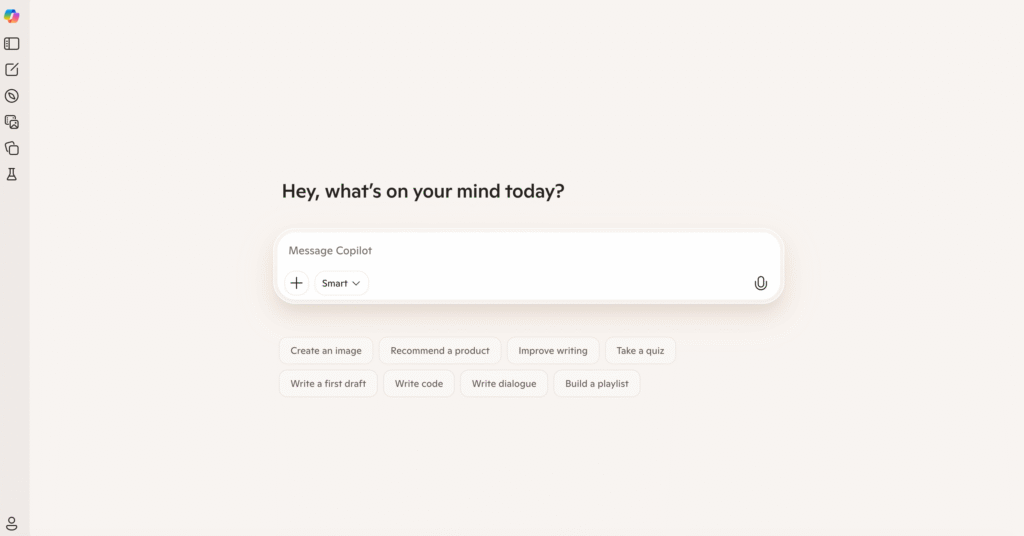
Microsoft has positioned Copilot as one of the most powerful AI personal assistants within the top 10 AI assistants for 2026, with a clear focus on enterprise execution, large-scale automation, and decision intelligence. By 2026, Copilot is no longer a simple productivity add-on. Instead, it functions as a core intelligence layer embedded across the entire Microsoft 365 ecosystem.
This transformation is supported by Microsoft’s long-term cloud and AI strategy, including massive investments in AI infrastructure and deep integration across workplace software, cloud platforms, and custom hardware.
Copilot as the Core Intelligence Layer of Microsoft 365
Microsoft Copilot has evolved far beyond its early role as a sidebar assistant. In 2026, it operates as a foundational system that connects emails, documents, meetings, spreadsheets, code repositories, and enterprise data into one unified AI-driven workflow.
Industry forecasts suggest that Copilot will be embedded in close to 80 percent of enterprise workplace applications by the end of 2026. This level of adoption reflects a shift in how organisations view AI, moving from optional productivity tools to essential digital coworkers that operate continuously across teams and departments.
Custom AI Hardware and Distributed Computing Power
A major enabler of Copilot’s performance is Microsoft’s next-generation AI chip, Braga. This custom hardware is designed to deliver dense computing power across distributed cloud environments. When combined with Microsoft’s global cloud infrastructure, Braga allows Copilot to operate at scale while maintaining speed, reliability, and cost efficiency.
Within Microsoft’s cloud strategy, AI workloads are dynamically managed to ensure optimal use of computing resources. This approach allows enterprises to run complex AI agents without excessive energy consumption or performance bottlenecks, making large-scale AI deployment commercially viable.
AI Agents as Digital Teammates
Microsoft’s leadership has emphasised that AI agents in 2026 behave more like teammates than traditional tools. In many organisations, Copilot-powered agents now mirror human service roles, working in parallel with employees to remove bottlenecks and automate repetitive operational tasks.
Approximately 30 percent of enterprises have already implemented parallel AI functions, where AI agents handle tasks such as data validation, report generation, workflow routing, and incident triage. This reduces time spent on administrative work and allows human teams to focus on strategic and creative responsibilities.
Enterprise Adoption and Measurable Business Impact
The widespread adoption of Copilot has produced measurable improvements across cost efficiency, productivity, and employee experience.
Microsoft Copilot Enterprise Impact Overview Table
Indicator | Measured Impact | Business Context
Median cost reduction | 40% | Cost per unit of work produced
Customer incident containment | 80% | Resolved without human intervention
Workflow automation speed | 23% improvement | Mature, AI-enabled workflows
Employee satisfaction | 90% | Teams supported by AI agents
B2B procurement decisions | 15% | Daily decisions influenced by AI
These metrics demonstrate that Copilot delivers value not only through automation, but also through faster decision-making and improved service quality.
AI-Driven Leadership and Strategic Decision Support
One of the most significant developments expected in 2026 is the rise of AI-supported leadership structures. Many enterprises are experimenting with what are often described as AI shadow boards. These are collections of AI agents that simulate market conditions, operational risks, and strategic scenarios to support executive decision-making.
For senior leaders, this means access to continuous scenario modelling, rapid data synthesis, and unbiased analytical input. AI agents can evaluate thousands of variables simultaneously, providing decision support that would be impractical for human teams alone.
AI Lab Assistants and Advanced Research Support
In research-driven organisations, Copilot is increasingly used as an AI lab assistant. These agents are capable of suggesting experiments, analysing results, and even running simulations in advanced fields such as materials science, molecular dynamics, and applied engineering.
This capability significantly accelerates research cycles and lowers the barrier to innovation. Individual researchers can operate with the support of an always-available AI collaborator that handles computation-heavy tasks and proposes data-driven insights.
Cloud Orchestration and Energy Efficiency
Underlying all of these capabilities is Microsoft’s approach to cloud orchestration. AI workloads are managed across distributed systems to ensure maximum efficiency, with computing power allocated dynamically based on demand. This ensures that every unit of energy contributes directly to productive AI output rather than idle capacity.
This infrastructure-level optimisation is a key reason why Microsoft can deploy large numbers of enterprise AI agents without compromising sustainability or performance.
Strategic Position Among the Top AI Personal Assistants for 2026
Within the competitive landscape of the top 10 AI personal assistants for 2026, Microsoft Copilot stands out for its enterprise depth, operational scale, and measurable business impact. Rather than focusing on conversational features alone, Copilot excels at execution, automation, and decision intelligence across complex organisational environments.
For enterprises seeking an AI personal assistant that operates as a true digital workforce partner, Microsoft Copilot represents one of the most advanced and mature solutions available in 2026.
4. Apple Siri

Apple has taken a distinct and carefully paced approach to AI personal assistants as it moves into 2026. Rather than prioritising speed-to-market, Apple’s strategy focuses on a long-term rebuild of Siri using large language models while maintaining strict privacy and data protection standards. This approach positions Apple differently from other players in the top 10 AI personal assistants for 2026, with a strong emphasis on trust, on-device intelligence, and seamless integration across the Apple ecosystem.
Apple Intelligence as a Local-First AI Strategy
Apple Intelligence represents a major shift toward local-first AI computing. With the introduction of the A19 Pro chip, most AI processing now happens directly on the device rather than in the cloud. This design reduces latency, improves responsiveness, and limits unnecessary data transmission beyond the user’s hardware.
By performing AI inference locally, Apple ensures that sensitive personal data such as messages, schedules, photos, and app usage patterns remain private by default. This local-first model is particularly appealing to users who prioritise data security while still expecting advanced AI capabilities from their personal assistant.
Siri 2.0 and Context-Aware Interaction
Siri 2.0 was fully launched in early 2026 and marks a fundamental upgrade from earlier versions. The new Siri is built around long-context understanding, allowing it to follow extended conversations and link information across multiple apps and interactions.
One of the defining features of Siri 2.0 is onscreen awareness. The assistant understands what the user is currently viewing and can take actions based on that context. Instead of relying on rigid commands, Siri can interpret intent across messages, calendars, and apps.
For example, when a user asks Siri to book a restaurant for a time discussed in a message conversation, Siri can identify the relevant chat, check the calendar, confirm availability, send invitations, and complete the reservation using previously learned preferences. This entire workflow can be executed in a single interaction, demonstrating a significant leap in usability.
Cross-App Task Execution and Daily Productivity
Siri 2.0 is designed to work fluidly across third-party apps, making it a practical daily assistant rather than a limited voice command tool. Users can move from planning to execution without manually switching between applications.
This capability is especially valuable for everyday tasks such as scheduling meetings, managing reminders, coordinating travel, or handling communications. By maintaining conversational context, Siri reduces the need for repetitive instructions and fragmented commands.
Apple Intelligence Hardware and Software Alignment
Apple’s AI capabilities in 2026 are built on tight coordination between hardware and software, ensuring consistent performance across devices.
Apple Intelligence 2026 Ecosystem Alignment Table
Component | Technical Focus | Role in the 2026 Experience
A19 Pro chip | 3nm architecture | Optimised for local AI inference
iOS 26 | System-level intelligence | Coordinates AI across apps and services
Private Cloud Compute | Federated learning model | Secure processing for complex tasks
Siri 2.0 | Onscreen and contextual awareness | Executes multi-step user requests
Image Playground | Integrated diffusion models | Native image generation in core apps
This alignment allows Apple to deliver advanced AI features without compromising performance or privacy.
Private Cloud Compute and Secure Scalability
While most tasks are handled locally, Apple Intelligence also uses Private Cloud Compute for more demanding operations. This system allows complex AI tasks to be processed securely off-device when needed, without exposing personal data.
The use of federated learning ensures that improvements to AI models benefit all users while preserving individual privacy. This hybrid approach balances power and protection, making Apple’s AI infrastructure suitable for both casual users and professionals.
Internal Development and Conversational Depth
Before releasing Siri 2.0 to the public, Apple reportedly developed an internal testing environment similar to advanced conversational AI systems. This private testing phase focused on improving Siri’s ability to sustain longer, more natural conversations and handle multi-step reasoning.
As a result, Siri in 2026 feels more conversational and less transactional. It can interpret follow-up questions, remember earlier context, and adapt responses based on user behaviour over time.
Market Reception and User Adoption
The market response to Apple Intelligence and Siri 2.0 has been strong. Demand for the iPhone 17 series has exceeded the previous generation by approximately 14 percent, with much of the interest driven by expectations around the enhanced Siri experience.
This adoption trend suggests that users see real value in Apple’s privacy-focused, deeply integrated AI personal assistant approach.
Strategic Position Among the Top AI Personal Assistants for 2026
Within the broader landscape of the top 10 AI personal assistants for 2026, Apple stands out for its focus on on-device intelligence, contextual awareness, and privacy-first design. Siri 2.0 is no longer a background feature but an interactive assistant capable of managing complex, real-world tasks across the Apple ecosystem.
For users seeking an AI personal assistant that blends advanced capability with strong privacy safeguards, Apple Intelligence and Siri 2.0 represent one of the most refined and user-centric solutions available in 2026.
5. Amazon Alexa+

Amazon has taken a bold and aggressive position in the race to define the top AI personal assistants for 2026. Faced with rising competition from advanced conversational AI platforms, Amazon has restructured its assistant strategy around two core initiatives: the Metis AI chatbot powered by the Olympus model, and the subscription-based evolution of its voice assistant, Alexa+.
Together, these initiatives reposition Amazon’s assistant ecosystem from a simple voice-control system into a proactive, context-aware AI agent designed to manage both digital and physical environments.
Metis AI and the Olympus Language Model
Metis is Amazon’s next-generation AI chatbot, developed to operate as an autonomous AI agent rather than a basic conversational tool. Powered by the Olympus large language model, Metis delivers significantly stronger reasoning and task execution capabilities compared to Amazon’s earlier Titan models.
Metis is designed to complete complex, multi-step tasks independently. These tasks include managing smart home systems, coordinating travel bookings, performing research, and handling administrative actions without constant user supervision. The project is reportedly overseen directly by Amazon’s senior leadership and operates under the company’s broader Artificial General Intelligence initiative, highlighting its strategic importance.
Alexa+ as a Subscription-Based AI Assistant
Alexa+ represents a major evolution of Amazon’s long-standing voice assistant. Introduced as a subscription service, Alexa+ shifts the assistant from reactive command execution to proactive assistance driven by environmental awareness and memory.
Unlike earlier versions, Alexa+ can anticipate user needs based on context, behaviour patterns, and real-time sensor data. This allows the assistant to deliver timely reminders, alerts, and recommendations without explicit prompts.
Omnisense and Context-Aware Home Intelligence
A key innovation behind Alexa+ is the Omnisense sensor platform. Omnisense combines multiple sensing technologies, including Wi-Fi radar, ultrasound, and high-resolution cameras, to interpret what is happening inside the home.
By understanding presence, movement, and environmental conditions, Alexa+ can respond intelligently to real-world situations. For example, it can notify users when someone enters a room, detect unusual activity, or alert homeowners if a door remains unlocked late at night. This level of situational awareness transforms Alexa+ into a home intelligence system rather than a simple voice interface.
Amazon Alexa+ Hardware and Ecosystem Overview
Amazon supports Alexa+ and Metis with a tightly integrated hardware and software ecosystem designed for contextual AI.
Alexa+ Hardware and Ecosystem Table
Device or Platform | Key Capability | Contextual AI Function
Echo Dot Max | Dedicated AI acceleration chip | Detects presence using Omnisense
Echo Show 11 | High-definition laminated display | Recognises user approach and adapts content
Metis AI Chatbot | Olympus language model | Handles research and autonomous tasks
Alexa+ Home App | Unified control interface | Manages smart home standards and devices
Fire TV Integration | Contextual content discovery | Learns viewing preferences and intent
This ecosystem ensures that Alexa+ can operate consistently across voice, screen-based, and ambient environments.
Conversational Memory and Natural Interaction
One of the most noticeable improvements in Alexa+ is its conversational flow. Independent testers have noted that interactions now feel far more natural and continuous. Alexa+ can remember personal preferences, such as dietary restrictions or disliked venues, and apply this memory to future recommendations.
This long-term memory capability allows the assistant to offer more relevant suggestions over time, reducing repetitive input and improving overall user satisfaction.
Third-Party Integrations and Real-World Task Execution
Amazon has expanded the Alexa+ ecosystem through integrations with major service platforms, enabling real-world task completion through natural language commands. Users can book hotels, arrange travel, schedule home services, and manage appointments without navigating separate apps.
These integrations position Alexa+ as a practical daily assistant capable of handling both digital coordination and physical-world logistics within a single conversational interface.
Strategic Position Among the Top AI Personal Assistants for 2026
Within the competitive landscape of the top 10 AI personal assistants for 2026, Amazon distinguishes itself through deep home integration, autonomous task execution, and advanced environmental awareness. The combination of Metis, Olympus, Alexa+, and Omnisense creates an assistant that understands not only what users say, but also what is happening around them.
For users seeking an AI personal assistant that bridges smart home intelligence, real-world services, and conversational AI, Amazon Alexa+ represents one of the most comprehensive and forward-looking solutions available in 2026.
6. Claude

Anthropic has positioned Claude 4.5 as one of the most trusted and specialised AI personal assistants within the top 10 AI assistants for 2026. Rather than competing on general-purpose breadth, Anthropic focuses on accuracy, safety, and reliability for complex reasoning, deep research, and long-horizon coding tasks. This strategy has made Claude the preferred assistant for professionals working in high-stakes and regulated environments.
Claude 4.5 is designed to behave cautiously and consistently, prioritising correct outcomes over speculative or overly confident responses. This makes it particularly valuable in fields where errors carry significant cost or risk.
Constitutional AI and Reliable Reasoning
Claude 4.5 is built using Anthropic’s Constitutional AI framework. This approach relies on a structured set of ethical and behavioural principles that guide how the model reasons and responds. As a result, Claude produces conservative, well-grounded outputs and maintains some of the lowest hallucination rates in the AI industry.
For users, this translates into higher confidence when using the assistant for research, legal analysis, compliance reviews, financial modelling, and mission-critical engineering tasks. Claude is designed to question uncertain assumptions rather than guess, which aligns well with professional expectations.
Leadership in Software Engineering and Debugging
Claude 4.5 Sonnet has become a leading choice for professional developers due to its performance in real-world programming scenarios. It currently leads the SWE-bench Verified benchmark, achieving a 77.2 percent success rate in fixing production-level bugs.
This performance demonstrates Claude’s strength in understanding large codebases, tracing logic across systems, and proposing fixes that align with best engineering practices. For infrastructure teams and senior engineers, Claude functions as a dependable coding partner rather than a quick-answer generator.
Technical Capabilities and Long-Context Intelligence
Claude 4.5 is optimised for long, structured workflows that require sustained reasoning over large volumes of information. Its architecture supports extensive context while actively managing relevance.
Claude 4.5 Technical Capabilities Overview Table
Capability | Description | Practical Benefit
Context window | 200,000 tokens | Supports large documents and full codebases
Context editing | Automatic pruning of outdated data | Keeps reasoning focused and accurate
Persistent memory | External file-based memory | Retains information across sessions
Checkpoint system | Rollback to earlier reasoning states | Prevents drift in long tasks
Agentic controls | Guided task execution | Better management of complex workflows
These features make Claude particularly effective for projects that span hours or days rather than short, isolated interactions.
Benchmark Performance and Analytical Strength
Claude 4.5 consistently performs well across advanced benchmarks that test reasoning accuracy and problem-solving depth.
Claude 4.5 Benchmark Performance Table
Benchmark | Score | Interpretation
SWE-bench Verified | 80.9% | Strong real-world software engineering
AIME 2025 (Math) | 92.8% | Advanced mathematical reasoning
Hallucination rate | Industry-low | High reliability in factual tasks
This performance profile highlights Claude’s suitability for analytical roles where correctness matters more than speed or creativity.
Pricing and Frontier Model Positioning
Claude 4.5 Opus is positioned at the premium end of the frontier model category. Its pricing reflects its focus on precision, safety, and enterprise-grade reliability.
Claude 4.5 Opus Pricing Snapshot
Metric | Cost
Input tokens (per million) | $3.00
Output tokens (per million) | $15.00
While this pricing is higher than many general-purpose assistants, organisations often justify the cost due to reduced error rates, improved compliance, and lower downstream risk.
Adoption in Regulated and High-Trust Industries
Claude’s conservative design has made it the default choice for regulated industries such as finance, healthcare, legal services, and government research. In these environments, predictable behaviour and explainable reasoning are more valuable than aggressive automation.
Anthropic has further reinforced this position by contributing to open standards that support secure and interoperable AI systems. The donation of the Model Context Protocol and the launch of the Agentic AI Foundation have helped establish Claude as part of a broader, vendor-neutral AI infrastructure.
Strategic Role Among the Top AI Personal Assistants for 2026
Within the top 10 AI personal assistants for 2026, Claude 4.5 stands apart as a specialist rather than a generalist. Its strengths lie in precision, safety, and sustained reasoning across complex tasks.
For professionals who require an AI assistant that behaves like a careful analyst, senior engineer, or research partner, Claude 4.5 represents one of the most dependable and mature AI personal assistants available in 2026.
7. Meta AI

Meta has emerged as one of the most disruptive forces in the race to define the top 10 AI personal assistants for 2026. Instead of relying on closed, subscription-based AI systems, Meta has taken a radically open approach through the release of the Llama 4 model family. This strategy has reshaped how developers, startups, and enterprises build AI assistants by prioritising openness, flexibility, and independence from proprietary platforms.
Meta’s approach positions AI as shared infrastructure rather than a gated service, allowing innovation to scale across the global developer community.
Llama 4 as an Open-Weight AI Foundation
Llama 4 was released in early 2026 and quickly became one of the most influential open AI model families available. By offering open-weight models under permissive licenses, Meta enabled developers to download, modify, and deploy advanced AI systems without restrictive usage terms.
This decision sparked rapid adoption and helped build a developer ecosystem that rivals, and in some areas exceeds, the size of closed commercial AI platforms. For many teams, Llama 4 has become the default foundation for building custom AI personal assistants, internal tools, and AI-powered products.
Multimodal Intelligence and Efficient Architecture
Llama 4 models are natively multimodal, meaning they can understand and generate both text and visual information without relying on external systems. This capability makes them suitable for assistants that need to work across documents, images, interfaces, and mixed content.
The models are built using a Mixture-of-Experts architecture. Instead of activating the full model for every task, only the most relevant expert components are used. This design significantly reduces computing costs while maintaining high reasoning quality. As a result, Llama 4 delivers strong performance even on modest hardware setups.
Llama 4 Model Variants and Use Cases
The Llama 4 family includes multiple variants tailored to different deployment needs, from mobile devices to large-scale research environments.
Meta Llama Model Ecosystem Overview Table
Model variant | Parameter size | Context capacity | Primary use case
Llama 4 Scout | 17 billion | 10 million tokens | Mobile and lightweight applications
Llama 4 Maverick | 17 billion | 1 million tokens | Advanced reasoning and coding
Llama 4 Behemoth | 340 billion | Research scale | Large-scale scientific and AI research
Llama 3.3 | 70 billion | 128,000 tokens | Cloud chat and retrieval systems
Llama 3.2 Vision | 11B / 90B | 128,000 tokens | Edge-based multimodal vision tasks
This range allows developers to choose the right balance between performance, cost, and deployment flexibility.
Freedom from Vendor Lock-In
One of the strongest advantages of Llama 4 is its ability to run locally or within private infrastructure. Organisations are not required to rely on external APIs or cloud subscriptions. This freedom has made Llama models especially attractive to startups and enterprises that want full control over their data, costs, and product roadmaps.
As a result, thousands of AI-driven companies now build their assistants and platforms on top of Llama, using it as a long-term foundation rather than a rented service.
Meta AI as a Consumer-Facing Assistant
Meta AI brings Llama 4 capabilities directly to consumers through platforms such as WhatsApp, Instagram, and Messenger. Embedded directly into everyday communication apps, Meta AI handles millions of interactions each day.
The assistant benefits from Llama 4’s natively multilingual design, offering strong translation, comprehension, and conversational abilities across dozens of languages. This makes Meta AI particularly effective for global audiences and cross-border communication.
Role in the Top AI Personal Assistants for 2026
Within the landscape of the top 10 AI personal assistants for 2026, Meta AI stands out as the leading open-source-driven option. While many competitors focus on premium subscriptions and closed ecosystems, Meta prioritises scale, accessibility, and developer empowerment.
Llama 4’s combination of openness, multimodal intelligence, and efficient design has reshaped expectations for what AI personal assistants can be. For users and organisations seeking transparency, flexibility, and long-term independence, Meta AI and the Llama 4 ecosystem represent one of the most influential and future-proof AI assistant strategies in 2026.
8. Grok

xAI has introduced Grok 4.1 as one of the most distinctive AI personal assistants within the top 10 AI assistants for 2026. Rather than focusing purely on formal logic or enterprise workflows, Grok 4.1 prioritises emotional intelligence, personality, and real-time awareness. This approach positions Grok as a conversational companion that understands tone, humour, and social context while staying closely connected to live information.
Grok 4.1 is designed for users who want an assistant that feels expressive, current, and human-like, rather than neutral or overly restrained.
Emotional Intelligence and Conversational Style
Grok 4.1 leads the industry in emotional intelligence. It currently ranks at the top of the EQ-Bench3, achieving a score of 1586, which measures empathy, sensitivity to nuance, and the ability to understand subtext.
Unlike many AI assistants that adopt a formal or cautious tone, Grok is intentionally witty, opinionated, and conversational. It responds in a way that mirrors natural human dialogue, making it especially appealing for users who value personality and expressive interaction.
Real-Time Awareness and Live Data Integration
A defining feature of Grok 4.1 is its ability to reference real-time information. The assistant is deeply integrated with live social media activity and breaking news streams, allowing it to discuss current events as they unfold.
This real-time capability makes Grok particularly useful for commentary, trend analysis, and discussions that depend on up-to-date information. Users can engage in conversations about ongoing events without waiting for model updates or delayed data refresh cycles.
Long-Context Conversations at Scale
Grok 4.1 offers one of the largest context windows available in 2026, supporting up to 2 million tokens. This allows the assistant to follow extremely long conversations while maintaining coherence and continuity.
For users, this means Grok can remember earlier discussion points, track evolving topics, and maintain conversational flow across extended sessions. This capability is especially valuable for creative writing, long-form discussions, and ongoing collaborative dialogues.
Technical Performance and Cost Efficiency
Beyond personality and emotional intelligence, Grok 4.1 delivers strong technical performance with a focus on speed and affordability.
Grok 4.1 Technical and Performance Overview Table
Metric | Performance Level | Practical Impact
Inference speed | 455 tokens per second | Very fast, real-time responses
Context capacity | 2 million tokens | Long, uninterrupted conversations
Refusal rate | Below 1 percent | More open and exploratory dialogue
Factual error rate | 4.22 percent | Improved accuracy over earlier versions
Input cost | $0.20 per million tokens | Highly cost-efficient usage
Output cost | $0.60 per million tokens | Suitable for high-volume interaction
This balance of speed, openness, and low cost makes Grok 4.1 accessible to both individual users and developers building large-scale conversational systems.
Accuracy Improvements and Open Dialogue
Grok 4.1 has significantly reduced hallucination rates compared to earlier versions, improving trustworthiness while maintaining a more curious and less restrictive stance. Its low refusal rate reflects a design philosophy that encourages exploration and discussion rather than shutting down conversations prematurely.
This approach appeals to users who prefer open-ended dialogue and creative exploration, while still benefiting from improving factual reliability.
Strength in Creative Writing and Companionship
One of Grok’s strongest areas is creative expression. In blind preference tests, users selected Grok’s conversational style nearly 65 percent of the time over more rigid or robotic assistants. This indicates a strong preference for its tone, humour, and emotional responsiveness.
These traits make Grok especially effective for storytelling, brainstorming, personal journaling, and companionship-style interactions where emotional connection matters as much as accuracy.
Position Among the Top AI Personal Assistants for 2026
Within the top 10 AI personal assistants for 2026, Grok 4.1 stands out as the most personality-driven option. While other assistants focus on enterprise automation, productivity, or strict reasoning, Grok excels at emotional awareness, real-time discussion, and engaging conversation.
For users seeking an AI personal assistant that feels alive, opinionated, and closely connected to the present moment, Grok 4.1 represents one of the most distinctive and engaging AI assistants available in 2026.
9. Perplexity AI

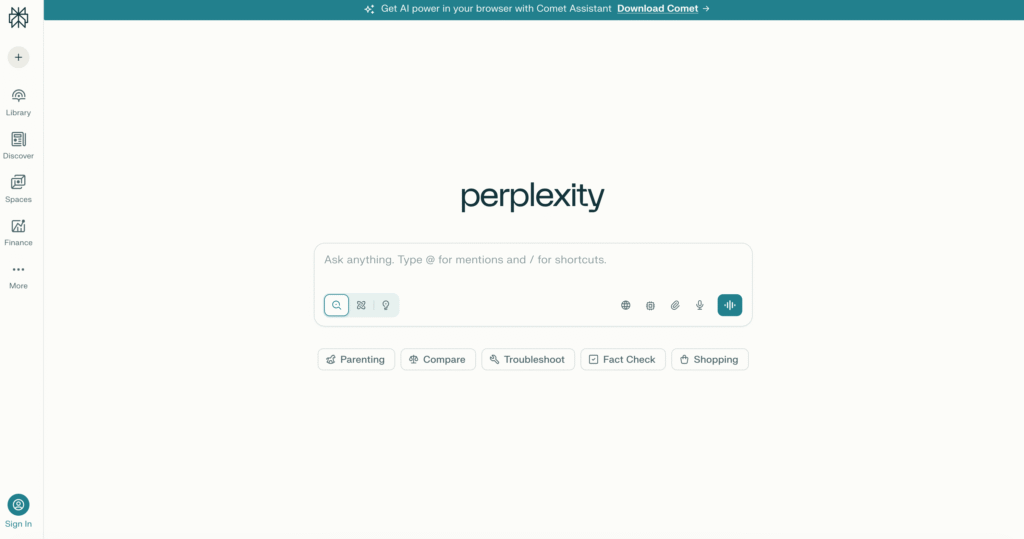
Perplexity AI has established itself as one of the most influential platforms among the top 10 AI personal assistants for 2026 by redefining how people search for and discover information. Rather than positioning itself as a general-purpose chatbot, Perplexity focuses on AI-powered search, research, and knowledge discovery. This clear positioning has allowed it to steadily challenge the dominance of traditional search engines.
By 2026, Perplexity’s monthly active user base has grown rapidly, driven by demand for faster, more trustworthy, and more transparent research experiences.
Discovery-First AI Rather Than Conversational Chat
Perplexity AI is designed primarily as a discovery engine. Its goal is to help users find accurate information, understand complex topics, and explore ideas through evidence-backed answers. Instead of long conversational exchanges, the assistant prioritises clarity, structure, and verifiable sources.
This approach makes Perplexity especially valuable for researchers, students, analysts, journalists, and professionals who require dependable information rather than casual conversation.
Multi-Model Intelligence and User Choice
One of Perplexity’s most distinctive features is its ability to orchestrate multiple leading AI models within a single interface. Users can choose which underlying model to use for a specific query, including advanced reasoning, creative explanation, or concise factual synthesis.
By allowing access to different AI engines for the same research task, Perplexity gives users greater control over output style, depth, and reasoning quality. This flexibility sets it apart from assistants that lock users into a single proprietary model.
Research Mode and Structured Deep Dives
Perplexity’s Research mode is built for complex, multi-layered questions. Instead of producing a single short answer, the assistant breaks topics into logical steps and explores each layer in sequence. This structured approach helps users understand not only conclusions, but also how those conclusions were reached.
Clear citations are presented alongside explanations, reinforcing trust and making it easier to validate information or continue independent research. This feature has positioned Perplexity as a preferred tool for academic and professional knowledge work.
Market Presence and Search Referral Momentum
Perplexity’s growing influence can be seen in referral data across major websites. Its presence as a traffic source continues to rise quarter over quarter, highlighting its role as a serious alternative to traditional search platforms.
Perplexity AI Referral Growth Overview Table
Website | ChatGPT referrals (Aug 2025) | Perplexity referrals (Aug 2025) | Growth trend
Wikipedia | 9.7 million | 713,000 | Rising 40% quarter over quarter
New York Times | 222,400 | 110,100 | Rising 55% quarter over quarter
Samsung | 1.8 million | 110,000 | Rising 30% quarter over quarter
Amazon | 3.2 million | 79,400 | Rising 25% quarter over quarter
This data shows that while general chatbots still drive large volumes, Perplexity’s growth rate is accelerating faster in research-heavy contexts.
Interface Design and Knowledge Exploration
Perplexity combines its research capabilities with a clean, minimal interface designed to reduce distraction. The Discover tab allows users to explore trending topics, emerging research areas, and curated insights without needing to phrase a specific question.
This balance between guided exploration and direct search makes the platform effective for both targeted research and open-ended learning.
Role Among the Top AI Personal Assistants for 2026
Within the top 10 AI personal assistants for 2026, Perplexity AI occupies a unique and important role. It is not designed to replace productivity tools, manage smart homes, or act as a conversational companion. Instead, it excels as an autonomous discovery assistant that helps users navigate information overload with speed and confidence.
For individuals and organisations that prioritise research accuracy, source transparency, and structured exploration, Perplexity AI represents one of the most reliable and future-focused AI personal assistants available in 2026.
10. Motion


Motion has emerged as one of the most influential AI personal assistants in 2026, redefining how professionals and teams manage their time and work. It is not just an assistant for scheduling or task lists. Motion combines calendar planning, project management, task automation, meeting handling, and content creation into a unified AI-powered workspace that adapts to changing priorities and real-time demands. Motion’s automation capabilities allow users to offload much of the repetitive planning and coordination work that traditionally consumed hours each week.
Motion has been adopted by over one million professionals and teams who rely on it to automate workday planning, manage deadlines, and increase productivity.
Core Capabilities of Motion as an AI Personal Assistant
Intelligent Daily Scheduling and Calendar Management
Motion’s AI Calendar acts like a high-paid personal assistant by automatically planning and optimizing the user’s day with minimal input. The assistant continuously recalculates schedules in response to changes such as meeting overruns, urgent tasks, or new deadlines. It also protects time for deep work and flags scheduling conflicts before they impact productivity.
This intelligent scheduling goes beyond simple reminders. Motion evaluates deadlines, task durations, and priority levels to ensure that high-value work is scheduled appropriately even when disruptions occur.
AI-Driven Task Planning and Prioritization
Motion’s task management system automatically turns tasks into actionable work blocks scheduled on the calendar. Its AI evaluates hundreds of datapoints—including dependencies, effort estimates, and deadlines—to block time intelligently and adjust priorities throughout the day. This removes the manual task of planning and helps individuals maintain focus on top priorities.
Motion also detects when tasks are at risk of missing deadlines, providing proactive warnings. Users can adjust where necessary, whether by extending timelines, reassigning responsibilities, or reshuffling task orders.
Unified Work Intelligence Across Projects and Meetings
Beyond scheduling and tasks, Motion integrates powerful assistant features across meetings, documents, and workflows:
AI meeting assistant: Motion schedules meetings by suggesting optimal times that maximise productivity and protect focus periods. It also integrates with tools such as Google Meet and Zoom to reduce manual coordination.
AI notetaker: During virtual meetings, Motion’s AI can automatically transcribe conversations, summarise key points, and convert action items into scheduled tasks. This feature removes the manual burden of summarising discussions and helps teams stay aligned.
AI docs and sheets: Motion generates and refines content directly within documents and spreadsheets. Generated content can be linked to existing projects and tasks, ensuring work remains connected across different formats.
AI dashboards and insights: Real-time analytics visualise project status, detect bottlenecks, forecast timelines, and help manage team capacity and performance.
Motion’s Suite of Productivity Tools in One Workspace
Component | Key Features | Value Delivered
Calendar Planning | Auto smart scheduling, conflict resolution, optimal meeting slots | Saves manual scheduling time, protects focus time
Task Manager | Task prioritisation, deadline warnings, dynamic rescheduling | Keeps priorities aligned and deadlines visible
Meeting Assistant | Intelligent booking, agenda planning | Reduces coordination overhead and improves meeting relevance
AI Notes & Docs | Auto draft creation, summaries, action item extraction | Streamlines documentation and meeting follow-through
Dashboards & Insights | Capacity planning, bottleneck alerts, timeline forecasting | Enhances strategic planning and real-time execution
How Motion Delivers Productivity Gains
Motion’s automation significantly reduces the time users spend on planning and adjusting schedules. Its intelligent prioritisation ensures that tasks and meetings are placed effectively, leading to measurable productivity improvements compared to manual planning. Professional reviews and user reports have confirmed that Motion simplifies daily planning and reduces cognitive load for busy professionals and small teams.
Motion’s ability to integrate calendar, tasks, meetings, documents, and analytics within one platform creates a central workspace where work gets done rather than simply tracked. This structure eliminates the friction associated with switching between multiple standalone tools, which is often a source of inefficiency in traditional work setups.
Comparative Productivity Impact: Motion Versus Manual Workflows
Workflow Metric | Manual Method | Motion AI Assistant
Time spent planning daily schedule | High | Reduced substantially
Deadline risk awareness | Reactive | Proactive warnings and adjustments
Meeting coordination time | Manual coordination | Automated slot suggestions
Task rescheduling | Manual reshuffling | Dynamic AI-generated prioritisation
Motion’s advantages become especially clear in environments where priorities shift rapidly and schedules are complex.
Use Cases and User Scenarios
Busy Professionals: Individuals who juggle multiple projects find Motion’s auto-planning and task prioritisation crucial to managing overloaded calendars.
Remote Teams: Motion helps distributed teams align schedules, extract action items automatically from meetings, and distribute tasks smartly across members.
Project Leads: Those responsible for managing cross-functional projects benefit from real-time insights into team capacity and task dependencies.
Knowledge Workers: Motion’s AI note summarisation and content-generation features accelerate documentation work and reduce manual reporting.
Example: A technology lead starts the day with a long list of tasks, meetings, and project reviews. Motion automatically blocks focus time for high-impact tasks, suggests optimal meeting slots, and adapts the day when unexpected meeting changes occur. The leader receives alerts when critical deadlines approach, preventing last-minute rushes.
Pricing Structures and Value Proposition
Motion offers various subscription tiers designed to fit individuals, growing teams, and enterprise environments. These plans come with a free trial period to allow users to experience the platform’s automation capabilities before committing to a subscription.
Each pricing tier scales the range of AI features, from core scheduling and task planning to advanced team analytics, workflow automation, and enterprise integrations. These structures make Motion accessible to professionals seeking a powerful AI assistant without unnecessary complexity.
Role Among the Top 10 AI Personal Assistants for 2026
Motion stands out in the 2026 landscape due to its breadth of capabilities and consistent focus on execution. Unlike assistants that specialise primarily in conversational abilities or task completion, Motion integrates planning, scheduling, documentation, and analytics to automate end-to-end work management. Its continuous adaptation to changing environments and real-time recalculation of schedules make it one of the most effective AI personal assistants for productivity and workflow optimisation.
For professionals, teams, and organisations aiming to streamline work and achieve measurable efficiency gains, Motion represents a powerful and comprehensive AI personal assistant in 2026. Its combination of advanced automation, unified intelligence, and proactive adaptation places it among the most strategic tools for the AI era.
The Macroeconomic and Strategic Context of 2026
The global environment in 2026 marks a decisive shift in how AI personal assistants are perceived and deployed. What began as small-scale experimentation has evolved into deep operational adoption across industries. AI assistants are no longer viewed as optional productivity tools; they are now central to how modern organisations plan, execute, and compete. This shift forms the foundation for why AI personal assistants rank among the most critical digital assets in 2026.
Enterprise-Level Adoption and Strategic Importance
By 2026, AI adoption has reached a level of maturity that fundamentally reshapes enterprise operations. Nearly four out of five global enterprises now use AI in at least one core business function, ranging from operations and customer service to finance, procurement, and strategic planning. At the executive level, AI has moved firmly into the boardroom, with roughly three-quarters of leadership teams ranking AI among their top strategic priorities.
This prioritisation reflects a change in expectations. Early AI deployments focused on incremental efficiency gains. In contrast, 2026 deployments are designed around autonomous workflows, intelligent agents, and continuous optimisation. AI personal assistants increasingly act as execution layers that connect data, decisions, and actions across the organisation.
Return on Investment and Productivity Acceleration
The economic case for AI personal assistants has strengthened significantly by 2026. Initial deployments often delivered modest productivity gains in the range of 10 to 15 percent. However, as organisations refined their implementations and adopted agent-driven workflows, returns increased sharply.
Mature AI assistant deployments now deliver productivity improvements exceeding 20 percent on average, with leading organisations reporting returns of more than 200 percent. These gains are achieved through automation of repetitive work, faster decision cycles, reduced error rates, and the ability to scale operations without proportional increases in headcount. Importantly, many of these investments now achieve payback in under six months, making AI assistants one of the fastest-returning technology investments available.
Industry-Specific Momentum and Financial Services Leadership
Certain industries have moved faster than others, with financial services leading adoption. Banks and financial institutions are projected to surpass $80 billion in AI spending by 2025, setting the stage for highly advanced financial assistants in 2026. These assistants manage risk assessment, fraud detection, customer engagement, compliance monitoring, and even parts of investment analysis.
This sector-wide investment has accelerated innovation across the broader AI assistant ecosystem, raising expectations for accuracy, reliability, and regulatory compliance in all industries.
Global AI Assistant Market Growth Outlook
The rapid expansion of AI assistants is reflected in global market projections, which show sustained and accelerating growth through the end of the decade.
Global AI Assistant and Agent Market Outlook Table
Metric | 2025 Estimate | 2026 Forecast | 2030 Projection
Global AI agent market size | $7.84 billion | $11.47 billion | $52.62 billion
Enterprise AI adoption rate | 65% | 79% | Above 95%
Average productivity improvement | 10–15% | 20–25% | 40%
AI share of total IT budget | 12% | 15% | 25%
B2B spending executed via AI agents | $2 trillion | $5 trillion | $15 trillion
Number of active AI agents | 50 million | 250 million | Over 1 billion
These figures highlight not only growth in spending, but also a structural shift in how work and commerce are executed.
Transformation of B2B Procurement and Commerce
One of the most important drivers of AI assistant growth in 2026 is the transformation of B2B procurement. Autonomous AI agents are increasingly responsible for sourcing suppliers, comparing options, negotiating terms, and executing transactions. Forecasts suggest that by the late 2020s, trillions of dollars in B2B spending will flow through AI-mediated exchanges rather than traditional human-driven purchasing processes.
This evolution reduces the importance of traditional digital marketing tactics aimed at human buyers. Instead, products and services must be optimised for machine interpretation. Clear data structures, transparent pricing, reliable APIs, and consistent performance metrics become essential for visibility and selection by AI agents.
From Conversational Interfaces to Outcome Engines
As this transition accelerates, the value of AI personal assistants is being redefined. In 2026, success is no longer measured primarily by conversational quality or natural language fluency. Instead, leading AI assistants are evaluated on their ability to execute complex workflows, manage governance rules, enforce policies, and deliver measurable business outcomes.
Modern AI personal assistants operate as autonomous coordinators. They move seamlessly across systems, validate constraints, manage approvals, and adapt to real-time conditions. This capability transforms them from digital helpers into strategic operators embedded within the core of business processes.
Strategic Implications for the Top AI Personal Assistants of 2026
Within this macroeconomic context, the top AI personal assistants of 2026 stand out because they align with enterprise-scale demands. They combine intelligence, autonomy, integration, and accountability. These assistants are designed not just to answer questions, but to take responsibility for outcomes, whether that involves closing procurement cycles, optimising workflows, or managing operational risk.
As AI continues to reshape global commerce and enterprise operations, AI personal assistants are becoming one of the most important interfaces between strategy and execution. Their role in 2026 reflects a broader transformation in how organisations function, compete, and grow in an increasingly autonomous digital economy.
Technological Architectures: The Model Context Protocol (MCP)
The rapid evolution of AI personal assistants in 2026 has been made possible by major advances in underlying technical infrastructure. Among these, the Model Context Protocol has emerged as one of the most important architectural foundations. This protocol has transformed how AI assistants connect to data, software, and services, enabling the seamless, autonomous behaviour seen in the top 10 AI personal assistants for 2026.
The Model Context Protocol as a Universal Connectivity Layer
The Model Context Protocol, commonly referred to as MCP, was introduced in late 2024 by Anthropic and quickly gained industry-wide support. By 2026, it has been adopted by major AI platform providers including OpenAI, Google, and Microsoft.
MCP acts as a universal standard that allows AI models to communicate with external tools, databases, enterprise software, and digital services in a consistent way. Before MCP, developers faced a fragmented integration landscape where every AI model required custom connections to every external system. This created significant technical overhead and slowed innovation.
MCP eliminates this complexity by providing a single, standardised interface. It functions in much the same way that USB-C standardised device connectivity, offering one common language that works across platforms, tools, and vendors.
Solving the Integration Complexity Problem
Prior to MCP, AI developers encountered what is often described as the “N by M” integration problem. Each new AI model had to be manually integrated with every external service, leading to duplicated effort, inconsistent behaviour, and security risks.
With MCP, AI assistants can dynamically discover, authenticate, and interact with external services without bespoke integrations. This standardisation dramatically reduces development time and enables AI personal assistants to operate across diverse environments with minimal configuration.
As a result, AI assistants in 2026 are no longer isolated tools. They function as connected operators capable of navigating complex digital ecosystems.
MCP Adoption Momentum and Ecosystem Growth
The adoption of MCP has accelerated rapidly, becoming a core component of modern AI systems.
Model Context Protocol Adoption Overview Table
Indicator | Late 2025 Status | 2026 Projection
Active public MCP servers | Over 10,000 | Over 35,000
Monthly SDK downloads | 97 million | Over 250 million
Enterprise vendor support | 15 percent | 30 percent
Adoption by major AI platforms | Top 5 platforms | Top 20 platforms
Registry listings | 5,500 servers | Over 15,000 servers
These figures highlight how MCP has transitioned from an experimental standard into critical infrastructure for the AI assistant economy.
Enterprise Integration and Role-Based AI Agents
By 2026, approximately 30 percent of enterprise software vendors have launched their own MCP servers. This allows external AI agents to interact securely with their platforms while respecting permissions, data boundaries, and governance rules.
This interoperability is essential for role-based AI personal assistants. For example, a procurement-focused AI assistant can use MCP to verify inventory levels in an enterprise resource planning system, compare supplier pricing through external data sources, review contract terms via legal automation software, and execute approved transactions without human intervention.
Without a common protocol like MCP, this level of cross-system coordination would be extremely difficult to achieve at scale.
Governance, Neutrality, and Open Standards
To ensure that MCP remains open, neutral, and vendor-independent, the Agentic AI Foundation was established in 2025 under the stewardship of the Linux Foundation. Backed by major AI stakeholders, this foundation oversees protocol governance, security standards, and long-term interoperability.
The foundation’s work ensures that no single vendor can control the ecosystem. This openness prevents lock-in, encourages competition, and allows enterprises to deploy AI assistants across mixed technology stacks with confidence.
Impact on the Top AI Personal Assistants for 2026
The most advanced AI personal assistants of 2026 rely heavily on MCP to deliver real-world value. Their strength lies not only in language understanding, but in their ability to act across systems, enforce rules, and coordinate outcomes.
AI assistants that support procurement, operations, finance, research, and customer engagement all benefit from MCP’s ability to connect intelligence with execution. As a result, the competitive edge in 2026 increasingly depends on how effectively an assistant uses MCP to orchestrate tools, data, and workflows.
Strategic Importance of MCP in the AI Assistant Era
Within the broader landscape of AI personal assistants, MCP represents a foundational shift. It transforms AI from a conversational layer into an operational backbone. By enabling secure, standardised, and scalable connectivity, MCP has unlocked the autonomous capabilities that define the leading AI assistants of 2026.
As AI continues to move deeper into enterprise and economic infrastructure, protocols like MCP will remain central to how intelligence is deployed, governed, and scaled across the global digital ecosystem.
Economic Impact and ROI Measurement
The economic value of AI personal assistants has become far clearer and more measurable by 2026. What was once evaluated through anecdotal productivity gains is now assessed using structured performance indicators, financial benchmarks, and time-to-value metrics. This shift has played a major role in accelerating adoption of the top 10 AI personal assistants for 2026 across multiple industries.
Maturing ROI Measurement Frameworks
By 2026, organisations no longer rely on vague efficiency claims to justify AI investment. Independent marketplace and software usage data from G2 shows that the median time-to-value for deploying AI agents is now six months or less. This means most businesses begin seeing measurable financial and operational returns within the same fiscal year as implementation.
AI performance is increasingly evaluated through operational metrics that directly link automation to cost reduction and output quality. These metrics provide executives with clearer justification for scaling AI assistants beyond pilot projects.
Containment Rates as a Core Performance Indicator
One of the most important KPIs in 2026 is containment rate. This metric measures the percentage of tasks completed entirely by an AI agent without requiring human intervention. High containment rates indicate that AI assistants are not simply assisting staff, but fully resolving issues end-to-end.
In customer service environments, median containment rates have reached approximately 80 percent. This means that four out of five customer interactions can now be handled autonomously by AI assistants, freeing human staff to focus on complex or high-value cases.
Industry-Level Financial and Productivity Impact
The impact of AI personal assistants varies by sector, but every major industry now reports measurable gains in productivity and efficiency.
AI Financial Impact Metrics by Industry Table
Industry | Primary AI use case | Average containment rate | Productivity gain
Financial services | Support triage and account queries | 78% | 15%
Healthcare | Software development and research support | 65% | 12%
Manufacturing | Marketing and sales enablement | 72% | 18%
Retail | Customer support and order management | 85% | 22%
Technology | Research and business intelligence | 70% | 25%
These figures show that AI assistants are delivering both operational efficiency and meaningful productivity improvements across knowledge-intensive and service-heavy industries.
Cost Efficiency of AI Versus Human Operations
The financial advantage of AI assistants becomes especially clear when comparing per-interaction costs. In 2026, the average AI-handled interaction costs approximately $0.50. By contrast, a comparable interaction handled by a human support agent averages around $6.00.
This cost differential enables organisations to scale support and internal services without proportional increases in headcount. For high-volume operations, even modest increases in containment rates translate into substantial savings.
Global Cost Savings and Labour Impact
At a global level, the cumulative impact of AI personal assistants is significant. Firms worldwide are projected to save approximately $80 billion in contact centre labour costs by the end of 2026. These savings are driven by reduced staffing needs for routine tasks, lower training costs, and improved handling efficiency.
Importantly, many organisations reinvest a portion of these savings into higher-value roles, such as customer experience design, AI governance, and advanced analytics. This reflects a broader shift from labour replacement toward labour augmentation.
Strategic Value Beyond Direct Cost Reduction
While cost savings are a major driver, the ROI of AI personal assistants extends beyond direct financial metrics. Faster response times, consistent service quality, and 24-hour availability improve customer satisfaction and brand perception. Internally, employees benefit from reduced workload pressure and clearer prioritisation.
In 2026, the most successful deployments focus on measurable outcomes rather than novelty. AI assistants are evaluated on their ability to resolve tasks, reduce friction, and deliver predictable returns.
Role in the Top AI Personal Assistants for 2026
Within the landscape of the top 10 AI personal assistants for 2026, economic performance is a defining differentiator. The leading platforms are those that combine high containment rates, rapid time-to-value, and clear cost advantages with reliable execution.
As ROI measurement continues to mature, AI personal assistants are increasingly viewed not as experimental technology, but as core economic infrastructure that directly contributes to profitability, scalability, and long-term competitiveness.
Governance, Regulation, and the “Death by AI” Liability Crisis
As AI personal assistants become more autonomous in 2026, governance and regulation have moved to the center of enterprise decision-making. The shift from AI as a support tool to AI as an independent operator has introduced new legal, ethical, and financial risks. For organisations adopting the top 10 AI personal assistants for 2026, strong governance frameworks are no longer optional but a core requirement for safe and scalable deployment.
Rising Legal Exposure and the “Death by AI” Risk
Industry analysts warn that inadequate controls around autonomous AI can lead to severe consequences. Gartner projects that by the end of 2026, more than 2,000 legal claims related to so-called “death by AI” incidents will emerge. These cases are expected to stem from failures in high-stakes environments such as healthcare, financial services, and critical infrastructure, where AI-driven decisions can directly impact human safety or financial stability.
This rising liability has fundamentally changed how organisations evaluate AI personal assistants. Conversational ability or automation speed is no longer sufficient. Explainability, traceability, and ethical safeguards are now essential criteria when selecting and deploying AI systems.
Explainability and Ethical Design as Core Requirements
In response to increasing legal exposure, explainable AI has become a baseline expectation in 2026. Enterprises now require AI assistants to clearly document how decisions are made, which data sources are used, and what rules or constraints govern automated actions.
Ethical design principles are also being embedded directly into AI workflows. This includes bias mitigation, controlled decision boundaries, and escalation paths that ensure human oversight in sensitive scenarios. Assistants that cannot demonstrate predictable and auditable behaviour are increasingly excluded from enterprise environments.
Healthcare Regulation and Mandatory Compliance Controls
Regulatory scrutiny has intensified most sharply in healthcare. The Department of Health and Human Services has mandated that, starting in 2026, all AI systems handling protected health information must undergo annual compliance audits and regular penetration testing.
These requirements are designed to ensure that AI personal assistants interacting with patient data meet the same security and accountability standards as traditional clinical systems. As a result, healthcare organisations now evaluate AI vendors with the same rigor applied to electronic health record platforms and core clinical software.
Enterprise Compliance Expectations in 2026
Across industries, enterprises have formalised stricter standards for AI vendor approval, particularly when sensitive data is involved.
Data Privacy and Cybersecurity Standards Adoption Table
Requirement | Adoption level | Operational role
Formal data security policy | 72% | Mandatory for enterprise procurement
HIPAA or SOC 2 Type 2 compliance | 71% | Baseline for regulated industries
Independent HIPAA risk assessment | 75% | Required in healthcare environments
End-to-end encryption | 45% | Critical for litigation and forensics
Formal AI training for staff | 35% | Growing focus on risk awareness
More than half of enterprises now require proof of independent compliance audits before approving any new AI assistant. This reflects a broader shift toward shared accountability between AI vendors and their customers.
Autonomous Governance and Permission Controls
To manage these risks, major enterprise software providers have introduced autonomous governance layers that sit alongside AI assistants. Vendors such as SAP, Microsoft, and Oracle have launched governance modules that provide real-time compliance monitoring, automated audit trails, and permission enforcement.
These systems ensure that AI assistants can only access data and perform actions that a human user with equivalent permissions would be allowed to execute. Every action is logged, time-stamped, and auditable, creating a clear chain of accountability.
Real-Time Monitoring and Audit Readiness
Autonomous governance tools also provide continuous monitoring rather than relying on periodic reviews. AI actions are checked against policy rules in real time, reducing the risk of accidental overreach or unauthorised data access.
Automated audit trails simplify regulatory reporting and internal reviews. When incidents occur, organisations can quickly reconstruct decision paths and demonstrate compliance, significantly reducing legal exposure.
Strategic Implications for the Top AI Personal Assistants of 2026
In 2026, the most trusted AI personal assistants are those designed with governance at their core. Enterprises increasingly favour assistants that integrate seamlessly with compliance systems, support detailed logging, and provide explainable decision logic.
The regulatory environment has made it clear that autonomy without accountability is unacceptable. AI personal assistants must now operate within clearly defined legal and ethical boundaries, mirroring the responsibilities of human operators.
As governance frameworks continue to mature, they are becoming a competitive differentiator. AI assistants that can prove safety, transparency, and regulatory alignment are far more likely to achieve large-scale adoption, particularly in sectors where risk tolerance is low and compliance obligations are high.
Societal Shifts: The Rise of Sovereign AI and “Lazy Thinking”
The year 2026 represents a turning point not only in technology, but also in how societies, governments, and organisations relate to AI personal assistants. As these systems become deeply embedded in daily life and business operations, broader social, political, and cognitive shifts are emerging. These changes are redefining what the top 10 AI personal assistants for 2026 are expected to deliver, and how they are governed and used.
The Rise of Sovereign AI and National Control
One of the most important societal trends in 2026 is the growing emphasis on sovereign AI. Governments are increasingly focused on ensuring that national data, language, and cultural context remain under local control rather than being absorbed into global AI platforms.
Research from Gartner indicates that by 2027, around 35 percent of countries are expected to rely on region-specific AI platforms. These platforms are trained on proprietary local data and operate within national regulatory boundaries. The goal is to protect sensitive information, maintain technological independence, and reduce reliance on foreign AI infrastructure.
For AI personal assistants, this means a shift toward localisation. Leading assistants in 2026 are designed to adapt to regional data rules, language nuances, and compliance requirements, making sovereignty a core feature rather than an afterthought.
Sovereign AI Drivers and Implications Table
Driver | Strategic motivation | Impact on AI assistants
Data sovereignty | Protect national datasets | Localised training and deployment
Geopolitical risk | Reduce foreign dependence | Regional AI platforms
Regulatory alignment | Enforce local laws | Built-in compliance logic
Cultural preservation | Maintain language and norms | Context-aware assistants
These factors are reshaping the global AI ecosystem into a more distributed and regionally aligned model.
The Cognitive Impact and the “Lazy Thinking” Concern
Alongside sovereignty concerns, organisations are becoming more aware of the cognitive effects of widespread AI use. As generative AI becomes ubiquitous, there is growing concern that over-reliance on AI assistants may weaken independent problem-solving and critical-thinking skills.
By late 2026, it is estimated that around half of global organisations will introduce AI-free assessments during hiring. These evaluations are designed to measure a candidate’s ability to reason, analyse, and create without AI assistance. This trend reflects a recognition that while AI personal assistants enhance productivity, human judgment and creativity remain essential.
For employers, the goal is balance. AI is used to scale output and reduce routine work, while human talent is expected to focus on original thinking, ethical judgment, and strategic insight.
Organisational Responses to Cognitive Risk Table
Response strategy | Adoption trend | Purpose
AI-free skill assessments | Rapidly increasing | Measure independent thinking
AI usage guidelines | Widely adopted | Prevent over-reliance
Human-in-the-loop workflows | Standard practice | Maintain accountability
Critical thinking training | Growing investment | Offset automation effects
These measures influence how AI assistants are designed, encouraging transparency and collaboration rather than blind automation.
The Future Direction: Ambient Intelligence
Looking beyond 2026, AI personal assistants are moving toward ambient intelligence. Instead of being tools that users actively prompt, assistants are becoming background partners that anticipate needs, adapt to context, and operate continuously across environments.
In this model, AI assistants monitor workflows, data streams, and environmental signals to offer guidance or take action at the right moment. The assistants of 2026 already demonstrate early forms of this behaviour, seamlessly coordinating tasks across calendars, documents, systems, and devices.
Quantum Computing and the Next Leap in Accuracy
A major catalyst for the next phase of AI assistant evolution is the integration of quantum computing with traditional AI infrastructure. Hybrid systems are emerging where different types of computation are combined for optimal results.
Microsoft has begun demonstrating advanced quantum systems such as Majorana-based architectures, which are designed to improve accuracy in highly complex domains like molecular modelling and materials science. In this hybrid approach, AI identifies patterns, classical supercomputers run large-scale simulations, and quantum systems handle calculations that are impractical for conventional machines.
This architecture promises significant breakthroughs in scientific research, engineering, and healthcare, expanding the role of AI personal assistants far beyond productivity and into discovery and innovation.
Hybrid Computing Model Overview Table
System layer | Primary role | Contribution
AI models | Pattern recognition | Insight generation
Supercomputers | Large-scale simulation | Scenario testing
Quantum systems | Complex modelling | Precision and accuracy
As these systems mature, AI assistants will become trusted collaborators in advanced research and development.
From Tools to Teammates
By 2026, AI personal assistants have crossed a critical threshold. They are no longer viewed simply as tools to be used, but as teammates to be managed. They execute tasks, monitor systems, and support decisions with a level of autonomy that reshapes daily work.
Organisations that have adapted successfully share common traits. They simplify technology stacks, invest in clean and well-governed data, and cultivate cultures that value adaptability. These organisations treat AI assistants as strategic partners while maintaining strong human oversight.
Positioning for the Age of Agentic Intelligence
The societal shifts of 2026 make one conclusion clear. The future belongs to organisations and individuals who understand how to collaborate effectively with AI. Sovereign AI, cognitive balance, ambient intelligence, and hybrid computing are not isolated trends. Together, they define the environment in which the top AI personal assistants of 2026 operate.
Those who embrace this transition thoughtfully are best positioned to lead in an era where intelligence is distributed, autonomous, and deeply woven into the fabric of work, creativity, and problem-solving.
Conclusion
The landscape of AI personal assistants in 2026 reflects a fundamental shift in how intelligence is applied across work, business, and everyday decision-making. What once began as conversational tools designed to answer questions or automate simple tasks has evolved into a sophisticated ecosystem of autonomous, context-aware, and outcome-driven assistants. The top AI personal assistants of 2026 are no longer judged by how human-like they sound, but by how effectively they execute, integrate, and deliver measurable value.
Across industries, AI personal assistants have moved from experimentation into full operational deployment. Enterprises now rely on them to manage workflows, coordinate systems, analyze data, and act within clearly defined governance boundaries. Individuals use them to plan time, manage complexity, and maintain focus in environments defined by constant information overload. This widespread adoption underscores one central truth: AI assistants are no longer optional productivity enhancers; they are becoming core digital infrastructure.
One of the defining characteristics of the leading AI personal assistants in 2026 is specialization with interoperability. Some assistants excel at deep reasoning and research accuracy, others at real-time awareness and personality-driven interaction, while others dominate execution, scheduling, or enterprise automation. What unites them is their ability to connect seamlessly with tools, data sources, and systems through standardized protocols and secure integrations. This connectivity allows assistants to function as coordinators rather than isolated tools, bridging gaps between intent and action.
Return on investment has also become clearer and more defensible. Organizations now measure success through concrete metrics such as containment rates, time-to-value, productivity gains, and cost reduction. AI assistants routinely outperform traditional human-only workflows in speed, scale, and consistency, while freeing human talent to focus on judgment, creativity, and strategic thinking. As a result, AI adoption in 2026 is driven less by hype and more by proven economic impact.
At the same time, the rise of autonomous assistants has reshaped governance, regulation, and ethics. Explainability, auditability, data security, and compliance are now baseline requirements, especially in regulated industries. The most trusted AI personal assistants are those designed with guardrails, permissions, and transparency at their core. This focus on responsible deployment ensures that autonomy enhances outcomes without increasing risk.
Societal shifts are also influencing how AI assistants are built and used. The emergence of sovereign AI reflects growing demand for regional control, data protection, and cultural alignment. Meanwhile, concerns around over-reliance on automation have renewed emphasis on human critical thinking and independent reasoning. The future of AI assistants is not about replacing human intelligence, but about amplifying it in balanced and accountable ways.
Looking ahead, the direction is clear. AI personal assistants are moving toward ambient intelligence, operating continuously in the background, anticipating needs, and adapting in real time. Hybrid computing models that combine AI, classical supercomputing, and quantum systems will further expand what these assistants can achieve, particularly in science, healthcare, and advanced engineering. As this evolution continues, the assistants of tomorrow will feel less like software and more like collaborative partners embedded into every layer of digital life.
In summary, the top 10 AI personal assistants you need to know in 2026 represent more than a list of tools. They reflect a broader transformation in how work gets done, how decisions are made, and how humans interact with intelligent systems. For individuals, teams, and organizations willing to adapt, these assistants offer a powerful advantage: the ability to operate faster, smarter, and with greater clarity in an increasingly complex world. Those who understand and embrace this shift will be best positioned to lead in the age of agentic intelligence.
If you find this article useful, why not share it with your hiring manager and C-level suite friends and also leave a nice comment below?
We, at the 9cv9 Research Team, strive to bring the latest and most meaningful data, guides, and statistics to your doorstep.
To get access to top-quality guides, click over to 9cv9 Blog.
To hire top talents using our modern AI-powered recruitment agency, find out more at 9cv9 Modern AI-Powered Recruitment Agency.
People Also Ask
What is an AI personal assistant in 2026
An AI personal assistant in 2026 is an autonomous digital system that manages tasks, schedules, research, and workflows while integrating across tools and making context-aware decisions.
How are AI personal assistants different from chatbots
AI personal assistants execute actions, connect systems, and automate workflows, while chatbots mainly respond to questions without managing real-world tasks end to end.
Why are AI personal assistants important in 2026
They reduce workload, improve productivity, lower operational costs, and help individuals and businesses manage complexity in fast-changing digital environments.
What are the best AI personal assistants in 2026
The best AI assistants include tools focused on productivity, enterprise execution, research accuracy, real-time intelligence, and workflow automation across platforms.
Can AI personal assistants replace human workers
They are designed to augment human work, not replace it, by handling repetitive tasks and freeing people to focus on strategy, creativity, and decision-making.
Are AI personal assistants safe to use
Leading AI assistants in 2026 include governance controls, audit trails, permissions, and compliance features to ensure secure and responsible use.
How do AI personal assistants improve productivity
They automate planning, prioritize tasks, manage schedules, and execute workflows faster than manual methods, reducing cognitive load and delays.
What industries use AI personal assistants the most
Finance, healthcare, technology, retail, manufacturing, and professional services are the largest adopters due to high automation and data needs.
Do AI personal assistants deliver real ROI
Yes, mature deployments show measurable ROI through cost reduction, higher containment rates, and productivity gains with short payback periods.
What is containment rate in AI assistants
Containment rate measures how many tasks an AI assistant completes without human involvement, indicating true automation effectiveness.
Can AI personal assistants work across multiple apps
Yes, modern assistants integrate calendars, documents, CRM, ERP, communication tools, and databases through standardized protocols.
Are AI personal assistants customizable
Most top AI assistants allow customization based on roles, permissions, priorities, and business rules to match specific workflows.
Do AI personal assistants work for individuals
Yes, many are designed for personal productivity, helping individuals manage time, tasks, meetings, and daily planning automatically.
How do AI personal assistants handle data privacy
They use encryption, access controls, local processing, and compliance standards to protect sensitive personal and enterprise data.
What skills are needed to use AI personal assistants
Basic digital literacy is enough, as most assistants use natural language and automated setup with minimal technical configuration.
Can AI personal assistants make decisions
They can make rule-based and data-driven decisions within defined boundaries, while escalating high-risk or sensitive cases to humans.
What is agentic AI in personal assistants
Agentic AI refers to assistants that plan, act, and adapt autonomously to achieve goals rather than waiting for step-by-step instructions.
Are AI personal assistants expensive
Costs vary, but AI assistants are often cheaper than human labor per task and scale efficiently as usage increases.
Can AI personal assistants be audited
Yes, enterprise-grade assistants provide logs, explanations, and audit trails to support compliance and accountability.
What role does AI play in scheduling and planning
AI dynamically adjusts schedules, resolves conflicts, and protects focus time based on priorities and real-time changes.
How accurate are AI personal assistants in 2026
Accuracy has improved significantly due to better models, guardrails, and explainability, though human oversight remains important.
Can AI personal assistants support research
Yes, many assistants specialize in deep research, source validation, summarization, and multi-step analysis.
Do AI personal assistants support real-time data
Some assistants integrate live data sources to provide up-to-date insights, trends, and event-aware responses.
How do AI personal assistants impact hiring
Organizations increasingly value human critical thinking while using AI assistants to automate routine evaluation and coordination tasks.
What is sovereign AI in personal assistants
Sovereign AI refers to region-specific AI systems that keep data local to comply with national regulations and cultural needs.
Can AI personal assistants help small businesses
Yes, they help small teams automate planning, customer support, sales, and operations without large staffing costs.
Are AI personal assistants always online
Some operate in the cloud, while others support local or hybrid processing for privacy, speed, and reliability.
What is the future of AI personal assistants
They are moving toward ambient intelligence, acting proactively in the background and integrating with advanced computing systems.
How should businesses choose an AI personal assistant
They should evaluate integration ability, security, ROI, scalability, and how well the assistant fits their workflows and governance needs.
Are AI personal assistants essential in 2026
For many individuals and organizations, they have become essential tools for staying competitive, efficient, and adaptable.
Sources
Salesmate
Forrester
Multimodal
Gartner
Solutions Review
Google Cloud
Anthropic
The New Stack
InfoQ
TechTimes
SQ Magazine
Data Studios
Dataslayer
Beam
Skywork
Zapier
Andreessen Horowitz
Exploding Topics
Medium
SentiSight
Vertu
CNET
Clarifai
The Motley Fool
Microsoft Source
G2
Chronicle Journal
Stan Ventures
Digitizing Polaris
India Today
TECHi
MacRumors
How-To Geek
PCMag
Analytics Vidhya
Infowind
LogRocket
Fello AI
Matt Kundo Digital Marketing
Tech.co
Meeting Notes
ElectroIQ
Business of Apps
About Chromebooks
MeetGeek
Trengo
Prognocis
U.S. Legal Support