
























Key Takeaways
- The best equipment rental software in 2026 combines AI-powered automation, fleet management, predictive maintenance, online booking, and real-time inventory tracking to help rental businesses improve efficiency, maximize asset utilization, and increase profitability.
- Leading equipment rental platforms such as RentalMan, Point of Rental, Texada, Rentman, Quipli, Booqable, and other top solutions cater to different business sizes and industries, from heavy construction equipment and industrial machinery to AV production, event rentals, and consumer equipment hire.
- Choosing the right equipment rental software depends on factors such as business size, fleet complexity, pricing model, scalability, integration capabilities, mobile functionality, customer self-service features, and long-term digital transformation goals to support sustainable business growth.
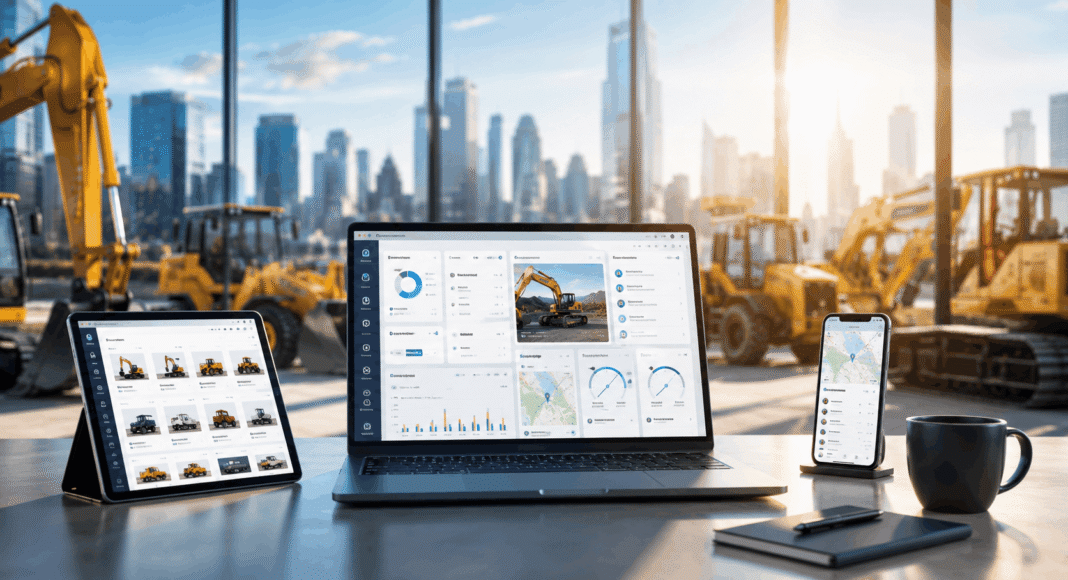
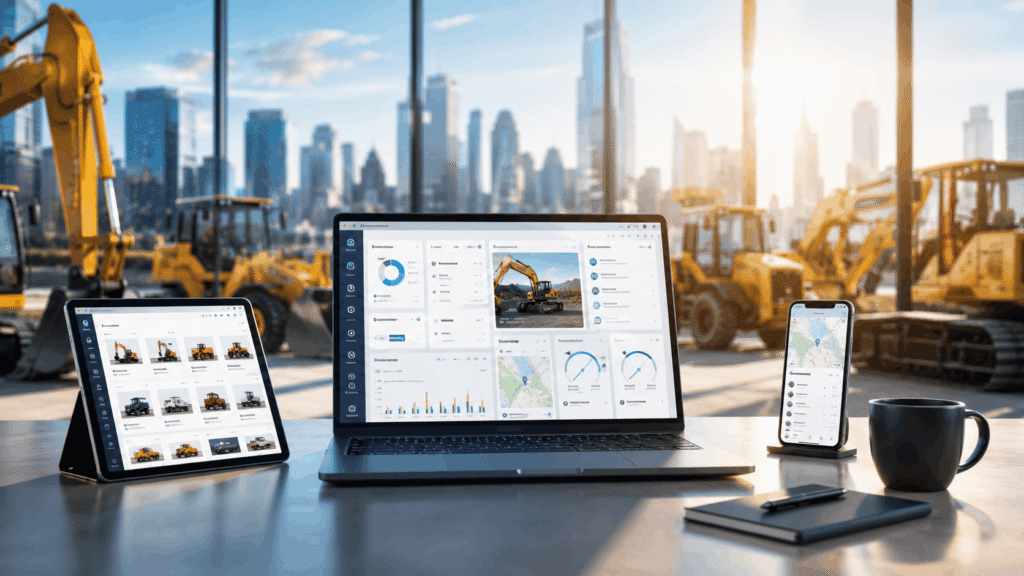
Equipment rental software helps businesses manage reservations, inventory, maintenance, customer bookings, payments, and fleet operations from one platform. The best equipment rental software in 2026 also uses AI, automation, telematics, and real-time analytics to improve equipment utilization, reduce downtime, increase operational efficiency, and support long-term business growth.
The global equipment rental industry is entering a new era of digital transformation in 2026, driven by rapid technological innovation, increasing customer expectations, and the growing need for operational efficiency. From heavy construction machinery and industrial equipment to specialized tools, event production assets, medical devices, and consumer rental products, businesses across virtually every sector are embracing digital solutions to streamline rental operations and maximize the value of their equipment fleets. As competition intensifies and margins become increasingly dependent on asset utilization, choosing the right equipment rental software has evolved from a simple IT purchasing decision into a strategic investment capable of determining long-term business success.
Equipment rental businesses today face a wide range of operational challenges. Managing thousands of serialized assets across multiple locations, preventing scheduling conflicts, reducing equipment downtime, tracking maintenance histories, coordinating logistics, processing customer contracts, handling invoicing, and monitoring financial performance all require a high level of operational precision. Traditional spreadsheets, paper-based workflows, and disconnected legacy systems are no longer capable of supporting the speed, accuracy, and scalability demanded by modern rental businesses. Consequently, equipment rental software has become the digital backbone that integrates every stage of the rental lifecycle into one centralized management platform.
The best equipment rental software solutions available in 2026 extend far beyond basic reservation and invoicing functions. Modern platforms combine enterprise resource planning (ERP), inventory management, fleet optimization, predictive maintenance, customer relationship management (CRM), accounting integration, business intelligence, telematics connectivity, mobile workforce management, artificial intelligence (AI), and cloud computing into highly intelligent ecosystems. These technologies enable rental companies to automate repetitive administrative tasks, make data-driven decisions, improve customer experiences, reduce operational costs, and maximize equipment availability across increasingly complex business environments.
One of the most significant trends reshaping the equipment rental software market is the rapid adoption of artificial intelligence. Leading software vendors are embedding AI throughout their platforms to automate customer support, generate quotations, optimize inventory allocation, recommend complementary equipment, predict maintenance requirements, analyze equipment utilization, and dynamically adjust rental pricing according to market demand. Rather than replacing employees, these AI-powered capabilities enable staff to focus on higher-value activities while allowing businesses to operate more efficiently and respond to customer requests more quickly than ever before.
Cloud computing has also fundamentally transformed how rental businesses deploy and manage software. Instead of investing in costly on-premises servers and maintaining complex IT infrastructure, organizations increasingly prefer cloud-based equipment rental software that provides real-time access from virtually anywhere. Employees working in offices, warehouses, construction sites, customer locations, and field service operations can collaborate through synchronized cloud platforms using laptops, tablets, and smartphones. This accessibility improves communication, accelerates decision-making, and enables businesses to scale operations without the traditional limitations associated with legacy software systems.
Another major development influencing the industry in 2026 is the growing integration of connected assets and telematics technologies. Modern equipment rental software increasingly connects directly with GPS tracking systems, IoT sensors, engine diagnostics, OEM telematics platforms, and machine health monitoring solutions. This connectivity allows rental companies to monitor equipment location, engine hours, utilization rates, fuel consumption, operating conditions, maintenance requirements, and fault codes in real time. Such visibility supports predictive maintenance strategies that minimize unexpected breakdowns, reduce repair expenses, extend equipment lifecycles, and maximize overall fleet utilization.
Customer expectations have also changed dramatically over recent years. Businesses and consumers alike increasingly expect equipment rental experiences comparable to modern e-commerce platforms. Customers now want to browse equipment availability online, receive instant quotations, compare rental options, reserve equipment, sign digital contracts, make secure payments, and manage bookings without lengthy telephone calls or in-person office visits. As a result, many leading equipment rental software providers now include integrated online storefronts, customer self-service portals, digital payment gateways, electronic signatures, automated notifications, and mobile applications that simplify every stage of the customer journey.
Despite these technological advancements, selecting the right equipment rental software remains a complex decision because no single solution serves every type of rental business equally well. The market now includes highly specialized platforms designed for different operational requirements and industry sectors.
Large multinational construction equipment companies typically require enterprise-grade ERP platforms capable of managing thousands of assets across multiple countries while integrating financial management, procurement, maintenance, telematics, and business intelligence into one centralized environment. Mid-sized rental organizations often seek cloud-based platforms that provide sophisticated operational functionality without the implementation complexity of enterprise ERP systems. Smaller independent rental companies generally prioritize affordability, ease of use, rapid deployment, and integrated e-commerce capabilities that allow them to compete effectively against much larger competitors.
Industry specialization has become another defining characteristic of today’s rental software market. Construction equipment rental businesses often prioritize fleet management, preventive maintenance, logistics coordination, and telematics integration. Event production companies require sophisticated crew scheduling, warehouse management, transportation planning, and project coordination. Consumer rental businesses frequently focus on online reservations, digital storefronts, point-of-sale systems, and customer self-service. Healthcare equipment providers, industrial machinery suppliers, agricultural equipment dealers, and specialty rental companies all have unique operational requirements that influence which software platform delivers the greatest value.
As businesses evaluate potential solutions, numerous factors should be considered beyond basic feature comparisons. Scalability, implementation complexity, customer support quality, cybersecurity, integration capabilities, reporting functionality, artificial intelligence features, mobile accessibility, pricing models, user experience, and long-term product innovation all contribute significantly to the overall return on investment. Organizations should also evaluate how well each platform integrates with existing accounting software, ERP systems, CRM platforms, payment processors, GPS tracking providers, telematics hardware, and business intelligence tools to ensure a seamless operational ecosystem.
The increasing emphasis on sustainability and operational efficiency further highlights the importance of intelligent equipment rental software. Better asset utilization reduces unnecessary fleet expansion, predictive maintenance extends equipment lifecycles, optimized transportation lowers fuel consumption, and digital documentation minimizes paper usage. Together, these improvements contribute not only to stronger financial performance but also to more environmentally responsible business operations.
Looking ahead, the equipment rental software industry is expected to continue evolving through deeper artificial intelligence integration, machine learning, advanced predictive analytics, autonomous workflow automation, expanded IoT connectivity, digital twins, conversational AI assistants, and increasingly personalized customer experiences. Vendors that successfully combine innovation with reliability, security, scalability, and ease of use will continue shaping the future of equipment rental management worldwide.
This comprehensive guide explores the Top 10 Equipment Rental Software in the World in 2026, examining the industry’s leading platforms based on their features, technology, innovation, scalability, integrations, pricing models, strengths, and ideal use cases. Whether operating a global heavy equipment rental enterprise, a regional construction equipment business, an AV production company, an industrial machinery supplier, or a growing independent rental operation, this guide provides valuable insights to help identify the software solution best suited to current operational needs and future business growth. By understanding the capabilities and competitive advantages of today’s leading equipment rental management platforms, businesses can make informed technology investments that improve efficiency, enhance customer satisfaction, maximize fleet utilization, and establish a strong foundation for sustained success in an increasingly digital and competitive rental marketplace.
Before we venture further into this article, we would like to share who we are and what we do.
About 9cv9
9cv9 is a business tech startup based in Singapore and Asia, with a strong presence all over the world.
With over ten years of startup and business experience, and being highly involved in connecting with thousands of companies and startups, the 9cv9 team has listed some important and crucial software tools in this review.
If you like to get your company listed in our top B2B software reviews, check out our world-class 9cv9 Media and PR service and pricing plans here.
Top 10 Equipment Rental Software To Know in 2026
- Wynne Systems (RentalMan)
- Point of Rental Software
- Texada Software
- InTempo Software
- MCS Rental Software
- Quipli
- Booqable
- Rentman
- OnRent Events (formerly Current RMS)
- Anolla
1. Wynne Systems (RentalMan)
Wynne Systems’ flagship enterprise platform, RentalMan, continues to rank among the world’s leading equipment rental ERP and fleet management software solutions in 2026. Founded in 1985 and headquartered in Irvine, California, the company has built a strong reputation for serving large-scale construction equipment rental providers, industrial fleet operators, heavy machinery dealerships, infrastructure contractors, and multinational rental enterprises. Rather than functioning solely as a rental management application, RentalMan delivers a comprehensive enterprise resource planning (ERP) ecosystem that connects fleet operations, financial management, maintenance, logistics, procurement, customer service, and business intelligence into a unified platform.
One of RentalMan’s strongest competitive advantages lies in its ability to support highly complex, multi-location rental organizations operating thousands of serialized assets across regional, national, and international branch networks. The software is specifically engineered for organizations requiring enterprise-grade scalability, real-time operational visibility, and centralized management of large rental fleets. As equipment rental companies continue investing in digital transformation, automation, predictive maintenance, and data-driven decision-making, RentalMan remains a preferred solution for organizations seeking to improve fleet utilization, maximize return on assets, and increase operational efficiency.
Industry research based on the International Rental News (IRN) Top 100 Global Rental Companies demonstrates the platform’s dominant position within the global equipment rental industry. RentalMan customers collectively account for approximately 39.3% of the total revenue generated by the world’s top 100 rental companies. Furthermore, organizations operating on the platform have reported significantly stronger business performance, including approximately 62% higher growth rates than comparable non-users, nearly double the rental revenue generated per branch, and more than 40% greater revenue per employee. These performance indicators highlight the software’s ability to improve operational productivity while supporting long-term enterprise growth.
The platform also provides sophisticated Total Cost of Ownership (TCO) management capabilities by consolidating equipment acquisition costs, repair expenses, preventive maintenance, warranty tracking, labor costs, depreciation schedules, and lifecycle analytics into a centralized asset record. This comprehensive visibility enables finance teams and fleet managers to make informed decisions regarding asset replacement, maintenance investments, fleet expansion, and capital allocation.
RentalMan is designed around specialized operational modules that automate critical rental workflows across the entire equipment lifecycle.
| Core Module | Primary Business Function | Operational Benefit |
|---|---|---|
| MobileLink | Mobile field operations and inspections | Accelerates equipment turnaround and return-to-ready time |
| RapidCount | Automated inventory cycle counting | Improves inventory accuracy while reducing manual effort |
| IntelliSource | Cross-branch equipment sourcing | Optimizes fleet utilization and lowers transportation costs |
| RenterLink | Customer self-service portal | Streamlines contract management and accelerates payments |
| Enterprise ERP | Finance, rental, maintenance, procurement | Centralizes enterprise-wide operational management |
| Business Intelligence | Analytics and reporting dashboards | Supports strategic planning and performance optimization |
MobileLink extends RentalMan’s capabilities directly into field operations by enabling technicians, drivers, yard personnel, and branch employees to complete inspections, process equipment check-ins and check-outs, capture photographs, record digital signatures, update meter readings, and document equipment conditions from mobile devices. By reducing paperwork and enabling real-time synchronization, MobileLink significantly shortens equipment turnaround times, allowing rental assets to become available for new bookings more quickly.
RapidCount modernizes inventory management through automated cycle-counting workflows that minimize manual counting errors while maintaining continuous operational activity. Instead of shutting down branches for full physical inventory audits, organizations can perform frequent rolling counts that improve inventory accuracy, enhance compliance, and reduce audit preparation costs.
IntelliSource functions as an intelligent equipment sourcing engine capable of identifying the most appropriate asset across multiple branches and depots. By evaluating fleet availability, equipment proximity, transportation requirements, and customer demand, the system minimizes unnecessary equipment transfers while reducing logistics expenses and improving customer fulfillment times.
RenterLink enhances customer experience by providing secure online access to rental contracts, invoices, payment information, equipment history, and account management functions. Customers can review documentation, manage transactions, and monitor rental activities independently, helping organizations reduce administrative workloads while improving cash flow through faster invoice processing and reduced Days Sales Outstanding (DSO).
The platform’s enterprise architecture further distinguishes RentalMan from many mid-market rental management solutions through its extensive integration capabilities. Open APIs enable seamless connectivity with telematics providers, CRM platforms, accounting systems, enterprise procurement software, OEM equipment databases, IoT devices, GPS tracking solutions, and other third-party enterprise applications. This interconnected ecosystem creates a centralized operational environment where decision-makers gain real-time visibility into fleet utilization, equipment health, maintenance schedules, customer activity, financial performance, and overall business operations.
RentalMan also supports advanced fleet optimization by providing comprehensive analytics covering equipment utilization rates, asset availability, maintenance performance, profitability by asset class, branch productivity, transportation efficiency, workforce utilization, and lifecycle costs. These insights help executives identify underperforming assets, optimize fleet composition, improve rental yields, and maximize return on capital investments.
The platform is particularly well suited for organizations managing diverse equipment categories, including construction machinery, aerial work platforms, cranes, power generation equipment, industrial tools, material handling equipment, temporary infrastructure, healthcare equipment, and specialized industrial assets. Its scalable architecture allows multinational enterprises to standardize operational processes while maintaining flexibility across regional business units.
The following matrix summarizes RentalMan’s enterprise capabilities.
| Enterprise Capability | Description | Business Value |
|---|---|---|
| Fleet Lifecycle Management | Tracks equipment from acquisition through disposal | Maximizes asset value throughout its lifecycle |
| Rental Operations | Manages reservations, contracts, returns, and billing | Improves operational efficiency |
| Maintenance Management | Preventive and corrective maintenance scheduling | Reduces equipment downtime |
| Financial Management | Integrated ERP accounting and depreciation | Supports accurate financial reporting |
| Multi-Branch Operations | Centralized control across numerous rental locations | Enables enterprise scalability |
| Inventory Optimization | Real-time inventory visibility and availability | Increases equipment utilization |
| Logistics Management | Equipment dispatch and transportation planning | Reduces logistics costs |
| Customer Portal | Self-service account and contract management | Improves customer satisfaction |
| Mobile Workforce | Field-based inspections and operational updates | Accelerates service delivery |
| Open API Integration | Connects with telematics, CRM, OEM, and ERP systems | Supports digital transformation |
| Business Intelligence | Operational dashboards and predictive reporting | Enables data-driven decision-making |
Several characteristics continue to position RentalMan as one of the most comprehensive enterprise equipment rental software platforms available in 2026.
| Competitive Strength | Enterprise Impact |
|---|---|
| Built specifically for equipment rental operations | Delivers industry-specific workflows instead of generic ERP functionality |
| Proven adoption among global market leaders | Demonstrates scalability across the world’s largest rental organizations |
| Extensive financial management capabilities | Supports complex accounting and asset depreciation requirements |
| Advanced fleet optimization tools | Maximizes equipment utilization and profitability |
| Enterprise-grade integration ecosystem | Connects seamlessly with existing corporate technology environments |
| Comprehensive reporting and analytics | Improves executive visibility and operational decision-making |
| Strong mobile capabilities | Enables real-time field operations and faster equipment processing |
| High scalability | Supports thousands of assets across international branch networks |
As equipment rental businesses continue embracing automation, predictive analytics, IoT-enabled fleet management, artificial intelligence, and cloud-based enterprise systems, RentalMan remains one of the industry’s benchmark solutions. Its combination of operational depth, financial integration, advanced fleet management, mobile functionality, and enterprise scalability makes it particularly attractive to large organizations seeking to optimize asset performance, improve profitability, and sustain long-term growth in an increasingly competitive global rental market.
2. Point of Rental Software
Point of Rental Software has established itself as one of the world’s most recognized equipment rental management software providers, serving rental businesses for more than four decades. Founded in 1982 and headquartered in Fort Worth, Texas, the company supports thousands of rental organizations operating across more than 2,000 cities worldwide. Its customer base spans construction equipment rental, tool rental, event rental, heavy machinery, industrial equipment, portable sanitation, medical equipment, and specialty rental businesses, making it one of the most versatile platforms in the global rental software market.
By 2026, Point of Rental has evolved beyond traditional rental management software into an intelligent business operations platform that combines enterprise resource planning (ERP), fleet management, customer relationship management, financial controls, telematics integration, and artificial intelligence. The company’s strategy focuses on helping rental businesses automate repetitive processes, improve customer experiences, optimize fleet utilization, and leverage AI-driven insights to make faster operational decisions. This combination of operational depth and continuous innovation has positioned Point of Rental among the leading equipment rental software solutions worldwide.
Unlike many competitors that primarily target a single market segment, Point of Rental offers multiple deployment tiers designed to accommodate organizations at every stage of growth. Smaller rental companies can begin with cloud-native solutions before expanding into highly configurable enterprise environments capable of supporting multinational rental operations with thousands of assets spread across multiple locations.
The platform’s product portfolio is structured to serve different business sizes and operational complexities.
| Platform Edition | Target Business Size | Primary Focus | Typical Deployment |
|---|---|---|---|
| Essentials | Small and growing rental businesses | Cloud-native rental management | Single or few locations |
| Elite | Mid-sized and multi-branch companies | ERP-grade rental operations | Regional and national businesses |
| Enterprise | Large global rental organizations | Complex fleet, logistics, and financial management | International multi-location enterprises |
For smaller organizations entering digital rental management, the Essentials platform generally starts between approximately USD 150 and USD 300 per month, providing an accessible cloud-based solution for inventory management, contracts, customer records, and rental workflows. Larger organizations requiring advanced ERP functionality, customized integrations, enterprise reporting, and global fleet management typically purchase Elite or Enterprise editions through customized pricing models tailored to fleet size, branch count, and operational complexity.
One of Point of Rental’s defining strengths in 2026 is its aggressive investment in artificial intelligence through its Rental Intelligence (RI) ecosystem. Rather than treating AI as a standalone feature, the company has embedded intelligent automation directly into everyday rental workflows to improve operational efficiency while minimizing manual administrative work. The Rental Intelligence initiative combines machine learning, natural language processing, predictive analytics, and rental-specific industry knowledge to transform operational data into actionable business intelligence.
The Rental Intelligence Suite introduces AI capabilities that help rental businesses move beyond simply reporting historical performance. Instead, the system analyzes operational data to recommend actions that improve profitability, increase fleet utilization, identify operational risks, and support strategic planning.
| Rental Intelligence Feature | Primary Function | Business Benefit |
|---|---|---|
| Rental Intelligence Suite | AI-powered operational analytics | Improves business decision-making |
| Product Detail Supercharger | AI-generated equipment descriptions | Reduces manual catalog creation |
| Intelligent Phone Agent | AI voice assistant | Captures customer enquiries around the clock |
| Record360 AI Blur Detection | Automated inspection image validation | Reduces equipment damage disputes |
| AI License Plate Scanner | OCR-based vehicle identification | Accelerates inspections |
| AI Integration Accelerator | AI-assisted API integration | Simplifies software connectivity |
Among the most innovative additions is the Product Detail Supercharger, one of the first AI-powered catalog generation tools designed specifically for the rental industry. By entering only a manufacturer’s make and model, rental companies can automatically generate professional product descriptions, detailed technical specifications, short summaries, and long-form catalog content without extensive manual research. This capability significantly reduces administrative effort while ensuring that equipment listings remain consistent, informative, and optimized for online customer searches.
Another major advancement is the Intelligent Phone Agent, introduced in 2026 as an AI-powered virtual assistant built specifically for rental businesses. Operating continuously throughout the year, the system answers incoming telephone enquiries, provides real-time pricing and equipment availability, creates quotations, processes rental requests, handles call-offs, and records missed opportunities that might otherwise result in lost revenue. Rather than replacing customer service teams, the Intelligent Phone Agent extends operational capacity beyond traditional business hours while ensuring that potential customers receive immediate assistance regardless of when they call.
Point of Rental’s acquisition and integration of Record360 has further strengthened its position in digital inspection management. Record360’s AI Blur Detection technology automatically analyzes inspection photographs during equipment pickup and return processes. If images are blurry or unsuitable for documentation purposes, the system immediately requires users to retake them before inspections can be completed. Since its introduction in 2024, the technology has flagged more than one million blurry photographs, helping rental companies maintain clear, court-ready evidence of equipment condition while reducing costly disputes regarding damage responsibility.
These AI capabilities demonstrate Point of Rental’s emphasis on solving practical operational challenges rather than implementing artificial intelligence solely as a marketing feature. Company leadership has consistently emphasized that Rental Intelligence is designed to augment human decision-making with reliable, industry-specific recommendations grounded in real rental workflows.
Beyond artificial intelligence, Point of Rental delivers comprehensive operational management across the entire equipment rental lifecycle.
| Core Operational Area | Capability | Business Outcome |
|---|---|---|
| Equipment Inventory | Asset tracking and availability | Higher fleet utilization |
| Rental Contracts | Automated contract lifecycle management | Faster transaction processing |
| Fleet Logistics | Dispatch and transportation planning | Lower operating costs |
| Maintenance Management | Preventive maintenance scheduling | Reduced equipment downtime |
| Financial Management | Billing, invoicing, accounting | Improved financial accuracy |
| Customer Management | CRM and customer portals | Better customer retention |
| Mobile Operations | Field inspections and deliveries | Faster operational workflows |
| Business Analytics | Dashboards and reporting | Better executive visibility |
A major advantage for growing rental organizations is the platform’s ability to integrate with widely used accounting, telematics, and fleet management solutions. Point of Rental connects with QuickBooks, Xero, Sage, Rouse, Samsara, Trackunit, Geotab, and numerous other enterprise systems. These integrations enable rental businesses to synchronize financial information, equipment telemetry, maintenance records, customer data, GPS tracking, and operational analytics within a centralized management environment, reducing duplicate data entry while improving organizational visibility.
The software also supports highly configurable workflows for organizations operating multiple depots or regional branch networks. Fleet availability can be monitored across numerous locations in real time, allowing staff to identify the nearest available equipment, coordinate transfers between branches, optimize logistics, and maximize asset utilization across the enterprise. These capabilities are particularly valuable for construction equipment rental companies, infrastructure contractors, industrial equipment providers, and multinational rental organizations managing extensive equipment portfolios.
The following matrix summarizes Point of Rental’s enterprise strengths.
| Enterprise Capability | Description | Strategic Value |
|---|---|---|
| Multi-location Management | Centralized management across numerous branches | Supports organizational growth |
| Cloud and Enterprise Deployment | Flexible deployment options | Matches different business sizes |
| Artificial Intelligence | Embedded AI throughout operational workflows | Automates repetitive tasks |
| Customer Self-Service | Digital customer interactions | Improves customer experience |
| ERP Functionality | Integrated financial and operational management | Simplifies business administration |
| Mobile Workforce Support | Field applications for inspections and logistics | Improves operational efficiency |
| Open Integrations | Connectivity with accounting, telematics, and fleet systems | Creates unified business operations |
| Business Intelligence | Advanced reporting and operational analytics | Enables data-driven decision-making |
Like many comprehensive enterprise platforms, Point of Rental presents a learning curve for organizations implementing its more advanced functionality. Some users have reported that legacy platform upgrades and extensive feature sets can require additional training and longer implementation timelines. However, these considerations are often balanced by the software’s exceptional configurability, scalability, and depth of functionality, particularly for businesses operating multiple branches or managing complex rental workflows.
Overall, Point of Rental continues to strengthen its leadership position within the global equipment rental software industry by combining decades of rental expertise with modern cloud technologies, enterprise ERP capabilities, AI-powered automation, intelligent customer engagement, and advanced operational analytics. Its continued investment in Rental Intelligence, mobile workforce solutions, predictive analytics, and enterprise integrations ensures that the platform remains one of the most comprehensive and forward-looking equipment rental management solutions available in 2026.
3. Texada Software
Texada Software has established itself as one of the leading equipment rental and dealership management platforms in the global heavy equipment industry. Headquartered in Kitchener, Ontario, Canada, the company has spent more than four decades developing specialized software that unifies equipment rental, sales, service management, inventory control, field operations, and financial administration into a single enterprise platform. Unlike many rental management systems that focus primarily on rental transactions, Texada differentiates itself by placing equal emphasis on equipment servicing and lifecycle management, making it particularly attractive for organizations where maximizing asset uptime directly impacts profitability.
Today, Texada supports more than 380 major heavy equipment businesses and over 60,000 active users across field operations, workshops, service departments, finance teams, rental counters, and executive management. Its customer base spans equipment dealerships, construction rental companies, agricultural machinery distributors, mining equipment providers, industrial equipment suppliers, and infrastructure contractors. The platform is specifically designed for businesses that simultaneously sell, rent, maintain, repair, and service large fleets of high-value equipment throughout their operational lifecycle.
A defining milestone in Texada’s evolution occurred in 2022 when software investment firm Banneker Partners acquired the company as part of its strategy to accelerate innovation within vertical SaaS markets. This investment was quickly followed by several strategic acquisitions that significantly expanded Texada’s technology portfolio. Most notably, the merger with Uptake Canada (formerly Uptake Dealer) in February 2023 transformed Texada from a traditional rental management platform into a comprehensive equipment business management ecosystem capable of supporting rental operations, dealership sales, equipment servicing, customer engagement, and predictive maintenance within one integrated environment.
The acquisition strategy also included LogiMove in 2022, which was subsequently rebranded as Texada Workflow. This addition introduced a powerful low-code and no-code mobile workflow engine that allows rental companies and equipment dealerships to digitize inspections, maintenance processes, field service activities, equipment deliveries, safety checklists, and numerous operational workflows without requiring extensive software development resources.
Texada’s overall platform strategy is centered on providing complete visibility across the equipment lifecycle, from procurement and inventory management to rental utilization, field service, maintenance, repairs, depreciation, resale, and customer support. This integrated approach helps organizations eliminate disconnected software systems while enabling real-time collaboration between departments.
| Platform Capability | Primary Function | Business Value |
|---|---|---|
| Equipment Rental Management | Rental contracts, reservations, dispatch | Maximizes fleet utilization |
| Service Management | Repairs, work orders, warranty administration | Reduces equipment downtime |
| Sales Management | Equipment sales and customer management | Supports diversified revenue |
| Parts Management | Inventory and procurement | Accelerates maintenance turnaround |
| Mobile Workflow | Digital inspections and field operations | Eliminates paper-based processes |
| Business Intelligence | Operational analytics and reporting | Improves executive decision-making |
| Customer Engagement | CRM and customer lifecycle management | Strengthens customer relationships |
| Financial Integration | Billing, accounting and ERP connectivity | Streamlines financial operations |
One of Texada’s strongest differentiators in 2026 is its comprehensive Service Management module. While many rental platforms concentrate primarily on reservations and invoicing, Texada treats equipment servicing as a core operational discipline. Every maintenance activity, technician labor hour, warranty claim, replacement part, inspection record, and repair history is linked directly to individual serialized equipment assets.
This integrated service model allows organizations to monitor equipment health continuously while reducing unplanned downtime. Service managers gain complete visibility into preventive maintenance schedules, technician productivity, repair costs, equipment availability, and warranty recovery opportunities. As a result, businesses can improve equipment reliability while extending asset lifecycles and reducing long-term ownership costs.
The merger with Uptake Dealer further strengthened Texada’s service capabilities by introducing advanced predictive equipment monitoring into the platform. Equipment dealers and rental companies can now proactively monitor machine health, identify emerging mechanical issues before failures occur, automate planned maintenance schedules, and streamline parts procurement directly through integrated vendor catalogs.
Rather than relying solely on reactive maintenance after equipment failures occur, organizations using Texada can increasingly shift toward predictive maintenance strategies that improve equipment availability while minimizing expensive emergency repairs. This predictive approach is especially valuable for industries operating high-value machinery where equipment downtime directly affects revenue generation.
Texada Workflow has also become one of the platform’s most innovative operational components. Built on low-code architecture, it enables organizations to rapidly digitize operational processes without requiring extensive programming expertise.
Field personnel can perform equipment inspections, capture photographs, complete digital checklists, collect electronic signatures, update work orders, and synchronize operational data directly from mobile devices in real time. These capabilities significantly improve communication between field technicians, workshop teams, branch managers, and headquarters while reducing paperwork and administrative delays.
The mobile platform supports numerous operational activities.
| Mobile Workflow Feature | Operational Function | Business Benefit |
|---|---|---|
| Digital Equipment Inspections | Field inspections and condition reports | Improves inspection accuracy |
| Electronic Signatures | Customer approval workflows | Accelerates contract completion |
| Mobile Work Orders | Technician job management | Improves workforce productivity |
| Contactless Payments | Integrated digital payment collection | Enhances customer convenience |
| Photo Documentation | Equipment condition records | Reduces damage disputes |
| Workflow Automation | Configurable operational processes | Eliminates repetitive manual tasks |
Another major innovation is Texada Pay, which integrates digital payment processing directly into rental and service workflows. Customers can complete secure transactions electronically while field employees collect payments without requiring traditional office processing. Combined with digital signatures and mobile documentation, this creates a largely paperless customer experience that accelerates equipment deliveries, returns, and service completion.
Texada is particularly well suited for organizations whose profitability depends on maximizing equipment availability rather than simply increasing fleet size. Every hour of downtime for high-value construction machinery, agricultural equipment, mining assets, or industrial machinery represents lost rental revenue and reduced operational efficiency. Consequently, Texada emphasizes preventive maintenance, technician productivity, rapid parts procurement, warranty administration, and equipment readiness as central performance drivers.
The platform serves a broad range of equipment-intensive industries.
| Industry Sector | Typical Equipment Managed | Primary Operational Focus |
|---|---|---|
| Construction Equipment | Excavators, loaders, cranes | Rental and maintenance |
| Agriculture | Tractors, harvesters, implements | Dealer sales and servicing |
| Mining | Heavy mining equipment | Asset uptime optimization |
| Industrial Equipment | Compressors, generators, tools | Rental lifecycle management |
| Infrastructure | Road construction equipment | Fleet availability |
| Material Handling | Forklifts and warehouse equipment | Maintenance and utilization |
Texada’s enterprise architecture also enables organizations to consolidate multiple operational functions that traditionally required separate software systems. Rental transactions, workshop management, equipment sales, inventory control, parts procurement, customer management, mobile operations, financial reporting, and business analytics operate from a unified database, improving organizational visibility while reducing duplicate data entry.
The following matrix summarizes Texada’s competitive positioning within the equipment rental software market.
| Competitive Strength | Description | Strategic Advantage |
|---|---|---|
| Integrated Rental and Service Platform | Combines rental, sales and servicing | Eliminates disconnected software systems |
| Predictive Equipment Monitoring | Machine health and maintenance intelligence | Reduces unexpected equipment failures |
| Advanced Service Management | Detailed work orders and warranty tracking | Maximizes equipment uptime |
| Low-Code Mobile Workflow | Configurable field automation | Accelerates digital transformation |
| Contactless Customer Experience | Mobile signatures and digital payments | Improves operational efficiency |
| Parts Procurement Integration | Vendor catalog connectivity | Speeds maintenance completion |
| Enterprise Scalability | Supports dealerships and rental enterprises | Enables long-term business growth |
| Equipment Lifecycle Management | Tracks assets from acquisition to disposal | Improves return on investment |
As equipment-intensive industries continue investing in predictive maintenance, digital inspections, connected fleets, and intelligent service operations, Texada remains one of the most specialized software platforms serving both equipment dealerships and rental businesses. Its combination of enterprise rental management, advanced service workflows, predictive maintenance capabilities, low-code mobile automation, and equipment lifecycle intelligence makes it particularly valuable for organizations seeking to maximize asset availability, reduce maintenance costs, and improve operational efficiency across complex heavy equipment fleets.
4. InTempo Software
InTempo Software has built a strong reputation as a specialized equipment rental management platform designed primarily for independent, regional, and mid-sized equipment rental businesses. Unlike many enterprise rental systems that focus exclusively on large multinational organizations, InTempo delivers a balanced combination of enterprise-grade functionality, cloud-based flexibility, and simplified implementation that allows growing rental companies to modernize operations without the complexity and infrastructure costs associated with traditional Tier 1 ERP platforms. Built upon decades of rental software expertise and now operating under Volvo Financial Services, InTempo combines rental operations, fleet management, accounting, maintenance, business intelligence, and connected asset technologies into a unified business platform.
In 2026, InTempo positions itself as a comprehensive solution for equipment rental, vehicle leasing, industrial equipment, construction machinery, specialty rental businesses, and fleet operators seeking greater operational efficiency while maintaining manageable implementation costs. The software serves organizations requiring sophisticated rental management capabilities together with integrated financial controls, lease accounting, equipment lifecycle management, and telematics-driven operational intelligence. Rather than competing directly with the largest enterprise ERP providers, InTempo focuses on delivering powerful capabilities specifically tailored for local and regional rental organizations experiencing rapid business growth.
One of InTempo’s greatest competitive advantages stems from its close integration with Volvo Financial Services. This relationship enables the platform to extend beyond traditional rental management by incorporating lease accounting, residual value management, asset financing visibility, and compliance reporting directly into everyday business operations. For rental businesses financing large fleets of construction equipment, industrial machinery, or commercial vehicles, these capabilities provide significantly greater financial transparency throughout the equipment lifecycle.
The platform has evolved into an integrated business management ecosystem covering every stage of equipment ownership, from procurement and financing to rental operations, maintenance, inspections, utilization reporting, retirement planning, and financial analysis.
| Core Platform Capability | Primary Function | Business Benefit |
|---|---|---|
| Equipment Rental Management | Rental contracts, reservations and dispatch | Improves fleet utilization |
| Equipment Lifecycle Management | Tracks assets from acquisition to retirement | Maximizes asset value |
| Accounting and Finance | Lease accounting and financial reporting | Strengthens financial visibility |
| Maintenance Management | Preventive and corrective maintenance | Reduces equipment downtime |
| Business Intelligence | Executive dashboards and analytics | Supports strategic decisions |
| Connected Assets | Real-time telematics integration | Improves operational efficiency |
| Dispatch Management | Equipment movement and scheduling | Optimizes logistics |
| Customer Management | Rental history and customer records | Enhances customer relationships |
The defining innovation behind InTempo’s 2026 product strategy is the InTempo MX Connected Assets platform, developed in collaboration with LHP Telematics. Rather than presenting telematics information as isolated GPS tracking data, InTempo MX combines machine location, engine usage, operational performance, rental contract information, customer records, maintenance schedules, and billing data into a single operational environment. This integrated architecture transforms raw telematics information into actionable business intelligence that supports both operational and financial decision-making.
Traditional fleet management systems often require employees to navigate separate applications for GPS tracking, rental management, maintenance scheduling, and financial administration. InTempo MX eliminates these operational silos by merging real-time telematics directly with the central rental ERP, allowing managers to make faster and more informed decisions without switching between multiple systems.
The Connected Assets platform introduces several intelligent automation capabilities that directly improve profitability.
| InTempo MX Feature | Operational Function | Business Value |
|---|---|---|
| Connected Assets Platform | Unified telematics and ERP integration | Complete operational visibility |
| Excess Usage Billing | Automated usage-based invoicing | Increases revenue recovery |
| Predictive Maintenance | Condition-based maintenance scheduling | Reduces unexpected downtime |
| Remote Diagnostics | Equipment fault monitoring | Improves first-time repair success |
| Geofencing | Real-time location monitoring | Enhances fleet security |
| Engine Hour Tracking | Equipment utilization measurement | Optimizes maintenance planning |
| Customer Usage Monitoring | Rental activity visibility | Improves contract compliance |
One of the platform’s most valuable capabilities is its automated Excess Usage Billing functionality. Equipment rental contracts frequently include limits on engine hours, power take-off (PTO) hours, mileage, or equipment utilization. Traditionally, these limits required manual inspection and billing calculations after equipment was returned. InTempo MX automatically collects engine-hour and utilization data from connected telematics devices and compares actual equipment usage against contractual limits. When equipment exceeds the agreed usage thresholds, surcharge calculations are generated automatically, allowing rental companies to recover additional revenue while reducing manual administrative work.
Predictive Maintenance represents another major advancement within the InTempo ecosystem. Conventional preventive maintenance programs rely primarily on calendar-based service intervals, which often fail to reflect actual equipment wear. InTempo MX instead evaluates real-time operating conditions such as engine hours, utilization rates, equipment status, and operational behavior to determine when maintenance should occur. This condition-based approach reduces unnecessary servicing while helping prevent costly mechanical failures before they disrupt rental operations.
Remote Diagnostics further strengthens equipment availability by integrating manufacturer fault codes directly into service management workflows. Instead of dispatching technicians with limited diagnostic information, service teams receive detailed equipment fault data before arriving on-site. Integration with supported equipment manufacturers allows mechanics to identify likely component failures, prepare replacement parts in advance, and increase first-time repair success rates. This capability minimizes equipment downtime while reducing repeated service visits and transportation costs.
The platform also delivers comprehensive connected fleet intelligence that extends beyond simple location tracking.
| Connected Asset Intelligence | Operational Insight | Business Outcome |
|---|---|---|
| Real-Time GPS Location | Current equipment position | Faster equipment recovery |
| Engine Hours | Actual equipment utilization | Accurate maintenance scheduling |
| Geofence Monitoring | Equipment movement alerts | Improved asset security |
| Contract Integration | Customer and rental visibility | Better operational coordination |
| Preventive Maintenance Status | Upcoming service requirements | Increased equipment availability |
| Pickup and Delivery Tracking | Transportation planning | More efficient logistics |
| Utilization Analytics | Asset performance measurement | Higher fleet profitability |
InTempo MX also enables organizations to customize operational dashboards according to departmental requirements. Service managers, dispatch coordinators, rental coordinators, finance departments, branch managers, and executives each receive tailored reporting views relevant to their operational responsibilities. Rather than overwhelming users with excessive operational data, the system delivers role-specific analytics that simplify decision-making across the organization.
Another notable strength of the platform is its flexibility regarding telematics hardware. InTempo MX supports data from both proprietary InTempo devices and numerous third-party telematics providers, allowing organizations to leverage existing hardware investments instead of replacing their connected fleet infrastructure. This hardware-agnostic approach reduces implementation costs while simplifying migration from legacy telematics environments.
The software portfolio is designed to accommodate businesses at different stages of growth.
| Product | Target Organization | Primary Focus |
|---|---|---|
| InTempo Core | Small and mid-sized rental businesses | Cloud rental management with accounting integration |
| InTempo Enterprise | Growing regional and multi-location operators | Advanced ERP and enterprise rental operations |
| InTempo MX | Connected fleet operators | Telematics, predictive maintenance and asset intelligence |
| InTempo Reporter | Executive management | Business intelligence and operational analytics |
For mid-market organizations, InTempo Core generally begins at approximately USD 200 per month, offering cloud-based rental management, accounting integration, inventory management, maintenance scheduling, reporting, and customer management. Larger organizations requiring advanced ERP functionality, deeper financial controls, and enterprise-scale reporting can transition to InTempo Enterprise without replacing their operational platform, providing a clear upgrade path as businesses expand.
The following matrix summarizes InTempo’s strategic strengths within the equipment rental software market.
| Competitive Strength | Description | Strategic Advantage |
|---|---|---|
| Volvo Financial Services Integration | Lease-aware financial management | Improved asset financing visibility |
| Connected Assets Platform | ERP and telematics unified | Eliminates disconnected operational systems |
| Predictive Maintenance | Real-time condition monitoring | Maximizes equipment uptime |
| Automated Usage Billing | Usage-based contract enforcement | Increases revenue recovery |
| Hardware-Agnostic Telematics | Supports multiple device providers | Protects existing technology investments |
| Regional Business Focus | Built for independent rental companies | Lower implementation complexity |
| Enterprise Reporting | Advanced operational analytics | Supports data-driven growth |
| Scalable Product Portfolio | Growth from Core to Enterprise | Long-term business flexibility |
As equipment rental companies increasingly embrace connected fleets, intelligent asset monitoring, predictive maintenance, and usage-based billing models, InTempo continues to strengthen its position as one of the industry’s leading software platforms for regional rental operators. Its combination of rental management, lease accounting, connected asset intelligence, financial integration, business analytics, and real-time telematics enables organizations to improve fleet utilization, reduce maintenance costs, automate financial workflows, and maximize the lifetime value of high-value equipment assets.
5. MCS Rental Software
MCS Rental Software has established itself as one of the leading equipment rental management software providers in Europe, with a strong presence across the United Kingdom, Ireland, continental Europe, Australia, New Zealand, and other international markets. Founded in 1983 by Richard van der Knaap and headquartered in Maidenhead, United Kingdom, the company has spent more than four decades developing specialized software for equipment rental businesses operating in sectors such as heavy plant hire, construction equipment, access equipment, crane rental, portable sanitation, scaffolding, power generation, and specialist industrial hire. Its long-standing focus on the rental industry has enabled MCS to build highly tailored workflows that address the operational challenges faced by equipment-intensive businesses.
Unlike generic ERP platforms, MCS Rental Software is purpose-built for the rental industry, combining equipment availability, contract administration, workshop management, logistics, customer service, financial management, and fleet visibility into a unified cloud-enabled platform. By 2026, the software continues to support hundreds of rental businesses managing millions of rental assets worldwide, helping organizations improve fleet utilization, reduce administrative overhead, and automate complex operational processes.
One of MCS Rental Software’s defining strengths is its ability to optimize every stage of the rental lifecycle. From quotation creation and contract generation to equipment dispatch, field servicing, returns processing, invoicing, and maintenance scheduling, the platform centralizes operational data while providing real-time visibility across multiple branches and depots. This integrated approach enables rental companies to improve productivity while maintaining tighter control over high-value equipment assets.
| Core Platform Capability | Primary Function | Business Benefit |
|---|---|---|
| Rental Management | Reservations, contracts, quotations | Streamlines rental operations |
| Fleet Management | Equipment availability and utilization | Maximizes fleet productivity |
| Workshop Management | Repairs and maintenance scheduling | Reduces equipment downtime |
| Logistics Management | Delivery and collection planning | Improves transport efficiency |
| Customer Management | CRM and account administration | Enhances customer service |
| Financial Integration | Accounting and invoicing | Improves financial accuracy |
| Mobile Workforce | Field operations and inspections | Accelerates on-site activities |
| Business Intelligence | Reporting and analytics | Supports strategic planning |
The platform is built around MCS-rm, the company’s flagship rental management solution developed using Microsoft technologies. Its enterprise architecture supports organizations ranging from regional rental companies to large multi-location enterprises managing thousands of assets across geographically distributed operations. The scalable design allows businesses to expand their operations without replacing their underlying software infrastructure.
One of the most notable advantages reported by existing customers is the significant productivity improvement achieved after implementation. Organizations adopting MCS commonly report productivity gains ranging from approximately 60% to 70%, driven primarily by workflow automation, streamlined rental processing, optimized transport scheduling, and improved workshop coordination. These efficiencies reduce manual administration while allowing employees to focus on higher-value operational activities.
The software automates numerous repetitive business processes that traditionally consume substantial administrative resources.
| Automated Workflow | Operational Function | Business Outcome |
|---|---|---|
| Contract Automation | Rental documentation generation | Faster customer processing |
| Equipment Dispatch | Delivery scheduling and routing | Reduced transport costs |
| Workshop Scheduling | Maintenance planning | Increased equipment availability |
| Customer Notifications | Automated communication | Improved customer satisfaction |
| Invoice Generation | Rental billing automation | Faster payment processing |
| Asset Availability | Real-time fleet tracking | Higher equipment utilization |
Another major differentiator is the platform’s comprehensive mobile ecosystem, which extends rental operations beyond the office environment. MCS provides mobile applications designed specifically for yard personnel, delivery drivers, workshop technicians, and field engineers. These applications support offline functionality, allowing employees to continue working even when network connectivity is unavailable. Information captured in the field automatically synchronizes with the central system once internet access is restored, ensuring operational continuity across remote construction sites and infrastructure projects.
The mobile platform enables field personnel to perform numerous operational tasks directly from smartphones and tablets.
| Mobile Capability | Operational Function | Business Benefit |
|---|---|---|
| Equipment Deliveries | Driver workflow management | Faster equipment dispatch |
| Digital Checklists | Equipment inspections | Improved compliance |
| Electronic Signatures | Customer approvals | Eliminates paper documentation |
| Site Photography | Visual equipment records | Better asset documentation |
| Offline Operation | Remote field activities | Maintains productivity without connectivity |
| Job Scheduling | Daily route management | Improves workforce efficiency |
MCS also places significant emphasis on equipment maintenance and workshop management. Service teams can schedule preventive maintenance, manage repair work orders, monitor technician workloads, track equipment servicing history, and coordinate spare parts inventories from within the same operational environment used for rental management. This integration helps minimize equipment downtime while ensuring that assets remain available for future rental opportunities.
The software further strengthens operational efficiency through extensive integration capabilities. MCS connects with widely adopted accounting platforms including Xero, Sage, and QuickBooks, allowing financial transactions, invoices, customer payments, and accounting records to synchronize automatically. This eliminates duplicate data entry while improving financial reporting accuracy.
Beyond accounting integration, MCS connects with leading telematics providers including Trackunit, Teletrac Navman, and JCB LiveLink. These integrations provide real-time visibility into equipment location, utilization, engine hours, operating status, fuel consumption, and service requirements. Instead of relying solely on manual equipment inspections, rental businesses gain continuous insight into fleet performance and operational health.
| Integration Category | Supported Systems | Operational Advantage |
|---|---|---|
| Accounting | Xero, Sage, QuickBooks | Unified financial management |
| Equipment Telematics | Trackunit | Fleet utilization visibility |
| GPS Tracking | Teletrac Navman | Real-time equipment location |
| OEM Connectivity | JCB LiveLink | Equipment health monitoring |
| Mobile Applications | MCS Resource Mobile | Digital field operations |
One of the platform’s newest innovations in 2026 is the enhancement of its eScan technology. This intelligent equipment check-in and check-out solution leverages AI-assisted QR code and barcode scanning to accelerate equipment processing throughout the rental lifecycle. Rather than requiring manual asset identification, employees can rapidly scan equipment identifiers using mobile devices, reducing processing time while minimizing human error.
The enhanced eScan workflow also captures site photographs that are automatically associated with precise GPS coordinates and stored alongside rental transactions. This creates a comprehensive digital record documenting equipment condition at pickup and return, helping reduce disputes regarding damage responsibility while improving audit readiness and operational transparency.
| eScan Capability | Operational Function | Business Value |
|---|---|---|
| QR Code Scanning | Rapid asset identification | Faster equipment processing |
| Barcode Recognition | Automated equipment lookup | Reduced manual entry |
| GPS Verification | Location validation | Improved operational accuracy |
| Digital Photography | Equipment condition records | Supports damage documentation |
| AI-Assisted Processing | Intelligent workflow automation | Increases operational efficiency |
The combination of telematics integration and intelligent asset processing enables dispatch teams to monitor fuel levels, verify actual equipment utilization, schedule maintenance based on equipment usage, and coordinate fleet movements more efficiently. This connected approach supports better resource planning while extending equipment lifecycles and improving overall return on investment.
The following matrix summarizes MCS Rental Software’s competitive strengths within the global equipment rental software market.
| Competitive Strength | Description | Strategic Advantage |
|---|---|---|
| Industry-Specific Design | Built exclusively for equipment rental businesses | Delivers highly specialized workflows |
| Proven Productivity Improvements | Significant operational efficiency gains | Reduces administrative costs |
| Comprehensive Mobile Platform | Offline-capable field applications | Supports remote operations |
| Intelligent eScan Technology | AI-assisted asset processing | Accelerates check-in and check-out workflows |
| Strong Telematics Integration | Real-time equipment monitoring | Improves fleet utilization |
| Integrated Workshop Management | Maintenance and repair coordination | Maximizes equipment availability |
| Multi-Branch Operations | Centralized enterprise management | Supports business expansion |
| Accounting Connectivity | Integration with leading financial systems | Streamlines financial administration |
As equipment rental companies continue investing in digital transformation, connected fleets, intelligent automation, and mobile workforce technologies, MCS Rental Software remains one of the most mature and specialized solutions available for the European and international rental markets. Its combination of rental lifecycle management, workshop automation, logistics optimization, mobile workforce capabilities, telematics connectivity, and intelligent equipment processing enables rental businesses to improve operational efficiency, maximize fleet utilization, and deliver higher levels of customer service while maintaining strong control over complex rental operations.
6. Quipli
Quipli has rapidly emerged as one of the most innovative cloud-native equipment rental software platforms in the global rental industry. Founded in 2020 and headquartered in Bethesda, Maryland, the company was created with a clear objective: to modernize equipment rental businesses by eliminating the long-standing disconnect between traditional rental management systems and customer-facing digital commerce. Instead of treating online reservations as an optional add-on, Quipli was designed from the ground up to unify e-commerce, point-of-sale operations, inventory management, customer self-service, payment processing, and rental administration within a single cloud-based platform.
By 2026, Quipli has grown into one of the fastest-expanding SaaS providers serving independent equipment rental companies, supporting more than 100 equipment rental dealers across North America. Its primary customer base consists of construction equipment rental businesses, contractor tool rental companies, heavy equipment operators, and regional rental firms seeking a modern alternative to legacy rental software. Rather than competing directly with highly customized enterprise ERP platforms, Quipli focuses on delivering a streamlined, cloud-first experience that enables rental businesses to digitize operations quickly while maintaining a predictable and transparent pricing model.
One of Quipli’s most distinctive competitive advantages is its subscription-based pricing strategy. Unlike many traditional rental management platforms that increase licensing costs according to the number of employees, inventory assets, or user accounts, Quipli charges a flat annual subscription fee of approximately USD 6,000 per location, equivalent to roughly USD 500 per month. This subscription includes unlimited users, unlimited inventory records, and no implementation fees, allowing businesses to expand operations without experiencing escalating software costs. This pricing approach provides greater financial predictability for growing rental companies while lowering barriers to digital transformation.
Quipli’s cloud architecture integrates every major rental workflow into a unified operating environment.
| Core Platform Capability | Primary Function | Business Benefit |
|---|---|---|
| Equipment Rental Management | Reservations, contracts and scheduling | Simplifies rental operations |
| E-Commerce Storefront | Online equipment reservations | Enables digital customer self-service |
| Point-of-Sale (POS) | Counter rental processing | Accelerates in-store transactions |
| Payment Processing | Integrated digital payments | Improves cash flow |
| Inventory Management | Equipment availability tracking | Maximizes fleet utilization |
| Customer Management | CRM and customer history | Enhances customer relationships |
| Service & Repair | Maintenance scheduling | Improves equipment uptime |
| Accounting Integration | Financial synchronization | Eliminates duplicate data entry |
The defining characteristic of Quipli’s 2026 platform is its real-time e-commerce infrastructure. While many traditional rental systems require customers to submit enquiries before receiving confirmation, Quipli allows renters to complete the entire transaction digitally. Customers can browse equipment availability, obtain pricing, reserve equipment, upload required documentation, sign rental agreements electronically, and complete secure online payments without interacting with rental office staff. Because the customer portal connects directly with live inventory records, equipment availability remains synchronized across online and in-person channels, reducing booking conflicts and administrative overhead.
This digital-first approach has produced measurable business outcomes for many rental operators. Companies using Quipli have reported that online reservations have increased from approximately 3% of total rental volume to nearly 40% after implementing the integrated e-commerce storefront. These improvements demonstrate the growing importance of self-service digital commerce within the equipment rental industry, particularly among contractors who increasingly expect online purchasing experiences comparable to mainstream retail platforms.
Quipli also modernizes physical rental counter operations through its Rapid POS Checkout workflow. Traditional equipment rental transactions frequently involve extensive paperwork, manual customer verification, printed contracts, and payment processing that can consume 10 to 15 minutes per customer. Quipli streamlines this process through digital signatures, integrated payment gateways, electronic documentation, and automated customer records, reducing average checkout times to well under one minute in many rental scenarios. Faster transactions improve customer satisfaction while enabling rental staff to serve more customers during peak business periods.
| Customer Experience Feature | Operational Function | Business Value |
|---|---|---|
| Online Equipment Reservation | Self-service booking | Increases online revenue |
| Digital Contracts | Electronic agreement execution | Eliminates paperwork |
| Integrated Payments | Secure online payment processing | Accelerates cash collection |
| Rapid POS Checkout | Automated in-store transactions | Reduces customer wait times |
| Customer Portal | Self-service account management | Improves customer experience |
| Digital Documentation | Cloud-based rental records | Simplifies compliance |
Another significant advancement introduced during 2026 is Quipli’s integration with the Hapn GPS fleet tracking platform. Rather than displaying telematics information separately from rental operations, the integration embeds live GPS location, equipment movement history, engine-hour readings, and telemetry directly within Quipli’s rental management interface. Dispatchers can simultaneously view active rental contracts, customer information, equipment locations, service records, and operational status without switching between multiple software applications. This unified operational view improves fleet visibility while reducing manual reconciliation between telematics and rental management systems.
The Hapn integration supports several operational improvements.
| Hapn Integration Capability | Operational Function | Business Benefit |
|---|---|---|
| Live GPS Tracking | Real-time equipment location | Improves fleet visibility |
| Engine Hour Monitoring | Actual equipment utilization | Supports accurate maintenance |
| Geofence Alerts | Unauthorized movement detection | Enhances asset security |
| Usage Analytics | Equipment operating history | Optimizes fleet planning |
| Dispatch Integration | Equipment location with rental contracts | Improves transportation efficiency |
| Rental Status Synchronization | Two-way operational updates | Eliminates duplicate data entry |
Because engine-hour information flows directly into Quipli, rental businesses can improve billing accuracy while supporting usage-based pricing models. Dispatchers can also identify equipment availability more quickly, verify that machines remain at approved job sites, and coordinate equipment transfers more efficiently. At the same time, maintenance teams gain more reliable utilization data that supports preventive servicing based on actual equipment usage rather than fixed calendar intervals.
Security and compliance also play an increasingly important role within Quipli’s digital workflow. The platform incorporates identity verification capabilities through driver’s license scanning technology, enabling rental businesses to verify customer identities during the rental process. By automating customer verification and maintaining digital records of identity documentation, rental companies can reduce fraud risk while improving compliance with internal rental policies and insurance requirements. Digital documentation also simplifies audit preparation and strengthens equipment security for high-value rental assets.
Quipli integrates seamlessly with widely used financial management platforms including QuickBooks Online and Sage Intacct, allowing invoices, customer payments, accounting records, and financial transactions to synchronize automatically. This eliminates duplicate data entry while helping accounting teams maintain accurate financial reporting and streamlined month-end reconciliation processes.
The platform is particularly well suited for independent and regional equipment rental businesses seeking rapid implementation without sacrificing operational functionality.
| Industry Segment | Typical Equipment Managed | Primary Business Focus |
|---|---|---|
| Construction Equipment Rental | Excavators, loaders, compact machinery | Fleet utilization |
| Contractor Tool Rental | Power tools and specialty equipment | Digital customer experience |
| Heavy Equipment Rental | Earthmoving and infrastructure equipment | Operational efficiency |
| Industrial Equipment Rental | Compressors, generators and machinery | Inventory optimization |
| Regional Multi-Location Rental | Mixed rental fleets | Business growth |
The following matrix summarizes Quipli’s strategic strengths within the equipment rental software market.
| Competitive Strength | Description | Strategic Advantage |
|---|---|---|
| Cloud-Native Architecture | Fully web-based rental management | Rapid deployment and scalability |
| Flat Annual Pricing | Fixed pricing with unlimited users and inventory | Predictable operating costs |
| Integrated E-Commerce | Real-time online reservations and payments | Expands digital revenue channels |
| Rapid POS Checkout | Automated in-store rental processing | Improves customer service speed |
| Hapn GPS Integration | Live telematics embedded into rental workflows | Enhances fleet visibility |
| Customer Identity Verification | Digital license scanning and validation | Reduces rental fraud |
| Accounting Integration | QuickBooks Online and Sage Intacct synchronization | Streamlines financial operations |
| Modern User Experience | Intuitive cloud interface | Lowers employee training requirements |
As equipment rental businesses increasingly prioritize digital commerce, customer self-service, cloud computing, and connected fleet technologies, Quipli continues to distinguish itself through its modern software architecture and customer-centric design philosophy. Its combination of predictable pricing, integrated e-commerce, rapid point-of-sale workflows, live telematics integration, digital identity verification, and cloud-based rental management makes it one of the most compelling equipment rental software solutions available in 2026 for independent and regional rental operators seeking scalable growth without the complexity of traditional enterprise ERP platforms.
7. Booqable
Booqable has established itself as one of the world’s leading cloud-based equipment rental software platforms for small and medium-sized rental businesses that prioritize online bookings, digital customer experiences, and rapid deployment. Headquartered in Groningen, the Netherlands, and founded in 2015, the company has rapidly expanded its global presence by focusing on businesses operating high-turnover rental inventories, including camera equipment, audiovisual gear, bicycles, sporting equipment, party supplies, furniture, trailers, medical equipment, and specialty consumer rental products. Rather than competing with enterprise ERP platforms designed for multinational fleet operators, Booqable concentrates on delivering an intuitive, e-commerce-first solution that enables rental companies to digitize their businesses quickly without requiring technical expertise or significant implementation costs.
By 2026, Booqable is trusted by more than 8,000 rental businesses operating across more than a dozen industries worldwide. The platform consistently receives strong customer satisfaction ratings, maintaining approximately 4.8 out of 5 stars across more than 1,000 verified customer reviews on leading software review platforms. Its popularity reflects a growing market demand for rental software that combines inventory management, online booking, customer relationship management, payment processing, and website creation within a single cloud-based ecosystem.
Unlike traditional rental management systems that often require separate e-commerce platforms or custom development, Booqable was built with digital commerce as its foundation. The software enables rental businesses to manage inventory, automate reservations, accept online payments, generate rental contracts, process point-of-sale transactions, and operate a professional rental website from one centralized platform. This unified architecture eliminates many of the operational silos that historically existed between back-office rental management and customer-facing online storefronts.
| Core Platform Capability | Primary Function | Business Benefit |
|---|---|---|
| Inventory Management | Tracks rental inventory and availability | Prevents scheduling conflicts |
| Online Booking System | Digital reservations and payments | Generates 24/7 online revenue |
| Website Builder | No-code rental website creation | Accelerates digital transformation |
| Point-of-Sale | Counter rental transactions | Improves in-store efficiency |
| Customer Management | CRM and rental history | Enhances customer service |
| Rental Contracts | Automated agreements and documentation | Reduces administrative work |
| Payment Processing | Online and in-store payments | Improves cash flow |
| Mobile Applications | Rental management on mobile devices | Supports operational flexibility |
One of Booqable’s strongest competitive advantages is its no-code website builder, which enables rental businesses to launch fully functional rental websites without programming knowledge. Using professionally designed templates, companies can create branded rental storefronts that allow customers to browse products, check live availability, reserve equipment, complete online payments, and sign rental agreements digitally. According to the company, businesses can launch an operational online booking experience in as little as 20 minutes, making Booqable one of the fastest deployment solutions available within the equipment rental software market.
For organizations that already operate established websites, Booqable also offers embeddable booking widgets that integrate seamlessly with popular website platforms including WordPress, Shopify, and Squarespace. These integrations allow rental operators to retain their existing websites while adding real-time inventory availability and online reservation functionality directly into their digital storefronts.
The software follows a transparent subscription pricing model that scales according to business growth rather than requiring complex enterprise licensing negotiations.
| Pricing Plan | Monthly Price | Target User | Key Features |
|---|---|---|---|
| Start (Essential) | USD 29 | Small rental businesses | Core rental management, online bookings, live availability |
| Grow | USD 69 | Growing rental companies | Additional users, reporting, website integrations |
| Scale | USD 149 | Multi-location businesses | API access, barcode scanning, multi-location inventory management |
This straightforward pricing strategy has contributed significantly to Booqable’s popularity among independent rental operators seeking predictable software costs while maintaining access to enterprise-quality rental functionality.
A defining feature of the platform is its intelligent inventory availability engine. Rather than simply displaying inventory status, Booqable continuously calculates equipment availability using real-time reservations, rental durations, maintenance periods, turnaround buffers, and scheduled returns. The system automatically prevents double bookings while ensuring equipment remains unavailable during predefined preparation or servicing intervals. This dynamic scheduling capability minimizes booking conflicts and improves customer confidence by displaying accurate inventory availability throughout the rental process.
The availability engine incorporates several automation capabilities.
| Availability Management Feature | Operational Function | Business Value |
|---|---|---|
| Real-Time Inventory Tracking | Live equipment availability | Eliminates double bookings |
| Automatic Buffer Times | Preparation and cleaning periods | Improves operational readiness |
| Dynamic Pricing Support | Flexible rental pricing | Maximizes revenue opportunities |
| Security Deposit Management | Automated deposit collection | Reduces financial risk |
| Reservation Calendar | Visual scheduling interface | Simplifies booking management |
| Booking Notifications | Automated customer communication | Improves customer experience |
Beyond online commerce, Booqable also provides integrated point-of-sale functionality through native iOS and Android applications. Rental staff can process walk-in customers, create reservations, collect payments, scan barcodes, manage returns, and update inventory directly from mobile devices. This mobile-first design enables rental businesses to conduct operations from retail stores, warehouses, event venues, or temporary rental locations without requiring dedicated desktop workstations.
| Mobile Capability | Operational Function | Business Benefit |
|---|---|---|
| Mobile Point-of-Sale | Counter rental processing | Faster customer service |
| Barcode Scanning | Inventory identification | Reduces manual errors |
| Payment Collection | Mobile transaction processing | Improves convenience |
| Inventory Updates | Real-time stock management | Maintains inventory accuracy |
| Customer Management | Rental history access | Better customer support |
Booqable also simplifies administrative operations through automated document generation. Rental quotations, contracts, invoices, receipts, and customer communications are generated automatically, reducing repetitive administrative tasks while maintaining consistent documentation across every transaction. Built-in customer relationship management capabilities further centralize customer records, rental histories, payment information, and communication logs within a unified operational environment.
The platform is particularly well suited for businesses operating high-frequency consumer rental inventories.
| Industry Segment | Typical Rental Inventory | Primary Business Focus |
|---|---|---|
| Camera Rental | Cameras, lenses, lighting | Online reservations |
| Bicycle Rental | Bikes and accessories | Digital customer experience |
| Party Rental | Furniture, tents, decorations | Inventory scheduling |
| Sports Equipment | Outdoor and recreational equipment | High-volume consumer rentals |
| Audio Visual Rental | Projectors, speakers, displays | Event equipment management |
| Medical Equipment | Mobility and healthcare devices | Customer convenience |
Although Booqable excels in e-commerce, inventory management, and customer self-service, it intentionally focuses on simplicity rather than enterprise operational complexity. Compared with software platforms designed for multinational construction equipment fleets, Booqable provides fewer advanced capabilities for field service dispatching, heavy equipment maintenance management, predictive servicing, telematics integration, and complex logistics coordination. This specialization allows the platform to maintain an intuitive user experience while addressing the operational requirements of retail-oriented rental businesses.
The following matrix summarizes Booqable’s competitive strengths within the global equipment rental software market.
| Competitive Strength | Description | Strategic Advantage |
|---|---|---|
| No-Code Website Builder | Professional rental websites without programming | Rapid digital transformation |
| Integrated Online Booking | Real-time reservations and payments | Expands online revenue channels |
| Transparent Subscription Pricing | Predictable monthly pricing | Affordable scalability |
| Real-Time Availability Engine | Automated inventory scheduling | Prevents overbooking |
| Strong Customer Satisfaction | Highly rated by verified users | Demonstrates platform reliability |
| Mobile Point-of-Sale | Native iOS and Android applications | Supports flexible operations |
| Website Integrations | WordPress, Shopify and Squarespace compatibility | Preserves existing websites |
| Fast Implementation | Operational deployment within minutes | Minimizes implementation time |
As consumer rental businesses continue shifting toward digital commerce and self-service booking experiences, Booqable remains one of the industry’s most accessible and user-friendly rental software platforms. Its combination of cloud-native architecture, integrated e-commerce, intelligent inventory management, mobile point-of-sale capabilities, and no-code website creation makes it an outstanding solution for small and medium-sized rental operators seeking to grow online revenue while simplifying day-to-day rental operations without the complexity of traditional enterprise rental management systems.
8. Rentman
Rentman has established itself as one of the world’s leading operations management platforms for the audiovisual (AV), live events, broadcast, media production, and entertainment industries. Founded in 2011 by Roy van den Broek in Utrecht, the Netherlands, the company was created to solve one of the most complex operational challenges in event production: coordinating equipment, personnel, transportation, warehouse logistics, and project execution within a single integrated platform. Unlike traditional equipment rental software that focuses primarily on inventory management, Rentman combines rental operations with workforce scheduling, project planning, transportation management, warehouse execution, and financial administration to create a purpose-built ecosystem for event-driven businesses.
By 2026, Rentman supports more than 50,000 daily users and over 250,000 event professionals across more than 70 countries. Its rapid international expansion has been further strengthened by a USD 22 million Series B funding round led by Expedition Growth Capital, enabling continued investment in cloud infrastructure, enterprise scalability, workflow automation, and international product development. Today, the platform is widely adopted by AV rental companies, event production firms, concert organizers, television broadcasters, staging companies, lighting specialists, audio providers, and production agencies managing complex, resource-intensive events worldwide.
Unlike conventional rental software that views equipment as the primary operational constraint, Rentman recognizes that successful event execution depends equally on the availability of skilled personnel, transportation assets, warehouse resources, and project schedules. Its operations-first architecture enables organizations to coordinate every moving component of an event from quotation through final equipment return, significantly reducing scheduling conflicts and operational bottlenecks.
| Core Platform Capability | Primary Function | Business Benefit |
|---|---|---|
| Equipment Management | Inventory planning and availability | Maximizes equipment utilization |
| Crew Scheduling | Staff allocation and shift planning | Prevents workforce conflicts |
| Transport Planning | Vehicle scheduling and logistics | Optimizes deliveries and collections |
| Warehouse Management | Equipment preparation and packing | Improves operational efficiency |
| Project Management | Event planning and coordination | Centralizes project execution |
| Quoting & Invoicing | Financial administration | Accelerates customer billing |
| Equipment Tracking | QR code and barcode inventory tracking | Improves inventory accuracy |
| Mobile Workforce | Crew communication and field access | Enhances collaboration |
One of Rentman’s defining competitive advantages is its integrated planning engine, which synchronizes equipment availability with workforce scheduling and transportation logistics. Traditional rental systems may allow equipment reservations based solely on inventory availability. Rentman goes significantly further by verifying that qualified crew members, transport vehicles, and supporting resources are also available before confirming project schedules.
For example, if a production requires certified lighting technicians, audio engineers, broadcast specialists, or rigging crews, the platform automatically identifies scheduling conflicts before confirming the booking. This integrated resource planning significantly reduces operational risks while ensuring that events remain fully staffed with appropriately qualified personnel.
| Integrated Planning Feature | Operational Function | Business Value |
|---|---|---|
| Crew Scheduling | Links staff availability to projects | Prevents labor shortages |
| Equipment Availability | Real-time inventory planning | Eliminates double bookings |
| Transport Scheduling | Coordinates vehicles with projects | Improves logistics efficiency |
| Skill-Based Assignment | Matches qualified personnel to events | Improves operational quality |
| Resource Conflict Detection | Identifies scheduling issues automatically | Reduces planning errors |
| Unified Project Timeline | Consolidates all operational resources | Simplifies event coordination |
Another major strength is Rentman’s advanced Sub-Rental Management capability. Large-scale productions frequently require more equipment than a company owns internally. Instead of rejecting opportunities or managing third-party rentals separately, Rentman allows businesses to source additional equipment from external rental partners while maintaining centralized control over the project.
Sub-rented equipment is fully integrated into project quotations, operational schedules, transportation planning, and financial reporting. Project managers can monitor supplier deadlines, rental costs, equipment availability, and delivery schedules without leaving the primary workflow, enabling organizations to confidently manage larger and more complex productions.
Warehouse operations represent another area where Rentman delivers substantial operational improvements. The platform provides digital warehouse staging workflows that guide staff through equipment preparation using intelligent packing lists, QR codes, and barcode scanning.
Instead of relying on paper-based pick lists, warehouse personnel receive digital instructions showing exactly which equipment should be packed for each project. QR code scanning verifies that every item leaving the warehouse matches the planned inventory while simultaneously updating inventory records in real time. When equipment returns after an event, the same scanning workflow confirms successful returns, identifies missing items, and records damaged equipment for repair processing.
| Warehouse Management Feature | Operational Function | Business Benefit |
|---|---|---|
| Digital Packing Lists | Guided warehouse preparation | Reduces packing errors |
| QR Code Scanning | Equipment verification | Improves inventory accuracy |
| Barcode Tracking | Real-time equipment movement | Enhances asset visibility |
| Return Verification | Equipment check-in processing | Identifies missing assets quickly |
| Repair Registration | Damage reporting | Accelerates maintenance workflows |
| Warehouse Locations | Multi-location inventory control | Supports enterprise operations |
Rentman follows a modular pricing strategy that enables organizations to purchase only the functionality required for their operations. Entry-level subscriptions begin at approximately USD 39 per month, allowing smaller production companies to implement core inventory and project management features while expanding into additional modules such as crew scheduling, warehouse management, transport planning, quoting, or enterprise reporting as operational complexity increases. This flexible licensing approach enables businesses to scale gradually without investing in unnecessary functionality.
One particularly distinctive aspect of Rentman’s licensing model is its support for unlimited free freelance crew accounts. Since live event productions frequently depend on freelance technicians, contractors, camera operators, lighting specialists, and temporary event staff, Rentman enables external personnel to access relevant project information without requiring expensive additional user licenses.
Through the dedicated Rentman Crew mobile application, freelancers can receive shift invitations, confirm availability, review project schedules, access digital packing lists, download production documents, communicate with project managers, register working hours, and receive operational updates directly from their mobile devices. This greatly improves communication while reducing administrative coordination between production managers and temporary workforce members.
| Crew Management Capability | Operational Function | Business Outcome |
|---|---|---|
| Crew App | Mobile workforce access | Improves communication |
| Shift Invitations | Digital scheduling | Faster workforce coordination |
| Availability Management | Crew scheduling | Prevents staffing shortages |
| Time Registration | Working hour tracking | Simplifies payroll preparation |
| Project Documentation | Mobile file access | Better operational visibility |
| Freelancer Accounts | Unlimited external users | Reduces software licensing costs |
Rentman also delivers comprehensive financial management by integrating quotations, contracts, invoices, transportation costs, equipment utilization, subcontractor expenses, and project profitability into centralized reporting dashboards. Executives gain real-time visibility into project performance, resource utilization, workforce costs, equipment profitability, and operational efficiency, enabling more informed business decisions.
The platform serves a wide range of event-oriented industries.
| Industry Sector | Typical Resources Managed | Primary Operational Focus |
|---|---|---|
| AV Production | Audio, lighting, staging equipment | Event execution |
| Live Events | Concert production equipment | Resource coordination |
| Broadcast | Cameras, broadcasting infrastructure | Production scheduling |
| Media Production | Studio equipment and crews | Equipment and workforce planning |
| Event Staffing | Temporary production personnel | Crew management |
| Equipment Rental | Event inventory | Rental lifecycle management |
The following matrix summarizes Rentman’s competitive strengths within the global equipment rental and event operations software market.
| Competitive Strength | Description | Strategic Advantage |
|---|---|---|
| Operations-First Platform | Integrates equipment, crew and logistics | Eliminates disconnected workflows |
| Crew & Equipment Synchronization | Links labor directly to inventory planning | Prevents scheduling conflicts |
| Advanced Warehouse Management | QR code-based equipment tracking | Improves inventory accuracy |
| Sub-Rental Management | Integrated third-party equipment sourcing | Supports larger productions |
| Flexible Modular Pricing | Pay only for required functionality | Cost-effective scalability |
| Unlimited Freelance Users | Dedicated Crew application for contractors | Supports flexible workforces |
| Mobile Workforce Platform | Real-time communication and scheduling | Enhances operational collaboration |
| Global Scalability | Used across more than 70 countries | Supports international operations |
As the global live events, broadcast, and media production industries continue embracing digital transformation, workforce mobility, and intelligent operational planning, Rentman remains one of the most specialized and comprehensive operations management platforms available. Its ability to synchronize equipment inventory, crew scheduling, transportation logistics, warehouse workflows, financial management, and project execution within a unified cloud platform makes it an outstanding solution for organizations delivering complex event productions where operational precision, resource coordination, and execution speed are essential for success.
9. OnRent Events (formerly Current RMS)
OnRent Events, formerly known as Current RMS, is one of the world’s leading cloud-based rental management platforms designed specifically for the audiovisual (AV), broadcast, live events, lighting, production, and entertainment industries. Originally developed in Birmingham, United Kingdom, Current RMS earned a strong reputation for helping event rental businesses streamline their entire rental lifecycle, from customer enquiries and quotations to warehouse operations, logistics, invoicing, and financial reporting. In 2026, following the corporate rebranding of Kerridge Commercial Systems (KCS) to Klipboard, Current RMS was officially renamed OnRent Events as part of a unified global rental software portfolio. Importantly, the rebranding represents a change in product identity rather than functionality, with customers continuing to use the same core platform and workflows under the new OnRent Events name.
Today, OnRent Events supports more than 1,500 rental companies worldwide and remains one of the most widely adopted rental management platforms for businesses providing AV equipment, lighting systems, staging, production services, broadcast equipment, party rentals, and live event technology. Its cloud-native architecture enables organizations to manage complex rental operations across multiple warehouses, transportation fleets, customer accounts, and project schedules from a single centralized platform. Unlike generic equipment rental software, OnRent Events has been purpose-built for project-driven event operations where timing, inventory coordination, and logistical precision are critical to successful event delivery.
One of the platform’s defining strengths is its seamless quote-to-booking workflow. Rather than requiring staff to repeatedly enter identical information throughout different stages of the rental process, OnRent Events creates a unified operational workflow where a single quotation automatically generates the operational documents required throughout the remainder of the rental lifecycle. Once a customer approves a quotation, the platform immediately creates rental orders, warehouse pull sheets, transportation schedules, delivery documentation, invoices, and accounting records without additional manual processing. This automation significantly reduces administrative effort while minimizing costly data-entry errors that frequently occur when information is duplicated across multiple systems.
| Core Platform Capability | Primary Function | Business Benefit |
|---|---|---|
| Quote Management | Customer quotations and proposals | Accelerates sales workflows |
| Booking Management | Converts approved quotes into rental orders | Eliminates duplicate data entry |
| Inventory Management | Tracks equipment availability | Maximizes equipment utilization |
| Warehouse Operations | Pull sheets and equipment preparation | Improves warehouse productivity |
| Logistics Planning | Delivery and collection scheduling | Optimizes transportation |
| Financial Management | Billing, invoicing and accounting | Streamlines financial operations |
| CRM | Customer and project management | Enhances client relationships |
| Reporting & Analytics | Operational performance dashboards | Supports informed decision-making |
The platform follows a subscription-based licensing model with pricing generally ranging between approximately USD 55 and USD 62 per user per month, depending on licensing arrangements and deployment requirements. This flexible user-based pricing enables organizations to scale software adoption alongside workforce growth while maintaining predictable operational expenses.
A key differentiator for OnRent Events is its highly integrated operational workflow that connects sales, warehouse management, logistics, and finance into one continuous process.
| Workflow Stage | Automated Function | Operational Benefit |
|---|---|---|
| Customer Enquiry | CRM opportunity creation | Centralizes customer information |
| Quotation | Proposal generation | Faster sales cycle |
| Booking Confirmation | Automatic rental order creation | Eliminates repetitive administration |
| Warehouse Preparation | Digital pull sheet generation | Improves picking accuracy |
| Logistics Planning | Delivery scheduling | Optimizes transportation resources |
| Financial Processing | Invoice creation and accounting synchronization | Accelerates billing |
By linking these operational stages together, rental companies can dramatically reduce manual administration while maintaining greater consistency across every customer project.
Another major strength of OnRent Events is its advanced multi-warehouse inventory management capabilities. Organizations operating numerous depots can monitor equipment availability across all locations in real time. Inventory visibility extends beyond simple stock counts by identifying equipment currently available, assets allocated to future projects, equipment in transit between locations, items undergoing maintenance, and products temporarily quarantined due to damage or inspection requirements. This comprehensive inventory intelligence enables project managers to allocate resources more efficiently while minimizing scheduling conflicts across multiple warehouse locations.
| Multi-Warehouse Capability | Operational Function | Business Value |
|---|---|---|
| Cross-Depot Inventory | View stock across multiple warehouses | Maximizes resource utilization |
| Transit Tracking | Monitor equipment movement | Improves logistics visibility |
| Maintenance Status | Tracks equipment under repair | Prevents unavailable inventory from being booked |
| Equipment Availability | Real-time inventory monitoring | Reduces scheduling conflicts |
| Warehouse Allocation | Assign inventory by location | Optimizes operational planning |
Warehouse staff also benefit from barcode and QR-code scanning capabilities that simplify equipment check-out, equipment returns, and inventory verification. Digital warehouse workflows reduce manual errors while providing accurate audit trails documenting equipment movement throughout each rental project.
Financial integration is another area where OnRent Events delivers substantial value. The platform connects directly with widely adopted accounting systems including QuickBooks Online and Xero, allowing invoices, customer payments, credit notes, and financial transactions to synchronize automatically. Account managers can review outstanding balances, invoice statuses, and customer payment histories without switching between separate accounting applications, improving financial visibility while reducing duplicate data entry.
| Financial Integration | Supported Platform | Business Advantage |
|---|---|---|
| Accounting Integration | QuickBooks Online | Automated financial synchronization |
| Accounting Integration | Xero | Real-time invoice visibility |
| Invoice Synchronization | ERP accounting systems | Eliminates duplicate entries |
| Payment Tracking | Customer account monitoring | Improves cash flow management |
Beyond its native functionality, OnRent Events provides an open API that enables organizations to extend the platform according to their operational requirements. Businesses can integrate specialized CRM systems, logistics platforms, customer portals, e-commerce websites, mobile applications, or custom-built operational tools directly with the rental management engine. This flexibility allows larger organizations to maintain unique workflows while preserving OnRent Events as the operational core of their rental ecosystem.
The platform is particularly well suited for project-driven rental industries where multiple operational resources must be coordinated simultaneously.
| Industry Sector | Typical Equipment Managed | Primary Operational Focus |
|---|---|---|
| Audiovisual Rental | Audio systems, projectors, displays | Project coordination |
| Lighting Production | Stage lighting and control systems | Inventory scheduling |
| Broadcast | Cameras and production equipment | Equipment logistics |
| Live Events | Concert and event production equipment | Resource planning |
| Entertainment Production | Staging and special effects | Operational workflow management |
| Party & Event Rental | Event equipment and furniture | Customer project management |
The following matrix summarizes OnRent Events’ competitive strengths within the global equipment rental software market.
| Competitive Strength | Description | Strategic Advantage |
|---|---|---|
| Quote-to-Booking Automation | Single workflow from quotation to invoicing | Eliminates duplicate data entry |
| Multi-Warehouse Inventory Management | Real-time stock visibility across depots | Improves equipment utilization |
| Cloud-Native Architecture | Fully web-based deployment | Supports remote operations |
| Accounting Integration | Direct synchronization with QuickBooks Online and Xero | Simplifies financial management |
| Open API Platform | Custom integration capabilities | Supports business-specific workflows |
| Warehouse Automation | Digital pull sheets and inventory tracking | Improves operational efficiency |
| Industry-Specific Design | Built for AV, production and live events | Addresses specialized operational requirements |
| Scalable Subscription Model | User-based pricing | Supports organizational growth |
As the global live events, production, and broadcast industries continue investing in cloud technologies, workflow automation, and digital operational management, OnRent Events remains one of the industry’s most mature and specialized rental management platforms. Its combination of unified quote-to-booking workflows, real-time inventory visibility, multi-warehouse management, financial integration, and open API architecture enables rental businesses to improve operational efficiency, reduce administrative complexity, and deliver complex event projects with greater accuracy and reliability.
10. Anolla
Anolla has rapidly emerged as one of the most innovative equipment rental software platforms in 2026, positioning itself as a next-generation cloud solution built for businesses operating modern hybrid rental models that serve both business-to-business (B2B) and business-to-consumer (B2C) markets. Unlike many legacy rental management systems that rely on traditional desktop workflows, manual scheduling, and fragmented operational processes, Anolla has been designed as an intelligent, cloud-native rental management platform that combines artificial intelligence, automation, mobile accessibility, and real-time operational analytics into a unified ecosystem.
The platform is particularly well suited for organizations managing diverse rental portfolios that include construction tools, heavy equipment, industrial machinery, landscaping equipment, specialty assets, and consumer rental products. By integrating customer management, inventory control, scheduling, pricing optimization, maintenance planning, and AI-powered automation into a centralized platform, Anolla enables rental companies to improve operational efficiency while delivering a faster and more personalized customer experience.
A defining characteristic of Anolla is its emphasis on automation. Rather than requiring staff to manually handle repetitive administrative tasks, the platform uses artificial intelligence to streamline customer communications, optimize fleet utilization, automate pricing decisions, and improve equipment lifecycle management. This allows rental businesses to reduce operational bottlenecks while enabling employees to focus on higher-value customer interactions and strategic business activities.
| Core Platform Capability | Primary Function | Business Benefit |
|---|---|---|
| Rental Management | Reservations, contracts and scheduling | Streamlines rental operations |
| AI Rental Assistant | Automated customer interactions | Reduces administrative workload |
| Dynamic Pricing | Intelligent rental rate optimization | Maximizes revenue and utilization |
| Inventory Management | Equipment availability tracking | Prevents scheduling conflicts |
| Predictive Maintenance | AI-driven maintenance planning | Minimizes equipment downtime |
| Mobile Operations | Cloud-based access from any device | Improves workforce flexibility |
| Business Analytics | Performance dashboards and reporting | Supports data-driven decision-making |
| Customer Portal | Self-service reservations and account management | Enhances customer experience |
One of Anolla’s strongest differentiators is its Automated AI Rental Assistant. The platform incorporates conversational artificial intelligence capable of handling a significant proportion of routine customer enquiries without requiring staff intervention. Customers can instantly check equipment availability, request quotations, extend rental agreements, confirm reservations, review booking details, and receive automated responses through digital communication channels.
By automating these repetitive interactions, rental businesses can significantly reduce front-desk administration while shortening customer response times. The AI assistant also operates continuously, allowing customers to receive support outside standard business hours and improving overall service availability.
| AI Rental Assistant Feature | Operational Function | Business Value |
|---|---|---|
| Equipment Availability Checks | Real-time inventory enquiries | Faster customer service |
| Instant Quote Generation | Automated pricing responses | Accelerates sales process |
| Booking Confirmation | Digital reservation management | Reduces manual processing |
| Rental Extensions | Self-service contract updates | Improves customer convenience |
| Customer Support Automation | AI-powered enquiry handling | Lowers administrative costs |
| Reservation Status Updates | Real-time booking information | Enhances customer satisfaction |
Another major innovation within Anolla is its Smart Dynamic Pricing Engine. Traditional rental pricing often relies on static price lists that remain unchanged regardless of changing market conditions. Anolla instead uses intelligent pricing algorithms that automatically adjust rental rates according to multiple operational variables, including seasonal demand, weekend surcharges, equipment utilization, fleet availability, contract duration, overtime usage, and early equipment returns.
This dynamic pricing strategy enables rental companies to respond more effectively to fluctuations in market demand while improving equipment utilization and maximizing revenue opportunities. During periods of high demand, pricing can automatically increase to reflect market conditions, while quieter periods may trigger more competitive pricing designed to stimulate additional bookings.
| Dynamic Pricing Variable | Operational Impact | Business Outcome |
|---|---|---|
| Seasonal Demand | Adjusts rates during peak periods | Increases revenue |
| Fleet Availability | Responds to equipment utilization | Maximizes asset productivity |
| Weekend Pricing | Applies demand-based coefficients | Improves profitability |
| Contract Duration | Rewards longer rental periods | Encourages customer retention |
| Overtime Usage | Calculates additional rental charges | Improves billing accuracy |
| Early Returns | Automatically recalculates pricing | Enhances pricing flexibility |
Anolla also introduces Context-Aware Kit Recommendations, an intelligent recommendation engine that assists customers during the reservation process. Rather than allowing customers to reserve only primary equipment, the platform analyzes rental requirements together with operational data to recommend compatible accessories, safety equipment, additional tools, power requirements, transport equipment, and protective gear.
For example, customers renting construction machinery may automatically receive recommendations for compatible attachments, generators, trailers, personal protective equipment, or additional accessories that improve operational readiness. These intelligent recommendations not only enhance customer convenience but also create opportunities for increased average order values and cross-selling.
| Intelligent Recommendation Feature | Operational Function | Business Benefit |
|---|---|---|
| Equipment Matching | Suggests compatible machinery | Improves project planning |
| Accessory Recommendations | Identifies required attachments | Increases ancillary revenue |
| Safety Equipment Suggestions | Recommends protective gear | Improves compliance |
| Power Requirement Analysis | Matches equipment capacity | Enhances operational efficiency |
| Cross-Selling Automation | Promotes complementary products | Raises average transaction value |
Predictive Maintenance represents another cornerstone of Anolla’s intelligent operational strategy. Instead of relying solely on fixed maintenance intervals based on calendars or predetermined service schedules, the platform synchronizes maintenance planning with telematics and IoT-generated equipment data.
By monitoring actual equipment usage, operating hours, utilization intensity, and machine health indicators, Anolla predicts when maintenance should occur before mechanical failures develop. This condition-based maintenance approach helps rental businesses minimize unexpected downtime, improve fleet availability, reduce repair costs, and extend equipment lifecycles.
| Predictive Maintenance Capability | Operational Function | Business Value |
|---|---|---|
| Telematics Integration | Collects real-time equipment data | Improves operational visibility |
| Machine Wear Analysis | Monitors equipment condition | Supports proactive maintenance |
| Automated Service Scheduling | Generates maintenance alerts | Reduces downtime |
| Equipment Health Monitoring | Tracks operational performance | Extends asset lifespan |
| Maintenance Forecasting | Predicts servicing requirements | Optimizes workshop planning |
Another significant advantage is Anolla’s mobile-first architecture. Rather than adapting desktop software for mobile devices, the platform has been designed to provide a consistent experience across smartphones, tablets, and desktop computers. Rental managers, field technicians, warehouse personnel, and sales teams can access operational information, process reservations, update equipment status, complete inspections, and communicate with customers from virtually any location.
The software also employs a transparent usage-based pricing model that allows businesses to scale according to operational requirements. In addition to flexible subscription options, Anolla offers a free starter tier designed for small rental companies, seasonal operators, and businesses beginning their digital transformation journey. This approach lowers the barrier to adoption while allowing organizations to upgrade as their fleets and customer bases expand.
| Pricing Tier | Target Business | Primary Advantage |
|---|---|---|
| Free Starter | Small and seasonal rental businesses | Low-cost entry into digital rental management |
| Usage-Based Plans | Growing rental companies | Costs scale with operational growth |
| Enterprise Options | Large multi-location operators | Advanced automation and reporting capabilities |
Although Anolla’s third-party integration marketplace remains smaller than those offered by long-established enterprise vendors, the platform continues to expand its ecosystem through new API connections, cloud integrations, telematics partnerships, and automation capabilities. Its modern architecture provides a strong foundation for future enhancements while allowing businesses to adopt emerging technologies more rapidly than many legacy systems.
The following matrix summarizes Anolla’s competitive strengths within the equipment rental software market.
| Competitive Strength | Description | Strategic Advantage |
|---|---|---|
| AI-Powered Automation | Intelligent workflows across rental operations | Reduces manual administration |
| Mobile-First Platform | Designed for modern cloud accessibility | Improves workforce mobility |
| Dynamic Pricing Engine | Automated demand-based pricing | Maximizes fleet profitability |
| Predictive Maintenance | Condition-based servicing using equipment data | Increases asset availability |
| Context-Aware Recommendations | Intelligent accessory and equipment suggestions | Boosts customer value and revenue |
| Flexible Pricing Model | Usage-based subscriptions with a free starter tier | Supports businesses of all sizes |
| Modern Cloud Architecture | Built for scalability and continuous innovation | Future-proofs rental operations |
| Hybrid B2B and B2C Support | Serves both commercial and consumer rental workflows | Expands market opportunities |
As equipment rental businesses increasingly embrace artificial intelligence, cloud computing, connected assets, and automation, Anolla represents a new generation of rental management software focused on operational intelligence rather than simple transaction processing. Its combination of AI-assisted customer service, intelligent pricing optimization, predictive maintenance, mobile-first usability, and flexible deployment makes it a compelling choice for rental companies seeking to modernize their operations, improve customer satisfaction, and build a scalable digital foundation for long-term growth in 2026 and beyond.
Conclusion
As the global equipment rental industry continues its rapid digital transformation, selecting the right equipment rental software has become one of the most important strategic decisions for rental businesses of every size. Whether managing a fleet of heavy construction machinery, industrial tools, audiovisual equipment, medical devices, party supplies, or specialty rental assets, organizations increasingly depend on intelligent software platforms to improve operational efficiency, maximize equipment utilization, automate workflows, and deliver superior customer experiences. In 2026, equipment rental software is no longer simply an administrative tool for managing reservations and invoices. It has evolved into the operational backbone that connects inventory management, maintenance scheduling, financial reporting, telematics, mobile workforce management, artificial intelligence, e-commerce, and business intelligence into a single, integrated ecosystem.
The software landscape has also become significantly more specialized. Rather than relying on one-size-fits-all solutions, rental companies can now choose platforms tailored to their industry, business size, operational complexity, and growth objectives. Enterprise organizations managing thousands of assets across international branch networks often prioritize comprehensive ERP capabilities, sophisticated financial controls, predictive maintenance, and large-scale fleet optimization. Mid-sized rental businesses typically seek flexible cloud platforms that balance powerful functionality with manageable implementation costs. Meanwhile, smaller rental operators increasingly value intuitive user interfaces, transparent pricing, integrated online booking, and rapid deployment that enables them to compete effectively without investing heavily in IT infrastructure.
One of the defining trends shaping the equipment rental software market in 2026 is the widespread adoption of artificial intelligence and automation. Leading vendors are embedding AI directly into rental workflows through intelligent inventory optimization, predictive maintenance, automated customer service, AI-powered product catalog generation, digital inspections, image recognition, and smart operational analytics. These innovations enable rental companies to reduce manual administration, minimize equipment downtime, improve decision-making, and increase overall profitability while enhancing the customer experience.
Connected asset technologies are also transforming how rental businesses manage their fleets. Modern equipment rental software now integrates seamlessly with telematics platforms, GPS tracking systems, IoT sensors, and OEM diagnostic tools to provide real-time visibility into equipment location, engine hours, utilization rates, fault codes, fuel consumption, and maintenance requirements. Instead of reacting to equipment failures after they occur, businesses can proactively schedule servicing, optimize fleet deployment, recover underutilized assets, and maximize return on investment through data-driven operational planning.
Another major evolution within the industry is the growing importance of digital customer engagement. Customers increasingly expect the same convenience when renting equipment that they experience in online retail. As a result, many leading rental software platforms now include integrated e-commerce storefronts, online reservations, self-service customer portals, digital contracts, electronic signatures, secure payment processing, automated notifications, and mobile applications. These capabilities allow rental businesses to serve customers around the clock while reducing administrative workloads and improving booking conversion rates.
Cloud computing has similarly become the preferred deployment model for the majority of rental businesses. Cloud-native platforms eliminate many of the infrastructure challenges associated with traditional on-premises systems while enabling automatic software updates, remote access, mobile workforce support, and easier integration with third-party applications. Organizations can scale their software alongside business growth while maintaining predictable subscription costs and reducing long-term IT maintenance expenses.
The diversity of today’s equipment rental software market also means that there is no universally perfect solution. Every platform featured in this list excels in different areas of the industry.
Enterprise rental organizations managing complex multinational operations may benefit most from platforms that provide advanced ERP capabilities, comprehensive financial management, and large-scale fleet optimization. Companies focused on maximizing equipment uptime may prioritize sophisticated maintenance management, predictive diagnostics, and integrated service workflows. Businesses seeking rapid online growth may prefer software with built-in e-commerce capabilities, customer self-service portals, and seamless digital payment processing. Event production companies often require specialized crew scheduling, warehouse logistics, transportation planning, and project coordination that extend well beyond traditional rental management. Smaller rental businesses may instead prioritize ease of use, affordability, rapid implementation, and intuitive interfaces that enable faster return on investment.
When evaluating equipment rental software, decision-makers should look beyond feature lists alone. Factors such as scalability, implementation support, customer service quality, system reliability, mobile functionality, integration capabilities, reporting depth, cybersecurity, user experience, and vendor innovation all play essential roles in determining long-term success. Software should not only address current operational requirements but also provide sufficient flexibility to support future expansion, emerging technologies, and changing customer expectations.
Businesses should also carefully evaluate how well a platform integrates with existing accounting systems, ERP software, CRM platforms, telematics providers, payment gateways, e-commerce websites, and business intelligence tools. Strong integration capabilities reduce duplicate data entry, improve operational accuracy, and create a unified digital ecosystem capable of supporting informed strategic decision-making across the organization.
As environmental sustainability becomes an increasingly important business priority, equipment rental software is also playing a growing role in optimizing fleet efficiency and reducing unnecessary resource consumption. Better equipment utilization, predictive maintenance, optimized transportation planning, digital documentation, and paperless workflows contribute not only to improved profitability but also to more sustainable business operations. These capabilities are expected to become even more important as governments, investors, and customers place greater emphasis on environmental responsibility throughout the equipment rental industry.
Looking beyond 2026, the future of equipment rental software will likely be shaped by even deeper artificial intelligence integration, autonomous workflow automation, predictive business analytics, digital twins, advanced IoT connectivity, autonomous maintenance scheduling, conversational AI assistants, and increasingly personalized customer experiences. Vendors that continue investing in innovation while maintaining reliability, security, and user-friendly design will be best positioned to support the evolving needs of rental businesses worldwide.
Ultimately, the best equipment rental software in the world is the solution that aligns most closely with an organization’s operational complexity, fleet size, industry specialization, customer expectations, and long-term business strategy. Whether the objective is increasing equipment utilization, improving customer satisfaction, reducing operating costs, expanding into new markets, or accelerating digital transformation, the right software investment can deliver measurable improvements across virtually every aspect of rental operations.
The platforms featured in this list represent some of the most capable, innovative, and widely respected equipment rental software solutions available in 2026. Each has earned its place by addressing specific operational challenges while helping rental businesses modernize workflows, improve operational visibility, enhance financial performance, and strengthen competitive advantage. By carefully evaluating business requirements, future growth plans, technology ecosystems, and industry-specific needs, organizations can confidently select a solution that not only supports today’s operations but also provides a solid foundation for sustainable growth and continued success in the increasingly competitive global equipment rental market.
If you find this article useful, why not share it with your hiring manager and C-level suite friends and also leave a nice comment below?
We, at the 9cv9 Research Team, strive to bring the latest and most meaningful data, guides, and statistics to your doorstep.
To get access to top-quality guides, click over to 9cv9 Blog.
To hire top talents using our modern AI-powered recruitment agency, find out more at 9cv9 Modern AI-Powered Recruitment Agency.
People Also Ask
What is equipment rental software?
Equipment rental software is a digital platform that helps rental businesses manage inventory, reservations, contracts, maintenance, billing, customer records, and fleet utilization from a centralized system.
Why is equipment rental software important in 2026?
Modern equipment rental software improves efficiency through AI, automation, telematics, online bookings, predictive maintenance, and real-time analytics, helping businesses reduce costs and increase profitability.
What are the key features of the best equipment rental software?
Top platforms include inventory management, online booking, maintenance scheduling, invoicing, CRM, mobile apps, telematics integration, AI automation, reporting, and accounting integrations.
Which industries use equipment rental software?
Construction, heavy equipment, industrial tools, events, AV production, healthcare, party rentals, landscaping, agriculture, mining, and specialty equipment businesses commonly use rental management software.
How does equipment rental software improve fleet utilization?
It tracks equipment availability in real time, prevents double bookings, optimizes scheduling, monitors utilization rates, and helps businesses maximize revenue from every asset.
Can equipment rental software automate maintenance scheduling?
Yes. Many platforms automatically schedule preventive maintenance using usage data, engine hours, telematics, or service intervals to reduce downtime and extend equipment life.
Does equipment rental software support online bookings?
Most modern solutions include online booking portals where customers can check availability, reserve equipment, sign contracts, and make payments without contacting staff.
What is AI used for in equipment rental software?
AI automates customer support, pricing, maintenance predictions, product recommendations, inventory optimization, reporting, and workflow automation to improve operational efficiency.
Can equipment rental software integrate with accounting systems?
Yes. Many leading platforms integrate with QuickBooks, Xero, Sage, Microsoft Dynamics, and other accounting systems for automated invoicing and financial reporting.
What is telematics integration in equipment rental software?
Telematics integration connects GPS devices and IoT sensors to monitor equipment location, engine hours, fuel usage, utilization, and maintenance requirements in real time.
How does equipment rental software prevent overbooking?
The software updates inventory availability instantly after each reservation, ensuring equipment cannot be booked by multiple customers during the same rental period.
Is cloud-based equipment rental software better than on-premise software?
Cloud-based solutions offer automatic updates, remote access, easier scalability, lower IT costs, and better collaboration compared to traditional on-premise software.
What is ERP equipment rental software?
ERP equipment rental software combines rental operations with accounting, inventory, purchasing, maintenance, CRM, and financial management in one integrated business platform.
Can small businesses benefit from equipment rental software?
Yes. Many affordable cloud platforms are designed specifically for small and medium-sized rental companies, offering scalable features without requiring major IT investments.
How much does equipment rental software cost?
Pricing varies widely, ranging from under $30 per month for small businesses to enterprise solutions with custom pricing based on users, assets, and operational complexity.
What is the best equipment rental software for construction companies?
The best choice depends on fleet size and operational needs. Enterprise platforms often excel in heavy equipment management, while cloud-based solutions suit growing construction businesses.
Does equipment rental software support mobile devices?
Yes. Most modern platforms include mobile apps that allow staff to manage rentals, inspections, deliveries, maintenance, payments, and customer interactions from smartphones or tablets.
Can equipment rental software track equipment locations?
Yes. Many platforms integrate with GPS and telematics systems to display real-time equipment locations, movement history, utilization, and geofencing alerts.
How does equipment rental software improve customer experience?
It offers faster bookings, online payments, self-service portals, automated notifications, digital contracts, and quicker equipment checkout and return processes.
What is predictive maintenance in equipment rental software?
Predictive maintenance uses equipment usage data and telematics to forecast service needs before failures occur, reducing downtime and repair costs.
Can equipment rental software generate reports?
Yes. Most platforms include dashboards and analytics covering fleet utilization, revenue, profitability, maintenance costs, customer activity, and operational performance.
Does equipment rental software support multiple business locations?
Many enterprise and mid-market platforms support multi-location operations with centralized inventory management, cross-branch scheduling, and consolidated reporting.
Can equipment rental software manage digital contracts?
Yes. Most solutions allow businesses to generate contracts automatically, collect electronic signatures, and securely store rental agreements digitally.
What should businesses consider when choosing equipment rental software?
Important factors include scalability, pricing, integrations, AI capabilities, ease of use, customer support, reporting, mobile access, and industry-specific functionality.
Is equipment rental software suitable for event and AV rental companies?
Yes. Several platforms specialize in AV, broadcast, lighting, staging, and event production by integrating equipment scheduling with crew and logistics management.
How does equipment rental software increase revenue?
It improves equipment utilization, automates pricing, reduces downtime, speeds up customer service, minimizes administrative work, and enables online bookings.
Can equipment rental software reduce administrative work?
Yes. Automation handles reservations, invoices, contracts, maintenance scheduling, notifications, reporting, and customer communications, reducing manual processes.
What role does business intelligence play in equipment rental software?
Business intelligence provides dashboards, KPIs, forecasting, utilization reports, profitability analysis, and operational insights that help managers make informed decisions.
Is equipment rental software secure?
Reputable providers use cloud security, encrypted data transmission, user permissions, backups, and compliance measures to protect sensitive business and customer information.
What are the future trends in equipment rental software beyond 2026?
Future trends include more advanced AI automation, predictive analytics, IoT integration, autonomous maintenance scheduling, dynamic pricing, digital twins, and increasingly personalized customer experiences.
Sources
Anolla Dataintelo Pro Contractor Rentals Fieldproxy Crozdesk rent2B Software Advice Reservety Field Service Software International Rental News Wynne Systems Point of Rental Current RMS EZO TradeTech Guide Construction Digital SelectHub Texada Software GrowthPoint Technology Partners SourceForge Slashdot InTempo Software LHP Telematics For Construction Pros Smart Dispatch MCS Rental Software MovoGo Tracxn Synergix Technologies Quipli Tydeco Hapn Inventro EquipDash Capterra Booqable Yourenti Zendesk Rentman GetApp RMS Klipboard AppIntent LSi Online TechnologyMatch Bottom Line Equipment GoodFirms Exafol SpotSaaS SoftwareSuggest Vibefam Yo!Rent G2 Record360 Kerridge Commercial Systems Annata