



























Key Takeaways
- Salaries in Egypt for 2026 are rising across sectors, with the highest pay concentrated in technology, finance, and engineering due to strong demand and global integration
- Experience, education, and specialized skills significantly increase earning potential, while regional disparities and informality continue to impact wage distribution
- Despite salary growth, cost of living—especially housing—remains a key challenge, making real purchasing power and benefits critical in compensation decisions
Egypt’s salary landscape in 2026 reflects a pivotal moment in the country’s economic evolution.
As one of the largest and most dynamic economies in the Middle East and North Africa, Egypt is experiencing a transition shaped by macroeconomic stabilization, structural reforms, and the rapid expansion of key industries such as technology, finance, and infrastructure.
Against this backdrop, understanding salaries in Egypt is no longer a simple matter of averages—it requires a comprehensive view of economic trends, labor market dynamics, regional disparities, and the growing importance of skills and experience.

In recent years, Egypt has navigated significant economic challenges, including currency fluctuations and high inflation.
By 2026, however, the economy has entered a more stable phase, supported by foreign investment, policy reforms, and increased productivity in non-oil sectors.
This stabilization has led to rising nominal wages across many industries, creating new opportunities for professionals and businesses alike.
Yet, despite these improvements, the relationship between salaries and real purchasing power remains complex, as the cost of living—particularly in urban centers like Cairo—continues to exert pressure on household finances.
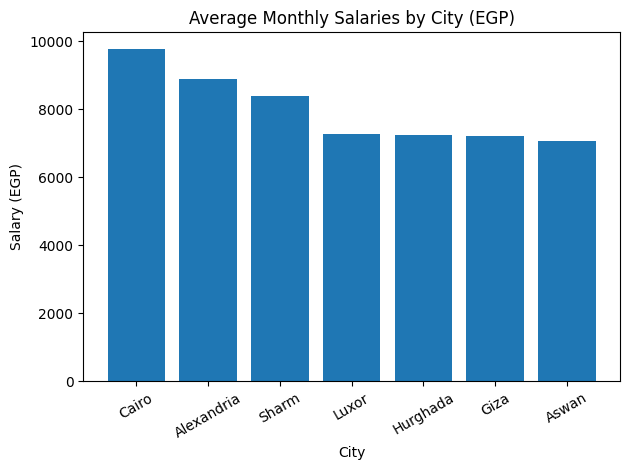
This complete guide to salaries in Egypt for 2026 is designed to provide a detailed, data-driven overview of how compensation works across the country. It explores salary benchmarks by industry, highlights differences based on experience and seniority, and examines how education and professional certifications influence earning potential. It also delves into regional variations, revealing how location plays a critical role in determining income levels, with Cairo and emerging urban hubs offering significantly higher salaries than other parts of the country.
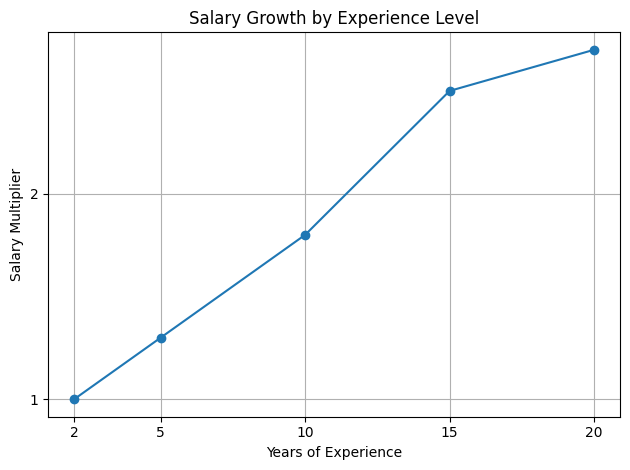
In addition, this guide addresses some of the most pressing structural challenges in Egypt’s labor market. High levels of informal employment, a persistent gender pay gap, and a mismatch between education and job market needs continue to shape salary outcomes. These factors are essential for understanding why wage growth does not always translate into improved living standards and why access to formal-sector employment remains a key determinant of financial stability.
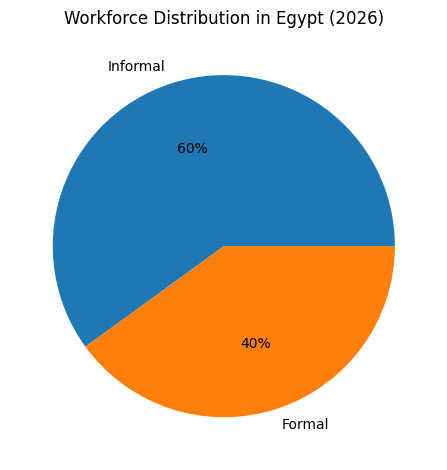
For employers, Egypt presents a unique environment where competitive salaries must be balanced with rising operational costs and evolving workforce expectations. Companies are increasingly adopting total rewards strategies that go beyond base pay, incorporating benefits such as health insurance, flexible working arrangements, and performance incentives to attract and retain talent. At the same time, the need for continuous upskilling and digital transformation is reshaping hiring practices and compensation models.
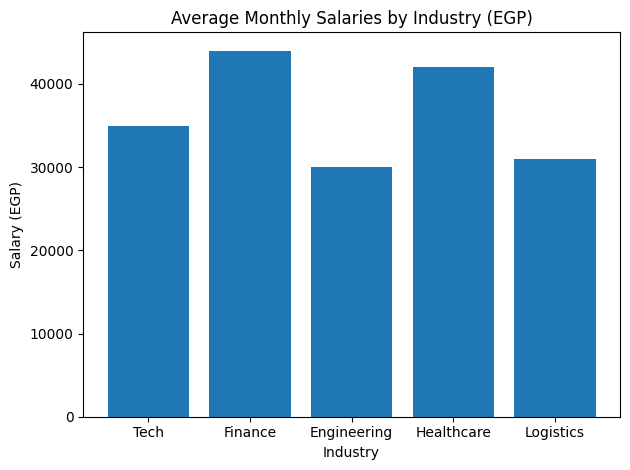
For professionals, navigating Egypt’s salary landscape requires a strategic approach. Career choices, industry selection, skill development, and geographic mobility all play crucial roles in determining earning potential. High-growth sectors such as technology and finance offer substantial opportunities, but they also demand specialized expertise and continuous learning.
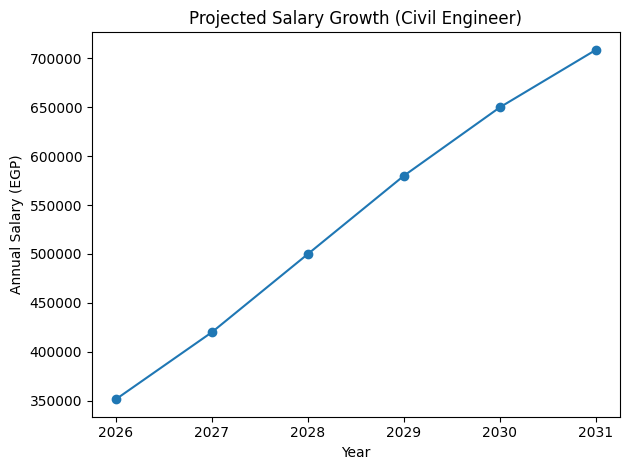
Looking ahead, the outlook for salaries in Egypt is broadly positive. Projections suggest strong nominal wage growth through 2031, driven by economic expansion, labor market formalization, and increased demand for skilled professionals. However, the sustainability of this growth will depend on maintaining inflation control and ensuring that economic gains translate into real improvements in purchasing power.
Ultimately, this guide provides a holistic perspective on salaries in Egypt for 2026, offering valuable insights for job seekers, employers, investors, and policymakers. By examining the interplay between economic conditions, labor market structures, and compensation trends, it equips readers with the knowledge needed to make informed decisions in a rapidly changing environment.
Before we venture further into this article, we would like to share who we are and what we do.
About 9cv9
9cv9 is a business tech startup based in Singapore and Asia, with a strong presence all over the world.
With over nine years of startup and business experience, and being highly involved in connecting with thousands of companies and startups, the 9cv9 team has listed some important learning points in this overview of Salaries in the Egypt for 2026: A Complete Guide.
If your company needs recruitment and headhunting services to hire top-quality employees, you can use 9cv9 headhunting and recruitment services to hire top talents and candidates. Find out more here, or send over an email to hello@9cv9.com.
Or just post 1 free job posting here at 9cv9 Hiring Portal in under 10 minutes.
Salaries in the Egypt for 2026: A Complete Guide
- Macroeconomic Context and the Foundations of Compensation Planning
- Statutory Framework and Regulatory Compliance
- Aggregate Labor Market Trends: Unemployment and Informality
- Industry-Specific Salary Comparisons
- Salaries by Seniority and Experience Level
- Regional Salary Disparities
- The Education and Skill Premium
- Cost of Living vs. Wages: The Purchasing Power Challenge
- Future Outlook: Salary Projections to 2031
- Strategic Recommendations
1. Macroeconomic Context and the Foundations of Compensation Planning
Understanding the macroeconomic environment is essential for interpreting salary structures and compensation strategies in Egypt in 2026. The broader economic landscape directly shapes wage benchmarks, purchasing power, and employer decision-making. This guide provides a detailed, third-party perspective on the key economic forces influencing salaries, offering clarity for employers, job seekers, and analysts evaluating Egypt’s labor market.
Macroeconomic Stability and Currency Dynamics
In 2026, the Egyptian pound (EGP) has entered a phase of relative stability after a period of volatility in prior years. This stabilization is largely attributed to structural reforms supported by international financial institutions and increased capital inflows from foreign investors, particularly from Gulf-region partners. The currency now operates within a more flexible exchange framework, allowing market forces to play a greater role in valuation.
By early 2026, the exchange rate is projected to fluctuate within a controlled band, creating a more predictable financial environment for businesses. This predictability is particularly important for multinational corporations and large domestic firms that rely on accurate cost forecasting when designing compensation packages.
The strengthening of foreign exchange reserves further reinforces confidence in the economy. With reserves reaching approximately USD 52.7 billion, Egypt demonstrates improved liquidity and a stronger ability to manage external obligations, which indirectly supports stable wage planning.
Table: Currency and External Stability Indicators
| Indicator | 2026 Estimated Value | Impact on Salaries |
|---|---|---|
| Exchange Rate (EGP/USD) | 51 – 55 | Enables predictable salary benchmarking |
| Foreign Exchange Reserves | USD 52.745 Billion | Strengthens economic confidence |
| Currency Policy Framework | Flexible exchange regime | Reduces volatility in compensation planning |
| Foreign Direct Investment (FDI) | High inflows (Gulf-led) | Drives job creation and salary growth |
Inflation Trends and Real Wage Growth
Although inflation has moderated compared to the sharp increases observed in earlier years, it continues to play a critical role in shaping salary adjustments. In 2026, average headline inflation is expected to hover around 10.5%, with occasional spikes due to energy pricing reforms and transportation cost adjustments.
Employers across industries are responding with nominal salary increases; however, these adjustments are often calibrated to balance cost control with employee retention. As a result, while workers may observe higher nominal wages, real income growth remains modest, with purchasing power only gradually improving.
The Central Bank maintains a cautious stance, targeting inflation within a defined range. This approach reflects a broader effort to stabilize the economy while avoiding excessive wage inflation that could undermine long-term growth.
Table: Inflation and Wage Impact Matrix
| Factor | Trend in 2026 | Effect on Employees | Employer Response |
|---|---|---|---|
| Headline Inflation | ~10.5% average | Reduced real income growth | Gradual salary increments |
| Inflation Peaks | Up to ~13.4% | Short-term cost-of-living pressure | Variable bonus adjustments |
| Central Bank Policy | Tight monetary stance | Controlled wage expansion | Conservative compensation planning |
| Energy & Transport Costs | Periodic increases | Higher household expenses | Sector-specific salary revisions |
Economic Growth and Sectoral Drivers
Egypt’s economic outlook for 2026 reflects a steady recovery, with real GDP growth expected to approach 4.7% to 4.8% during the fiscal year, and further acceleration projected in the following year. This growth is not evenly distributed across all sectors; instead, it is concentrated in high-performing industries that significantly influence salary benchmarks.
Non-oil manufacturing, information and communications technology, and tourism are leading contributors to economic expansion. These sectors not only drive national output but also establish the upper range of compensation levels due to higher productivity, global integration, and demand for skilled labor.
As these industries expand, they create competitive pressure in the labor market, particularly for specialized roles. This results in salary differentiation, where employees in growth sectors experience faster wage progression compared to those in more traditional or slower-growing industries.
Table: Key Growth Sectors and Salary Influence
| Sector | Growth Outlook | Salary Impact Level | Talent Demand |
|---|---|---|---|
| Non-Oil Manufacturing | Strong | Medium to High | Skilled technical roles |
| ICT (Technology Sector) | Very Strong | High | Highly competitive |
| Tourism and Hospitality | Recovering Strongly | Medium | Service and management roles |
| Traditional Sectors | Moderate | Low to Medium | Stable but less dynamic |
Comprehensive Macroeconomic Overview
A consolidated view of Egypt’s economic indicators provides valuable context for salary planning and benchmarking. These figures serve as reference points for organizations designing compensation frameworks and for professionals evaluating earning potential.
Table: Egypt Macroeconomic Snapshot for 2026
| Indicator | Forecast / Value |
|---|---|
| Real GDP Growth (FY 2025/2026) | 4.7% – 4.8% |
| Projected GDP Growth (FY 2026/27) | Up to 5.4% |
| Average Headline Inflation | Approximately 10.5% |
| Exchange Rate (EGP/USD) | 52 – 55 EGP |
| Foreign Exchange Reserves | USD 52.745 Billion |
| GDP per Capita (Nominal) | USD 3,191 |
| Current Account Balance | -5.105% of GDP |
Implications for Salary Planning in 2026
The interplay between currency stability, inflation control, and economic growth creates a nuanced salary environment in Egypt. Employers are increasingly adopting data-driven compensation strategies that account for both macroeconomic indicators and sector-specific dynamics.
From a workforce perspective, salary growth is evident but must be evaluated in real terms rather than nominal figures. Employees in high-growth industries are likely to benefit the most, while others may experience more gradual income progression.
Overall, Egypt’s compensation landscape in 2026 reflects a transitional phase marked by stabilization, cautious optimism, and evolving market competitiveness.
2. Statutory Framework and Regulatory Compliance
The regulatory environment governing wages and employment in Egypt has evolved significantly in recent years, with 2026 reflecting a more structured and intervention-driven framework. Public authorities continue to play a central role in safeguarding employee welfare, particularly for lower- and middle-income segments, while also ensuring that employers adhere to standardized compensation practices. These policies are critical in shaping salary benchmarks, total employment costs, and compliance obligations across industries.
Minimum Wage Policies and Mandatory Salary Increments
The national minimum wage framework in Egypt has undergone multiple revisions, reflecting the government’s response to inflationary pressures and cost-of-living challenges. By 2026, the private sector minimum wage has been firmly established at EGP 7,000 per month, marking a significant increase compared to levels observed just a few years prior.
This upward trajectory is not static. Fiscal projections indicate that further adjustments are anticipated within the same year, with estimates suggesting a potential rise to EGP 8,500. These changes highlight a continued commitment to reinforcing income stability and supporting workforce resilience.
In addition to the base wage, employers are legally required to implement periodic salary increases. These annual increments must meet a minimum threshold of 3% of the employee’s social insurance wage, with a guaranteed minimum increase of EGP 250 per month. This ensures that wage growth remains consistent, even in sectors where discretionary raises might otherwise be limited.
Table: Minimum Wage and Increment Structure
| Component | 2026 Requirement | Employer Implication |
|---|---|---|
| Minimum Wage (Private Sector) | EGP 7,000 / month | Establishes baseline salary compliance |
| Projected Minimum Wage (Late 2026) | Up to EGP 8,500 | Anticipated increase in payroll costs |
| Annual Salary Increment | Minimum 3% | Mandatory yearly adjustment |
| Minimum Increment Floor | EGP 250 / month | Protects low-income employees |
Social Insurance Contributions and Employee Benefits
Egypt’s unified social insurance system represents a substantial portion of total compensation costs and plays a critical role in long-term employee security. The system is designed to provide coverage for pensions, disability, unemployment, and survivorship benefits.
As of January 2026, both the lower and upper bounds of insurable wages have been revised. The minimum insurable salary has increased to EGP 2,700 per month, while the maximum threshold has reached EGP 16,700. These limits define the range within which mandatory contributions are calculated.
Employers are required to contribute approximately 18.75% of an employee’s gross salary within the insurable limits. Employees, in turn, contribute 11% of their earnings. These contributions collectively fund a comprehensive social protection system that forms an integral part of the overall compensation package.
Beyond statutory insurance, employers must also comply with additional benefit obligations. Health insurance is mandatory, with companies covering at least 75% of the premium cost. Furthermore, employees are entitled to a share of company profits, reinforcing a performance-linked compensation component.
Table: Social Insurance and Benefits Overview
| Requirement | 2026 Value / Rate | Coverage and Impact |
|---|---|---|
| Minimum Insurable Wage | EGP 2,700 / month | Defines lower contribution threshold |
| Maximum Insurable Wage | EGP 16,700 / month | Caps contribution calculations |
| Employer Contribution | 18.75% of gross salary | Major component of employment cost |
| Employee Contribution | 11% of gross salary | Deducted from monthly salary |
| Health Insurance Coverage | 75% employer-funded | Mandatory employee healthcare support |
| Profit Sharing | 10% of net profits | Incentivizes workforce performance |
| Annual Leave Entitlement | Minimum 21 days | Statutory paid leave benefit |
Profit Sharing and Additional Legal Obligations
A distinctive feature of Egypt’s labor regulations is the requirement for profit sharing. Employers must allocate at least 10% of their annual net profits to employees, although individual payouts are capped at one year’s salary. This mechanism ensures that employees benefit directly from organizational success, aligning workforce incentives with company performance.
Additionally, labor laws mandate a minimum annual leave entitlement of 21 days after the completion of one year of service. This provision contributes to employee well-being and reflects broader efforts to standardize working conditions across sectors.
Matrix: Employer Cost Components Breakdown
| Cost Component | Fixed / Variable | Percentage / Value | Strategic Impact |
|---|---|---|---|
| Base Salary | Fixed | Market-driven | Core compensation benchmark |
| Social Insurance (Employer) | Fixed | 18.75% | Significant statutory cost |
| Health Insurance | Fixed | 75% premium coverage | Employee retention factor |
| Profit Sharing | Variable | 10% of net profits | Performance-linked incentive |
| Annual Increment | Variable | Min. 3% or EGP 250 | Ensures wage progression |
Progressive Income Tax System
Egypt’s personal income tax system in 2026 is structured to ensure equitable distribution of tax obligations based on income levels. The system operates on a progressive scale, where higher income brackets are subject to higher marginal tax rates. Taxes are deducted at source, simplifying compliance for employees and ensuring consistent government revenue collection.
This progressive approach helps balance fiscal sustainability with social equity, while also influencing net salary outcomes across different income groups.
Table: Personal Income Tax Brackets for 2026
| Annual Income Range (EGP) | Tax Rate |
|---|---|
| 0 – 40,000 | 0% |
| 40,001 – 55,000 | 10% |
| 55,001 – 70,000 | 15% |
| 70,001 – 200,000 | 20% |
| 200,001 – 400,000 | 22.5% |
| 400,001 – 1,200,000 | 25% |
| Above 1,200,000 | 27.5% |
Implications for Employers and Workforce Planning
The statutory framework in Egypt for 2026 introduces a structured and compliance-driven compensation environment. Employers must account for multiple layers of mandatory costs, including minimum wage thresholds, social insurance contributions, health benefits, and profit-sharing obligations.
For employees, these regulations provide a degree of financial protection and income predictability, although actual take-home pay is influenced by taxation and inflation dynamics.
Overall, the regulatory landscape reinforces transparency, fairness, and long-term sustainability in Egypt’s labor market, while also requiring organizations to adopt more strategic and compliant compensation planning practices.
3. Aggregate Labor Market Trends: Unemployment and Informality
The Egyptian labor market in 2026 presents a complex and often contradictory picture. On the surface, official indicators suggest a strong employment environment, with unemployment rates reaching historically low levels. However, a deeper analysis reveals structural imbalances, including widespread informality, demographic pressures, and persistent gender disparities. These factors collectively shape salary distribution, job quality, and long-term workforce sustainability.
Understanding the “Low Unemployment Paradox”
Egypt’s official unemployment rate has declined significantly, reaching approximately 6.25% in 2025 and trending toward 6% in 2026. While this suggests a tightening labor market, the figure does not fully capture the quality or stability of employment.
A substantial portion of the workforce remains engaged in informal employment, which lacks legal protections, social insurance coverage, and standardized wages. As a result, the low unemployment rate coexists with underemployment and income insecurity, creating what is often described as a “low unemployment paradox.”
This dynamic has important implications for salary benchmarking. Formal sector jobs, which offer regulated wages and benefits, remain limited and highly competitive, while informal roles tend to offer lower and more volatile income levels.
Table: Employment Structure Overview
| Metric | 2025/2026 Estimate | Interpretation |
|---|---|---|
| Official Unemployment Rate | ~6.0% – 6.25% | Indicates strong headline employment |
| Informal Employment Rate | Over 60% | Majority lack formal protections |
| Total Informal Workforce | 18 – 19 million workers | Large unregulated labor segment |
| Labor Force Participation Rate | 44% – 45.5% | Moderate workforce engagement |
Informality and Its Impact on Salaries
The dominance of informal employment is one of the most defining characteristics of Egypt’s labor market. Workers in the informal sector typically operate outside regulatory frameworks, meaning they do not benefit from minimum wage laws, social insurance, or structured career progression.
This creates a dual labor market:
Formal Sector: Offers higher wages, job security, and benefits but is limited in size
Informal Sector: Provides widespread employment but with lower income stability and minimal protections
The result is a widening wage gap between workers in regulated industries and those in informal occupations. Employers in the formal sector must comply with statutory requirements, increasing labor costs, while informal employers operate with greater flexibility but lower wage standards.
Matrix: Formal vs Informal Employment Comparison
| Dimension | Formal Sector | Informal Sector |
|---|---|---|
| Wage Structure | Regulated, standardized | Variable, often lower |
| Social Protection | Full coverage (insurance, etc.) | Limited or none |
| Job Security | High | Low |
| Career Progression | Structured | Minimal |
| Compliance Costs | High for employers | Low for employers |
| Workforce Share | Minority | Majority (>60%) |
Demographic Pressures and Future Labor Supply
Egypt is currently benefiting from a temporary demographic phase often referred to as a “youth bulge relief period.” Smaller cohorts are entering working age, which has eased immediate pressure on job creation and contributed to lower unemployment rates.
However, this relief is short-lived. A significantly larger “echo generation,” currently aged between 5 and 14, is expected to enter the labor market within the next decade. This will dramatically increase the demand for job creation.
To maintain current unemployment levels, the economy will need to generate approximately 1.6 million new jobs annually. This presents a major structural challenge and will likely intensify competition for high-quality, formal-sector employment.
Table: Demographic Labor Market Outlook
| Factor | Current Status | Future Implication |
|---|---|---|
| Youth Cohort Size | Temporarily smaller | Reduced short-term pressure |
| Echo Generation (Age 5–14) | Large population segment | Surge in future labor supply |
| Annual Job Creation Requirement | ~1.6 million jobs | Critical for stability |
| Labor Supply Trend | Increasing (long-term) | Intensifies job competition |
Youth Employment and Workforce Entry
Youth unemployment remains a critical concern despite overall improvements in headline unemployment figures. Individuals aged 15 to 24 face disproportionately higher unemployment rates, estimated at approximately 18.8%.
This reflects structural challenges such as skills mismatches, limited entry-level opportunities, and the concentration of high-paying jobs in specialized sectors. As a result, many young workers are either unemployed or absorbed into informal roles with limited career growth.
Table: Youth Employment Indicators
| Indicator | Value (2025/2026) | Key Insight |
|---|---|---|
| Youth Unemployment Rate | 18.8% | Significantly above national average |
| Entry-Level Job Availability | Constrained in formal sectors | |
| Skill Mismatch | High | Gap between education and market needs |
| Informal Absorption | Common | Default option for many young workers |
Gender Dynamics and Workforce Participation
A significant structural issue within Egypt’s labor market is the low participation of women. Female labor force participation remains between 15% and 18%, one of the lowest rates globally.
Several factors contribute to this trend, including limited availability of flexible work arrangements, cultural constraints, and a decline in traditional public-sector roles that historically employed large numbers of women.
This imbalance is further reflected in a substantial gender pay gap, estimated at approximately 56.9%. Men are more likely to work in higher-paying industries such as construction, manufacturing, and technical fields, while women are often concentrated in lower-paying sectors or self-employment.
Matrix: Gender Disparities in Employment
| Dimension | Male Workforce | Female Workforce |
|---|---|---|
| Labor Force Participation | High | Low (15% – 18%) |
| Sector Representation | High-paying industries | Lower-paying sectors |
| Employment Type | Formal employment dominant | Higher informal/self-employment share |
| Average Earnings | Higher | Significantly lower |
| Work Flexibility Access | Moderate | Limited |
| Gender Pay Gap | — | ~56.9% disparity |
Key Implications for Salaries in 2026
The structural characteristics of Egypt’s labor market have direct consequences for salary distribution and compensation strategies:
High informality suppresses overall wage averages while increasing inequality
Formal sector roles command premium salaries due to compliance costs and scarcity
Demographic pressures will increase competition for quality jobs, potentially widening wage gaps
Youth and women face systemic barriers that limit earning potential
Table: Labor Market Impact on Salary Trends
| Factor | Impact on Salaries | Overall Effect |
|---|---|---|
| Low Unemployment Rate | Signals stability | Positive but misleading |
| High Informality | Depresses average wages | Negative |
| Demographic Growth | Increases labor supply | Downward pressure on wages |
| Gender Disparities | Unequal earning distribution | Structural imbalance |
| Youth Unemployment | Limits early-career earnings | Slower income growth |
Conclusion: A Dual-Speed Labor Market
Egypt’s labor market in 2026 operates as a dual-speed system. While headline indicators suggest improvement, underlying structural challenges continue to influence salary levels and employment quality.
The coexistence of low unemployment and high informality, combined with demographic and gender-based disparities, creates a nuanced environment where access to formal employment remains the key determinant of income stability and long-term career progression.
4. Industry-Specific Salary Comparisons
a. Technology and Digital Services: The Growth Engine
Egypt’s salary landscape in 2026 is highly segmented, with compensation levels varying significantly across industries. The highest-paying sectors are typically those that are export-driven, technologically advanced, or closely integrated into global value chains. Among these, the technology and digital services sector stands out as the primary engine of salary growth, setting benchmarks that influence compensation strategies across the broader economy.
Technology and Digital Services: Egypt’s High-Growth Salary Leader
The information and communications technology (ICT) sector continues to lead Egypt’s economic and salary expansion in 2026. With an estimated growth rate of approximately 14.5%, the industry has become a central pillar of the country’s modernization strategy.
This growth is supported by strong government initiatives aimed at positioning Egypt as a regional technology and outsourcing hub. As a result, global corporations have established development and service centers within the country, driving demand for highly skilled professionals and elevating salary standards.
Unlike traditional sectors, compensation in technology roles is increasingly aligned with international benchmarks. This is particularly evident in roles linked to global delivery models, such as software engineering, cloud computing, cybersecurity, and product management.
Table: ICT Sector Growth and Salary Drivers
| Factor | 2026 Status | Impact on Salaries |
|---|---|---|
| Sector Growth Rate | ~14.5% | Strong upward pressure on wages |
| Foreign Company Presence | High | Global salary benchmarking |
| Government Digital Strategy | Active | Increased job creation |
| Export-Oriented Services | Expanding | Higher compensation competitiveness |
| Demand for Specialized Skills | Very High | Premium pay for niche expertise |
Software Engineering and Technical Roles
Software engineering remains one of the most in-demand and well-compensated professions in Egypt. Mid-level engineers working in structured, professional environments earn an average monthly salary of approximately EGP 35,000. However, this figure can increase substantially for individuals with specialized expertise in areas such as artificial intelligence, machine learning, or cloud security.
Senior engineers and technical specialists often command salaries that exceed standard benchmarks due to the scarcity of advanced skills and the global demand for such expertise. This has led to the emergence of a premium salary tier within the Egyptian labor market.
Product and Leadership Roles in Technology
Beyond technical execution roles, strategic and leadership positions within the technology sector offer even higher compensation. Product managers, who are responsible for business outcomes and product profitability, earn some of the highest salaries in the industry, with average monthly compensation reaching EGP 45,000.
Similarly, roles such as IT directors, architects, and lead developers command strong salary packages due to their responsibility for system design, team leadership, and long-term technology strategy.
Table: Technology and IT Salary Benchmarks (2026)
| Role | Average Monthly Salary (EGP) | Estimated Total Employer Cost (EGP) |
|---|---|---|
| Software Engineer | 35,000 | 41,560 |
| Product Manager | 45,000 | 53,440 |
| IT Director | 37,548 | Not specified |
| Lead Developer | 32,795 | Not specified |
| IT Architect | 30,993 | Not specified |
| IT Specialist | 14,300 | Not specified |
Understanding Total Employer Cost
The difference between gross salary and total employer cost is a critical consideration in Egypt’s compensation structure. Employer costs typically include social insurance contributions, mandatory benefits, and other statutory obligations.
For example, a software engineer earning EGP 35,000 per month may represent a total employer cost exceeding EGP 41,000 when statutory contributions are included. This highlights the importance of considering the full cost of employment rather than base salary alone.
Matrix: Salary vs Total Cost in Technology Roles
| Component | Description | Impact on Compensation |
|---|---|---|
| Base Salary | Monthly gross pay | Core employee earnings |
| Social Insurance | Employer contribution (~18.75%) | Increases total cost significantly |
| Health Benefits | Mandatory employer coverage | Adds indirect compensation value |
| Bonuses and Incentives | Performance-based | Variable earnings component |
| Total Employer Cost | All-inclusive cost | True cost for organizations |
Salary Differentiation Within the Technology Sector
Even within the ICT sector, salary variation is significant and depends on several factors:
Level of experience: Senior professionals command substantially higher wages
Skill specialization: Expertise in emerging technologies drives premium pay
Type of employer: Multinational corporations typically offer higher compensation than local firms
Business function: Strategic and revenue-linked roles tend to pay more than support roles
Table: Key Drivers of Salary Variation in ICT
| Driver | Low Range Impact | High Range Impact |
|---|---|---|
| Experience Level | Entry-level salaries | Senior-level premium pay |
| Technical Specialization | Generalist roles | AI, cloud, cybersecurity premiums |
| Employer Type | Local firms | Multinational corporations |
| Role Responsibility | Execution-focused | Strategic / P&L ownership roles |
Implications for Egypt’s Overall Salary Structure
The rapid growth of the technology sector is reshaping Egypt’s overall compensation landscape. High salaries in ICT are creating upward pressure on wages in adjacent industries, particularly those competing for similar talent pools, such as fintech, telecommunications, and digital marketing.
At the same time, the gap between technology salaries and those in traditional sectors is widening, contributing to increased income inequality across industries. This divergence reinforces the importance of skills development and digital transformation as key drivers of earning potential in Egypt’s evolving labor market.
In summary, the technology and digital services sector in 2026 serves as the benchmark for high-value employment in Egypt, offering some of the most competitive salaries and fastest career progression opportunities in the country.
b. Banking, Finance, and Insurance (BFSI)
The banking, finance, and insurance (BFSI) sector remains one of the most lucrative and stable employment domains in Egypt in 2026. As a cornerstone of the country’s economic infrastructure, this sector benefits from strong regulatory oversight, increasing financial inclusion, and growing integration with international markets. These factors contribute to consistently competitive salary structures, particularly in roles that require specialized expertise, regulatory knowledge, and global exposure.
Overview of Compensation in the BFSI Sector
Compensation within Egypt’s financial services industry is highly stratified, reflecting differences in role complexity, institutional scale, and international exposure. Employees working in multinational banks, investment firms, or globally connected financial institutions typically receive higher salaries compared to those in local or retail-focused organizations.
Roles involving cross-border transactions, compliance with international financial regulations, and capital markets operations are especially well-compensated. In addition to base salaries, performance-based bonuses form a significant portion of total earnings, particularly in investment banking and senior finance roles.
Table: Key Salary Drivers in BFSI Sector
| Factor | Influence on Salaries | Explanation |
|---|---|---|
| International Exposure | High | Global operations require specialized skills |
| Regulatory Complexity | High | Compliance expertise commands premium pay |
| Institution Size | Medium to High | Larger firms offer higher compensation |
| Role Seniority | Very High | Leadership roles earn significantly more |
| Performance Incentives | High | Bonuses linked to financial outcomes |
International Banking and High-End Finance Roles
International banking roles represent the upper tier of compensation within Egypt’s financial sector. Professionals working in global banking environments, particularly in major urban centers such as Cairo, benefit from salaries that are often aligned with international standards.
An international banker in Egypt earns an average annual salary of approximately EGP 588,008, translating to around EGP 49,000 per month. In addition to base compensation, annual bonuses can exceed EGP 51,000, significantly increasing total earnings.
These roles typically require expertise in foreign exchange markets, international trade finance, anti-money laundering regulations, and cross-border compliance frameworks.
Finance Management and Strategic Roles
Mid- to senior-level management roles within finance departments also offer strong earning potential. Finance managers, who oversee budgeting, financial planning, and organizational financial health, earn an average of over EGP 44,000 per month.
These roles are critical for corporate decision-making and often involve direct interaction with executive leadership. As such, compensation reflects both responsibility and impact on business performance.
Financial analysts and planning professionals exhibit a wide salary range, typically between EGP 24,000 and EGP 90,000 per month. This variation is influenced by experience level, technical expertise, and the size and type of employing institution.
Table: Banking and Finance Salary Benchmarks (2026)
| Role | Annual Average Salary (EGP) | Monthly Average Salary (EGP) |
|---|---|---|
| International Banker (Cairo) | 588,008 | 49,000 |
| Finance Manager | 528,624 | 44,052 |
| Financial Analyst / Planning | Not fixed | 24,000 – 90,000 |
| Accountant | 213,600 | 17,800 |
| Banking Teller Head | 188,522 | 15,710 |
| Bank Teller (Cairo) | 129,683 | 10,807 |
Entry-Level and Operational Roles in Banking
At the operational level, roles such as bank tellers and accounting staff form the backbone of the financial services workforce. While these positions offer lower salaries compared to strategic or specialized roles, they provide stable employment and clear career progression pathways.
Accountants earn an average monthly salary of approximately EGP 17,800, reflecting moderate compensation for roles that require technical knowledge but are widely available in the labor market.
Bank tellers, particularly in Cairo, earn around EGP 10,800 per month, while supervisory roles such as head tellers can earn upwards of EGP 15,700. These positions are typically associated with retail banking operations and customer service functions.
Matrix: BFSI Role Hierarchy and Salary Positioning
| Role Category | Example Roles | Salary Level | Career Progression |
|---|---|---|---|
| Executive / Strategic | Finance Manager, Director | High | Leadership pathways |
| Specialized Professionals | Financial Analyst, Banker | Medium to High | Skill-based advancement |
| Operational / Support | Accountant, Teller | Low to Medium | Structured progression |
Bonus Structures and Total Compensation
A defining feature of the BFSI sector is the prominence of variable compensation. Bonuses are often tied to individual performance, departmental targets, and overall institutional profitability.
In international banking roles, bonuses can represent a substantial portion of total compensation, sometimes exceeding 10% of annual salary. This incentivizes performance and aligns employee objectives with organizational goals.
Matrix: Compensation Components in BFSI
| Component | Fixed / Variable | Importance Level | Description |
|---|---|---|---|
| Base Salary | Fixed | High | Core monthly earnings |
| Performance Bonus | Variable | High | Linked to individual and firm performance |
| Allowances | Variable | Medium | May include transport or housing support |
| Benefits | Fixed | Medium | Insurance and retirement contributions |
| Total Compensation | Combined | Very High | Overall earning potential |
Implications for Egypt’s Salary Landscape
The BFSI sector continues to set high compensation standards in Egypt, second only to the technology sector in many cases. Its structured pay scales, strong bonus culture, and demand for specialized skills make it an attractive career path for professionals seeking financial stability and upward mobility.
However, the sector also reflects broader labor market inequalities. High-paying roles are concentrated among a relatively small segment of highly skilled professionals, while entry-level positions offer more modest compensation.
In conclusion, banking, finance, and insurance remain among the most rewarding sectors in Egypt’s 2026 labor market, particularly for individuals with advanced financial expertise, international exposure, and strategic responsibilities.
c. Engineering, Construction, and Infrastructure
The engineering, construction, and infrastructure sector in Egypt plays a central role in shaping the country’s economic transformation in 2026. Driven by large-scale national projects, including urban expansion initiatives and industrial development programs, this sector has emerged as one of the most significant contributors to employment and salary growth.
With continued investment in megaprojects such as new cities, transportation networks, and logistics infrastructure, demand for engineering talent remains high. As a result, compensation levels in this sector are competitive, particularly for experienced professionals and those based in key urban centers like Cairo.
Sector Overview: Infrastructure Expansion and Talent Demand
Egypt’s ongoing infrastructure expansion has created sustained demand for engineers across multiple disciplines. Civil, mechanical, and supply chain engineers are particularly востребованы due to their involvement in construction, manufacturing, and logistics operations.
Cairo, as the country’s primary economic and administrative hub, offers higher salary levels compared to the national average. This is due to the concentration of major projects, multinational contractors, and industrial facilities within the country.
Table: Key Drivers of Engineering Salaries in Egypt
| Factor | 2026 Trend | Impact on Salaries |
|---|---|---|
| Infrastructure Investment | Very High | Strong demand for engineers |
| Urban Development Projects | Expanding | Increased hiring in construction roles |
| Industrial and Logistics Growth | Accelerating | Higher pay for mechanical engineers |
| Geographic Concentration (Cairo) | Dominant | Salary premiums in urban centers |
| Experience and Seniority | Critical | Significant wage differentiation |
Civil and Mechanical Engineering Salaries
Civil engineering remains one of the most prominent professions in Egypt due to its direct involvement in large-scale construction and infrastructure projects. The national average annual salary for civil engineers is approximately EGP 351,444. However, professionals working in Cairo benefit from a notable salary premium, earning around EGP 412,733 annually, representing an increase of approximately 17.5%.
Mechanical engineers, particularly those based in Cairo, earn even higher salaries on average. This reflects the city’s role as a hub for industrial production, manufacturing, and logistics operations, where mechanical expertise is essential.
Senior engineers, who typically oversee project execution and technical teams, earn between EGP 316,278 nationally and approximately EGP 380,231 in Cairo. Their compensation reflects both experience and leadership responsibilities.
Table: Engineering Salary Comparison (National vs Cairo – 2026)
| Role | National Average (Annual EGP) | Cairo Average (Annual EGP) |
|---|---|---|
| Mechanical Engineer | Not specified | 437,632 |
| Civil Engineer | 351,444 | 412,733 |
| Senior Engineer | 316,278 | 380,231 |
| Supply Chain Engineer | 361,150 | 406,169 |
| Project Manager | 123,000 | 180,000 |
Supply Chain and Project Management Roles
Beyond core engineering disciplines, supply chain engineers and project managers play a crucial role in ensuring the successful delivery of infrastructure projects. These roles are increasingly important as projects grow in scale and complexity.
Supply chain engineers, responsible for logistics optimization and procurement efficiency, earn approximately EGP 361,150 annually at the national level and around EGP 406,169 in Cairo. Their role is particularly valuable in managing material flows and reducing operational costs.
Project managers, who oversee timelines, budgets, and stakeholder coordination, exhibit a wide salary range. While the national average stands at approximately EGP 123,000 annually, those in Cairo can earn up to EGP 180,000, reflecting the higher complexity and scale of urban projects.
Matrix: Engineering Role Value and Salary Positioning
| Role Category | Example Roles | Salary Level | Market Demand |
|---|---|---|---|
| Core Engineering | Civil, Mechanical | Medium to High | Very High |
| Senior Technical Roles | Senior Engineer | High | High |
| Operational Optimization | Supply Chain Engineer | Medium to High | Increasing |
| Project Leadership | Project Manager | Variable | High |
Geographic Salary Disparities
Location remains a key determinant of salary levels within Egypt’s engineering sector. Cairo consistently offers higher compensation due to several factors:
Concentration of large-scale projects
Presence of multinational engineering and construction firms
Higher cost of living
Greater demand for experienced professionals
This geographic disparity creates a clear incentive for engineers to seek opportunities in urban centers, particularly for those aiming to maximize earning potential.
Table: Location-Based Salary Impact
| Location | Salary Level | Key Characteristics |
|---|---|---|
| Cairo | High | Major projects, multinational presence |
| Other Cities | High | Smaller-scale projects, lower cost of living |
| Remote Areas | Low to Medium | Limited infrastructure activity |
Implications for Salary Trends in 2026
The engineering and construction sector continues to offer stable and competitive salaries, particularly for professionals with specialized skills and project experience. However, compensation levels are influenced by several key variables:
Project scale and funding source
Level of technical expertise
Geographic location
Industry specialization
As Egypt continues to invest heavily in infrastructure and urban development, demand for engineering talent is expected to remain strong. This will likely sustain upward pressure on salaries, particularly in high-demand disciplines and major metropolitan areas.
In summary, engineering, construction, and infrastructure roles in Egypt for 2026 represent a vital and growing segment of the labor market, offering solid earning potential and long-term career opportunities for qualified professionals.
d. Healthcare and Life Sciences
The healthcare and life sciences sector in Egypt in 2026 is undergoing a period of structural transformation, driven by rising demand for medical services, workforce shortages, and the continued migration of skilled professionals. These pressures have forced both public and private healthcare providers to reassess compensation strategies in order to attract and retain qualified talent.
As a result, salaries across key medical roles have seen notable increases, particularly in major urban centers such as Cairo, where demand for specialized healthcare services is highest.
Sector Overview: Workforce Challenges and Salary Adjustments
One of the defining characteristics of Egypt’s healthcare labor market is the imbalance between supply and demand for skilled professionals. While the population continues to grow and healthcare needs expand, the availability of experienced doctors, nurses, and specialists remains constrained.
A significant contributing factor is the migration of medical professionals to international markets offering higher compensation and better working conditions. This has created a domestic talent gap, prompting employers to increase wages and improve benefits in an effort to retain staff.
Table: Key Drivers of Healthcare Salaries in Egypt
| Factor | 2026 Trend | Impact on Salaries |
|---|---|---|
| Talent Shortage | Severe | Strong upward pressure on wages |
| Medical Workforce Migration | High | Retention-driven salary increases |
| Population Growth | Rising demand | Increased need for healthcare services |
| Private Sector Expansion | Accelerating | Competitive compensation packages |
| Urban Demand (Cairo) | Concentrated | Higher salary premiums |
Medical Doctors: Salary Benchmarks and Urban Premiums
Medical doctors represent the highest-paid category within the healthcare sector in Egypt. In 2026, the national average annual salary for physicians is approximately EGP 509,370, equivalent to around EGP 42,448 per month.
However, location plays a significant role in determining compensation. Doctors practicing in Cairo earn an average of EGP 572,553 annually, or approximately EGP 47,713 per month. This reflects a substantial urban premium driven by higher demand, greater access to private healthcare facilities, and a higher cost of living.
Specialists and consultants, although not explicitly detailed in base averages, often command significantly higher salaries depending on their field of expertise and institutional affiliation.
Table: Medical Doctor Salary Comparison (2026)
| Category | Annual Average Salary (EGP) | Monthly Equivalent (EGP) |
|---|---|---|
| Medical Doctor (Cairo) | 572,553 | 47,713 |
| Medical Doctor (National) | 509,370 | 42,448 |
Nursing and Mid-Level Healthcare Roles
Registered nurses form the backbone of Egypt’s healthcare delivery system and are increasingly in demand due to workforce shortages. In Cairo, registered nurses earn an average annual salary of EGP 223,481, which translates to approximately EGP 18,623 per month.
This represents a salary premium of approximately 17% compared to the national average, highlighting the importance of geographic location in determining compensation. Despite these increases, nursing salaries remain relatively lower compared to physicians, reflecting differences in training requirements and professional responsibilities.
Other medical professionals, including technicians and allied health workers, earn an average annual salary of around EGP 253,200, or approximately EGP 21,100 per month.
Table: Nursing and Healthcare Support Salaries (2026)
| Role | Annual Average Salary (EGP) | Monthly Equivalent (EGP) |
|---|---|---|
| Registered Nurse (Cairo) | 223,481 | 18,623 |
| Medical Professional (Average) | 253,200 | 21,100 |
Public vs Private Sector Compensation
Compensation in Egypt’s healthcare sector varies significantly between public and private institutions. Public sector roles offer stability, pension benefits, and structured career progression, but often come with lower base salaries.
In contrast, private healthcare providers offer higher wages, performance incentives, and better working conditions, particularly in urban areas. This has led to increased competition for talent, especially among experienced doctors and specialists.
Matrix: Public vs Private Healthcare Employment
| Dimension | Public Sector | Private Sector |
|---|---|---|
| Base Salary | Lower | Higher |
| Job Security | High | Moderate |
| Benefits | Strong (pensions, stability) | Competitive (insurance, bonuses) |
| Workload | High | Variable |
| Career Growth | Structured | Performance-driven |
| Talent Retention | Challenging | More effective |
Geographic Disparities in Healthcare Salaries
Location continues to be a major determinant of salary levels within the healthcare sector. Cairo offers higher compensation due to:
Higher concentration of private hospitals and specialized clinics
Greater demand for advanced medical services
Higher cost of living
Increased competition among healthcare providers
Professionals working outside major cities may experience lower salaries but potentially benefit from reduced living expenses and less competitive work environments.
Table: Location-Based Salary Comparison
| Location | Salary Level | Key Characteristics |
|---|---|---|
| Cairo | High | Private sector dominance, high demand |
| Major Cities | Medium | Growing healthcare infrastructure |
| Rural Areas | Low to Medium | Limited facilities, lower salary scales |
Implications for Healthcare Salaries in 2026
The healthcare and life sciences sector in Egypt reflects a dynamic interplay between demand pressures and workforce constraints. Key implications include:
Rising salaries driven by talent shortages and migration
Increasing competition between public and private employers
Urban salary premiums, particularly in Cairo
Persistent gaps between different healthcare roles
Table: Healthcare Salary Trend Impacts
| Factor | Impact on Salaries | Overall Effect |
|---|---|---|
| Talent Migration | Drives wage increases | Positive for employees |
| Skill Shortages | Raises demand for professionals | Upward salary pressure |
| Private Sector Expansion | Increases competition | Higher compensation packages |
| Geographic Concentration | Creates salary disparities | Uneven income distribution |
Conclusion: A Sector Under Pressure but Rising in Value
In 2026, Egypt’s healthcare sector stands at a critical juncture. While workforce shortages and migration challenges persist, these same pressures are contributing to improved compensation and greater recognition of medical professionals’ value.
For individuals pursuing careers in healthcare, the sector offers increasing financial rewards, particularly for those with specialized skills or who are based in high-demand urban centers. At the same time, systemic reforms will be essential to ensure long-term sustainability and equitable workforce distribution across the country.
e. Supply Chain, Logistics, and Professional Services
The supply chain, logistics, and professional services sectors in Egypt have gained significant momentum in 2026, driven by structural shifts in trade, digital commerce, and organizational modernization. As Egypt strengthens its position as a regional logistics hub and embraces digital transformation, these sectors are experiencing increased demand for skilled professionals, resulting in competitive and steadily rising salary levels.
Sector Overview: Trade Expansion and Digital Transformation
Egypt’s strategic geographic location, combined with ongoing investments in logistics infrastructure, has elevated the importance of supply chain and logistics roles. The expansion of key economic zones and the rapid growth of e-commerce platforms have intensified the need for efficient logistics management, procurement optimization, and last-mile delivery solutions.
At the same time, professional services such as human resources, marketing, and recruitment are evolving to support increasingly complex organizational needs, particularly within multinational and high-growth companies.
Table: Key Drivers of Salary Growth in Supply Chain and Professional Services
| Factor | 2026 Trend | Impact on Salaries |
|---|---|---|
| Logistics Infrastructure Expansion | Accelerating | Increased demand for supply chain talent |
| E-commerce Growth | Rapid | Higher need for logistics coordination roles |
| Global Trade Integration | Strengthening | Premium for experienced professionals |
| Corporate Modernization | Expanding | Growth in HR and consulting roles |
| Multinational Presence | Increasing | Higher salary benchmarks |
Supply Chain and Logistics Roles: Compensation Insights
Supply chain management roles are among the most critical and well-compensated positions within this sector. Professionals responsible for overseeing procurement, inventory management, and distribution networks earn strong salaries, reflecting the strategic importance of their work.
Supply chain managers earn an average annual salary of approximately EGP 376,512, equivalent to around EGP 31,376 per month. These roles require a combination of operational expertise, analytical skills, and leadership capabilities.
Mid-level roles such as supply chain analysts and logistics coordinators also offer competitive compensation. Salaries for these positions typically range between EGP 219,000 and EGP 225,000 annually, reflecting growing demand for data-driven decision-making and process optimization.
Table: Supply Chain and Logistics Salary Benchmarks (2026)
| Role | Average Monthly Salary (EGP) | Average Annual Salary (EGP) |
|---|---|---|
| Supply Chain Manager | 31,376 | 376,512 |
| Supply Chain Analyst | 18,787 | 225,453 |
| Logistics Coordinator | Approx. 18,250 | 219,000 – 225,000 |
| Customer Support Representative | 15,000 | 180,000 |
Professional Services: HR, Marketing, and Recruitment
The professional services segment plays a vital supporting role across all industries, particularly as organizations adapt to regulatory requirements, talent shortages, and competitive market conditions.
Human resources (HR) managers are among the highest-paid professionals in this category. Those with expertise in Egyptian labor law, compliance frameworks, and multinational corporate practices earn an average monthly salary of approximately EGP 40,000, or EGP 480,000 annually.
Marketing specialists, particularly those with digital marketing and performance analytics expertise, earn around EGP 22,000 per month. Their role is increasingly important in driving brand visibility and customer acquisition in a competitive marketplace.
Recruitment consultants, who are essential in sourcing and placing talent, earn approximately EGP 17,277 per month, reflecting moderate compensation with potential for performance-based incentives.
Table: Professional Services Salary Benchmarks (2026)
| Role | Average Monthly Salary (EGP) | Average Annual Salary (EGP) |
|---|---|---|
| HR Manager | 40,000 | 480,000 |
| Marketing Specialist | 22,000 | 264,000 |
| Recruitment Consultant | 17,277 | 207,334 |
Role-Based Salary Positioning Across Sectors
Salaries within these sectors vary significantly depending on the level of responsibility, technical expertise, and strategic impact of each role. Leadership and management positions command higher compensation, while operational and support roles offer moderate but stable earnings.
Matrix: Role Hierarchy and Salary Positioning
| Role Category | Example Roles | Salary Level | Market Demand |
|---|---|---|---|
| Strategic Leadership | HR Manager, Supply Chain Manager | High | Strong |
| Analytical Specialists | Supply Chain Analyst, Marketing | Medium to High | Increasing |
| Operational Support | Recruitment, Customer Support | Low to Medium | Stable |
Cross-Sector Salary Drivers and Differentiation
Several common factors influence salary levels across both supply chain and professional services roles:
Level of experience and managerial responsibility
Industry sector and company size
Exposure to international standards and systems
Technical and analytical skill sets
Professionals working in multinational corporations or export-oriented industries tend to receive higher compensation due to increased complexity and global alignment requirements.
Table: Key Salary Determinants
| Driver | Low Impact Scenario | High Impact Scenario |
|---|---|---|
| Experience Level | Entry-level roles | Senior management positions |
| Company Type | Local firms | Multinational corporations |
| Skill Specialization | Generalist skills | Data analytics, compliance expertise |
| Industry Exposure | Domestic operations | Global supply chain integration |
Implications for Egypt’s Salary Landscape in 2026
The growth of supply chain, logistics, and professional services reflects broader economic shifts toward globalization, digital commerce, and operational efficiency. These sectors are becoming increasingly important in shaping Egypt’s overall compensation trends.
Key implications include:
Rising demand for logistics and supply chain expertise due to trade expansion
Increasing value of HR and recruitment functions in a competitive labor market
Moderate to high salary growth driven by digital transformation
Expanding opportunities for mid-level professionals with specialized skills
Table: Sector Impact on Salary Trends
| Factor | Impact on Salaries | Overall Effect |
|---|---|---|
| E-commerce Expansion | Increases logistics demand | Positive |
| Infrastructure Development | Boosts supply chain roles | Positive |
| Corporate Complexity | Raises need for HR expertise | Positive |
| Talent Competition | Drives salary increases | Moderate to High |
Conclusion: Strategic and Operational Roles Gain Prominence
In 2026, the supply chain, logistics, and professional services sectors in Egypt are positioned as essential enablers of economic growth and business efficiency. While not always reaching the salary levels of technology or finance, these sectors offer strong and stable compensation, particularly for professionals with specialized knowledge and leadership capabilities.
As Egypt continues to integrate into global trade networks and modernize its corporate environment, these roles will remain critical, with salaries expected to grow steadily in line with demand and economic development.
5. Salaries by Seniority and Experience Level
a. Experience-Based Increments
Experience remains one of the most powerful determinants of salary growth in Egypt’s labor market in 2026. Across industries, employers place a strong premium on practical expertise, institutional knowledge, and leadership capabilities. As a result, compensation increases are not linear but instead accelerate significantly as professionals move from entry-level roles into mid-career and senior positions.
This structured progression reflects both the scarcity of experienced talent and the increasing value of decision-making, technical mastery, and managerial responsibility within organizations.
The Role of Experience in Salary Growth
In Egypt’s employment landscape, early career stages are typically associated with modest salaries, as fresh graduates focus on skill development and gaining practical exposure. However, once professionals accumulate a few years of experience, salary growth becomes more pronounced.
The transition from entry-level to mid-level roles often brings the most substantial increase in compensation. This is due to the shift from learning-oriented roles to positions that require independent execution, problem-solving, and measurable contributions to business outcomes.
Table: Key Drivers of Experience-Based Salary Growth
| Factor | Impact on Salary Growth | Explanation |
|---|---|---|
| Skill Development | High | Increased productivity and specialization |
| Responsibility Level | Very High | Greater accountability leads to higher pay |
| Leadership Capability | High | Management roles command premium salaries |
| Talent Scarcity (Mid-Senior Level) | Very High | Limited supply of experienced professionals |
| Industry Demand | Variable | High-growth sectors amplify salary increases |
Early Career Stage: Entry-Level to Junior Professionals
Professionals with 0 to 2 years of experience typically earn baseline salaries within their respective industries. At this stage, compensation is primarily influenced by educational background, field of study, and employer type.
Once individuals reach 2 to 5 years of experience, salaries increase significantly, typically by 30% to 32% compared to entry-level earnings. This reflects the transition into more independent roles, where employees begin to contribute more directly to organizational performance.
Mid-Career Acceleration: 5 to 10 Years of Experience
The mid-career phase represents a critical turning point in salary progression. Professionals with 5 to 10 years of experience often see an additional salary increase of approximately 35% to 36% compared to the previous tier.
At this stage, individuals are expected to possess strong technical expertise, industry knowledge, and the ability to manage projects or teams. Employers compete more aggressively for such talent, leading to higher compensation packages.
Senior-Level Compensation: 10+ Years of Experience
As professionals move into senior roles with more than 10 years of experience, salary growth continues but at a more gradual pace. The focus shifts from technical execution to strategic oversight, leadership, and organizational impact.
By the time individuals reach 15 to 20 years of experience, they can earn approximately 2.5 times their entry-level salary. Those with more than 20 years of experience may reach up to 2.7 times their starting compensation, depending on industry and role.
Table: Experience-Based Salary Progression in Egypt (2026)
| Experience Bracket | Average Salary Increase vs Previous Tier | Cumulative Premium vs Entry-Level |
|---|---|---|
| 0 – 2 Years | — | Base Level |
| 2 – 5 Years | +30% – 32% | ~1.3x |
| 5 – 10 Years | +35% – 36% | ~1.8x |
| 10 – 15 Years | +21% – 25% | ~2.2x |
| 15 – 20 Years | +14% | ~2.5x |
| 20+ Years | +9% | ~2.7x |
Salary Growth Curve and Diminishing Increments
While salary increases are substantial in the early and mid-career stages, the rate of growth gradually slows at senior levels. This is due to several factors:
Fewer available leadership positions at the top of organizations
Salary ceilings within certain industries
Greater emphasis on non-monetary benefits such as bonuses, equity, and executive perks
Despite slower percentage increases, absolute salary levels remain high for senior professionals, particularly those in executive or highly specialized roles.
Matrix: Experience vs Salary Growth Dynamics
| Career Stage | Growth Rate | Salary Level | Key Characteristics |
|---|---|---|---|
| Entry-Level | Low | Low | Learning and skill acquisition |
| Early Career | High | Moderate | Rapid development and role expansion |
| Mid-Career | Very High | High | Peak demand and strong bargaining power |
| Senior-Level | Moderate | Very High | Leadership and strategic influence |
| Executive Level | Lower % Growth | Maximum | Focus on impact and decision-making |
Industry Influence on Experience-Based Salaries
The impact of experience on salaries is further amplified in high-growth industries such as technology, finance, and engineering. In these sectors, mid-level and senior professionals often command significantly higher premiums due to the complexity of roles and global competition for talent.
In contrast, industries with lower growth rates or higher labor supply may exhibit more modest salary progression, even at higher experience levels.
Table: Experience Impact by Industry Type
| Industry Type | Entry-Level Growth | Mid-Level Growth | Senior-Level Earnings |
|---|---|---|---|
| High-Growth (Tech, BFSI) | Moderate | Very High | Very High |
| Industrial (Engineering) | Moderate | High | High |
| Service-Based | Low to Moderate | Moderate | Moderate |
Implications for Career Planning and Salary Strategy
The strong correlation between experience and salary in Egypt highlights the importance of long-term career planning. Professionals who invest in skill development, specialization, and leadership capabilities are more likely to benefit from accelerated salary growth.
For employers, this trend underscores the need to retain mid- and senior-level talent through competitive compensation packages, career development opportunities, and performance-based incentives.
Table: Strategic Insights on Experience and Salaries
| Insight | Implication for Employees | Implication for Employers |
|---|---|---|
| Experience Drives Earnings | Focus on skill accumulation | Invest in talent development |
| Mid-Career is Critical | Maximize growth opportunities | Retain high-performing employees |
| Senior Roles Offer Stability | Aim for leadership positions | Build succession pipelines |
| Industry Choice Matters | Enter high-growth sectors | Align pay with market benchmarks |
Conclusion: Experience as the Primary Salary Multiplier
In Egypt’s 2026 labor market, experience acts as the primary multiplier of earning potential. While education and industry choice are important, it is the accumulation of practical knowledge and professional expertise that drives the most significant salary increases over time.
From rapid early-career growth to high-value senior roles, the salary trajectory reflects a structured yet competitive environment where experience remains the most valuable currency for long-term financial advancement.
b. Role-Specific Seniority Comparison
The influence of seniority on salaries in Egypt becomes most pronounced when analyzed at the role-specific level. While general experience trends show steady income growth, certain occupations—particularly leadership positions and highly specialized technical roles—demonstrate exponential salary progression as professionals advance in their careers.
In 2026, the gap between entry-level and senior-level compensation is especially wide in sectors such as executive management, healthcare, finance, and engineering. This reflects the increasing value placed on strategic decision-making, domain expertise, and leadership capabilities.
Leadership Roles: Director-Level Salary Progression
Director-level roles represent one of the clearest examples of how seniority impacts compensation. These positions carry significant responsibility, including strategic oversight, financial accountability, and organizational leadership.
In Cairo, an entry-level director with 1 to 3 years of experience in a leadership capacity earns approximately EGP 495,839 annually. However, as experience increases beyond 8 years, salaries can rise dramatically to around EGP 1,294,383 per year.
This substantial increase highlights the premium placed on seasoned leadership, particularly in complex and competitive business environments. The average salary for director-level roles in Cairo sits between these two extremes, reflecting a broad range of experience levels.
Table: Director-Level Salary Growth (Cairo – 2026)
| Experience Level | Annual Salary (EGP) | Growth Multiple vs Entry |
|---|---|---|
| Entry-Level Director | 495,839 | Base |
| Senior Director (8+ yrs) | 1,294,383 | ~2.6x |
| Average Director Salary | 786,645 | ~1.6x |
Healthcare Roles: Senior Medical Expertise Premium
In the healthcare sector, seniority also plays a critical role in determining compensation, particularly for medical doctors. Experienced physicians not only bring advanced clinical expertise but also often take on supervisory, diagnostic, and specialized roles.
A medical doctor in Cairo at the entry level earns approximately EGP 392,198 annually. With over 8 years of experience, this figure rises to around EGP 651,576, representing a premium of approximately 66%.
This increase reflects both the scarcity of experienced medical professionals and the growing demand for high-quality healthcare services.
Table: Medical Doctor Salary Progression (Cairo – 2026)
| Experience Level | Annual Salary (EGP) | Percentage Increase |
|---|---|---|
| Entry-Level (1–3 yrs) | 392,198 | Base |
| Senior-Level (8+ yrs) | 651,576 | +66% |
Banking and Finance Roles: Experience and Global Exposure
In the banking and finance sector, seniority is closely linked to expertise in financial systems, regulatory compliance, and international markets. As professionals gain experience, they are entrusted with more complex financial responsibilities, which is reflected in higher compensation.
An entry-level international banker earns approximately EGP 414,309 annually, while senior professionals with over 8 years of experience can earn around EGP 686,192. This progression demonstrates a strong but slightly more moderate growth curve compared to executive leadership roles.
Table: International Banker Salary Progression (2026)
| Experience Level | Annual Salary (EGP) | Growth Multiple vs Entry |
|---|---|---|
| Entry-Level | 414,309 | Base |
| Senior-Level (8+ yrs) | 686,192 | ~1.65x |
Engineering Roles: Technical Experience and Project Responsibility
In engineering, salary progression is driven by a combination of technical expertise and project management responsibilities. Senior engineers are often responsible for overseeing large-scale projects, managing teams, and ensuring technical compliance.
In Cairo, entry-level senior engineers earn approximately EGP 271,048 annually, while those with over 8 years of experience can earn around EGP 438,587. This reflects a steady increase tied to both experience and leadership within technical teams.
Table: Senior Engineer Salary Progression (Cairo – 2026)
| Experience Level | Annual Salary (EGP) | Growth Multiple vs Entry |
|---|---|---|
| Entry-Level | 271,048 | Base |
| Senior-Level (8+ yrs) | 438,587 | ~1.6x |
Professional Services Roles: Recruitment and HR Progression
In professional services, roles such as recruitment specialists and HR professionals also exhibit clear salary progression with experience. While the absolute salary levels may be lower than in sectors like finance or engineering, the percentage increase remains significant.
A recruiting specialist earns approximately EGP 154,201 annually at the entry level, increasing to around EGP 234,451 at the senior level. This reflects the growing importance of talent acquisition and workforce planning in a competitive labor market.
Table: Recruiting Specialist Salary Progression (2026)
| Experience Level | Annual Salary (EGP) | Growth Multiple vs Entry |
|---|---|---|
| Entry-Level | 154,201 | Base |
| Senior-Level (8+ yrs) | 234,451 | ~1.5x |
Nursing Roles: Gradual but Consistent Growth
Registered nurses also experience salary growth as they gain experience, though the increase is more gradual compared to highly specialized or leadership roles.
Entry-level nurses earn approximately EGP 160,692 annually, while senior nurses with over 8 years of experience earn around EGP 255,638. This progression reflects increased clinical experience, patient management skills, and potential supervisory responsibilities.
Table: Registered Nurse Salary Progression (2026)
| Experience Level | Annual Salary (EGP) | Growth Multiple vs Entry |
|---|---|---|
| Entry-Level | 160,692 | Base |
| Senior-Level (8+ yrs) | 255,638 | ~1.6x |
Cross-Role Comparison: Seniority Impact Across Occupations
A comparative view across different roles highlights how the impact of seniority varies by industry and job function. Leadership roles exhibit the highest salary multiples, while operational and support roles show more moderate growth.
Matrix: Seniority Impact Across Key Roles
| Occupation | Entry-Level Salary (EGP) | Senior-Level Salary (EGP) | Growth Multiple |
|---|---|---|---|
| Director (Cairo) | 495,839 | 1,294,383 | ~2.6x |
| Medical Doctor (Cairo) | 392,198 | 651,576 | ~1.66x |
| International Banker | 414,309 | 686,192 | ~1.65x |
| Senior Engineer (Cairo) | 271,048 | 438,587 | ~1.6x |
| Recruiting Specialist | 154,201 | 234,451 | ~1.5x |
| Registered Nurse | 160,692 | 255,638 | ~1.6x |
Key Insights on Role-Specific Seniority and Salaries
Several important patterns emerge from this analysis:
Leadership roles offer the highest salary growth, often exceeding 2.5 times entry-level pay
Specialized professions such as healthcare and finance show strong but more moderate increases
Technical roles like engineering exhibit steady, experience-driven growth
Support and operational roles provide consistent but comparatively lower salary progression
Table: Strategic Interpretation of Seniority Trends
| Insight | Implication for Employees | Implication for Employers |
|---|---|---|
| Leadership Premium | Pursue management roles | Invest in leadership development |
| Specialization Value | Develop niche expertise | Reward critical skills |
| Experience Differentiation | Build long-term career paths | Retain senior talent |
| Sector Variability | Choose high-growth industries | Align pay with market demand |
Conclusion: Seniority as a Key Differentiator in Earnings
In Egypt’s 2026 labor market, seniority is a defining factor in determining salary levels, particularly when examined within specific roles. The transition from entry-level to senior-level positions brings substantial financial rewards, especially in leadership and specialized fields.
This trend reinforces the importance of career progression, continuous skill development, and strategic role selection for professionals aiming to maximize their earning potential in a competitive and evolving job market.
6. Regional Salary Disparities
Egypt’s salary landscape in 2026 is heavily influenced by geography, with clear disparities between major urban centers, coastal regions, and less-developed areas. The labor market remains highly centralized, with Greater Cairo acting as the primary hub for high-paying, formal-sector employment. This concentration of economic activity has created a tiered compensation structure across the country.
Understanding these regional differences is essential for employers designing location-based pay strategies and for professionals evaluating career opportunities across Egypt.
Cairo as the Dominant Salary Hub
Cairo continues to lead the Egyptian labor market in terms of salary levels, driven by its status as the country’s political, financial, and commercial center. The city hosts the majority of multinational corporations, financial institutions, and technology firms, all of which offer higher-than-average compensation packages.
In 2026, the average monthly salary in Cairo is estimated at EGP 9,780, making it the highest-paying city in the country. The concentration of high-value industries such as finance, technology, and administrative services contributes significantly to this premium.
The availability of formal employment opportunities and structured career paths further reinforces Cairo’s dominance in salary competitiveness.
Alexandria and Secondary Urban Centers
Alexandria ranks as the second-highest-paying city, with an average monthly salary of approximately EGP 8,890. As a major port city, its economy is heavily influenced by manufacturing, logistics, and maritime trade.
While salaries in Alexandria are slightly lower than in Cairo, the cost of living is also relatively lower, making it an attractive alternative for professionals seeking a balance between income and expenses.
Other urban areas, such as Giza, offer moderate salary levels, largely driven by service-based industries and trade activities.
Tourism-Driven Coastal Economies
Coastal cities such as Sharm el-Sheikh and Hurghada present a different salary dynamic. These regions rely heavily on tourism and hospitality, which drives demand for service-oriented roles.
To attract talent away from Cairo and other major cities, employers in these مناطق offer relatively competitive salaries within the hospitality sector. For example, average monthly salaries in Sharm el-Sheikh reach approximately EGP 8,390, while Hurghada offers around EGP 7,250.
Although these figures are lower than Cairo’s averages, they are often supplemented by benefits such as accommodation, meals, and service-related incentives.
Table: Salary Comparison Across Major Cities (2026)
| City / Region | Average Monthly Salary (EGP) | Top Contributing Sector |
|---|---|---|
| Cairo | 9,780 | Finance, Technology, Administration |
| Alexandria | 8,890 | Manufacturing, Port Operations |
| Sharm el-Sheikh | 8,390 | Tourism, Hospitality |
| Luxor | 7,290 | Tourism, Agriculture |
| Hurghada | 7,250 | Tourism, Services |
| Giza | 7,210 | Services, Trade |
| Aswan | 7,070 | Energy, Public Sector |
Upper Egypt: Lower Salary Bands and Limited Opportunities
Regions in Upper Egypt, including cities such as Aswan and Luxor, typically offer the lowest salary levels in the country. Average monthly wages in these areas hover around EGP 7,000, which aligns closely with the national minimum wage threshold.
These lower salary levels are primarily due to:
Limited presence of multinational companies
Lower levels of industrial and commercial activity
Higher reliance on agriculture and public sector employment
While the cost of living in these regions is generally lower, the lack of high-paying opportunities contributes to internal migration toward major urban centers.
Matrix: Regional Salary Characteristics
| Region Type | Salary Level | Key Industries | Employment Opportunities |
|---|---|---|---|
| Greater Cairo | High | Finance, Tech, Corporate | Extensive and diverse |
| Coastal Cities | Medium | Tourism, Hospitality | Seasonal and service-based |
| Secondary Cities | Medium | Manufacturing, Trade | Moderate |
| Upper Egypt | Low | Agriculture, Public Sector | Limited formal employment |
The New Administrative Capital: Emerging Salary Premium Zone
The New Administrative Capital (NAC) is rapidly emerging as a new economic and administrative center, introducing a distinct salary dynamic within Egypt’s labor market.
As government ministries, large corporations, and real estate developers relocate to the NAC, the cost of living in this area has risen sharply. Property prices in prime districts have increased between 15% and 22% annually, with residential units priced between EGP 30,000 and EGP 55,000 per square meter.
This surge in living costs is directly influencing salary structures. Employers operating in or near the NAC are increasingly required to offer higher compensation packages or additional benefits, such as transportation allowances, to attract and retain talent.
Table: New Administrative Capital Cost and Salary Implications
| Factor | 2026 Status | Impact on Salaries |
|---|---|---|
| Property Price Growth | 15% – 22% annually | Increased cost-of-living pressure |
| Residential Prices (Prime Areas) | 30,000 – 55,000 EGP/m² | Higher salary expectations |
| Business Relocation | Increasing | Demand for skilled professionals |
| Commuting Costs | Rising | Additional allowances required |
Regional Salary Disparities: Key Implications
The variation in salaries across Egypt highlights the importance of location in determining earning potential. Several key patterns emerge:
Urban concentration drives higher wages due to industry clustering
Tourism regions offer competitive but sector-specific salaries
Rural and less-developed areas remain constrained by lower economic activity
New urban developments are creating localized salary premiums
Table: Regional Impact on Salary Strategy
| Factor | Impact on Salaries | Overall Effect |
|---|---|---|
| Urbanization | Increases wage levels | Positive |
| Industry Clustering | Concentrates high-paying jobs | Uneven distribution |
| Cost of Living Variations | Drives regional pay differences | Structural disparity |
| Infrastructure Development | Creates new salary hubs | Emerging opportunities |
Conclusion: A Geographically Uneven Salary Landscape
In 2026, Egypt’s salary structure is defined by significant regional disparities, with Cairo and emerging urban centers leading in compensation, while other regions lag behind. The rise of the New Administrative Capital is further reshaping this landscape, introducing new cost pressures and salary expectations.
For professionals, location remains a critical factor in maximizing earning potential. For employers, adopting region-specific compensation strategies is essential to remain competitive in attracting and retaining talent across Egypt’s diverse economic geography.
7. The Education and Skill Premium
Education and professional qualifications remain among the most influential factors in determining salary levels and career progression in Egypt’s formal labor market in 2026. As industries become more specialized and globally integrated, employers increasingly prioritize candidates with higher academic credentials and validated technical skills.
This growing emphasis on education reflects a broader shift toward knowledge-based employment, where qualifications serve as a key signal of capability, productivity, and long-term potential.
The Role of Education in Salary Differentiation
In Egypt’s workforce, educational attainment is directly correlated with earning potential. Individuals with higher levels of education consistently earn more than those with basic or vocational qualifications.
Employers view academic credentials not only as proof of technical knowledge but also as indicators of discipline, analytical ability, and readiness for complex roles. This is particularly relevant in sectors such as technology, engineering, finance, and healthcare, where specialized expertise is essential.
Table: Education Level and Salary Premium Progression (2026)
| Education Level | Salary Premium vs Previous Level | Cumulative Earning Advantage |
|---|---|---|
| High School | Base Level | 1.0x |
| Certificate / Diploma | +17% | ~1.17x |
| Bachelor’s Degree | +24% | ~1.45x |
| Master’s Degree | +29% | ~1.87x |
| PhD / Doctorate | +23% | ~2.30x |
Bachelor’s Degree as the Market Standard
A bachelor’s degree has become the minimum requirement for entry into most formal-sector roles in Egypt. Compared to individuals holding only a diploma or certificate, bachelor’s degree holders earn approximately 24% more on average.
This level of education is particularly important for accessing professional roles in corporate environments, including finance, administration, engineering, and technology.
However, while a bachelor’s degree provides access to the job market, it is often not sufficient on its own to secure top-tier salaries, especially in competitive industries.
Advanced Degrees and Their Impact on Earnings
Postgraduate education offers substantial salary advantages. A master’s degree provides an additional 29% increase in earnings compared to a bachelor’s degree, reflecting the higher level of specialization and expertise.
Professionals with master’s degrees are often considered for leadership roles, strategic functions, and specialized technical positions. In fields such as business administration, engineering, and data science, postgraduate qualifications significantly enhance career prospects.
A PhD or doctorate further increases earning potential by approximately 23% over a master’s degree. While less common, doctoral qualifications are highly valued in academia, research, and advanced technical fields.
Matrix: Education Level vs Career Opportunities
| Education Level | Typical Roles | Salary Level | Career Mobility |
|---|---|---|---|
| High School | Entry-level, manual roles | Low | Limited |
| Diploma / Certificate | Technical support, vocational roles | Low to Medium | Moderate |
| Bachelor’s Degree | Professional roles | Medium | High |
| Master’s Degree | Senior specialist, management | High | Very High |
| PhD / Doctorate | Research, executive, expert roles | Very High | Specialized |
Professional Certifications and Skill-Based Premiums
In addition to formal education, professional certifications have become increasingly important in Egypt’s labor market. In 2026, many employers prioritize candidates who possess industry-recognized certifications that validate practical skills and global standards.
Certifications in areas such as project management, quality assurance, cloud computing, and data analytics can significantly enhance an individual’s market value. These credentials are particularly valuable in high-growth sectors like IT, engineering, and supply chain management.
Unlike academic degrees, certifications often focus on applied knowledge and are closely aligned with industry needs, making them highly relevant for employers.
Table: High-Value Certifications and Salary Impact
| Certification Type | Relevant Industry | Impact on Salary |
|---|---|---|
| Project Management (PMP) | Engineering, Construction | Higher managerial pay |
| Quality Management (Six Sigma) | Manufacturing, Operations | Efficiency-driven salary premium |
| Cloud Certifications (AWS) | Technology, IT Services | High demand, premium compensation |
| Data Analytics Certifications | Finance, Marketing, Tech | Increased analytical role value |
Skill Premium vs Degree Premium
While education provides a foundational advantage, the Egyptian labor market is increasingly shifting toward a hybrid model where both degrees and skills are equally important. In some cases, highly specialized skills or certifications can rival or even exceed the value of traditional academic qualifications.
This is particularly evident in technology roles, where practical expertise in programming, cybersecurity, or cloud infrastructure can significantly boost earning potential, even without advanced academic degrees.
Matrix: Degree vs Skill-Based Salary Drivers
| Factor | Degree-Based Advantage | Skill-Based Advantage |
|---|---|---|
| Recognition | Formal and widely accepted | Industry-specific validation |
| Entry into Job Market | Essential | Supportive but not always required |
| Salary Growth Potential | High with advanced degrees | Very high in specialized fields |
| Flexibility | Limited to field of study | Highly adaptable across roles |
| Employer Preference | Strong for structured roles | Strong for technical roles |
Implications for Career and Salary Strategy
The strong relationship between education and salary in Egypt highlights the importance of continuous learning and skill development. Professionals who combine academic qualifications with practical certifications are best positioned to maximize their earning potential.
For employers, this trend underscores the need to design compensation frameworks that reward both formal education and demonstrable skills, particularly in competitive and rapidly evolving industries.
Table: Strategic Insights on Education and Salaries
| Insight | Implication for Employees | Implication for Employers |
|---|---|---|
| Higher Education Increases Pay | Invest in advanced degrees | Target highly qualified candidates |
| Certifications Add Value | Pursue industry credentials | Prioritize skill-based hiring |
| Hybrid Skill Profiles | Combine education and skills | Offer competitive compensation packages |
| Industry-Specific Demand | Align education with market | Develop specialized talent pipelines |
Conclusion: Education as a Long-Term Salary Multiplier
In Egypt’s 2026 labor market, education continues to serve as a powerful multiplier of earning potential. From foundational degrees to advanced postgraduate qualifications and professional certifications, each level of educational attainment contributes to higher salaries and improved career prospects.
As the economy becomes more knowledge-driven and globally competitive, individuals who invest in both education and skills will be best positioned to access high-paying opportunities and sustain long-term career growth.
8. Cost of Living vs. Wages: The Purchasing Power Challenge
While nominal salaries in Egypt have risen significantly in recent years, the real financial situation for workers in 2026 remains complex. The increase in wages has been partially offset by rising living costs, particularly in urban centers such as Greater Cairo. As a result, purchasing power—the true measure of financial well-being—continues to face pressure, especially for middle-income households.
Understanding the balance between income and expenses is essential for evaluating what constitutes a “livable salary” in Egypt’s evolving economic environment.
Rising Cost of Living in Urban Egypt
The cost of living in Egypt varies significantly depending on location, lifestyle, and housing choices. Urban areas, particularly Cairo, have seen the most pronounced increases in living expenses, driven by demand, inflationary effects, and real estate dynamics.
Housing remains the single largest expense for most households, with rental prices rising faster than overall inflation. This has created a situation where salary increases do not always translate into improved living standards.
Table: Estimated Monthly Cost of Living in Cairo (2026)
| Category | Estimated Monthly Cost (EGP) |
|---|---|
| Studio Rent (Greater Cairo) | 10,000 – 40,000 |
| 1-Bedroom Apartment | 14,000 – 55,000 |
| 2-Bedroom Apartment | 20,000 – 80,000 |
| Mobile Data (~10GB) | 18 – 20 |
| International Schooling (Annual) | 75,000+ (approximate annual cost) |
Housing and Rent: The Primary Cost Driver
Housing costs in Egypt have become increasingly burdensome, particularly in premium districts. In early 2026, rental prices in Greater Cairo increased by approximately 10% to 18% year-over-year, outpacing general inflation.
In high-demand neighborhoods such as Zamalek and Garden City, a standard two-bedroom apartment can cost between EGP 45,000 and EGP 50,000 per month. These figures place significant financial strain on even well-paid professionals.
More affordable areas, such as 6th of October City, offer lower-cost alternatives, with studio apartments starting at around EGP 10,000 per month. However, these savings often come with trade-offs, including longer commuting times and reduced access to central business districts.
Table: Housing Cost Comparison by Area
| Location Type | Example Areas | Monthly Rent Range (EGP) | Key Considerations |
|---|---|---|---|
| Premium Urban مناطق | Zamalek, Garden City | 45,000 – 50,000 | Central, high demand, expensive |
| Mid-Range Urban Areas | Nasr City, Maadi | 20,000 – 35,000 | Balanced cost and accessibility |
| Peripheral المدن الجديدة | 6th of October, New Cairo | 10,000 – 25,000 | Lower cost, longer commute |
Defining a “Decent Salary” in 2026
Given the wide variation in living costs, the concept of a “decent salary” in Egypt is highly subjective and dependent on lifestyle expectations. However, for urban professionals, a general benchmark has emerged.
A monthly income between EGP 9,200 and EGP 14,317 is often considered the minimum range required to maintain a stable lifestyle. This typically covers essential expenses such as housing (in more affordable areas), transportation, food, and utilities.
However, individuals living in premium areas or supporting families may require significantly higher income levels to achieve financial comfort.
Matrix: Salary vs Lifestyle Affordability
| Monthly Salary Range (EGP) | Lifestyle Level | Financial Outlook |
|---|---|---|
| Below 9,000 | Basic survival | Limited savings, high cost pressure |
| 9,200 – 14,317 | Stable baseline | Covers essentials with constraints |
| 15,000 – 30,000 | Comfortable | Moderate savings, better housing options |
| Above 30,000 | Upper-middle lifestyle | Strong purchasing power, flexibility |
The Misery Index and Economic Stabilization
The “misery index,” which combines inflation and unemployment rates, provides a broader measure of economic well-being. In Egypt, this index declined significantly to approximately 20.5% in 2025, down from 34.9% in 2024.
This improvement reflects several positive developments:
Stabilization of the Egyptian pound
Reduction in inflationary pressures
Improved labor market conditions
As a result, the central bank has been able to gradually lower interest rates, encouraging investment and economic activity. For workers, this translates into a more stable financial environment compared to previous years, although challenges remain.
Table: Misery Index Trend and Economic Impact
| Year | Misery Index (%) | Key Economic Conditions |
|---|---|---|
| 2024 | 34.9% | High inflation, currency instability |
| 2025 | 20.5% | Stabilization and recovery |
| 2026 | Improving trend | Gradual return to economic balance |
Real Wages vs Nominal Wages
A critical distinction in 2026 is the difference between nominal wages (the amount earned) and real wages (purchasing power after inflation and expenses).
Although nominal salaries have increased across most sectors, rising housing and living costs have limited real income growth. This means that many workers are not experiencing a proportional improvement in their standard of living.
Matrix: Nominal vs Real Income Dynamics
| Factor | Nominal Wage Trend | Real Income Impact |
|---|---|---|
| Salary Levels | Increasing | Positive |
| Housing Costs | Rising rapidly | Negative |
| Inflation | Moderating but persistent | Mixed impact |
| Purchasing Power | Slowly improving | Limited growth |
Implications for Employees and Employers
The gap between wages and living costs has important implications for both individuals and organizations:
Employees must carefully evaluate job offers based on net income and living expenses, not just gross salary
Employers need to offer competitive compensation packages, including allowances and benefits, to attract talent
Location-based salary adjustments are becoming increasingly important
Non-monetary benefits such as remote work and transportation support are gaining value
Table: Strategic Implications of Cost vs Wages
| Factor | Impact on Employees | Impact on Employers |
|---|---|---|
| Rising Rent Costs | Reduced disposable income | Pressure to increase salaries |
| Urban Cost Disparities | Location-based decisions | Need for regional pay strategies |
| Economic Stabilization | Improved confidence | Increased hiring activity |
| Benefit Expectations | Higher demand for support | Expanded compensation packages |
Conclusion: A Gradual Recovery with Ongoing Pressure
In 2026, Egypt’s economic environment reflects a gradual recovery, with stabilizing inflation and improving macroeconomic indicators. However, the rising cost of living—particularly in housing—continues to challenge real purchasing power.
While salaries are increasing, the pace of cost growth in key areas means that financial comfort remains unevenly distributed. For many workers, achieving a stable and sustainable lifestyle requires careful financial planning, strategic career choices, and, increasingly, access to higher-paying sectors or urban opportunities.
9. Future Outlook: Salary Projections to 2031
Egypt’s salary landscape is expected to undergo substantial transformation over the next five years, with strong nominal wage growth projected across multiple industries. This growth is driven by structural economic reforms, digital transformation initiatives, and a gradual shift toward a more formalized labor market.
However, while headline salary figures are forecast to rise significantly, the real value of these increases will depend heavily on inflation control, currency stability, and sustained economic expansion.
Projected Salary Growth Across Key Professions
Econometric projections and historical wage trends suggest that many professional roles in Egypt could experience salary increases exceeding 100% between 2026 and 2031. This reflects both catch-up growth following previous economic adjustments and increased demand for skilled labor.
Roles in engineering, healthcare, finance, and administrative support are all expected to benefit from this upward trajectory, although the pace of growth will vary depending on sector-specific dynamics.
Table: Salary Projections by Role (2026 vs 2031)
| Professional Role | 2026 Average Salary (EGP) | 2031 Projected Salary (EGP) | Growth Rate |
|---|---|---|---|
| Recruitment Consultant | 207,334 | 418,839 | ~102% |
| Civil Engineer | 351,444 | 708,725 | ~102% |
| Bank Teller | 111,764 | 225,776 | ~102% |
| Medical Doctor | 509,370 | 714,752 | ~40% |
| Office Administrator | 225,850 | 455,451 | ~102% |
Sectoral Drivers Behind Salary Growth
Several macroeconomic and structural factors are expected to fuel salary expansion through 2031. These drivers are closely tied to Egypt’s long-term development strategy and its integration into the global economy.
The continued growth of the digital economy will increase demand for skilled professionals, particularly in technology, data analytics, and digitally enabled services. At the same time, government-led initiatives aimed at modernizing infrastructure and public services will create additional employment opportunities.
Formalization of the labor market is another critical factor. As more workers transition from informal to formal employment, average reported salaries are expected to rise, reflecting improved compliance with wage regulations and social protection systems.
Table: Key Drivers of Salary Growth (2026–2031)
| Growth Driver | Expected Trend | Impact on Salaries |
|---|---|---|
| Digital Economy Expansion | Rapid growth | High demand for skilled labor |
| Labor Market Formalization | Increasing | Higher reported wages |
| Infrastructure Development | Continued investment | Growth in engineering roles |
| Financial Sector Expansion | Strengthening | Increased compensation in BFSI |
| Healthcare Demand | Rising | Sustained wage increases |
Nominal Growth vs Real Income Outlook
While nominal salaries are projected to increase significantly, the key determinant of real income growth will be inflation. If inflation remains within the central bank’s target range, workers will experience genuine improvements in purchasing power.
However, if inflationary pressures persist, a portion of the salary increases may be offset by rising living costs, particularly in housing, transportation, and essential goods.
Matrix: Salary Growth vs Inflation Scenarios
| Scenario | Salary Growth Outcome | Real Income Impact |
|---|---|---|
| Low Inflation Environment | High nominal growth | Strong increase in purchasing power |
| Moderate Inflation | Balanced growth | Moderate real income improvement |
| High Inflation | Eroded wage gains | Limited or stagnant purchasing power |
The Role of Economic Policy and Stability
Egypt’s ability to sustain salary growth through 2031 will depend on effective macroeconomic management. The central bank’s long-term inflation targets and monetary policy decisions will play a critical role in maintaining economic stability.
Additionally, continued foreign investment, currency stability, and structural reforms will be essential for supporting job creation and wage growth across sectors.
Table: Policy and Economic Factors Influencing Salaries
| Factor | Importance Level | Expected Influence |
|---|---|---|
| Inflation Control | Very High | Determines real wage growth |
| Currency Stability | High | Supports investor confidence |
| Foreign Direct Investment | High | Drives job creation |
| Labor Market Reforms | High | Encourages formal employment |
| Interest Rate Policy | Medium | Affects business expansion |
Long-Term Implications for Workforce and Employers
The projected growth in salaries will have several long-term implications for Egypt’s labor market:
Increased competition for skilled professionals across industries
Greater emphasis on education, certifications, and digital skills
Rising expectations for compensation and benefits among employees
Expansion of the middle-income workforce
For employers, this environment will require more strategic workforce planning, competitive compensation structures, and investment in employee development to retain talent.
Table: Strategic Outlook for 2031
| Trend | Implication for Employees | Implication for Employers |
|---|---|---|
| Rising Salary Levels | Higher earning potential | Increased payroll costs |
| Skill-Based Competition | Need for continuous learning | Focus on talent retention |
| Economic Formalization | More job security | Greater compliance requirements |
| Digital Transformation | New career opportunities | Demand for tech-enabled workforce |
Conclusion: Strong Growth with Conditional Gains
The outlook for salaries in Egypt through 2031 is broadly positive, with substantial nominal increases expected across most professional roles. This reflects a maturing economy, stronger institutional frameworks, and increasing integration into global markets.
However, the true benefit of this growth will depend on maintaining macroeconomic stability. If inflation is effectively managed and economic reforms continue, Egypt’s workforce can expect meaningful improvements in real income and overall living standards over the coming years.
10. Strategic Recommendations
Egypt’s compensation environment in 2026 presents a unique combination of opportunity and complexity. While economic stabilization and sectoral growth are driving nominal salary increases, structural challenges such as inflationary pressure, workforce informality, and talent mismatches continue to shape real outcomes.
For both employers and professionals, success in this evolving market requires a strategic, data-driven approach to compensation, talent development, and workforce planning.
Balancing Compensation with Total Rewards Strategies
In an environment where rising living costs—particularly housing—erode the real value of salaries, organizations are increasingly shifting toward total rewards frameworks rather than relying solely on base pay.
Non-monetary benefits have become essential components of competitive compensation packages. These benefits not only enhance employee well-being but also improve retention, especially in high-demand sectors.
Key benefits gaining prominence include:
Private health insurance coverage
Transportation and commuting allowances
Flexible and hybrid work arrangements
Performance-based bonuses and retention incentives
Table: Total Rewards Components and Strategic Value
| Component | Type | Impact on Retention | Strategic Importance |
|---|---|---|---|
| Base Salary | Monetary | Moderate | Essential but insufficient alone |
| Health Insurance | Non-monetary | High | Strong employee security |
| Transportation Allowance | Non-monetary | High | Offsets urban cost pressures |
| Flexible Work Arrangements | Non-monetary | Very High | Increasingly expected benefit |
| Performance Bonuses | Monetary | High | Drives engagement and productivity |
Addressing the Skills Gap through Upskilling
Despite relatively low unemployment rates, Egypt faces a persistent mismatch between academic qualifications and market-relevant skills. Many university graduates lack the technical and digital competencies required by modern industries.
Organizations that invest in structured upskilling and reskilling programs are better positioned to:
Reduce reliance on expensive external talent
Improve workforce productivity
Enhance employee retention and engagement
Critical areas for skill development include digital literacy, data analytics, cloud technologies, and project management.
Table: Skill Development Priorities
| Skill Category | Industry Relevance | Impact on Salary Levels |
|---|---|---|
| Digital and IT Skills | Technology, Finance | High salary premium |
| Data Analytics | Cross-industry | Increasing demand |
| Project Management | Engineering, Services | Leadership pathway |
| Operational Efficiency | Manufacturing, Logistics | Moderate to high impact |
Implementing Region-Specific Compensation Strategies
Given the significant regional salary disparities across Egypt, a one-size-fits-all compensation model is no longer effective. Employers must adopt geographically differentiated salary structures to remain competitive while managing costs efficiently.
The rise of the New Administrative Capital as a high-cost area further reinforces the need for location-based pay adjustments. Companies operating across multiple regions should tailor compensation packages to reflect local living costs and labor market conditions.
Matrix: Regional Compensation Strategy
| Region Type | Salary Level Strategy | Cost Consideration | Recommended Approach |
|---|---|---|---|
| Greater Cairo | Premium pay | High cost of living | أعلى رواتب + benefits |
| New Administrative Capital | Premium + allowances | Very high | Salary uplift + transport support |
| Secondary Cities | Moderate pay | متوسط | Balanced compensation |
| Upper Egypt | Cost-efficient pay | Low cost | Base salary focus |
Adopting Inflation-Responsive Salary Models
Although statutory frameworks mandate annual salary increases, many leading organizations are moving toward more dynamic compensation models to address inflation volatility.
Frequent salary reviews, mid-year adjustments, and cost-of-living allowances are becoming increasingly common, particularly in sectors where talent retention is critical.
These practices help ensure that employees do not experience a decline in real income during periods of price instability.
Table: Inflation Management Strategies
| Strategy | Frequency | Benefit to Employees | Employer Advantage |
|---|---|---|---|
| Annual Salary Increase | Once per year | Baseline protection | Regulatory compliance |
| Mid-Year Adjustments | Semi-annual | Maintains purchasing power | Retains key talent |
| Cost-of-Living Allowance | Variable | Offsets inflation impact | Flexible compensation tool |
| Performance-Based Reviews | Ongoing | Rewards high performers | Drives productivity |
Enhancing Workforce Inclusion and Participation
Structural challenges such as low female labor force participation and high informality require targeted interventions. Organizations that actively promote inclusive hiring practices and flexible work models can access untapped talent pools.
Encouraging greater participation from women and transitioning informal workers into formal roles can strengthen workforce diversity and improve overall productivity.
Table: Inclusion and Workforce Development Focus
| Area | Current Challenge | Strategic Opportunity |
|---|---|---|
| Female Participation | Low (15% – 18%) | Expand flexible work options |
| Informal Employment | High (>60%) | Formalization initiatives |
| Youth Employment | Elevated unemployment | Entry-level training programs |
Aligning Compensation with Market Competitiveness
As Egypt becomes increasingly integrated into global talent markets, especially in sectors like technology and finance, companies must benchmark salaries against both local and international standards.
Failure to remain competitive may result in talent attrition, particularly among highly skilled professionals who have access to remote or overseas opportunities.
Matrix: Competitive Compensation Positioning
| Factor | Local Benchmark | Global Benchmark | Strategic Approach |
|---|---|---|---|
| Salary Levels | Moderate | High | Adjust for critical roles |
| Benefits | Basic to moderate | Comprehensive | Expand offerings |
| Career Development | Variable | Structured | Invest in growth pathways |
Conclusion: Building Resilient and Competitive Compensation Strategies
Egypt’s salary landscape in 2026 is defined by rapid change, regional disparities, and evolving workforce expectations. While rising wages and economic stabilization create opportunities, challenges such as inflation, informality, and skills gaps require careful navigation.
For employers, success depends on adopting holistic compensation strategies that combine competitive salaries with meaningful benefits, continuous skill development, and geographic flexibility.
For professionals, long-term earning potential will increasingly depend on adaptability, continuous learning, and alignment with high-growth sectors.
Ultimately, thriving in Egypt’s labor market requires a balanced approach that integrates economic awareness, strategic planning, and a forward-looking perspective on talent and compensation.
Conclusion
The salary landscape in Egypt for 2026 reflects a dynamic and evolving economy shaped by macroeconomic stabilization, structural reforms, and sector-specific growth. This comprehensive analysis highlights that while nominal wages are increasing across most industries, the true picture of earnings is far more nuanced, influenced by inflation, regional disparities, workforce structure, and the growing importance of skills and experience.
Egypt’s labor market presents a dual reality. On one hand, official unemployment rates are at historic lows, signaling improved job availability and economic recovery. On the other, a significant portion of the workforce remains in the informal sector, limiting access to stable income, social protection, and career advancement. This duality underscores the importance of understanding not just salary figures, but also the quality and sustainability of employment.
One of the most defining characteristics of salaries in Egypt in 2026 is the strong segmentation across industries. High-growth sectors such as technology, banking and finance, and engineering offer some of the most competitive compensation packages, often aligned with global benchmarks. In contrast, traditional sectors and informal employment continue to lag behind, contributing to widening income inequality. This divergence highlights the increasing value of specialization, digital skills, and international exposure in determining earning potential.
Experience remains a critical driver of salary progression. Professionals who advance into mid-career and senior roles benefit from substantial income growth, particularly in leadership and highly technical positions. The data clearly demonstrates that long-term career development, combined with continuous skill enhancement, is essential for achieving higher earnings in Egypt’s competitive labor market.
Education also plays a central role in shaping salary outcomes. Higher academic qualifications, particularly postgraduate degrees, provide significant earning premiums. However, the growing emphasis on professional certifications and practical skills reflects a shift toward a more competency-based economy. Employers are increasingly prioritizing candidates who can demonstrate applied expertise, especially in areas such as technology, project management, and data analytics.
Geographic location further influences salary levels, with Greater Cairo remaining the dominant hub for high-paying jobs and formal employment opportunities. Emerging areas such as the New Administrative Capital are introducing new salary dynamics, driven by rising living costs and increased demand for skilled professionals. Meanwhile, other regions continue to offer lower salary levels, reinforcing internal migration trends and regional inequality.
Despite rising wages, the cost of living—particularly housing—remains a significant challenge. Rent increases in major urban areas have outpaced inflation, placing pressure on real purchasing power. This means that salary growth does not always translate into improved living standards, especially for middle-income workers. As a result, both employers and employees must adopt more strategic approaches to compensation and financial planning.
Looking ahead to 2031, salary projections indicate strong nominal growth across multiple professions, with some roles expected to see earnings double. This optimistic outlook is supported by Egypt’s ongoing digital transformation, infrastructure development, and labor market formalization. However, the sustainability of these gains will depend on effective inflation control, continued foreign investment, and the successful implementation of economic reforms.
For businesses operating in Egypt, the key to success lies in adopting holistic compensation strategies. Competitive salaries alone are no longer sufficient. Organizations must offer comprehensive total rewards packages that include benefits such as health insurance, flexible work arrangements, and performance incentives. Additionally, investing in employee development and upskilling will be critical for building a resilient and future-ready workforce.
For professionals, navigating Egypt’s salary landscape requires a proactive approach. Choosing high-growth industries, acquiring in-demand skills, and gaining relevant experience are essential steps toward maximizing earning potential. Understanding regional cost variations and aligning career decisions with long-term economic trends will also play a crucial role in achieving financial stability.
In summary, Egypt in 2026 offers a labor market filled with both opportunity and complexity. Salaries are rising, industries are expanding, and economic conditions are stabilizing. Yet, challenges such as inflation, informality, and skill mismatches continue to shape the real value of income. A deep understanding of these interconnected factors is essential for anyone seeking to make informed decisions about careers, compensation, and business strategy in Egypt.
This complete guide to salaries in Egypt for 2026 ultimately reveals a market in transition—one that rewards adaptability, expertise, and strategic thinking, while continuing to evolve toward a more structured, competitive, and globally integrated economy.
If you find this article useful, why not share it with your hiring manager and C-level suite friends and also leave a nice comment below?
We, at the 9cv9 Research Team, strive to bring the latest and most meaningful data, guides, and statistics to your doorstep.
To get access to top-quality guides, click over to 9cv9 Blog.
To hire top talents using our modern AI-powered recruitment agency, find out more at 9cv9 Modern AI-Powered Recruitment Agency.
People Also Ask
What is the average salary in Egypt in 2026?
The average monthly salary in Egypt in 2026 ranges from EGP 7,000 to EGP 15,000, depending on industry, experience, and location, with higher averages in Cairo and formal sectors.
Which industries pay the highest salaries in Egypt in 2026?
Technology, banking and finance, engineering, and healthcare offer the highest salaries due to demand for skilled professionals and global market integration.
How much does a software engineer earn in Egypt in 2026?
A software engineer earns around EGP 35,000 per month on average, with higher salaries for senior roles or specialists in AI, cybersecurity, or cloud computing.
What is the minimum wage in Egypt in 2026?
The private sector minimum wage is set at EGP 7,000 per month, with expected increases as part of ongoing government wage reforms.
How does experience affect salaries in Egypt?
Experience significantly increases salaries, with mid-career professionals earning up to 80% more than entry-level workers and senior professionals earning over double.
What is the salary range for fresh graduates in Egypt?
Fresh graduates typically earn between EGP 5,000 and EGP 10,000 per month, depending on their field, qualifications, and employer type.
How much do finance professionals earn in Egypt?
Finance managers earn around EGP 44,000 monthly, while financial analysts can earn between EGP 24,000 and EGP 90,000 depending on experience.
What is the average salary in Cairo compared to other cities?
Cairo offers the highest average salary at around EGP 9,780 per month, followed by Alexandria, while Upper Egypt cities have lower averages near the minimum wage.
Is the cost of living high in Egypt in 2026?
Yes, especially in Cairo where housing costs have increased significantly, impacting real purchasing power despite rising salaries.
How much does rent cost in Cairo in 2026?
Rent ranges from EGP 10,000 for studios to over EGP 50,000 for premium apartments in central areas like Zamalek or Garden City.
What is considered a good salary in Egypt in 2026?
A salary between EGP 15,000 and EGP 30,000 per month is generally considered comfortable, while higher incomes provide better financial flexibility.
Do salaries differ by region in Egypt?
Yes, salaries are highest in Cairo and lower in rural or less developed regions, reflecting differences in cost of living and job availability.
How does inflation affect salaries in Egypt?
Inflation reduces real income, meaning salary increases may not fully improve purchasing power, especially when living costs rise faster.
What is the unemployment rate in Egypt in 2026?
The unemployment rate is projected to be around 6%, though informal employment remains high.
How common is informal employment in Egypt?
Over 60% of the workforce operates in the informal sector, often without social protection or standardized wages.
What are the highest-paying jobs in Egypt?
Top-paying roles include IT professionals, bankers, engineers, and senior executives in multinational companies.
How much do engineers earn in Egypt?
Civil engineers earn around EGP 351,000 annually, with higher salaries in Cairo and for senior or specialized roles.
What is the salary of a doctor in Egypt in 2026?
Doctors earn about EGP 509,000 annually on average, with higher earnings in Cairo and for experienced specialists.
How much do HR managers earn in Egypt?
HR managers earn approximately EGP 40,000 per month, especially in multinational companies or large organizations.
Do multinational companies pay higher salaries in Egypt?
Yes, multinational firms typically offer higher salaries, better benefits, and global-standard compensation packages.
How does education impact salary in Egypt?
Higher education levels lead to higher salaries, with bachelor’s, master’s, and PhD holders earning significantly more than diploma holders.
Are professional certifications important in Egypt?
Yes, certifications like PMP, AWS, and Six Sigma can significantly increase earning potential, especially in technical and management roles.
What is the gender pay gap in Egypt?
The gender pay gap is estimated at around 56.9%, with women often earning less due to lower participation and sector differences.
How much do bank employees earn in Egypt?
Bank tellers earn around EGP 10,000 monthly, while senior banking professionals can earn significantly higher salaries.
What are salary trends in Egypt for 2026?
Salaries are increasing across sectors, driven by economic recovery, digital growth, and labor market reforms.
How will salaries in Egypt change by 2031?
Salaries are projected to grow significantly, with some roles expected to double in nominal terms due to economic expansion.
What benefits are common in Egypt salary packages?
Common benefits include health insurance, transportation allowances, bonuses, and sometimes flexible work arrangements.
Is Egypt a good place to work in terms of salary?
Egypt offers competitive salaries in certain sectors, but cost of living and job type greatly influence overall financial comfort.
How do salaries compare between formal and informal sectors?
Formal sector jobs offer higher and more stable salaries with benefits, while informal roles often pay less and lack security.
What factors influence salary growth in Egypt?
Key factors include experience, education, industry, location, skills, and economic conditions such as inflation and investment levels.
Sources
NAGA Playroll Wikipedia Trading Economics Daily News Egypt Central Bank of Egypt CairoScene Ministry of Planning and Economic Development CXC Global EARLY Remote People Wuzzuf Amwal Al Ghad BDO Mercans EWS Limited Businessday NG Business Today Egypt Yotru Al Manassa CEIC Data Mordor Intelligence SalaryExpert ERI Time Doctor Zimyo Sands Of Wealth Seek Estate Nomad List Media Avataar Mena Aplus HRQ